

OBD-II Code C1732: Suspension System Malfunction
What C1732 means, why it triggers, and how to fix it
- Verify your vehicle's specific C1732 definition first; it means a $300 air suspension leak on a Ford, but a simple $80 TPMS sensor failure on a Nissan.
- Diagnose a sagging corner immediately using a $5 spray bottle of soapy water to find air spring leaks before they destroy the compressor.
- Never ignore a constantly running air compressor; replacing a $250 leaking air spring today prevents a $1,500 compressor replacement next month.
- Consider a $1,000 coil spring conversion kit to permanently eliminate recurring air suspension failures on older vehicles.
- Test Toyota and Lexus damping actuators with a multimeter; a reading outside the 6.4-7.2 Ω range confirms a failed $300 actuator.
What Does C1732 Mean?
C1732 is a manufacturer-specific code. For Ford, Lincoln, Toyota, and Lexus, it signals a problem with the air or electronic suspension system, often at the front-left wheel. For Mitsubishi, Nissan, and Infiniti, it indicates a faulty tire pressure (TPMS) sensor. For Subaru, it points to a failed lateral G-force sensor.
Technical definition: The SAE/OBD-II definition varies by brand. Ford/Lincoln: 'Air Suspension LF Corner Down Timeout'. Toyota/Lexus: 'Front Leveling Valve Solenoid Circuit' or 'Front Damping Force Control Actuator LH Circuit Malfunction'. Mitsubishi/Nissan/Infiniti: 'TPMS Sensor Malfunction' or 'Flat Tire'. Subaru: 'Lateral G Sensor Abnormal'.
Can I Drive With C1732?
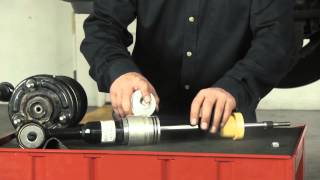
Yes, But With Caution. Yes, but your vehicle's ride quality and handling will be severely compromised. Avoid high speeds and long trips. Driving with a failed air spring for extended periods burns out the air compressor, adding $400 to $1,700 in repair costs. 🎬 Consider this: Replacing air suspension with reliable coil springs. If a corner bottoms out, the tire contacts the wheel well, causing immediate tire damage. For Subaru, this code disables stability control, making adverse weather driving dangerous.
Common Causes

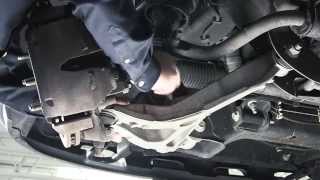
- Leaking Air Spring or Strut (Very Common) — The rubber air bag at the front-left corner develops small cracks from age and wear, causing air to leak and the suspension to sag. 🎬 Watch: How to replace a front air spring and shock. This is the most frequent cause on vehicles with air suspension.
- Worn or Failing Air Suspension Compressor (Common) — The compressor is a small air pump that fills the air springs. It fails from being overworked while trying to compensate for a leak. A worn compressor cannot maintain the required pressure, triggering a fault.
- Faulty Ride Height Sensor (Common) — A small sensor with a movable arm tells the computer the suspension height. If this sensor breaks, its wiring fails, or the linkage arm detaches, the computer receives bad data and sets this code.
- Faulty Suspension Control Solenoid or Actuator (Common) — On Toyota and Lexus, this code points to a failed electronic solenoid or actuator that controls the suspension's fluid pressure or damping stiffness at the front-left wheel.
- Faulty Tire Pressure Monitoring System (TPMS) Sensor (Common On Specific Makes) — On Mitsubishi, Nissan, and Infiniti, this code flags a bad TPMS sensor, not the suspension. The sensor's internal battery dies (typically after 5-10 years), stopping pressure data transmission.
- Damaged Wiring or Corroded Connectors (Less Common) — Wires routing to suspension components suffer damage from road debris, moisture, or rubbing. A bad connection mimics a failed part and is highly common on Toyota and Lexus models near the wheel wells.
- Improperly Adjusted Torsion Bars (Toyota/Lexus AHC) (Less Common) — On Toyota Land Cruisers with Active Height Control (AHC), improperly adjusted front torsion bars put excessive weight on the shocks. This pushes AHC fluid pressures out of spec, triggering failsafe mode and codes C1732 and C1736.
- Faulty Lateral G-Sensor (Subaru) (Rare) — On Subaru models, C1732 points to a malfunction in the lateral G-force sensor, a key part of the Vehicle Dynamics Control (VDC) system. A failure here disables traction and stability control.
- Faulty Suspension Control Module (ECU) (Rare) — The electronic control unit (ECU) managing the suspension system fails due to an internal short circuit or moisture damage. Suspect this when multiple, unrelated suspension codes appear simultaneously.
Symptoms

- Vehicle Leaning or Sagging — One corner of the vehicle, usually the front driver's side, sits noticeably lower than the others, especially after being parked overnight.
- Compressor Runs Constantly or is Unusually Loud — A buzzing or humming sound from the air compressor motor runs continuously as it tries to pump up a leaking air spring.
- Suspension Warning Light is On — A message like 'Check Air Suspension' or 'Service Suspension System' appears on the dashboard. On Subaru, the 'VDC' or traction control light illuminates.
- Harsh or Bouncy Ride — The vehicle rides stiffly because the suspension cannot absorb bumps. On Lexus or Toyota, the ride locks into the firm 'Sport' mode.
- Tire Pressure (TPMS) Warning Light (Mitsubishi, Nissan, Infiniti) — On these makes, C1732 triggers the TPMS warning light, not a suspension light. The light flashes for a minute and then stays solid.
Diagnostic Flowchart
Tap your situation to follow the diagnostic path that matches what you're seeing on this code.
Common Fixes & Costs

- Replace Leaking Air Spring/Strut — Parts: $200-$1,200, Labor: $150-$350, ~1.5 hr book time (Intermediate)
- Replace Air Suspension Compressor — Parts: $250-$1,300, Labor: $150-$400, ~2 hr book time (Intermediate)
- Replace Ride Height Sensor — Parts: $100-$800, Labor: $80-$200, ~1 hr book time (DIY)
- Replace Damping Control Actuator/Solenoid (Toyota/Lexus) — Parts: $200-$600, Labor: $100-$250, ~1.2 hr book time (Intermediate)
- Replace TPMS Sensor (Mitsubishi, Nissan, Infiniti) — Parts: $40-$150, Labor: $50-$120, ~0.7 hr book time (Professional)
- Convert to Coil Spring Suspension — Parts: $500-$1,500, Labor: $400-$800, ~4.5 hr book time (Intermediate)
- Replace Lateral G-Sensor (Subaru) — Parts: $150-$700, Labor: $80-$150, ~0.8 hr book time (Intermediate)
Used vs. New Parts: Buying Guide
When a used part is worth it: Buying used rubber air springs is highly discouraged. Used rubber bladders fail quickly. Used parts only make sense for hard-to-find mechanical linkages or control arms on older vehicles.
Donor-vehicle mileage cap: roughly under 50000 miles for the part to have meaningful remaining life.
Donor quality checklist:
- Avoid parts from regions with heavy road salt use.
- Visually inspect rubber bladders for cracking, chafing, or dry rot.
- Ensure electronic part numbers match exactly.
Decision logic:
- If The part is a rubber air spring or a complete air strut assembly. → Buy new (OEM or quality aftermarket) or remanufactured. The risk of a used bladder failing is too high.
- If The part is a mechanical component like a control arm or sensor linkage. → A used part from a low-mileage, non-accident vehicle is a reasonable option to save money.
- If The part is the air compressor. → Favor new or remanufactured. A used compressor was likely overworked due to a leak in its donor vehicle.
Warranty tradeoff: Salvage yard parts offer a 30-90 day warranty. New aftermarket parts come with a 1-year to limited lifetime warranty. OEM parts carry a 1-2 year warranty.
Worst-case if a used part fails: $300-600 if a used air strut fails shortly after install, requiring repeat labor costs plus a new replacement part.
What Happens If You Wait — Timeline
- 0-2 weeks: A small leak develops in an air spring. The 'Check Suspension' light appears intermittently. The compressor runs slightly more often, but the vehicle does not visibly sag yet. (MPG impact: 0%% · Added cost: $0)
- 2 weeks - 3 months: The leak worsens. The affected corner sags noticeably overnight. The compressor runs for over a minute at startup and cycles on while driving. Ride quality becomes harsh. (MPG impact: 0-1%% · Added cost: $50 in accelerated compressor wear.)
- 3-8 months: The overworked air compressor burns out. It becomes very loud or stops running entirely. The affected corner permanently sags, causing a constant harsh ride and poor handling. (MPG impact: 1-3%% · Added cost: $400 - $1,700 (A new compressor is required in addition to the air spring).)
- 8+ months: Driving on the collapsed suspension destroys the tire on that corner. Constant bottoming-out damages the shock absorber, control arm bushings, and ball joints. (MPG impact: 2-5%% · Added cost: $1,000 - $2,500+ (Cost of new compressor, air spring, tire, and suspension components).)
Cost of Not Fixing It
- 0-1 month: A leaking air spring causes a harsh, bouncy ride and forces the air compressor to run constantly, increasing wear and noise. (Added cost: $0 immediately, but compressor wear accelerates daily.)
- 1-6 months: The over-stressed air suspension compressor burns out from constant use. This turns a single-corner repair into a major system repair. (Added cost: $400 - $1,700 (for a new compressor and labor).)
- 6+ months: Continued driving on a collapsed suspension causes uneven tire wear and damages shocks, control arms, and ball joints due to repeated bottoming out. (Added cost: $1,000 - $2,500+ (for new tires and additional suspension parts).)
Diagnosis Steps

- Read the Specific Code Definition
Use an advanced OBD-II scanner to read chassis ('C') codes and confirm C1732. The manufacturer-specific definition dictates whether you diagnose the suspension, TPMS, or VDC system.
Tools: Advanced OBD-II Scanner (Beginner) - Perform a Visual Inspection (The 'Park and Look' Test)
Park the vehicle on a level surface and note the height of each corner. Let it sit overnight. A sagging corner confirms a leak in that specific air spring.
Tools: None (Beginner) - Perform a Soapy Water Leak Test
With the engine running to fill the system, spray a soap and water mixture on the sagging air spring and air line fittings. Bubbles confirm the exact location of the leak.
Tools: Spray bottle, soap, water (Intermediate) - Listen for the Air Compressor
Turn the vehicle on. A humming or buzzing sound running for over 60 seconds, or cycling frequently, confirms the compressor is overworking to compensate for a leak.
Tools: None (Beginner) - Inspect Ride Height Sensor and Linkage
Locate the ride height sensor in the affected wheel well. Verify the plastic or metal linkage arm connecting the frame to the suspension is attached and unbroken. Detached arms are a known issue on 2003-2006 Ford/Lincoln SUVs.
Tools: Flashlight (Intermediate) - Pro Tip: Test Ride Height Sensor Voltage (Ford/Lincoln)
Back-probe the ride height sensor connector. It requires a 5V reference. The output signal should read approximately 2.66V at normal trim height and sweep smoothly from ~0.5V to ~4.5V as you manually move the arm. Stuck voltages indicate a failed sensor.
Tools: Multimeter, Back-probe pins (Advanced) - Pro Tip: Test Damping Actuator Resistance (Toyota/Lexus)
Disconnect the actuator connector atop the shock absorber. Measure resistance between the terminals using a multimeter. A healthy actuator reads 6.4-7.2 Ω. An open circuit (OL) confirms a failed actuator.
Tools: Multimeter, Vehicle Service Manual (Advanced) - Pro Tip: Test Lateral G-Sensor Voltage (Subaru)
Locate the Yaw Rate & Lateral G-Sensor in the center console. Backprobe the signal wire with the ignition ON. It should read 2.1-2.7V when level. Tilting the sensor 90 degrees changes the voltage. A static voltage confirms a failed sensor.
Tools: Multimeter, Trim Removal Tools, Service Manual (Advanced) - Pro Tip: Use Scan Tool Live Data and Active Tests
Use an advanced scanner's 'Live Data' to monitor ride height sensor voltage and AHC pressures. Use 'Active Tests' to command a specific corner to raise or lower. No response confirms a component or circuit failure.
Tools: Advanced Bi-Directional Scanner (e.g., Techstream, Autel) (Advanced)
When This Code Triggers (Freeze-Frame Conditions)
- System Voltage: 12.5-14.5V (Normal operating voltage; rules out a low battery as the primary cause.)
- Vehicle Speed: 0-15 mph (Fault logs at startup or low speeds when the system performs self-leveling adjustments.)
- Time Since Ignition On: 5-120 seconds (Code sets during the initial system self-test and pressure-up cycle.)
- Suspension Command: Raise or Lower (For 'Timeout' codes, the fault logs when the ECU sends a command and the height sensor fails to report the expected change in time.)
Related Codes
- C1731, C1733, C1734 — On Lexus and Toyota, these are direct companions to C1732. They indicate the identical 'Damping Force Control Actuator Circuit' malfunction for different corners: C1731 (Front Right), C1733 (Rear Right), and C1734 (Rear Left).
- C1736 — On Toyota/Lexus AHC systems, C1736 appears with C1732. C1732 points to the leveling valve solenoid, while C1736 points to the accumulator solenoid. A single wiring fault triggers both.
- C1725 / C1726 — On Fords, C1725 ('Front Pneumatic Failure') and C1726 ('Rear Pneumatic Failure') indicate the axle cannot hold air pressure. C1732 follows these codes to pinpoint the exact leaking corner.
- C1712 — Points directly to a circuit malfunction in the front-left ride height sensor. A C1732 'Timeout' code on a Ford is the direct result of a C1712 fault, as the module receives no position signal.
Climate & Environmental Factors
- Cold Weather: Low temperatures cause rubber air springs to become brittle, increasing cracking risks. Moisture in the air lines freezes, causing blockages and preventing the compressor from filling the springs.
- High Humidity / Road Salt: Moisture and road salt corrode electrical connectors, suspension level sensor arms, and metal air line fittings, leading to electrical faults and leaks. Salt degrades rubber components rapidly.
- Hot Weather: High ambient temperatures cause the air suspension compressor to overheat, especially if overworked by a leak. Prolonged heat accelerates the degradation of rubber air springs.
How to Talk to a Mechanic About This Code
Say this: "I have a C1732 code on my [Vehicle]. I know this is a manufacturer-specific code related to the [system: 'front-left air suspension' for Ford, 'damping actuator circuit' for Lexus, 'rear-right TPMS sensor' for Infiniti]. I need a diagnostic to confirm the fault within that specific system."
This signals to the shop that you've done your research and prevents them from wasting time diagnosing the wrong system. It focuses the technician's effort and protects you from misdiagnosis.
Avoid saying:
- 'My suspension light is on, can you fix it?'
- 'I have a C1732, just replace the part.'
- 'Just do whatever it takes to fix the light.'
Questions to ask before authorizing the repair:
- Did you confirm the specific definition of C1732 for my vehicle's VIN?
- What was the result of the diagnostic test? (e.g., 'Did the air spring fail the soapy water test?' or 'What was the resistance reading on the damping actuator?')
- Is the recommended repair the only option, or is there a more cost-effective alternative like a coil conversion kit?
- If the compressor also needs replacement, have you confirmed and fixed the air leak that caused it to fail?
- What is the warranty on the parts and labor for this specific repair?
Where to Take It: Dealer vs Independent vs Chain
- Dealer:
Recommended for complex electronic versions of C1732 (Lexus, Subaru) or if local independent shops lack capability.
Best for: Vehicles under warranty., Complex electronic systems like Toyota/Lexus AHC/AVS or Subaru VDC, which require brand-specific tools and service bulletin knowledge., First-time diagnosis where brand-specific knowledge is critical.
Downsides: Highest labor rates and parts costs., Dealers prefer replacing large assemblies rather than smaller failed components. (Typical cost: +50% vs. baseline) - Independent Shop:
Best overall choice for most common C1732 issues provided the shop is well-vetted and properly equipped.
Best for: Out-of-warranty vehicles., Common air suspension failures on brands like Ford/Lincoln (leaking springs, bad sensors)., Brand-specialist independents (e.g., a Toyota/Lexus specialist).
Downsides: Quality and equipment vary greatly. Ensure they have advanced scanners that read chassis codes and perform bidirectional tests., May lack experience with niche systems like Subaru's VDC or Toyota's AHC. (Typical cost: +0% vs. baseline) - Chain Shop:
ONLY recommended if the code is for a TPMS sensor. AVOID for any suspension-related diagnosis or repair.
Best for: TPMS-related C1732 codes on Nissan, Mitsubishi, or Infiniti models. A tire shop is the ideal place for this repair.
Downsides: High risk of misdiagnosis for suspension-related faults., Technicians lack specialized training and tools for complex air or electronic suspension diagnostics., High pressure to upsell unnecessary services. (Typical cost: -10% vs. baseline)
When to Walk Away From the Repair
If the estimated repair cost for the air/electronic suspension exceeds 40-50% of the car's private-party value, strongly consider alternatives before fixing.
- Car worth $4000, fix is $2200: Walk away. The repair cost is over 50% of the car's value. This is a classic scenario for a coil spring conversion kit.
- Car worth $15000, fix is $1200: Fix it. The repair is well below the threshold and restores a key feature of the vehicle.
- Car worth $7000, fix is $3500: Borderline. This is a major repair. Get a second opinion and evaluate the cost of a full coil conversion versus fixing the air system.
What Scan Tool You Need for This Code

Minimum: A scanner that reads manufacturer-specific Chassis ('C') codes. A basic $20 engine code reader will NOT see this code.
Standard OBD-II readers only access powertrain (engine/transmission) codes. C1732 is a chassis code stored in the suspension, VDC, or body control module.
Budget: BlueDriver Pro (~$100) — Reads and clears chassis codes for major brands, allowing you to see the C1732 code and its definition. It views live data from some suspension sensors.
Mid-range: Foxwell NT510 Elite / iCarsoft V3.0 series (~$180) — Offers deeper system access, including reading live data from ride height sensors. Crucially, some models offer bidirectional tests for specific brands.
Professional: Autel MaxiCOM MK808 / MK808S (~$450) — Full bidirectional control. This allows you to command the compressor on/off, tell specific air springs to inflate/deflate, and cycle actuators to confirm component failures.
Rent vs buy: Auto parts stores do not rent scanners with chassis/bidirectional capabilities. Buying a mid-range or pro-level scanner is a worthwhile investment that saves you more than its cost on the first use.
How to Clear the Code After You Fix It
- Perform the physical repair (e.g., replace air spring, sensor).
- Reconnect any disconnected components and the battery.
- Use an advanced OBD-II scan tool to access the Chassis or Suspension Control Module.
- Select the option to 'Clear DTCs' or 'Reset Codes'.
- If a TPMS sensor was replaced (Nissan/Infiniti), use a specialized TPMS tool to perform the sensor registration.
- Start the vehicle and allow the air suspension to self-level for 3 minutes.
Drive cycle (~20 minutes): Start the engine and idle for 2 minutes to build compressor pressure. Drive for 15-20 minutes, mixing city speeds (25-45 mph) and steady highway speeds (50-60 mph). Park, turn off the vehicle, and restart to verify the warning light remains off.
Readiness monitors affected: Not applicable; this is a chassis code and does not affect emissions readiness monitors.
Watch out for:
- Using a basic code reader that cannot access the suspension control module.
- Forgetting to perform the TPMS relearn procedure on Nissan/Infiniti.
- The code returning immediately because a slow air leak or intermittent wiring short was ignored.
Will This Fail Emissions / State Inspection?
No — by itself this code doesn't fail OBD inspection (but it can keep readiness monitors from setting, which causes a separate fail).
- California: This chassis code does not illuminate the Check Engine Light and passes the OBD-II emissions inspection. However, a technician flags it during a visual inspection.
- New York: NYS inspection includes a check of the suspension system and warning lights. A lit suspension warning light or an obviously sagging vehicle fails the safety inspection.
- Texas: The Texas safety inspection checks the suspension. A vehicle with a broken or sagging suspension that compromises handling fails the inspection.
Most Commonly Affected Vehicles

- Toyota Land Cruiser (100-Series) (1998-2007) — Prone to failures in the Active Height Control (AHC) system. High pressures prevent height adjustments. Incorrect fluid causes globe/membrane failure.
- Lexus GX460 / GX470 (2003-2023) — Commonly experiences issues with damping force control actuators and ride height sensors. Repair costs for a single air strut exceed $900.
- Ford Expedition (2003-2006) — Frequently suffers from leaking front air springs and ride height sensor linkage failures. TSB 06-15-10 addresses linkage arms detaching from the ball stud.
- Lincoln Navigator (2003-2006) — Shares the Ford Expedition air suspension system and suffers identical air spring leaks and sensor issues. Compressor failure follows air spring leaks.
- Mitsubishi Outlander / L200 (2012-2020) — C1732 indicates a failed TPMS sensor in the front right wheel, not a suspension fault.
- Nissan Rogue (2014-2020) — C1732 is a TPMS-related code defined as 'flat tire', indicating significant pressure loss or sensor data anomaly.
- Infiniti Q60 (2017-2020) — C1732 points to a fault with the rear right TPMS sensor. TSB ITB20-003 notes this code causes a solid TPMS light and relates to a slow leak from the valve stem seal.
- Subaru WRX, Forester, Legacy (2005-2020) — C1732 indicates an abnormal signal from the lateral G-force sensor, disabling the Vehicle Dynamics Control (VDC) system.
Manufacturer-Specific Notes

- Toyota / Lexus: Code C1732 relates to the Active Height Control (AHC) or Adaptive Variable Suspension (AVS). A failure defaults the suspension to a stiff 'sport' mode and disables height adjustments. The cause is a failed damping actuator, wiring issue, or incorrect AHC fluid pressure.
- Ford / Lincoln: The definition 'Corner Down Timeout' means the computer tried to lower the front-left corner but the ride height sensor reported it failed. This is caused by a binding mechanical part or a disconnected ride height sensor linkage, not the air spring itself.
- Mitsubishi / Nissan / Infiniti: These brands use C1732 to report a fault with a tire pressure sensor (TPMS). For Mitsubishi, it is the front-right; for Infiniti Q60, the rear-right. The fix requires replacing the sensor inside the tire.
- Subaru: C1732 'Lateral G Sensor Abnormal' points to a fault in the Vehicle Dynamics Control (VDC) system. A fault disables stability and traction control. The fix involves replacing the G-sensor located in the center console.
Real Owner Stories
2005 Lexus GX470 with 180K miles - Electrical Gremlin
Suspension warning light illuminated, and the ride became extremely harsh. Codes C1732 and C1734 pointed to both left-side damping actuator circuits. The vehicle was not sagging.
What they tried:
- Initially suspected the expensive damping actuators on top of the shocks.
- Checked wiring harness and connectors between the actuators and the suspension ECU.
- Found corrosion inside a connector located in the driver-side kick panel area.
Outcome: Cleaned the corroded connector terminals with contact cleaner and applied dielectric grease. Cleared the codes, and the suspension returned to normal operation. Cost was minimal.
Lesson: When multiple related electrical circuit codes appear simultaneously, suspect a wiring or connector issue before replacing expensive components. A wiring diagram is crucial.
2004 Ford Expedition at 155K miles - Classic Air Spring Failure
'Check Air Suspension' light illuminated. The front driver's side sagged noticeably overnight. The air compressor ran constantly when the vehicle was on.
What they tried:
- Performed a visual inspection and confirmed the front-left corner was low.
- Used the soapy water test on the front-left air spring.
- Bubbles appeared from numerous small cracks in the rubber, confirming a leak.
Outcome: Replaced the front-left air spring with an aftermarket part for $250. The vehicle held its height, and the compressor stopped running constantly. The code cleared permanently.
Lesson: A sagging corner combined with a constantly running compressor is the classic sign of a leaking air spring. The soapy water test confirms the diagnosis before buying parts.
2016 Nissan Rogue with 75K miles - Misdiagnosis Trap
A generic scanner read a C1732 code during routine service. The owner was quoted for a suspension system diagnostic.
What they tried:
- Owner researched the code for their specific vehicle online.
- Discovered that for a Nissan Rogue, C1732 is a TPMS code indicating a sensor issue or flat tire.
- Noticed the TPMS warning light was illuminated.
Outcome: Took the vehicle to a tire shop. The shop found a slow leak from a nail, repaired the tire, and reset the TPMS light. The C1732 code cleared. Cost was $30.
Lesson: Always verify the code definition for your exact make and model. A C1732 on a Nissan is a completely different problem than on a Ford or Lexus.
2008 Subaru WRX at 110K miles - VDC System Fault
The traction control (VDC) and ABS warning lights illuminated simultaneously. The stability control was disabled. A scan revealed code C1732.
What they tried:
- Confirmed the code definition for Subaru as 'Lateral G Sensor Abnormal'.
- Located the sensor under the center console.
- Tested the voltage on the sensor's signal wire, which was stuck at a fixed value and did not change when tilted.
Outcome: Replaced the Lateral G-Sensor with an OEM part for $400. After replacement and clearing the code, the VDC and ABS lights extinguished.
Lesson: On a Subaru, C1732 is a critical safety system fault, not a suspension comfort issue. The fix involves diagnosing a specific sensor in the Vehicle Dynamics Control system.
How to Prevent This Code From Triggering
- Periodically Clean Air Springs and Ride Height Sensors (Once or twice a year, especially after winter) — Washing away road salt and grime prevents abrasion of the rubber air springs and keeps the ride height sensor arms from seizing.
- Inspect Air Lines and Electrical Connectors (Annually) — Checking for rubbing air lines prevents leaks. Applying dielectric grease to suspension connectors prevents moisture-induced corrosion and electrical faults.
- Flush Toyota/Lexus AHC Fluid (Every 60,000-90,000 miles) — AHC hydraulic fluid degrades over time. Flushing it maintains the health of the expensive pump, valves, and accumulators. Use only OEM fluid.
- Drain Moisture from Air System (if applicable) (Before winter) — Draining accumulated water prevents it from freezing in the lines or valves, which causes blockages and system damage.
- Avoid Overloading the Vehicle (Daily habit) — Exceeding payload capacity puts excessive stress on the air springs and compressor, accelerating wear and leading to premature failure.
Frequently Asked Questions
Can I just replace my air suspension with regular shocks and springs?
Yes, this is a common and cost-effective solution known as a coil conversion. Conversion kits replace the complex air system with traditional coil springs and struts. This often costs less than replacing a single OEM air strut.
Is it safe to drive with the C1732 code?
No, driving long distances or at high speeds is unsafe. A sagging suspension ruins handling, damages tires, and overworks the air compressor until it burns out. On Subarus, this code disables stability control entirely.
Why is my suspension warning light on but the car isn't sagging?
This usually points to an electrical problem rather than a mechanical leak. The computer detects a fault in a sensor, actuator, or wiring circuit. It requires a multimeter or advanced scan tool to pinpoint the exact electrical failure.
What are common misdiagnosis mistakes for C1732?
The biggest mistake is ignoring the manufacturer-specific definition. Nissan or Mitsubishi owners waste money inspecting suspension parts when the code actually indicates a dead TPMS sensor. Always verify the code definition for your exact VIN before buying parts.
My scanner shows C1732 for my Nissan, but the suspension seems fine. Why?
This is normal because on many Nissan and Infiniti models, C1732 is a Tire Pressure Monitoring System (TPMS) code. It indicates a dead TPMS sensor battery or a flat tire. Check your dashboard for an illuminated TPMS warning light.
Can a bad ride height sensor cause the compressor to fail?
Yes, a faulty ride height sensor provides incorrect data to the control module. This causes the computer to run the compressor excessively, trying to adjust a corner it mistakenly believes is too low. This overworking leads to premature compressor burnout.
Why won't the C1732 code clear after a repair?
Some systems require a specific procedure to clear codes, not just a generic OBD-II reset. Nissan/Infiniti TPMS sensors must be registered to the vehicle with a specialized tool. For suspension faults, the code returns immediately if the underlying leak or electrical short remains.
Can a bad battery cause this code?
While a failing battery causes random electrical codes, C1732 typically indicates a specific component failure. If the code appeared immediately after a battery died, clear the codes and perform a 20-minute drive cycle. If it returns, proceed with component diagnosis.
Key Takeaways
- Verify your vehicle's specific C1732 definition first; it means a $300 air suspension leak on a Ford, but a simple $80 TPMS sensor failure on a Nissan.
- Diagnose a sagging corner immediately using a $5 spray bottle of soapy water to find air spring leaks before they destroy the compressor.
- Never ignore a constantly running air compressor; replacing a $250 leaking air spring today prevents a $1,500 compressor replacement next month.
- Consider a $1,000 coil spring conversion kit to permanently eliminate recurring air suspension failures on older vehicles.
- Test Toyota and Lexus damping actuators with a multimeter; a reading outside the 6.4-7.2 Ω range confirms a failed $300 actuator.
Helpful Videos

The information in this article is provided for general reference and educational purposes only. Vehicle specifications, procedures, and part compatibility can vary by production date, trim level, and region. Always consult your vehicle's factory service manual and verify part numbers before purchasing or performing repairs. Safety-critical components such as airbags, seat belts, and braking systems should be installed by a qualified professional.
- 🎬 Helpful Videos
- What Does C1732 Mean?
- Can I Drive With C1732?
- Common Causes
- Symptoms
- Diagnostic Flowchart
- Common Fixes & Costs
- Used vs. New Parts: Buying Guide
- What Happens If You Wait — Timeline
- Cost of Not Fixing It
- Diagnosis Steps
- When This Code Triggers (Freeze-Frame Conditions)
- Related Codes
- Climate & Environmental Factors
- How to Talk to a Mechanic About This Code
- Where to Take It: Dealer vs Independent vs Chain
- When to Walk Away From the Repair
- What Scan Tool You Need for This Code
- How to Clear the Code After You Fix It
- Will This Fail Emissions / State Inspection?
- Most Commonly Affected Vehicles
- Manufacturer-Specific Notes
- Real Owner Stories
- 2005 Lexus GX470 with 180K miles - Electrical Gremlin
- 2004 Ford Expedition at 155K miles - Classic Air Spring Failure
- 2016 Nissan Rogue with 75K miles - Misdiagnosis Trap
- 2008 Subaru WRX at 110K miles - VDC System Fault
- How to Prevent This Code From Triggering
- Frequently Asked Questions
- Can I just replace my air suspension with regular shocks and springs?
- Is it safe to drive with the C1732 code?
- Why is my suspension warning light on but the car isn't sagging?
- What are common misdiagnosis mistakes for C1732?
- My scanner shows C1732 for my Nissan, but the suspension seems fine. Why?
- Can a bad ride height sensor cause the compressor to fail?
- Why won't the C1732 code clear after a repair?
- Can a bad battery cause this code?
- Key Takeaways
- 🎟️ Get 5% Off