

C1717 on 2002-2016 Volkswagen Phaeton: Suspension Fault Causes and Fixes
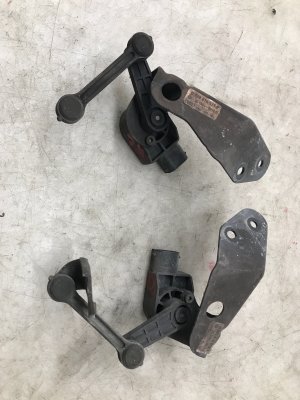
While the exact VW definition for C1717 is unconfirmed, it almost certainly points to a fault in the air suspension system. The most common cause is a failed ride height level sensor or its brittle plastic linkage rod, which can break or pop off. A scan with a VW-specific tool like VCDS is needed for an accurate diagnosis. Expect to pay $50-$150 for a new sensor and linkage.
- C1717 on a Phaeton is not a clearly defined code, but it strongly implies a fault with the air suspension's ride height sensing system.
- Before buying any parts, visually inspect the small plastic linkage rods on the ride height sensors at all four corners of the car. A disconnected or broken rod is the most common and cheapest fix.
- A VW-specific scan tool (like VCDS) is highly recommended for accurate diagnosis and is required for calibrating the system after a repair.
- Due to safety risks, this repair is best left to professionals or experienced DIYers who know how to safely work on air suspension systems.
What's Unique About the 2002-2016 Volkswagen Phaeton
The Phaeton was Volkswagen's luxury flagship, equipped with a sophisticated four-corner adaptive air suspension as standard for superior ride comfort. This system, while advanced, has several known failure points that are common across the model's lifespan. Unlike simpler cars, a suspension fault on the Phaeton can also disable other features like adaptive cruise control and dynamic self-leveling headlights, as these systems rely on ride height data to function correctly.
Symptoms You May Notice
- Suspension warning light on the dashboard (often a yellow car icon with up/down arrows).
- Vehicle sitting too low on one or more corners, or 'squatting' in the rear, especially after being parked overnight.
- Vehicle leaning to one side.
- A harsh, bumpy, or 'rock hard' ride.
- Air suspension compressor running excessively or seeming louder than usual.
- Error messages like 'CAR TOO LOW DO NOT DRIVE' or 'Air Suspension System Fault'.
- Malfunction of adaptive headlights (headlights pointing too low or too high).
- Inability to change suspension height or damping settings via the infotainment system.
- Replacing the air compressor when the fault is actually a sensor. A faulty sensor can prevent the system from activating the compressor, making it seem like the compressor is dead when it is not the root cause.
- Replacing an air strut for a leak when the issue is a faulty ride height sensor causing one corner to be commanded to the wrong height.
Most Likely Causes
- Broken or Disconnected Ride Height Sensor Linkage 🔴 High Probability The small plastic linkage rods that connect the suspension arms to the ride height sensors are a very common failure point. The ball joint on the end of the link can corrode and seize, putting stress on the plastic arm, which eventually becomes brittle and breaks or pops off the ball.
How to confirm: Visually inspect the ride height sensors located on the control arms at each corner of the vehicle. Check if the plastic linkage rod is securely attached at both ends. Often, a broken or disconnected link will be hanging loose or missing entirely.
Typical fix: Replace the broken linkage rod. This is a common DIY repair. While the rod itself is the point of failure, it is often sold as an assembly with the ride height sensor. Aftermarket metal replacement links are also available.
Est. part cost: $30-$100 - Failed Ride Height Level Sensor 🟡 Medium Probability The sensors are exposed to the elements under the car, leading to water intrusion and electronic failure over time. They can also be damaged during suspension work if not handled carefully.
How to confirm: If the linkage is intact, the sensor itself may have failed. This requires a diagnostic scan tool (like VCDS for VW) to read the live data from the sensor in measuring blocks 004 and 005 of the Level Control module (Address 34). An unchanging, erratic, or out-of-range value points to a bad sensor.
Typical fix: Replace the faulty ride height sensor and its linkage. The system will need to be recalibrated using a diagnostic tool after replacement.
Est. part cost: $50-$150 - Wiring or Connector Damage ⚪ Low Probability Wiring to the sensors can chafe against suspension or chassis components, and connectors can corrode from road salt and water spray. This can cause an open or short circuit.
How to confirm: Inspect the wiring harness leading to the ride height sensor for any signs of abrasion, breaks, or corrosion in the connector pins. A multimeter can be used to check for continuity and voltage at the sensor connector.
Typical fix: Repair the damaged section of wire or replace the corroded connector pigtail.
Est. part cost: $10-$50
Rare But Worth Checking
- Suspension Control Module (J197) Fault: While rare, the control module for the self-leveling suspension (J197), located behind the glovebox, can fail internally. This is usually suspected only after all sensors, wiring, and other components have been ruled out. Water leaks in the cabin can also damage this module.
Diagnosis Steps
- Perform a visual inspection of the vehicle's ride height. Note which corner(s) are lower or higher than normal.
- Scan the Level Control module (Address 34) with a VW-specific diagnostic tool like VCDS. Record all fault codes.
- Visually inspect the ride height sensor and its plastic linkage rod at the corner indicated by the fault code or visual inspection. Check for broken or disconnected parts.
- If the linkage is intact, use the scan tool to view live measuring blocks for all four ride height sensors (Address 34, MVB 004/005). Check if the sensor readings change when you carefully lift or push down on that corner of the car. A sensor with a static or erratic reading is likely faulty.
- If the sensor and linkage appear good, inspect the wiring harness and connector going to the sensor for damage or corrosion.
- If wiring is good, the sensor itself is the most likely culprit.
- After replacing parts, clear the fault codes and perform a basic setting/calibration of the suspension level control system. This is a mandatory step. Using VCDS: go to [34 - Level Control], then [Security Access - 16], enter code '31564'. Then go to [Adaptation - 10]. Measure the ride height from wheel center to fender lip in mm for each corner and enter the values in channels 01-04. Finally, save a value of '1' to channel 05 to confirm the calibration.
Parts You'll Likely Need
- Ride Height Level Sensor
(OEM #Front: 3D0941286D (Right), 3D0941285D (Left). Rear: 3D0907503. Note: Part numbers can vary, always confirm with VIN.)— This is the most common point of failure, either electronically or via its plastic linkage rod, that would trigger a chassis sensor fault code like C1717.
Trusted brands: Bosch, HELLA, VEMO, Topran
OEM price range: $120-$200
Aftermarket price range: $50-$100
Related Codes That Often Appear With This One
- 01772 — This code indicates a 'Signal from Level Control Pressure Sensor (G291)', often appearing alongside other suspension codes when the system has a leak or a sensor fault causing pressure issues.
- 01400 — This code means 'Suspension Level Control - Control Limit Not Reached', which is a general code that will be triggered when a sensor or leak prevents the car from reaching its target height.
- 01437 — This code means 'Control Position Not Learned' and indicates the system has lost its calibration. This often happens as a direct result of a failed sensor or link providing an implausible value.
Platform-Specific Known Issues
- The plastic linkage arms for the ride height sensors are a well-documented weak point, frequently failing due to age and exposure. The ball joint seizes, causing the plastic link to snap or pop off, which gives the sensor an incorrect reading and can cause the suspension to lower itself completely.
Mechanic-Grade Diagnostic Values
- Ride Height Sensor Connector Voltage — expected: Pin 1: 5V (supply from control module), Pin 2: Variable voltage (signal), Pin 3: Ground. Failure: No 5V on Pin 1 indicates a wiring or module issue. A static or non-changing voltage on Pin 2 while moving the suspension indicates a failed sensor.
- VCDS Live Data - Level Control (Address 34) — expected: In Measuring Value Blocks (MVB) 004 and 005, the millimeter readings for each corner should change smoothly and logically as the suspension is manually lifted or lowered with a jack.. Failure: A value that is stuck, jumps erratically, or reads as out-of-range points to a faulty sensor or broken linkage for that corner.
- Factory Suspension Height for Calibration — expected: Front: 407 mm, Rear: 401 mm. This is the target value, measured from the wheel center to the fender lip, used as a baseline during calibration.. Failure: These are not failure indicators, but the required baseline values for the adaptation procedure.
Scan Tool Commands That Help
- VCDS (VAG-COM): Live Data Monitoring: Module 34 (Level Control), Measuring Blocks 004 & 005 — This is the primary method to confirm a suspected faulty ride height sensor. While jacking one corner of the car, the corresponding value in VCDS should change. If it doesn't, the sensor or its wiring is bad.
- VCDS (VAG-COM): Adaptation: Module 34, Security Access Code 31564, Adaptation Channels 01-05 — This is a mandatory procedure after replacing any ride height sensor or linkage. It teaches the control module the new baseline height for each corner.
- VCDS (VAG-COM): Basic Settings: Module 34, Security Access Code 08367 — Used for functions like bleeding or charging the pneumatic system, which may be necessary if the system has been opened for major repairs beyond just a sensor swap.
Wiring & Ground Locations
- J197 — In the luggage compartment (trunk), on the right side, behind the trim panel.. This is the Level Control System Control Module. All sensor signals are processed here. A bad connection or water damage at this module can cause system-wide faults.
- Ground Point 51 — In the luggage compartment, right side, near the J197 module.. This is a primary ground connection for the J197 control module. Corrosion or a loose connection here can cause erratic behavior, communication errors, and random faults in the suspension system.
- Ground Point 50 — On the left side in the luggage compartment.. Another key chassis ground point in the rear of the vehicle. Poor grounding can cause a host of electrical issues, including sensor reading problems.
- Ground Connection 32 — Located within the main wiring harness, connecting to the J197 module.. This is an internal harness ground. While not easily serviceable, a wiring diagram shows its importance for the J197 module's operation, and damage to the harness could affect it.
Real Owner Repair Stories
- Ross-Tech Forum user (Volkswagen Phaeton) — Unable to complete the suspension level calibration procedure in VCDS. The system would not accept the new values.
❌ Tried (didn't work) Repeatedly attempting the calibration procedure.
✅ What actually fixed it The user had a separate, seemingly unrelated fault code for the Steering Angle Sensor (G85). After clearing the G85 fault and calibrating the steering angle, the suspension calibration could be completed successfully. The level control module required the steering angle input to confirm the wheels were straight before it would accept calibration data. - YouTube channel 'furiousdriving' (2005 Volkswagen Phaeton with 300,000 km) — Suspension fault light, dynamic headlights and adaptive cruise control not working. Car was sitting too low on one corner.
✅ What actually fixed it The plastic linkage arm on the front left ride height sensor had popped off its ball joint. The video shows the ball joint had seized from rust and corrosion, which put enough stress on the plastic link to force it off. Replacing the entire sensor and link assembly resolved the issue. - Ross-Tech Forum user (2005 Volkswagen Phaeton) — Could not communicate with the Level Control module (Address 34) when the ignition was on (engine off). Also had a persistent battery drain.
❌ Tried (didn't work) Attempting to diagnose the suspension system directly.
✅ What actually fixed it The root cause was a faulty stationary heater causing a battery drain. To combat this, a previous owner had pulled a fuse related to the second battery. This fuse was necessary to power the level control module with the engine off. After fixing the battery drain (disconnecting the faulty heater) and reinstalling the fuse, communication with the suspension module was restored and it could be diagnosed properly.
OEM Part Supersession History
3D0941286D→3D0941286E— Likely a minor revision or change in supplier for the front right ride height sensor.
Heads up: The parts are generally interchangeable, but it is always best practice to replace in pairs (left and right) if a revised part is used, to ensure matched response.3D0907503 (Rear Sensor)→4E0616571D / 4E0616571E— Part shared with the Audi A8 platform. The 4E0 numbers are more commonly referenced for the rear sensors.
Heads up: These parts are physically and functionally identical for the application. Always confirm fitment with VIN.
Model Year Variations Within This Range
- 2008-2016: The 2008 facelift introduced a new center console with an updated touchscreen navigation and climate control system. While the method of putting the car in 'Jack Mode' or adjusting comfort settings is done through this newer interface, the underlying air suspension hardware, sensors, and control module logic related to code C1717 remained fundamentally unchanged from the earlier models.
Diagnostic Flowchart
Other Known Issues on This Vehicle
Issues unrelated to this code that are worth knowing about as an owner of this generation:
- KESSY Module Water Damage 🔴 High — Very common, especially on vehicles parked outdoors. Caused by clogged plenum chamber drains under the windshield or sunroof drains, allowing water to enter the passenger footwell and flood the Keyless Entry/Start System (KESSY) module.
- Trunk Lid Wiring Harness Failure 🟠 Medium — Extremely common. The wires in the harness that flexes when the trunk is opened and closed become fatigued and break over time. This causes failure of the trunk release, license plate lights, reverse camera, and can generate multiple fault codes.
- Dual Battery System Complexity 🟠 Medium — Common source of electrical gremlins. The Phaeton uses two batteries (starter and house/convenience). If one fails, is replaced incorrectly, or the battery control module (J71) has issues, it can cause a wide range of seemingly unrelated faults and starting problems.
- TPMS Sensor Battery Failure 🟡 Low — Guaranteed to occur over the vehicle's life. The batteries inside the original wheel-mounted TPMS sensors have a lifespan of 5-10 years. When they die, they will trigger a persistent TPMS warning light, requiring sensor replacement.
Used vs. New Parts: Buying Guide for This Vehicle
When a used part is the smart pick: A used sensor assembly is a budget-conscious but risky option. It only makes sense if the donor vehicle has very low mileage, as the primary failure point—the plastic linkage—suffers from age-related brittleness. You are likely buying a part with a very limited remaining lifespan.
Donor-vehicle mileage cap: roughly under 50000 miles for the part to have meaningful remaining life.
What to inspect on the donor part:
- Inspect the plastic linkage arm for any signs of stress whitening or cracking.
- Check the rubber boot on the ball joint; if it's torn, cracked, or missing, the joint is likely seized or will fail soon.
- Ensure the electrical connector pins are clean, straight, and free of corrosion.
- Ask for the VIN of the donor car to verify the part number is a close match.
OEM-only on this vehicle (don't cheap out):
- Suspension Control Module (J197) - A used module may have component protection enabled, requiring online coding at a dealer to pair it to your vehicle. Given the complexity and cost, a new or professionally remanufactured unit is a safer bet.
Aftermarket brands forum-validated for this vehicle:
- Arnott: Frequently mentioned as a quality aftermarket supplier for air suspension components, including sensors.
- Aerosus: Presents itself as an OEM-quality alternative.
- Metal Linkage Rods: Unbranded, aftermarket metal replacement links are considered a significant durability upgrade over the OEM plastic design and are recommended by the enthusiast community.
Brands owners have reported issues with on this vehicle:
- No-name, unbranded sensors from online marketplaces are a gamble. While they may work initially, their long-term reliability and accuracy are questionable and can lead to repeated diagnostic effort.
Real Owner Stories
Aggregated from forums and TSBs cited above. Mileages and costs reflect what owners reported in those sources.
2010 VW Phaeton
Symptoms: The car became 'Extremely Un-Level' after an attempt at calibration.
What fixed it: Diagnostic process using VCDS to check live sensor data in measuring blocks 004 and 005 to identify the faulty component.
Source hint: Ross-Tech Forums: VW Phaeton level control problem
VW Phaeton
Symptoms: Suspension lowering itself completely due to an incorrect sensor reading.
What fixed it: Replacement of the plastic linkage arm which had snapped after the ball joint seized due to age and exposure.
Source hint: vehicle_specific_issues
Related OBD-II Codes
Frequently Asked Questions
My Phaeton is 'squatting' in the rear after being parked overnight; is this related to code C1717?
Can I replace the ride height sensor linkage myself on my Phaeton?
Why are my adaptive headlights pointing too low while my suspension warning light is on?
What specific diagnostic tool do I need to calibrate the suspension after a sensor repair?
Is it true that the linkage rods are a weak point on the Phaeton's platform mates like the Bentley Continental?
What should I look for during a visual inspection of the ride height sensors?
We Have This Part in Stock


The information in this article is provided for general reference and educational purposes only. Vehicle specifications, procedures, and part compatibility can vary by production date, trim level, and region. Always consult your vehicle's factory service manual and verify part numbers before purchasing or performing repairs. Safety-critical components such as airbags, seat belts, and braking systems should be installed by a qualified professional.
- Volkswagen Phaeton:
- 🛍️ Shop This Part
- What's Unique About the 2002-2016 Volkswagen Phaeton
- Symptoms You May Notice
- Most Likely Causes
- Rare But Worth Checking
- Diagnosis Steps
- Parts You'll Likely Need
- Related Codes That Often Appear With This One
- Platform-Specific Known Issues
- Mechanic-Grade Diagnostic Values
- Scan Tool Commands That Help
- Wiring & Ground Locations
- Real Owner Repair Stories
- OEM Part Supersession History
- Model Year Variations Within This Range
- Diagnostic Flowchart
- Other Known Issues on This Vehicle
- Used vs. New Parts: Buying Guide for This Vehicle
- Real Owner Stories
- 2010 VW Phaeton
- VW Phaeton
- Related OBD-II Codes
- Frequently Asked Questions
- 🎟️ Get 5% Off