

C1717 on 2011-2018 Porsche Cayenne: Air Suspension Fault Causes and Fixes
Code C1717 on a Porsche Cayenne indicates a fault in the chassis system, almost certainly related to the air suspension. The most likely cause is a faulty ride height level sensor or its wiring, but it can also be a failing air compressor or a simple blown fuse. Diagnosis is critical as the specific definition for Porsche is not well-documented. A Porsche-specific scanner is highly recommended for accurate diagnosis.
- C1717 is an undefined Porsche code but strongly points to a fault in the air suspension system, likely a sensor circuit.
- Always check the easiest and cheapest things first: the 40-amp fuse and relay for the air suspension compressor are common failure points.
- A 'Chassis System Faulty' message is the most common symptom. The vehicle's ride will be harsh, and height adjustment will be disabled.
- Leaks from the air struts are a very common problem on aging Cayennes and will cause the compressor to overwork.
- Due to the system's complexity, using a Porsche-specific scan tool for diagnosis is highly recommended to avoid replacing incorrect parts.
What's Unique About the 2011-2018 Porsche Cayenne

The Porsche Cayenne's air suspension (PASM) is a complex, active system responsible for ride height and damping. Unlike many vehicles, a fault here doesn't just make the ride bumpy; it can disable performance modes like Sport and Sport Plus and may cause the vehicle to sit unevenly. While the exact meaning of C1717 is elusive, owner experiences with general 'Chassis System Faulty' warnings on this platform often point to issues with the air compressor, its relay, or ride height sensors, particularly in cold climates which can cause fuses to blow or expose failing components.
Symptoms You May Notice

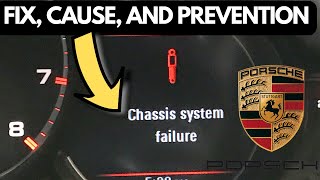
- 'Chassis System Faulty' or 'Suspension System Fault' warning light on the dashboard.
- Vehicle is stuck at one ride height and cannot be raised or lowered.
- Air suspension compressor is running excessively or making loud noises.
- Vehicle is visibly leaning to one corner or sitting lower than normal.
- A harsh, stiff ride as the system defaults to its firmest setting.
- Sport and Sport Plus driving modes may be disabled.
- A 40-amp fuse for the compressor repeatedly blows, especially in cold weather.
- Replacing the air compressor when the actual fault is a simple blown 40A fuse, a bad relay, or most commonly, a leak in an air strut that caused the compressor to overwork and fail.
Most Likely Causes

- Faulty Air Suspension Compressor Relay or Fuse 🔴 High Probability The air compressor draws high current, especially in cold weather or if it's working overtime to compensate for a leak. This stress can cause the 40A fuse to blow or the relay to fail. It's a very common first point of failure, often triggered by extreme cold.
How to confirm: Locate the fuse box on the driver's side of the dashboard and inspect the 40A maxi-fuse for the suspension system. The relay is located under the driver's side dash. Test the relay for proper function or swap with a known good one.
Typical fix: Replace the blown fuse or faulty relay. This is a simple and inexpensive first step. Always question why the fuse blew; it often indicates an overworking compressor. Some owners keep a spare fuse in the car for this issue 🎬 Watch this quick guide on checking fuses and common fixes., especially in winter.
Est. part cost: $5-$50 - Leaking Air Strut or Air Line 🟡 Medium Probability The rubber air springs (bellows) on the struts degrade over time, developing cracks and leaks. This forces the compressor to run constantly, leading to its eventual failure and blown fuses.
How to confirm: With the vehicle running, raise the suspension to its highest level. Spray a solution of soapy water on the air struts and line connections. Look for bubbles, which indicate a leak. You may also hear a hissing sound or notice one corner sagging after being parked overnight.
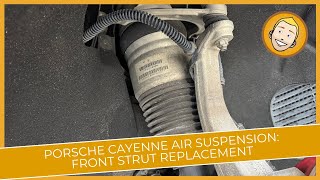
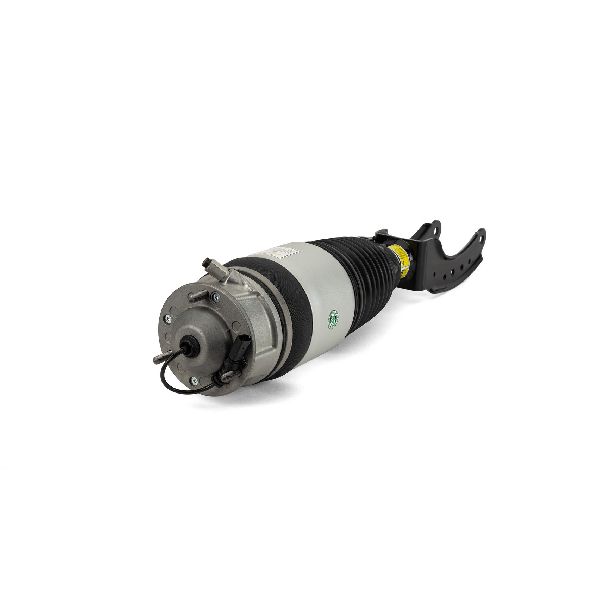
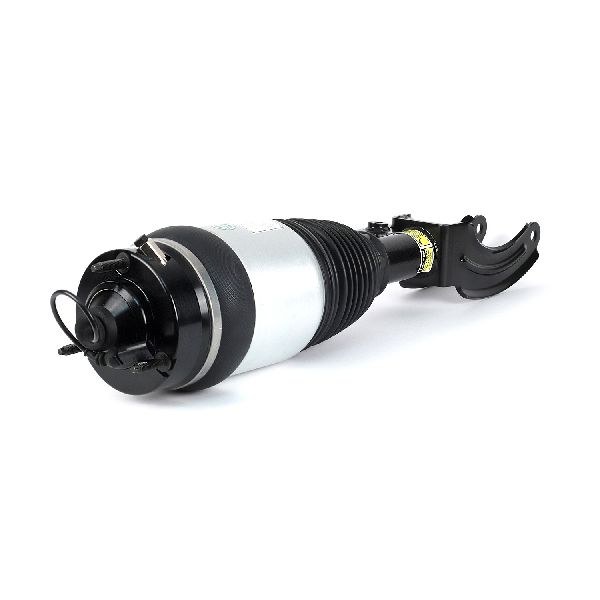
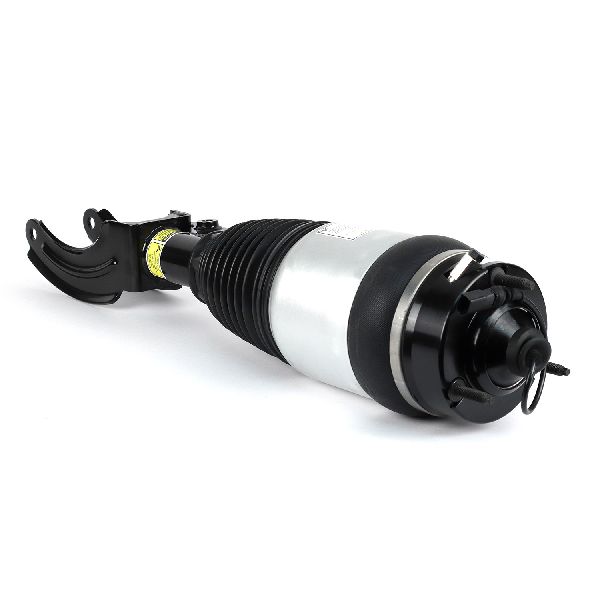
Typical fix: Replace the leaking air strut assembly. It is often recommended to replace them in pairs (both front or both rear) to maintain balanced performance. Aftermarket suppliers like Arnott are popular alternatives to OEM. 🎬 See how to replace a front air strut yourself.
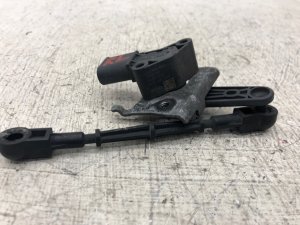
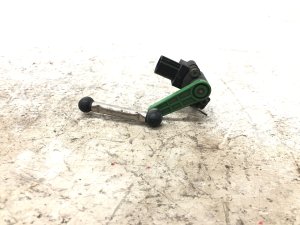
Est. part cost: $500-$1500 per strut - Failed Ride Height Level Sensor or Wiring 🟡 Medium Probability These sensors are mounted on the control arms and are exposed to road debris, water, and salt, leading to corrosion and failure of the sensor, its plastic linkage, or its wiring. This aligns directly with the generic definition of C1717.
How to confirm: Visually inspect the sensors and their wiring for damage, corrosion, or broken plastic arms. Use a Porsche-specific scan tool to monitor the live data from each height sensor to see if one is providing an erratic, stuck, or out-of-range reading.
Typical fix: Replace the faulty ride height sensor and repair any damaged wiring. Sometimes just the linkage arm can be replaced. Calibration with a PIWIS or equivalent scanner is required after replacement.
Est. part cost: $100-$250 - Failing Air Suspension Compressor ⚪ Low Probability The compressor's piston ring can wear out, reducing its ability to generate sufficient pressure. This is almost always a secondary failure caused by a leak in the system that forces the compressor to run constantly.
How to confirm: If the compressor runs for a long time without raising the vehicle, if it's very loud, or if it repeatedly blows the 40A fuse, it may be weak or failing. A pressure test can confirm its output.
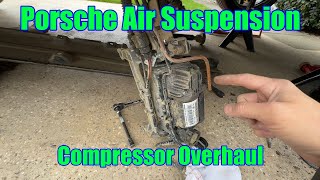
Typical fix: Replace the air suspension compressor and its relay. It is critical to find and fix any air leaks before installing a new compressor, or it will fail prematurely. Rebuild kits for the piston seal are also available.
Est. part cost: $400-$1200 for a new compressor, $30-$100 for a rebuild kit
Rare But Worth Checking
- Faulty PASM Control Module: While not common, the electronic control module for the suspension system can fail internally. This is usually diagnosed after all other possibilities (sensors, wiring, compressor, leaks) have been ruled out. Water ingress into the passenger footwell can sometimes damage this module. A PIWIS tool may be needed to reprogram the module.
- Low Battery Voltage: As with many modern German vehicles, a weak or dying battery can cause a host of random, seemingly unrelated electronic fault codes, including the 'Chassis System Faulty' message. If the battery is over 4-5 years old, it should be a primary suspect.
Diagnosis Steps

- Read Fault Codes: Use a Porsche-specific diagnostic tool (like PIWIS, iCarsoft for Porsche, or Autel) to read the exact trouble codes from the suspension control module. Generic scanners may not provide accurate information or access the correct module.
- Check Battery Health: Before diving into the suspension, ensure the battery is fully charged and healthy. A battery older than 4 years is a suspect. Low voltage is a known cause of spurious chassis faults.
- Check Fuses and Relays: Inspect the 40A fuse for the air suspension compressor, located in the fuse box on the driver's side dashboard. This is a very common failure point. If it's blown, replace it and the compressor relay (Part No. 95561501001).
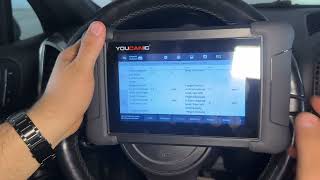
- Inspect Ride Height Sensors: Visually inspect the ride height sensors on each corner of the vehicle and their wiring/linkages for any signs of physical damage, corrosion, or disconnection. Watch their live data on a scan tool while bouncing the suspension. 🎬 Learn how to read live sensor data and clear codes.
- Perform Leak Test: Raise the vehicle to its highest setting. Spray soapy water on all four air struts (especially around the bottom crimp and top seal) and the air line connections at the valve block and compressor. Watch for bubbles. Let the car sit overnight and check for sagging.
- Test Compressor Function: Listen to the compressor when it runs. If it is excessively loud or runs continuously without lifting the vehicle, it may be weak. If it immediately blows a new fuse, the compressor motor may be seized or shorted.
- Test Valve Block: The valve block distributes air to the struts. A faulty valve block can cause internal leaks or prevent a corner from raising/lowering. This is typically diagnosed with a scan tool that can command each solenoid individually.
- Diagnose Control Module: If all components and wiring test correctly, the PASM control module itself may be at fault. This is typically the last item to be diagnosed.
Parts You'll Likely Need

- Air Suspension Compressor Relay
(OEM #95561501001)— This is a frequent failure point that prevents the compressor from running. It is mandatory to replace this relay whenever the compressor is replaced to avoid premature failure of the new unit.
Trusted brands: Genuine Porsche, Bosch
OEM price range: $30-$60
Aftermarket price range: $5-$20 - Air Suspension Ride Height Level Sensor
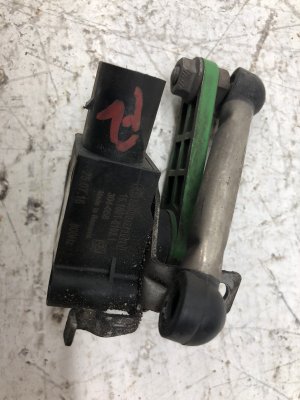
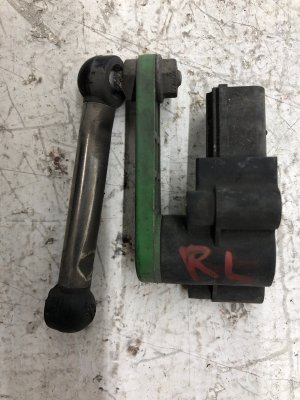
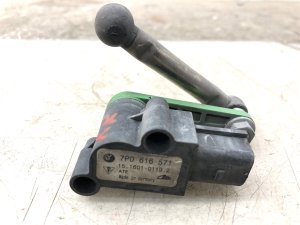
(OEM #Front Left: 95834107500, Front Right: 95834107600, Rear: 7P0616571)— Directly implicated by the generic definition of C1717. These sensors are exposed to the elements and their failure (or their linkage's failure) is a common cause for chassis system faults.
Trusted brands: Genuine Porsche, VEMO
OEM price range: $150-$250
Aftermarket price range: $80-$150 - Air Suspension Compressor
(OEM #95835890102)— Often fails as a secondary result of a system leak causing it to overwork. A weak compressor will struggle to lift the vehicle and may repeatedly blow fuses.
Trusted brands: Genuine Porsche, Arnott, Continental (OEM supplier)
OEM price range: $1000-$1500
Aftermarket price range: $400-$800 - Front Air Strut Assembly
(OEM #Left: 95835803910, Right: 95835804010)— The rubber air bags are a primary leak point. Leaks cause the compressor to overwork, leading to other failures. They are a common wear item.
Trusted brands: Genuine Porsche, Arnott (new or remanufactured), Bilstein (B4 Airmatic)
OEM price range: $1500-$2000
Aftermarket price range: $500-$1200
Related Codes That Often Appear With This One
- 1772 — Fault code 1772 (often 01772 in VAG-specific tools) points to an 'Implausible Signal' from the Level Control Pressure Sensor (G291). This often accompanies a major leak or a failing compressor that cannot build pressure.
- 000284 — A Porsche-specific code for 'Control position not adjustable'. This indicates the system tried to change height but failed, often because the vehicle was too high or too low to begin with, which can be caused by a faulty sensor or a major leak.
- C11000 — A generic code indicating the supply voltage is below the limit value. This can be triggered by a weak battery, a common source of multiple electronic faults on this platform.
Technical Service Bulletins (TSBs) & Recalls
- NHTSA Campaign: 17V368000 / Porsche Recall AH08 - Affects certain 2011 Cayenne S and Turbo models for camshaft controller bolts that may loosen and fail, leading to engine stall. Dealers are to replace the fastening screws.
Mechanic-Grade Diagnostic Values
- Air Suspension Accumulator Tank Pressure — expected: 10 bar (145 PSI) to 17 bar (246 PSI). Failure: Pressure below 10 bar indicates a significant leak or a completely failed compressor.
- Voltage at Level Control Module Harness — expected: Battery Voltage (B+). Failure: No voltage or significantly lower voltage indicates a wiring issue or blown fuse.
Scan Tool Commands That Help
- PIWIS (or equivalent like Launch X431, Autel): Height Sensor Calibration / Leveling System Calibration — This is required after replacing a ride height sensor or air strut. The technician measures the actual height from the wheel center to the fender lip for each corner, enters these values (in mm) into the tool, and saves them to the control module.
- PIWIS (or equivalent): Coding without Rules -> Correction Values — This function allows for adjusting the ride height by a specific offset (e.g., lowering the car by 20mm) without performing a full recalibration. This is considered a safer coding adjustment. The PIWIS must be in Engineering mode.
- PIWIS: Control Unit Programming — If a Technical Service Bulletin (TSB) is issued for a software-related issue, the PASM control unit may need to be reprogrammed. This requires a stable internet connection and a high-amperage battery maintainer (70A+ recommended).
Wiring & Ground Locations
- Air Suspension Compressor — Under the vehicle, typically beneath the right front passenger seat area.. This is the primary component for generating air pressure. Its wiring and connectors are susceptible to damage from road debris and corrosion.
- PASM Control Unit — Varies slightly, but often located in the passenger compartment, sometimes in the footwell or under a seat, making it vulnerable to water damage from clogged drains.. This is the brain of the system. A wiring fault to or from this module, or internal failure, will disable the entire system.
- Compressor Fuse (40A) — In the fuse box located on the driver's side of the dashboard, accessible when the door is open.. This is the most common failure point for a completely inoperative system. A blown fuse is often the first symptom of an overworking compressor due to a leak.
Real Owner Repair Stories
- YouTube User 'Porsche Cayenne Chassis System Failure' (2011-2018 Porsche Cayenne (exact year not specified)) — 'Chassis System Failure' warning on the dash, especially in very cold weather (-35°C) and at high elevation. Suspension became disabled and vehicle sat low in the front.
❌ Tried (didn't work) Restarting the car did not clear the persistent error.
✅ What actually fixed it The 40-amp fuse for the air compressor relay was visibly blown. Replacing the fuse restored all suspension functions immediately. The owner notes this is a recurring issue in extreme cold and keeps a spare fuse in the car. - 6SpeedOnline user 'rsbIII' (Porsche Panamera (similar system to Cayenne 958)) — Yellow 'Chassis System Fault' message appeared during a cold spell.
❌ Tried (didn't work) Initial troubleshooting pointed towards multiple potential causes.
✅ What actually fixed it The root cause was old, leaking air struts. The leaks became worse in cold temperatures, causing the fault. Replacing the air struts with rebuilt units from RMT (Rebuild Master Tech) solved the problem. - Rennlist user 'gonzoe11' (958.1 Cayenne Turbo) — 'Chassis System Failure' warning message.
❌ Tried (didn't work) Standard suspension system diagnosis.
✅ What actually fixed it A bad ignition coil. This is a highly unusual edge case, but replacing the faulty coil resolved the chassis failure message.
OEM Part Supersession History
95835890100→95835890101, 95835890102, 95835890103, 95835890104, 95835890105, 958698007A— Progressive updates and improvements by the manufacturer (Continental) to enhance reliability and performance.
Heads up: While later versions are generally backward compatible, some early aftermarket compressors sold for the shared VW/Audi platform may lack specific threaded connections required for the Cayenne, necessitating swapping brackets from the old unit.
Model Year Variations Within This Range
- 2011-2014 (958.1) vs 2015-2018 (958.2): While the core air suspension system (PASM) is fundamentally the same, there were minor software updates and part number supersessions throughout the generation. A TSB was issued that could affect 2016 models, requiring a PASM control unit software update via PIWIS to address an issue where valve control current was insufficient, causing a temporary PASM shutdown. However, for the C1717 code, the diagnostic approach remains consistent across the entire 2011-2018 range.
Diagnostic Flowchart
Other Known Issues on This Vehicle
Issues unrelated to this code that are worth knowing about as an owner of this generation:
- Transfer Case Failure 🔴 High — Very common. Symptoms like shuddering or hesitation at low speeds often appear between 30,000 and 60,000 miles. Porsche issued an extended warranty for this part. (Ref: Extended Warranty (not a formal recall))
- Camshaft Adjuster Bolt Failure 🔴 High — Affects early 2011-2012 V8 models. The original aluminum bolts can shear, potentially causing engine stall and catastrophic engine damage. (Ref: NHTSA Campaign 17V368000 (Recall AH08))
- Coolant Pipe & Hose Leaks 🟠 Medium — Common on V8 models. Original plastic pipes and hose fittings under the intake manifold and at the alternator become brittle and crack, causing coolant leaks.
- Weak Battery Causing Multiple Electronic Faults 🟡 Low — Frequent on vehicles that are not driven daily. An aging or weak battery can cause a cascade of seemingly unrelated electronic fault messages, including 'Chassis System Faulty'.
Used vs. New Parts: Buying Guide for This Vehicle
When a used part is the smart pick: Used parts are generally not recommended for the core wear components of the air suspension. However, a used PASM control module or a used valve block from a low-mileage, accident-free donor vehicle can be a cost-effective option if diagnosed as faulty, but may require coding.
Donor-vehicle mileage cap: roughly under 60000 miles for the part to have meaningful remaining life.
What to inspect on the donor part:
- Verify the donor vehicle's mileage and ensure it was not from a region with heavy road salt use.
- For electronic modules, ensure there is no evidence of water damage to the donor car's interior.
- Inspect air line fittings on components like valve blocks for corrosion or tool marks indicating previous issues.
OEM-only on this vehicle (don't cheap out):
- Air Suspension Compressor Relay: While cheap, using the OEM Bosch relay is highly recommended to ensure correct amperage handling and longevity.
Aftermarket brands forum-validated for this vehicle:
- Arnott: Widely regarded as the top aftermarket choice. They offer both remanufactured OEM struts (which retain PASM electronic damping) and fully new assemblies. Their new struts may not support PASM and might require minor modification to fit brake cooling ducts. They typically come with a lifetime warranty.
- Bilstein: The B4 Airmatic series is a direct OEM-quality replacement that fully supports PASM. It is a trusted brand but may have a shorter warranty than Arnott.
- Continental: The original equipment manufacturer for the compressor. Buying a Continental-branded compressor is equivalent to getting the genuine Porsche part without the Porsche box.
Brands owners have reported issues with on this vehicle:
- Unbranded eBay/Amazon compressors and struts: While significantly cheaper, these often have high failure rates, poor fitment, and may not be compatible with the vehicle's electronic damping system (PASM), leading to a permanent harsh ride and new fault codes.
Real Owner Stories
Aggregated from forums and TSBs cited above. Mileages and costs reflect what owners reported in those sources.
2011 Porsche Cayenne Turbo
Symptoms: Intermittent 'Chassis system failure' warnings, particularly during cold weather.
What fixed it: Checked the 40A fuse and relay as primary culprits; discussion also noted potential sensor issues.
Source hint: Rennlist thread 'chassis-system-failure' (2016)
2011-2018 Porsche Cayenne GTS
Symptoms: Intermittent 'Chassis System Failure' warnings and a blown 40A fuse. Diagnostic scanner showed code 000284 'Control position not adjustable'.
What fixed it: The issue was identified as a tired compressor being overworked by a slow air leak.
Source hint: Rennlist thread 'troubleshooting-chassis-system-failure' (2024)
2003-2010 Porsche Cayenne (957)
Symptoms: 'Chassis System Faulty' message on the dashboard.
What fixed it: Repaired a broken plastic linkage on a ride height sensor by crafting a more durable metal replacement.
Source hint: Rennlist thread 'porsche-cayenne-957-chassis-system-failure-diy-retrofit-fix'
2011-2018 Porsche Cayenne
Symptoms: Chassis system failure warning light.
What fixed it: Checking the battery first to rule out low voltage, then inspecting the 40A fuse which often fails in cold weather.
Source hint: Reddit r/PorscheCayenne thread 'chassis_system_failure'
Related OBD-II Codes
Frequently Asked Questions
My 2011 Cayenne Turbo is showing a 'Chassis system failure' specifically when it gets very cold outside. Is this a known issue?
Does the Porsche Recall AH08 (NHTSA Campaign 17V368000) affect my 2011 Cayenne's suspension system?
I'm seeing a 'Chassis System Faulty' light and my Cayenne is leaning to one side. Can I just replace the sensor?
Where is the fuse and relay located for the air suspension on a 958 Cayenne?
Can I use a generic OBD-II scanner to diagnose C1717 on my Cayenne?
Is it true that a bad battery can cause suspension codes like C1717?
Helpful Videos
Used OEM Parts in Stock

New Aftermarket Parts Available



The information in this article is provided for general reference and educational purposes only. Vehicle specifications, procedures, and part compatibility can vary by production date, trim level, and region. Always consult your vehicle's factory service manual and verify part numbers before purchasing or performing repairs. Safety-critical components such as airbags, seat belts, and braking systems should be installed by a qualified professional.
- Porsche Cayenne:
- 🎬 Helpful Videos
- 🛍️ Shop This Part
- What's Unique About the 2011-2018 Porsche Cayenne
- Symptoms You May Notice
- Most Likely Causes
- Rare But Worth Checking
- Diagnosis Steps
- Parts You'll Likely Need
- Related Codes That Often Appear With This One
- Technical Service Bulletins (TSBs) & Recalls
- Mechanic-Grade Diagnostic Values
- Scan Tool Commands That Help
- Wiring & Ground Locations
- Real Owner Repair Stories
- OEM Part Supersession History
- Model Year Variations Within This Range
- Diagnostic Flowchart
- Other Known Issues on This Vehicle
- Used vs. New Parts: Buying Guide for This Vehicle
- Real Owner Stories
- 2011 Porsche Cayenne Turbo
- 2011-2018 Porsche Cayenne GTS
- 2003-2010 Porsche Cayenne (957)
- 2011-2018 Porsche Cayenne
- Related OBD-II Codes
- Frequently Asked Questions
- 🎟️ Get 5% Off