

C1717 on 2007-2014 Cadillac Escalade: Service Suspension System Causes and Fixes
Code C1717 on a 2007-2014 Escalade indicates an electrical fault in the front left Magnetic Ride Control shock absorber circuit. The most common fix is replacing the entire front shock/strut assembly due to an internal short. Expect to pay $300-$550 for an OEM ACDelco part.
- C1717 specifically points to an electrical fault in the front left shock absorber circuit.
- The most probable cause is an internal failure of the MagneRide shock absorber itself, requiring replacement of the entire unit.
- Always inspect the wiring harness and connector at the top of the shock for damage before buying expensive parts.
- The correct OEM replacement part for the Z95 MagneRide front shock is ACDelco 580-435 (also listed under GM part number 19353951), which fits both the left and right sides.
- It is strongly recommended to replace front shocks in pairs to ensure safe and balanced handling.
What's Unique About the 2007-2014 Cadillac Escalade
The third-generation (GMT900) Escalade uses the Z95 Magnetic Ride Control system, a sophisticated adaptive suspension. Unlike simpler systems, the sensors and damping actuators are integrated into the shock absorber. This means a simple sensor circuit fault often requires the replacement of the entire, more expensive, shock assembly. These systems are known for the shock absorbers to fail both electrically (triggering codes like C1717) and mechanically (leaking fluid), leading to a harsh ride and a 'Service Suspension System' warning.
Symptoms You May Notice
- "Service Suspension System" message on the dash 🎬 Watch: How to diagnose the Service Suspension System messageboard
- Harsh, stiff, or bouncy ride quality
- Noticeable nose-diving during braking
- Vehicle may sway more when cornering
- Audible clunking or rattling noises from the front suspension
- Vehicle may feel like it is "locked up" and jumps over bumps
- Replacing the air suspension compressor. The compressor is part of the rear auto-leveling system and is unrelated to a front shock absorber electrical fault code.
Most Likely Causes
- Internal Failure of Front Left Shock Absorber 🔴 High Probability The electronic sensor and actuator components are integrated into the shock assembly, which is subject to constant vibration, heat, and moisture, leading to internal shorts over time. Leaking of the magnetorheological fluid is also a very common failure point which can lead to subsequent electrical faults.
How to confirm: After visually inspecting and confirming the external wiring is intact, the fault is almost certainly internal to the shock. A mechanic can use a high-end scan tool to observe live data from the shock's position sensor. If the wiring is good but the signal is erratic or shorted, the shock has failed. Visible fluid leaking from the shock body also confirms failure.
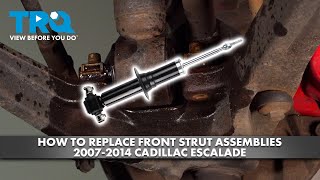
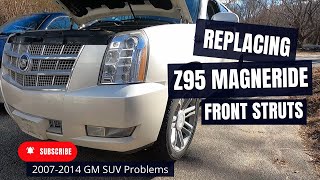
Typical fix: Replace the front left shock absorber assembly. 🎬 See this step-by-step Z95 front strut replacement guide It is highly recommended to replace both front shocks at the same time to ensure even damping and handling characteristics.
Est. part cost: $300 - $550 per shock - Damaged Wiring Harness or Connector 🟡 Medium Probability The wiring harness leading to the top of the shock absorber is located in the wheel well, where it is exposed to road debris, moisture, and turning wheels, which can cause chafing, corrosion, or broken wires. A common point of failure for suspension wiring on this platform is in the rear of the vehicle, where the harness can be pinched or corroded, though front harness issues also occur.
How to confirm: Visually inspect the wiring harness and the electrical connector at the top of the front left shock tower. Look for any signs of abrasion, breaks, corrosion in the pins, or pinched wires. Use a multimeter to check for continuity and shorts in the wiring between the shock connector and the Suspension Control Module.
Typical fix: Repair the damaged section of the wiring harness. If the connector is corroded or damaged, it can be replaced with a new pigtail connector.
Est. part cost: $20 - $60 for a pigtail
Rare But Worth Checking
- Faulty Suspension Control Module: This is very rare. The control module should only be considered after definitively ruling out both the wiring and the shock absorber itself. A failure of the module would likely present other suspension-related codes as well, often communication codes starting with 'U'.
Diagnosis Steps
- Read the trouble codes with an OBD-II scanner capable of reading chassis (C-codes) to confirm C1717 is present.
- Visually inspect the wiring harness and electrical connector at the top of the front left shock absorber. Check for any signs of damage, chafing, or corrosion.
- Disconnect the connector and inspect the pins for moisture or damage.
- If the wiring appears damaged, repair the affected section or replace the connector pigtail.
- If the wiring and connector are in good condition, the fault is most likely internal to the shock absorber.
- Visually inspect the shock absorber body for any signs of fluid leakage. A leaking shock is a sign of mechanical failure and should be replaced, regardless of the electrical code.
- Using a capable scan tool, access the Suspension Control Module (SCM) data stream to monitor the left front shock sensor voltage. An out-of-spec or fixed high voltage reading points to an internal short.
- Replace the front left shock absorber. It is best practice to replace the front right shock at the same time to maintain balanced suspension performance.
Parts You'll Likely Need
- Front Suspension Strut / Shock Absorber (MagneRide)
(OEM #ACDelco 580-435 (GM 19353951))— This is the most common cause of C1717, as the sensor and actuator that fail are integrated into this assembly. The front left and right shocks use the same part number for the Z95 MagneRide suspension.
Trusted brands: ACDelco, GM Genuine Parts
OEM price range: $300-$550
Aftermarket price range: $250-$450
Platform-Specific Known Issues
- Owner Experience with MagneRide Failure: An owner of a 2015 Tahoe LTZ (a platform mate with the same Z95 suspension) reported a very bouncy and uncontrollable ride, which was diagnosed as a leaking and failed MagneRide strut at 65,000 miles. This is a typical failure scenario for these components.
Mechanic-Grade Diagnostic Values
- Suspension Position Sensor 5-Volt Reference — expected: 3.7-5.5 volts between terminal A and ground at the sensor connector with ignition ON.. Failure: A reading less than 3.7V suggests a short to ground or an open/high resistance in the circuit. A reading above 5.5V suggests a short to voltage.
- Suspension Position Sensor Low Reference Circuit Resistance — expected: Less than 1 ohm between terminal C at the sensor connector and a known good ground with ignition OFF.. Failure: Greater than 1 ohm indicates an open or high resistance in the ground circuit for the sensor.
- Suspension Position Sensor Live Data Voltage — expected: Between 0.35-4.75 volts on a scan tool, which should change as the suspension moves.. Failure: A fixed or erratic voltage reading that doesn't correspond to suspension movement indicates a sensor or circuit fault.
Scan Tool Commands That Help
- GM GDS2 (Global Diagnostic System 2): Module Diagnostics -> Electronic Suspension Control Module -> Control Functions — After confirming the C1717 code, a technician can use GDS2 to command the individual shock absorbers to change their damping state. This helps verify if the control module can communicate with and attempt to control the shock. While it may not pinpoint an internal short, a lack of response from the left front shock during this test, when other shocks respond, further isolates the fault to that corner.
Wiring & Ground Locations
- Electronic Suspension Control Module (ESCM) — Located on the left rear of the frame chassis, often above or near the spare tire.. This is the control unit that processes all suspension sensor inputs and sends commands to the shocks. All wiring for the C1717 circuit terminates here, making its connector a key test point.
- G400 — On the left rear body mount.. This is a primary ground point for the rear of the vehicle, including the Electronic Suspension Control Module. A poor connection here can cause erratic behavior and various suspension codes.
- G103 — Located at the left rear of the engine compartment on the cowl, above the brake booster.. This ground serves multiple modules, including the Body Control Module (BCM), which communicates with the ESCM. While not a direct cause for C1717, a bad ground here can cause network communication issues that may present with other codes.
- G105 — Located at the left front of the engine compartment, often behind cooling fan relays.. This is a major engine bay ground point. A service bulletin for other GM issues notes that ensuring G104, G105, and G106 are secure is critical for proper module grounding.
Real Owner Repair Stories
- YouTube user comment (2007-2014 Cadillac Escalade (specific year not mentioned)) — Service Suspension System light with front MagneRide codes (such as C0575, C0580, related to C1717 family) after installing new struts. Vehicle speed limited to 80 mph.
❌ Tried (didn't work) Replacing the front struts with new units, but the codes returned within 3 weeks.
✅ What actually fixed it As a workaround, the owner bypassed the system by installing two 6-ohm load resistors in parallel (creating ~3 ohms of resistance) into the wiring harness connector at the top of the strut tower. This tricked the control module into thinking a functional shock was present, clearing the codes and removing the speed limitation.
Diagnostic Flowchart
Other Known Issues on This Vehicle
Issues unrelated to this code that are worth knowing about as an owner of this generation:
- Cracked Dashboard 🟠 Medium — Very common, especially in sun-exposed climates. Cracks often appear around the passenger airbag area and steering column. (Ref: No recall, but subject of class-action lawsuits.)
- Broken Exterior Door Handles 🟠 Medium — Extremely common. The internal plastic mechanisms become brittle and snap, causing the handle to break off. (Ref: None)
- AFM Lifter Failure (L94 V8) 🔴 High — A known issue on engines with Active Fuel Management (AFM), particularly the L94 V8 used from 2010-2014. A collapsed lifter can cause misfires, a ticking noise, and potential camshaft damage. (Ref: TSB 15-06-01-002F addresses engine misfires related to AFM lifters.)
- Excessive Oil Consumption 🟠 Medium — Some owners report higher-than-normal oil consumption, sometimes related to the PCV system or AFM operation on later models.
- Reduced Engine Power Message 🟠 Medium — Can be caused by a failing electronic throttle body or accelerator pedal position sensor, putting the vehicle into a limp mode.
Used vs. New Parts: Buying Guide for This Vehicle
When a used part is the smart pick: A used MagneRide shock absorber is generally NOT recommended. These parts fail both electrically and mechanically (leaking fluid) with age and mileage. The risk of buying a used part that has limited life remaining or is already failing is very high. A used wiring harness pigtail or a used Suspension Control Module (aftermarket programming may be required) could be a cost-effective option if those specific parts are diagnosed as faulty.
Donor-vehicle mileage cap: roughly under 40000 miles for the part to have meaningful remaining life.
What to inspect on the donor part:
- For a shock/strut: Absolutely no signs of fluid leakage or weeping around the seals.
- For a shock/strut: The rubber bushings must be intact with no cracking or deterioration.
- For a wiring connector: No signs of green corrosion on the pins, no cracked plastic, and no brittle or exposed wires.
- Verify the part number on the donor part exactly matches the required OEM number (580-435).
OEM-only on this vehicle (don't cheap out):
- Magnetic Ride Control Shock/Strut Assembly: While some aftermarket options exist, owner forums frequently report that only the OEM ACDelco/GM parts restore the original, intended ride quality. Aftermarket versions may be passive shocks that require an electronic bypass module to prevent error messages.
Aftermarket brands forum-validated for this vehicle:
- Arnott Industries: A well-known aftermarket brand for suspension components. However, for MagneRide replacements, user experiences are mixed. Some find the ride quality acceptable, while others report it's not the same as OEM and may have fitment issues. Arnott offers both active electronic replacements and passive conversion kits.
Brands owners have reported issues with on this vehicle:
- Unbranded, low-cost units from online marketplaces: These are frequently cited as having poor ride quality, premature failure rates, and can cause compatibility issues with the vehicle's electronic suspension system.
Real Owner Stories
Aggregated from forums and TSBs cited above. Mileages and costs reflect what owners reported in those sources.
2015 Chevrolet Tahoe LTZ — 65000 miles
Symptoms: The owner reported a very bouncy and uncontrollable ride quality.
What fixed it: The issue was diagnosed as a leaking and failed MagneRide strut which required replacement.
Source hint: vehicle_specific_issues: Owner Experience with MagneRide Failure
2007-2014 Cadillac Escalade
Symptoms: The 'Service Suspension System' message appeared on the dashboard.
What fixed it: After performing a wiring check, the front left shock absorber was replaced. Owners on this forum emphasize that this code almost always leads to shock replacement and recommend doing them in pairs.
Source hint: Cadillac Forums
Related OBD-II Codes
Frequently Asked Questions
My 2012 Escalade has a 'Service Suspension System' message; is there a TSB for this?
Can I use a used MagneRide shock (Part 580-435) to fix the C1717 code on my Escalade?
Is the C1717 fault always the shock, or could it be the wiring in the wheel well?
Should I replace both front shocks if only the left one is triggering C1717?
Will aftermarket shocks from brands like Arnott fix my 'Service Suspension System' light?
My Escalade feels like it is 'locked up' and jumps over bumps; is this related to C1717?
Helpful Videos
Used OEM Parts in Stock

New Aftermarket Parts Available






The information in this article is provided for general reference and educational purposes only. Vehicle specifications, procedures, and part compatibility can vary by production date, trim level, and region. Always consult your vehicle's factory service manual and verify part numbers before purchasing or performing repairs. Safety-critical components such as airbags, seat belts, and braking systems should be installed by a qualified professional.
- Cadillac Escalade:
- 🎬 Helpful Videos
- 🛍️ Shop This Part
- What's Unique About the 2007-2014 Cadillac Escalade
- Symptoms You May Notice
- Most Likely Causes
- Rare But Worth Checking
- Diagnosis Steps
- Parts You'll Likely Need
- Platform-Specific Known Issues
- Mechanic-Grade Diagnostic Values
- Scan Tool Commands That Help
- Wiring & Ground Locations
- Real Owner Repair Stories
- Diagnostic Flowchart
- Other Known Issues on This Vehicle
- Used vs. New Parts: Buying Guide for This Vehicle
- Real Owner Stories
- 2015 Chevrolet Tahoe LTZ — 65000 miles
- 2007-2014 Cadillac Escalade
- Related OBD-II Codes
- Frequently Asked Questions
- 🎟️ Get 5% Off