

C1711 on 2007-2014 Nissan Sentra: Rear Left TPMS Sensor Fault Guide
Code C1711 on a 2007-2014 Nissan Sentra means the system is not receiving data from the rear left tire pressure (TPMS) sensor. This is almost always due to a dead battery inside the sensor, which has a 5-10 year lifespan. Replacement of the sensor is required. Expect to pay a tire shop or dealer $75-$250 for the part, labor, and programming.
- The C1711 code on a 2007-2014 Sentra points to a communication failure with the rear-left TPMS sensor.
- The most frequent cause is the sensor's internal battery dying due to age (7-10 year lifespan).
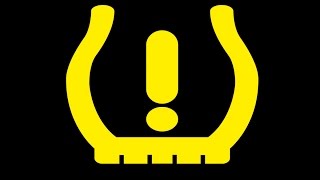
- A flashing TPMS light indicates a system fault like this, while a solid light means low tire pressure.
- Repair requires replacing the sensor, which involves dismounting the tire and programming the new sensor.
- It's highly recommended to replace all four sensors if they are original, as the others will likely fail soon.
- In rare cases, RF interference from aftermarket electronics can cause this code; unplugging them is a key diagnostic step.
What's Unique About the 2007-2014 Nissan SENTRA
For this generation of Sentra, the most common reason for a C1711 code is simply the age of the vehicle. The original TPMS sensors contain sealed batteries with a lifespan of roughly 7-10 years, meaning most are failing by now. Additionally, Nissan issued a Technical Service Bulletin (TSB #NTB13088A) acknowledging that radio frequency (RF) interference from aftermarket electronic devices (like dash cams or cheap USB phone chargers) can sometimes cause this 'No Data' condition by disrupting the 315 MHz signal. A failed sensor battery is far more likely than RF interference, but the latter is a known issue for this platform.
Diagnostic Flowchart
Tap your situation to follow the diagnostic path that matches what you're seeing on this vehicle.
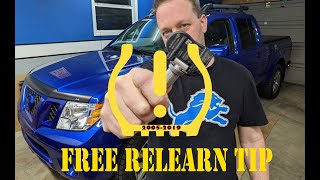
Generation note: This range covers two Sentra generations: the B16 (2007-2012) and the early B17 (2013-2014). The TPMS system function and the meaning of code C1711 are the same for both. However, the specific OEM part numbers for the sensors and the relearn procedures may vary slightly. The B16 generation often uses a manual relearn procedure involving grounding a wire 🎬 Watch: How to perform this manual TPMS reset without tools., while the B17 typically requires a scan tool.
Symptoms You May Notice
- TPMS warning light flashes for approximately one minute after startup, then stays on continuously.
- Inability to see the tire pressure reading for the rear left tire on a scan tool or advanced driver display.
- A "TPMS Error See Owner's Manual" message may appear on the instrument cluster display.
- Replacing the BCM. The BCM is the receiver for the signal, but it rarely fails. The transmitter (the sensor in the wheel) is the weak point.
- Assuming the TPMS warning light means low tire pressure. A flashing light indicates a system fault, not necessarily low pressure.
- Replacing only the TPMS service kit (seals and valve stem). This will only fix a leak; it will not fix a dead sensor battery or electronic fault that causes code C1711.
Most Likely Causes
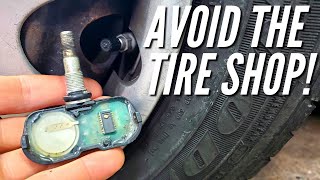
- Dead TPMS Sensor Battery 🔴 High Probability The sealed, non-replaceable batteries inside the original sensors have a finite lifespan of about 7-10 years. Vehicles in this year range are now well beyond that service life, making battery failure the most common cause.
How to confirm: A professional TPMS diagnostic tool can be used to 'ping' or 'activate' the sensor. If the sensor does not respond, its battery is dead or the sensor has failed.
Typical fix: Replace the rear left TPMS sensor. It is often recommended to replace all four sensors at the same time, especially if they are already having new tires installed, as the others are likely to fail soon.
Est. part cost: $30-$80 - Faulty TPMS Sensor 🟡 Medium Probability Beyond the battery, the sensor's electronics can fail from age, vibration, or internal corrosion from moisture ingress, especially if the valve stem seal has failed. 🎬 Watch this walkthrough of a mid-2000s Nissan TPMS replacement.
How to confirm: If the sensor does not respond to an activation tool, it is considered faulty (this includes a dead battery).
Typical fix: Replace the rear left TPMS sensor and perform the relearn procedure.
Est. part cost: $30-$80 - Radio Frequency (RF) Interference ⚪ Low Probability As noted in Nissan TSB NTB13-088a, strong signals from aftermarket devices like phone chargers (especially cheap, unshielded ones), dash cams, or power inverters can disrupt the 315 MHz signal from the TPMS sensor to the receiver. Owners have specifically reported wireless phone chargers causing this issue.
How to confirm: Turn off and unplug all aftermarket electronic devices. Clear the code (if possible) and drive the vehicle to see if the code returns. If it does not, one of the devices was the cause.
Typical fix: Relocate or replace the interfering electronic device. Using a high-quality, shielded charger or a ferrite choke on the power cord can resolve the issue.
Est. part cost: $0 - $25
Rare But Worth Checking
- Faulty Body Control Module (BCM) or TPMS Receiver: This is very rare. It should only be considered if a new, known-good sensor cannot be registered to the vehicle, or if all four sensors are failing to communicate simultaneously without any RF interference present. The diagnostic procedure instructs to check the receiver connector first, then consider BCM replacement.
- Damaged Sensor During Tire Service: The sensor can be physically broken if a tire technician is not careful during tire mounting or dismounting. TSB NTB13-088a warns that sensors can be damaged if they are at the 6 o'clock position when a tire is deflated on a machine.
- Faulty HVAC Blower Motor: On the related Nissan Versa, a TSB (NTB10-111) was issued because a failing blower motor could create enough electrical noise to interfere with the TPMS receiver, causing C1708-C1711 codes. While not specific to the Sentra, it is a possibility on the shared platform.
Diagnosis Steps
- Verify that the TPMS light flashes for ~60 seconds on startup before turning solid. This confirms a system fault.
- Check and adjust the pressure in all four tires to the specification on the driver's door jamb sticker to rule out pressure-related issues.
- Use a professional TPMS diagnostic tool to attempt to activate the rear left (RL) sensor and read its ID, pressure, temperature, and battery status.
- If the tool cannot get a response from the RL sensor, the sensor has failed (likely a dead battery) and must be replaced.
- If the tool *can* get a response, the problem may be intermittent or related to RF interference. Unplug all aftermarket 12V accessories (chargers, dash cams, etc.).
- Clear the codes and drive the vehicle for at least 10 minutes at speeds above 16 mph (25 km/h) to see if the light returns.
- If the light returns with no accessories plugged in, proceed with replacing the sensor.
- If a new sensor is installed and still cannot be registered, inspect the wiring and connectors for the BCM/TPMS receiver, as well as the main BCM ground point, before condemning the module itself.
Parts You'll Likely Need
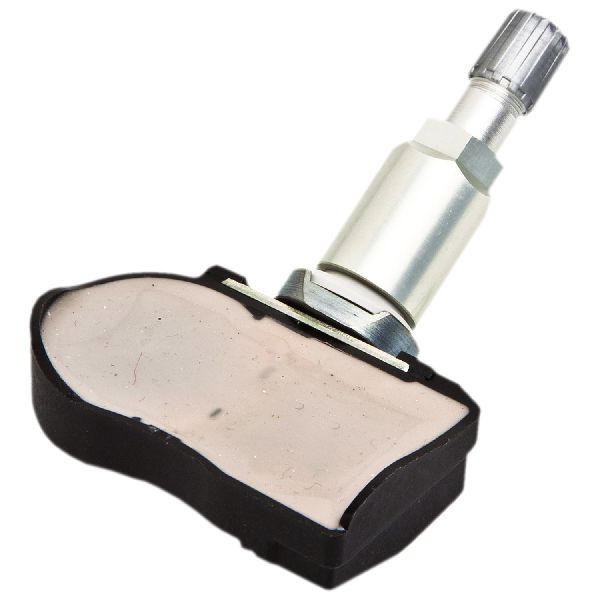
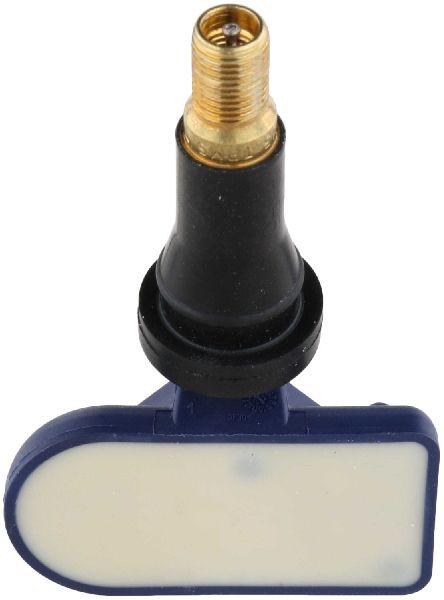
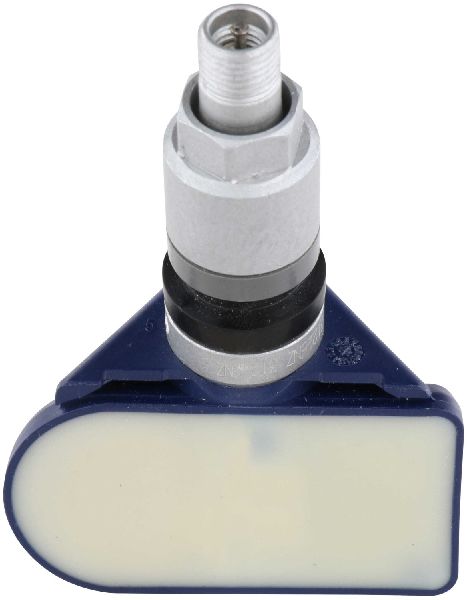
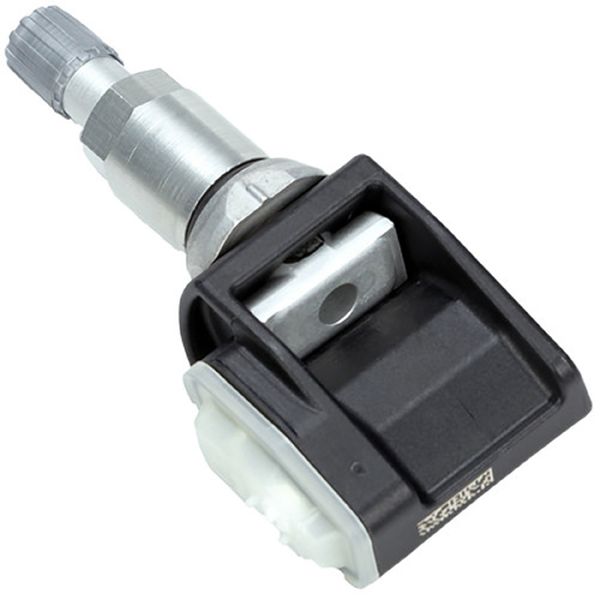
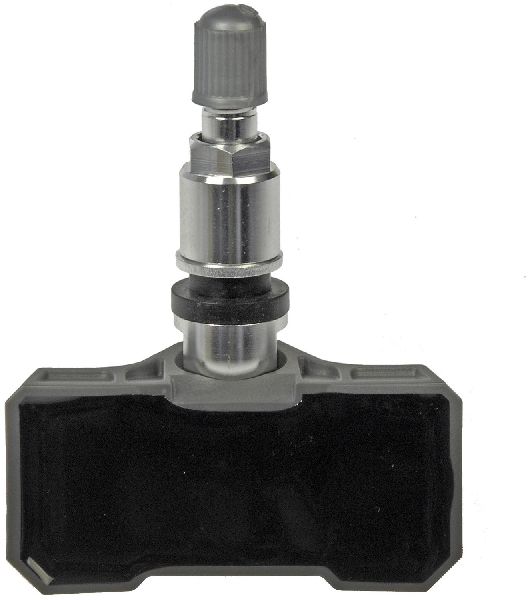
- Tire Pressure Monitoring System (TPMS) Sensor
(OEM #40700-3AN1D)— This is the transmitter inside the wheel that fails. The internal battery is not serviceable, so the entire unit must be replaced. This part number may be superseded by 40700-3AN1B, 40700-3AN1A, or 40770-3AN1D. Other compatible OEM numbers for this era include 40700-JA01B and 40700-JK01C.
Trusted brands: Schrader (OEM Manufacturer), Continental/VDO, Denso, Standard Motor Products (SMP), Autel
OEM price range: $60-$110
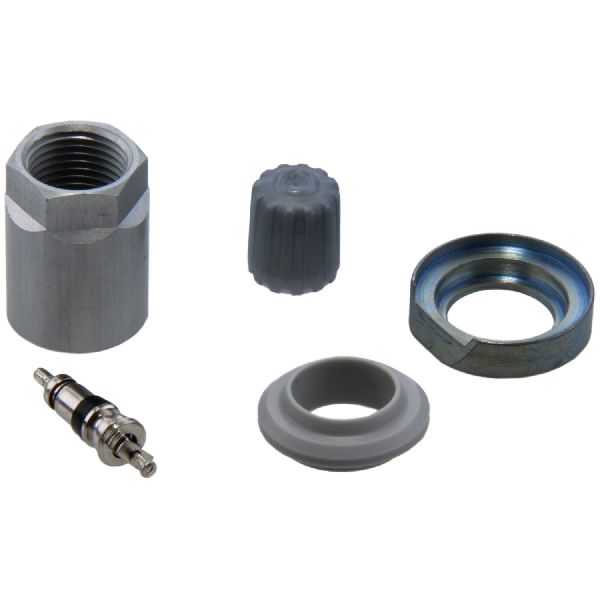
Aftermarket price range: $30-$60 - TPMS Sensor Service Kit — This is a set of seals, a new valve core, and a retaining nut that should be replaced whenever a sensor is serviced to prevent leaks. It is often included with a new sensor but can be purchased separately if only servicing the valve. TSB NTB13-088a notes that a leak can be caused by a bad seal, which should be replaced instead of the whole sensor if the sensor is still transmitting.
Trusted brands: Schrader, Dorman, Continental
OEM price range: $5-$15
Aftermarket price range: $3-$8
Related Codes That Often Appear With This One
- C1708 — This is the code for the Front-Left TPMS sensor. Seeing multiple codes (C1708, C1709, C1710, C1711) together often indicates that all sensor batteries are failing around the same time due to age.
- C1710 — This is the code for the Rear-Right TPMS sensor. Seeing it with C1711 could suggest a common issue like RF interference affecting the rear of the vehicle, or multiple sensors failing from age.
Technical Service Bulletins (TSBs) & Recalls
- NTB13-088A: Provides general diagnostic information for Nissan's TPMS system, including 'No Data' conditions (C1708-C1711) caused by radio frequency interference and sensor seal leaks.
- NTB10-111: Specific to the Nissan Versa, but relevant to the platform, this TSB identifies the HVAC blower motor as a potential source of RF interference causing TPMS codes C1708-C1711.
- NTB14-105: While for a 2014 Frontier, this TSB addresses intermittent C1710/C1711 codes and instructs technicians to replace all four sensors if no other cause is found, indicating a known issue with sensor reliability.
Platform-Specific Known Issues
- Nissan TSB NTB13-088A was issued to help technicians diagnose TPMS issues, specifically noting that radio frequency interference from devices like cell phone chargers can cause 'No Data' codes like C1711.
- A DIY relearn procedure exists for many B16 (2007-2012) models that involves grounding a specific pin on a connector under the dash multiple times to enter learning mode, avoiding the need for a scan tool. This is documented in multiple owner forums and videos.
- Owners on forums like NICOclub and Reddit frequently confirm that a flashing TPMS light on their 10+ year old Sentra was resolved by replacing a single dead sensor, though many advise replacing all four to avoid repeat repairs.
Mechanic-Grade Diagnostic Values
- Tire pressures for B16 (2007-2012) manual relearn procedure — expected: Front-Left: 34 PSI, Front-Right: 31 PSI, Rear-Right: 29 PSI, Rear-Left: 26 PSI.. Failure: The manual relearn procedure may not initiate or complete if these specific, staggered pressures are not set before starting.
Scan Tool Commands That Help
- Nissan CONSULT-II / CONSULT-III: BCM -> AIR PRESSURE MONITOR -> WORK SUPPORT -> ID REGIST — This is the dealer/specialist procedure used to register the unique ID of a new TPMS sensor to the Body Control Module after replacement.
Wiring & Ground Locations
- Body Control Module (BCM) - B17 — For 2013-2014 models, the BCM is located behind the glove box area, often mounted to the right of the steering column.. The BCM acts as the receiver for the TPMS signals. A loose connection or corrosion at the BCM could prevent it from receiving the signal from the C1711 sensor.
- Body Control Module (BCM) - B16 — For 2007-2012 models, the BCM is to the right of the steering column, typically accessed by removing the glove box and lower dash panels.. This is the location of the TPMS receiver. Verifying its connections is a key step if a new sensor fails to register.
- TPMS Interface Plug - B16 — A single-wire white female connector, often taped to the OBD-II port wiring harness under the driver's side dash.. This connector is intentionally used for the manual TPMS relearn procedure on 2007-2012 models. Grounding this wire's pin multiple times initiates the learning mode without a scan tool.
- Main Internal Ground Point - B16 — Located behind the glove box, where a bundle of 8+ ground wires attaches to the chassis via a single bolt.. The BCM and other interior electronics rely on this ground. A loose or corroded connection here can cause a wide range of intermittent electrical issues, including poor TPMS reception.
Real Owner Repair Stories
- My Nissan Leaf Forum user 'Turbo3' (2011 Nissan Leaf (3 years old)) — TPMS warning light came on. Initial codes were C1710 (RR) and C1711 (RL). The fault cleared itself, then returned later with codes C1708 (FL) and C1711 (RL).
❌ Tried (didn't work) Waiting for the fault to be non-intermittent so the dealer could diagnose it under warranty.
✅ What actually fixed it The user suspected failing TPMS sensor batteries due to the intermittent and migrating nature of the codes, even though the vehicle was only 3 years old. The final fix was not posted, but the diagnostic path strongly points to age-related sensor failure.
OEM Part Supersession History
40700-3AN1D→40770-3AN1D— Part number update/replacement.
Heads up: 40770-3AN1D is listed as a replacement for 40700-3AN1D for Sentra models with intelligent key.
Model Year Variations Within This Range
- 2007-2012 (B16 Generation): A manual, tool-free TPMS relearn procedure is possible. It involves locating a white, single-wire connector taped to the OBD-II harness, setting specific differential tire pressures, turning the key to ON, and tapping the connector's wire to a chassis ground 6-10 times to initiate learning mode.
- 2013-2014 (B17 Generation): A scan tool (like the Nissan CONSULT or a capable aftermarket tool like Autel) is required to perform the TPMS relearn procedure. The manual grounding-wire method is not available, and owners report the specific TPMS interface plug is not present on these models.
Helpful Videos
We Have This Part in Stock

The information in this article is provided for general reference and educational purposes only. Vehicle specifications, procedures, and part compatibility can vary by production date, trim level, and region. Always consult your vehicle's factory service manual and verify part numbers before purchasing or performing repairs. Safety-critical components such as airbags, seat belts, and braking systems should be installed by a qualified professional.
- Nissan SENTRA:
- 🎬 Helpful Videos
- 🛍️ Shop This Part
- What's Unique About the 2007-2014 Nissan SENTRA
- Diagnostic Flowchart
- Symptoms You May Notice
- Most Likely Causes
- Rare But Worth Checking
- Diagnosis Steps
- Parts You'll Likely Need
- Related Codes That Often Appear With This One
- Technical Service Bulletins (TSBs) & Recalls
- Platform-Specific Known Issues
- Mechanic-Grade Diagnostic Values
- Scan Tool Commands That Help
- Wiring & Ground Locations
- Real Owner Repair Stories
- OEM Part Supersession History
- Model Year Variations Within This Range
- 🎟️ Get 5% Off