

C1711 on 2005-2012 Nissan Frontier: TPMS 'No Data' Causes and Fixes
Code C1711 on a 2005-2012 Nissan Frontier means the Tire Pressure Monitoring System (TPMS) is not receiving data from the rear left wheel sensor. This is most often caused by a dead sensor battery, as they typically last 7-10 years. The fix is to replace the sensor and perform a relearn procedure, which can often be done manually without special tools.
- C1711 on a 2005-2012 Frontier means the rear left TPMS sensor is not communicating with the truck.
- The most likely cause is a dead battery in the original sensor, which has a 7-10 year lifespan.
- Before replacing parts, unplug all aftermarket devices (phone chargers, etc.) to rule out radio frequency interference, a known issue mentioned in Nissan TSBs.
- Replacing the sensor requires a tire shop to dismount the tire. It's best practice to replace all four sensors at once if they are original.
- After replacement, a 'relearn' procedure is mandatory to sync the new sensor(s) to the truck's computer.
What's Unique About the 2005-2012 Nissan FRONTIER
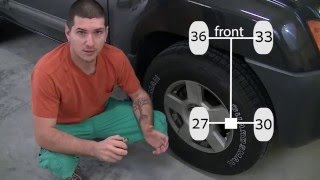
The second-generation Nissan Frontier (D40) uses a direct TPMS system that is generally reliable but has a well-documented manual relearn procedure that can be performed without special tools. 🎬 Watch: Two ways to manually reset your TPMS system. This involves grounding a specific single-wire white connector near the OBD-II port multiple times to put the system into learning mode. This allows a DIY-savvy owner to register new sensors after replacement. Additionally, Nissan has issued Technical Service Bulletins (TSBs), such as NTB13-088A, acknowledging that these codes can be triggered by radio frequency (RF) interference from aftermarket electronics like phone chargers, a factor that should be ruled out before replacing parts.
Diagnostic Flowchart
Tap your situation to follow the diagnostic path that matches what you're seeing on this vehicle.
Generation note: The 2005-2012 year range falls entirely within the second generation (D40) of the Nissan Frontier, so the information regarding this code is consistent across these model years. However, TPMS was not standard on all trims from 2005-2007, becoming standard equipment in 2008. This issue and its fixes also apply to its platform mates, the 2005-2015 Nissan Xterra and the 2009-2012 Suzuki Equator.
Symptoms You May Notice
- Flashing TPMS warning light on the dashboard (flashes for about a minute on startup, then stays solid).
- Solid TPMS warning light.
- Inability to read the rear left tire pressure on a scan tool or through the vehicle's information display (if equipped).
- Message on the instrument cluster display, such as "Check tire pressure."
- Replacing the BCM or TPMS receiver before confirming the sensor has failed.
- Assuming the TPMS light is on only for low pressure, without checking for a flashing light on startup, which indicates a system fault.
- Replacing a sensor without performing the required relearn procedure, causing the light to remain on.
- Not replacing the TPMS service kit (grommet, nut, valve core) when replacing a tire, leading to a slow leak which can be confused with a sensor fault.
Most Likely Causes
- Dead TPMS Sensor Battery 🔴 High Probability TPMS sensors use internal, non-replaceable batteries with a finite lifespan of 5-10 years. The 2005-2012 vehicle range is now at an age where original sensor batteries are expected to fail. Forum users and repair guides strongly recommend replacing all four sensors at once if one fails due to age, to avoid repeated labor costs.
How to confirm: Use a TPMS diagnostic tool to attempt to 'wake up' or read the sensor. If the sensor does not respond, its battery is almost certainly dead. A blinking TPMS light is the primary indicator of a system fault, often a dead sensor battery.
Typical fix: Replace the TPMS sensor in the rear left wheel. It is highly recommended to replace all four sensors at once, as the others are likely to fail soon.
Est. part cost: $40-$150 per sensor - Radio Frequency (RF) Interference 🟡 Medium Probability As noted in Nissan TSB NTB13-088A, aftermarket devices like phone chargers, dash cams, or power inverters can transmit on a frequency that interferes with the 315 MHz TPMS signal. TSB NTB14-103 also points to issues with specific non-navigation audio units on some 2013-2014 models causing intermittent C1710/C1711 codes, highlighting the system's sensitivity.
How to confirm: Unplug all aftermarket electronic devices from the vehicle's power ports. Clear the code and drive the vehicle to see if the code returns. If it doesn't, one of the devices was the cause.
Typical fix: Remove or replace the interfering electronic device.
Est. part cost: $0 - Failed TPMS Sensor (Physical Damage) ⚪ Low Probability Sensors can be fragile and are sometimes damaged during tire mounting or dismounting. A Reddit user reported multiple TPMS codes appearing immediately after having a tire repaired at a tire shop.
How to confirm: The code appears immediately after a tire service. A visual inspection during tire dismounting may reveal a broken sensor stem or housing. A TPMS tool will be unable to get a signal from the sensor.
Typical fix: Replace the faulty TPMS sensor.
Est. part cost: $40-$150
Rare But Worth Checking
- Faulty Body Control Module (BCM) or TPMS Receiver: This is very rare. Before suspecting the BCM, all sensors and potential RF interference sources must be ruled out. This would typically be accompanied by other TPMS codes (C1708, C1709, C1710) if the entire receiver failed, not just a single wheel code. A faulty ground at location M57 behind the dash could also cause BCM issues.
Diagnosis Steps
- Note the behavior of the TPMS light on startup. A light that flashes for ~60 seconds before staying solid indicates a system fault like C1711.
- Use an OBD-II scanner capable of reading chassis codes to confirm C1711 is present.
- Unplug all aftermarket accessories (phone chargers, dash cams, etc.) from the power outlets to eliminate RF interference per TSB NTB13-088A.
- Clear the DTCs and drive the vehicle for several minutes at speeds above 15 MPH to see if the code returns.
- If the code returns, use a dedicated TPMS tool to try and read the data from the rear left sensor. If the tool cannot get a reading, the sensor has failed (likely a dead battery).
- If the sensor is confirmed bad, have it replaced. This requires dismounting the tire. It is best practice to also replace the TPMS service kit (grommet, nut, valve core) at this time.
- Perform the TPMS relearn procedure to register the new sensor(s) with the vehicle's BCM. This can be done with a TPMS tool via the OBD-II port or by using the manual relearn procedure.
- Manual Relearn Procedure: Locate the single-pin white TPMS diagnostic connector near the OBD-II port. Turn the ignition to ON (engine off). Using a paperclip or wire, ground the pin to a nearby metal bracket (like the OBD-II port bracket) 6 times within 10 seconds. The TPMS light on the dash will begin to flash slowly, indicating it's in learn mode. Drive the vehicle for 10-15 minutes. The light will turn off when the new sensor is learned.
- Confirm the fix by checking that the TPMS light is off and that a TPMS tool can now read the pressure from the new sensor.
Parts You'll Likely Need
- TPMS Sensor
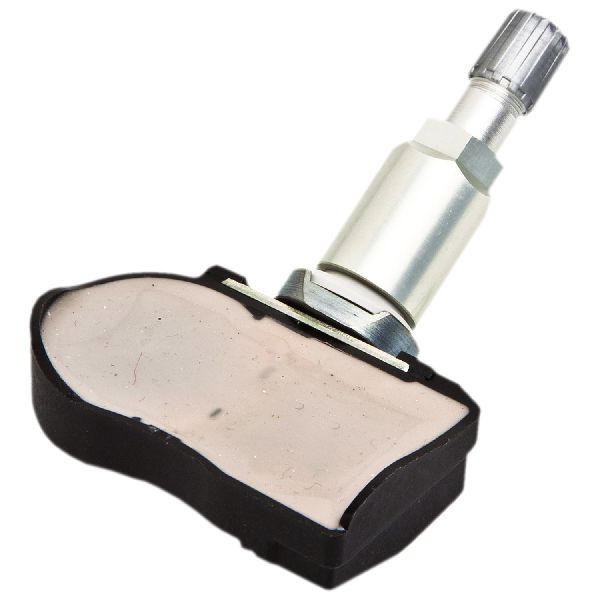
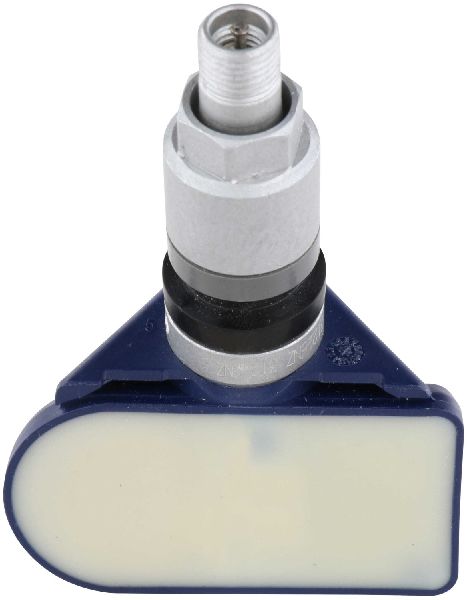
(OEM #40700-JA01B, 40700-JA01C, 40700-CK001)— This is the sensor and transmitter inside the wheel that fails, usually due to a dead battery after 5-10 years. The entire unit must be replaced. The original part 40700-JA01B is often superseded by 40700-JA01C or 40700-CK001.
Trusted brands: Schrader (OEM supplier), VDO, Dill, Hitachi, Duralast, Autel
OEM price range: $80-$150
Aftermarket price range: $40-$80 - TPMS Sensor Service Kit
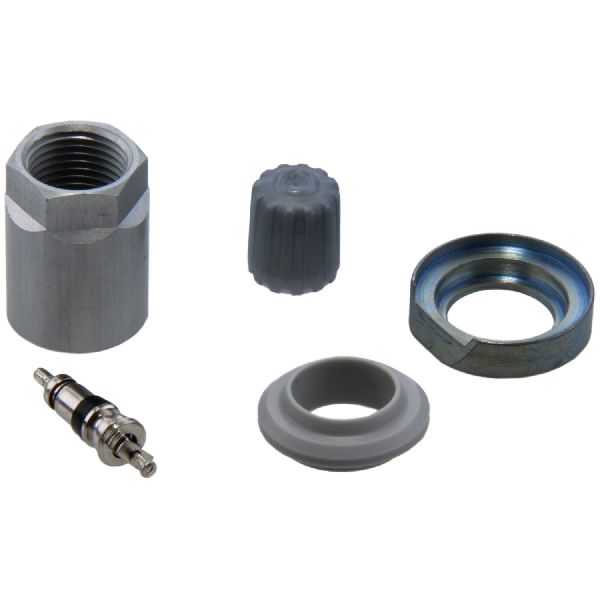
(OEM #40702-CD001)— This kit contains the rubber grommet, retaining nut, valve core, and cap. It is critical to replace these parts when a sensor is serviced or a tire is replaced to ensure an airtight seal and prevent leaks.
Trusted brands: Nissan (OEM), Dill, Schrader
OEM price range: $10-$15
Aftermarket price range: $3-$8
Related Codes That Often Appear With This One
- C1708 — Relates to the Front-Left TPMS sensor. If multiple codes are present, it could point to a systemic issue like RF interference or multiple aging sensors failing around the same time.
- C1709 — Relates to the Front-Right TPMS sensor. Seeing multiple codes suggests a common cause like age or interference.
- C1710 — Relates to the Rear-Right TPMS sensor. If seen with C1711, it's very likely both rear sensors are failing due to age, or there is an issue like RF interference as described in TSB NTB14-103.
Technical Service Bulletins (TSBs) & Recalls
- NTB13-088A: Low Tire Pressure Warning System Bulletins Summary - This TSB provides general diagnostic information for TPMS issues, specifically mentioning radio frequency interference as a cause for 'No Data' codes like C1711.
- NTB14-103: 2013 - 2014 Frontier; TPMS Light Flashing and DTC C1710 and/or C1711 Stored - Details an issue on specific models where rear TPMS codes are set intermittently due to interference from the audio unit and recommends replacing all four sensors.
Platform-Specific Known Issues
- Manual Relearn Procedure: The manual relearn procedure for the 2005-2012 Frontier is a notable feature, allowing DIY-savvy owners to register new sensors without a proprietary scan tool. It involves grounding a specific white, single-wire connector pin near the OBD-II port 6 times in 10 seconds with the key on, which puts the system in learn mode. Note that for the driving portion of the relearn, some procedures require setting each tire to a unique pressure to help the system identify wheel positions.
- RF Interference Sensitivity: Nissan TSB NTB14-103 addresses intermittent flashing TPMS lights with codes C1710 and/or C1711 on 2013-2014 models with specific audio units, recommending the replacement of all four sensors with an updated part. While outside the primary year range, it highlights a known sensitivity of the TPMS receiver to radio frequency interference that should be considered during diagnosis.
Mechanic-Grade Diagnostic Values
- TPMS Operating Frequency — expected: 315 MHz. Failure: N/A. This is a system specification, not a diagnostic value. Aftermarket sensors must match this frequency.
- Main Body Ground Voltage Drop — expected: Less than 0.20 Volts. Failure: A reading greater than 0.50 Volts indicates a poor ground connection that can cause various electrical issues.
Scan Tool Commands That Help
- Nissan CONSULT-III Plus: ID REGIST (Work Support) — This is the dealer-level function to register new TPMS sensor IDs to the BCM after a sensor replacement. The tool is put into 'execution mode', and each sensor is triggered to program it to the vehicle.
- Nissan CONSULT-III Plus: After Replace ECU — This function is required only when the entire Body Control Module (BCM) is replaced. It writes the correct vehicle configuration to the new module. Failure to perform this can lead to system malfunctions.
Wiring & Ground Locations
- Body Control Module (BCM) — Located at the left front of the center console, behind the dash.. The BCM is the computer that receives signals from the TPMS sensors and triggers fault codes like C1711. Its location is necessary for advanced diagnostics or replacement.
- TPMS Diagnostic Connector — A single-wire white connector located under the driver's side dash, near the OBD-II port.. This connector is intentionally used for the manual relearn procedure. Grounding this wire's pin 6 times puts the BCM into learning mode without a scan tool.
- Ground Point M57 — Located behind the left side of the dash.. This is a primary ground point for multiple components controlled by the BCM. A loose or corroded connection here could cause intermittent communication issues with the TPMS receiver, potentially leading to a C1711 code.
- Main Body Ground — On the passenger-side inner fender panel, where a strap from the negative battery cable connects to the body.. While a fault here would likely cause multiple, widespread electrical issues, a poor main ground can create unpredictable behavior in any electronic module, including the BCM.
Real Owner Repair Stories
- CarKiller.com forum user (2006 Nissan Frontier SE Crew Cab 2WD) — TPMS light would not turn off after 5-6 miles of driving.
❌ Tried (didn't work) Replacing all four factory TPMS sensors., Performing the manual relearn procedure (driving with different pressures)., Using a consumer-grade TPMS reset tool., Having a tire shop (Costco) use their professional tool to perform a reset., Disconnecting the battery to reset the ECU.
✅ What actually fixed it The original poster gave up and put tape over the light. However, another user in the thread provided a critical insight from a similar issue on their GM truck: a high-level scan tool revealed the BCM was flagging a fault due to a very small pressure difference (+/- 0.5 PSI) between tires that other tools couldn't see, indicating extreme BCM sensitivity or a persistent logic fault. This suggests the next step would be diagnosis with a dealer-level tool like Nissan CONSULT to view the BCM's live data.
"I Checked Everything" — The Actual Cause
- A direct parallel exists for TPMS, as documented in Nissan TSB NTB14-103 for 2013-2014 models. The procedure states that if a technician confirms intermittent C1710/C1711 codes, but the sensor itself tests as 'good' with the Signal Tech II diagnostic tool, the official fix is to replace all four TPMS sensors with an updated part number. This acknowledges a failure mode where the sensor works enough to pass a bench test but fails intermittently on the road, likely due to RF interference from the vehicle's own electronics.
OEM Part Supersession History
40700-JA01B, 40700-CK001→40700-JA01C, and other compatible numbers— Part updates for reliability and compatibility across multiple Nissan and Infiniti platforms.
Heads up: The key compatibility factor is the 315 MHz frequency. While many part numbers are interchangeable, using a sensor with the wrong frequency (e.g., 433 MHz used in other markets) will not work. The OEM supplier is typically Schrader.
Model Year Variations Within This Range
- 2005-2007: TPMS was not standard equipment on all trim levels during these years; it became standard on all models in 2008 to comply with the TREAD Act. Owners of 2005-2007 trucks can verify if their vehicle has TPMS by turning the ignition to 'ON' and checking if the TPMS warning symbol illuminates on the dash for a few seconds.
Helpful Videos

We Have This Part in Stock


The information in this article is provided for general reference and educational purposes only. Vehicle specifications, procedures, and part compatibility can vary by production date, trim level, and region. Always consult your vehicle's factory service manual and verify part numbers before purchasing or performing repairs. Safety-critical components such as airbags, seat belts, and braking systems should be installed by a qualified professional.
- Nissan FRONTIER:
- 🎬 Helpful Videos
- 🛍️ Shop This Part
- What's Unique About the 2005-2012 Nissan FRONTIER
- Diagnostic Flowchart
- Symptoms You May Notice
- Most Likely Causes
- Rare But Worth Checking
- Diagnosis Steps
- Parts You'll Likely Need
- Related Codes That Often Appear With This One
- Technical Service Bulletins (TSBs) & Recalls
- Platform-Specific Known Issues
- Mechanic-Grade Diagnostic Values
- Scan Tool Commands That Help
- Wiring & Ground Locations
- Real Owner Repair Stories
- "I Checked Everything" — The Actual Cause
- OEM Part Supersession History
- Model Year Variations Within This Range
- 🎟️ Get 5% Off