

OBD-II Code C1711: Manufacturer-Specific Fault Guide
What C1711 means, why it triggers, and how to fix it on your Toyota, Nissan, Subaru, Kia, or Cadillac
- Identify your vehicle's make first, as C1711 means a dead rear-left TPMS sensor on Nissans, a faulty steering angle sensor on Subarus, or a broken front-right height sensor on Toyotas.
- Unplug all 12V accessories like phone chargers and dash cams before replacing a Nissan TPMS sensor, as RF interference causes over 30% of false C1711 codes.
- Recalibrate the steering angle sensor using a bi-directional scan tool after any Subaru wheel alignment to clear a persistent C1711 code.
- Test the Toyota/Lexus front-right height sensor signal wire with a multimeter to confirm the voltage is stuck outside the normal 0.3V to 4.7V range before spending $400 on a replacement.
What Does C1711 Mean?

C1711 is a manufacturer-specific chassis code with entirely different definitions based on your vehicle's make. For Nissan/Infiniti, it indicates a communication failure with the rear-left tire pressure (TPMS) sensor. For Toyota/Lexus, it points to a front-right air suspension height sensor fault. For Subaru, it signals a steering angle sensor malfunction. For Kia, it relates to a left-front wheel speed sensor circuit.
Technical definition: The SAE/ISO definition for C1711 varies by manufacturer. Common definitions include: Nissan/Infiniti: 'No Data From Transmitter Rear Left' (TPMS). Toyota/Lexus: 'Front Height Control Sensor RH Circuit Malfunction'. Subaru: 'Steering Angle Sensor Malfunction'. Kia: 'Left Front Sensor Circuit Short to Vbat'. Cadillac: 'Left Front Damper Actuator Short Circuit to Ground'.
Can I Drive With C1711?
Yes, But With Caution. Yes, but drive with extreme caution. Because C1711 is manufacturer-specific, the risk varies. On a Subaru or Kia, it disables Vehicle Dynamics Control (VDC/ESC) and ABS, dramatically increasing the risk of a skid or spin during emergency maneuvers. On a Nissan, the TPMS system cannot warn you of a sudden tire deflation, risking a blowout. On a Toyota/Lexus, driving with a failed height sensor causes poor handling and burns out the expensive air suspension compressor.
Common Causes

- Dead TPMS Sensor Battery (Nissan/Infiniti) (Very Common) — On Nissan and Infiniti vehicles, the internal battery of the rear-left TPMS sensor dies after 5 to 10 years. This is the most frequent cause of C1711 on these makes and requires replacing the entire sensor.
- Radio Frequency (RF) Interference (Nissan/Infiniti) (Very Common) — Aftermarket 12V accessories like cheap phone chargers, dash cams, and power inverters emit RF interference that blocks the 315 MHz signal from the TPMS sensor. Nissan confirmed this in TSB NTB13-088a.
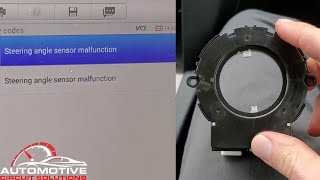
- Steering Angle Sensor Malfunction (Subaru) (Common) — On Subarus, the steering angle sensor fails internally or loses its zero-point calibration after a battery replacement, wheel alignment, or steering component repair. 🎬 Watch: How to replace a faulty Subaru steering angle sensor.
- Failed Ride Height Sensor (Toyota/Lexus) (Common) — For vehicles with air suspension, the front-right height sensor fails due to internal wear of its carbon track, corrosion from road salt, or a physically broken linkage arm. 🎬 See how to diagnose and fix a Lexus height sensor error.
- Damaged Wiring or Connectors (Less Common) — Across all makes, the wiring harness leading to the respective sensor (height, TPMS receiver, steering angle, or wheel speed) corrodes, frays, or breaks from road debris, causing an open or short circuit.
- Improper Clock Spring Installation (Subaru) (Less Common) — If work was recently done on the steering wheel, the clock spring and steering angle sensor were likely installed without being properly centered, causing an out-of-range value.
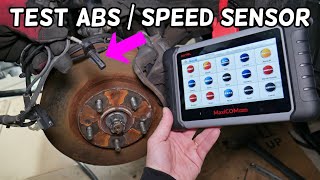
- Broken Wheel Speed Sensor (Kia) (Less Common) — The left-front wheel speed sensor fails internally or its exposed wiring shorts to battery voltage due to corrosion or impact damage. 🎬 Watch: A quick guide to testing Kia wheel speed sensors.
- HVAC Blower Motor Interference (Nissan) (Rare) — On 2007-2011 Nissan Versa models, TSB NTB10-111 notes that a failing HVAC blower motor creates enough RF interference on high speed to block TPMS signals.
- Faulty Control Module (Rare) — The control module receiving the sensor's signal (Suspension ECU, Body Control Module, or VDC Module) fails internally. This is diagnosed only after ruling out the sensor and wiring.
Symptoms

- Flashing then Solid TPMS Light (Nissan/Infiniti) — The TPMS warning light flashes for about one minute after starting the car and then stays on continuously, indicating a system fault rather than low tire pressure.
- Disabled Safety Systems & Warning Lights (Subaru, Kia) — The dashboard illuminates with ABS, VDC/ESC, and Traction Control warning lights. Advanced driver-assistance systems like Subaru's EyeSight are completely disabled.
- Suspension Warning Light & Uneven Ride Height (Toyota/Lexus) — A suspension warning appears, and the vehicle sits visibly lower on one corner ('Lexus Lean'), rides harshly, or fails to adjust its height.
- Steering Feels Heavy or Unresponsive (Subaru) — The failure of the steering angle sensor disrupts the electric power steering system, making the steering feel unusually heavy or inconsistent.
- Incorrect Live Sensor Data (scan-tool only — no driver-felt sign) — Using an advanced scan tool, the affected sensor's data is missing, erratic, or stuck. For example, a Subaru steering angle reads -3500 degrees, or a Toyota height sensor voltage is stuck at 0V.
Diagnostic Flowchart
Tap your situation to follow the diagnostic path that matches what you're seeing on this code.
Common Fixes & Costs
- Remove Source of RF Interference (Nissan/Infiniti) — Parts: $0, Labor: $0, ~0.1 hr book time (DIY)
- Replace Rear-Left TPMS Sensor (Nissan/Infiniti)
— Parts: $40-$100, Labor: $50-$100, ~0.5 hr book time
(Professional)
: OEM
: OEM - Replace Steering Angle Sensor (Subaru)
— Parts: $150-$400, Labor: $150-$300, ~1.5 hr book time
(Professional)
: OEM
: OEM - Replace Front Ride Height Sensor (Toyota/Lexus)
— Parts: $150-$500, Labor: $100-$250, ~1.0 hr book time
(Intermediate)
: OEM
: OEM - Replace Left Front Wheel Speed Sensor (Kia)
— Parts: $50-$150, Labor: $80-$150, ~0.8 hr book time
(DIY)
: OEM
: OEM
Used vs. New Parts: Buying Guide
When a used part is worth it: For mechanical components like a Toyota/Lexus height sensor linkage, a used part from a dry climate is cost-effective. For electronic sensors, buying used is highly discouraged.
Donor-vehicle mileage cap: roughly under 60000 miles for the part to have meaningful remaining life.
Donor quality checklist:
- Verify the donor vehicle wasn't scrapped for a related system failure.
- Match part numbers exactly, as slight variations lead to incompatibility.
Decision logic:
- If The part is a TPMS sensor. → Always buy new. The internal battery is a wear item, and a used part will fail prematurely.
- If The part is a steering angle sensor or electronic module. → Strongly favor new OEM or high-quality aftermarket. Used sensors carry a high risk of being faulty.
- If The part is a simple mechanical component like a sensor bracket. → A used part is acceptable if free from corrosion and damage.
Warranty tradeoff: Used parts offer a 30-90 day warranty. New aftermarket parts offer 1-year to lifetime warranties. New OEM parts offer a 1-year/12,000-mile warranty.
Worst-case if a used part fails: $200 - $600. If a used electronic sensor fails, you pay for the part again plus the full cost of labor for a second installation.
What Happens If You Wait — Timeline
- Immediate: Safety lights illuminate and systems are disabled (Subaru/Kia). TPMS light stays on (Nissan). Suspension warning appears (Toyota/Lexus). (MPG impact: 0%% · Added cost: $0)
- 1-3 months (Toyota/Lexus): A failed height sensor causes the air suspension compressor to run excessively, leading to premature wear and overheating. (MPG impact: 0-2%% · Added cost: $50 in electricity/fuel to run compressor, plus accelerated wear.)
- 3-9 months (Toyota/Lexus): The overworked air suspension compressor burns out. The vehicle sags to its bump stops, resulting in a harsh ride. (MPG impact: N/A (vehicle is borderline undrivable)% · Added cost: $500 - $1,500 to replace the burned-out compressor.)
- Ongoing (All Makes): A critical safety system remains disabled. The driver enters an emergency maneuver and the lack of ESC/ABS causes a skid, or an undetected low tire causes a blowout. (MPG impact: N/A% · Added cost: $2,000+ for damage from a blowout or loss-of-control accident.)
Cost of Not Fixing It
- Immediate: Disabled safety systems (ABS, VDC/ESC) dramatically increase the risk of a loss-of-control accident during emergency maneuvers. (Added cost: N/A)
- 0-6 months: On Toyota/Lexus, a failed height sensor causes the air suspension compressor to run excessively, leading to premature burnout. (Added cost: $500 - $1,500 (for a new suspension compressor))
- Ongoing: On Nissan/Infiniti, the inability to detect a deflating tire leads to a sudden blowout, causing severe wheel and body damage. (Added cost: $2,000+)
Diagnosis Steps

- Identify Your Vehicle's System
Confirm your vehicle's make to determine the exact fault. Nissan/Infiniti = Rear-Left TPMS sensor. Toyota/Lexus = Front-Right Height Sensor. Subaru = Steering Angle Sensor. Kia = Left-Front Wheel Speed Sensor.
Tools: Owner's Manual (Beginner) - Check for RF Interference (Nissan/Infiniti)
Unplug ALL aftermarket 12V accessories (phone chargers, dash cams). Clear the code and drive for 15 minutes above 16 mph. If the TPMS light turns off, the accessory was causing RF interference.
Tools: None (Beginner) - Read Live Sensor Data
Use a bi-directional scan tool to read live data. For Nissan, check the rear-left TPMS battery status. For Toyota, monitor the front-right height sensor voltage. For Subaru, view the steering angle output in degrees. For Kia, monitor left-front wheel speed.
Tools: Bi-directional OBD-II Scanner, TPMS Tool (Intermediate) - Visually Inspect the Sensor and Wiring
For Toyota/Lexus, inspect the front-right control arm for a broken height sensor linkage. For Kia, check the left-front wheel well for damaged ABS wiring. Look for severe corrosion, frayed wires, or disconnected plugs.
Tools: Flashlight, Jack and Jack Stands (Intermediate) - Test the Height Sensor Circuit (Toyota/Lexus)
Backprobe the height sensor connector with a multimeter. The ECU supplies a 5V reference. The signal wire voltage must change smoothly between 0.3V and 4.7V as you move the suspension arm. A stuck voltage indicates a bad sensor.
Tools: Multimeter, Backprobe Pins, Jack (Advanced) - Check for a 'Stuck' Steering Angle Sensor (Subaru)
View live steering angle data. Center the wheel (should read ~0 degrees). Turn lock-to-lock. The reading must change smoothly. If the value is stuck at an extreme number (e.g., -3500 degrees), the sensor has failed internally.
Tools: Bi-directional OBD-II Scanner (Advanced) - Attempt Steering Angle Sensor Calibration (Subaru)
If the sensor provides a plausible but incorrect signal (e.g., reads 20 degrees when straight), use a bi-directional scan tool to perform a zero-point calibration. This is mandatory after an alignment. If calibration fails, replace the sensor.
Tools: Bi-directional OBD-II Scanner (Advanced) - Test the Wheel Speed Sensor Circuit (Kia)
C1711 indicates a 'short to Vbat'. With the ignition on, disconnect the sensor and check the signal wire voltage at the harness connector. If you read ~12V, the wiring harness is shorted. If 0V, the sensor itself failed.
Tools: Multimeter (Advanced) - Check Nissan TPMS Transmission Frequency
Use a TPMS tool to activate the sensor and confirm its frequency (315 MHz or 433 MHz). C1711 triggers if a replacement sensor with the wrong frequency was previously installed.
Tools: TPMS Activation/Scan Tool (Advanced)
When This Code Triggers (Freeze-Frame Conditions)
- Vehicle Speed: Above 15 mph (Nissan's TPMS system requires speeds above 15-20 mph to wake up the sensors and receive signals.)
- Steering Angle: Varies (during a turn) (For Subaru, C1711 sets when the VDC module detects an irrational signal from the steering angle sensor during a turning maneuver.)
- System Voltage: 11.5V - 14.5V (A low battery condition (below 11V) triggers erratic behavior in control modules, leading to false C1711 codes, particularly in Subarus.)
- Time Since Ignition On: 1-5 minutes (Nissan TPMS and Subaru VDC perform self-checks upon startup. The warning light flashes for the first minute and sets the code if a fault is detected.)
Related Codes
- C1710, C1712, C1709 — Identical to C1711 but for different corners of the vehicle. For Nissan, C1710 is the Rear-Right TPMS sensor. Seeing multiple codes suggests widespread RF interference or multiple aging sensors failing simultaneously.
- C0071 (Subaru) — A generic SAE code for 'Steering Angle Sensor Malfunction.' C1711 is Subaru's manufacturer-specific equivalent. Both point to the exact same problem and share the same diagnostic procedure.
- U1000 (Nissan) — A generic CAN communication error. If it appears alongside C1711, the Body Control Module (BCM) is experiencing broader network issues, requiring checks of the BCM's power and ground connections.
- C1B00 (Ford) — A common Ford-specific code for a steering angle sensor failure. A cheap generic scan tool often incorrectly displays this as C1711.
Climate & Environmental Factors
- Road Salt / Corrosion: For Toyota/Lexus and Kia, road salt accelerates the corrosion of the height sensor's linkage arm and the wheel speed sensor's wiring. This causes parts to seize, break, or short circuit.
- Cold Weather: Cold temperatures reduce the voltage output of aging lithium-ion batteries inside TPMS sensors. A weak sensor works fine in summer but triggers a C1711 fault on the first cold morning.
- High Temperatures: Sustained high heat accelerates chemical degradation within TPMS batteries, shortening their overall lifespan from the typical 5-10 years.
How to Talk to a Mechanic About This Code
Say this: "My vehicle has a C1711 code. For Nissan, I've already checked for RF interference. For Subaru, it happened after an alignment. I'd like a diagnosis focusing on the specific sensor related to this make (rear-left TPMS, steering angle, front-right height, or left-front wheel speed)."
This shows you understand the code is make-specific and directs the technician to the most likely cause, preventing a costly, wide-ranging diagnostic.
Avoid saying:
- 'My ABS light is on, can you check it?'
- 'The code is C1711, just replace the sensor.'
- 'Just fix whatever is needed to turn the light off.'
Questions to ask before authorizing the repair:
- For Subaru: Does the steering angle sensor just need to be recalibrated, or is it confirmed bad via live data?
- For Nissan: Did you test the TPMS sensor and confirm its battery is dead?
- For Toyota/Lexus: Did you test the height sensor's voltage output through its range of motion?
- Does the labor estimate include the mandatory relearn/calibration procedure?
Where to Take It: Dealer vs Independent vs Chain
- Dealer:
Best for: Vehicles under warranty, Complex electronic issues like Subaru steering angle sensor replacement, Toyota/Lexus air suspension diagnostics and calibration
Downsides: Highest labor rates, May replace parts that an independent shop might repair (e.g., a wiring fault) (Typical cost: +50% vs. baseline) - Independent Shop:
Good fit for most C1711 scenarios, provided the shop has the right diagnostic tools for calibration procedures.
Best for: Out-of-warranty vehicles, Straightforward sensor replacements like a Kia wheel speed sensor, Shops specializing in specific makes
Downsides: May lack expensive, dealer-level diagnostic tools for specific calibrations, Quality varies widely (Typical cost: +0% vs. baseline) - Chain Shop:
Recommended only for Nissan TPMS sensor replacement. AVOID for Subaru or Toyota issues.
Best for: Tire-related services, making them a good option for a Nissan TPMS sensor replacement.
Downsides: Technician skill varies greatly, Lacks advanced scan tools needed for Subaru or Toyota calibrations, High pressure to upsell services (Typical cost: -10% vs. baseline)
When to Walk Away From the Repair
If the estimated repair cost exceeds 50% of the car's private-party value, seriously consider selling or trading it in.
- Car worth $5000, fix is $2600: Walk away. The repair cost is over 50% of the car's value.
- Car worth $15000, fix is $850: Fix it. The repair is a small fraction of the vehicle's value.
- Car worth $3000, fix is $1600: Walk away. It's not economical to put this much money into a low-value car.
What Scan Tool You Need for This Code

Minimum: A scanner that reads and clears Chassis (C) codes from the ABS/SRS/VDC modules. A basic engine code reader will not see C1711.
A standard $20 OBD-II scanner only reads Powertrain ('P') codes. C1711 is a Chassis code stored in modules like the ABS or Body Control Module.
Budget: BlueDriver Pro (~$99) — Reads and clears ABS, SRS, and enhanced trouble codes. Confirms the code and views live data, sufficient for initial diagnosis on a Kia or Toyota.
Mid-range: Foxwell NT710 / Autel AL619 (~$150-260) — Offers bi-directional control. Critical for C1711 on a Subaru to perform the mandatory steering angle sensor calibration, or Nissan TPMS relearn mode.
Professional: Autel MaxiCOM MK808 / Launch X431 Series (~$500-1200) — Provides full OE-level diagnostic and bi-directional capabilities. Performs TPMS relearns, steering angle calibrations, and suspension calibrations.
Rent vs buy: For a one-time fix like a Kia wheel speed sensor, renting a scanner is sufficient. For a Nissan or Subaru, the required relearn procedures make owning a bi-directional scanner a worthwhile investment.
How to Clear the Code After You Fix It
- Use an OBD-II scan tool to clear the code from the specific module (BCM, VDC, or Suspension ECU).
- For Nissan, perform the TPMS sensor relearn procedure with a TPMS tool.
- For Subaru, perform the steering angle sensor zero-point calibration with a bi-directional scan tool.
- For Toyota/Lexus, perform a height calibration if required.
Drive cycle (~20 minutes): For Nissan TPMS: Drive continuously above 16 mph for 15 minutes. For Subaru VDC: Take a short drive involving left and right turns to confirm the calibration. For Toyota Suspension: Drive over varied surfaces to confirm height control.
Readiness monitors affected: Not applicable
Watch out for:
- Clearing the code without fixing the root cause results in the code returning immediately.
- Forgetting to perform the mandatory calibration/relearn procedure after replacing a Subaru steering angle sensor or Nissan TPMS sensor.
- Plugging an interfering device back into the 12V outlet after clearing a Nissan code causes the fault to return.
Will This Fail Emissions / State Inspection?
No — by itself this code doesn't fail OBD inspection (but it can keep readiness monitors from setting, which causes a separate fail).
- California: A C-code will not fail the OBD-II emissions check, but the illuminated warning light constitutes a safety hazard and fails the overall vehicle inspection.
- New York: An illuminated ABS, traction control, or TPMS light is grounds for an automatic safety inspection failure.
- Texas: The annual safety inspection requires ABS and traction control warning lights to be off. A C1711 code results in a failed inspection.
Most Commonly Affected Vehicles
- Nissan GT-R, 370Z, Versa, Rogue, NV, Quest, Sentra, Altima (2007-2019) — Prone to C1711 due to dead TPMS sensor batteries and high sensitivity to RF interference from 12V accessories.
- Subaru Outback, Crosstrek, Impreza, Forester, Legacy (2012-2021) — Frequently logs C1711 for steering angle sensor failure or calibration issues, instantly disabling VDC and EyeSight.
- Toyota / Lexus Land Cruiser, LX470, LS460, Tundra, LC500 (2000-Present) — On models with Active Height Control (AHC) or air suspension, C1711 points to a front-right height sensor circuit malfunction.
- Kia Sorento, Sportage, Optima (2011-2020) — C1711 indicates 'Left Front Sensor Circuit Short to Vbat,' pointing to a fault in the ABS wheel speed sensor circuit.
- Infiniti G35, G37, FX35, QX56 (2003-2013) — Shares the Nissan TPMS definition (Rear-Left Sensor). Highly susceptible to RF interference.
- Cadillac DTS, Escalade (2006-2011) — On models with Magnetic Ride Control, C1711 means 'Left Front Damper Actuator Short Circuit to Ground'.
- Ford Explorer, Fusion, Focus (2005-2018) — C1711 is not a standard Ford code. A generic scanner is misinterpreting a Ford-specific code. Re-scan with FORScan.
- Chevrolet / GMC Silverado, Sierra, Tahoe (2007-2018) — C1711 is a phantom code on GM vehicles. A professional scan tool is needed to retrieve the correct GM-specific 'C' code.
Manufacturer-Specific Notes
- Nissan / Infiniti: Notoriously sensitive to radio frequency (RF) interference. TSB NTB13-088a warns that low-quality aftermarket 12V accessories block TPMS signals, triggering false C1711 codes.
- Subaru: Replacing the steering angle sensor is not enough. The new sensor's zero point must be calibrated using a bi-directional scan tool. Failure to calibrate causes the C1711 code to persist permanently.
- Toyota / Lexus: A height sensor can fail by sending a signal that is within the acceptable voltage range (0.3V-4.7V) but incorrect for the actual vehicle height. This causes a suspension lean without setting a code.
- Ford / GM: C1711 is not a valid code for most Ford or GM vehicles. Its appearance on a generic scanner is a red herring requiring a manufacturer-specific scanner to pull the true diagnostic trouble code.
Real Owner Stories
2013 Nissan Altima at 110K miles - The 'Easy Fix'
TPMS light flashed then turned solid during highway driving. Code C1711 was present. Tire pressures were normal.
Outcome: After driving for 10 minutes, the TPMS light went out permanently. The cheap charger was causing RF interference.
Lesson: On Nissan/Infiniti vehicles, always unplug all aftermarket 12V accessories before assuming a sensor is bad. This free check solves the problem for many owners.
2019 Subaru Impreza at 64K miles - Misdiagnosis & Return
VDC, Hill Assist, and EyeSight warning lights came on. Live data showed the steering angle sensor stuck at -3500 degrees.
Outcome: The issue was intermittent. The root cause was a wiring harness fault, not the sensor itself.
Lesson: If a new sensor doesn't fix the issue, the root cause is likely in the wiring harness or the control module. A stuck data reading points to the sensor, but also occurs if the module isn't processing the signal.
2013 Subaru Impreza - The DIY Mistake
Owner installed an OEM cruise control switch, requiring steering wheel removal. After reassembly, ABS and VDC lights came on with code C1711.
Outcome: The sensor was damaged due to misalignment. The owner learned that replacement requires a dealer to perform the zero-point calibration.
Lesson: When working on steering components, keep the clockspring centered. Misalignment breaks internal connections, and replacement always requires a special calibration procedure.
Lexus with Air Suspension - The 'Ghost' Problem
The air suspension compressor ran frequently, but there were no warning lights and the vehicle held its height when parked.
Outcome: The problem was resolved after recalibrating the sensors. The sensor was sending a valid but factually incorrect signal.
Lesson: On air suspension systems, the absence of a code doesn't guarantee sensors are working correctly. An overworked compressor points to a sensor needing calibration or replacement.
How to Prevent This Code From Triggering
- Apply dielectric grease to sensor connectors (When servicing brakes or suspension) — For Kia and Toyota sensors, dielectric grease seals out moisture and prevents corrosion that leads to short circuits.
- Clean and lubricate height sensor linkages (Every 1-2 years in salt-belt regions) — On Toyota/Lexus air suspension, the mechanical linkage seizes from rust. Lubrication prevents the arm from breaking.
- Use high-quality, shielded 12V accessories (Always) — For Nissan/Infiniti, cheap phone chargers cause RF interference that blocks TPMS signals. Shielded electronics prevent this.
- Insist on steering angle calibration after every wheel alignment (After each alignment) — For Subaru, an alignment changes the 'straight ahead' position. Failing to recalibrate the sensor triggers C1711.
Frequently Asked Questions
Can I just replace the battery in my TPMS sensor?
No. TPMS batteries are sealed inside the unit and cannot be replaced. You must replace the entire sensor assembly.
Why did my C1711 code come back after replacing the sensor?
For a Subaru, the new steering angle sensor likely requires a zero-point calibration. For a Nissan, RF interference from a 12V accessory or a wiring fault might be the actual culprit.
My Subaru C1711 code appeared after an alignment. Is the sensor broken?
Probably not. An alignment changes the steering geometry, requiring the sensor's 'zero point' to be recalibrated. A shop with a bi-directional scan tool can perform this calibration to fix the issue.
Can I fix a C1711 myself?
Unplugging a charger on a Nissan or replacing a Kia wheel speed sensor is DIY-friendly. However, replacing a TPMS or steering angle sensor requires specialized tire machines or calibration scan tools. Leave those complex jobs to a professional.
Is a flashing TPMS light different from a solid one?
Yes. A TPMS light that flashes for one minute on startup then stays solid indicates a system fault like code C1711. A light that stays solid immediately means a tire is low on pressure.
What does C1711 mean on my Ford or Chevy?
C1711 is not a standard code for Ford or GM vehicles. Your generic scan tool is misinterpreting a manufacturer-specific code related to the ABS or steering system. Re-scan the vehicle with a model-specific tool like FORScan to get the accurate code.
Is it safe to drive with a bad steering angle sensor?
No, driving with a bad steering angle sensor is dangerous. It disables critical safety systems like Electronic Stability Control (ESC) and ABS. This dramatically increases your risk of skidding or spinning out during an emergency maneuver.
Key Takeaways
- Identify your vehicle's make first, as C1711 means a dead rear-left TPMS sensor on Nissans, a faulty steering angle sensor on Subarus, or a broken front-right height sensor on Toyotas.
- Unplug all 12V accessories like phone chargers and dash cams before replacing a Nissan TPMS sensor, as RF interference causes over 30% of false C1711 codes.
- Recalibrate the steering angle sensor using a bi-directional scan tool after any Subaru wheel alignment to clear a persistent C1711 code.
- Test the Toyota/Lexus front-right height sensor signal wire with a multimeter to confirm the voltage is stuck outside the normal 0.3V to 4.7V range before spending $400 on a replacement.
Helpful Videos


The information in this article is provided for general reference and educational purposes only. Vehicle specifications, procedures, and part compatibility can vary by production date, trim level, and region. Always consult your vehicle's factory service manual and verify part numbers before purchasing or performing repairs. Safety-critical components such as airbags, seat belts, and braking systems should be installed by a qualified professional.
- 🎬 Helpful Videos
- What Does C1711 Mean?
- Can I Drive With C1711?
- Common Causes
- Symptoms
- Diagnostic Flowchart
- Common Fixes & Costs
- Used vs. New Parts: Buying Guide
- What Happens If You Wait — Timeline
- Cost of Not Fixing It
- Diagnosis Steps
- When This Code Triggers (Freeze-Frame Conditions)
- Related Codes
- Climate & Environmental Factors
- How to Talk to a Mechanic About This Code
- Where to Take It: Dealer vs Independent vs Chain
- When to Walk Away From the Repair
- What Scan Tool You Need for This Code
- How to Clear the Code After You Fix It
- Will This Fail Emissions / State Inspection?
- Most Commonly Affected Vehicles
- Manufacturer-Specific Notes
- Real Owner Stories
- 2013 Nissan Altima at 110K miles - The 'Easy Fix'
- 2019 Subaru Impreza at 64K miles - Misdiagnosis & Return
- 2013 Subaru Impreza - The DIY Mistake
- Lexus with Air Suspension - The 'Ghost' Problem
- How to Prevent This Code From Triggering
- Frequently Asked Questions
- Can I just replace the battery in my TPMS sensor?
- Why did my C1711 code come back after replacing the sensor?
- My Subaru C1711 code appeared after an alignment. Is the sensor broken?
- Can I fix a C1711 myself?
- Is a flashing TPMS light different from a solid one?
- What does C1711 mean on my Ford or Chevy?
- Is it safe to drive with a bad steering angle sensor?
- Key Takeaways
- 🎟️ Get 5% Off