

C1709 on 2012-2015 Nissan Altima: TPMS 'No Data' Causes and Fixes
On a 2012-2015 Nissan Altima, code C1709 almost always means the Tire Pressure Monitoring System (TPMS) sensor in the front right wheel has failed, usually due to a dead battery. Another common cause is radio frequency (RF) interference from an aftermarket device like a phone charger. The fix is to first unplug all accessories, and if the light returns, replace the sensor and have it registered to the vehicle, which costs about $50-$100 for the part.
- Code C1709 means the front right TPMS sensor is not communicating with the car.
- The most common cause is a dead sensor battery (5-10 year life).
- ALWAYS check for RF interference from phone chargers/dash cams first by unplugging them.
- The TPMS light flashing for a minute then staying solid indicates a system fault, not just low pressure.
- Sensor replacement requires tire dismounting and a special tool to program the new sensor.
- The 2012 model uses a 315MHz sensor, while 2013-2015 models use a 433MHz sensor; they are not interchangeable.
What's Unique About the 2012-2015 Nissan ALTIMA
For this generation of Nissan Altima, a well-documented issue is radio frequency (RF) interference from aftermarket electronic devices, such as phone chargers, dash cams, or power inverters, which can block the TPMS sensor signals and cause a 'No Data' condition like C1709. Nissan issued a Technical Service Bulletin (NTB13088A) acknowledging this specific problem across many of its vehicles. Before replacing any parts, it is crucial to unplug all aftermarket devices from the vehicle's 12V power outlets and re-test the system, as this is a common and free fix.
Diagnostic Flowchart
Tap your situation to follow the diagnostic path that matches what you're seeing on this vehicle.
Generation note: This range covers two Altima generations: the end of the fourth generation (L32, 2007-2012) and the beginning of the fifth generation (L33, 2013-2018). While the TPMS systems are similar, part numbers and frequencies for sensors may differ. The 2012 model uses a 315MHz sensor. The 2013-2015 models use a 433MHz sensor. Always verify the correct frequency and part number for your specific model year before purchasing.
Symptoms You May Notice
- TPMS warning light flashes for approximately one minute and then stays illuminated.
- Inability to read the front right tire pressure with a TPMS scan tool.
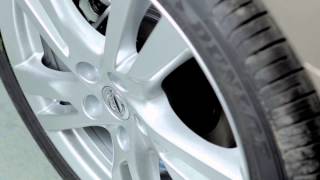
- "TPMS Error See Owner's Manual" message on the instrument cluster display. 🎬 Watch: How the Altima's TPMS and Easy Fill Alert system works
- Replacing the BCM when the issue is a simple dead sensor battery.
- Ignoring potential RF interference and immediately replacing the sensor, only to have the problem persist.
- Replacing a sensor without having the proper TPMS tool to register the new sensor ID to the vehicle.
Most Likely Causes
- Dead TPMS Sensor Battery 🔴 High Probability TPMS sensors contain a non-replaceable battery with a finite lifespan, typically 5-10 years. Vehicles in this 2012-2015 year range are now at an age where battery failure is the most common cause of sensor failure.
How to confirm: Use a TPMS diagnostic tool to attempt to 'trigger' or read the sensor at the front right wheel. If the tool cannot get a response or shows a low/dead battery status, the sensor is not transmitting and has failed.
Typical fix: Replace the front right TPMS sensor. It is often recommended to replace all four sensors at the same time, as their batteries are of similar age and the others are likely to fail soon, especially if new tires are being mounted.
Est. part cost: $40-$100 per sensor - Radio Frequency (RF) Interference 🟡 Medium Probability As noted in Nissan TSB NTB13088A, aftermarket devices like 'smart' phone chargers, dash cams, or power inverters can emit RF noise that interferes with the TPMS signal. This is a widely reported issue in owner forums.
How to confirm: Unplug all aftermarket electronic devices from the vehicle's power outlets (12V sockets). Clear the DTCs (if you have a scanner) and drive the vehicle for several minutes above 16 MPH to see if the code returns or the light goes out. If the code does not return, one of the devices was the cause.
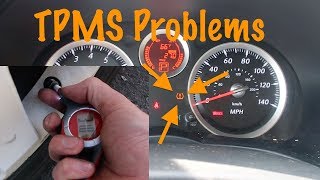
Typical fix: Remove or replace the interfering electronic device. Using a high-quality, well-shielded charger or adding ferrite chokes to the power cords can sometimes resolve the issue. This is not a vehicle fault. 🎬 See how RF interference from chargers can cause TPMS errors
Est. part cost: $0 - Damaged TPMS Sensor ⚪ Low Probability Sensors can be physically damaged during tire installation or by hitting a large pothole. The plastic housing can crack or the valve stem can be damaged. Using tire sealant can also clog and ruin the sensor's pressure port.
How to confirm: Visual inspection is required after dismounting the tire from the wheel. Look for cracks, corrosion, or contamination from tire sealant.
Typical fix: Replace the damaged TPMS sensor.
Est. part cost: $40-$100
Rare But Worth Checking
- Faulty Body Control Module (BCM): While extremely rare, it's possible for the BCM itself or its internal TPMS receiver to fail. This would typically be accompanied by other, unrelated electrical issues and multiple TPMS codes (e.g., C1708, C1710, C1711 all at once), not just C1709.
- Faulty HVAC Blower Motor: On some other Nissan models like the 370Z and GT-R, a faulty HVAC blower motor has been known to cause RF interference leading to TPMS codes. While not specifically documented for the Altima, it is a remote possibility if all other causes, especially RF interference from 12V accessories, are ruled out.
Diagnosis Steps
- Verify the TPMS warning light behavior: Flashing for approximately one minute at startup, then staying solid. This confirms a system fault.
- Scan the BCM for codes using an OBD-II scanner capable of reading Chassis (C) codes. Confirm C1709 is present. Note any other TPMS codes.
- Unplug ALL aftermarket devices (phone chargers, dash cams, GPS, etc.) from all 12V power outlets.
- Clear the codes and drive the vehicle for at least 10 minutes at speeds above 16 MPH (25 km/h) to allow the system to relearn. If the light does not return, an aftermarket device was the cause.
- If the code returns, use a TPMS diagnostic tool at the front right wheel to attempt to trigger the sensor and read its data (ID, pressure, temperature, battery status).
- If the tool fails to get a signal ('Trigger Failed' or shows 'Bad Battery'), the sensor has failed and needs replacement.
- If the tool CAN read the sensor and shows a good battery, the problem may be intermittent RF interference, a wiring issue between the BCM and TPMS receiver, or a faulty BCM. This is less common.
- To replace the sensor, the tire must be dismounted from the wheel.
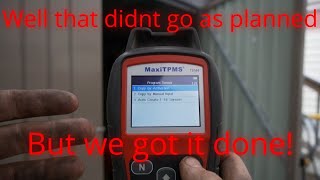
- After installing the new sensor, it must be registered to the vehicle using the TPMS tool's OBD-II relearn procedure to write the new sensor ID to the BCM. 🎬 Watch: How to program a new TPMS sensor using a tool
Parts You'll Likely Need
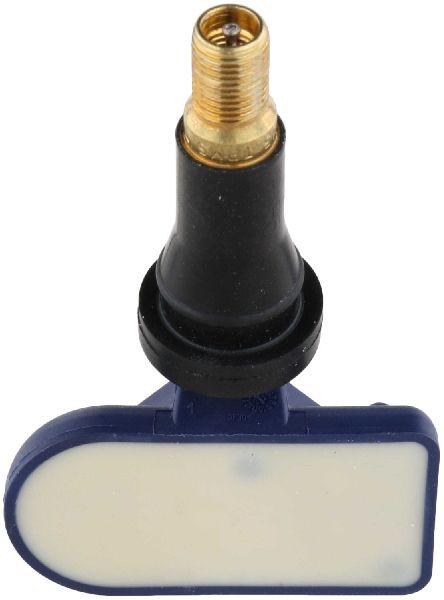
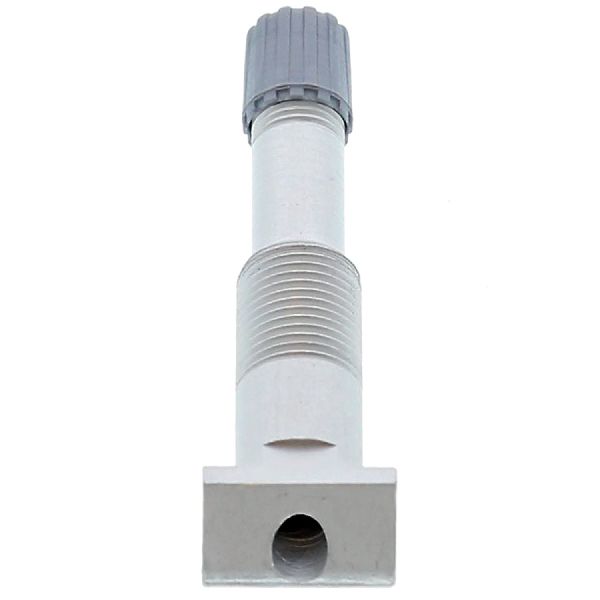
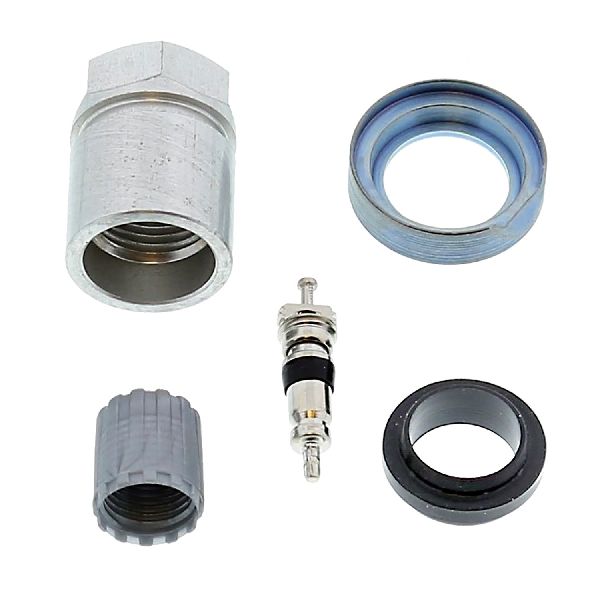
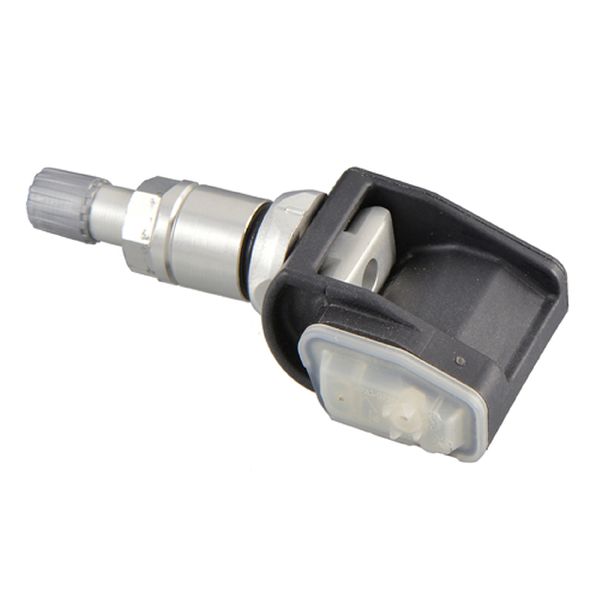
- Tire Pressure Monitoring System (TPMS) Sensor
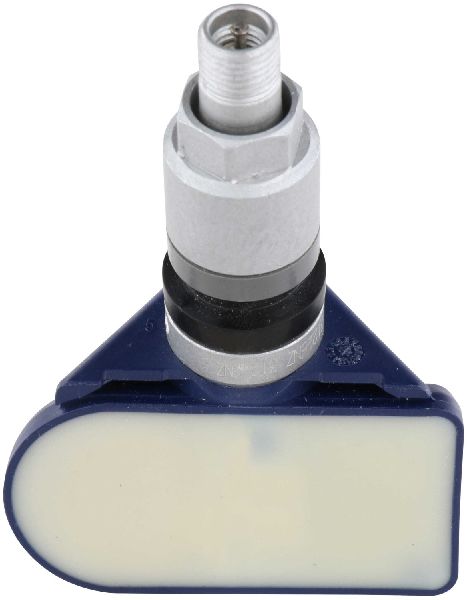
(OEM #40700-3AN0A (315MHz, for 2012) / 40700-3JA0B (433MHz, for 2013-2015))— This is the transmitting sensor inside the wheel that fails, most often due to its internal battery dying after 5-10 years of service. The part number and frequency are different between the 2012 (L32) and 2013+ (L33) models. 40700-3JA0B supersedes 40700-3JA0A.
Trusted brands: Schrader, Autel, Huf/BH Sens, Continental (OEM)
OEM price range: $70-$120
Aftermarket price range: $40-$70
Related Codes That Often Appear With This One
- C1708 — This code indicates 'No Data' from the Front Left TPMS sensor. It's common to see multiple TPMS codes at once if the sensors are original and failing due to age or if there is a significant RF interference source.
- C1710 — This code indicates 'No Data' from the Rear Right TPMS sensor.
- C1711 — This code indicates 'No Data' from the Rear Left TPMS sensor.
Technical Service Bulletins (TSBs) & Recalls
- NTB13088A: A comprehensive bulletin covering various TPMS issues, explicitly mentioning 'No Data' codes (C1708-C1711) caused by radio frequency interference from aftermarket electronics plugged into 12V power outlets.
Platform-Specific Known Issues
- Nissan Technical Service Bulletin NTB13088A specifically calls out that radio frequency interference from accessories plugged into the vehicle's power outlets can cause 'No Data' codes C1708, C1709, C1710, and C1711. This should be the first diagnostic check.
- The 2012 model year is part of the L32 generation and uses a 315MHz sensor, while the 2013-2015 models are L33 generation and use a 433MHz sensor. The parts are not interchangeable.
Mechanic-Grade Diagnostic Values
- TPMS Sensor Battery Life (via TPMS Tool) — expected: A new sensor will typically report a life of over 100 months (e.g., 120 months).. Failure: A reading of less than 15 months is considered weak and can cause intermittent 'No Data' faults, even if it's currently transmitting.
- Nissan CONSULT Live Data Parameter 'ID REGST FR1' — expected: The status should read 'CMPLT' (Complete).. Failure: If the status is not 'CMPLT', it indicates the sensor ID for the front right wheel is not correctly registered in the BCM.
Scan Tool Commands That Help
- Nissan CONSULT-III / CONSULT-III+: Work Support > ID REGIST (ID Registration) — This function is mandatory after replacing a TPMS sensor. It is used to write the new sensor's unique hexadecimal ID into the Body Control Module (BCM) so the system can recognize it.
- Aftermarket TPMS Tool (e.g., Autel, Bartec): OBD Relearn / Position Relearn — This is the equivalent function on professional aftermarket tools. It connects to the vehicle's OBD-II port to perform the same ID registration process as the dealer tool, making it essential for independent shops or DIYers.
Wiring & Ground Locations
- Body Control Module (BCM) — On 2013-2018 (L33) Altima models, the BCM is located behind the instrument cluster/speedometer. It is not in the kick panel or behind the glove box as in some other Nissan models.. The BCM contains the TPMS receiver. All TPMS sensor signals are sent to this module. A loose connector, corrosion, or internal fault in the BCM could theoretically cause a C1709 code, though this is very rare compared to a sensor failure.
- BCM Ground Circuit — According to a service manual for the 2014 Altima, the BCM ground connections are at terminals 134 and 143 of connector M21.. A poor ground connection to the BCM can cause a wide range of unpredictable electrical issues, including the failure to receive or process signals from the TPMS sensors, potentially leading to a C1709 code.
Real Owner Repair Stories
- Reddit user on r/altima (2014 Nissan Altima) — TPMS error message appeared on the dash. Tire pressure was visually and manually checked as good.
❌ Tried (didn't work) Letting some air out and re-inflating the tires., Driving the car around the block., Turning the car on and off multiple times.
✅ What actually fixed it The user noted that after swapping their stock wheels for winter wheels from a Maxima, the error appeared. The likely cause was that the sensors from the Maxima wheels were not registered to the Altima's BCM, or were the wrong frequency, requiring a TPMS tool to diagnose and register the correct sensors. - YouTube channel Astral Auto Repairs (2007 Nissan Altima (L32 generation, similar TPMS system)) — TPMS light was on, with codes C1708, C1709, and C1711 (No data from FL, FR, RL) and a low battery code for the RR sensor.
❌ Tried (didn't work) Just replacing one sensor would not be a complete fix as others were also failing.
✅ What actually fixed it A TPMS tool confirmed three sensors were not transmitting and one had a low battery. The mechanic replaced all four TPMS sensors with aftermarket units and used an Autel tool to perform the OBD relearn procedure, which successfully registered the new sensor IDs and cleared the faults.
OEM Part Supersession History
40700-3JA0A→40700-3JA0B— Standard part revision by the manufacturer.
Heads up: These parts are interchangeable for the specified 2013-2015 model years. 40700-3JA0B is the most current OEM replacement for 40700-3JA0A.
Model Year Variations Within This Range
- 2012 vs 2013-2015: The 2012 model (L32 generation) uses a 315MHz TPMS sensor (P/N: 40700-3AN0A), while the 2013-2015 models (L33 generation) use a 433MHz sensor (P/N: 40700-3JA0B). These are not interchangeable.
- 2013+: Some 2013+ models feature the "Easy Fill Tire Alert" system. When filling a tire with the ignition on, the horn will beep once the correct pressure is reached. This feature is part of the TPMS but does not change the diagnosis for a C1709 fault.
Helpful Videos
We Have This Part in Stock


The information in this article is provided for general reference and educational purposes only. Vehicle specifications, procedures, and part compatibility can vary by production date, trim level, and region. Always consult your vehicle's factory service manual and verify part numbers before purchasing or performing repairs. Safety-critical components such as airbags, seat belts, and braking systems should be installed by a qualified professional.
- Nissan ALTIMA:
- 🎬 Helpful Videos
- 🛍️ Shop This Part
- What's Unique About the 2012-2015 Nissan ALTIMA
- Diagnostic Flowchart
- Symptoms You May Notice
- Most Likely Causes
- Rare But Worth Checking
- Diagnosis Steps
- Parts You'll Likely Need
- Related Codes That Often Appear With This One
- Technical Service Bulletins (TSBs) & Recalls
- Platform-Specific Known Issues
- Mechanic-Grade Diagnostic Values
- Scan Tool Commands That Help
- Wiring & Ground Locations
- Real Owner Repair Stories
- OEM Part Supersession History
- Model Year Variations Within This Range
- 🎟️ Get 5% Off