

C1709 on 2014-2015 Infiniti QX80: Front Right TPMS Sensor Failure Causes and Fixes
On a 2014-2015 Infiniti QX80, code C1709 indicates a communication failure with the front right TPMS sensor. The most common cause is a dead battery in the sensor itself. Before replacing the sensor, unplug all aftermarket phone chargers to rule out RF interference. Expect to pay $150-$250 at a shop to replace the sensor and register it to the vehicle.
- C1709 on a 2014-2015 QX80 means the front right TPMS sensor is not communicating with the vehicle.
- The most likely cause is a dead battery inside the sensor, which requires replacing the entire sensor unit.
- Always unplug all 12V aftermarket accessories (especially phone chargers) to rule out Radio Frequency (RF) interference before replacing any parts, as this is a known issue per TSB ITB13039A.
- The repair is not DIY-friendly as it requires tire dismounting and specialized tools to register the new sensor.
What's Unique About the 2014-2015 Infiniti QX80
For this generation of Infiniti QX80 and its platform mates (Nissan Armada/Titan), radio frequency (RF) interference is a well-documented issue that can mimic a failed sensor. An official Technical Service Bulletin (ITB13039A) specifically calls out RF interference from aftermarket devices like 'smart cell phone chargers' and aftermarket DVD players as a potential cause for C1709 and other 'No Data' codes. This is not considered a warrantable defect. Owners should always rule out this simple, no-cost issue before spending money on a new sensor.
Diagnostic Flowchart
Tap your situation to follow the diagnostic path that matches what you're seeing on this vehicle.
Symptoms You May Notice
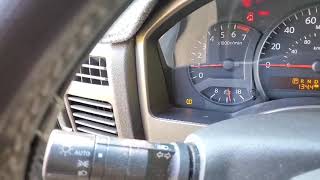
- TPMS warning light flashes for approximately one minute at startup, then stays on solid.
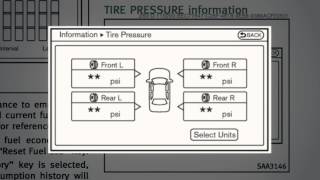
- A 'Tire Pressure Warning' message may appear in the vehicle information display. 🎬 Watch: How the QX80 tire pressure display and inflation indicator work.
- The display for individual tire pressures will show dashes ('--') or no reading for the front right tire.
- Replacing the TPMS sensor without first checking for RF interference from chargers or other electronics.
- Assuming the TPMS light indicates low tire pressure, when a flashing light indicates a system fault.
- Replacing the wrong wheel sensor; C1709 is specific to the front right position.
Most Likely Causes
- Dead TPMS Sensor Battery 🔴 High Probability TPMS sensor batteries are not rechargeable and have a finite lifespan, typically 5-10 years. Vehicles from the 2014-2015 model years are now at an age where battery failure is the most common and expected cause of this code.
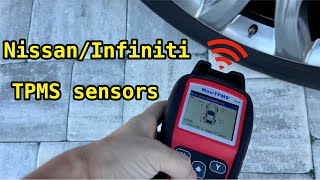
How to confirm: A professional tire shop or dealership can use a TPMS diagnostic tool (like an Autel or Bartec model) to try and 'wake up' or read the sensor at the wheel. If the tool cannot get a response from the sensor, the sensor has failed, most likely due to a dead battery.
Typical fix: Replace the front right TPMS sensor. The tire must be dismounted, the old sensor removed, a new one installed, and the tire remounted and balanced. The new sensor ID must then be registered to the vehicle. It is often recommended to replace all four sensors at once to avoid repeat failures.
Est. part cost: $35-$115 - Radio Frequency (RF) Interference 🟡 Medium Probability As noted in Infiniti TSB #ITB13039A, aftermarket electronics plugged into the 12V power outlets (like phone chargers, dash cams, or GPS units) can emit RF noise that blocks the 315 MHz signal from the TPMS sensor. 'Smart' chargers are specifically mentioned as potential culprits.
How to confirm: Unplug all aftermarket accessories from the vehicle's power outlets. Clear the trouble codes with a scanner if possible. Drive the vehicle for over 10 minutes at speeds above 25 MPH (40 km/h). If the code does not return, one of the accessories was the cause.
Typical fix: Identify and replace the offending aftermarket device with a higher-quality, better-shielded one. Sometimes simply moving the device to a different power outlet can help.
Est. part cost: $0-$50 - Improper or Failed Sensor Registration ⚪ Low Probability
How to confirm: This typically occurs immediately after a new sensor has been installed or after tires have been rotated. 🎬 Watch: DIY steps to relearn existing sensors after a tire rotation. If the shop did not correctly register the new sensor's ID to the TPMS module, this code will appear. Confirm with the service provider that the registration procedure was completed successfully.
Typical fix: The vehicle needs to be put through the TPMS relearn/registration procedure using a compatible scan tool or TPMS tool.
Est. part cost: $0
Rare But Worth Checking
- Faulty TPMS Control Unit or Receiver: This is rare. A failure in the central receiver or control unit would typically cause codes for multiple or all sensors (e.g., C1708, C1710, C1711) to appear at the same time, not just C1709.
- Damaged Sensor: The sensor can be physically damaged during tire installation, by hitting a large pothole, or from internal corrosion, sometimes caused by aftermarket tire sealants. This is less common than simple battery failure but is still a possibility.
Diagnosis Steps
- Verify the code with an OBD-II scanner capable of reading 'C' (Chassis) codes.
- Observe the TPMS light at startup. A light that flashes for ~60 seconds before staying solid confirms a system fault, not low pressure.
- Unplug all aftermarket devices from 12V power sockets to rule out Radio Frequency (RF) interference. Clear the code and drive the vehicle for at least 10 minutes at speeds over 25 MPH to see if it returns.
- If the code returns, use a dedicated TPMS tool to attempt to read the front right sensor's signal directly at the wheel. No signal (no ID, pressure, or temp reading) indicates a dead or faulty sensor.
- If the sensor can be read by the tool but the car still shows a code, attempt a TPMS sensor re-registration procedure.
- If registration fails or the sensor cannot be read, replace the front right TPMS sensor.
- After replacement, ensure the new sensor ID is correctly registered to the vehicle's TPMS control unit and the system is tested.
Parts You'll Likely Need
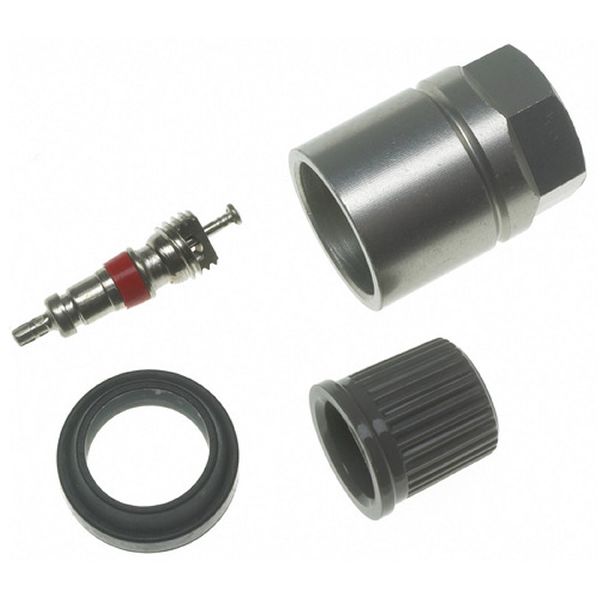
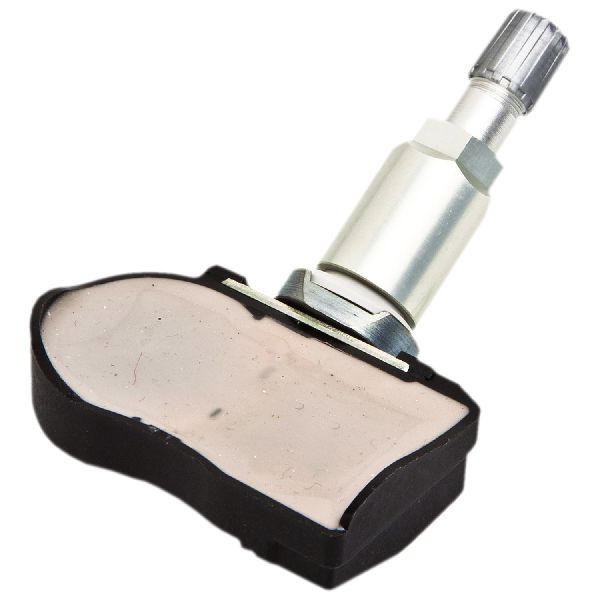
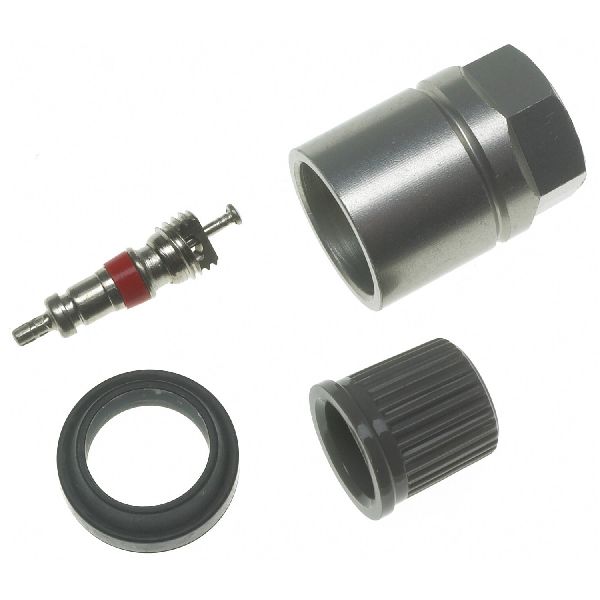
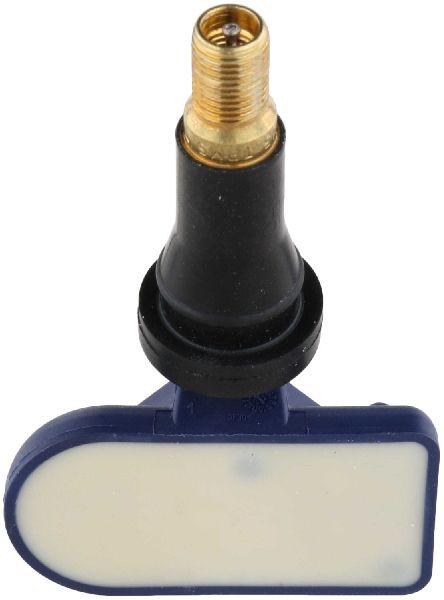
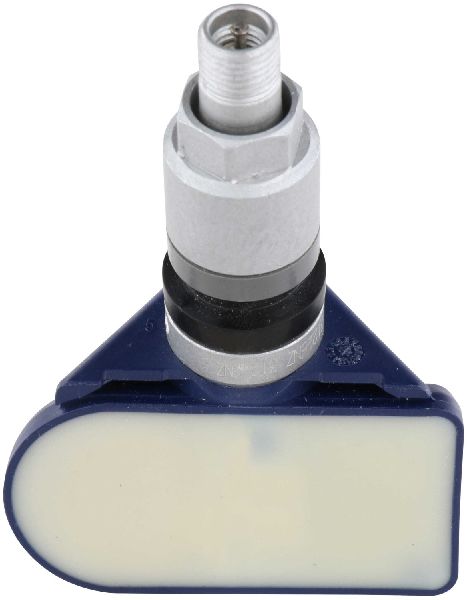
- Tire Pressure Monitoring System (TPMS) Sensor
(OEM #40700-1LA0D)— This is the transmitter unit inside the front right wheel. Its internal, non-replaceable battery is the most common point of failure, causing the C1709 code. The original part 40700-1LA0D is superseded by 40700-1LA0E.
Trusted brands: Infiniti (OEM), Schrader, Huf, Denso, Dorman, Autel, Bosch
OEM price range: $70-$115
Aftermarket price range: $35-$80
Related Codes That Often Appear With This One
- C1708 — This code is for the Front Left TPMS sensor. If seen with C1709, it suggests multiple sensors are failing around the same time due to age.
- C1710 — This code is for the Rear Right TPMS sensor. Seeing multiple codes points towards a common issue like battery age across all sensors or significant RF interference.
- C1711 — This code is for the Rear Left TPMS sensor. When multiple sensor codes are present, it's wise to consider replacing all four at once to save on future labor costs.
Technical Service Bulletins (TSBs) & Recalls
- ITB13039A: Addresses diagnosing TPMS systems, including radio frequency interference from devices like 'smart cell phone chargers' causing 'No Data' codes like C1708, C1709, C1710, and C1711.
Platform-Specific Known Issues
- Infiniti Technical Service Bulletin ITB13039A specifically addresses radio frequency interference from aftermarket accessories causing 'No Data' conditions for TPMS sensors, which includes code C1709.
- The issue is shared with platform-mates like the Nissan Armada and Titan, confirming it's a platform-wide sensitivity.
Scan Tool Commands That Help
- Infiniti CONSULT III Plus: ID Registration (under 'Work Support' for 'AIR PRESSURE MONITOR') — This function is required after installing a new TPMS sensor to write the new sensor's unique ID to the Body Control Module (BCM). The technician uses this function in conjunction with a handheld activation tool (like J-50190 or J-45295-A) at each wheel to complete the registration.
- ATEQ VT56 (or similar professional TPMS tool): OBD Relearn / Program Sensor — As an aftermarket alternative to the dealer's CONSULT tool, this tool can perform the OBD relearn procedure to register new sensor IDs to the vehicle's BCM after replacement.
Wiring & Ground Locations
- Body Control Module (BCM) — Located inside the cabin on the driver's side, behind the lower dashboard panel.. The BCM serves as the integrated TPMS control unit and receiver for the 315 MHz signals from the wheel sensors. A fault with the BCM, its wiring, or its power/ground connections can prevent it from receiving the signal from the front right sensor, causing a C1709 code even if the sensor itself is good. It is also referred to as the interior fuse box.
OEM Part Supersession History
40700-1LA0A, 40700-1LA0B, 40700-1LA0C, 40700-1LA0D→40700-1LA0E— Standard part revision and improvement over time.
Heads up: All listed part numbers are considered interchangeable for the 2014-2015 QX80, with 40700-1LA0E being the latest service part. No known incompatibilities exist when replacing an older revision with a newer one.
Helpful Videos
We Have This Part in Stock


The information in this article is provided for general reference and educational purposes only. Vehicle specifications, procedures, and part compatibility can vary by production date, trim level, and region. Always consult your vehicle's factory service manual and verify part numbers before purchasing or performing repairs. Safety-critical components such as airbags, seat belts, and braking systems should be installed by a qualified professional.
- Infiniti QX80:
- 🎬 Helpful Videos
- 🛍️ Shop This Part
- What's Unique About the 2014-2015 Infiniti QX80
- Diagnostic Flowchart
- Symptoms You May Notice
- Most Likely Causes
- Rare But Worth Checking
- Diagnosis Steps
- Parts You'll Likely Need
- Related Codes That Often Appear With This One
- Technical Service Bulletins (TSBs) & Recalls
- Platform-Specific Known Issues
- Scan Tool Commands That Help
- Wiring & Ground Locations
- OEM Part Supersession History
- 🎟️ Get 5% Off