

C1709 on 2014-2016 Infiniti QX50: TPMS Sensor 'No Data' Fault Causes and Fixes
Code C1709 on a 2014-2016 Infiniti QX50 means the TPMS system is not receiving a signal from the front right wheel sensor. The most common cause is a dead sensor battery, requiring sensor replacement. Expect to pay $50-$100 for the part and tire shop fees for installation and programming.
- C1709 means the front right TPMS sensor is not communicating with your QX50.
- The most common cause is a dead battery inside the sensor, which is a part that wears out over 7-10 years.
- The fix is to replace the sensor in the front right wheel, which requires tire removal, balancing, and programming.
- A new sensor must be registered or 'relearned' to the car's computer using a TPMS tool.
- While less common, radio frequency interference from other electronics, like phone chargers, can also cause this code and is not covered by warranty.
What's Unique About the 2014-2016 Infiniti QX50
On Infiniti vehicles, including the QX50 and its platform mates (G37, 370Z), the C1708/C1709/C1710/C1711 codes are explicitly linked to a 'No Data' condition in Technical Service Bulletin ITB13-039A. This bulletin highlights that radio frequency (RF) interference from devices like aftermarket phone chargers can be a cause, which is less commonly considered. While a dead sensor battery is the most frequent culprit, the possibility of interference from other electronic devices is a documented concern for this platform.
Diagnostic Flowchart
Tap your situation to follow the diagnostic path that matches what you're seeing on this vehicle.
Symptoms You May Notice
- TPMS warning light flashing for approximately one minute after startup, then remaining solid.
- Solid TPMS warning light on the instrument cluster.
- The tire pressure display in the vehicle information center shows dashes (--) for the front right tire.
- A 'Check Tire Pressure' message may appear.
- Replacing the TPMS control unit when the actual problem is a single dead sensor.
- Replacing a good sensor when the problem is intermittent RF interference from a phone charger.
- Ignoring the flashing TPMS light, assuming it's just a faulty light rather than a system problem indicating a dead sensor.
- Assuming a DIY battery replacement is possible; the sensor units are sealed and must be replaced entirely.
Most Likely Causes
- Dead TPMS Sensor Battery 🔴 High Probability TPMS sensors use sealed, non-replaceable batteries with a finite lifespan, typically 7-10 years. Vehicles from the 2014-2016 model years are now at an age where battery failure is common. Forum users on InfinitiScene.com corroborate this, noting a 5-7 year lifespan depending on climate.
How to confirm: Use a TPMS diagnostic tool to attempt to 'wake up' or read the sensor at the front right wheel. If the tool gets no response, the sensor is dead. This is the definitive test before dismounting a tire.
Typical fix: Replace the front right TPMS sensor. This requires dismounting the tire from the wheel. The new sensor must then be registered to the vehicle using a TPMS tool.
Est. part cost: $40-$90 - Faulty TPMS Sensor (Internal Failure) 🟡 Medium Probability Beyond the battery, the sensor's electronics can fail from vibration, moisture intrusion from a bad seal, or physical damage from tire mounting/dismounting.
How to confirm: Diagnosis is the same as a dead battery. If a TPMS tool cannot get a signal from the sensor, it has failed for one reason or another.
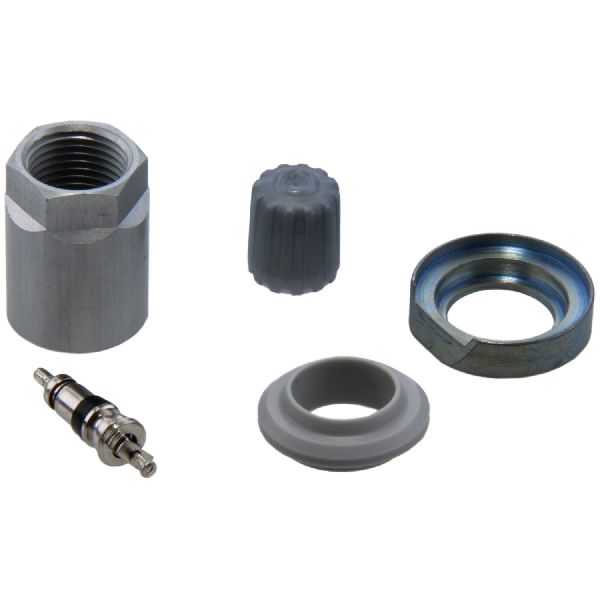
Typical fix: Replace the front right TPMS sensor and register the new sensor ID with the vehicle's TPMS control unit. It is often recommended to replace the sensor seal kits whenever a tire is dismounted to prevent future leaks.
Est. part cost: $40-$90 - Radio Frequency (RF) Interference ⚪ Low Probability Infiniti TSB ITB13-039A specifically calls out RF interference as a potential cause for C1709, noting that devices like 'Smart cell phone chargers' and aftermarket DVD players are common culprits. Another TSB for a related platform identified the HVAC blower motor as a source of interference. This is not covered under warranty.
How to confirm: If the TPMS light comes on intermittently, try turning off and unplugging all aftermarket electronic devices. If the code is triggered only when the HVAC fan is on high, this points to the blower motor. A technician can use a spectrum analyzer or follow TSB diagnostic steps.
Typical fix: Remove the source of interference. If the HVAC blower motor is the cause, it may need to be replaced.
Est. part cost: $0 (if removing a device) to $150-$300 (for a new blower motor)
Rare But Worth Checking
- Faulty TPMS Control Unit or Receiver: This is rare. Before suspecting the control unit, all sensors and potential interference sources should be ruled out. This would typically set 'No Data' codes for all four wheels (C1708, C1709, C1710, and C1711). A user on the MyG37 forum experienced this exact scenario, and the fix was to replace the TPMS receiver module located behind the glove box, not the sensors themselves. 🎬 Watch: Diagnosing a faulty TPMS module that won't reset.
Diagnosis Steps
- Verify the TPMS warning light is flashing for ~1 minute on startup and then staying solid. Use an OBD-II scanner that can read Chassis (C-codes) to confirm C1709 is stored.
- Use a dedicated TPMS diagnostic tool to attempt to read the signal from the front right tire's sensor. This tool sends a low-frequency signal to 'wake up' the sensor and force a 315MHz transmission.
- If the tool receives no data, the sensor has failed (likely a dead battery) and must be replaced.
- If the tool *can* read the sensor's data (ID, pressure, temp), but the car cannot, the problem lies with the signal path. Check for sources of radio frequency interference as noted in TSB ITB13-039A.
- Unplug all aftermarket electronics (phone chargers, dash cams, etc.) and clear the codes. See if the code returns.
- If the issue persists and all sensors can be read by a tool, investigate the TPMS receiver/control module, which on related models is located behind the glove compartment.
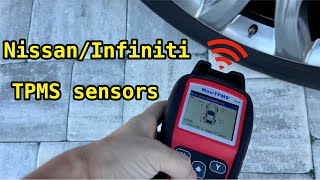
- After replacing a sensor, a relearn/registration procedure must be performed. This requires a TPMS tool to upload the new sensor's unique ID to the vehicle's computer via the OBD-II port. 🎬 Watch: How to program new Nissan and Infiniti tire sensors.
- For some older Nissan/Infiniti models, a DIY relearn can be initiated by grounding a specific pin near the OBD-II connector, though a dedicated tool is the standard professional method.
Parts You'll Likely Need
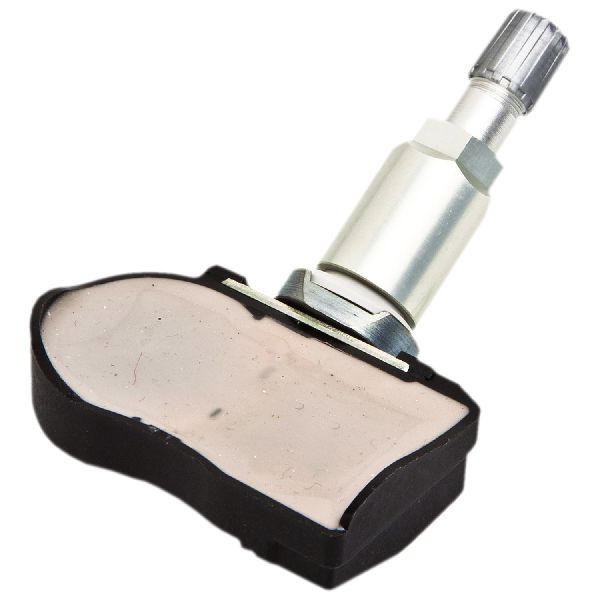
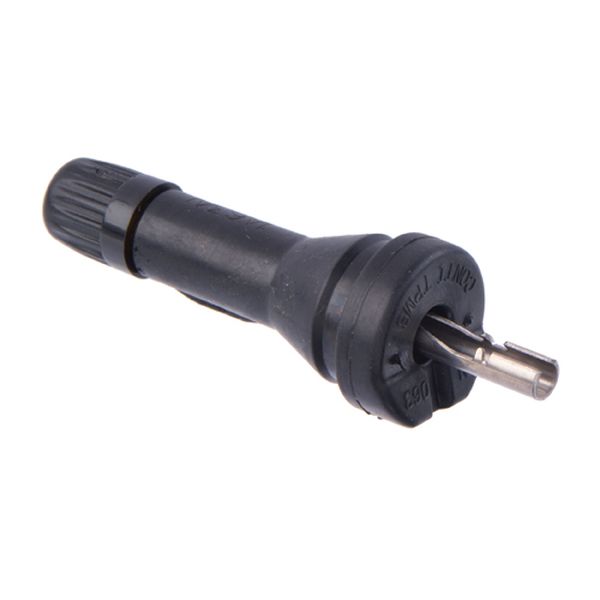
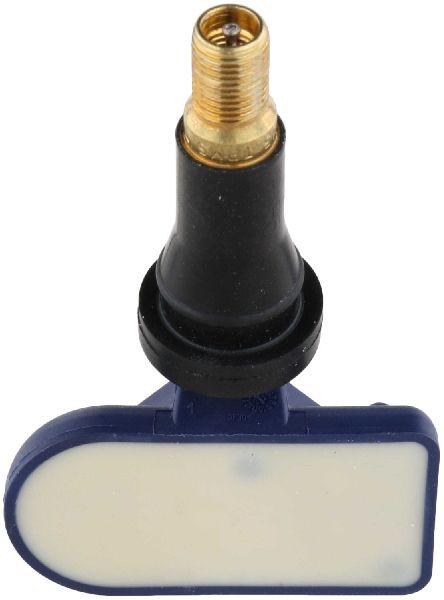
- Tire Pressure Monitoring System (TPMS) Sensor
(OEM #40700-1LA0E)— This is the component that fails, usually due to its internal battery expiring after 7-10 years. It is the direct cause of the 'No Data' signal that triggers code C1709. This part number supersedes 40700-1LA0A, 40700-1LA0B, 40700-1LA0C, and 40700-1LA0D.
Trusted brands: Schrader, VDO, Bosch, Dorman, Huf, Pacific
OEM price range: $80-$125
Aftermarket price range: $40-$75
Related Codes That Often Appear With This One
- C1708, C1710, C1711 — These codes correspond to the other three wheels (Front Left, Rear Right, Rear Left). If multiple or all four codes are present, it strongly suggests a systemic issue like widespread RF interference or a failing central TPMS receiver, rather than multiple sensors coincidentally dying at the exact same time.
Technical Service Bulletins (TSBs) & Recalls
- ITB13-039A - LOW TIRE PRESSURE WARNING SYSTEM; BULLETINS SUMMARY. This TSB compiles general TPMS diagnostic information and specifically mentions that RF interference from devices like 'Smart cell phone chargers' can cause a 'No Data' condition for codes C1708, C1709, C1710, and C1711.
Platform-Specific Known Issues
- Infiniti has issued Technical Service Bulletin ITB13-039A, which acknowledges that radio frequency interference from accessories like phone chargers can cause a 'No Data' condition, leading to codes like C1709. This is not considered a warrantable defect.
- Owners on forums for platform-mate vehicles (like the G37) have documented a DIY TPMS relearn procedure involving grounding a single-wire connector found near the OBD-II port to put the system into learning mode, avoiding a trip to the dealer for some resets. 🎬 See this guide on resetting your TPMS warning light.
Mechanic-Grade Diagnostic Values
- TPMS Sensor Signal Transmission — expected: A 315 MHz radio frequency signal containing a unique sensor ID, tire pressure, and temperature data should be received by the TPMS control unit.. Failure: No signal is received by a TPMS diagnostic tool when attempting to 'wake up' the sensor, or the vehicle's BCM does not receive the signal even if a tool can.
Scan Tool Commands That Help
- Infiniti CONSULT-III / CONSULT-III plus: ID Registration — This function is required to write the unique ID of a new TPMS sensor to the Body Control Module (BCM) after a sensor has been replaced.
- Infiniti CONSULT-III / CONSULT-III plus: DATA MONITOR for 'AIR PRESSURE MONITOR' — Used to view the live data that the BCM is receiving from each of the four tire pressure sensors, which helps confirm if a specific sensor is the one not transmitting.
- Signal Tech II (J-50190) with Transmitter Activation Tool (J-45295-A): Sensor Activation and ID Registration — These are the official Nissan/Infiniti special service tools. The activation tool (J-45295-A) forces each sensor to transmit its ID, and the Signal Tech II tool (J-50190) connects to the OBD-II port to write those IDs to the vehicle's computer.
Wiring & Ground Locations
- TPMS Control Unit / Receiver — On related Infiniti models like the G37, the TPMS receiver module is located behind the glove box compartment. It is a small black box connected to the vehicle's wiring harness.. If all four sensors are good (can be read by a handheld tool) but the car reports 'No Data' codes for one or more wheels, the fault may lie in the receiver or its wiring/ground connection. A failure here prevents any sensor signals from reaching the BCM.
- TPMS Relearn Connector — On some Nissan/Infiniti models, this is a single-wire white female plug taped to the main OBD-II port wiring harness, located under the driver's side dashboard.. This connector is used for a DIY relearn procedure. By grounding this wire's pin to the chassis multiple times with the ignition on, the BCM can be put into 'learning mode', allowing it to register sensor IDs without a CONSULT scan tool.
Real Owner Repair Stories
- G35Driver Forum User 'Maine35X' (2007 Infiniti G35X (platform mate)) — TPMS warning light flashing, with self-diagnostics showing 'no signal' from all four wheels (codes 15, 16, 17, 18) plus specific receiver codes (22, 23).
❌ Tried (didn't work) Verifying tire pressures., Attempting the pressure-differential relearn method ('34, 31, 29, 26' psi)., Replacing the TPMS receiver module located behind the glovebox.
✅ What actually fixed it The problem started after major front-end disassembly for a differential repair. While the final post was unresolved, the key learning was that even with strong signals from all four sensors (confirmed by a tire shop), and after replacing the receiver, the problem persisted, pointing towards a wiring harness or ground issue that occurred during the prior major repair.
Helpful Videos
We Have This Part in Stock


The information in this article is provided for general reference and educational purposes only. Vehicle specifications, procedures, and part compatibility can vary by production date, trim level, and region. Always consult your vehicle's factory service manual and verify part numbers before purchasing or performing repairs. Safety-critical components such as airbags, seat belts, and braking systems should be installed by a qualified professional.
- Infiniti QX50:
- 🎬 Helpful Videos
- 🛍️ Shop This Part
- What's Unique About the 2014-2016 Infiniti QX50
- Diagnostic Flowchart
- Symptoms You May Notice
- Most Likely Causes
- Rare But Worth Checking
- Diagnosis Steps
- Parts You'll Likely Need
- Related Codes That Often Appear With This One
- Technical Service Bulletins (TSBs) & Recalls
- Platform-Specific Known Issues
- Mechanic-Grade Diagnostic Values
- Scan Tool Commands That Help
- Wiring & Ground Locations
- Real Owner Repair Stories
- 🎟️ Get 5% Off