

C1708 on 2011-2015 Nissan JUKE: TPMS 'No Data' Causes and Fixes
On a 2011-2015 Nissan Juke, code C1708 almost always means the battery inside the front-left tire pressure sensor has died. The fix is to replace the sensor, which costs around $40-$110 for the part and requires a tire shop to install and program it. Before replacing, always unplug all 12V accessories like phone chargers to rule out radio frequency (RF) interference, a known Nissan issue.
- C1708 on a Juke means the front-left TPMS sensor is not communicating.
- The most common cause is a dead sensor battery due to the vehicle's age.
- Always rule out RF interference from 12V accessories before replacing parts.
- Sensor replacement requires tire dismounting and programming with a special tool.
- It is cost-effective to replace all four sensors if they are original and tires are being replaced.
What's Unique About the 2011-2015 Nissan JUKE
For this generation of Nissan vehicles, including the Juke, the TPMS is known to be sensitive to radio frequency (RF) interference. Nissan issued a Technical Service Bulletin (NTB13088A) that specifically warns that aftermarket devices like phone chargers, dash cams, and even some wireless phone chargers can block the 315MHz sensor's signal, causing a C1708 code even when the sensor is perfectly fine. 🎬 See how to diagnose C1708 and other sensor data codes Owners on forums like MyNissanLeaf.com have confirmed that unplugging a cheap or unshielded USB adapter can resolve the issue instantly.
Diagnostic Flowchart
Tap your situation to follow the diagnostic path that matches what you're seeing on this vehicle.
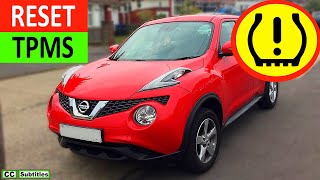
🎬 Watch: How to reset the TPMS light on a JukeSymptoms You May Notice
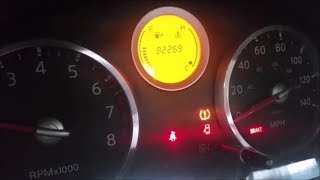
- TPMS warning light flashes for approximately one minute at startup, then stays on solid.
- The vehicle's information display, if equipped, will not show a pressure reading for the front-left tire.
- A C1708 code is stored in the Body Control Module (BCM), which requires a scanner capable of reading 'C' (Chassis) codes to view.
- Replacing the TPMS sensor when the actual cause is RF interference from a cheap phone charger.
- Assuming the TPMS light will go off on its own after installing a new sensor without performing the mandatory registration/relearn procedure.
- Replacing the wrong wheel's sensor because tires were rotated without updating the sensor positions in the BCM. Always use a TPMS tool to confirm which sensor is offline before replacement.
Most Likely Causes
- Dead TPMS Sensor Battery 🔴 High Probability TPMS sensor batteries have a finite lifespan of 5-10 years. Vehicles in the 2011-2015 range are now at an age where battery failure is the most common cause. The battery is sealed inside the sensor with potting compound and cannot be easily replaced separately.
How to confirm: Use a TPMS activation tool at the front-left wheel. If the tool cannot get a response from the sensor ('Trigger Failed' or no data displayed), the sensor is dead. Some advanced tools can also read the remaining battery life, which will be low or zero.
Typical fix: Replace the front-left TPMS sensor. It is often recommended to replace all four sensors at the same time, especially if they are original and you are already replacing tires, to save on future labor costs as the others are likely to fail soon.
Est. part cost: $40-$110 - Radio Frequency (RF) Interference 🟡 Medium Probability As documented in Nissan TSB #NTB13088A, the TPMS receiver can be overwhelmed by signals from unshielded aftermarket electronics plugged into the 12V outlets, such as phone chargers, dash cams, or GPS units. These devices create electromagnetic noise that can jam the 315MHz frequency used by the sensors.
How to confirm: Unplug ALL aftermarket devices from the vehicle's power outlets. Clear the codes if possible, then drive the car for several minutes above 16 MPH. If the TPMS light turns off and does not return, one of the devices was causing the interference.
Typical fix: Identify the interfering device by plugging them back in one by one. Replace the faulty device with a higher-quality, better-shielded alternative, sometimes identifiable by having a ferrite choke on its cable.
Est. part cost: $10-$50 - Faulty TPMS Sensor ⚪ Low Probability Beyond the battery, the sensor's electronics can fail from physical damage (e.g., during a tire change, hitting a pothole) or internal corrosion from moisture. Use of unapproved tire sealants can also damage the sensor.
How to confirm: Even if a TPMS tool gets a response, the sensor might be sending corrupt data. If RF interference is ruled out and a relearn procedure fails, the sensor is the next logical point of failure. Physical inspection during replacement may reveal cracks or corrosion.
Typical fix: Replace the front-left TPMS sensor and register it to the vehicle.
Est. part cost: $40-$110
Rare But Worth Checking
- Faulty Body Control Module (BCM) or Receiver: This is very rare. The BCM is the control unit for the TPMS. Before condemning the BCM, all sensors and potential RF interference must be ruled out. This would typically be accompanied by other, unrelated electrical issues or codes for all four sensors at once.
- Incorrect Sensor Registration: If wheels were recently rotated or a new sensor was installed without the proper relearn procedure, the BCM may be looking for the sensor in the wrong location. Performing the TPMS relearn procedure with a scan tool can fix this.
Diagnosis Steps
- Verify the symptom: Confirm the TPMS warning light flashes for about a minute upon startup before staying solid. A solid light on its own just means low pressure.
- Rule out RF Interference: Unplug all aftermarket accessories from 12V power outlets (phone chargers, dash cams, etc.). Drive the vehicle for 5-10 minutes at speeds above 16 MPH to see if the light extinguishes. This is a critical first step per Nissan's TSB.
- Scan for Codes: Use an OBD-II scanner capable of reading Chassis 'C' codes from the BCM to confirm C1708 is the active fault. A basic engine code reader will not see this code.
- Test the Sensor: Use a TPMS activation tool at the front-left wheel. Command the sensor to transmit. If the tool reports 'No Signal' or 'Trigger Failed', the sensor has failed (likely dead battery) and must be replaced.
- Attempt Relearn: If the sensor *does* transmit to the tool, the issue might be with registration. Attempt the TPMS ID registration procedure using a compatible scan tool.
- Replace Sensor: If the sensor fails the activation test, replace the front-left TPMS sensor. This requires breaking the tire bead or dismounting the tire.
- Register New Sensor: After installation, the new sensor's unique ID must be registered to the BCM using a TPMS diagnostic tool. The light will not go out until this step is completed. The tool will guide you through the process, typically starting with the front-left wheel.
Parts You'll Likely Need
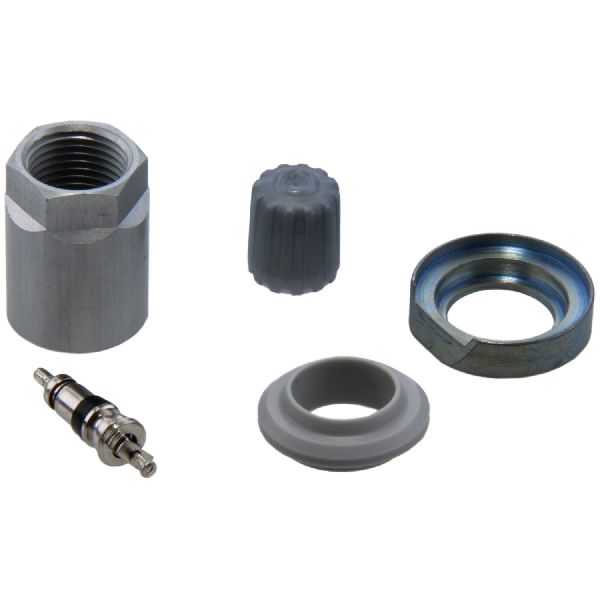
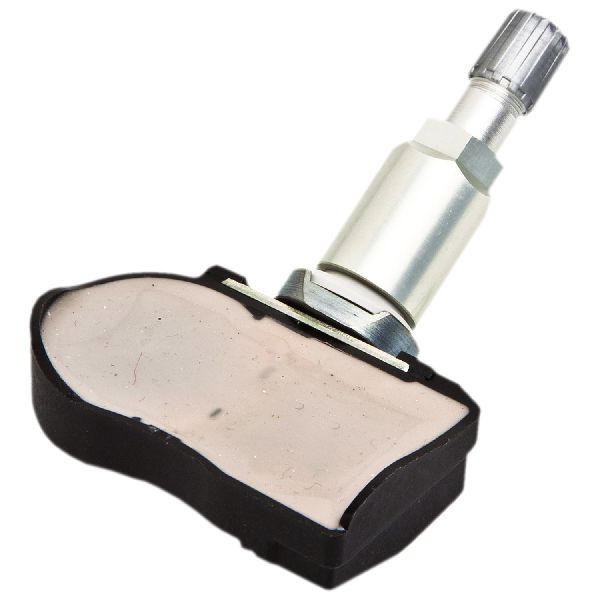
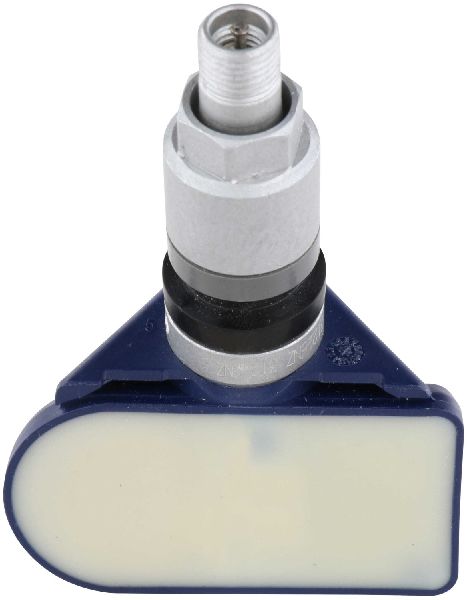
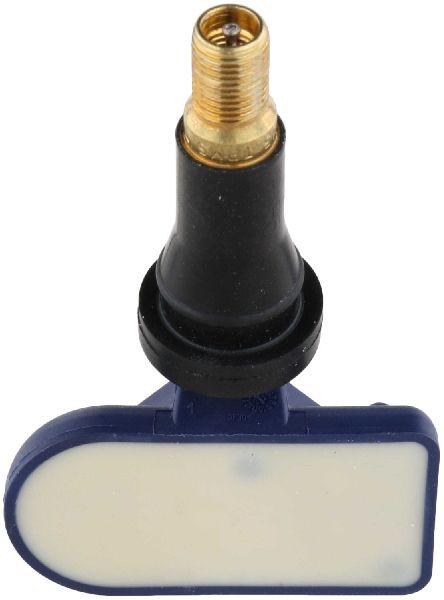
- Tire Pressure Monitoring System (TPMS) Sensor
(OEM #40700-1LA0C)— This is the direct cause of the C1708 code when its internal, non-serviceable battery expires after 5-10 years of service. This part number is often superseded.
Trusted brands: Nissan Genuine, Schrader (often the OEM supplier), Autel, VDO, Dorman
OEM price range: $80-$110
Aftermarket price range: $40-$70
Related Codes That Often Appear With This One
- C1709 — This code corresponds to the Front-Right TPMS sensor. Seeing it with C1708 could indicate multiple sensors failing around the same time due to age, or a more significant RF interference or BCM issue.
- C1710 — This code corresponds to the Rear-Right TPMS sensor.
- C1711 — This code corresponds to the Rear-Left TPMS sensor.
Technical Service Bulletins (TSBs) & Recalls
- NTB13088A - Low Tire Pressure Warning System (LTPWS) information for diagnosing TPMS systems, including RF interference causing 'No Data' codes like C1708. This TSB confirms the flashing-then-solid light pattern indicates a system malfunction.
Platform-Specific Known Issues
- Nissan Technical Service Bulletin NTB13088A explicitly identifies 'Radio frequency interference causing a “No Data” (C1708, C1709, C1710, C1711) condition' as a known issue. It specifically calls out cell phone chargers and aftermarket DVD players as potential sources of interference that should be ruled out before performing diagnostics.
- While the battery is the most common failure point, some Juke owners have reported that the TPMS system can be particularly sensitive, sometimes only working reliably with genuine OEM Nissan sensors rather than aftermarket alternatives.
Mechanic-Grade Diagnostic Values
- TPMS Sensor Screw Torque — expected: 1.4 ± 0.1 N.m. Failure: An improperly torqued screw can lead to sensor damage or air leaks.
- TPMS Sensor Signal Frequency — expected: 315 MHz. Failure: Using a sensor with the wrong frequency (e.g., 433 MHz) will result in a 'No Data' condition.
Scan Tool Commands That Help
- Nissan Consult III+ or compatible professional scan tool (e.g., Autel): ID Registration (or 'Position Relearn') — This function is mandatory after replacing a TPMS sensor. It writes the new sensor's unique ID to the BCM. The system will not recognize the new sensor until this is performed.
- Nissan Consult III+: Work Support > ID Registration — This is the specific path within the Nissan dealer software to access the TPMS registration function, which then requires using a transmitter activation tool to trigger each sensor in sequence (LF, RF, RR, LR).
Wiring & Ground Locations
- Body Control Module (BCM) — Located on the driver's side (left-hand side), behind the dash panel, against the left A-pillar at the bottom.. The BCM acts as the receiver and control unit for the TPMS. In the rare event of a BCM failure or wiring issue, this is the component that needs to be accessed and tested.
- BCM Ground — The BCM's primary ground connection is via terminal 67 of connector M69. Ground points M36 and M76 are also located on the left side of the dash and serve various components controlled by the BCM.. A poor ground connection to the BCM could cause a wide range of difficult-to-diagnose electrical issues, including intermittent TPMS communication failures across multiple or all sensors.
- TPMS Receiver — The TPMS receiver function is integrated directly into the Body Control Module (BCM) on this platform; there is no separate, standalone receiver module.. This confirms that any diagnostic path related to the 'receiver' leads directly to the BCM and its associated wiring and connectors.
OEM Part Supersession History
40700-1LA0A→40700-1LA0B, 40700-1LA0C, 40700-1LA0D, 40700-1LA0E— Standard part evolution for improved reliability or manufacturing changes.
Heads up: The latest part number in the series, 40700-1LA0E, is the recommended service replacement for all previous versions. While older stock might be available, using the latest revision is best practice.
Model Year Variations Within This Range
- 2015: The Nissan Juke received a facelift for the 2015 model year. While the TPMS system function and the C1708 code remain the same, always verify the sensor part number with the vehicle's VIN, as mid-generation changes can sometimes occur with refreshed models. Some part suppliers differentiate between Jukes built before and after September 2015.
Helpful Videos
We Have This Part in Stock


The information in this article is provided for general reference and educational purposes only. Vehicle specifications, procedures, and part compatibility can vary by production date, trim level, and region. Always consult your vehicle's factory service manual and verify part numbers before purchasing or performing repairs. Safety-critical components such as airbags, seat belts, and braking systems should be installed by a qualified professional.
- Nissan JUKE:
- 🎬 Helpful Videos
- 🛍️ Shop This Part
- What's Unique About the 2011-2015 Nissan JUKE
- Diagnostic Flowchart
- Symptoms You May Notice
- Most Likely Causes
- Rare But Worth Checking
- Diagnosis Steps
- Parts You'll Likely Need
- Related Codes That Often Appear With This One
- Technical Service Bulletins (TSBs) & Recalls
- Platform-Specific Known Issues
- Mechanic-Grade Diagnostic Values
- Scan Tool Commands That Help
- Wiring & Ground Locations
- OEM Part Supersession History
- Model Year Variations Within This Range
- 🎟️ Get 5% Off