

C1708 on 2008-2013 Infiniti G37: TPMS 'No Data' Causes and Fixes
On a 2008-2013 Infiniti G37, code C1708 means a tire pressure (TPMS) sensor is not sending data to the car's computer. This is almost always due to a dead battery in the sensor, which has a 7-10 year lifespan. The fix is to replace the faulty sensor and register it, which typically requires a tire shop.
- C1708 on your G37 means a TPMS sensor has stopped communicating, most likely due to a dead battery.
- Before going to a shop, unplug all phone chargers and other aftermarket electronics and see if the light goes away.
- This is not a DIY-friendly fix as it requires tire dismounting and a special tool to program the new sensor.
- Due to the vehicle's age, if one sensor has failed, the others may not be far behind. Consider replacing all four if your budget allows.
- Do not trust the code's location; use a TPMS tool to identify the correct non-responsive sensor before replacement.
What's Unique About the 2008-2013 Infiniti G37

For the Infiniti G37 and similar platforms, a key issue is susceptibility to Radio Frequency (RF) interference, as noted in Technical Service Bulletin ITB13-039A. This bulletin specifically calls out that aftermarket devices like cell phone chargers can disrupt the 315MHz TPMS signal and trigger 'No Data' codes like C1708, C1709, C1710, and C1711. Before assuming a sensor is bad, it's a well-documented first step on these vehicles to unplug all non-factory electronics from the power outlets. A less common but documented issue on the related Nissan 370Z is RF interference from a failing HVAC blower motor, which could also apply to the G37.
Diagnostic Flowchart
Tap your situation to follow the diagnostic path that matches what you're seeing on this vehicle.
Symptoms You May Notice
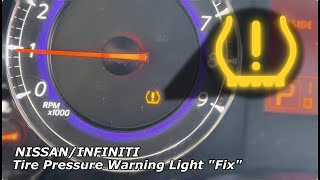
- TPMS warning light flashes for 60-90 seconds after startup, then stays on solid.
- Inability to view the pressure reading for one or more tires on the vehicle's information display.
- A 'TIRE PRESSURE WARNING' message may or may not appear, depending on the specific fault.
- A 'Check Tire Pressure' message may appear in the instrument cluster display on some models.
- Replacing the Body Control Module (BCM) first. While the BCM processes the data, the fault is more commonly with the sensor, receiver, or RF interference.
- Assuming the code corresponds to a fixed wheel position (e.g., C1708 is always front-left) without verifying with a TPMS tool. Tires are often rotated, which moves the sensors.
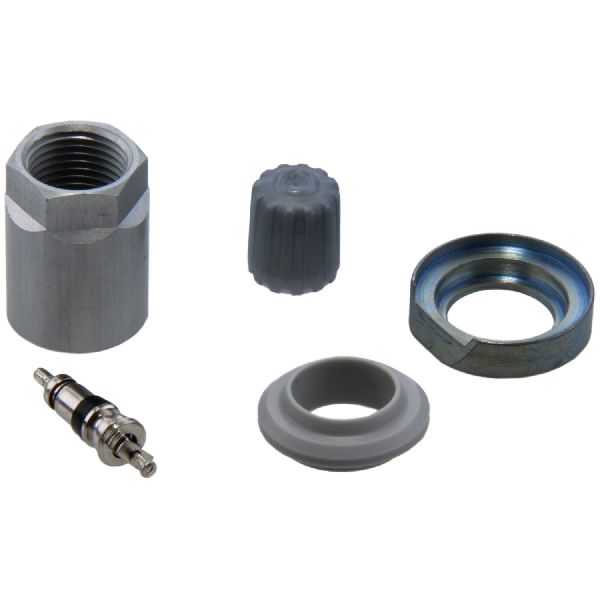
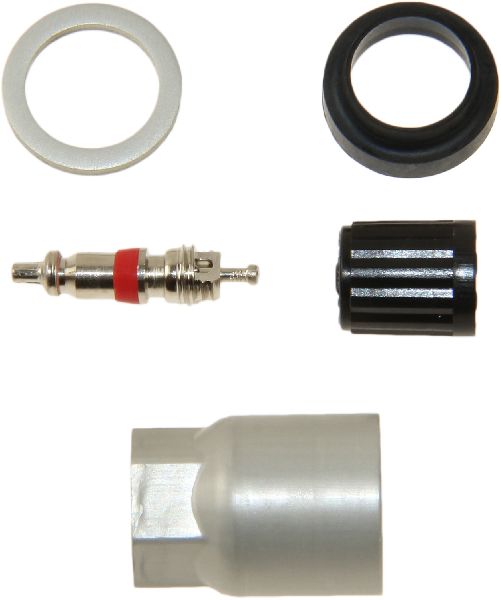
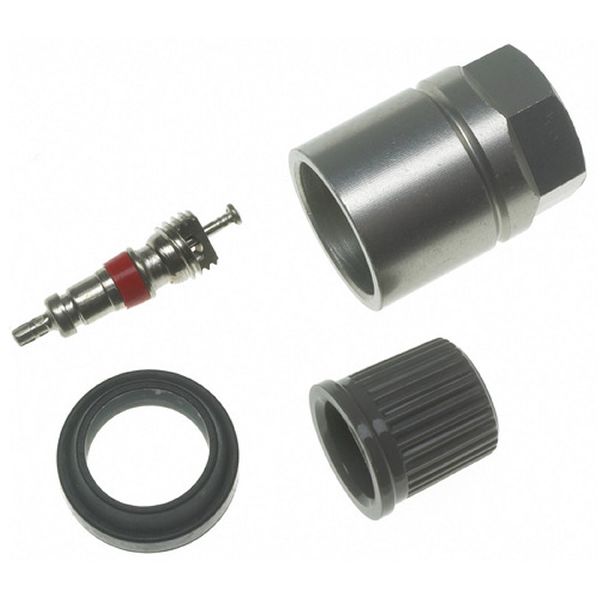
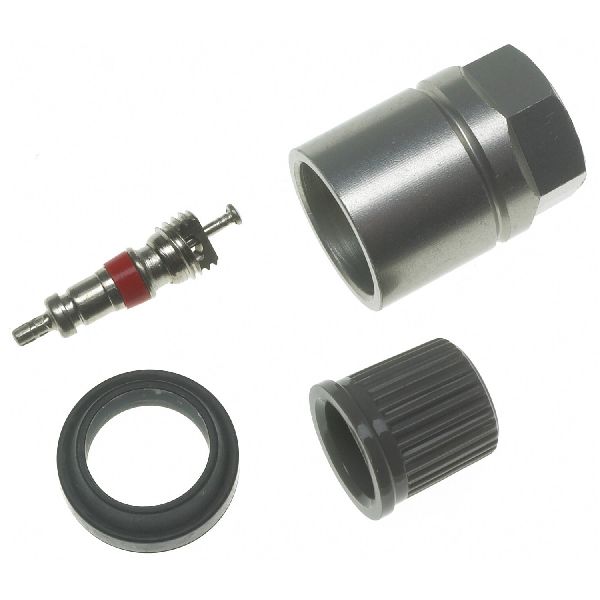
- Replacing only the TPMS service kit (valve stem, seals) when the light is flashing. A flashing light indicates an electronic fault (dead sensor), whereas a solid light indicates low pressure, which could be from a leaking valve stem.
Most Likely Causes

- Dead TPMS Sensor Battery 🔴 High Probability TPMS sensor batteries have a finite lifespan of 5-10 years. Vehicles in the 2008-2013 range are at or beyond the typical end-of-life for their original sensors. Forum users on MyG37.com frequently report multiple sensors failing around the same time due to age.
How to confirm: Use a TPMS activation tool to attempt to 'wake up' or read the sensor. If the tool cannot get a response from a specific sensor, its battery is likely dead.
Typical fix: Replace the entire TPMS sensor unit in the affected wheel and register the new sensor to the vehicle.
Est. part cost: $40-$80 - Radio Frequency (RF) Interference 🟡 Medium Probability Infiniti TSB ITB13-039A specifically identifies RF interference from aftermarket accessories (especially cheap, unshielded phone chargers and dash cams) as a cause for C1708-C1711 codes.
How to confirm: Unplug all aftermarket devices from the 12V power outlets (cigarette lighters). Clear the codes and drive the vehicle to see if the fault returns. If the light stays off, one of the devices was the cause.
Typical fix: Remove or replace the interfering electronic device with a high-quality, well-shielded alternative.
Est. part cost: $0 - Faulty TPMS Receiver/Antenna ⚪ Low Probability While less common than sensor failure, the TPMS receiver module can fail. On the G37, this module is located behind the glove box. A failure here will typically cause all four sensor codes (C1708, C1709, C1710, C1711) to appear simultaneously, as the BCM cannot communicate with any of them.
How to confirm: If all four TPMS sensors have been replaced with known-good units and properly registered, and RF interference has been ruled out, the receiver module is the next logical suspect. A user on MyG37.com confirmed that replacing this module (Part No. 40740-1NC2A for a 2013 model) resolved a case where all four codes were present.
Typical fix: Replace the TPMS receiver module. Part numbers vary, but 28530-JK60A and 40740-1NC2A have been cited for this platform.
Est. part cost: $60-$200
Rare But Worth Checking
- Low Vehicle Voltage / BCM Issues: A weak car battery or faulty Body Control Module (BCM) can cause a variety of electrical faults, including TPMS communication codes. A Reddit user on r/infiniti reported a long list of codes, including C1708-C1711, after having an aftermarket remote starter improperly removed and the main battery replaced. Another user on MyG37.com noted the TPMS light began flashing after the car battery died and was jumped.
- Faulty HVAC Blower Motor: Extremely rare for this specific model, but documented on the platform-mate Nissan 370Z in TSB NTB19-062. A failing blower motor can generate significant RF interference when on high speed, disrupting TPMS signals and triggering C1708-C1711 codes. If the TPMS light only appears when the fan is set to high, this could be a potential cause.
Diagnosis Steps

- Check the TPMS warning light behavior. A flashing light that turns solid indicates a system malfunction, which is consistent with code C1708.
- Unplug all aftermarket accessories from the 12V power outlets to eliminate Radio Frequency Interference as per TSB ITB13-039A.
- Use a TPMS diagnostic tool to attempt to read the ID, pressure, and battery status of all four sensors directly at the wheel.
- The sensor that fails to respond to the tool is the one causing the C1708 code.
- If all sensors respond to the tool but the car still shows the code, the issue may be with the TPMS receiver or the BCM.
- If all sensors fail to respond, suspect a faulty TPMS receiver module (located behind the glove box) or a systemic power/ground issue.
- Before replacing parts, confirm the tire pressures are set to the specification on the driver's door jamb.
- If a sensor is confirmed bad, proceed with replacement.
- After replacement, use the TPMS tool to register the new sensor ID to the vehicle's BCM. This step is mandatory.
Parts You'll Likely Need

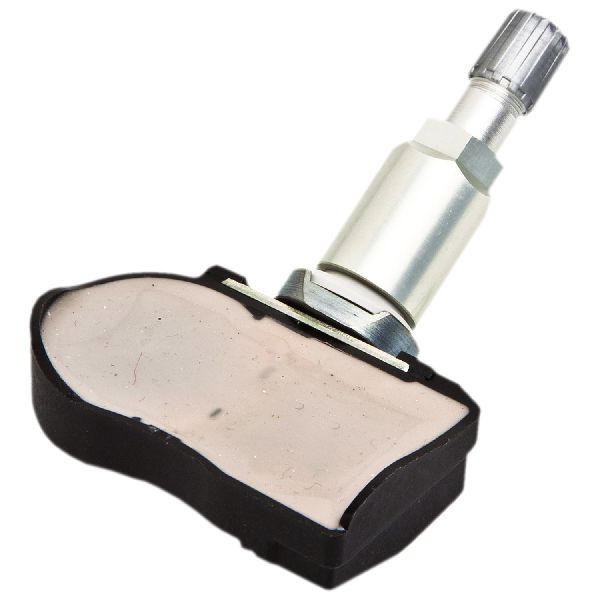
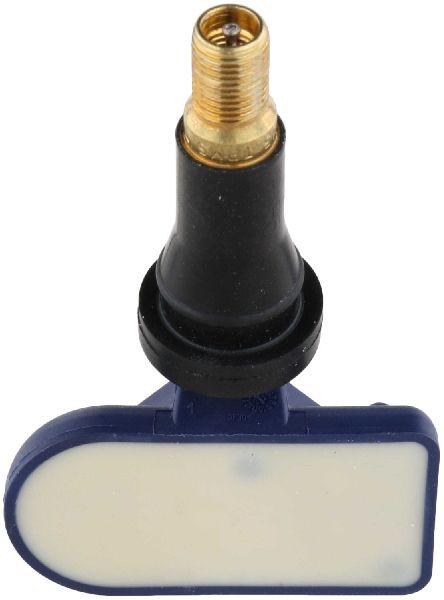
- Tire Pressure Monitoring System (TPMS) Sensor
(OEM #40700-JK00B)— The internal, non-replaceable battery in the original sensor fails due to age (5-10 years), causing a loss of signal that triggers the C1708 code. This part has been superseded by 40700-JK00C and 40700-JK01C.
Trusted brands: Schrader, Denso, Continental, Dorman, Autel
OEM price range: $70-$120
Aftermarket price range: $40-$80 - TPMS Receiver Module
(OEM #28530-JK60A / 40740-1NC2A)— This part can fail, though it's rare. It typically results in all four TPMS codes (C1708-C1711) being stored at once because the car can't receive signals from any sensor. A user on MyG37.com confirmed replacing P/N 40740-1NC2A fixed this exact issue.
Trusted brands: Infiniti (OEM)
OEM price range: $60-$200
Aftermarket price range: $40-$100 (Used)
Related Codes That Often Appear With This One
- C1709, C1710, C1711 — These codes correspond to the other three wheel sensors. They often appear together if there is a systemic issue like a faulty TPMS receiver, low vehicle voltage, or significant RF interference affecting all sensors.
- U1000 — This is a CAN communication error code. It can appear alongside TPMS codes if there is a broader electrical issue affecting the Body Control Module (BCM) or its network connections, often related to a dying battery or faulty aftermarket wiring.
Technical Service Bulletins (TSBs) & Recalls
- ITB13-039A: A summary bulletin for the Low Tire Pressure Warning System that mentions RF interference from aftermarket accessories as a cause for C1708-C1711 codes.
- NTB19-062: A Nissan TSB for the 2018 370Z and GT-R that identifies a faulty HVAC blower motor as a source of RF interference causing C1708-C1711 codes. Relevant due to platform similarities.
Platform-Specific Known Issues
- Infiniti Technical Service Bulletin ITB13-039A explicitly warns that radio frequency interference from devices like smartphone chargers can cause a 'No Data' condition, resulting in codes C1708, C1709, C1710, or C1711.
- A related TSB for the Nissan 370Z (NTB19-062) identifies the HVAC blower motor as a potential source of RFI that can trigger these same codes, which may be a rare possibility on the G37 as well.
Mechanic-Grade Diagnostic Values
- TPMS Receiver Power Supply — expected: 12V DC on the violet wire at the receiver connector. Failure: No or low voltage indicates a power supply issue to the receiver, preventing it from functioning.
- TPMS Receiver Ground — expected: Continuity to ground on the orange wire at the receiver connector. Failure: High resistance or an open circuit indicates a bad ground, which can cause the receiver to fail.
- Tire Pressure Warning Check Switch — expected: Approximately 5V at BCM terminal 149 (White wire). Failure: Incorrect voltage could indicate an issue with the BCM's input circuit.
Scan Tool Commands That Help
- Infiniti CONSULT-III: Work Support -> ID Regist — This function is required after replacing a TPMS sensor to write the new sensor's unique ID into the Body Control Module (BCM). Without this step, the car will not recognize the new sensor and the C1708 code will persist.
- Infiniti CONSULT-III: Self-Diagnostic Results -> AIR PRESSURE MONITOR — Used to read the specific TPMS diagnostic trouble codes (like C1708) from the BCM and to confirm after a repair that no codes are present.
Wiring & Ground Locations
- Body Control Module (BCM) — Located in the passenger's side footwell, behind the right kick panel.. The BCM is the central computer that receives data from the TPMS receiver, processes it, and stores the C1708 fault code. All TPMS diagnostics ultimately lead back to the BCM.
- TPMS Receiver Module — Located behind the glove box assembly. Requires removing the glove box to access.. This is the antenna that receives the 315MHz signals from all four wheel sensors. If this module fails or loses power/ground, it will typically set codes for all four sensors (C1708-C1711).
- TPMS Interface Plug (Relearn Connector) — A white, single-pin female plug often taped to the OBD-II port wiring harness, located under the driver's side dash near the left knee.. This connector is used for a manual, DIY relearn procedure. By grounding this pin in a specific sequence, the BCM can be put into 'learning mode' without a professional scan tool.
- BCM Connector M121 — One of the main connectors at the Body Control Module (BCM) in the passenger kick panel.. This connector contains the input from the Tire Pressure Warning Check Switch (Pin 149), which is part of the TPMS diagnostic circuit.
Real Owner Repair Stories
- MyG37.com user (2013 Infiniti G37x) — TPMS light flashing then solid, with codes C1708, C1709, C1710, and C1711 all present.
❌ Tried (didn't work) A tire shop confirmed the TPMS sensors in the wheels were transmitting correctly.
✅ What actually fixed it The owner replaced the TPMS Receiver module (P/N 40740-1NC2A) located behind the glove compartment. After clearing the codes, the TPMS light went off and the system functioned correctly. - YouTube user Melniks Automotive (Infiniti G37 (year not specified)) — TPMS light would not reset despite having known-good sensors.
❌ Tried (didn't work) Verifying all four wheel sensors were good.
✅ What actually fixed it The TPMS module (receiver) located behind the glove box was faulty. The video shows the step-by-step process of removing the glove box and replacing the module, which resolved the issue. - MyG37.com user 'Modme' (Infiniti G37 (year not specified)) — TPMS warning light was on after changing wheels/tires.
❌ Tried (didn't work) Going to the dealership for a paid reset.
✅ What actually fixed it The user documented a DIY reset procedure. It involves locating a white TPMS interface plug near the OBD-II port, turning the key to 'ON', and grounding the pin with a paperclip 6 times to put the system in relearn mode. Driving the car then allows the BCM to register the sensor IDs without a scan tool.
When the Usual Fixes Don't Work
- While dead sensor batteries are the most common cause of C1708, multiple owner accounts exist where replacing all four sensors did not fix the issue. In these cases, the problem was often a failed TPMS Receiver module located behind the glove box. One owner on MyG37.com documented replacing this receiver (P/N 40740-1NC2A) to finally resolve persistent C1708, C1709, C1710, and C1711 codes after a tire shop confirmed the sensors themselves were transmitting properly. This highlights the importance of diagnosing beyond the sensors if multiple 'No Data' codes are present.
OEM Part Supersession History
40700-JK00B→40700-JK00C, 40700-JK01C— Standard part revision and update by the manufacturer.
Heads up: The original 40700-JK00B part number was specified for 2008-2010 models. The superseding part 40700-JK01C is listed as the replacement, ensuring compatibility with the entire 2008-2013 range.28530-JK60A→40740-1NC2A— Part number update for the TPMS Receiver module.
Heads up: While the numbers are different, forum evidence confirms that 40740-1NC2A is a valid replacement for the receiver on a 2013 G37.
Model Year Variations Within This Range
- 2008-2013: There are no significant documented changes to the TPMS system's operation or common failures within this generation. The primary variation is in part number supersessions for the sensors and receiver module over time, but the replacement parts are backward-compatible.
Helpful Videos
We Have This Part in Stock

The information in this article is provided for general reference and educational purposes only. Vehicle specifications, procedures, and part compatibility can vary by production date, trim level, and region. Always consult your vehicle's factory service manual and verify part numbers before purchasing or performing repairs. Safety-critical components such as airbags, seat belts, and braking systems should be installed by a qualified professional.
- Infiniti G37:
- 🎬 Helpful Videos
- 🛍️ Shop This Part
- What's Unique About the 2008-2013 Infiniti G37
- Diagnostic Flowchart
- Symptoms You May Notice
- Most Likely Causes
- Rare But Worth Checking
- Diagnosis Steps
- Parts You'll Likely Need
- Related Codes That Often Appear With This One
- Technical Service Bulletins (TSBs) & Recalls
- Platform-Specific Known Issues
- Mechanic-Grade Diagnostic Values
- Scan Tool Commands That Help
- Wiring & Ground Locations
- Real Owner Repair Stories
- When the Usual Fixes Don't Work
- OEM Part Supersession History
- Model Year Variations Within This Range
- 🎟️ Get 5% Off