

C1708 on 2008-2012 Infiniti EX35: TPMS 'No Data' Fault from Dead Sensor or RF Interference
On a 2008-2012 Infiniti EX35, code C1708 means a tire pressure (TPMS) sensor has stopped sending data, usually because its internal battery has died after 5-10+ years. Before replacing anything, unplug all aftermarket phone chargers and dash cams from the 12V outlets to rule out radio frequency (RF) interference, a known issue for this platform documented in TSB ITB13039A. A shop will charge approximately $120-$250 to replace and program one sensor.
- C1708 means a TPMS sensor has stopped communicating, most likely due to a dead battery.
- ALWAYS unplug all 12V accessories (phone chargers, etc.) first to rule out RF interference, per Infiniti's own TSB.
- Sensor replacement requires a tire shop for mounting and an OBD-II tool for programming the new sensor ID.
- If all four sensors fail at once, suspect a central problem like RF interference or a water-damaged BCM.
- The OEM part number 40700-JK00C is superseded by 40700-JK01C.
What's Unique About the 2008-2012 Infiniti EX35
The Infiniti EX35 and its Nissan/Infiniti platform mates from this era are uniquely susceptible to radio frequency (RF) interference from aftermarket devices plugged into the 12V power outlets. Infiniti issued Technical Service Bulletin #ITB13039A specifically to address 'No Data' codes like C1708, C1709, C1710, and C1711 caused by items such as 'smart cell phone chargers' and 'aftermarket DVD players'. These devices can broadcast disruptive RF noise on or near the 315 MHz frequency used by the TPMS sensors, blocking their signal. This makes unplugging all accessories a mandatory first diagnostic step before assuming a sensor has failed.
Diagnostic Flowchart
Tap your situation to follow the diagnostic path that matches what you're seeing on this vehicle.
Symptoms You May Notice
- TPMS warning light flashes for approximately one minute on startup, then remains solidly lit.
- Inability to view pressure readings for one or more tires on the vehicle's information display (if equipped).
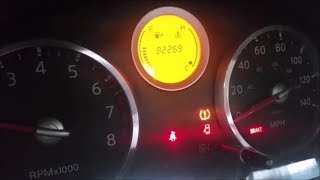
- AWD warning light may illuminate if tire sizes are mismatched, which can sometimes be confused with TPMS issues. 🎬 Watch: How the AWD and TPMS lights interact on an EX35
- Replacing the BCM before confirming sensor failure or RF interference.
- Replacing a TPMS sensor without first unplugging all 12V accessories, potentially wasting $150+ on a part and labor when the issue was a cheap charger.
- Assuming the code's default position (C1708 for Front-Left) is correct after tires have been rotated. Always use a TPMS tool to identify the non-responsive wheel's actual location.
Most Likely Causes
- Failed TPMS Sensor (Dead Battery) 🔴 High Probability The original TPMS sensors contain non-replaceable lithium-ion batteries with a finite lifespan of 5-10 years. For the 2008-2012 model years, these original sensors are now well beyond their expected service life, making battery failure the most common cause.
How to confirm: Use a TPMS activation tool (e.g., Autel TS508) to scan each wheel. The tool attempts to 'wake up' the sensor and read its data, including ID, pressure, and battery status. If one sensor fails to respond or shows a 'low battery' status, it has failed.
Typical fix: Replace the faulty TPMS sensor. The tire must be dismounted to access it. It is highly recommended to replace all four sensors if they are original, as the others are likely to fail soon. The new sensor ID must then be programmed to the BCM using a TPMS tool with OBD-II relearn capability. 🎬 See how to program new sensors using the Autel TS508
Est. part cost: $35-$90 per sensor - Radio Frequency (RF) Interference 🟡 Medium Probability As documented in TSB #ITB13039A, these vehicles' TPMS receivers are sensitive to RF noise from low-quality aftermarket devices like phone chargers, dash cams, and GPS units plugged into the 12V outlets. This interference jams the 315 MHz sensor signals.
How to confirm: Unplug ALL aftermarket accessories from every power outlet in the vehicle. Turn the car off and on again. Drive for 10-15 minutes above 16 mph to see if the TPMS light turns off. If it does, one of the accessories was the cause.
Typical fix: Identify the specific device causing the interference by plugging them back in one by one until the light returns. Replace the faulty device with a higher-quality, better-shielded alternative. This is a no-cost fix if successful.
Est. part cost: $0-$50
Rare But Worth Checking
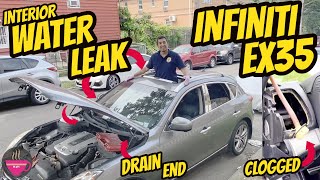
- Faulty Body Control Module (BCM) or Wiring: This is rare, but should be considered if all four TPMS sensors fail to communicate simultaneously (codes C1708, C1709, C1710, C1711) and RF interference has been ruled out. On the EX35 and related G35/G37 models, the BCM is located in the passenger footwell and is highly susceptible to water damage from clogged or detached sunroof drain tubes. 🎬 Watch: How to find and fix EX35 sunroof drain leaks Inspect the passenger-side carpet for dampness. A visual inspection of the BCM may reveal corrosion or burn marks.
- Leaking TPMS Sensor Seal: The rubber grommet and metal valve stem nut holding the sensor can corrode and fail, especially in salt-belt states, causing an air leak. This would typically trigger a low-pressure warning first, but if the sensor is damaged by moisture in the process, it could lead to a C1708 code. The service kits for these seals should be replaced whenever new tires are installed as a preventative measure.
Diagnosis Steps
- Verify the TPMS warning light behavior: Confirm it flashes for about a minute at startup before staying on solid, which indicates a system fault, not low pressure.
- Eliminate RF Interference: Unplug ALL aftermarket accessories (phone chargers, dash cams, etc.) from ALL 12V power outlets. This is a critical first step per TSB #ITB13039A.
- Drive the vehicle for 10-15 minutes at speeds over 16 mph to allow the system to reset and see if the light goes out.
- Scan for Codes: Use an OBD-II scanner capable of reading Chassis (C-codes) to confirm C1708 is the active fault. Note any other codes present.
- Test the Sensors: Use a TPMS diagnostic tool (e.g., Autel, ATEQ) to individually scan each wheel. Attempt to trigger each sensor to read its unique ID, pressure, temperature, and battery status.
- Identify the Faulty Sensor: The sensor that does not respond or shows a 'low battery' status is the one that needs to be replaced.
- Inspect BCM (If multiple sensors fail): If all sensors fail to respond and RF interference is ruled out, inspect the BCM in the passenger footwell for signs of water damage or corrosion.
- Professional Replacement: Take the vehicle to a tire shop to have the identified sensor replaced. Ensure they program the new sensor ID to the vehicle's computer using their OBD-II relearn tool.
Parts You'll Likely Need
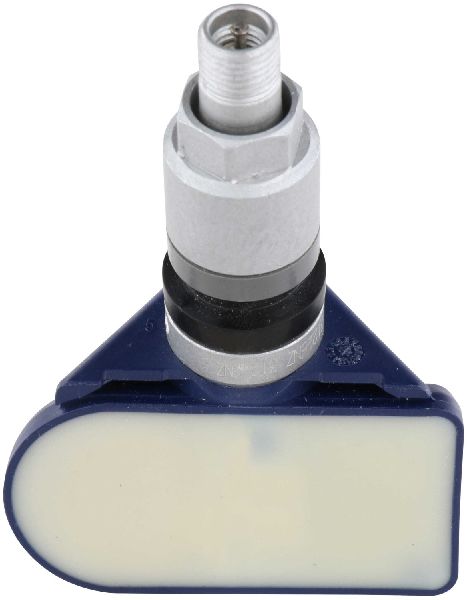
- Tire Pressure Monitoring System (TPMS) Sensor
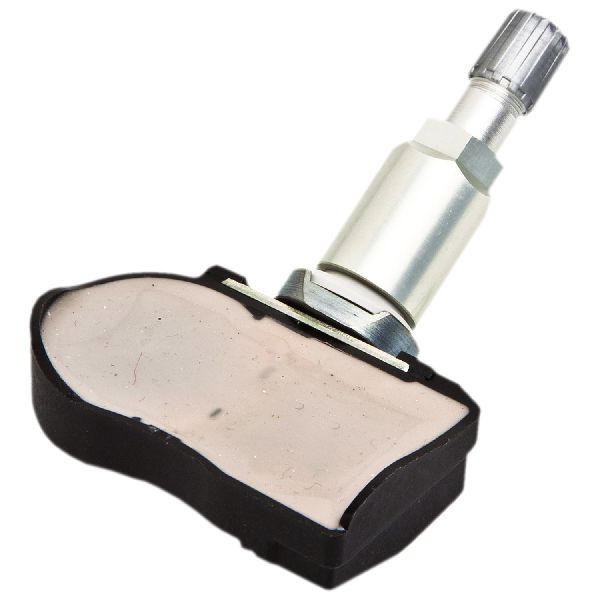
(OEM #40700-JK00C)— This is the most common failure point. The internal, non-serviceable battery dies, causing the 315 MHz sensor to stop transmitting data and triggering the C1708 code. The original part 40700-JK00C has been superseded by 40700-JK01C.
Trusted brands: Schrader (OEM Supplier), Continental/VDO, Denso, Standard Motor Products (SMP)
OEM price range: $70-$115
Aftermarket price range: $35-$85 - TPMS Sensor Service Kit
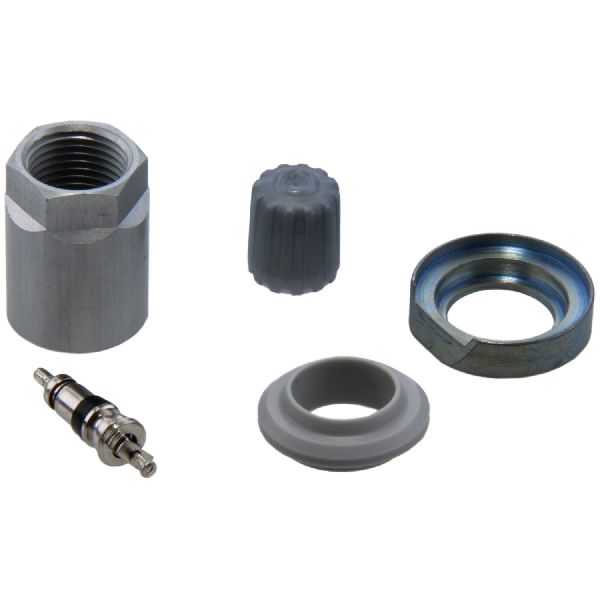
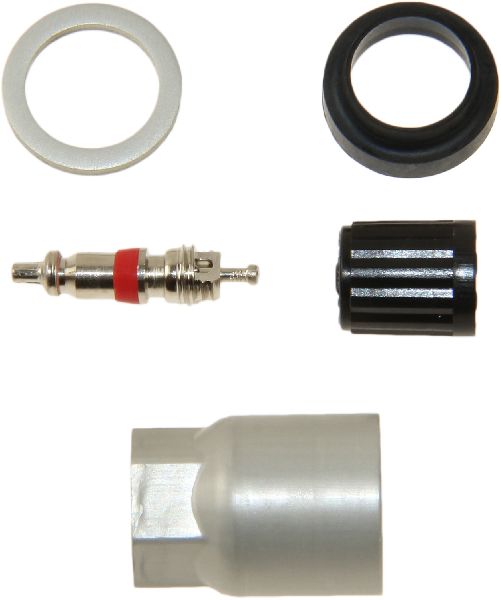
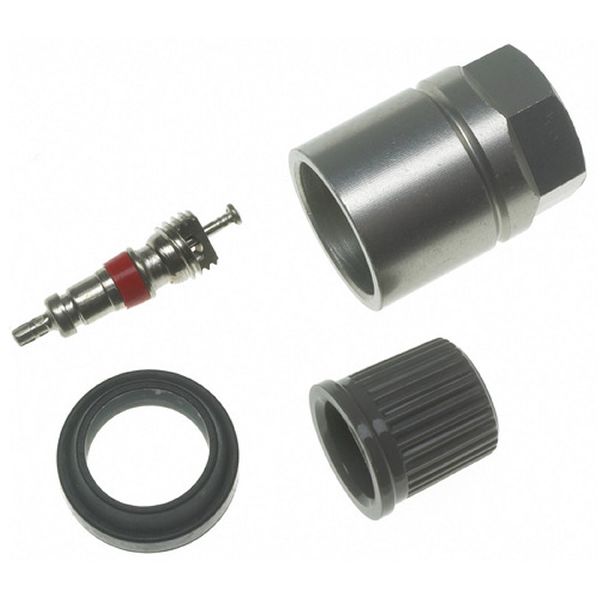
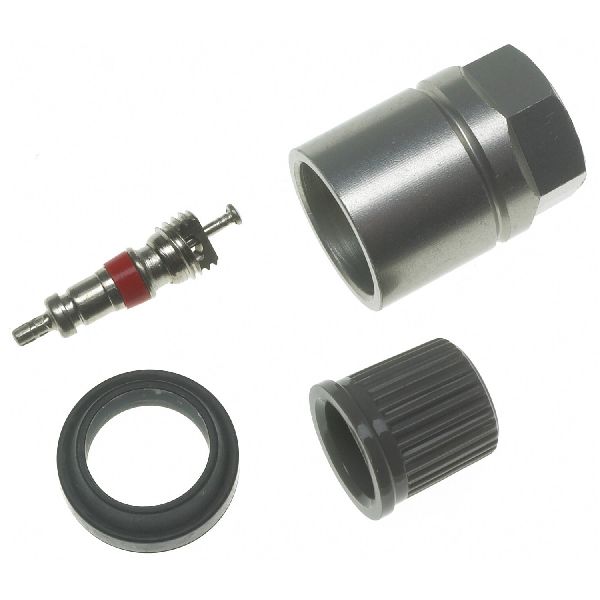
(OEM #40780-JA01B (example, verify for specific sensor))— This inexpensive kit contains the valve stem nut, rubber grommet, washer, and valve core. It is best practice to replace this kit whenever a sensor is replaced or tires are changed to prevent future air leaks from corrosion or seal degradation.
Trusted brands: Denso, ACDelco, Dorman
OEM price range: $10-$25
Aftermarket price range: $5-$15
Related Codes That Often Appear With This One
- C1709, C1710, C1711 — These codes are identical to C1708 but correspond to the other three wheel sensors. Seeing them all together can point towards a central issue like a faulty BCM, widespread RF interference, or simply that all the original sensor batteries have died around the same time.
Technical Service Bulletins (TSBs) & Recalls
- ITB13039A / NTB13-088a: A summary bulletin for the Low Tire Pressure Warning System (LTPWS) that specifically calls out 'Radio frequency interference causing a "No Data" (C1708, C1709, C1710, C1711) condition' as a known issue. It explicitly names 'Smart cell phone chargers' and 'aftermarket DVD players' as potential causes.
Platform-Specific Known Issues
- Per TSB #ITB13039A, this vehicle is highly susceptible to RF interference from aftermarket 12V accessories, which can mimic the symptoms of a failed sensor.
- The BCM is located in the passenger footwell and is vulnerable to water damage from clogged sunroof drains, a common issue on this platform that can cause widespread electrical problems, including TPMS failure.
- There is no simple, tool-free relearn procedure for new TPMS sensors. An OBD-II TPMS tool is required to register new sensor IDs to the BCM.
Mechanic-Grade Diagnostic Values
- TPMS Sensor RF Signal Frequency — expected: 315 MHz. Failure: No signal detected by a TPMS activation tool.
Scan Tool Commands That Help
- Nissan CONSULT-III or compatible aftermarket tool (e.g., Autel, ATEQ): TPMS Sensor ID Registration — This function is mandatory after replacing a TPMS sensor. It writes the new sensor's unique ID into the Body Control Module (BCM), allowing the system to recognize it. The procedure involves using the tool to scan each sensor in sequence (LF, RF, RR, LR), then connecting to the OBD-II port to upload the collected IDs to the BCM.
Wiring & Ground Locations
- BCM (Body Control Module) — Located in the passenger kick panel area.. The BCM is the receiver for the TPMS sensor signals and the central computer for the system. All wiring for the TPMS system terminates here. It is notoriously vulnerable to water damage from clogged sunroof drains, which can cause C1708 and other codes.
- Ground Point B202 — Located in the right kick panel.. This is a primary ground distribution point in the same physical location as the BCM. A poor connection at this ground could cause erratic behavior or failure of the BCM, leading to TPMS communication codes like C1708.
- BCM CAN Bus Wiring — Part of the main harness connected to the BCM's 40-pin connectors in the passenger kick panel. Specifically, CAN High (Blue wire) and CAN Low (Pink wire) at pins 20 and 19 of the black 40-pin connector.. Aftermarket devices, particularly remote starters, are often spliced into these critical data lines. Improper installation or removal can damage the wires, leading to communication faults between the BCM and other modules, which can manifest as C1708-C1711 codes.
Real Owner Repair Stories
- Reddit user in r/infiniti (Infiniti (model not specified, but platform-relevant)) — After having a water leak fixed and an aftermarket remote starter removed, the car returned with a long list of codes, including C1708, C1709, C1710, and C1711, all marked as 'PRESENT'.
❌ Tried (didn't work) The user had just picked the car up from the dealership, so the story starts at the point of diagnosis.
✅ What actually fixed it The final fix was not posted by the original author, but commenters identified the root cause was not the TPMS sensors themselves. The consensus was that the cluster of codes, including CAN communication errors (C1729), pointed directly to a wiring problem on the CAN bus caused by the improper removal of the remote starter, or general low voltage issues from a recently replaced battery. - YouTube channel 'How to Helen' (2011 Infiniti EX35) — Flashing TPMS warning light on the dashboard, in addition to a flashing AWD light.
❌ Tried (didn't work) The owner went directly to a tire shop for diagnosis.
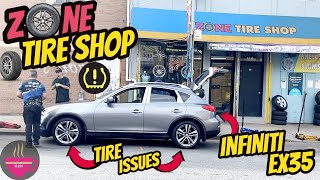
✅ What actually fixed it A tire shop diagnosed a dead battery in the rear driver's side TPMS sensor. They replaced the single faulty sensor and used a tool to recalibrate the new sensor to the car's system, which resolved the TPMS light.
OEM Part Supersession History
40700-JK00C→40700-JK01C— Standard part revision and consolidation by the manufacturer.
Heads up: Part number 40700-JK01C is a direct replacement for a long list of previous numbers, including 40700-JK00A, 40700-JK00B, 40700-JK00D, 40700-JK00E, 40700-JA01C, and others, with no known incompatibilities for this vehicle.
Model Year Variations Within This Range
- 2008-2010 (approx.): Some earlier Nissan/Infiniti models in this generation had a single-wire TPMS interface plug near the OBD-II port that could be manually grounded to initiate a relearn sequence without a scan tool.
- 2011-2012: For the 2011 model year and newer, the manual TPMS relearn plug was eliminated. Registering new sensors on these vehicles is not possible without a dedicated TPMS tool with OBD-II capability, such as the dealer's CONSULT-III computer.
Helpful Videos
![[New Tool Review] Programming my TPMS Sensors for the G37 Rims Using Autel TS508👌](https://img.youtube.com/vi/2qAQozHaDp4/mqdefault.jpg)
We Have This Part in Stock

The information in this article is provided for general reference and educational purposes only. Vehicle specifications, procedures, and part compatibility can vary by production date, trim level, and region. Always consult your vehicle's factory service manual and verify part numbers before purchasing or performing repairs. Safety-critical components such as airbags, seat belts, and braking systems should be installed by a qualified professional.
- Infiniti EX35:
- 🎬 Helpful Videos
- 🛍️ Shop This Part
- What's Unique About the 2008-2012 Infiniti EX35
- Diagnostic Flowchart
- Symptoms You May Notice
- Most Likely Causes
- Rare But Worth Checking
- Diagnosis Steps
- Parts You'll Likely Need
- Related Codes That Often Appear With This One
- Technical Service Bulletins (TSBs) & Recalls
- Platform-Specific Known Issues
- Mechanic-Grade Diagnostic Values
- Scan Tool Commands That Help
- Wiring & Ground Locations
- Real Owner Repair Stories
- OEM Part Supersession History
- Model Year Variations Within This Range
- 🎟️ Get 5% Off