

C1707 on 2016-2020 Infiniti Q50: TPMS Causes and Fixes
Code C1707 on a 2016-2020 Infiniti Q50 means the car's computer has detected low tire pressure in the rear left tire. The most common fix is simply adding air. If the issue persists, it could be a slow leak from the TPMS sensor's valve stem seal, a problem addressed by Infiniti TSB ITB20-003, or a failed sensor, often due to an expired battery.
- C1707 means your rear left tire's pressure is low. The first step is always to check and inflate the tire.
- A common problem on the Q50 is a slow leak from the TPMS valve stem seal, a fix covered by a manufacturer TSB (ITB20-003).
- If the TPMS light flashes for a minute on startup, the sensor itself has likely failed, most often due to a dead battery.
- When replacing a sensor on a 2016-2020 Q50, ensure it is a 433 MHz frequency model.
What's Unique About the 2016-2020 Infiniti Q50
For the 2016-2020 Infiniti Q50, a common issue beyond simple low pressure is a slow air leak originating from the TPMS sensor's valve stem seal, not the sensor itself. Infiniti recognized this problem and issued a Technical Service Bulletin (TSB ITB20-003) with a specific repair procedure. This TSB applies to 2014-2020 Q50 and 2017-2020 Q60 models and involves replacing the seal and tightening the valve nut to a new, higher torque specification of 10 N·m (88.5 in-lb) to prevent future leaks. Additionally, it's crucial to use the correct 433 MHz frequency TPMS sensor for these model years, as 2014-2015 models used a 315 MHz frequency.
Diagnostic Flowchart
Tap your situation to follow the diagnostic path that matches what you're seeing on this vehicle.
Symptoms You May Notice
- Solid TPMS warning light on the dashboard.
- Vehicle information display shows a "Check Tire Pressure" warning for the rear left tire.
- Visibly low or flat rear left tire.
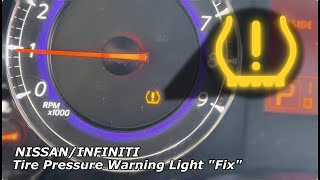
- A flashing TPMS light for about a minute at startup, which then stays solid, indicates a system malfunction 🎬 See why your TPMS light might be blinking at startup. (like a dead sensor battery), not low pressure.
- Replacing the entire TPMS sensor when the actual problem is the inexpensive valve stem seal. Always perform the leak test at the valve stem as described in TSB ITB20-003 before condemning the sensor.
Most Likely Causes
- Low Tire Pressure 🔴 High Probability Tires naturally lose a small amount of air over time, and pressure is significantly affected by drops in ambient temperature.
How to confirm: Use a quality tire pressure gauge to check the pressure in the rear left tire. Compare the reading to the recommended pressure on the driver's door jamb sticker.
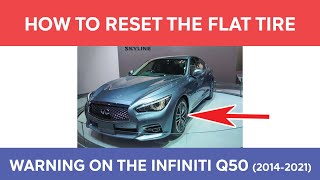
Typical fix: Inflate the tire to the recommended pressure. The TPMS light should go off after driving for a few minutes at speeds above 16-25 mph. 🎬 Watch: How to reset the flat tire warning on your Q50.
Est. part cost: $0 - Leaking TPMS Sensor Valve Stem Seal 🟡 Medium Probability A known issue for this platform, as documented in Infiniti TSB ITB20-003. The seal between the sensor's valve stem and the wheel can fail or be improperly seated, causing a slow leak of around 1 PSI every few days.
How to confirm: Inflate the tire to the correct pressure (the TSB suggests 35 PSI for testing). Apply a mixture of soap and water to the valve stem area where it meets the wheel and look for bubbles, which indicate a leak.
Typical fix: The tire must be dismounted from the wheel. Replace the valve stem washer/seal and valve nut with new parts. Torque the new nut to the updated specification of 10 N·m ±0.5 (88.5 in-lb) as per TSB ITB20-003.
Est. part cost: $5-$15 for the seal and nut kit. - Failed TPMS Sensor ⚪ Low Probability The internal, non-replaceable battery of a TPMS sensor has a finite lifespan, typically 5-10 years. As these vehicles age, battery failure becomes more common, leading to a system fault.
How to confirm: If the tire holds pressure and the valve stem isn't leaking, but the C1707 code persists or the TPMS light flashes for a minute at startup before staying solid, the sensor is likely faulty. A tire shop can use a TPMS diagnostic tool to test the sensor's signal and battery status, which will typically show as 'Low' or 'Bad'.
Typical fix: Replace the rear left TPMS sensor. This requires dismounting the tire. The new sensor must be the correct frequency (433 MHz) and must be registered to the vehicle's Body Control Module (BCM) using a TPMS scan tool.
Est. part cost: $40-$120 - Tire Puncture ⚪ Low Probability This is a general risk for any vehicle.
How to confirm: Visually inspect the tire for nails, screws, or other objects. Listen for hissing or spray the tire tread and sidewalls with soapy water to find the leak.
Typical fix: Repair the puncture with a plug or patch, or replace the tire if the damage is in the sidewall or is too large to repair.
Est. part cost: $25-$50 for a repair, $150+ for a new tire.
Rare But Worth Checking
- Corroded or Damaged Valve Stem Nut:
Diagnosis Steps
- Check the air pressure in the rear left tire with a reliable gauge.
- Inflate the tire to the pressure specified on the driver's door jamb sticker.
- Drive the vehicle for 10-15 minutes at speeds above 16 mph to allow the system to reset. The light should turn off.
- If the light returns, re-check the pressure. If it has dropped, perform a leak test. Spray the entire tire, especially the valve stem base, with soapy water.
- If bubbles appear around the valve stem base, the valve stem seal is leaking. This confirms the issue described in TSB ITB20-003.
- To fix the seal leak, the tire must be dismounted. Replace the valve stem washer/seal and nut, then torque the nut to the new specification of 10 N·m (88.5 in-lb).
- If the leak is elsewhere on the tire (tread/sidewall), have the tire repaired or replaced.
- If the tire holds pressure perfectly but the C1707 code persists, the TPMS sensor itself is the likely culprit. A flashing TPMS light upon startup is a strong indicator of a sensor or system fault.
- Have a tire shop test the sensor with a TPMS tool. If it's bad (shows 'Low Battery' status), replace it with a 433 MHz sensor and ensure it is correctly registered to the vehicle.
Parts You'll Likely Need
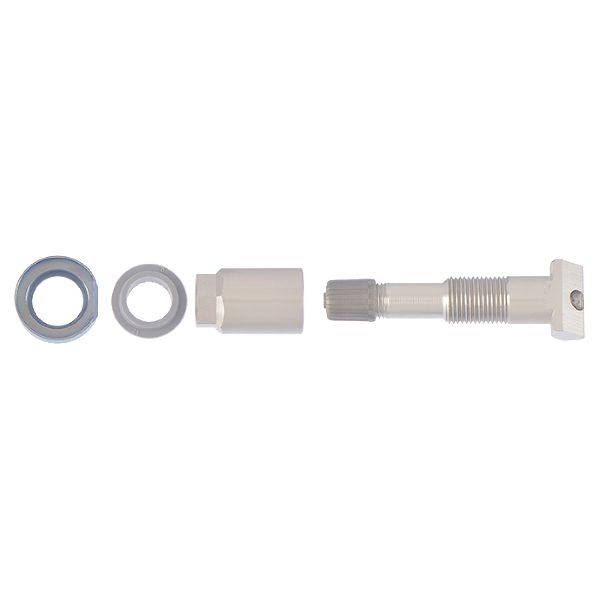
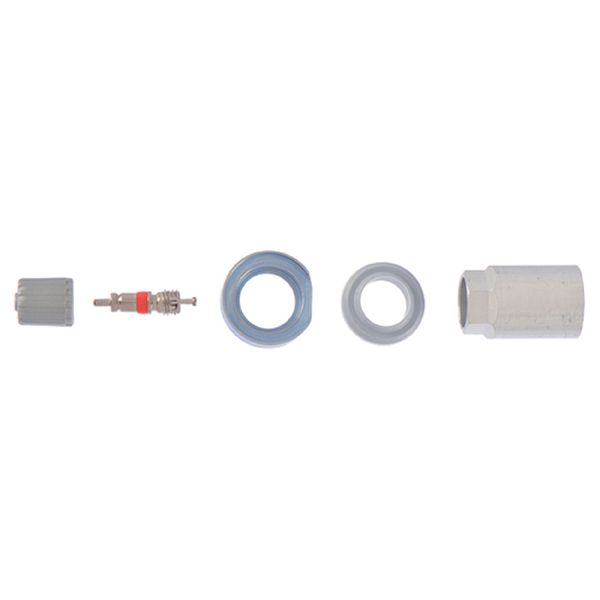
- TPMS Sensor Valve Stem Seal Kit
(OEM #40708-3AN0B (Kit may include this washer/seal))— This is the specific fix for the common leak documented in TSB ITB20-003. The kit typically includes the grommet (seal) and retaining nut.
Trusted brands: Infiniti OE, Dorman
OEM price range: $9-$15
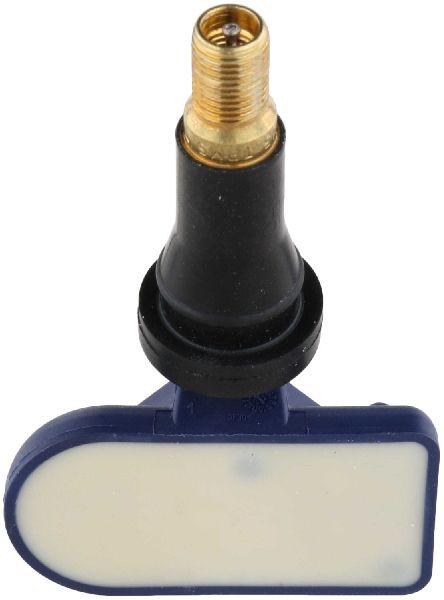
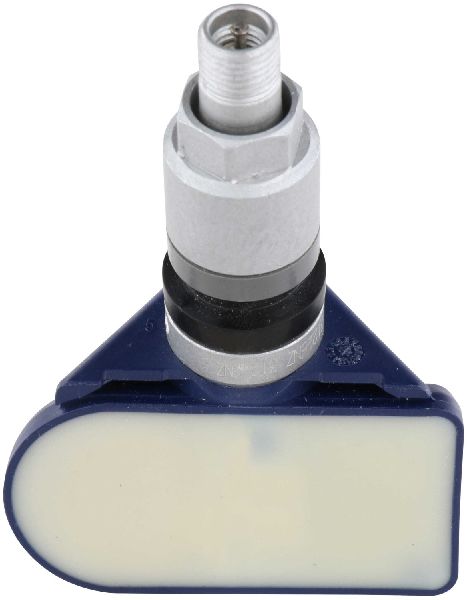
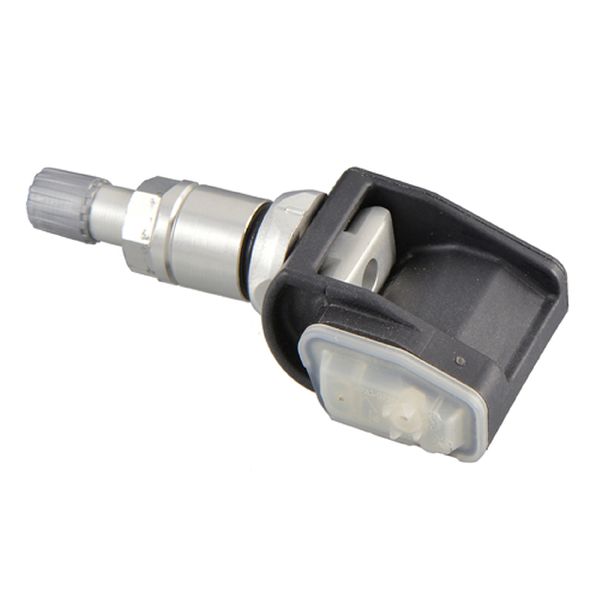
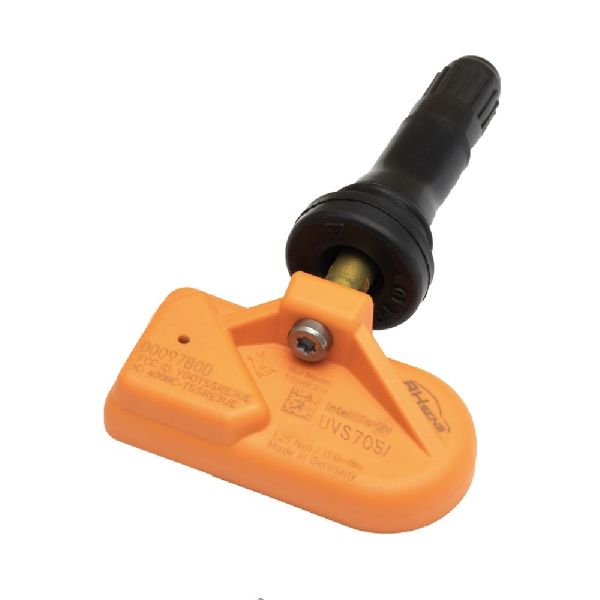
Aftermarket price range: $5-$10 - TPMS Sensor (433 MHz)
(OEM #40700-4GA0B)— Required if the sensor's internal battery has died or the sensor has failed electronically. 2016-2020 models require the 433 MHz frequency. This part number supersedes 40700-4GA0A.
Trusted brands: Infiniti OE, Denso, Schrader, Autel
OEM price range: $90-$135
Aftermarket price range: $40-$80
Related Codes That Often Appear With This One
- C1704, C1705, C1706 — These are the corresponding low pressure codes for the other three wheels (Front Left, Front Right, Rear Right). Seeing them together could indicate a systemic issue, such as pressure loss in all tires due to cold weather, or that all tires are low due to neglect.
Technical Service Bulletins (TSBs) & Recalls
- ITB20-003: Addresses a slow air leak from the TPMS sensor's valve stem on 2014-2020 Q50 and 2017-2020 Q60 models, which can cause codes like C1707. It provides a specific diagnostic procedure and a repair involving a new seal, nut, and an updated torque specification of 10 N·m.
Platform-Specific Known Issues
- A known issue documented in Technical Service Bulletin ITB20-003 describes a slow air leak from the TPMS sensor's valve stem. The fix is to replace the washer/seal and valve nut and tighten it to a new, higher torque specification of 10 N·m (88.5 in-lb). This applies to 2014-2020 Q50 and 2017-2020 Q60 models.
Mechanic-Grade Diagnostic Values
- TPMS Sensor Battery Status — expected: A professional TPMS tool (e.g., Autel, Bartec) should display a 'Good' or 'OK' status for the sensor battery.. Failure: The tool will display a 'Low' or 'Bad' battery status, indicating a pending sensor failure even if it's still transmitting intermittently.
- Tire Inflation Indicator Over-Inflation Warning — expected: When inflating tires with the ignition ON, the horn beeps once when the correct pressure is reached.. Failure: If the tire is over-inflated by approximately 4 PSI or more, the horn will beep again and the hazard lights will flash three times. 🎬 Watch: How the Infiniti tire inflation indicator system works.
Scan Tool Commands That Help
- Infiniti CONSULT-III plus or equivalent professional scan tool: ID REGIST (ID Registration) — This function is required after replacing a TPMS sensor to write the new sensor's unique ID to the Body Control Module (BCM). The path is typically: BCM -> AIR PRESSURE MONITOR -> WORK SUPPORT -> ID REGIST.
Wiring & Ground Locations
- Body Control Module (BCM) — Located in the passenger side of the cabin, typically behind the kick panel or glove box area.. The BCM acts as the receiver and control unit for the TPMS system. All sensor signals are sent to, interpreted by, and stored in the BCM. A fault with the BCM or its power/ground connections can mimic a sensor failure.
Real Owner Repair Stories
- Reddit user on r/infiniti (2015 Infiniti Q50 (demonstrates the system architecture)) — TPMS light would not reset after installing new wheels with new OEM sensors.
❌ Tried (didn't work) Driving the car to force an automatic relearn., Attempting a 'paper clip hack' or using a simple, inexpensive wireless programming tool.
✅ What actually fixed it The vehicle required a professional TPMS tool with an OBD-II connector to write the new sensor IDs directly into the Body Control Module. The process took a tire shop (Costco) less than a minute to complete.
OEM Part Supersession History
40700-4GA0A→40700-4GA0B— Part revision.
Heads up: This part is for 2014-2015 Q50 models only. It operates at 315 MHz and is NOT compatible with 2016+ models which require a 433 MHz sensor.40700-3JA0A (likely predecessor)→40700-3JA0B— Part revision.
Heads up: This is the correct 433 MHz sensor for 2016-2020 Q50 models. It is NOT compatible with 2014-2015 models.
Model Year Variations Within This Range
- 2014-2015: These models use 315 MHz TPMS sensors (Part # 40700-4GA0B). They also feature the 3.7L V6 engine.
- 2016-2020: These models use 433 MHz TPMS sensors (Part # 40700-3JA0B). They feature the 3.0L twin-turbo V6 engine. Using a 315 MHz sensor on these vehicles will result in a TPMS malfunction light.
Helpful Videos

We Have This Part in Stock

The information in this article is provided for general reference and educational purposes only. Vehicle specifications, procedures, and part compatibility can vary by production date, trim level, and region. Always consult your vehicle's factory service manual and verify part numbers before purchasing or performing repairs. Safety-critical components such as airbags, seat belts, and braking systems should be installed by a qualified professional.
- Infiniti Q50:
- 🎬 Helpful Videos
- 🛍️ Shop This Part
- What's Unique About the 2016-2020 Infiniti Q50
- Diagnostic Flowchart
- Symptoms You May Notice
- Most Likely Causes
- Rare But Worth Checking
- Diagnosis Steps
- Parts You'll Likely Need
- Related Codes That Often Appear With This One
- Technical Service Bulletins (TSBs) & Recalls
- Platform-Specific Known Issues
- Mechanic-Grade Diagnostic Values
- Scan Tool Commands That Help
- Wiring & Ground Locations
- Real Owner Repair Stories
- OEM Part Supersession History
- Model Year Variations Within This Range
- 🎟️ Get 5% Off