

C1704 on 2016-2020 Infiniti Q50: TPMS Low Pressure Fault Causes and Fixes
This code indicates low tire pressure in the front-left tire. Before replacing any parts, check for and correct the tire pressure. A known issue on these vehicles is a slow leak from the TPMS sensor's valve stem seal, which is a simple and inexpensive fix detailed in an Infiniti Technical Service Bulletin.
- C1704 specifically points to the front-left tire's pressure.
- Always check and correct the tire pressure before assuming a part has failed.
- A known issue on the Q50 and Q60 is a leaking valve stem seal (TSB ITB20-003), a much cheaper fix than replacing the whole sensor. Check for leaks with soapy water.
- A solid TPMS light indicates low pressure, while a flashing light on startup indicates a system malfunction (like a bad sensor or module). This code is for a solid light.
- If you replace the sensor, it must be registered to the car with a specialized tool.
- The correct torque for the TPMS valve stem nut is critical: 10 N·m (88.5 in-lb).
What's Unique About the 2016-2020 Infiniti Q50

For the 2016-2020 Infiniti Q50, this code is frequently caused by a specific, documented issue. Infiniti released Technical Service Bulletin ITB20-003, which identifies a common problem where air leaks slowly from the seal between the TPMS sensor's valve stem and the wheel. This means the sensor itself is often fine, but the inexpensive seal has failed. The official fix involves replacing the seal and nut and torquing it to a new specification of 10 N·m (88.5 in-lb).
Diagnostic Flowchart
Tap your situation to follow the diagnostic path that matches what you're seeing on this vehicle.
Symptoms You May Notice
- Solid (non-flashing) TPMS warning light on the instrument cluster.
- A message on the vehicle information display indicating low tire pressure.
- A noticeable drop in pressure in the front-left tire over several days or weeks, often around 1 psi every 3 days.
- Replacing the entire TPMS sensor when only the inexpensive valve stem seal is leaking.
- Replacing the BCM or other modules before thoroughly checking the tire, valve stem seal, and sensor.
Most Likely Causes

- Slow leak from TPMS valve stem seal 🔴 High Probability A known issue documented in Infiniti TSB #ITB20-003 for the Q50 and Q60 models built before December 2019.
How to confirm: Inflate the tire to 35 psi. Apply a mixture of soap and water to the area where the TPMS valve stem exits the wheel. Look for bubbles forming around the valve nut, which confirms the leak.
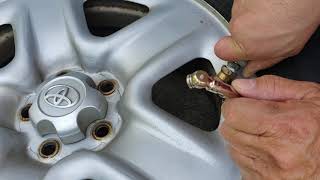
Typical fix: Replace the valve stem washer/seal and valve nut, then torque to the new specification of 10 N·m (88.5 in-lb). This does not require replacing the entire sensor. 🎬 Watch: How to fix a slow leak at the valve stem.
Est. part cost: $5-$15 - Low tire pressure from a puncture or natural air loss 🔴 High Probability
How to confirm: Use a quality tire pressure gauge to check the pressure in the front-left tire. Compare it to the specification on the driver's door jamb sticker.
Typical fix: Inflate the tire to the correct pressure. If it loses pressure again quickly, inspect the tire for punctures.
Est. part cost: $0-$30 for a puncture repair - Faulty TPMS Sensor 🟡 Medium Probability TPMS sensor batteries have a finite lifespan, typically 5-10 years. Vehicles in this year range are reaching the age where battery failure is common.
How to confirm: A professional TPMS diagnostic tool can read the sensor's battery status, transmission frequency, and pressure reading directly. A key symptom of a failed sensor (as opposed to low pressure) is a TPMS light that flashes for about a minute upon startup before staying solid.
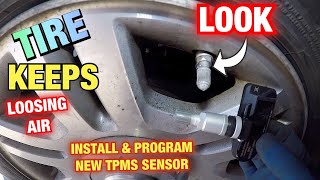
Typical fix: Replace the front-left TPMS sensor and perform the TPMS relearn procedure so the vehicle recognizes the new sensor.
Est. part cost: $40-$120
Rare But Worth Checking
- Faulty TPMS Control Module: This is rare. It should only be considered after all sensors have been verified to be working correctly and properly registered, yet the code persists or cannot be cleared.
- BCM (Body Control Module) Failure due to Water Ingress: Extremely rare for this specific code, but the Q50 is known to suffer from clogged sunroof drains which can cause water to leak onto and damage the BCM located in the passenger footwell area. A damaged BCM can cause a wide range of electrical issues, including erroneous TPMS warnings. This should be a last resort after all other TPMS components are ruled out.
- Cracked Wheel: A hairline crack in the aluminum wheel, often on the inner barrel from a pothole impact, can cause a slow leak that is difficult to detect. This can mimic the symptoms of the TSB-related valve stem leak. A thorough leak test with soapy water should include the entire wheel surface, especially the inner barrel and bead seat area.
Diagnosis Steps
- Use a reliable tire pressure gauge to check the pressure in the front-left tire. Inflate it to the pressure specified on the driver's door jamb sticker.
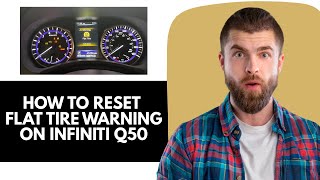
- Drive the vehicle for several minutes at speeds above 16-25 MPH to allow the system to reset. If the light turns off, the issue was simply low pressure. 🎬 See this quick guide on resetting the flat tire warning.
- If the light returns, perform a leak test. Inflate the tire to 35 psi. Spray soapy water on the tire's tread, sidewall, and especially around the TPMS valve stem where it meets the wheel. Look for bubbles.
- If bubbles appear around the valve stem, the valve stem seal is the confirmed culprit, as described in TSB ITB20-003.
- If no leaks are found, use a TPMS diagnostic tool to check the front-left sensor. Verify its battery status, pressure reading, and temperature. A flashing light on startup is a strong indicator of a sensor fault.
- If the TPMS tool confirms the sensor has a dead battery or is not transmitting, the sensor must be replaced.
- After replacing a sensor or a valve stem seal, ensure the tire is re-balanced and the TPMS sensor is registered to the vehicle using the correct relearn procedure. The new valve nut should be torqued to 10 N·m (88.5 in-lb).
Parts You'll Likely Need

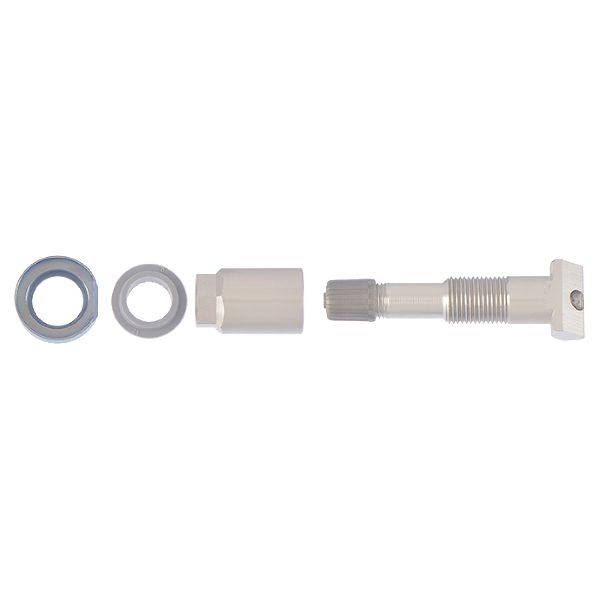
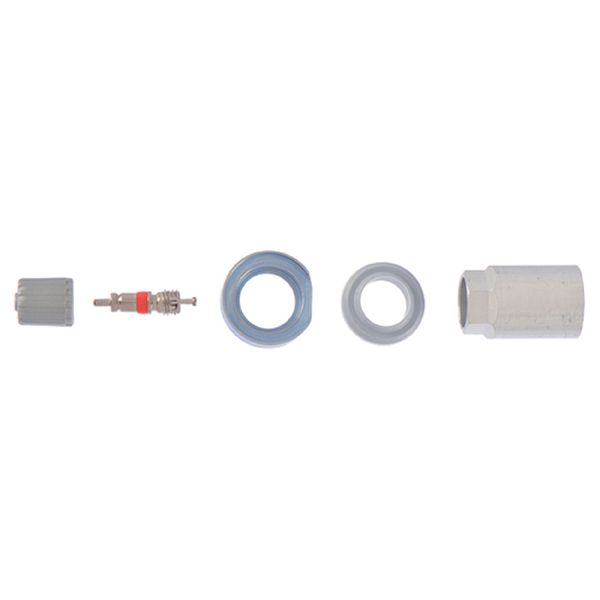
- TPMS Valve Stem Seal/Grommet Kit
(OEM #40708-3VA0A (supersedes 40702-3AN0A, 40708-3VA0B))— This is the most probable fix for the specific slow leak issue identified in TSB ITB20-003 for the 2016-2020 Q50. This kit contains the seal and nut needed for the repair.
Trusted brands: Infiniti (OEM), Schrader, Dill
OEM price range: $5-$15
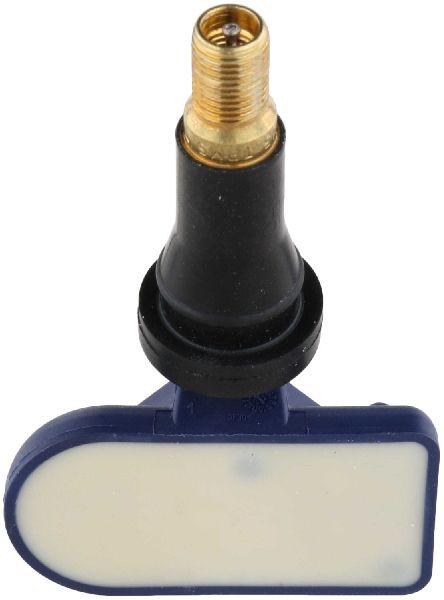
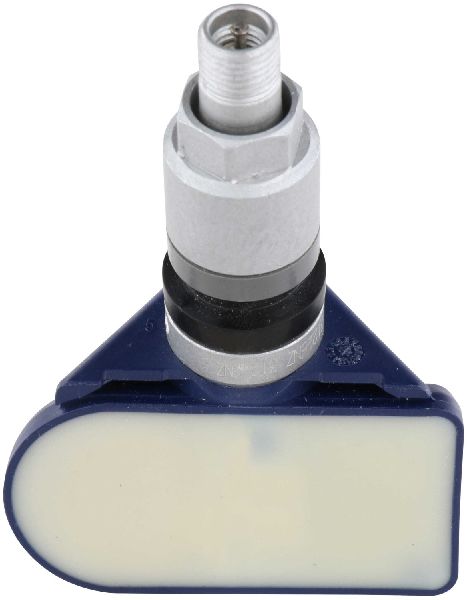
Aftermarket price range: $5-$10 - Tire Pressure Monitoring System (TPMS) Sensor
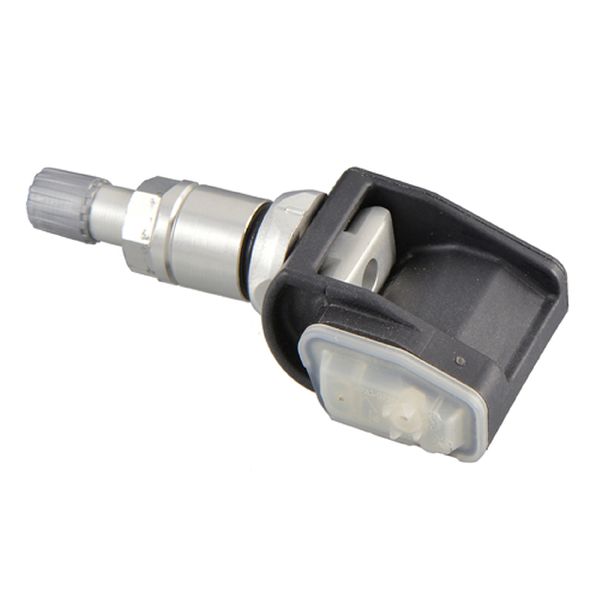
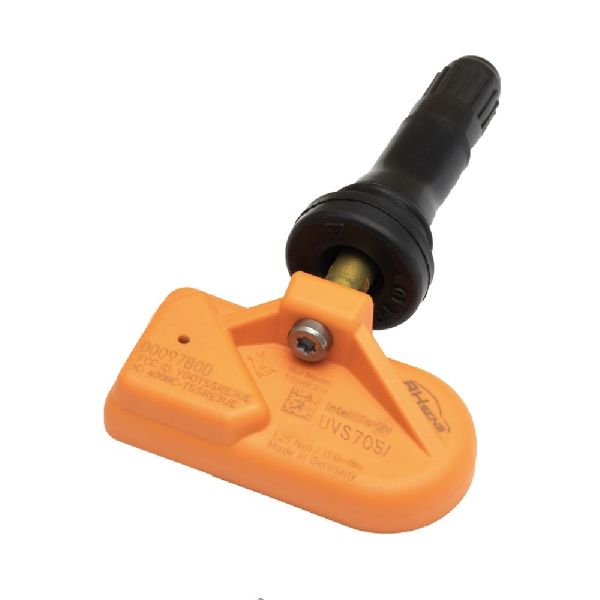
(OEM #40700-4GA0B)— If the sensor's battery has died (typically after 5-10 years) or it has failed internally, it will need to be replaced. This is the second most likely cause after a simple leak.
Trusted brands: Hitachi, Continental, Denso
OEM price range: $80-$120
Aftermarket price range: $40-$70
Related Codes That Often Appear With This One
- C1705, C1706, C1707 — These codes correspond to the other three wheels (Front Right, Rear Right, Rear Left). They may appear with C1704 if multiple tires are low or if the valve stem seals on other wheels are also leaking.
- C1730, C1731, C1732, C1733 — Infiniti TSB ITB20-003 explicitly lists these codes as potentially being stored along with C1704 for the same slow leak issue. While these codes may refer to suspension components on other vehicle brands, for this specific Infiniti fault, they are related to the TPMS.
Technical Service Bulletins (TSBs) & Recalls
- ITB20-003: Describes a condition where the TPMS warning lamp is on due to a slow air leak from the TPMS sensor's valve stem seal, storing codes C1704-C1707 and C1730-C1733. It provides the full diagnostic and repair procedure, including a revised torque spec.
Platform-Specific Known Issues
- TSB ITB20-003: A notable issue for 2014-2020 Q50 and 2017-2020 Q60 models is a slow air leak (around 1 psi every 3 days) from the TPMS sensor's valve stem seal, causing codes like C1704 to be stored. The fix involves replacing the seal and nut, not the entire sensor.
- Clogged Sunroof Drains: Q50s are known to have issues with clogged front sunroof drain tubes. This can cause water to back up and leak inside the cabin, often onto the BCM in the passenger footwell, potentially causing various electrical faults.
Mechanic-Grade Diagnostic Values
- Tire Inflation Indicator Over-Inflation Warning — expected: If a tire is over-inflated by more than approximately 4 PSI while using the Tire Inflation Indicator feature, the horn will beep and hazard lights will flash three times.. Failure: The system does not provide the expected audible or visual cues during inflation. 🎬 Watch: How the TPMS and Tire Inflation Indicator work together.
Scan Tool Commands That Help

- Infiniti CONSULT or compatible advanced scan tool (e.g., ATEQ VT56): TPMS Sensor ID Registration — This function is required after replacing a TPMS sensor to write the new unique sensor ID to the Body Control Module (BCM). The tool is connected to the OBD-II port, and after activating each sensor, the new IDs are uploaded to the vehicle's ECU.
- Vehicle's built-in system (No tool required): Tire Inflation Indicator — When inflating tires, with the ignition ON (engine off) and parking brake applied, this system provides feedback. The hazard lights flash during inflation, and the horn beeps once when the correct pressure is reached. This helps confirm the system is communicating with the sensor and allows for accurate inflation without a separate gauge.
Wiring & Ground Locations
- BCM (Body Control Module) — Located in the passenger side footwell area, typically behind the glove box or kick panel.. The BCM is the central control unit for the TPMS. It receives signals from each tire sensor and communicates with the instrument cluster. Any wiring issues, water damage from clogged sunroof drains, or poor ground connections (like M57 or M121 from the service manual) can disrupt TPMS function and cause erroneous codes.
Real Owner Repair Stories
- Forum User Reports (Various Infiniti Q50 models) — Persistent low tire pressure warning (like C1704) on one wheel, even after checking for leaks at the valve stem and tire tread.
❌ Tried (didn't work) Replacing the TPMS sensor, Replacing the TPMS valve stem seal per TSB ITB20-003
✅ What actually fixed it The root cause was a hairline crack on the inner barrel of the aluminum wheel, typically from a pothole impact. The slow leak was only found when the entire wheel was submerged in a water tank or meticulously sprayed with soapy water. The fix required either welding the crack by a wheel repair specialist or replacing the wheel entirely.
OEM Part Supersession History
40700-4GA0A→40700-4GA0B— Standard part revision by the manufacturer. The newer part is a direct replacement for the older one.
Heads up: Both parts are for the same frequency. However, ensure the correct frequency (315 MHz for pre-2016, 433 MHz for 2016+) is ordered for the specific vehicle year.
Model Year Variations Within This Range
- 2014-2015: These models typically use a 315 MHz frequency for the TPMS sensors.
- 2016-2020: These models use a 433 MHz frequency for the TPMS sensors. Using a 315 MHz sensor on these vehicles will result in a failure to register the sensor.
Helpful Videos



We Have This Part in Stock

The information in this article is provided for general reference and educational purposes only. Vehicle specifications, procedures, and part compatibility can vary by production date, trim level, and region. Always consult your vehicle's factory service manual and verify part numbers before purchasing or performing repairs. Safety-critical components such as airbags, seat belts, and braking systems should be installed by a qualified professional.
- Infiniti Q50:
- 🎬 Helpful Videos
- 🛍️ Shop This Part
- What's Unique About the 2016-2020 Infiniti Q50
- Diagnostic Flowchart
- Symptoms You May Notice
- Most Likely Causes
- Rare But Worth Checking
- Diagnosis Steps
- Parts You'll Likely Need
- Related Codes That Often Appear With This One
- Technical Service Bulletins (TSBs) & Recalls
- Platform-Specific Known Issues
- Mechanic-Grade Diagnostic Values
- Scan Tool Commands That Help
- Wiring & Ground Locations
- Real Owner Repair Stories
- OEM Part Supersession History
- Model Year Variations Within This Range
- 🎟️ Get 5% Off