

OBD-II Code C1687: Power Steering Communication Failure
What C1687 means, why it triggers, and how to fix it
- Code C1687 disables your vehicle's Electronic Stability Control (ESC) and Anti-lock Brakes (ABS) because the main computer lost communication with the power steering module.
- Over 80% of C1687 cases occur in 2011-2016 Hyundai and Kia models, typically triggered by a worn $15 flexible steering coupler or damaged MDPS wiring.
- Always test the battery and inspect the 120-ohm CAN bus termination resistance before authorizing a $1,000+ steering column replacement.
- Do not drive at highway speeds with an active C1687; the sudden loss of power steering assist and ABS dramatically increases the risk of an accident during emergency maneuvers.
What Does C1687 Mean?

Code C1687 indicates the Hydraulic Electronic Control Unit (HECU)—which manages your ABS and ESC—has lost communication with the Motor Driven Power Steering (MDPS) module. These safety systems require real-time steering angle data to function. When the data stream drops, the vehicle deactivates the ABS and ESC systems and illuminates dashboard warning lights.
Technical definition: The Hydraulic Electronic Control Unit (HECU) continuously monitors the Controller Area Network (CAN) bus for steering angle data from the Motor Driven Power Steering (MDPS) module. If the HECU fails to receive a valid message within 500 milliseconds, it registers a communication timeout and stores DTC C1687.
Can I Drive With C1687?
Yes, But With Caution. Yes, but only for a short trip to a repair facility. Your Electronic Stability Control (ESC) and Anti-lock Brakes (ABS) are disabled, significantly increasing the risk of losing control during emergency maneuvers. You will likely lose power steering assist, making the wheel extremely difficult to turn at low speeds. Driving without power assist causes accelerated wear on the steering rack and tie rods.
Common Causes

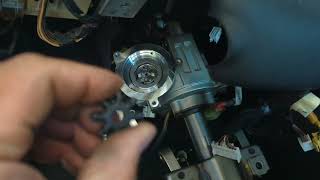
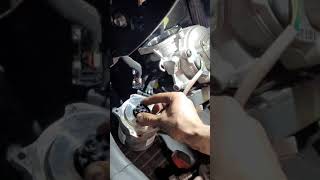
- Worn Flexible Steering Coupler (Hyundai/Kia) (Very Common) — On many Hyundai and Kia models, a worn flexible steering coupler inside the column causes excessive vibration and a distinct clunking noise. 🎬 Watch: How to replace the $9 steering coupler yourself. This mechanical vibration damages the internal electronics over time, triggering intermittent communication errors.
- Damaged or Corroded Wiring and Grounds (Very Common) — The CAN bus network relies on a pair of twisted wires. These wires, their connectors, or the module ground points can fray, short, or corrode. This is the most frequent electrical cause of C1687, especially in areas exposed to road salt.
- Low or Unstable Battery Voltage (Common) — Control modules require stable voltage to communicate. A weak, failing, or recently disconnected battery causes widespread electronic glitches, interrupting module communication and triggering this code.
- Faulty Motor Driven Power Steering (MDPS) Module (Common) — The electronic brain of the power steering system can fail internally. This prevents it from broadcasting steering angle data onto the CAN network, resulting in a timeout from the ABS module's perspective.
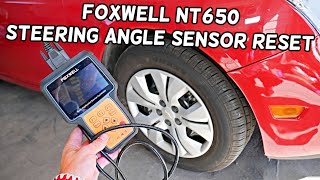
- Steering Angle Sensor (SAS) Requires Calibration (Less Common) — After a wheel alignment, battery replacement, or steering repair, the Steering Angle Sensor (SAS) must be recalibrated. 🎬 See how to recalibrate the sensor using an OBD scanner. Skipping this step generates conflicting data, leading to communication errors between the steering and stability systems.
- Software Glitch or Calibration Error (Less Common) — A control module sometimes requires a software update to correct a known bug. On certain GM vehicles, a calibration error causes the module to retain a DTC as 'current' even after the initial fault is repaired, requiring a re-program.
- Faulty ABS/ESC Control Module (HECU) (Rare) — The ABS/ESC computer can fail internally, preventing it from receiving or interpreting messages from the power steering system, even if the MDPS is broadcasting correctly.
- Internal Module Failure due to Condensation (Rare) — In extremely cold weather, condensation forms and freezes inside the power steering control module on certain Subaru models. This causes internal relays to stick, preventing the system from powering on.
Symptoms

- Electronic Stability Control (ESC/ESP) Warning Light is On — The stability control system deactivates and illuminates its warning light immediately when steering data is lost.
- ABS Warning Light is On — The Anti-lock Braking System works in conjunction with the ESC system and disables as a safety precaution, triggering its own warning light.
- Loss of Power Steering Assist — The steering suddenly becomes heavy and difficult to turn, particularly at low speeds, indicating the MDPS module has shut down.
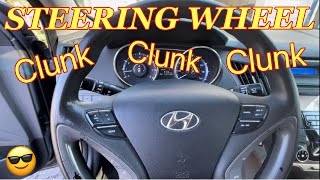
- Steering Clunks or Clicks — A clunking or clicking sound when turning points to a worn flexible steering coupler, the most common mechanical failure on Hyundai/Kia systems that set C1687.
- Cruise Control is Inoperative — Cruise control automatically disables when active faults exist in the braking, stability, or power steering systems.
Diagnostic Flowchart
Tap your situation to follow the diagnostic path that matches what you're seeing on this code.
Common Fixes & Costs
- Replacing the Flexible Steering Coupler
— Parts: $10-$30, Labor: $250-$400, ~2.5 hr book time
(Professional)
Hyundai Elantra/Sonata, Kia Optima: OEM 56315-2K000-FFF (Alt: {"brand": "Dorman", "part_number": "Multiple options available"}, {"brand": "TRQ", "part_number": "HYSTC00001"}) - Repairing Damaged Wiring or Connectors — Parts: $10-$50, Labor: $150-$300, ~2.0 hr book time (Intermediate)
- Steering Angle Sensor Calibration — Parts: $0, Labor: $100-$150, ~1.0 hr book time (Professional)
- Replacing the Steering Angle Sensor
— Parts: $150-$400, Labor: $200-$300, ~2.0 hr book time
(Professional)
Hyundai Sonata (2011-2014): OEM 93490-3S110 (Alt: {"brand": "Autotecnica", "part_number": "FD1318479"}) - Software Update for Control Module — Parts: $0, Labor: $100-$200, ~1.0 hr book time (Professional)
- Replacing the MDPS Control Module/Steering Column
— Parts: $800-$2000, Labor: $300-$500, ~3.0 hr book time
(Professional)
Kia Optima (2014-2015, w/ Smart Key): OEM 56310-2T325 - Replacing the ABS/HECU Module — Parts: $600-$1500, Labor: $200-$400, ~2.5 hr book time (Professional)
DIY vs Professional
- Repairing Damaged Wiring or Connectors — Beginner:
Tools: Multimeter, wire strippers, crimpers, heat shrink tubing, soldering iron. - Replacing the Flexible Steering Coupler — Beginner:
Tools: Socket set (10mm, 12mm, 14mm), T30 Torx bit, trim removal tools, torque wrench. - Steering Angle Sensor Calibration — Beginner:
Tools: An advanced bi-directional OBD-II scan tool with SAS calibration functions. - Replacing the Steering Angle Sensor — Beginner:
Tools: Tools to remove steering wheel and column shrouds, plus an advanced scan tool for mandatory post-replacement calibration. - Replacing Control Modules (MDPS, ABS) — Beginner:
Tools: Standard mechanic's tools plus manufacturer-specific software for programming the new module.
Used vs. New Parts: Buying Guide
When a used part is worth it: For a high-mileage vehicle (>150k miles) on a tight budget, a used MDPS steering column from a reputable salvage yard with a warranty is a cost-effective solution. Match the part number exactly.
Donor-vehicle mileage cap: roughly under 80000 miles for the part to have meaningful remaining life.
Donor quality checklist:
- Verify the donor vehicle's mileage and ensure it was not scrapped due to a front-end collision.
- Purchase from a reputable seller offering at least a 90-day warranty.
- Visually inspect for physical damage, corrosion, or tampering before installation.
Decision logic:
- If The failed part is the inexpensive flexible coupler ($15 part) → Always buy new; there is no benefit to buying used.
- If Vehicle is newer or has low mileage (<80k miles) → Buy a new OEM or a high-quality remanufactured MDPS module. The risk of premature failure outweighs the cost savings.
- If Budget is the primary concern on an older, high-mileage vehicle → A used MDPS module is a reasonable option, but accept the risk of a shorter lifespan.
Warranty tradeoff: Used parts typically come with a 30-90 day part-only warranty. New aftermarket or remanufactured modules carry a 1-year to lifetime warranty, providing greater protection against defects.
Worst-case if a used part fails: $400-$800 if a used electronic module fails after the warranty period, requiring a second replacement part and a second round of installation labor.
What Happens If You Wait — Timeline
- Immediate: ABS and ESC warning lights illuminate. ABS and Stability Control are disabled. Power steering may or may not be lost. (MPG impact: 0%% · Added cost: $0, but safety risk is extremely high.)
- 0-2 months: If power steering assist is lost, continued driving puts high physical stress on mechanical steering components not designed for unassisted forces. (MPG impact: 0%% · Added cost: $200-$500 in accelerated wear on steering components.)
- 2-6 months: If the root cause is an intermittent wiring short, the unstable electrical signals affect other modules on the CAN bus, causing new, unrelated symptoms. (MPG impact: 0%% · Added cost: $500-$1500 as diagnosing a spreading electrical issue becomes significantly more complex.)
- 6+ months: A continuously failing module or persistent short circuit pulls down the entire CAN network, leading to a no-start condition or widespread electronic failure. (MPG impact: 0%% · Added cost: $1500-$3000 for multiple module replacements and extensive diagnostic labor.)
Cost of Not Fixing It
- Immediate: Loss of ABS and Electronic Stability Control (ESC) function, significantly increasing the risk of losing control in an emergency braking or swerving maneuver. Potential for sudden loss of power steering assist. (Added cost: Negligible, but safety risk is very high.)
- 1-6 months: Continued driving without power assist puts high mechanical strain on the steering rack, column joints, and tie rods, accelerating wear on these components. (Added cost: $200-$1000 in accelerated wear on steering components.)
- 6+ months: An intermittent electrical short creates unpredictable electrical noise on the CAN bus, leading to phantom electronic issues that are extremely difficult and costly to diagnose. (Added cost: $500-$2000 for complex electrical diagnostics and module replacements.)
Diagnosis Steps

- Check Battery and Fuses
Ensure the battery is fully charged (12.4-12.6V engine off, 13.7-14.7V running) and check all fuses for the ABS, ESC, and Power Steering systems. A blown fuse or low voltage is a common, easily fixed culprit.
Tools: Multimeter, Vehicle Fuse Diagram (Beginner) - Scan for All Trouble Codes
Use an advanced OBD-II scanner to read Chassis (C) codes from all vehicle modules. C1687 rarely appears alone; companion codes like C1623 or C1259 provide critical clues to the root cause.
Tools: Advanced OBD-II Scanner (Beginner) - Perform a Visual Inspection
Inspect the wiring harnesses and connectors at the MDPS module (steering column) and the ABS/HECU module (engine bay). Look for chafing, rodent damage, green corrosion, or loose ground connections.
Tools: Flashlight, Trim Removal Tools (Intermediate) - Check CAN Bus Live Data
Monitor the live data stream from the steering and ABS modules using a scan tool. Observe the steering angle data as you turn the wheel. Values stuck at 0 or fluctuating erratically point to a sensor or wiring issue.
Tools: Advanced OBD-II Scanner (Advanced) - Attempt Steering Angle Sensor (SAS) Calibration
Perform the SAS calibration procedure with a bi-directional scan tool to reset the steering system's 'straight-ahead' position. This resolves communication conflicts after an alignment or battery replacement.
Tools: Advanced OBD-II Scanner (Intermediate) - Check CAN Bus Termination Resistance
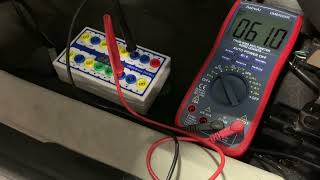
Disconnect the battery. Measure the resistance between Pin 6 (CAN High) and Pin 14 (CAN Low) at the OBD-II port. A healthy CAN bus reads 60 ohms. A reading of 120 ohms indicates an open circuit; near 0 ohms indicates a short.
Tools: Multimeter (Advanced) - Check MDPS Module Power and Ground
Check for power and ground at the MDPS module connector. With the key on, verify battery voltage (12V+) on the main power wire and less than 0.1V on the ground wire. Readings outside these values indicate a circuit fault.
Tools: Multimeter, Vehicle-Specific Wiring Diagram (Advanced) - Test CAN Bus Circuit Integrity
Disconnect the MDPS and HECU modules. Check for continuity (less than 1.0 ohm) on the CAN High and CAN Low wires between the two connectors. Verify each wire reads OL (open loop) when tested for a short to ground or power.
Tools: Multimeter, Vehicle-Specific Wiring Diagram (Advanced) - Scope Test CAN High/Low Signals
Back-probe the CAN High and CAN Low lines with an oscilloscope. A healthy signal shows a mirror-image square wave pattern. A distorted or noisy pattern pinpoints a failing module pulling the network down.
Tools: Automotive Oscilloscope, Wiring Diagram (Professional)
When This Code Triggers (Freeze-Frame Conditions)
- Vehicle Speed: 35-55 mph (Steady highway or arterial driving, where continuous steering data is expected.)
- Engine RPM: 1500-2500 RPM (Typical cruising RPM range, indicating the vehicle is in motion under normal load.)
- Battery Voltage: 13.5-14.5V (Normal operating voltage with the engine running; rules out a system-wide voltage drop as the immediate trigger.)
- Engine Coolant Temp: 180-210°F (Indicates the vehicle is at full operating temperature and not in a cold-start enrichment phase.)
Related Codes
- C1623 — Means 'CAN Time Out - SAS'. C1687 means the ABS module isn't hearing from the Power Steering module. C1623 means the Power Steering module isn't hearing from the Steering Angle Sensor. If you have both, the fault originates at the SAS or its wiring.
- C1259 — Means 'Steering Angle Sensor - Signal Error'. It points to an irrational signal, while C1687 is a complete loss of signal. Seeing both means the SAS is failing, sending bad data before failing to send any data at all.
- C1611 — Means 'CAN Time Out - EMS'. Seeing C1611 alongside C1687 strongly indicates a widespread network problem affecting multiple modules, such as a major CAN bus short or a severe power supply issue.
- C1260 — Means 'Steering Angle Sensor Signal Fault'. Often a companion code to C1687 on Hyundai/Kia vehicles. It indicates the ABS/ESC module detected an issue directly with the SAS signal, making the SAS or its calibration the primary suspect.
Climate & Environmental Factors
- Road Salt (Cold Climates): Saltwater accelerates corrosion of wiring and connectors on the undercarriage. This creates high resistance or open circuits in the CAN bus, leading to communication failures.
- High Humidity: Persistent moisture penetrates connector seals and wiring insulation over time, promoting corrosion and electrical faults even without road salt.
- Extreme Cold: Condensation forms and freezes inside the power steering control module on certain models, causing internal relays to stick and preventing the system from communicating.
How to Talk to a Mechanic About This Code
Say this: "I have a C1687 code with the ABS and ESC lights on. I'd like to schedule a diagnostic appointment. I've already checked the battery and fuses, which seem okay. If it's a Hyundai/Kia, please mention if you check for the common flexible coupler issue. I'd like to start with the least expensive potential causes, like wiring and connectors, before assuming it's a major module failure."
This signals you understand the code's meaning. It directs the shop toward a logical diagnostic process and mentions a well-known, cheap part, preventing them from immediately quoting an expensive steering column replacement.
Avoid saying:
- 'My steering feels weird and lights are on.' (too vague)
- 'Just replace the power steering module.' (don't diagnose for the mechanic)
- 'Fix it, whatever it costs.' (invites overcharging)
Questions to ask before authorizing the repair:
- What was the result of the CAN bus resistance test at the OBD-II port?
- Did you find any other related trouble codes in the ABS or power steering modules?
- If you're recommending a module replacement, can you confirm you've tested the power and ground wires at the module's connector?
- Does this repair estimate include the cost of programming or calibrating the new part?
- What is the warranty on the recommended parts and labor?
Where to Take It: Dealer vs Independent vs Chain
- Dealer:
Best for: Vehicles still under a factory or extended warranty., If the confirmed repair is a module replacement requiring manufacturer-specific software for programming., Complex, intermittent electrical issues where factory-trained technicians are a benefit.
Downsides: Highest labor rates, often 1.5-2x more than independent shops., May default to replacing an entire assembly when a smaller component repair is possible. (Typical cost: +50% vs. baseline) - Independent Shop:
Best fit for most out-of-warranty scenarios. A good independent shop efficiently handles the most common causes of C1687 at a lower cost. If they diagnose a bad module, you may still need the dealer for final programming.
Best for: Out-of-warranty vehicles where cost is a major factor., Diagnosing and repairing common causes like the Hyundai/Kia flexible coupler, wiring issues, or a bad battery., Getting a second opinion on a dealership's expensive quote.
Downsides: Shop quality varies widely; choose one with ASE-certified technicians specializing in electrical systems., May lack the expensive tools to program a new module if required. (Typical cost: +0% vs. baseline) - Chain Shop:
AVOID for diagnostics. While they can test your battery, they are generally ill-equipped to accurately diagnose a communication fault like C1687. There is a high risk of misdiagnosis.
Best for: A basic battery test and replacement.
Downsides: Technicians often lack specialized training for complex CAN bus diagnostics., Business model pressures technicians to upsell unnecessary services rather than perform detailed electrical troubleshooting. (Typical cost: -10% vs. baseline)
When to Walk Away From the Repair
If the estimated repair cost exceeds 50% of the car's private-party value, seriously consider selling or trading in the vehicle instead of repairing it.
- Car worth $4500, fix is $2500: Walk away. A $2,500 repair on a $4,500 car is a poor investment. The repair cost is over 55% of the car's value.
- Car worth $12000, fix is $450: Fix it. This repair is less than 4% of the vehicle's value and resolves a critical safety issue.
- Car worth $5000, fix is $2000: Borderline. The repair is 40% of the car's value. Get a second opinion before proceeding. If the rest of the car is in excellent condition, it might be worth it.
What Scan Tool You Need for This Code

Minimum: A scanner that reads Chassis (ABS/SRS) codes and performs a Steering Angle Sensor (SAS) calibration. A basic engine-only code reader will NOT see code C1687.
A standard $20 scanner only reads Powertrain ('P') codes from the engine computer. C1687 is a Chassis ('C') code stored in the ABS module. Without the ability to read these codes and perform SAS calibration, you cannot properly diagnose or fix this issue.
Budget: Autel AutoLink AL619 / Foxwell NT614 Elite (~$90) — Reads and clears codes from the Engine, ABS, and SRS systems. This is the minimum required to see the C1687 code, but it lacks the SAS calibration function needed after a repair.
Mid-range: Autel MaxiCOM MK808 / Foxwell NT680 Pro (~$350) — Provides full system diagnostics to read codes from all vehicle modules. Crucially, it includes bi-directional control and special service functions like Steering Angle Sensor (SAS) calibration.
Professional: Autel MaxiSys MS906 Pro / Launch X431 Series (~$600-1200) — Provides OEM-level diagnostics, full bi-directional control, advanced coding/programming functions, and detailed live data graphing. This is professional-grade equipment for diagnosing complex wiring faults.
Rent vs buy: Buy. Standard auto parts store loaner tools typically only read engine codes and cannot diagnose C1687 or perform the necessary SAS calibration. Investing in a mid-range scanner is recommended.
How to Clear the Code After You Fix It
- Fix the underlying mechanical or electrical fault.
- Use an OBD-II scan tool to clear the Chassis (C) trouble codes from the ABS/ESC module.
- Perform a Steering Angle Sensor (SAS) calibration if any steering or suspension components were replaced.
- Perform a drive cycle to allow the system to self-test and confirm the repair.
Drive cycle (~20 minutes): Start the engine and let it idle for 2 minutes. Drive in city traffic (multiple stops, speeds up to 40 mph) for 10 minutes. Drive at a steady highway speed (55-65 mph) for 5-10 minutes. Safely pull over, turn the vehicle off, and restart to verify the warning lights remain off.
Readiness monitors affected: This code does not directly affect emissions readiness monitors., Clearing all DTCs or disconnecting the battery resets emissions monitors, requiring a full drive cycle to become 'Ready' for an emissions test.
Before emissions retest: drive at least 50 miles to fully set monitors.
Watch out for:
- Clearing the code without fixing the root cause results in the code returning immediately.
- Forgetting to perform the SAS calibration after a relevant repair causes the code to persist.
- On some GM vehicles, a special reprogram is required to clear the code even after the fault is fixed.
Will This Fail Emissions / State Inspection?
No — by itself this code doesn't fail OBD inspection (but it can keep readiness monitors from setting, which causes a separate fail).
- California: While C1687 is not an emissions code, an illuminated warning light for a primary safety system like ABS or ESC is grounds for an inspection failure.
- New York: New York State law explicitly includes the Anti-Lock Brake (ABS) system warning light in the safety inspection. An illuminated ABS light causes an automatic failure.
- Texas: The OBD-II scan checks for any active trouble codes. An active chassis code related to a major safety system results in a failure.
Most Commonly Affected Vehicles
- Hyundai Elantra (2011-2016) — Frequently experiences C1687 related to the flexible steering coupler (P/N: 56315-2K000-FFF) or MDPS module issues. The coupler was subject to a 10-year/100,000-mile extended warranty.
- Hyundai Sonata (2011-2015) — Known for worn steering couplers and MDPS electronic issues. An extended warranty (Campaign TXXO) covered the MDPS assembly on some models up to 15 years/150,000 miles.
- Kia Optima (2011-2015) — Shares its platform with the Hyundai Sonata, making it equally susceptible to steering coupler and MDPS failures.
- Kia Sorento (2011-2015) — The MDPS system is a common source for C1687. A service campaign (SC07) involved an ECM update for some 2012 models.
- Hyundai Accent (2011-2017) — Technical service information lists C1687 as a primary fault code related to Vehicle Stability Management (VSM) communication with the MDPS.
- Chevrolet Cruze (2011-2016) — Loose fuse box terminals or faulty power steering racks cause a loss of power steering. GM TSB 20-NA-113 notes a PSCM calibration error that keeps DTCs active after repair.
- Subaru Forester (2014-2018) — Prone to EPS module failure in extreme cold due to internal condensation freezing, documented in TSB 04-24-18.
- Volkswagen Tiguan (2009-2017) — Highly sensitive to battery voltage changes. A weak battery illuminates the ESC/ABS lights. A steering angle sensor reset is required after a battery change.
Manufacturer-Specific Notes
- Hyundai / Kia: C1687 is defined as 'CAN Time-out MDPS' and is a core fault in the Vehicle Stability Management system. Diagnostics frequently lead to the MDPS control unit, the flexible steering coupler, or associated wiring.
- Chevrolet / GM: A loss of power steering assist is accompanied by a 'Steering Assist is Reduced Drive with Care' message. TSB 20-NA-113 highlights a software issue where the PSCM retains DTCs as 'current' even after the fault is resolved.
- Subaru: A loss of power steering in freezing temperatures is caused by condensation freezing inside the EPS control module, causing a relay to stick. This typically stores DTC C2532 but presents with identical symptoms.
- Toyota / Lexus: On some Toyota systems, C1687 is defined as 'Over Current Detected in Driver Side Camera', related to the Panoramic View Monitor system. This highlights the importance of using vehicle-specific service information.
Real Owner Stories
2013 Hyundai Elantra at 110K miles - The Clunk and the Code
Owner noticed a clunking noise in the steering column for months. Eventually, the ESC and power steering warning lights came on, and code C1687 was stored.
What they tried:
- Initially ignored the clunking noise.
- Took to a mechanic after warning lights appeared.
- Mechanic immediately identified the issue based on the noise and code.
Outcome: The flexible steering coupler (P/N 56315-2K000-FFF) was replaced. The part cost $15, and labor was 2.5 hours. The code was cleared, the lights went out, and the clunking noise disappeared.
Lesson: On a Hyundai/Kia, a clunking noise in the steering is a major red flag for the flexible coupler. Do not ignore it; it directly causes the electronic failures that trigger C1687.
2010 Hyundai Elantra at 75K miles - The Intermittent Failure
Once every few months, the power steering assist suddenly failed at low speeds. Restarting the car always fixed it. Codes C1260 and C1290 were also present.
What they tried:
- The EPS recall (127) had already been performed.
- Recalibrated the steering angle sensor with a scan tool, which passed but did not solve the problem long-term.
Outcome: The root cause was a failing Steering Angle Sensor (SAS) that only manifested under specific conditions. The next step was to test the wiring or replace the SAS.
Lesson: Intermittent electrical issues are difficult to diagnose. If the problem is infrequent but recurring, suspect a failing sensor or a wiring issue rather than a complete module failure. Companion codes like C1260 are critical clues.
2012 Kia Optima - Misdiagnosis with a Weak Battery
ESC, ABS, and Power Steering lights came on simultaneously. Code C1687 was present.
What they tried:
- Owner feared an expensive MDPS module or steering column replacement.
- A friend recommended checking the simplest thing first.
Outcome: The battery, although able to start the car, tested weak (below 12.4V engine off). A new battery was installed, the codes were cleared, and the problem did not return.
Lesson: Modern cars are extremely sensitive to voltage. Before diagnosing complex CAN bus failures, ensure the battery is fully charged and healthy. A weak battery causes a cascade of communication error codes.
How to Prevent This Code From Triggering
- Maintain Battery Health (Every 3-5 years) — Control modules require stable voltage. A weak battery is a primary cause of random electronic faults and communication timeouts. Replace the battery proactively.
- Inspect and Clean Electrical Connectors (During other under-hood maintenance) — Periodically inspect key connectors for signs of corrosion. Applying dielectric grease seals out moisture, preventing corrosion that causes high resistance.
- Regular Undercarriage Washes (Monthly in winter (salt-belt climates)) — Road salt accelerates the corrosion of wiring harnesses and ground points. Regularly washing the underbody removes corrosive agents, preserving CAN bus wiring integrity.
- Address Steering Noises Promptly (As needed) — On affected Hyundai/Kia models, a clunking noise indicates the flexible coupler is failing. Replacing the coupler early prevents excessive vibration from damaging the steering column electronics.
Frequently Asked Questions
What is the MDPS?
MDPS stands for Motor Driven Power Steering. It is an electric power steering system used by Hyundai, Kia, and other manufacturers that uses an electric motor to assist in turning the steering wheel. This replaces the traditional hydraulic pump system.
Can a wheel alignment cause code C1687?
An alignment itself does not directly cause the code, but failing to recalibrate the Steering Angle Sensor (SAS) afterward does. The stability control system becomes confused by the new alignment values if the 'straight ahead' position is not reset. This data mismatch triggers a communication fault.
Will replacing the battery fix C1687?
If the code stems from low or unstable voltage from a failing battery, replacing it and clearing the codes resolves the issue. Always check the battery's health first. It is the simplest and most common cause of mysterious electronic faults.
My steering makes a clunking noise. Is that related to C1687?
Yes, they are highly related, especially on Hyundai or Kia vehicles. The clunking noise is a classic symptom of a worn flexible steering coupler inside the steering column. This mechanical failure creates excessive vibration that damages the electronics and sets the C1687 code.
My power steering only fails in very cold weather. What causes that?
In certain vehicles, particularly Subaru models, condensation gets inside the Electronic Power Steering (EPS) control module and freezes. This causes an internal relay to stick, preventing the system from working correctly on a cold start. Allowing the engine bay to warm up temporarily resolves it.
I replaced the steering angle sensor but the code came back. What's next?
Code C1687 indicates a communication timeout, not necessarily a bad sensor. If a new, calibrated sensor did not fix it, the problem is in the CAN bus wiring between the power steering module and the ABS module. A full circuit integrity test is the required next step.
What is a CAN bus?
The Controller Area Network (CAN) bus is your car's internal communication network. It consists of a pair of twisted wires that all vehicle computers use to share real-time information. This includes data like vehicle speed, steering angle, and engine RPM.
What is a 'CAN Time Out'?
A 'CAN Time Out' code means a specific control module expected to receive a message from another module within a set timeframe, but the message never arrived. It functions like a missed check-in call between computers. When the ABS module misses the steering module's check-in, it triggers C1687.
What's the difference between ESC and ABS?
ABS (Anti-lock Braking System) prevents your wheels from locking up during hard braking to maintain steering control. ESC (Electronic Stability Control) uses ABS and steering angle data to prevent skids during turns by braking individual wheels. Code C1687 disables both systems.
Is it illegal to drive with the ESC light on?
It is not strictly illegal to drive with the ESC light on, but it indicates a critical safety system is offline. In states with safety inspections, an active safety system warning light causes an automatic failure. It also potentially impacts insurance claims if an accident occurs.
Key Takeaways
- Code C1687 disables your vehicle's Electronic Stability Control (ESC) and Anti-lock Brakes (ABS) because the main computer lost communication with the power steering module.
- Over 80% of C1687 cases occur in 2011-2016 Hyundai and Kia models, typically triggered by a worn $15 flexible steering coupler or damaged MDPS wiring.
- Always test the battery and inspect the 120-ohm CAN bus termination resistance before authorizing a $1,000+ steering column replacement.
- Do not drive at highway speeds with an active C1687; the sudden loss of power steering assist and ABS dramatically increases the risk of an accident during emergency maneuvers.
Helpful Videos


The information in this article is provided for general reference and educational purposes only. Vehicle specifications, procedures, and part compatibility can vary by production date, trim level, and region. Always consult your vehicle's factory service manual and verify part numbers before purchasing or performing repairs. Safety-critical components such as airbags, seat belts, and braking systems should be installed by a qualified professional.
- 🎬 Helpful Videos
- What Does C1687 Mean?
- Can I Drive With C1687?
- Common Causes
- Symptoms
- Diagnostic Flowchart
- Common Fixes & Costs
- DIY vs Professional
- Used vs. New Parts: Buying Guide
- What Happens If You Wait — Timeline
- Cost of Not Fixing It
- Diagnosis Steps
- When This Code Triggers (Freeze-Frame Conditions)
- Related Codes
- Climate & Environmental Factors
- How to Talk to a Mechanic About This Code
- Where to Take It: Dealer vs Independent vs Chain
- When to Walk Away From the Repair
- What Scan Tool You Need for This Code
- How to Clear the Code After You Fix It
- Will This Fail Emissions / State Inspection?
- Most Commonly Affected Vehicles
- Manufacturer-Specific Notes
- Real Owner Stories
- 2013 Hyundai Elantra at 110K miles - The Clunk and the Code
- 2010 Hyundai Elantra at 75K miles - The Intermittent Failure
- 2012 Kia Optima - Misdiagnosis with a Weak Battery
- How to Prevent This Code From Triggering
- Frequently Asked Questions
- What is the MDPS?
- Can a wheel alignment cause code C1687?
- Will replacing the battery fix C1687?
- My steering makes a clunking noise. Is that related to C1687?
- My power steering only fails in very cold weather. What causes that?
- I replaced the steering angle sensor but the code came back. What's next?
- What is a CAN bus?
- What is a 'CAN Time Out'?
- What's the difference between ESC and ABS?
- Is it illegal to drive with the ESC light on?
- Key Takeaways
- 🎟️ Get 5% Off