

OBD-II Code C1657: Hybrid Powertrain Control Module Malfunction
What C1657 means, why it triggers, and how to fix it
- Code C1657 is a secondary 'sympathy' code triggered when the hybrid system reports a primary fault, requiring you to diagnose the accompanying codes (like P0A80) to find the root cause.
- A failing high-voltage (HV) battery causes over 80% of C1657 codes, almost always accompanied by primary code P0A80.
- Do not drive with an active C1657 code; the vehicle unexpectedly enters a low-power 'limp mode' that limits speeds to under 35 mph, creating a severe traffic hazard.
- Always test the 12-volt auxiliary battery first, as a resting voltage below 12.4V causes module communication errors that falsely trigger hybrid system warnings.
- On 2015-2020 Ford F-150 and Mustang models, C1657 is not a hybrid code; it indicates an Engine Oil Pressure Sensor Circuit Malfunction requiring a sensor inspection.
What Does C1657 Mean?

Code C1657 means a secondary control module (like the brake or parking assist computer) received a malfunction signal from the hybrid powertrain system. It is a 'sympathy code' pointing to a primary fault in the hybrid system that requires separate diagnosis.
Technical definition: There is no universal SAE/ISO definition for C1657 as it is a manufacturer-specific code. For Toyota, it is defined as 'Hybrid Powertrain Control Module' when the parking assist ECU receives a hybrid control system malfunction signal via the CAN bus. For Hyundai and Kia, it indicates a problem with the 'Hybrid Powertrain Control Module'. For Ford, this code refers to an 'Engine Oil Pressure Sensor Circuit Malfunction'.
Can I Drive With C1657?
No — Do Not Drive. Do not drive. This code indicates a serious fault within the hybrid system. The vehicle unexpectedly enters a low-power 'limp mode,' limiting speed to under 35 mph and creating a severe traffic hazard. Continuing to drive causes the failing high-voltage battery to overheat, leading to a rare but possible battery module rupture accompanied by a loud noise and smoke in the cabin. This also causes cascading failures in other modules, significantly increasing repair costs.
Common Causes

- Failing High-Voltage (HV) Hybrid Battery (Very Common) — The high-voltage hybrid battery pack is degrading. One or more cells are weak, failing, or out of balance, which is the most frequent root cause for this code, almost always accompanied by code P0A80.
- Weak or Failing 12-Volt Auxiliary Battery (Common) — The smaller 12V battery powering the computers is weak. Low voltage causes communication errors between modules, incorrectly triggering hybrid system faults.
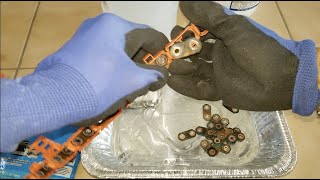
- Corroded HV Battery Bus Bars or Connectors (Common) — Metal bus bars connecting individual hybrid battery modules corrode, creating high resistance. The Battery ECU interprets this voltage drop as a cell failure, triggering P0A80 and C1657. 🎬 See how to clean corroded bus bars to fix codes.
- High-Voltage Battery Electrolyte Leak (Loss of Isolation) (Common) — Electrolyte leaks from one or more battery modules, causing a loss of high-voltage isolation resistance. This triggers a fault even if cell voltages appear normal.
- Faulty Battery Smart Unit (Battery ECU/BMS) (Less Common) — The dedicated computer monitoring HV battery health fails. It falsely reports a battery failure (P0A80) when the battery itself remains functional.
- Faulty Hybrid Powertrain Control Module (HPCM) (Less Common) — The main computer managing the hybrid system fails due to internal electronic faults or software corruption.
- Wiring or Connector Issues (Less Common) — Damaged, corroded, or loose wires leading to the HPCM or battery control module interrupt communication. Water intrusion into main harness connectors is a known cause.
- Faulty HV Battery Cooling Fan (Uncommon) — The HV battery cooling fan clogs with debris or fails. This leads to battery overheating, which accelerates degradation and triggers protective fault codes.
- Hybrid Control System Software Glitch (Rare) — The hybrid control module software contains a bug. Manufacturers release software updates (TSBs) to fix false warnings or improve system logic.
Symptoms

- “Check Hybrid System” Warning Light — This is the most common symptom, appearing on the main display, often with a red or yellow warning triangle.
- Gas Engine Runs Constantly — The car refuses to switch to electric-only (EV) mode, even when stopped. The gasoline engine runs continuously to keep the vehicle powered and try to charge a failing HV battery.
- Reduced Power or Sluggish Acceleration — The vehicle enters a 'limp mode' with very limited acceleration, making it difficult to reach normal speeds. This is a protective measure to prevent further damage.
- Loud, Constant Hybrid Battery Fan Noise — The HV battery cooling fan, typically located near the rear seats, runs at high speed continuously as the system tries to cool down an overheating or failing battery pack.
- Multiple Dashboard Warning Lights — The check engine light, ABS light, and VSC (Vehicle Stability Control) light all illuminate at the same time.
Diagnostic Flowchart
Tap your situation to follow the diagnostic path that matches what you're seeing on this code.
Common Fixes & Costs
- Replace High-Voltage Battery Pack (New OEM) — Parts: $2,000-$4,500, Labor: $300-$800, ~3 hr book time (Professional)
- Recondition High-Voltage Battery Pack — Parts: $1,400-$2,000, Labor: Included in part cost, ~2.5 hr book time (Professional)
- Replace 12-Volt AGM Battery — Parts: $200-$300, Labor: $50-$100, ~0.8 hr book time (DIY)
- Clean or Replace HV Battery Bus Bars — Parts: $20-$100 (for new nickel-plated bars), Labor: $300-$600 (due to labor to access and disassemble pack), ~4 hr book time (Professional)
- Replace HV Battery Safety Plug/Fuse (Hyundai/Kia) — Parts: $50-$150, Labor: $100-$200, ~1 hr book time (Professional)
- Replace Hybrid Powertrain Control Module (HPCM) — Parts: $1,300-$1,900, Labor: $150-$300 (plus programming), ~1.5 hr book time (Professional)
DIY vs Professional
- Replace 12-Volt AGM Battery — Beginner:
Tools: Basic hand tools (socket set, wrenches), terminal cleaner brush, safety glasses. - Clean or Replace HV Battery Bus Bars — Beginner:
Tools: High-voltage safety gloves (Class 0), insulated tools, multimeter, torque wrench, and specialized knowledge of HV depowering procedures. - Recondition or Replace High-Voltage Battery Pack — Beginner:
Tools: Same as bus bar replacement, plus specialized battery lifting equipment (packs weigh over 100 lbs), and diagnostic software for post-install calibration. - Replace Ford Oil Pressure Sensor — Beginner:
Tools: Socket set with deep-well sockets, wrenches, flashlight, rags for oil cleanup.
Used vs. New Parts: Buying Guide
When a used part is worth it: A used or reconditioned HV battery makes sense for older, high-mileage vehicles where the cost of a new battery is a significant percentage of the car's value, or if you plan to sell the vehicle within a few years.
Donor-vehicle mileage cap: roughly under 80000 miles for the part to have meaningful remaining life.
Donor quality checklist:
- Verify the reconditioning process involves balancing all modules, not just replacing the one bad one.
- Ensure the replacement comes with new or professionally cleaned and nickel-plated bus bars to prevent future corrosion issues.
- Check the warranty terms carefully; a longer warranty indicates higher quality cells and a more thorough remanufacturing process.
Decision logic:
- If Vehicle is newer or you plan to keep it for 3+ years → Buy a new OEM or high-quality new aftermarket battery for maximum longevity and reliability.
- If Vehicle is older (>150K miles) and your budget is the primary concern → A reconditioned battery from a reputable supplier with a solid warranty (at least 12 months) is a practical choice.
- If You are selling the car in the next 1-2 years → A reconditioned battery is the most cost-effective option to make the car operational for sale.
Warranty tradeoff: Used/Reconditioned batteries typically offer warranties from 12 to 36 months. New aftermarket and OEM batteries come with longer warranties, sometimes up to 48 months or more, providing greater peace of mind.
Worst-case if a used part fails: $500-$1500 if a cheap or poorly reconditioned battery fails prematurely, requiring repeat labor costs plus the price of another replacement battery.
What Happens If You Wait — Timeline
- 0-1 month: The 'Check Hybrid System' light appears. The code clears but returns within a few drive cycles. No other major symptoms are noticeable yet. (MPG impact: 0-5%% · Added cost: $0)
- 1-3 months: A noticeable drop in fuel economy occurs as the gas engine runs more often. The vehicle hesitates on acceleration, and the HV battery cooling fan runs loudly and constantly. (MPG impact: 10-25%% · Added cost: $50-$200 in wasted fuel.)
- 3-6 months: The vehicle intermittently enters 'limp mode,' limiting speed to under 40 mph. The car fails to enter 'Ready' mode or start. The continued stress on the battery pack begins to damage more cells, reducing the value of the battery as a 'core' for reconditioning. (MPG impact: 25-40%% · Added cost: $100-$300 in towing costs plus a potential loss of $300-$500 in battery core value.)
- 6+ months: The risk of a catastrophic battery failure increases significantly. Overheating from repeated charge/discharge cycles on failing cells causes a module to rupture, creating a loud noise and smoke in the cabin. This causes cascading damage to the battery computer (BMS), wiring, or inverter. (MPG impact: 40-60%% · Added cost: $2,500-$9,500, representing the full cost of replacing the battery and other damaged electronic modules.)
Cost of Not Fixing It
- 0-1 month: Noticeable decrease in fuel economy (MPG) as the gas engine runs constantly to compensate for the weak HV battery. Vehicle unexpectedly enters 'limp mode' with reduced power. (Added cost: $50-$150 in extra fuel costs.)
- 1-6 months: Increased strain on the gas engine and transmission. The HV battery continues to degrade, ruining a 'rebuildable' core. The car fails to start, as many hybrids use the HV battery to turn over the gas engine. (Added cost: $500-$1,500 in damage to related components like the inverter or cooling system, plus towing costs.)
- 6+ months: Catastrophic failure of the HV battery. Overheating causes a battery module to rupture with a loud noise and smoke in the cabin. The entire HV battery pack and main control module require replacement. (Added cost: $2,500-$9,500, representing the full cost of replacing the HV battery, control modules, and any other damaged components.)
Diagnosis Steps
- Read All Trouble Codes & Analyze Freeze Frame Data
Use a high-quality OBD-II scanner that reads manufacturer-specific codes from all modules (Hybrid, Engine, Brake). C1657 is a secondary code; look for the primary code like P0A80, P0A7F, or P0AFA. Analyze the freeze-frame data for the primary code to see the exact battery block voltages at the moment of the fault. A significant voltage difference between blocks confirms a battery issue.
Tools: OBD-II Scanner (Hybrid compatible, all-module access) (Beginner) - Test the 12V Auxiliary Battery
Before diagnosing the high-voltage system, thoroughly test the 12V battery. A weak 12V battery causes random electronic faults in hybrids. A healthy AGM battery has a resting voltage of 12.6V-12.8V. During a 15-second load test, the voltage must not drop below 9.6V. Replace it if it is more than 4 years old or fails a load test.
Tools: Digital Multimeter, Electronic Battery Tester (Beginner) - Analyze High-Voltage Battery Live Data
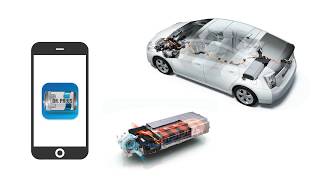
Using a specialized app (like Dr. Prius) or an advanced scan tool, monitor the live data from the high-voltage battery. Observe the voltage of each individual battery block under both charge and discharge (load) conditions. A difference of more than 0.3V between the highest and lowest voltage block under load indicates an imbalance and a failing battery.
Tools: OBD-II Scanner with Hybrid Live Data, Smartphone App (e.g., Dr. Prius) (Intermediate) - Check the Hybrid Battery Cooling Fan Intake
Locate the hybrid battery cooling fan intake vent (usually in the rear passenger area) and ensure it is not blocked by items on the floor or pet hair. A clogged fan intake causes battery overheating and premature failure.
Tools: Flashlight (Beginner) - Inspect HV Battery Bus Bars and Wiring Harness
After following all high-voltage safety procedures (including disconnecting the service plug), visually inspect the copper bus bars connecting the battery modules for a white or green crusty buildup indicating corrosion. Check the smaller wires and connector of the voltage sensing harness for corrosion or damage, as this causes false readings.
Tools: Flashlight, Basic Hand Tools, High-Voltage Safety Gear (Advanced) - Perform HV Isolation Test (Megohmmeter Test)
Disconnect the HV battery and use a megohmmeter (insulation tester) to measure the resistance between the positive and negative battery terminals and the vehicle chassis ground. The reading should be infinite or very high, typically over 100 megaohms (MΩ). A reading below 10 MΩ is a definitive sign of a problem, and a reading below 1-2 MΩ indicates a dangerous loss of isolation where high voltage is leaking to the chassis.
Tools: Megohmmeter (Insulation Tester), High-Voltage Safety Gear (Professional) - Test Oil Pressure Switch (Ford Specific)
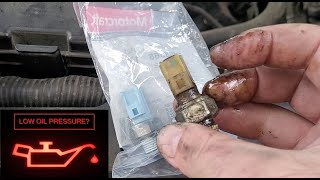
For Ford models where C1657 means 'Engine Oil Pressure Sensor Circuit Malfunction', remove the electrical connector from the sensor. Check for engine oil inside the connector; oil weeping through the sensor is a definitive sign of failure. With the key on and engine off, verify a 5V reference voltage at the connector.
Tools: Flashlight, Multimeter, Basic Hand Tools (Intermediate) - Check for Technical Service Bulletins (TSBs)
Check with a dealership or online (NHTSA database) for any TSBs related to the hybrid system for your specific vehicle model. A known software glitch, wiring issue, or updated part is sometimes the cause, offering a specific repair path.
Tools: Internet Access (Advanced)
When This Code Triggers (Freeze-Frame Conditions)
- Engine Coolant Temp: 180-195°F (The fault almost always sets when the vehicle is fully warmed up.)
- State of Charge (SOC): 30-50% (The fault triggers when the battery's state of charge is low, and the system is under load (e.g., accelerating) or attempting to recharge.)
- Vehicle Speed: 0-20 mph or 35-55 mph (The code sets either at low speeds after a stop or during steady-state cruising when the system transitions between gas and electric power.)
- Battery Block Voltage Deviation: > 0.3V (This is the most critical freeze frame parameter for the companion P0A80 code. It shows the voltage difference between the highest and lowest battery blocks at the moment of the fault. A deviation greater than 0.3V confirms a failing battery.)
Related Codes
- P0A80 — This is the most common companion code and the root cause. It means 'Replace Hybrid Battery Pack'. C1657 is the effect; P0A80 is the cause. P0A80 is set by the Battery ECU when it sees a significant voltage difference between battery blocks, often cited as >0.3V or a 20% difference. Diagnosis of C1657 should immediately shift to diagnosing P0A80 using live and freeze-frame data.
- P0A7F — This code for 'Hybrid Battery Pack Deterioration' is very similar to P0A80 and often appears with it. It confirms that the battery management system has determined the battery's capacity has degraded below an acceptable threshold.
- C1259 — This code, 'HV System Regenerative Malfunction', is set by the brake control module. It is functionally the same as C1657—a 'sympathy' code. It confirms the hybrid system has sent a fault signal, forcing the brake system to disable regenerative braking. If you see C1259, ignore it and find the primary 'P' code.
- C1310 — Similar to C1259, this code means 'HV System Malfunction'. It is another secondary code set by the brake/VSC system to acknowledge a problem reported by the main hybrid system. The diagnostic approach is identical: find the root cause in the hybrid control module.
- P0AFA — This code means 'Hybrid Battery System Voltage Isolation Fault'. It is a critical code that often points to a battery electrolyte leak. It means the high voltage is no longer safely isolated from the vehicle's chassis. This is a serious safety issue and requires immediate professional diagnosis.
- U0293 — This code means 'Lost Communication With Hybrid Powertrain Control Module'. This is diagnostically different from C1657. U0293 indicates a network failure (CAN bus wiring, connector, power/ground to the HPCM). C1657 means the HPCM is online and communicating, but it is *reporting* a failure of a component it monitors (like the battery). With U0293, you test the network; with C1657, you test the components.
Climate & Environmental Factors
- High Heat: Heat is the primary enemy of HV batteries, accelerating the degradation of both NiMH and Lithium-Ion cells. It causes a permanent, irreversible loss of capacity. High ambient temperatures also force the battery cooling fan to run more often, increasing wear on the fan motor and drawing more power.
- High Humidity: In humid or coastal climates, moisture accelerates the corrosion of copper bus bars and other electrical connectors within the HV battery pack. This corrosion increases resistance, leading to voltage drop and false P0A80 codes.
- Extreme Cold: Cold weather reduces the chemical efficiency and available capacity of both the 12V and HV batteries. A car that works fine in summer begins to set codes in winter as the cold pushes a borderline battery pack below the ECU's acceptable voltage or power thresholds. The gas engine runs more often to compensate, reducing fuel economy.
How to Talk to a Mechanic About This Code
Say this: "I have a 'Check Hybrid System' light and my scanner shows code C1657, which I know is secondary. I suspect the primary code is P0A80. I need a diagnostic from a technician experienced with hybrid systems to confirm a failing high-voltage battery. Please check the live data for battery block voltage differences under load and retrieve the freeze-frame data for the primary 'P' code."
This signals you are an informed consumer who understands that C1657 is a symptom, not the cause. It directs the technician to perform the correct diagnostic steps (checking live data for P0A80) and prevents them from wasting time or suggesting unnecessary repairs based on the secondary code.
Avoid saying:
- 'My check engine light is on, can you look at it?'
- 'The code is C1657, please fix it.'
- 'Just replace whatever is broken.'
Questions to ask before authorizing the repair:
- What was the maximum voltage deviation between the battery blocks according to the live data scan?
- Can you provide a printout or screenshot of the freeze-frame data from the P0A80 code?
- Did you inspect the hybrid battery cooling fan and intake for blockages?
- If replacing the battery, what is the warranty on the new or reconditioned pack, and does that warranty cover labor for a future replacement?
- Does the battery replacement service include cleaning or replacing the bus bars?
Where to Take It: Dealer vs Independent vs Chain
- Dealer:
Best for in-warranty repairs. For out-of-warranty, get a comparative quote from a hybrid specialist before proceeding.
Best for: Vehicles still under the hybrid system warranty (e.g., 10 years/150,000 miles for 2020+ Toyotas)., Complex software-related issues or recalls., Owners who prioritize having a new OEM battery installed.
Downsides: Highest cost for parts and labor, often 30-50% more than an independent shop., Often only offers a full, new battery replacement, which is thousands of dollars more than a reconditioned unit. (Typical cost: +50% vs. baseline) - Independent Shop:
Excellent fit, but ONLY if it's a vetted independent shop that specializes in hybrid vehicles. They provide better value and more repair options than the dealer for out-of-warranty cars.
Best for: Out-of-warranty vehicles where cost is a major factor., Accessing a wider range of repair options, like reconditioned or new aftermarket batteries., Getting a more personal level of service.
Downsides: Crucially, must be a *hybrid specialist*, not a general mechanic. A general shop lacks the training and safety equipment for high-voltage work. (Typical cost: +0% vs. baseline) - Chain Shop:
AVOID for any diagnosis or repair of the hybrid system. They can test/replace the 12V battery, but should not be trusted with the high-voltage battery or its related codes.
Best for: Simple, non-hybrid related services like tires, oil changes, or replacing the 12V battery.
Downsides: Technicians are generally not trained or equipped to work on high-voltage hybrid systems., High risk of misdiagnosis or refusal to perform the repair., An attempt to work on the HV system without proper training is a significant safety hazard. (Typical cost: -10% vs. baseline)
When to Walk Away From the Repair
If the estimated repair cost for the high-voltage battery exceeds 50% of the car's current private-party market value, you should seriously consider selling the vehicle as-is or trading it in.
- Car worth $5000, fix is $3500: Walk away. The repair cost is 70% of the car's value. Sell as a 'mechanic special' or trade it in, disclosing the issue.
- Car worth $12000, fix is $4000: Fix it. The repair is about 33% of the car's value. A new or reconditioned battery restores the car's function and a significant portion of its resale value.
- Car worth $7000, fix is $1800: Fix it, especially with a reconditioned battery. This cost is only ~25% of the car's value and makes it fully operational and sellable.
What Scan Tool You Need for This Code

Minimum: A tool that reads manufacturer-specific codes from all modules (Engine, Hybrid, Brake) and displays live data streams, specifically the individual block voltages of the high-voltage battery.
A basic $20 scanner only reads generic engine codes and will NOT see the C1657 in the brake module or the critical P0A80 code in the hybrid module. It cannot display the live battery block voltages, which are essential for confirming a failing HV battery, making it useless for this diagnosis.
Budget: Dr. Prius App with Veepeak OBDCheck BLE+ Adapter (~$85) — This combination is the gold standard for DIY hybrid diagnosis. The app is specifically designed to monitor Toyota/Lexus hybrid battery health, showing live graphs of all battery block voltages, internal resistance, and temperatures, making it easy to spot a failing battery.
Mid-range: Foxwell NT510 Elite or Autel MaxiCOM MK808 (~$180-350) — These handheld scanners access all vehicle modules, read and clear manufacturer-specific codes (like C1657), and display live data streams for the HV battery blocks. They are more robust than an app and work on a wider range of vehicles.
Professional: Autel MaxiSys MS909EV or Ultra EV (~$4000-5000) — Provides comprehensive, dealership-level diagnostics for hybrid and electric vehicles. It performs advanced battery pack analysis, including State of Charge (SOC) and State of Health (SOH) tests, and provides step-by-step disassembly instructions and component diagrams.
Rent vs buy: Rentals from auto parts stores are typically basic readers and will not work for this code. For a one-time diagnosis, paying a hybrid specialist for one hour of diagnostic time is more effective. Buy a budget or midrange tool only if you plan to monitor the vehicle's health long-term or perform other DIY repairs.
How to Clear the Code After You Fix It
- Perform the necessary physical repair (e.g., replace battery).
- Reconnect the 12V battery if it was disconnected.
- Use a compatible OBD-II scan tool to clear the trouble codes from all modules (Engine, Hybrid, Brake).
- Perform a complete drive cycle to allow the vehicle's readiness monitors to run.
Drive cycle (~30 minutes): A universal drive cycle includes a cold start (engine coolant temp below 122°F), a 2-3 minute idle, 10-15 minutes of mixed city driving (stops, starts, varied speeds), followed by 5-10 minutes of steady highway speed (55-60 mph) without aggressive throttle input. The vehicle must then be shut off and allowed to cool down.
Readiness monitors affected: Hybrid System, Catalyst Monitor, Evaporative System (EVAP), O2 Sensor Monitor
Before emissions retest: drive at least 100 miles to fully set monitors.
Watch out for:
- Disconnecting the 12V battery clears the code but resets all readiness monitors to 'Not Ready', causing an automatic emissions test failure.
- The code returns almost immediately if the underlying root cause (like a weak HV battery) is not fixed.
- Using a basic scanner that only clears engine codes leaves the C1657 code active in the brake or hybrid module.
Will This Fail Emissions / State Inspection?
Yes — this code typically fails an OBD-II emissions inspection.
- California: An illuminated 'Check Engine' light results in an automatic smog check failure. All OBD-II readiness monitors must be in a 'Ready' state. After a repair, a significant drive cycle is required before a retest.
- New York: A vehicle fails the NYS inspection if the 'Check Engine' light is on. Additionally, for model year 2001 and newer vehicles, the test fails if more than one readiness monitor is 'Not Ready'.
- Texas: In counties requiring emissions testing, an illuminated 'Check Engine' light is an automatic failure. Clearing the code right before the test causes a failure because the readiness monitors report as 'Not Ready'.
Most Commonly Affected Vehicles
- Toyota Prius (2004-2015) — Extremely common as Gen 2 and Gen 3 HV batteries age. C1657 is often stored in the brake or parking ECU when the main battery ECU sets a P0A80 code. The HV battery warranty for 2020+ models is extended to 10 years/150,000 miles.
- Toyota Camry Hybrid (2007-2017) — Shares similar hybrid technology with the Prius, making it susceptible to the same HV battery and 12V battery failure modes.
- Lexus CT200h (2011-2017) — As the luxury counterpart to the Prius, it uses the same fundamental hybrid system and is prone to identical HV battery degradation (P0A80), inverter failure, and 12V battery issues.
- Lexus RX400h / RX450h (2006-2017) — These luxury SUVs use Toyota's hybrid system and are subject to the same HV battery and control system faults as they age.
- Hyundai Sonata Hybrid (2011-2016) — Prone to HPCM faults and battery issues. Models from 2013-2015 are subject to a service campaign (Campaign 994 / TSB 23-01-054H) for a faulty safety plug and main fuse, which may be upgraded from 125A to 150A.
- Kia Optima Hybrid (2011-2016) — Mechanically similar to the Hyundai Sonata Hybrid and suffers from the same set of potential hybrid system faults, including the safety plug/fuse issue.
- Hyundai Ioniq Hybrid (2017-2022) — Known for 'Check Hybrid System' warnings caused by a range of issues from the battery pack to the power relay assembly or even a simple loose connector.
- Ford F-150, Mustang (2015-2020) — IMPORTANT: On these Ford models, C1657 is NOT a hybrid code. It indicates an 'Engine Oil Pressure Sensor Circuit Malfunction'. On the 3.5L EcoBoost, the sensor is on connector C1657. A common failure is oil leaking through the sensor into the electrical connector.
Manufacturer-Specific Notes
- Toyota / Lexus: C1657 is almost always a 'sympathy code'. It is logged by a secondary system (like Intelligent Parking Assist or the Brake ECU) because the main Hybrid ECU reported a problem. The focus of diagnosis should be on other codes, especially P0A80, and analyzing the freeze-frame data is key. For MY 2020 and newer vehicles, the HV battery warranty was extended to 10 years or 150,000 miles.
- Hyundai / Kia: On 2011-2016 models, always check for a blown main hybrid fuse located in the safety plug assembly in the trunk before suspecting the battery or HPCM. Hyundai issued a service campaign (Campaign 994 / TSB 23-01-054H) to upgrade this fuse from 125A to 150A due to premature failures.
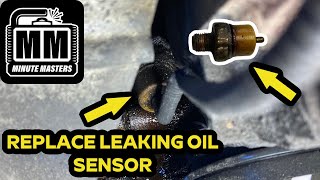
- Ford: C1657 is an oil pressure issue, not a hybrid fault. Some engines like the 3.5L EcoBoost have both an oil pressure *switch* for the dummy gauge and an oil pressure *sensor* for the PCM. C1657 relates to the sensor circuit. A common failure point is oil leaking through the sensor itself into the wiring harness.
Real Owner Stories
2012 Toyota Prius V with P0A80 & C1657
The 'Check Hybrid System' light and other warnings appeared two days after the owner replaced the engine water pump. The car had no other immediate symptoms.
What they tried:
- The owner scanned the codes, revealing P0A80 and C1657.
- They used an app to check the individual battery block voltages and resistances while the car was cold.
- Posted on a forum to ask for advice, where others suggested checking freeze-frame data and looking for signs of battery electrolyte leaks.
Outcome: The initial data showed a voltage difference of 0.17V between the highest and lowest blocks, which is below the typical 0.3V fault trigger, suggesting the problem might be intermittent or only appear under load. The case highlights the importance of analyzing freeze-frame data to see the conditions at the exact moment of the fault.
Lesson: A recent, unrelated repair sometimes precedes a fault by coincidence. Always start diagnosis by reading all codes from all modules and analyzing the freeze-frame data for the primary code (P0A80) before assuming the recent repair is the cause.
2006 Prius with 40k miles on a replacement battery
The P0A80 code appeared on a 4-year-old remanufactured battery. Symptoms included the battery charge display fluctuating rapidly from full to empty and slight hesitation during acceleration.
What they tried:
- Cleared the code, but it came back immediately.
- Owner recognized the symptoms from a previous battery failure and began planning for another replacement.
Outcome: The owner was planning to replace the battery pack again within a month. The case demonstrates that even remanufactured batteries have a finite lifespan and fail much sooner than new OEM packs.
Lesson: If you get a P0A80 code on a remanufactured battery that is out of warranty, the cause is almost certainly another battery failure. Erratic charge level display is a classic symptom.
2015 Ford F-150 2.7L with oil leak
Owner found a large pool of oil under the truck, with oil dripping from the skid plate and residue covering the underside. The code C1657 was present, which on this vehicle points to the oil pressure sensor circuit.
What they tried:
- The owner initially suspected a leak from a metal tube near the turbo.
- Forum members suggested the Engine Oil Pressure (EOP) sensor was a common culprit, often being loose from the factory.
- A Technical Service Bulletin (TSB 15-0183) confirmed that the EOP sensor threads leak on engines built before July 2015.
Outcome: A trip to the dealer confirmed the EOP sensor was loose, causing the major oil leak. Tightening the sensor resolved the issue.
Lesson: For Ford vehicles, C1657 is NOT a hybrid code. It relates to the oil pressure sensor on connector C1657. If you have an oil leak and this code, check for a loose or leaking EOP sensor before suspecting more complex issues.
How to Prevent This Code From Triggering
- Keep the HV battery cooling fan vent clear (Check every 6 months) — The intake vent, often near the rear seats, gets clogged with pet hair or debris. A blockage causes the battery to overheat, which is the primary cause of accelerated cell degradation and failure.
- Replace the 12V auxiliary battery proactively (Every 3-5 years) — A weak 12V battery provides unstable voltage to the vehicle's computers, leading to communication errors between modules that falsely trigger hybrid system warnings.
- Exercise smooth driving habits (Daily habit) — Avoiding hard acceleration and braking reduces the strain on the HV battery. Gentle coasting to a stop maximizes the use of regenerative braking, which helps maintain the battery's state of charge without stress.
- Avoid parking in extreme heat for long periods (As needed) — High temperatures are the enemy of battery chemistry, causing permanent capacity loss. Parking in a garage or shade reduces heat soak and slows the aging process.
- Drive the vehicle regularly (At least once a week) — Letting a hybrid sit for extended periods shortens the battery's life. Regular driving helps the battery maintain its state of charge and prevents it from becoming deeply discharged.
Frequently Asked Questions
What is the most common misdiagnosis for code C1657?
The most common mistake is treating C1657 as the root problem rather than a secondary informational code. Another error is replacing only one or two weak modules in a high-voltage battery pack, which acts as a temporary 'band-aid' before other aged modules fail. Failing to clean corroded battery bus bars during a replacement also causes the code to return.
What happens if I just clear the code and keep driving?
The code clears but returns immediately. Repeatedly clearing it is dangerous because the car unexpectedly enters a low-power limp mode in traffic. Worse, it causes failing battery modules to overheat and rupture, filling the cabin with smoke.
My hybrid battery was just replaced, so why did C1657 and P0A80 come back?
The replacement battery pack is likely faulty or of poor quality, which is common with cheap refurbished packs. Alternatively, the copper bus bars and wiring harness connectors were not properly cleaned during the swap, leaving old corrosion to cause high resistance. Finally, the fault might lie in the battery's electronic control unit (BMS) transferred from the old pack.
Is C1657 a serious problem?
Yes, it indicates a high-priority fault in the hybrid system. The car enters a low-power state at any time, making highway driving unsafe, and requires immediate diagnosis.
Will replacing my 12V battery fix code C1657?
It often does. A weak 12V battery causes electronic communication errors in hybrids. Since it is an inexpensive part to test, replace it first if it is over 4 years old or fails a load test.
Does C1657 mean I need a new expensive hybrid battery?
Frequently, yes. C1657 almost always appears alongside P0A80, which directly points to a failing high-voltage battery requiring replacement or reconditioning.
Why is my gas engine running all the time and won't shut off?
The vehicle is in a 'fail-safe' or 'limp' mode. The hybrid computer detects a critical fault and stops relying on the battery for propulsion. The gas engine runs constantly to provide all power, causing fuel economy to plummet.
What's the difference between battery 'reconditioning' and 'replacement'?
Reconditioning tests individual modules, replaces only the weak ones, and balances the charge, offering a cheaper but temporary fix. A full replacement uses all fresh, matched-capacity cells and includes a longer warranty for a reliable long-term solution.
Key Takeaways
- Code C1657 is a secondary 'sympathy' code triggered when the hybrid system reports a primary fault, requiring you to diagnose the accompanying codes (like P0A80) to find the root cause.
- A failing high-voltage (HV) battery causes over 80% of C1657 codes, almost always accompanied by primary code P0A80.
- Do not drive with an active C1657 code; the vehicle unexpectedly enters a low-power 'limp mode' that limits speeds to under 35 mph, creating a severe traffic hazard.
- Always test the 12-volt auxiliary battery first, as a resting voltage below 12.4V causes module communication errors that falsely trigger hybrid system warnings.
- On 2015-2020 Ford F-150 and Mustang models, C1657 is not a hybrid code; it indicates an Engine Oil Pressure Sensor Circuit Malfunction requiring a sensor inspection.
Helpful Videos






The information in this article is provided for general reference and educational purposes only. Vehicle specifications, procedures, and part compatibility can vary by production date, trim level, and region. Always consult your vehicle's factory service manual and verify part numbers before purchasing or performing repairs. Safety-critical components such as airbags, seat belts, and braking systems should be installed by a qualified professional.
- 🎬 Helpful Videos
- What Does C1657 Mean?
- Can I Drive With C1657?
- Common Causes
- Symptoms
- Diagnostic Flowchart
- Common Fixes & Costs
- DIY vs Professional
- Used vs. New Parts: Buying Guide
- What Happens If You Wait — Timeline
- Cost of Not Fixing It
- Diagnosis Steps
- When This Code Triggers (Freeze-Frame Conditions)
- Related Codes
- Climate & Environmental Factors
- How to Talk to a Mechanic About This Code
- Where to Take It: Dealer vs Independent vs Chain
- When to Walk Away From the Repair
- What Scan Tool You Need for This Code
- How to Clear the Code After You Fix It
- Will This Fail Emissions / State Inspection?
- Most Commonly Affected Vehicles
- Manufacturer-Specific Notes
- Real Owner Stories
- 2012 Toyota Prius V with P0A80 & C1657
- 2006 Prius with 40k miles on a replacement battery
- 2015 Ford F-150 2.7L with oil leak
- How to Prevent This Code From Triggering
- Frequently Asked Questions
- What is the most common misdiagnosis for code C1657?
- What happens if I just clear the code and keep driving?
- My hybrid battery was just replaced, so why did C1657 and P0A80 come back?
- Is C1657 a serious problem?
- Will replacing my 12V battery fix code C1657?
- Does C1657 mean I need a new expensive hybrid battery?
- Why is my gas engine running all the time and won't shut off?
- What's the difference between battery 'reconditioning' and 'replacement'?
- Key Takeaways
- 🎟️ Get 5% Off