

OBD-II Code C1651: Electronic Parking Brake (EPB) Communication Failure
What C1651 means, why it triggers, and how to fix it (Manufacturer-Specific Fault)
- On Hyundai and Kia vehicles, C1651 indicates a communication failure with the Electronic Parking Brake (EPB) module.
- On Ford and Lincoln models, 'C1651' is the name of a physical electrical connector prone to water damage, not an actual OBD-II trouble code.
- Test the center console EPB switch and verify battery voltage exceeds 12.4V before replacing the $1,200+ EPB actuator module.
- Do not drive if the parking brake is stuck engaged; forcing the vehicle to move destroys the rear brake pads and rotors, requiring a $500+ repair.
What Does C1651 Mean?

Code C1651 is a manufacturer-specific code (mostly Hyundai and Kia) indicating the main brake control computer (HECU) lost communication with the Electronic Parking Brake (EPB) module. These modules communicate over the CAN bus. The code sets when the HECU misses the expected signal from the EPB module for over 500 milliseconds. Crucially, on many Ford and Lincoln vehicles, C1651 is NOT a trouble code but the name of a physical electrical connector.
Technical definition: CAN Time-out EPB: The Hydraulic Electronic Control Unit (HECU) monitors Controller Area Network (CAN) communication lines. It sets code C1651 if the message from the Electronic Parking Brake (EPB) ECU is missing for a specified period (e.g., 500ms). As a direct fail-safe measure, the Automatic Vehicle Hold (AVH) function disables and a dash indicator illuminates.
Can I Drive With C1651?
Yes, But With Caution. Yes, but only if the parking brake is not stuck. If released, you can drive, but the electronic parking brake and 'Auto Hold' features are disabled. The primary risk is the brake failing to engage when parked, causing a roll-away incident. If stuck engaged, the vehicle is undriveable; forcing it to move destroys the brake system and drivetrain. Towing is required in this case.
Common Causes

- Faulty Electronic Parking Brake (EPB) Switch (Very Common) — The switch in the center console is a frequent failure point. Internal electronic contacts wear out, liquid spills cause shorts, or the physical mechanism breaks, preventing correct signal transmission.
- Damaged Wiring or Poor Connection (Common) — Wiring connecting the EPB module, switch, and ABS module chafes, corrodes, or disconnects. This frequently occurs under the vehicle or near the EPB actuator, where harnesses are exposed to road debris, moisture, and flexing.
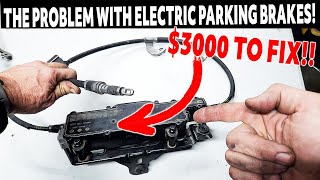
- Failed Electronic Parking Brake (EPB) Module/Actuator (Common) — The entire EPB module, containing a small motor and gears, fails due to burnt-out motors, water intrusion, or integrated circuit board failure. This is a highly documented issue on models like the Hyundai Santa Fe. 🎬 Watch this Santa Fe EPB module teardown and repair guide.
- Blown Fuse for the EPB System (Less Common) — A blown fuse cuts power to the EPB module, halting communication. Fuses blow due to underlying issues like short circuits or failing motors drawing excessive current.
- Low Battery Voltage or Poor Ground Connection (Less Common) — Modern modules require stable voltage (above 12.4V). A weak 12V battery causes insufficient voltage, triggering random communication faults like C1651. Corroded ground connections interrupt communication similarly.
- Binding or Seized Rear Brake Calipers (Less Common) — Rusted slide pins or seized pistons force the EPB motor to work harder. This excessive current draw overheats the motor, burns out a fuse, or damages the control module.
- Software Glitches in the Control Module (Rare) — A software glitch within the EPB or ABS module halts communication. Disconnecting the battery for 30 minutes resets the modules temporarily, 🎬 See how to reset the EPB warning light yourself. but a dealer software update provides a permanent fix.
- Faulty ABS/ESC Control Module (Rare) — The main Anti-lock Brake System (ABS) or Electronic Stability Control (ESC) module fails to receive signals. This rare issue is accompanied by other communication-related trouble codes (U-codes).
Symptoms

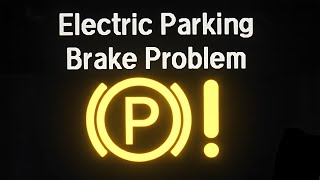
- Electronic Parking Brake (EPB) or Brake Warning Light is On — An illuminated warning light appears on your dashboard, showing 'EPB' or a symbol of a circle with a 'P' or an exclamation point. The light is either solid or flashing.
- Parking Brake Cannot Be Applied or Released — The electronic parking brake is stuck on, preventing movement, or it refuses to engage when operating the switch.
- 'Auto Hold' Feature is Disabled — The 'Auto Hold' function disables as a fail-safe measure, and the 'AUTO HOLD' light illuminates in amber or white.
- Audible Clicking or Whirring from Rear of Vehicle — The EPB motor makes noise for a few seconds when operating the switch, but the brake status remains unchanged. This indicates the motor receives a signal but is mechanically jammed or internally failed.
- 'Check Parking Brake' Message on Display — A text warning appears on the instrument cluster information display, instructing you to service the EPB system.
Diagnostic Flowchart
Tap your situation to follow the diagnostic path that matches what you're seeing on this code.
Common Fixes & Costs
- Replace the EPB Switch — Parts: $50-$150, Labor: $90-$150, ~1.2 hr book time (DIY)
- Repair Damaged Wiring or Connector — Parts: $20-$60, Labor: $150-$300, ~2.5 hr book time (Intermediate)
- Replace the EPB Actuator/Module Assembly — Parts: $250-$500 (aftermarket), $1200-$1800 (OEM), Labor: $200-$400, ~3 hr book time (Professional)
- Replace Blown Fuse and Diagnose Cause — Parts: $1-$10, Labor: $0-$150, ~0.1 hr book time (Beginner)
- Replace ABS/ESC Control Module — Parts: $200-$600 (rebuilt), $800-$2000+ (new), Labor: $150-$300, ~2 hr book time (Professional)
Used vs. New Parts: Buying Guide
When a used part is worth it: For the expensive EPB Actuator/Module, a used OEM part from a low-mileage, non-accident vehicle is a cost-effective option for older cars. For the simple EPB switch, buy a new aftermarket part.
Donor-vehicle mileage cap: roughly under 60000 miles for the part to have meaningful remaining life.
Donor quality checklist:
- Verify the part number exactly, as there are many variations.
- Prefer donors from dry, southern climates to avoid corrosion.
- Ask for the VIN of the donor car to check its history and ensure it wasn't scrapped for a related electrical or brake issue.
- Inspect photos for signs of damage to the electrical connector pins or cable housings.
Decision logic:
- If Fix is the EPB switch → Buy new aftermarket; the part is inexpensive and a common failure point.
- If Fix is the EPB actuator on a vehicle < 8 years old and < 100K miles → Favor a new aftermarket or new OEM part for longevity and warranty.
- If Fix is the EPB actuator on a vehicle > 8 years old and budget is critical → A used OEM part from a reputable salvage yard is a reasonable gamble, but be aware of the risks.
Warranty tradeoff: Used parts typically have a 30-90 day warranty, which excludes labor costs. Aftermarket new parts often come with a 1-year to limited lifetime warranty. New OEM parts carry the manufacturer's warranty, typically 1 year/12,000 miles.
Worst-case if a used part fails: $400-$1200 if a used actuator fails after installation, covering the cost of repeat labor and another replacement part.
What Happens If You Wait — Timeline
- 0-4 weeks: EPB/Brake warning light illuminates. 'Auto Hold' feature disables. The parking brake functions intermittently or not at all. There is an immediate risk of a roll-away incident if parked on an incline. (MPG impact: 0%% · Added cost: $0)
- 1-3 months: The fault becomes permanent. The EPB is completely inoperative. The risk of the brake failing and becoming stuck in the 'ON' position increases with every attempted use. (MPG impact: 0%% · Added cost: $150 (Potential towing cost if it gets stuck on away from home))
- 3-6 months: The EPB actuator fails and locks the rear brakes ON, rendering the vehicle undriveable. Forcing the vehicle to move destroys the rear brake pads and rotors via friction and heat. (MPG impact: N/A (Undriveable)% · Added cost: $450-$950 (Towing cost of $150 + $300-$800 for new rear pads and rotors))
- 6+ months (if root cause was a binding caliper): If the initial C1651 code was caused by a binding/seized caliper that was ignored, constant drag and extreme heat damage the wheel bearing and hub assembly alongside the pads and rotor. (MPG impact: 5-15% (if driveable)% · Added cost: $800-$1500+ (for a complete rear brake system overhaul including a new caliper, rotor, pads, and wheel bearing/hub assembly))
Cost of Not Fixing It
- Immediate: Loss of Electronic Parking Brake and Auto Hold features. Increased risk of a roll-away accident if parked on an incline without placing the transmission in park or gear. (Added cost: $0 (unless an accident occurs))
- 1-6 months: The EPB fails and becomes stuck in the 'ON' position, making the vehicle undriveable. Driving with a stuck brake destroys rear pads and rotors. (Added cost: $150 (towing) + $300-$800 (for new pads and rotors if damaged))
- 6+ months: If the root cause is a seizing caliper, constant drag and heat damage the wheel hub and bearing assembly alongside the pads and rotor. (Added cost: $800-$1500+ (for a complete rear brake overhaul including caliper, rotor, pads, and wheel bearing))
Diagnosis Steps

- Verify Actual DTCs and Check for TSBs
Use an OBD-II scanner to read codes from the ABS/Brake Control module. Confirm C1651 is present. On Ford or Lincoln vehicles, 'C1651' points to a connector, not a code; look for actual codes like U0128, C2007, or P26CA and check Technical Service Bulletins (TSBs) like SSM 47790.
Tools: OBD-II Scan Tool (capable of reading ABS codes) (Beginner) - Check Fuses and Battery Voltage
Locate the fuse labeled for the Electronic Parking Brake (EPB) and visually inspect it. Use a multimeter to check the 12V battery voltage; a reading below 12.4 volts with the engine off indicates a weak battery causing communication issues.
Tools: Fuse puller, Owner's manual, Multimeter (Beginner) - Test the EPB Switch
Listen and feel the EPB switch. If it feels sticky, is physically broken, doesn't click, or feels loose, it is faulty. While operating the switch, have a helper listen near the rear wheels for the actuator motor. If no sound occurs, the switch or its wiring is the primary suspect.
Tools: Assistant (to listen for motor) (Beginner) - Inspect EPB Module and Wiring
Safely raise and support the vehicle. Locate the EPB actuator module. Visually inspect the electrical connector and wiring harness for physical damage, corrosion, or loose connections. Focus on areas exposed to road spray and where the harness flexes.
Tools: Jack, Jack stands, Flashlight (Intermediate) - Scan Tool Actuation Test
Using a bidirectional scan tool, command the EPB to apply and release. If the scan tool cannot communicate with the EPB module, it confirms a communication failure (C1651/U0128). If it communicates but the command fails, it points to a faulty EPB module/actuator or wiring issue. If the command works, the problem is the EPB switch.
Tools: Bidirectional OBD-II Scan Tool (Advanced) - Check for Manual Emergency Release
Consult the vehicle's owner's manual for an emergency release procedure. Some models, like the 2014 Santa Fe, have a manual release achieved by removing two screws on the actuator itself, allowing the car to move if stuck. Many models lack a manual release.
Tools: Owner's Manual, Basic hand tools (e.g., Phillips screwdriver) (Intermediate) - Check EPB Motor Current Draw
Using a scan tool with live data or a clamp-on ammeter, monitor the current drawn by the EPB motor during activation. Normal operating current is 2-5 amps, with a brief stall current up to 17A or 40A. An abnormally high, sustained current draw suggests seized calipers or a failing motor. No current draw points to an open circuit or failed module.
Tools: Bidirectional Scan Tool, Clamp-on Ammeter (Advanced) - Perform Voltage Drop Test (Pro Tip)
With the EPB module plugged in and ignition on, set a multimeter to DC Volts. Place the positive lead on the battery's positive terminal and the negative lead on the power wire pin at the EPB connector. Command the EPB 'on'. A reading above 0.5 volts indicates excessive resistance in the power circuit. Repeat for the ground side. A reading over 0.2 volts indicates a bad ground.
Tools: Multimeter with long leads, T-pins, Bidirectional Scan Tool (Advanced) - Test CAN Bus Network Wires
With the battery disconnected, use a multimeter to check resistance between the two CAN bus wires (CAN High and CAN Low) at the EPB module connector. A healthy high-speed CAN network reads approximately 60 ohms. A reading of 120 ohms suggests a broken wire or missing terminating resistor. A reading near 0 ohms indicates a short between the wires.
Tools: Multimeter, Vehicle-specific wiring diagram (Advanced) - Analyze CAN Bus Signal with Oscilloscope (Pro Tip)
Using an oscilloscope, probe the CAN High and CAN Low wires at the EPB connector. A healthy signal shows two clean, mirror-image square waves. CAN High toggles between ~2.5V and ~3.5V; CAN Low toggles between ~2.5V and ~1.5V. A flat line indicates no signal. Distorted waveforms point to wiring issues, interference, or a faulty module.
Tools: Oscilloscope, Wiring diagram (Professional)
When This Code Triggers (Freeze-Frame Conditions)
- Ignition Status: ON / RUN (The code sets when the ignition is on and modules perform self-checks or when the EPB is commanded.)
- Battery Voltage: 11.8V - 14.5V (A timeout occurs at normal voltage, but is highly likely if voltage drops below 12.0V during an EPB command, indicating a weak battery or bad connection.)
- Vehicle Speed: 0 mph/kph (Fault occurs during vehicle startup, shutdown, or when parking, as this is when the EPB is most frequently activated.)
- EPB Command Status: Activating / Releasing / No Command (The fault logs at the exact moment the EPB switch is pressed or released, or during a routine network 'heartbeat' check even with no command.)
Related Codes
- U0128 — This is the generic SAE-standard code for 'Lost Communication With Park Brake Control Module.' C1651 is the manufacturer-specific equivalent for brands like Hyundai/Kia. A generic scan tool shows U0128, while a factory-level scanner shows C1651. Diagnosis is identical.
- C2402 — This Hyundai/Kia code indicates an 'ABS Motor Electrical Malfunction' or 'Motor Pump Fault', pointing to a problem inside the main ABS/HECU module itself. If you have C2402 alongside C1651, the ABS module is the likely source. If you only have C1651, the EPB module or wiring is the primary suspect.
- C2007 / C2008 — On Ford/Lincoln models, these codes mean 'Right/Left Rear Parking Brake Motor Circuit.' They are frequently caused by a broken wire in the harness pigtail near the rear caliper. This is a separate issue from water intrusion at the 'C1651' connector but is a very common EPB failure.
- C1200-C1212 — These codes relate to wheel speed sensor circuits. A wheel speed sensor fault does not directly cause a C1651. However, if the ABS module itself is failing, it sets both wheel speed sensor codes and communication codes like C1651 simultaneously.
Climate & Environmental Factors
- Humidity and Rain (Rust Belt, Coastal Areas): High humidity, road salt, and water exposure significantly increase failure rates. Water intrudes into electrical connectors like the Ford C1651, causing corrosion. It accelerates corrosion of brake caliper components and damages the wiring harness leading to the EPB module.
- Cold Weather: Cold temperatures make wiring insulation brittle and prone to cracking, particularly where the harness flexes. Low temperatures exacerbate problems with a weak 12V battery, causing voltage to drop below the threshold required for stable module communication.
How to Talk to a Mechanic About This Code
Say this: "I have a [Make/Model] with a brake warning light on, and my scanner shows code C1651, indicating an EPB communication failure. I verified the battery voltage and fuse are good. I need a diagnostic to test the EPB switch, wiring, and module."
This signals you did basic homework and guides the mechanic toward a logical diagnostic path. Mentioning specific components prevents them from starting from zero and avoids recommendations for unrelated, expensive repairs.
Avoid saying:
- 'My parking brake is broken.' (too vague)
- 'The internet said to replace the actuator.' (Don't propose a fix, describe the symptoms and the code)
- 'Just fix whatever's wrong, I have a blank check.' (invites unnecessary and expensive repairs)
Questions to ask before authorizing the repair:
- What specific tests did you perform to isolate the faulty part?
- If it's the module, have you ruled out the switch and wiring first?
- If it's a Ford, are you aware that C1651 refers to a connector and have you checked it for water damage per TSBs?
- Can you show me the damaged part or the bad readings?
- What is the warranty on the parts and your labor for this specific repair?
Where to Take It: Dealer vs Independent vs Chain
- Dealer:
Recommended for Ford/Lincoln due to the specific TSB, or for any make if the vehicle is under warranty. For out-of-warranty Hyundai/Kia, try an independent shop first.
Best for: Vehicles still under warranty, Complex, manufacturer-specific electrical issues where TSBs are critical (like the Ford C1651 connector issue), When you have exhausted options at independent shops.
Downsides: Highest labor rates and part costs (OEM only)., May recommend replacing an entire expensive assembly (EPB actuator) when a smaller component (switch, wire) is the cause. (Typical cost: +40% vs. baseline) - Independent Shop:
Best fit for most out-of-warranty C1651 repairs on Hyundai/Kia, provided the shop is reputable and well-equipped. They are more likely to attempt a wiring repair or suggest a cheaper aftermarket module.
Best for: Out-of-warranty vehicles where cost is a major factor., Diagnosing common failure patterns like a bad EPB switch or wiring issue., Providing aftermarket part options to save money on expensive modules.
Downsides: Quality and diagnostic capabilities vary widely; ensure they have modern scan tools and experience with electronic brake systems., May not have access to the very latest manufacturer TSBs. (Typical cost: +0% vs. baseline) - Chain Shop:
AVOID. This code requires diagnostic expertise beyond the scope of a typical chain shop. They will likely misdiagnose the issue or refer you elsewhere after charging a diagnostic fee.
Best for: Simple, unrelated maintenance like oil changes and tires.
Downsides: Generally not equipped for in-depth electrical or communication network diagnosis., High pressure to upsell based on simple code reads without proper diagnosis., Technician skill is highly variable. (Typical cost: -10% vs. baseline)
When to Walk Away From the Repair
If the estimated repair cost for the C1651 fault exceeds 40-50% of your car's current private-party value, you should seriously consider selling or trading in the vehicle instead of repairing it.
- Car worth $5000, fix is $2200: Borderline. The repair is 44% of the car's value. Get a second opinion, and explore cheaper aftermarket part options before authorizing the repair.
- Car worth $15000, fix is $1800: Fix it. The repair cost is well below the threshold and restores a critical safety and convenience feature.
- Car worth $3000, fix is $2000: Walk away. The repair cost is two-thirds of the car's value. It is not economically sensible to proceed.
What Scan Tool You Need for This Code
Minimum: A scan tool that can read and clear codes from the ABS/Brake module and supports the Electronic Parking Brake (EPB) service function. A basic engine-only code reader will NOT see this code or be able to perform the necessary functions.
A cheap $20 scanner only reads generic engine codes (P-codes). C1651 is a chassis code (C-code) stored in the brake module. Furthermore, if you replace the actuator or pads, you need a scanner with EPB service functions to retract the calipers into 'service mode' and recalibrate them afterward.
Budget: BlueDriver Pro (~$100) — Reads ABS/Brake system codes like C1651 and provides freeze-frame data. While it lacks the full bidirectional EPB service mode on all vehicles, it is an excellent starting point for diagnosis.
Mid-range: Innova 5610 or Foxwell NT630 Plus (~$300) — Offers full EPB service functions, including 'service mode' to open calipers and calibration after replacement. These are bidirectional tools that command the EPB module to actuate, which is critical for testing.
Professional: Autel MaxiCOM MK808 / Topdon Phoenix Lite 2 (~$500-800) — Provides full, OEM-level bidirectional control. Commands the EPB on/off, enters service mode, performs calibration, views live data of the switch and motor, and accesses manufacturer-specific TSBs directly on the tool.
Rent vs buy: Most auto parts stores do NOT rent out scanners with the necessary EPB/ABS capabilities. If you plan to do your own brake work on a modern car, buying a mid-range scanner is a worthwhile investment.
How to Clear the Code After You Fix It
- Perform EPB calibration/re-learn procedure with a bidirectional scan tool (if actuator or module was replaced).
- Use an OBD-II scan tool to clear codes from the ABS/Brake control module.
- Cycle the ignition off and then on, and verify the EPB warning light does not return.
- Perform a complete OBD-II drive cycle to reset emissions readiness monitors.
Drive cycle (~30 minutes): From a cold start, idle for 2-3 minutes. Drive in mixed city/highway conditions for 15-20 minutes, including some steady-state cruising. Allow the vehicle to cool down completely. This process helps the vehicle's computer run its self-tests.
Readiness monitors affected: Catalyst Monitor, O2 Sensor Monitor, EVAP System Monitor
Before emissions retest: drive at least 100 miles to fully set monitors.
Watch out for:
- Simply disconnecting the battery clears the code but erases all readiness monitors, guaranteeing an emissions test failure until a full drive cycle is completed.
- Forgetting to perform the EPB calibration or service mode reset after replacing the actuator prevents the system from working and causes the code to return immediately.
- If the underlying cause (e.g., a chafed wire, faulty switch) is not fixed, the code reappears as soon as the module communication times out again.
Will This Fail Emissions / State Inspection?
Yes — this code typically fails an OBD-II emissions inspection.
- California: While an EPB/ABS light is not an automatic emissions failure like a Check Engine Light, the inspector will fail the vehicle on a safety basis. If you clear the code, all OBD readiness monitors reset, blocking the test until a full drive cycle is completed.
- New York: An illuminated brake system warning light is grounds for an automatic failure of the mandatory annual safety inspection.
- Texas: Texas requires an annual safety inspection in its most populous counties. An illuminated brake warning light causes the vehicle to fail this safety inspection.
Most Commonly Affected Vehicles

- Hyundai Santa Fe (2012-2020) — Highly prone to failures of the EPB actuator module, causing rear wheels to lock up without a simple manual release. The 2014-2015 models are frequently mentioned.
- Hyundai Sonata (2011-2019) — Prone to issues with the EPB switch and actuator module. A 2015 model was reported to have a seized EPB unit requiring replacement.
- Kia Sorento (2015-2020) — The EPB switch and caliper-integrated motors are common failure points on these models.
- Kia Optima (2011-2020) — Shares components with the Hyundai Sonata. Failures of the electric motor in the brake caliper are reported, sometimes preceded by a clicking sound.
- Hyundai Genesis (2009-2016) — Manufacturer documentation specifically lists C1651 as a CAN timeout code for the EPB system on this model.
- Ford Fusion / C-MAX (Hybrid/PHEV) (2013-2019) — CRITICAL NOTE: C1651 is the NAME OF A CONNECTOR under the cowl panel, NOT a trouble code. Water intrusion at this connector causes other codes (e.g., U0284, P26CA). Separately, these cars suffer from broken EPB wires at the rear calipers, causing codes like C2007.
- Lincoln MKZ (Hybrid/PHEV) (2013-2019) — CRITICAL NOTE: Shares a platform with the Ford Fusion. C1651 is the name of an electrical connector, not a DTC. Water damage there causes other codes. The most common EPB issue on the MKZ is a broken wire in the harness pigtail at the rear caliper, setting codes C2007 or C2008.
- Peugeot / Citroen Various (2010-2019) — C1651 appears on these makes, often related to the ESP (Electronic Stability Program) and indicating an invalid signal or network fault. Diagnosis focuses on CAN bus wiring and the ABS/ESP module.
- Jaguar / Subaru Various (2010-2019) — While C1651 is a valid DTC on some models from these brands, it is not a commonly reported code. Diagnosis follows standard CAN network troubleshooting procedures.
Manufacturer-Specific Notes
- Ford, Lincoln: On models like the Fusion, MKZ, and C-MAX, 'C1651' is NOT a Diagnostic Trouble Code. It is the engineering name for a large electrical connector in the engine bay, typically under the driver's side cowl panel. Ford TSB SSM 47790 directs technicians to inspect this connector for water intrusion and corrosion. The fix is to clean and seal the connector, not replace a module.
- Ford, Lincoln (Fusion/MKZ): A separate, extremely common EPB failure on these models is a broken wire within the harness connecting to the rear brake caliper motor. The wire fatigues and breaks internally at its flex point near the rear control arm, setting codes C2007 or C2008. The fix is to splice the wire or replace the pigtail, which is much cheaper than replacing the caliper/motor assembly.
- Peugeot, Citroen: On some Peugeot/Citroen models, C1651 appears related to the ESP (Electronic Stability Program) and indicates an invalid signal from a component or a communication network fault. Diagnosis focuses on CAN bus wiring integrity, power/grounds, and the ABS/ESP module.
- Hyundai, Kia: Many Hyundai/Kia models with this fault, particularly the Santa Fe, lack a user-accessible manual or emergency release for the electronic parking brake. If the brake is stuck on due to a module or motor failure, the vehicle cannot move without being towed, sometimes with the rear wheels on dollies.
- Hyundai: There are no widespread recalls for C1651, but Hyundai issued a recall for some 2019-2020 Elantra, Kona, and Veloster vehicles (NHTSA Campaign Number: 23V-462) for an issue with the brake system vacuum pump leading to a loss of power brake assist. This highlights potential brake system vulnerabilities.
Real Owner Stories
2015 Hyundai Santa Fe with EPB and Auto Hold lights on, brake stuck.
The 'Auto Hold' and 'EPB' warning lights illuminated, and the electronic parking brake stuck engaged, making the car undriveable.
Outcome: A dealership diagnosed a complete failure of the EPB actuator module. The owner was quoted nearly $3000 AUD for the repair, with the OEM part costing $1900 AUD. The owner discovered aftermarket modules online for $225 AUD.
Lesson: On Hyundai/Kia vehicles, a stuck EPB is a serious issue with no simple manual override. The actuator module is a known failure point, and OEM parts are extremely expensive. Check for cheaper aftermarket alternatives before approving a dealer repair.
2015 Ford Fusion Hybrid with multiple random electrical failures.
The owner lost power to the A/C, passenger windows, passenger mirror, and the external temperature display simultaneously.
Outcome: The technician found water inside connector C134 near the driver's side front bumper. They dried the connector and applied dielectric grease, fixing all problems for a $150 diagnostic fee.
Lesson: On a Ford Fusion/MKZ, 'C1651' is a connector, not a fault code. Water intrusion is the root cause. Do not replace modules. Find the wet connector, dry it, and seal it with dielectric grease.
General EPB light on, but brake is not stuck.
The EPB warning light illuminated, but the brake engaged and disengaged with hesitation.
Outcome: After cleaning the sticky residue, the switch operated with a distinct click. After cycling the ignition, the warning light disappeared permanently. The fix cost nothing.
Lesson: Start with the simplest and cheapest potential causes. A dirty or sticky EPB switch is a very common cause of intermittent faults and is easy to clean.
How to Prevent This Code From Triggering
- Lubricate Rear Brake Caliper Slide Pins (Every brake service or 30,000 miles) — Sticking or seized caliper slide pins force the EPB motor to work harder, leading to excessive current draw that burns out the motor or damages the control module. High-temperature, silicone-based grease ensures the caliper moves freely.
- Apply Dielectric Grease to Exposed Connectors (Once, or whenever connectors are serviced) — On Fords, water intrusion into connector C1651 is a primary issue. Applying a thin layer of dielectric grease to the seals of connectors exposed to road spray creates a waterproof barrier, preventing corrosion.
- Exercise the Electronic Parking Brake Regularly (At least once a week) — Regularly engaging and disengaging the EPB keeps the motor, gears, and cables from seizing due to inactivity and corrosion. This is crucial in humid or winter climates.
- Maintain a Healthy 12V Battery (Test annually after 3 years of age) — The EPB system requires stable voltage (above 12.4V) to communicate and operate correctly. A weak battery is a common cause of intermittent electronic faults, including C1651.
- Keep Center Console Clean and Dry (Daily habit) — Liquid spills are a leading cause of failure for the console-mounted EPB switch. Keeping drinks covered prevents short circuits and physical damage to this common failure point.
- For Ford/Lincoln Owners: Check Cowl Drains (Annually, especially in leafy areas) — Water intrusion at connector C1651 on Fords is often caused by clogged cowl drains, forcing rainwater onto engine bay electronics. Keeping drains clear of leaves prevents this.
Frequently Asked Questions
Why does my Ford have code C1651 if it's not a real code?
Your Ford does not have a C1651 trouble code. A mechanic or technical document is referencing 'C1651' to identify a specific electrical plug under the cowl panel that needs checking for water damage. The actual trouble code stored in your car's computer will be a different number (e.g., U0284, P26CA).
My parking brake is stuck on. How can I move my car?
Check your owner's manual for a specific emergency release procedure, though many modern vehicles lack a simple manual release. If a release procedure is unavailable or fails, do not attempt to force the vehicle to move. You must tow the vehicle, possibly with the rear wheels on dollies, to a repair shop.
What are the most common misdiagnosis mistakes for C1651?
On a Ford/Lincoln, the biggest mistake is replacing an expensive module based on a 'C1651' reference instead of cleaning the corroded connector. For Hyundai/Kia, a common error is immediately replacing the expensive EPB actuator without first checking the cheaper EPB switch, battery voltage, fuses, and wiring harness.
Can I just replace the EPB fuse to fix C1651?
Always check the fuse first, as replacing a blown one restores communication instantly. However, fuses blow due to underlying issues like short circuits or failing EPB motors drawing excessive current. If the new fuse blows again, you must locate and fix the root electrical problem.
Is the 'Auto Hold' light related to the C1651 code?
Yes, the 'Auto Hold' system relies on perfect communication with the Electronic Parking Brake to function. When the main computer loses communication with the EPB module (triggering code C1651), it disables Auto Hold as a safety precaution. Restoring EPB communication automatically restores the Auto Hold feature.
How much does it cost to fix code C1651?
A simple fix like replacing the EPB switch costs between $140 and $300. Repairing a broken wire on a Ford costs $150-$300. Replacing the entire EPB actuator module on a Hyundai ranges from $450 for an aftermarket part (DIY) to over $2,000 at a dealership using OEM parts.
Can I reset the EPB warning light?
You can clear the code with an OBD-II scanner, but the light returns immediately if the underlying communication fault persists. If the fault was a temporary glitch from low battery voltage, clearing the code or cycling the ignition off and on resolves the issue.
Key Takeaways
- On Hyundai and Kia vehicles, C1651 indicates a communication failure with the Electronic Parking Brake (EPB) module.
- On Ford and Lincoln models, 'C1651' is the name of a physical electrical connector prone to water damage, not an actual OBD-II trouble code.
- Test the center console EPB switch and verify battery voltage exceeds 12.4V before replacing the $1,200+ EPB actuator module.
- Do not drive if the parking brake is stuck engaged; forcing the vehicle to move destroys the rear brake pads and rotors, requiring a $500+ repair.
Helpful Videos

The information in this article is provided for general reference and educational purposes only. Vehicle specifications, procedures, and part compatibility can vary by production date, trim level, and region. Always consult your vehicle's factory service manual and verify part numbers before purchasing or performing repairs. Safety-critical components such as airbags, seat belts, and braking systems should be installed by a qualified professional.
- 🎬 Helpful Videos
- What Does C1651 Mean?
- Can I Drive With C1651?
- Common Causes
- Symptoms
- Diagnostic Flowchart
- Common Fixes & Costs
- Used vs. New Parts: Buying Guide
- What Happens If You Wait — Timeline
- Cost of Not Fixing It
- Diagnosis Steps
- When This Code Triggers (Freeze-Frame Conditions)
- Related Codes
- Climate & Environmental Factors
- How to Talk to a Mechanic About This Code
- Where to Take It: Dealer vs Independent vs Chain
- When to Walk Away From the Repair
- What Scan Tool You Need for This Code
- How to Clear the Code After You Fix It
- Will This Fail Emissions / State Inspection?
- Most Commonly Affected Vehicles
- Manufacturer-Specific Notes
- Real Owner Stories
- 2015 Hyundai Santa Fe with EPB and Auto Hold lights on, brake stuck.
- 2015 Ford Fusion Hybrid with multiple random electrical failures.
- General EPB light on, but brake is not stuck.
- How to Prevent This Code From Triggering
- Frequently Asked Questions
- Why does my Ford have code C1651 if it's not a real code?
- My parking brake is stuck on. How can I move my car?
- What are the most common misdiagnosis mistakes for C1651?
- Can I just replace the EPB fuse to fix C1651?
- Is the 'Auto Hold' light related to the C1651 code?
- How much does it cost to fix code C1651?
- Can I reset the EPB warning light?
- Key Takeaways
- 🎟️ Get 5% Off