

OBD-II Code C1626: In-Depth Guide to Steering Angle Sensor Failure
What C1626 means, why it triggers, and how to fix it for good
- Code C1626 disables your vehicle's ABS and Electronic Stability Control (ESC), increasing your risk of a skid or crash in emergency maneuvers.
- The #1 cause is a missing recalibration; expect to pay $100-$200 for a 1-hour shop labor charge to reset the sensor after an alignment or battery swap.
- You can drive with C1626, but your electronic safety nets are 100% offline, leaving zero margin for error on wet or icy roads.
- If you own a 2021-2023 Kia Seltos, do not buy parts; a free dealer software update (TSB CHA117) fixes an overly sensitive logic glitch causing this code.
- Always check for U-codes (like U0126) before replacing the sensor; a broken $150 clock spring is often the true culprit behind the communication failure.
What Does C1626 Mean?

Code C1626 means the main computer detects a problem with the Steering Angle Sensor (SAS). This sensor reports the precise angle, direction, and rate of turn of the steering wheel. Modern safety systems like ESC, traction control, and ABS require this data to function.
Technical definition: A control module (ABS, Parking Assist, or main ECU) received an implausible signal or an internal failure flag from the steering angle sensor, indicating the data does not match vehicle physics or the sensor failed its self-test.
Can I Drive With C1626?
Yes, But With Caution. Yes, but your vehicle's primary electronic safety nets are offline. Anti-lock Braking (ABS) and Electronic Stability Control (ESC) are disabled. In a panic stop, your wheels will lock up and skid. In a sudden swerve, the vehicle will not correct for understeer or oversteer. Fix this promptly to restore emergency handling.
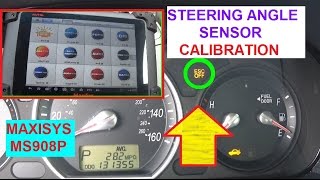
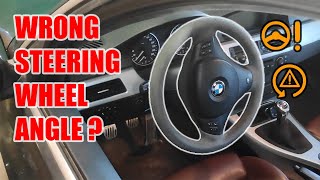
🎬 Watch: Understanding C1626 causes and how to fix them.Common Causes

- Incorrect Steering Angle Sensor (SAS) Calibration (Very Common) — This is the most frequent cause. After a wheel alignment, battery disconnection, or suspension repair, the sensor's 'zero' position must be reset. If skipped, the sensor sends data that conflicts with wheel speed sensors, triggering the code.
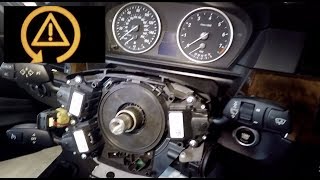
- Faulty Clock Spring (Common) — The SAS mounts on or inside the clock spring assembly behind the steering wheel. The clock spring contains flexible ribbon wiring that breaks from repeated turning, cutting off power, ground, or signal to the sensor.
- Faulty Steering Angle Sensor (SAS) (Common) — The sensor itself fails internally. Optical sensors accumulate dust and debris, while magnetic sensors suffer electronic failure, resulting in erratic, frozen, or missing data.
- Outdated Control Module Software (Rare) — On specific models (notably 2021-2023 Kia Seltos), the control module's software is overly sensitive and sets the code by mistake due to minor tire diameter variations. A dealer software update is the only fix.
- Faulty ABS/Wheel Speed Sensor (Less Common) — A failing wheel speed sensor or cracked ABS reluctor ring sends incorrect speed data. The control module compares this to the steering angle, finds a mismatch, and incorrectly blames the SAS.
- Wiring or Connector Issues (Less Common) — Damaged, corroded, or loose wires between the SAS and the control module interrupt the signal. This frequently occurs from moisture intrusion in high-humidity climates or botched previous repairs.
- Misalignment or Suspension Issues (Less Common) — If wheels are severely out of alignment, the driver must hold the steering wheel at an angle to drive straight. The SAS reports this angle, conflicting with yaw rate data and logging a fault.
- Low or Unstable Battery Voltage (Rare) — A weak battery causes a severe voltage drop during engine cranking. This prevents the SAS from initializing correctly during its startup self-test, logging a temporary glitch code.
Symptoms

- Electronic Stability Control (ESC) or Traction Control (TCS) Light is On — The ESC/TCS system disables itself and illuminates a dashboard warning light the moment it detects an unreliable steering angle signal.
- ABS Light is On — The Anti-lock Braking System relies on steering data for cornering stability and disables alongside the ESC system.
- Heavy, Stiff, or Unresponsive Steering — Vehicles with electric power steering (EPS) default to a heavier, non-variable steering effort because they lack accurate wheel position data.
- Advanced Driver-Assistance Systems (ADAS) Malfunction — Lane-keeping assist, adaptive cruise control, automatic parking, and adaptive headlights immediately stop working.
- Parking Assist or Monitor System Inoperative — On many Toyota, Lexus, and Hyundai models, parking guide lines on the backup camera disappear or freeze.
Diagnostic Flowchart
Tap your situation to follow the diagnostic path that matches what you're seeing on this code.
Common Fixes & Costs
- Steering Angle Sensor Recalibration — Parts: $0, Labor: $100-$200, ~1 hr book time (Professional)
- Control Module Software Update — Parts: $0, Labor: $100-$200, ~1 hr book time (Professional)
- Clock Spring Replacement
— Parts: $100-$450, Labor: $150-$300, ~1.8 hr book time
(Professional)
Hyundai (Various Models): OEM Check dealer for specific part number; subject to extended warranty on some models. (Alt: Available from brands like Dorman.) - Steering Angle Sensor Replacement
— Parts: $150-$500, Labor: $150-$400, ~2 hr book time
(Intermediate)
Toyota RAV4 (2019-2022): OEM 89245-06080, 8924B-42010 (Alt: Verify fitment with Dorman or SMP.)
Hyundai Sonata (2015-2019): OEM 93480-1Y000 (Alt: Generic and aftermarket versions widely available.) - Wiring Repair — Parts: $10-$50, Labor: $150-$400, ~2.5 hr book time (Professional)
Used vs. New Parts: Buying Guide
When a used part is worth it: Buying a used steering angle sensor or clock spring is strongly discouraged. The risk of receiving a worn or incompatible part is high. Only consider used for old, low-value vehicles where new parts are unavailable.
Donor-vehicle mileage cap: roughly under 40000 miles for the part to have meaningful remaining life.
Donor quality checklist:
- Verify the exact OEM part number matches; small variations (e.g., with/without cruise control) make parts incompatible.
- Avoid parts from vehicles involved in front-end collisions or with deployed airbags.
- Ensure a used clock spring is locked in the center position to prevent ribbon cable damage during shipping.
Decision logic:
- If The part is a steering angle sensor or clock spring. → Buy a new OEM or high-quality aftermarket part. The labor is significant; don't do it twice.
- If The vehicle is a daily driver or carries family. → Do not compromise on safety. Buy a new OEM part to ensure airbag and stability control reliability.
- If You must buy used due to budget/availability. → Source from a reputable salvage yard with a good return policy and low-mileage donor vehicle.
Warranty tradeoff: Used parts typically have a 30-90 day warranty. New aftermarket parts offer 1-year to lifetime warranties. New OEM parts offer the best fitment guarantee.
Worst-case if a used part fails: $300-$700 if a used part fails, requiring repeat labor and another replacement part.
What Happens If You Wait — Timeline
- Immediate: Code C1626 is stored. ABS, ESC, and TCS warning lights illuminate. Stability control, traction control, and ADAS features are disabled. (MPG impact: 0%% · Added cost: $0)
- 0-3 months: The primary risk is a loss-of-control accident. If the root cause is a bad alignment, uneven tire wear begins, 'feathering' the edges of the front tires. (MPG impact: 0-2%% · Added cost: $300-$1200 (premature tire replacement))
- 3-6 months: Continued driving with a bad alignment stresses tie rod ends and ball joints. The safety risk in emergency maneuvers remains critically high. (MPG impact: 0-2%% · Added cost: $500-$2000 (suspension parts and tires))
- 6+ months: Operating with no electronic safety net guarantees a higher likelihood of a severe crash during a sudden swerve or on slippery roads. (MPG impact: 0-2%% · Added cost: Potentially infinite (accident or total loss))
Cost of Not Fixing It
- Immediate: ABS and ESC systems are disabled, resulting in a total loss of anti-lock braking and skid correction assistance. (Added cost: Potentially infinite (in case of a serious accident).)
- 0-3 months: If the root cause is a bad alignment, continued driving causes accelerated and uneven tire wear. (Added cost: $300-$1200)
- Ongoing: Systems relying on steering data (Lane Keep Assist, Adaptive Cruise Control) remain inoperative. (Added cost: Negligible direct cost, but significant loss of vehicle features.)
Diagnosis Steps

- Read All Trouble Codes from All Modules
Use a professional scanner to confirm C1626. Scan all modules (ABS, BCM, ECU) for U-codes (e.g., U0126 for communication loss) or C-codes for wheel speed sensors, which point to the true root cause.
Tools: Professional OBD-II Scanner (Beginner) - Check for Technical Service Bulletins (TSBs)
Search online for TSBs related to C1626 for your specific year, make, and model. Manufacturers often release software updates (like Kia TSB CHA117) that fix the issue without hardware replacement.
Tools: Internet access (Beginner) - Analyze Live Sensor Data
Monitor the 'Steering Angle' parameter in live data. It should read 0.0° (+/- 5.0°) when straight. As you turn, the angle must change smoothly without jumping, freezing, or showing '---'.
Tools: Advanced OBD-II Scanner (Intermediate) - Attempt Steering Angle Sensor Recalibration
If live data is responsive but off-center, perform a 'SAS Reset' or 'Zero Point Calibration'. Center the wheel perfectly and follow the scanner's prompts. If the code clears, the issue was calibration.
Tools: Bidirectional OBD-II Scanner (Intermediate) - Inspect Wiring and Connectors
Visually inspect the harness at the steering column and clock spring. Unplug the SAS connector and check for bent, corroded, or pushed-out pins. Look for chafed wires.
Tools: Flashlight, Trim removal tools (Intermediate) - Test Sensor Power and Ground
Identify power and ground wires at the SAS connector using a wiring diagram. With the key on, verify battery voltage (or 5V reference) at the power pin and good continuity (<0.5 ohms) to ground.
Tools: Multimeter, Vehicle-specific wiring diagram (Advanced) - Verify Sensor Signal Output
For analog sensors, back-probe the signal wire with a multimeter to verify smooth voltage changes (e.g., 0V to 5V) as the wheel turns. For digital sensors, use an oscilloscope to check the square wave pattern for dropouts or noise. Flatlines confirm internal sensor failure.
Tools: Multimeter, Oscilloscope, Back-probe kit, Wiring diagram (Advanced) - Check Related Systems
If sensor tests pass, check live data from all four wheel speed sensors for consistency. Test the battery to ensure it holds ~12.6V off and ~13.7-14.7V running.
Tools: Advanced OBD-II Scanner, Multimeter (Intermediate)
When This Code Triggers (Freeze-Frame Conditions)
- Vehicle Speed: 10-40 mph (Sets during or immediately after a turn, when the module compares steering angle to wheel speed data and finds a mismatch.)
- Steering Wheel Angle: > 10° (or not changing) (Triggers when the reported angle is implausible for the given vehicle speed, or if the angle freezes while turning.)
- System Voltage: 11.5-14.5V (Most likely to set when system voltage is normal. A voltage drop during startup can also trigger it.)
- Ignition Cycle: Active (Detected during an active ignition cycle in motion, or logged immediately at startup if the sensor fails its self-test.)
Related Codes
- C1231 — A generic Toyota/Lexus code for a SAS Circuit Malfunction. C1231 points to an electrical problem (power/ground), while C1626 indicates implausible data or internal failure.
- U0126 — Lost Communication With SAS Module. Indicates a total communication breakdown (broken wire or dead sensor). C1626 means a faulty signal is received; U0126 means no signal is received.
- C1260 — Another code pointing to a steering angle sensor signal fault. Frequently seen alongside C1626, confirming the fault lies within the sensor's data output.
- Manufacturer-Specific Codes (e.g., C162604) — Manufacturers append a two-digit failure type code. Kia's C162604 specifies 'Implausible Control', providing more specific diagnostic direction.
Climate & Environmental Factors
- High Humidity / Moisture Intrusion: Prolonged exposure to high humidity or water leaks causes pin corrosion at the SAS connector, increasing circuit resistance and corrupting the signal.
- Extreme Cold: Extreme cold lowers battery voltage. During cranking, this voltage drop prevents the SAS from initializing correctly, logging a false C1626 code.
How to Talk to a Mechanic About This Code
Say this: "I have a C1626 code with my ABS and ESC lights on. I'd like to schedule a diagnostic. Can you please check if it's a calibration issue before recommending a sensor replacement? I'd also like you to check for any relevant TSBs for my vehicle."
This signals you understand the most common fix (recalibration) and potential software issues (TSBs). It directs the mechanic to perform a logical diagnosis instead of immediately quoting an expensive part.
Avoid saying:
- 'My traction control light is on, can you look at it?'
- 'Just fix whatever is wrong.'
- 'The car is acting weird, what do you think it is?'
Questions to ask before authorizing the repair:
- Did you try to recalibrate the steering angle sensor, and did the procedure succeed or fail?
- Can you show me the live data from the steering angle sensor? Does it read 0° when straight and change smoothly when turned?
- If you're recommending a sensor replacement, how did you rule out a wiring problem or a faulty wheel speed sensor?
- Does your quote for replacement include the mandatory SAS calibration after the new part is installed?
Where to Take It: Dealer vs Independent vs Chain
- Dealer:
Recommended if a TSB applies or the vehicle is under warranty. They have guaranteed access to the correct diagnostic tools and software.
Best for: Vehicles under warranty., Specific known issues covered by a Technical Service Bulletin (TSB), like the Kia Seltos., Complex electrical issues on newer or European vehicles.
Downsides: Highest labor rates, often 1.5-2x more than independent shops., May default to replacing an entire assembly when a smaller component or calibration would suffice. (Typical cost: +50% vs. baseline) - Independent Shop:
Best overall fit for out-of-warranty vehicles. Vet the shop by asking if they frequently perform SAS calibrations.
Best for: Out-of-warranty vehicles where cost is a major factor., Diagnosing common issues like post-alignment calibration failures.
Downsides: Quality varies; ensure the shop has a modern, bidirectional scan tool capable of SAS calibration., May not have access to the latest manufacturer-specific software updates. (Typical cost: +0% vs. baseline) - Chain Shop:
Use with caution. Acceptable for a wheel alignment IF you verify their ability to perform the subsequent SAS calibration. Avoid for diagnosing the C1626 code itself.
Best for: Simple wheel alignments, but you MUST confirm beforehand that they can and will perform the SAS calibration.
Downsides: Technician skill and equipment are inconsistent., High pressure to upsell; may misdiagnose a calibration issue as a need for expensive suspension parts., Often lack the advanced bidirectional scanners required for anything beyond reading the code. (Typical cost: -10% vs. baseline)
When to Walk Away From the Repair
If the estimated repair cost for the C1626 fault and related issues exceeds 40-50% of your car's private-party value, consider selling or trading it in.
- Car worth $4000, fix is $1800: Walk away. The repair cost is 45% of the car's value. The disabled safety systems make it hard to sell privately, so consider selling 'as-is' to a dealer.
- Car worth $15000, fix is $900: Fix it. The repair is only 6% of the vehicle's value and restores critical safety features, preserving its resale value.
- Car worth $2500, fix is $250: Fix it. If the fix is just a calibration, the low cost makes it worthwhile even on an inexpensive car, making it safer and easier to sell.
What Scan Tool You Need for This Code
Minimum: A tool that can perform Steering Angle Sensor (SAS) calibration/reset. A basic code reader is NOT sufficient.
A $20 code reader only tells you the C1626 code exists. It cannot view live steering angle data or perform the SAS calibration, which is the most common fix.
Budget: No reliable pick (~$0) — Scanners under $100 lack the bidirectional control needed for SAS calibration. The essential repair function is missing.
Mid-range: Foxwell NT510 Elite / NT630 Plus (~$180) — Provides full system diagnostics, reads live steering angle data, and has the bidirectional capability to perform the 'SAS Reset' function.
Professional: Autel MaxiCOM MK808S / MK900BT (~$400-600) — Offers full bidirectional control, extensive service functions including SAS calibration for a wide range of vehicles, and detailed live data graphing.
Rent vs buy: Auto parts store loaner tools are basic code readers and cannot perform SAS calibration. You will likely need to buy a suitable scanner or pay a shop for the diagnosis and calibration.
How to Clear the Code After You Fix It
- Reconnect battery if it was disconnected for the repair.
- Use a compatible bidirectional scan tool to perform the 'Steering Angle Sensor Calibration' or 'Zero Point Calibration'.
- Clear the C1626 fault code from the ABS/ESC control module.
- Perform the manufacturer-specified drive cycle to confirm the fix.
Drive cycle (~10 minutes): Start the engine. Drive in a straight line on a level surface under 15 mph for a short distance to confirm the new center point. Perform several left and right turns. Drive for 10 minutes at steady speeds to allow ABS/ESC self-checks to complete.
Readiness monitors affected: Not applicable. C1626 is a Chassis code and does not affect emissions readiness monitors.
Watch out for:
- Clearing the code without performing the calibration results in the code returning immediately.
- Forgetting to perform the calibration after a wheel alignment is the most common pitfall.
- Using a basic code reader that lacks the bidirectional SAS calibration function.
Will This Fail Emissions / State Inspection?
No — by itself this code doesn't fail OBD inspection (but it can keep readiness monitors from setting, which causes a separate fail).
- California: An illuminated ABS/ESC light does not fail the smog check, but a technician may refuse to test the vehicle on a dynamometer for safety reasons.
- New York: An illuminated ABS warning light is grounds for the vehicle to fail the annual safety inspection.
- Texas: An illuminated ABS light is explicitly listed as NOT a cause for rejection in the annual safety inspection. This code does not affect the emissions test.
Most Commonly Affected Vehicles
- Kia Seltos (2021-2023) — A known software glitch causes this code (often C162604). The fix is a dealer-installed software update (TSB CHA117), not a hardware replacement.
- Hyundai Various (Sonata, Elantra) (2007-2019) — Frequently relates to calibration issues after alignments or a faulty clock spring assembly. Hyundai has extended warranties on clock springs for some models.
- Toyota RAV4 (2019-2022) — The code points to an internal malfunction requiring replacement of the sensor assembly. A wheel alignment and recalibration are required post-repair.
- Lexus RX 350 (2010-2015) — Indicates an internal malfunction communicated to the parking assist ECU, requiring replacement of the spiral cable/clock spring assembly.
- Dodge/Ram Various Trucks & Cars (2011-2020) — Highly sensitive to calibration issues after front-end suspension work or battery replacement. Recalibration is the most common fix.
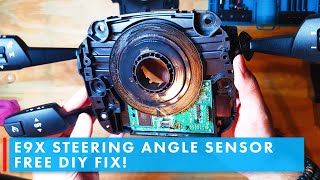
- BMW Various (3-Series, 5-Series) (2006-2013) — Caused by a dirty optical disc inside the sensor. Disassembling the sensor and cleaning the disc with isopropyl alcohol is a common DIY fix.
- Volkswagen Golf, Jetta (2005-2015) — Often triggered by a secondary fault, such as a corroded ABS reluctor ring. The ABS module sees a speed conflict and incorrectly flags the SAS.
- Subaru Outback, Forester (2014-2023) — Frequently appears after steering work or alignments due to a failure to recalibrate the sensor. Requires a bidirectional scanner to reset.
Manufacturer-Specific Notes

- Kia/Hyundai: C1626 is often caused by overly sensitive software (TSB CHA117). Hyundai also has a 15-year extended warranty for clock springs on many 2007-2014 models.
- Toyota/Lexus: Service information frequently points directly to replacing the spiral cable/clock spring assembly, as the sensor sends an internal 'fail flag' to the ECU.
- BMW: The sensor uses an optical disc that gets coated in dust over time. Cleaning the disc with electronics cleaner is a highly successful DIY repair.
- Volkswagen: The root cause is often a cracked ABS reluctor ring on a wheel hub, causing erratic wheel speeds that trick the module into flagging the steering sensor.
Real Owner Stories
2021 Kia Seltos with 47K miles
ABS and ESC warning lights appeared on the dashboard. No other symptoms were immediately noticeable.
What they tried:
- Took the vehicle to the Kia dealership for diagnosis.
Outcome: The dealer identified a known software glitch. They performed a software update for the ABS/ESC module per TSB CHA117. The code cleared permanently, and the repair was covered under warranty.
Lesson: For 2021-2023 Kia Seltos, always check for software updates before replacing hardware. TSB CHA117 addresses overly sensitive logic that falsely triggers C1626.
2007 BMW 335i (E92) with multiple dash lights
DTC, DSC, and brake warning lights were on. Turn signals would not self-cancel, and cruise control failed.
What they tried:
- Received a $1,400 dealership quote to replace the steering column switch center (SZL).
- The owner disassembled the steering column, removed the sensor, and cleaned the internal optical disc with isopropyl alcohol.
Outcome: Cleaning the optical disc restored full function. The fault codes cleared, saving $1,400 in parts and labor.
Lesson: On 2000s-era BMWs, dust on the sensor's optical disc causes reading errors. A careful DIY cleaning is a zero-cost first step before replacement.
2024 Honda CR-V with 21K miles
After hitting a pothole, the steering wheel was off-center by 10 degrees, and the car drifted left.
What they tried:
- Paid $135 for a wheel alignment at a local shop. The problem persisted.
- The same shop quoted $1,600 for bent control arms without providing an alignment printout.
- Sought a second opinion.
Outcome: The first shop failed to recalibrate the steering angle sensor after the alignment. A proper alignment and SAS calibration at the second shop resolved the issue.
Lesson: If C1626 appears immediately after an alignment, the shop failed to recalibrate the SAS. Always demand an alignment printout and verify SAS calibration is included.
How to Prevent This Code From Triggering
- Request SAS Calibration After Every Alignment (Every 10,000-15,000 miles or 1-2 years) — Ensures the sensor's 'zero point' matches the vehicle's actual straight-ahead position, preventing data conflicts. Many shops skip this unless asked.
- Maintain Proper Battery Health (Check battery voltage seasonally) — Prevents severe voltage drops during startup that interrupt module initialization and trigger false glitch codes.
- Avoid Holding Steering at Full Lock (Daily habit) — Holding the wheel hard against the stops strains the clock spring's delicate ribbon cables, which provide power and signal to the SAS.
- Inspect Connectors in Humid Climates (During other major service) — Moisture causes pin corrosion, adding electrical resistance that corrupts the sensor's signal and causes intermittent faults.
Frequently Asked Questions
Can a wheel alignment cause code C1626?
Yes, failing to recalibrate the sensor after an alignment is the most common cause of this code. Adjusting the suspension changes the steering wheel's physical center position. If the sensor isn't reset to match this new center, it reports a turn when driving straight, triggering the fault.
What is a steering angle sensor and what does it do?
Located behind the steering wheel, this sensor measures the exact position and turning rate of your steering inputs. It feeds this real-time data to safety systems like ABS and Electronic Stability Control so they can correct skids and assist in emergency stops.
Can I fix C1626 myself?
If the issue is a lost calibration, you can fix it using an advanced bidirectional scanner to perform a reset. Replacing the sensor or clock spring is an advanced job requiring steering wheel and airbag removal. Due to explosive airbag risks, leave hardware replacement to a professional unless you have specific SRS system experience.
Will just clearing the code fix the problem?
No, clearing the code only temporarily turns off the warning lights. The control module actively monitors the sensor data and will immediately detect the implausible signal again. The lights will return as soon as you start driving and turn the steering wheel.
How is a steering angle sensor calibrated?
A technician connects a bidirectional diagnostic scanner to the OBD-II port and ensures the vehicle's wheels are perfectly straight. They then access the ABS or steering control module and run a specific service function. This commands the system to learn the current steering wheel position as the new absolute zero point.
My mechanic replaced the sensor, but the light came back. What now?
This points to three possibilities: the new sensor wasn't calibrated, the initial diagnosis was wrong, or the replacement part is defective. Re-verify the diagnosis by checking related systems like wheel speed sensors and wiring. Ensure the shop completed the mandatory post-install calibration procedure.
Can a bad battery cause code C1626?
Yes, a weak battery causes severe voltage drops during engine cranking. This interrupts the startup self-test performed by the steering angle sensor and related modules. The system logs a temporary glitch code even if the sensor hardware is perfectly fine.
What is the difference between C1626 and C1231?
C1231 is a generic circuit malfunction code pointing to an electrical issue like a broken wire or loss of power. C1626 is more specific, indicating the sensor is powered and communicating, but the data it sends is mathematically impossible or it failed an internal self-check.
Key Takeaways
- Code C1626 disables your vehicle's ABS and Electronic Stability Control (ESC), increasing your risk of a skid or crash in emergency maneuvers.
- The #1 cause is a missing recalibration; expect to pay $100-$200 for a 1-hour shop labor charge to reset the sensor after an alignment or battery swap.
- You can drive with C1626, but your electronic safety nets are 100% offline, leaving zero margin for error on wet or icy roads.
- If you own a 2021-2023 Kia Seltos, do not buy parts; a free dealer software update (TSB CHA117) fixes an overly sensitive logic glitch causing this code.
- Always check for U-codes (like U0126) before replacing the sensor; a broken $150 clock spring is often the true culprit behind the communication failure.
Helpful Videos

The information in this article is provided for general reference and educational purposes only. Vehicle specifications, procedures, and part compatibility can vary by production date, trim level, and region. Always consult your vehicle's factory service manual and verify part numbers before purchasing or performing repairs. Safety-critical components such as airbags, seat belts, and braking systems should be installed by a qualified professional.
- 🎬 Helpful Videos
- What Does C1626 Mean?
- Can I Drive With C1626?
- Common Causes
- Symptoms
- Diagnostic Flowchart
- Common Fixes & Costs
- Used vs. New Parts: Buying Guide
- What Happens If You Wait — Timeline
- Cost of Not Fixing It
- Diagnosis Steps
- When This Code Triggers (Freeze-Frame Conditions)
- Related Codes
- Climate & Environmental Factors
- How to Talk to a Mechanic About This Code
- Where to Take It: Dealer vs Independent vs Chain
- When to Walk Away From the Repair
- What Scan Tool You Need for This Code
- How to Clear the Code After You Fix It
- Will This Fail Emissions / State Inspection?
- Most Commonly Affected Vehicles
- Manufacturer-Specific Notes
- Real Owner Stories
- 2021 Kia Seltos with 47K miles
- 2007 BMW 335i (E92) with multiple dash lights
- 2024 Honda CR-V with 21K miles
- How to Prevent This Code From Triggering
- Frequently Asked Questions
- Can a wheel alignment cause code C1626?
- What is a steering angle sensor and what does it do?
- Can I fix C1626 myself?
- Will just clearing the code fix the problem?
- How is a steering angle sensor calibrated?
- My mechanic replaced the sensor, but the light came back. What now?
- Can a bad battery cause code C1626?
- What is the difference between C1626 and C1231?
- Key Takeaways
- 🎟️ Get 5% Off