

OBD-II Code C1614: Comprehensive Guide to Parking Brake & System Communication Faults
What C1614 Really Means, Pro-Level Diagnosis, and Manufacturer-Specific Fixes
- On 2007-2020 Mitsubishi models, C1614 indicates a stuck parking brake switch, requiring a $125-$310 switch replacement.
- For 2019+ Toyota RAV4 and Highlander models, this code signals a failed Parking Assist ECU, costing $1,000+ to replace and calibrate.
- On 2015-2018 Subaru Outbacks and Legacys, inspect the rear EPB connectors for broken tabs before replacing parts; this is a free fix under the 15-year WI22-015 warranty extension.
- Never replace a module without first verifying the battery voltage is at least 12.4V and the CAN bus resistance measures exactly 60 ohms at the OBD-II port.
What Does C1614 Mean?

C1614 is a manufacturer-specific code with drastically different meanings depending on the vehicle. On Mitsubishi vehicles, it indicates a parking brake switch stuck in the 'on' position. On 2019+ Toyota models, it signals an internal self-test failure within the Parking Assist or Panoramic View Monitor ECU, completely unrelated to the brakes. This critical distinction dictates entirely different diagnostic paths.
Technical definition: The most common SAE/ISO definition for C1614, primarily used by Mitsubishi, is 'Parking Brake Switch System (Stuck ON)'. This indicates the control module (AWC-ECU or 4WD-ECU) receives a continuous 'on' signal from the parking brake switch, even when the vehicle is in motion. On modern Toyota vehicles, C1614 is defined as 'ECU Malfunction' within the Panoramic View Monitor or Parking Assist system, indicating an internal self-test failure of the module's CPU, RAM, or EEPROM.
Can I Drive With C1614?
Yes, But With Caution. Yes, but limit driving to a short trip to a repair shop. The primary risk is an unreliable parking brake system. You risk a roll-away incident on inclines or becoming stranded if the brake fails to disengage. Driving with a partially engaged brake generates extreme heat, causing accelerated wear of brake pads and rotors ($200-$500) and boiling the brake fluid, which causes a sudden loss of braking ability. In worst-case scenarios, this damages calipers or wheel bearings, adding $400-$1000+ to the repair bill.
Common Causes
- Faulty Parking Brake Switch (Mitsubishi) (Very Common) — The internal contacts of the switch wear out, break, or become gummed up by spilled liquids (coffee, soda), causing it to send a constant 'on' signal to the ECU.
- Loose or Damaged EPB Connectors (Subaru) (Very Common) — On vehicles with electronic parking brakes (EPB) like the Subaru Outback, the locking tabs on the rear brake caliper connectors break. This creates a loose connection that triggers intermittent faults, especially over bumps.
- Faulty Parking Assist ECU (Toyota) (Common) — On 2019+ Toyotas, this code points directly to an internal hardware or software failure of the Parking Assist / Panoramic View Monitor ECU during its startup self-check.
- Driving with the Parking Brake Partially Engaged (Common) — Failing to fully release the parking brake while driving forces the control module to log a logical fault, as it sees vehicle speed while the brake switch remains active.
- Damaged Wiring or Harness (Less Common) — Wires leading to the parking brake switch or EPB actuators fray, short to ground, or suffer high resistance from corrosion, interrupting the signal.
- Low System Voltage or Weak Battery (Less Common) — A weak battery (below 12.4V at rest) causes low voltage during startup, leading to unpredictable communication errors between electronic modules that trigger a false C1614.
- Malfunction of Intermediate ECUs (Mitsubishi) (Rare) — A fault in the combination meter or the ETACS-ECU corrupts the parking brake signal before it reaches the AWC-ECU via the CAN bus.
Symptoms

- Parking Brake Warning Light Stays On, Flashes, or Displays Message — The red 'BRAKE' or 'PARK' light remains illuminated or flashes continuously. Modern vehicles display a specific 'Service Parking Brake' or 'EPB Fault' message on the dash.
- Inability to Engage or Disengage Electronic Parking Brake (EPB) — The EPB system becomes completely unresponsive, leaving the brake stuck on (vehicle won't move) or stuck off (roll-away risk).
- Camera or Parking Assist System Inoperative (Toyota) — The panoramic view monitor or parking assist features fail to activate, resulting in a black or frozen infotainment screen.
- Multiple Other Warning Lights (ABS, AWD, VDC) — Because parking brake status is critical data, a fault triggers a cascade of warning lights for ABS, All-Wheel Drive (AWD), Vehicle Dynamic Control (VDC), or Subaru's EyeSight system.
- Parking Brake Warning Light Does Not Turn On — The warning light fails to illuminate when the parking brake is applied, removing visual confirmation that the brake is set.
Diagnostic Flowchart
Tap your situation to follow the diagnostic path that matches what you're seeing on this code.
Common Fixes & Costs

- Replacing the Parking Brake Switch (Mitsubishi) — Parts: $25-$160, Labor: $100-$150, ~1.2 hr book time (DIY)
- Securing or Replacing EPB Connector Clip (Subaru) — Parts: $5-$20, Labor: $0-$50, ~0.5 hr book time (DIY)
- Replacing the Parking Assist ECU (Toyota) — Parts: $800-$1500, Labor: $200-$400, ~2.0 hr book time (Professional)
- Repairing Damaged Wiring or Connectors — Parts: $10-$50, Labor: $150-$300, ~1.5 hr book time (Intermediate)
- Cleaning the Switch and Mechanism — Parts: $5-$15, Labor: $0, ~0.5 hr book time (DIY)
Used vs. New Parts: Buying Guide
When a used part is worth it: For a simple mechanical part like a parking brake switch, a used OEM part from a low-mileage vehicle is a reasonable way to save money.
Donor-vehicle mileage cap: roughly under 80000 miles for the part to have meaningful remaining life.
Donor quality checklist:
- Verify the donor vehicle wasn't scrapped due to an electrical fire or flood.
- Match the part number exactly; switches vary based on trim levels.
- Buy from a reputable auto recycler offering a 30-day warranty.
Decision logic:
- If The part is a simple mechanical switch and the new aftermarket price is under $50. → Buy new. The small savings on a used part isn't worth the risk of repeating the labor.
- If The part is a complex electronic module like the Toyota Parking Assist ECU. → Buy a new OEM part. Used modules are a major gamble due to hidden damage, software incompatibility, and mandatory post-install calibration.
- If The vehicle is old, budget is tight, and the part is a simple switch. → A used part is acceptable, but expect a shorter remaining lifespan.
Warranty tradeoff: Used parts carry a 30-90 day part-only warranty. New OEM parts installed by a dealer carry a 12-month/12,000-mile warranty on parts and labor.
Worst-case if a used part fails: $200-$500 if a used switch fails (repeat labor). $1000+ if a used ECU fails after installation.
What Happens If You Wait — Timeline
- 0-1 Month (Brake Dragging Scenario): A stuck switch causes the rear brakes to drag slightly. You notice a slight drop in fuel economy and a 'heavy' feeling during acceleration. (MPG impact: 5-10%% · Added cost: $50-$100 in wasted fuel. Brake pads begin to wear rapidly.)
- 1-3 Months (Brake Dragging Scenario): Constant friction generates significant heat. Brake pads wear down, rotors warp causing vibration, and brake fluid boils, leading to a spongy pedal. (MPG impact: 10-20%% · Added cost: $400-$700 (New rear pads, rotors, and brake fluid flush).)
- 3-6+ Months (Brake Dragging Scenario): Extreme heat destroys caliper seals, seizes pistons, and cooks wheel bearing grease. The wheel becomes noisy, wobbly, or separates from the vehicle. (MPG impact: 20%+% · Added cost: $1000-$2000+ (New calipers, pads, rotors, and wheel bearings).)
- Ongoing (Toyota ECU Failure Scenario): The Panoramic View Monitor / Parking Assist system becomes permanently inoperative. There is no physical damage to the braking system. (MPG impact: 0%% · Added cost: $0 (Loss of convenience and safety features).)
Cost of Not Fixing It
- Immediate: An unreliable parking brake creates a roll-away risk on inclines or leaves you stranded if the brake fails to disengage. (Added cost: $0 - $500 (Towing and diagnostics))
- 0-1 Month (if brake is dragging): Driving with the brake slightly engaged generates immense heat, causing accelerated wear of rear brake pads and a drop in fuel economy. (Added cost: $200 - $500 (New pads and rotor resurfacing))
- 1-6 Months (if brake is dragging): Prolonged heat warps brake rotors, boils brake fluid (causing total brake failure), and destroys caliper seals or wheel bearings. (Added cost: $600 - $1500+ (Rotors, calipers, bearings, and labor))
- Ongoing (Toyota specific): The panoramic view monitor and parking assist features remain permanently inoperative. (Added cost: $0 (Loss of functionality and resale value))
Diagnosis Steps
- Verify the Complaint and Check Basic Operation
Confirm the symptom. Cycle the parking brake several times. For manual brakes, feel for normal mechanical operation. For EPB systems, listen for the sound of the actuator motors at the rear wheels.
Tools: None (Beginner) - Perform a Scan Tool Live Data Check
Use an advanced scan tool to read live data. Navigate to the relevant module (AWC for Mitsubishi, EPB for Subaru, Parking Assist for Toyota) and find the 'Parking Brake Switch' PID. Observe its status ('On'/'Off') as you apply and release the brake. If the status doesn't change, the fault is in the switch or circuit. On a Toyota, check the 'Parking Assist ECU Status' for a 'Failed' state.
Tools: Advanced OBD-II Scan Tool (Intermediate) - Inspect the Parking Brake Switch and Connectors
For mechanical systems, access the switch at the base of the lever (requires removing console trim). Look for damage, corrosion, or sticky residue. For EPB systems, inspect the connectors at the rear brake calipers. On Subarus, check for broken locking tabs causing a loose fit.
Tools: Trim removal tools, Flashlight, Screwdriver/socket set (Intermediate) - Test the Switch/Circuit Manually (Mitsubishi)
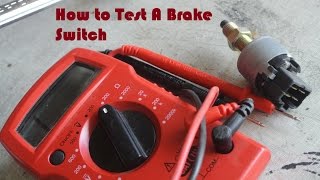
With the switch connector unplugged, use a multimeter on the continuity setting. Check for continuity between the switch terminal and the mounting bolt. Continuity must exist when the lever is pulled and vanish when released. If continuity is constant or absent, replace the switch.
Tools: Multimeter (Intermediate) - Check Fuses and Battery Health
Use a multimeter to check battery voltage with the engine off; it must be at least 12.4V. With the engine running, it must be 13.7V-14.7V. Inspect fuses related to the Body Control Module (BCM), ABS, and instrument cluster.
Tools: Multimeter, Fuse puller (Beginner) - Pro Tip: Perform a CAN Bus Health Check (Resistance)
With the battery disconnected, set your multimeter to Ohms and measure resistance between Pin 6 (CAN High) and Pin 14 (CAN Low) on the OBD-II port. A healthy high-speed CAN bus reads exactly 60 Ω. A reading of 120 Ω indicates a missing terminating resistor or broken circuit; 0 Ω indicates a short.
Tools: Multimeter (Advanced) - Pro Tip: Check CAN Bus Voltage
With the battery reconnected and ignition ON, check DC voltage at the OBD-II port. CAN High (Pin 6) reads ~2.6V and CAN Low (Pin 14) reads ~2.4V. If both lines are 2.5V, they are shorted together. If one line is 0V, it is shorted to ground.
Tools: Multimeter (Advanced) - Isolate the Faulty Module
If CAN bus errors are present (U-codes), a faulty module is bringing down the network. Disconnect modules one by one (e.g., ABS, AWC, ETACS) and re-check CAN resistance/voltage to see if the network returns to a healthy 60 Ω state.
Tools: Multimeter, Advanced OBD-II Scan Tool (Advanced)
When This Code Triggers (Freeze-Frame Conditions)
- Vehicle Speed: 10-45 mph (The code sets on Mitsubishi models when the ECU detects the parking brake switch is 'ON' while the vehicle is actively moving.)
- Parking Brake Switch Status: ON (Data shows the switch in the 'ON' state despite the vehicle being in motion, an illogical condition.)
- Engine RPM: 800-2500 RPM (Indicates the engine was running and the vehicle was being driven.)
- Ignition Cycle / Startup: 0 mph (For Toyota models, the fault triggers during the initial self-check immediately after turning the ignition on.)
Related Codes
- U0126 — Means 'Lost Communication With Steering Angle Sensor Module'. If present with C1614, it indicates a wider CAN bus issue preventing the EPB module from operating correctly.
- C1202 — Relates to the brake fluid level sensor circuit. If the fluid is low, the problem is the main hydraulic system (C1202). If full, the issue is the parking brake circuit (C1614).
- U0100 — Means 'Lost Communication with ECM/PCM'. Points toward a broader network or power supply failure. Diagnose the U-code first by checking the battery and CAN bus network.
- P1614 — A completely unrelated Powertrain code for the immobilizer system on makes like Hyundai and Nissan. It means the car cannot recognize the key transponder.
- C1921 — A Subaru-specific code for 'Parking Brake Switch Malfunction'. It points directly to a faulty switch button in the cabin rather than actuators or connectors.
Climate & Environmental Factors
- Cold Weather: Moisture within EPB actuator mechanisms freezes, causing the brake to stick. The resulting strain on the system triggers erratic signals and fault codes.
- High Humidity & Road Salt: Saltwater accelerates the corrosion of wiring and connector pins on exposed under-vehicle EPB actuators. This corrosion creates high resistance or shorts, directly causing electrical fault codes.
How to Talk to a Mechanic About This Code
Say this: "For a **Toyota**, say: 'My car has a C1614 code in the Parking Assist module, and the camera system isn't working. What is your diagnostic fee to confirm an ECU failure?' For a **Subaru**, say: 'I have a flashing parking brake light. Can you inspect the rear EPB actuator connectors for broken locking tabs under TSB 06-87-22R and the 15-year warranty extension?' For a **Mitsubishi**, say: 'I have a C1614 code and the parking brake light is stuck on. Please check the live data for the parking brake switch status before replacing any parts.'"
Using manufacturer-specific language directs the technician to the most likely cause, saving diagnostic time. For Subaru, it brings up a free warranty repair. For Toyota, it stops them from wasting time on the physical parking brake.
Avoid saying:
- 'My parking brake light is on, can you fix it?' (Too vague, invites expensive guessing.)
- 'Just do whatever it takes to fix it.' (Gives up all control over the cost and process.)
- 'I think I need a new parking brake.' (Suggests an expensive and incorrect repair.)
Questions to ask before authorizing the repair:
- For Toyota: Did you confirm the Parking Assist ECU failed its self-test? Is a software update available before replacing the module?
- For Subaru: Was the connector tab broken? Will this be submitted under the WI22-015 warranty extension for a no-charge repair?
- For Mitsubishi: Did live data confirm the switch signal is stuck? Did you test the switch with a multimeter?
- Will you provide a written estimate with a full breakdown of parts and labor?
- What is the warranty on this specific repair, for both the part and the labor?
Where to Take It: Dealer vs Independent vs Chain
- Dealer:
Best for: 2015-2018 Subaru models, to claim the free extended warranty fix for the EPB connector., 2019+ Toyota models, as ECU replacement and calibration require manufacturer-specific tools., Any vehicle still under its original bumper-to-bumper or extended warranty.
Downsides: Highest labor rates, typically $150-$250 per hour., Prefers replacing entire assemblies over component-level repairs. (Typical cost: +50% vs. baseline) - Independent Shop:
Highly dependent on the vehicle. Dealer is best for Subaru and Toyota due to warranty and specific tooling. A trusted independent shop is best for Mitsubishi and straightforward switch faults.
Best for: Mitsubishi models with the common 'stuck switch' issue., Out-of-warranty vehicles where the cause is a switch, wiring, or mechanical fault., Getting a second opinion on a high dealership quote.
Downsides: May not be aware of manufacturer-specific quirks, TSBs, or warranty extensions., May lack the expensive tools needed for ECU calibration on brands like Toyota. (Typical cost: +0% vs. baseline) - Chain Shop:
AVOID for C1614 diagnosis. They are not equipped for the nuance of this code.
Best for: Simple, unrelated maintenance like oil changes or tires.
Downsides: Technicians lack the deep diagnostic experience needed for complex electrical codes., High risk of misdiagnosis due to ignorance of manufacturer-specific definitions of C1614. (Typical cost: -10% vs. baseline)
When to Walk Away From the Repair
If the estimated repair cost exceeds 40-50% of the car's current private-party value, seriously consider selling or trading in the vehicle instead of repairing it.
- Car worth $5000, fix is $2500: Walk away. A $2,500 repair on a $5,000 car is a 50% ratio. This is a classic 'money pit' scenario.
- Car worth $15000, fix is $250: Fix it. A $250 repair for a Mitsubishi switch on a $15,000 car is well below the threshold.
- Car worth $18000, fix is $0: Fix it. If you have a Subaru with the warrantied connector issue, the repair costs $0.
- Car worth $3000, fix is $1800: Walk away. The repair is 60% of the vehicle's value. It is never economical to proceed.
What Scan Tool You Need for This Code

Minimum: A scanner that reads manufacturer-specific Chassis ('C') codes and displays live data PIDs from modules like the ABS, AWD, or Body Control Module.
A cheap $20 scanner only reads powertrain ('P') codes and reports 'no codes found'. To diagnose C1614, you must see the status of the parking brake switch or camera ECU in real-time.
Budget: BlueDriver Pro Scan Tool / Ancel BD310 (~$100) — These Bluetooth dongles read enhanced codes and display the live data needed to see if the parking brake switch PID is changing.
Mid-range: Foxwell NT510 Elite / Innova 5610 (~$180) — These handheld scanners offer OEM-level diagnostics, 'EPB Service Mode' to safely retract brake calipers, and bidirectional tests to command EPB motors.
Professional: Autel MaxiCOM MK808 / Launch X431 Series (~$500-1200) — These professional tablets offer full bidirectional control and perform the post-replacement calibration required for the Toyota Parking Assist ECU.
Rent vs buy: For a one-time diagnosis, AutoZone's Loan-A-Tool program allows you to borrow a capable OBD-II scanner for free. If you do regular maintenance, buying a midrange scanner is a worthwhile investment.
How to Clear the Code After You Fix It
- Reconnect battery if disconnected for repair.
- Use an OBD-II scan tool to formally clear the C1614 code from the relevant module's memory.
- Perform the specific drive cycle to allow the system to run its self-tests.
Drive cycle (~20 minutes): Start the engine and idle for 2-3 minutes. Drive in mixed city conditions for 10 minutes. Drive at a steady highway speed (50-60 mph) for 5-10 minutes. Cycle the ignition off and on. For EPB systems, operate the parking brake switch several times during the cycle.
Readiness monitors affected: This is a 'C' code and does not directly affect powertrain readiness monitors., However, clearing all DTCs with a scanner resets all monitors, requiring a full drive cycle before an emissions test.
Before emissions retest: drive at least 50 miles to fully set monitors.
Watch out for:
- Disconnecting the battery fails to clear the code from non-volatile module memory.
- If the underlying fault is not fixed, the code returns immediately upon the ECU's next self-test.
Will This Fail Emissions / State Inspection?
No — by itself this code doesn't fail OBD inspection (but it can keep readiness monitors from setting, which causes a separate fail).
- California: An illuminated 'BRAKE' warning light results in a safety inspection failure. Clearing the code resets OBD-II readiness monitors, causing an automatic rejection until a drive cycle is completed.
- New York: The NYS safety inspection checks for proper function of all warning lights. An illuminated red brake warning lamp is an automatic failure.
- Texas: An illuminated brake warning light is a citable offense. In emissions-testing counties, clearing the C1614 code resets readiness monitors, leading to a 'Not Ready' rejection.
Most Commonly Affected Vehicles
- Mitsubishi Outlander, Lancer (2007-2020) — The quintessential vehicle for the 'Parking Brake Switch Stuck ON' definition of C1614, logged by the AWC/4WD ECU.
- Subaru Outback, Legacy (2015-2018) — Notorious for EPB failure due to a broken locking tab on rear actuator connectors. Covered by a 15-year/unlimited miles warranty extension (WI22-015) in the US.
- Toyota RAV4 (2019-2025) — C1614 indicates an 'ECU Malfunction' in the Panoramic View Monitor system, completely unrelated to the parking brake.
- Toyota Highlander / Kluger (2020-2025) — Prone to the same Panoramic View Monitor ECU fault as the RAV4 when the module fails its internal self-check.
- Toyota Camry (2020-2025) — Affected by a Toyota service campaign for software and hardware issues in the Parking Assist ECU.
- Chevrolet / GMC Silverado / Sierra 1500 (2019-2022) — May display similar symptoms due to water intrusion in the transfer case actuator connector (TSB 22-NA-187).
- Volkswagen Golf, Passat, Tiguan (2015-2021) — A similar fault is indicated by code 16347 ('Control Module - EEPROM Error') in the Park Assist module.
- Hyundai / Kia Various (2010-2025) — IMPORTANT: Do NOT confuse with code P1614. On Hyundai/Kia, P1614 is an immobilizer code indicating a communication failure with the key transponder, preventing the engine from starting.
Manufacturer-Specific Notes
- Toyota: For modern Toyotas, C1614 means 'ECU Malfunction' within the Panoramic View Monitor / Parking Assist system. Diagnosing the physical parking brake is a waste of time. The fix requires ECU replacement or software reprogramming.
- Mitsubishi: Defined as 'Parking Brake Switch System (Stuck ON)' and logged by the All-Wheel Control (AWC) ECU. The diagnostic path involves checking the CAN bus, combination meter, and ETACS-ECU before condemning the switch.
- Subaru: On 2015-2018 models, EPB faults are commonly caused by a broken plastic locking tab on the rear actuator connectors. Subaru offers an extended 15-year/unlimited mileage warranty (WI22-015) for a free fix.
- Hyundai / Kia: Do not confuse Chassis code C1614 with Powertrain code P1614. P1614 points to an immobilizer system issue preventing the car from starting, completely unrelated to the brakes.
Real Owner Stories
2015 Subaru Outback at 110K miles with flashing 'BRAKE' light.
The 'BRAKE' light flashed intermittently over bumps, eventually staying on alongside 'EPB FAULT' and disabled EyeSight. The electronic parking brake would not engage.
What they tried:
- A general mechanic scanned the codes and suggested replacing the EPB actuator motor for $800+.
Outcome: The owner found TSB 06-87-22R online and took the car to a Subaru dealer. The dealer confirmed a broken locking tab on the rear EPB connector and applied the official retaining clip fix for free under the 15-year warranty extension (WI22-015). All codes cleared permanently.
Lesson: For 2015-2018 Subaru models with EPB faults, physically inspect the rear actuator connectors first. A loose connection is the most common cause and is a free warranty fix.
2021 Toyota RAV4 Hybrid with 45K miles, camera system inoperative.
The panoramic view monitor and parking sensors stopped working, displaying a black screen. A C1614 code was stored in the Parking Assist module.
What they tried:
- The owner disconnected the battery for 30 minutes to reset the system, but the problem returned immediately.
Outcome: A Toyota dealership confirmed C1614 indicates an internal ECU malfunction. The Parking Assist ECU was replaced and calibrated under the powertrain warranty, restoring full functionality.
Lesson: On a modern Toyota, C1614 is a Parking Assist ECU failure, not a parking brake issue. Do not waste time on brake components; take the vehicle to a dealership for module replacement and calibration.
2012 Mitsubishi Lancer at 95K miles, AWD service light on.
The 'AWC Service Required' light illuminated, and the parking brake light stayed on despite the handbrake being released. A scan revealed code C1614 in the AWC module.
What they tried:
- Suspecting a sticky switch from a prior soda spill, the owner cleaned the exterior of the handbrake lever with interior cleaner, with no success.
Outcome: The owner removed the center console trim, found the switch mechanism corroded, and replaced it with a new OEM part ($115). After clearing the codes, the C1614 and AWC service light vanished.
Lesson: On Mitsubishi vehicles, C1614 is a classic 'stuck switch' problem caused by spills or wear. Replacing the switch is a beginner-friendly DIY fix that solves seemingly unrelated AWD warning lights.
How to Prevent This Code From Triggering
- Apply dielectric grease to exposed connectors (Once, or whenever connectors are serviced) — Applying non-conductive dielectric grease inside under-vehicle EPB connectors seals out moisture and salt, preventing corrosion and high resistance.
- Be careful with liquids in the center console (Daily habit) — Spilled coffee or soda gums up mechanical parts and shorts electrical contacts on traditional handbrake switches, causing a 'stuck on' fault.
- Periodically cycle the Electronic Parking Brake (Monthly) — Engaging and disengaging the EPB ensures the actuator motors, gears, and cables move freely and do not seize from lack of use.
- Maintain a healthy battery (Test annually after 3 years) — A weak battery causes low voltage during startup, leading to communication errors between ECUs that falsely trigger C1614.
Frequently Asked Questions
Can I just ignore the C1614 code?
Ignoring it is a severe safety risk. You cannot rely on your parking brake to hold the vehicle, and driving with a stuck electronic brake causes expensive secondary damage to your rotors and calipers.
My parking brake light is on, but my fluid is full. Is it C1614?
It is a strong possibility, especially on a Mitsubishi. After confirming the brake fluid is full, scan for codes. C1614 points to the parking brake circuit, whereas other codes indicate ABS sensor faults.
What is the most common misdiagnosis for C1614?
On a modern Toyota, the biggest mistake is diagnosing the parking brake switch when the code actually refers to the camera ECU. On a Subaru, it is replacing an expensive EPB actuator instead of fixing a loose connector under warranty.
I replaced the parking brake switch but the code came back. What now?
If a new switch fails, the fault lies in the circuit or network. Use a scan tool to monitor live data, check the CAN bus for 60Ω resistance, and inspect the wiring harness. On Mitsubishis, investigate the combination meter and ETACS-ECU as potential failure points.
How much does it cost to fix code C1614?
Costs range from $0 for a warrantied Subaru connector fix to $150-$300 for a Mitsubishi switch replacement. Wiring repairs average $150-$300 depending on location. The most expensive scenario is a Toyota Parking Assist ECU replacement, ranging from $1,000 to over $3,000 at a dealership.
Can a weak car battery cause a C1614 code?
Yes. Low system voltage during startup causes communication glitches between modules, leading to a variety of false fault codes, including C1614.
What's the difference between a C-code and a P-code like P1614?
The first letter indicates the system: 'C' stands for Chassis (brakes, steering), and 'P' stands for Powertrain (engine, transmission). C1614 is a chassis code related to brakes or system communication, while P1614 is an unrelated engine immobilizer code.
My car is a Toyota with code C1614. Should I check my parking brake?
No. On 2019+ Toyota models, this code indicates an internal malfunction of the Parking Assist / Panoramic View Monitor ECU. The problem is with the camera system's computer, requiring professional software updates or module replacement.
Key Takeaways
- On 2007-2020 Mitsubishi models, C1614 indicates a stuck parking brake switch, requiring a $125-$310 switch replacement.
- For 2019+ Toyota RAV4 and Highlander models, this code signals a failed Parking Assist ECU, costing $1,000+ to replace and calibrate.
- On 2015-2018 Subaru Outbacks and Legacys, inspect the rear EPB connectors for broken tabs before replacing parts; this is a free fix under the 15-year WI22-015 warranty extension.
- Never replace a module without first verifying the battery voltage is at least 12.4V and the CAN bus resistance measures exactly 60 ohms at the OBD-II port.
Helpful Videos


The information in this article is provided for general reference and educational purposes only. Vehicle specifications, procedures, and part compatibility can vary by production date, trim level, and region. Always consult your vehicle's factory service manual and verify part numbers before purchasing or performing repairs. Safety-critical components such as airbags, seat belts, and braking systems should be installed by a qualified professional.
- 🎬 Helpful Videos
- What Does C1614 Mean?
- Can I Drive With C1614?
- Common Causes
- Symptoms
- Diagnostic Flowchart
- Common Fixes & Costs
- Used vs. New Parts: Buying Guide
- What Happens If You Wait — Timeline
- Cost of Not Fixing It
- Diagnosis Steps
- When This Code Triggers (Freeze-Frame Conditions)
- Related Codes
- Climate & Environmental Factors
- How to Talk to a Mechanic About This Code
- Where to Take It: Dealer vs Independent vs Chain
- When to Walk Away From the Repair
- What Scan Tool You Need for This Code
- How to Clear the Code After You Fix It
- Will This Fail Emissions / State Inspection?
- Most Commonly Affected Vehicles
- Manufacturer-Specific Notes
- Real Owner Stories
- 2015 Subaru Outback at 110K miles with flashing 'BRAKE' light.
- 2021 Toyota RAV4 Hybrid with 45K miles, camera system inoperative.
- 2012 Mitsubishi Lancer at 95K miles, AWD service light on.
- How to Prevent This Code From Triggering
- Frequently Asked Questions
- Can I just ignore the C1614 code?
- My parking brake light is on, but my fluid is full. Is it C1614?
- What is the most common misdiagnosis for C1614?
- I replaced the parking brake switch but the code came back. What now?
- How much does it cost to fix code C1614?
- Can a weak car battery cause a C1614 code?
- What's the difference between a C-code and a P-code like P1614?
- My car is a Toyota with code C1614. Should I check my parking brake?
- Key Takeaways
- 🎟️ Get 5% Off