

C1611 on 2012-2013 Kia RIO: Causes, Symptoms, and IPM Replacement Guide
On a 2012-2013 Kia Rio, code C1611 almost always indicates a faulty In-Panel Module (IPM), which is the vehicle's smart fuse box. This is a known issue covered by Kia Technical Service Bulletin #TSB-ELE067R1. The fix involves replacing the IPM, which is a junction box in the passenger compartment.
- Code C1611 on a 2012-2013 Kia Rio is a very specific code pointing to a known problem.
- The cause is almost certainly a faulty In-Panel Module (IPM), especially if your car was built between late 2011 and mid-2013.
- Symptoms include loss of power steering and an ESC warning light, often in cold weather.
- The official fix from Kia is to replace the IPM with an improved part.
- This is a moderately difficult DIY job, but professional service is recommended to ensure proper installation and function.
What's Unique About the 2012-2013 Kia RIO

The third-generation Kia Rio (model UB) from this specific period is known to have a defective In-Panel Module (IPM). The issue was so prevalent that Kia issued multiple Technical Service Bulletins (TSBs) advising technicians to replace the IPM on vehicles exhibiting this code, particularly those manufactured between November 7, 2011, and July 10, 2013. The failure is often caused by intermittently poor internal contacts within the IPM, a problem that can be worsened by low ambient temperatures, typically occurring at startup or idle. When this happens, the power steering assist level decreases, making the wheel harder to turn, though cycling the ignition key can temporarily restore normal function.
Diagnostic Flowchart

Tap your situation to follow the diagnostic path that matches what you're seeing on this vehicle.
Symptoms You May Notice

- Intermittent loss or decrease of power steering assist, making the wheel heavy or hard to turn.
- Electronic Stability Control (ESC) warning light is on or flashing.
- Check Engine Light may be illuminated.
- Symptoms are often more frequent at startup or idle, especially in cold weather.
- Cycling the ignition (turning the car off and on again) may temporarily resolve the symptoms.
- In some related cases on Hyundai/Kia platforms, other instrument cluster lights may flicker or gauges (like RPM) may not work during the fault.
- Replacing the power steering rack or pump.
- Replacing the Electronic Stability Control (ESC) module.
- Replacing the steering angle sensor.
- Replacing the Engine Control Module (ECM) without first suspecting the IPM.
Most Likely Causes

- Faulty In-Panel Module (IPM) 🔴 High Probability A known manufacturing defect involving poor internal contacts affects vehicles produced from November 7, 2011, through July 10, 2013, as documented in Kia TSB #TSB-ELE067R1. This internal failure disrupts CAN bus communication.
How to confirm: Confirm the vehicle's production date falls within the affected range. A professional diagnosis with a Kia-specific scan tool can confirm the communication fault originates at the IPM. The presence of code C1611 combined with the specified symptoms (loss of power steering, ESC light) is a very strong indicator.
Typical fix: Replace the In-Panel Module (IPM) with the updated part number specified in the TSB.
Est. part cost: $85-$300
Rare But Worth Checking
- Wiring Harness or Connector Issue: While the IPM is the most likely culprit, it's worth visually inspecting the wiring and connectors to the IPM for any signs of corrosion, damage, or looseness before replacing the module. A poor pin connection on the CAN line, particularly at the ECM/PCM connector, can also cause this code.
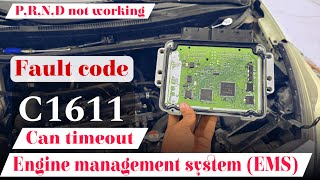
- Faulty Engine Control Module (ECM): In rare instances, a fault within the Engine Control Module itself can cause a C1611 'CAN Time-out' error, leading to similar symptoms. This may be due to internal component failure, such as capacitors. This is less common than the IPM failure 🎬 Watch: How to repair a faulty ECM for code C1611 for this specific vehicle.
Diagnosis Steps
- Scan the vehicle's control modules with an OBD-II scanner capable of reading manufacturer-specific 'C' codes. Confirm that C1611 is present in the EPS (Electronic Power Steering) or ABS/ESC module.
- Verify the primary symptoms, such as a loss of power steering assist and an illuminated ESC light.
- Check the vehicle's production date (located on the driver's side door jamb) to see if it falls within the range specified in TSB-ELE067R1 (November 7, 2011, to July 10, 2013).
- If the production date is within the range and symptoms match, the IPM is the primary suspect.
- Visually inspect the wiring and connectors at the In-Panel Module (located in the passenger compartment fuse/relay box area) for any obvious damage, corrosion, or loose pins.
- Test the CAN bus wiring. At the OBD-II port, check for approximately 2.75V - 4.5V on CAN High (Pin 6) and check for continuity (approx. 0Ω) on the CAN lines between module connectors.
- If the production date matches and symptoms are present, the most direct diagnostic step is to follow the TSB and replace the IPM.
- After replacement, clear all DTCs from all modules using a capable scan tool and perform a test drive to confirm the fix.
Parts You'll Likely Need
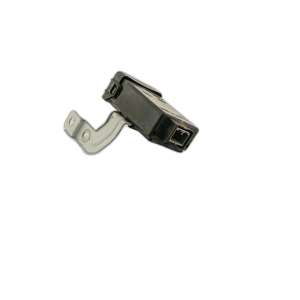
- In-Panel Module (IPM)
(OEM #919501W540FFF)— This is the component identified by Kia as the root cause of the C1611 code and associated symptoms on this specific vehicle range. TSB-ELE067R1 also lists 919501W560FFF as a required part.
Trusted brands: Kia (Genuine OEM)
OEM price range: $85-$300
Aftermarket price range: N/A
Technical Service Bulletins (TSBs) & Recalls
- TSB-ELE067R1: IN PANEL MODULE (IPM) REPLACEMENT - DTC C1611. This is the primary document outlining the known issue and fix. It details that intermittently poor contacts in the IPM, especially in low temperatures, cause the CAN communication error.
- TSB-ELE067: An earlier version of the same bulletin with a slightly different production date range.
- Bulletin #067: A general bulletin referencing the IPM replacement for DTC C1611 on affected 2012-2013 Rio vehicles.
Platform-Specific Known Issues
- Kia issued TSB #TSB-ELE067R1 specifically for 2012-2013 Rio models built between Nov 7, 2011, and July 10, 2013, which experience DTC C1611 due to a faulty In-Panel Module (IPM). The bulletin explicitly recommends replacing the module to resolve the issue.
Mechanic-Grade Diagnostic Values
- C-CAN Bus Voltage (High) — expected: 2.75V - 4.5V (Pulse Dominant). Failure: Voltage outside of this range, or no pulse activity.
- CAN Bus Line Continuity — expected: Approx. 0Ω. Failure: High resistance or an open circuit (OL) reading indicates a break in the wire.
- CAN Bus Baud Rate — expected: 500k. Failure: N/A - This is a configuration parameter for diagnostic tools.
Scan Tool Commands That Help
- Kia GDS/KDS: Variant Coding — This function is used to configure a new control module (like ABS/ESP or Airbag) to the specific options on the vehicle. While the TSB for the C1611 IPM replacement doesn't explicitly require it for the IPM itself, failure to perform it after replacing other modules on the CAN bus can cause communication errors.
- Kia GDS/KDS: MDPS Tuning Data Setting (Backup and Write) — Used to save and restore calibration/tuning data when replacing an MDPS or EPS unit. This is a critical step if the MDPS module is replaced during diagnosis.
Wiring & Ground Locations
- OBD-II Connector (CAN Pins) — Under the driver's side dashboard.. Pin 6 is CAN High and Pin 14 is CAN Low. These are the primary points for testing the overall health of the vehicle's main communication network.
- In-Panel Module (IPM) — The passenger compartment fuse/relay box, typically located behind the glove box or on the driver's side kick panel area.. This is the location of the component most likely to have failed. All connectors to this module should be inspected for damage or corrosion.
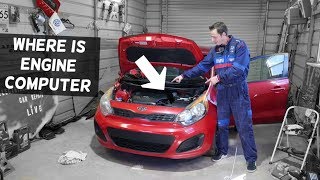
- Engine Control Module (ECM) — In the engine bay, located on the backside of the car battery. 🎬 See this video for the exact engine computer location. In rare cases, the ECM itself is the source of the CAN communication error. Knowing its location is necessary for inspection of its connectors or for replacement.
- ECM Connector (CAN Pins) — At the ECM, located behind the battery.. A wiring diagram indicates CAN High is at Pin 57 of the ECM connector. This allows for targeted testing of the CAN signal directly at the engine computer.
Real Owner Repair Stories
- YouTube - Car Hospital (2016 Hyundai Accent (platform-mate to Rio)) — Code C1611, hard power steering, PRND indicator not working on dash, RPM and speedometer gauges not working.
❌ Tried (didn't work) Initial diagnosis pointed to a communication failure.
✅ What actually fixed it The technician diagnosed a faulty Engine Control Module (ECM). The ECM was removed, and internal components (capacitors) were replaced on the circuit board. After reinstalling the repaired ECM, all symptoms were resolved. - YouTube - Monty car clinic (2012 Kia Soul (shares similar electronics)) — Code C1611, intermittent loss of power/acceleration.
❌ Tried (didn't work) Closing the spread pin terminal did not create a reliable connection.
✅ What actually fixed it The problem was a poor connection at the PCM (ECM) connector. The female pin for the CAN Low wire was spread too wide, causing an intermittent connection. The technician cut the wire and replaced the faulty pin terminal with a new one, which restored proper communication and fixed the code.
When the Usual Fixes Don't Work
- While the TSB strongly indicates the In-Panel Module (IPM) is the cause for C1611 on these specific Kia Rios, it is not the only possibility. There are documented cases where the identical code and symptoms were caused by other, less common failures. One confirmed fix was the repair of a faulty Engine Control Module (ECM) where internal capacitors had failed. Another confirmed fix, on a similar Kia platform, was a single loose female pin inside the main connector for the ECM, which required replacing the pin terminal, not the entire module. Therefore, if the vehicle is outside the TSB production date range, or if an IPM replacement does not resolve the issue, a thorough diagnosis of the CAN bus wiring, connectors, and the ECM itself is warranted before proceeding with further parts replacement.
OEM Part Supersession History
Unknown (defective part)→919501W540FFF and/or 919501W560FFF— The original IPM was prone to internal contact failure. The TSB recommends replacing it with an 'improved part'.
Heads up: The TSB lists both 919501W540FFF and 919501W560FFF as required parts for the repair, suggesting they may be used together or are specific to certain vehicle options. Both are described as 'Junction Box Assembly'.
Model Year Variations Within This Range
- 2012-2013 (specifically Nov 7, 2011 - July 10, 2013 production): Vehicles manufactured within this date range are subject to TSB-ELE067R1 and are known to have a defective In-Panel Module (IPM) that causes code C1611. Vehicles built after this date likely have the improved IPM from the factory.
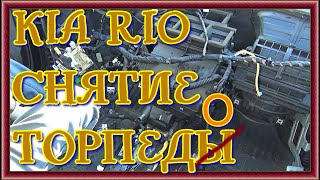
Helpful Videos
We Have This Part in Stock





The information in this article is provided for general reference and educational purposes only. Vehicle specifications, procedures, and part compatibility can vary by production date, trim level, and region. Always consult your vehicle's factory service manual and verify part numbers before purchasing or performing repairs. Safety-critical components such as airbags, seat belts, and braking systems should be installed by a qualified professional.
- Kia RIO:
- 🎬 Helpful Videos
- 🛍️ Shop This Part
- What's Unique About the 2012-2013 Kia RIO
- Diagnostic Flowchart
- Symptoms You May Notice
- Most Likely Causes
- Rare But Worth Checking
- Diagnosis Steps
- Parts You'll Likely Need
- Technical Service Bulletins (TSBs) & Recalls
- Platform-Specific Known Issues
- Mechanic-Grade Diagnostic Values
- Scan Tool Commands That Help
- Wiring & Ground Locations
- Real Owner Repair Stories
- When the Usual Fixes Don't Work
- OEM Part Supersession History
- Model Year Variations Within This Range
- 🎟️ Get 5% Off