

OBD-II Code C1596: Brake Switch Circuit Malfunction
The Ultimate 2026 Guide to Meaning, Causes, and Fixes
- Code C1596 indicates a brake switch circuit failure, disabling your brake lights and creating an immediate rear-end collision hazard.
- If you drive a 2007-2015 Hyundai or Kia, check NHTSA recall 13V-114 immediately to get this exact brake switch failure repaired for free at a dealership.
- On 2014-2024 Chevy and GMC trucks, this code triggers a 'Service Trailer Brake System' message, almost always caused by a broken wire in the harness above the spare tire.
- Do not buy a $1,200 replacement ABS module for a Ford F-150 until you inspect the wiring harness near the brake booster for a broken Green/Brown wire.
What Does C1596 Mean?

Code C1596 indicates the Anti-lock Brake System (ABS) module detects a malfunction in the brake light switch circuit. This circuit tells various control modules when you press the brake pedal. A fault disables the brake lights, anti-lock brakes (ABS), Electronic Stability Control (ESC), cruise control, and the brake-to-shift interlock.
Technical definition: The SAE/ISO definition for C1596 is "Brake Switch Circuit Malfunction." The control module receives an illogical signal, no signal, or detects an electrical fault (short to ground or open) from the brake pedal position switch circuit.
Can I Drive With C1596?
Yes, But With Caution. You can drive, but doing so is dangerous. Your brake lights will likely fail to illuminate, making you invisible to following traffic and creating a severe rear-end collision hazard. Driving with non-functional brake lights is illegal and guarantees a traffic ticket. Furthermore, cruise control disables automatically, and the shift-interlock system locks your vehicle in Park.
Common Causes

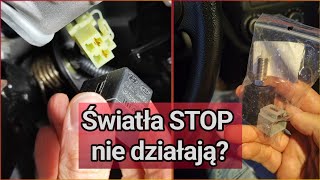
- Faulty Brake Light Switch (Very Common) — The most frequent cause. The switch, located near the brake pedal, wears out internally and sends incorrect or zero signals. This is exceptionally prevalent on 2007-2015 Hyundai and Kia models.
- Misadjusted Brake Light Switch (Common) — The switch must sit at a precise distance from the brake pedal arm. If the plunger sits too close or too far, it fails to activate at the correct pedal travel distance.
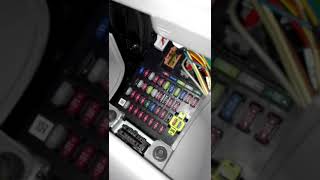
- Blown Fuse or Faulty Brake Light Bulbs (Common) — The brake switch circuit relies on specific fuses and the brake light bulbs. A blown fuse (labeled 'Stop Lamps' or 'Trailer B+') or burned-out bulbs alter circuit resistance and trigger this code.
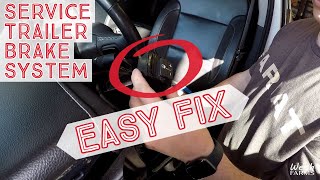
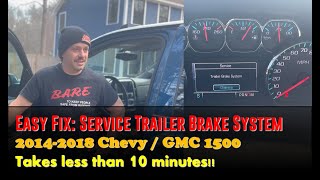
- Damaged Wiring or Connectors (Less Common) — Wires leading to the brake switch corrode, chafe, or break. On GM trucks, wiring to the Trailer Brake Control Module above the spare tire is a primary failure point. 🎬 Watch: How to fix the Service Trailer Brake System message. On Ford F-150s, the harness near the brake booster sensor frequently breaks.
- Faulty Trailer Brake Control Module/Switch (GM) (Less Common) — On Chevy and GMC trucks, the in-dash trailer brake controller switch or the frame-mounted Trailer Brake Power Module (TBPM) fails, triggering C1596 and a 'Service Trailer Brake System' message.
- Loose Module Connector (Subaru) (Uncommon) — On Subaru Outbacks and Legacys with an Electronic Parking Brake (EPB), the main connector to the EPB module develops a cracked locking tab. This causes a communication loss and triggers brake-related codes.
- Low Battery Voltage (Uncommon) — Sensitive ABS controllers set spurious fault codes when system voltage drops. If you recently experienced a dead battery or alternator failure, C1596 is a symptom of the charging system deficit.
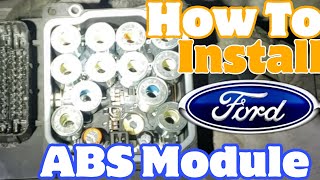
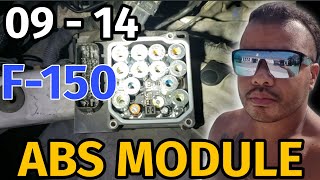
- Faulty ABS/ESC Control Module (Rare) — The computer module reading the signal fails internally. This requires an expensive module replacement or rebuild, seen most frequently on 2009-2016 Ford F-150 Hydraulic Control Units (HCU). 🎬 See this walkthrough on installing a Ford F-150 ABS module.
Symptoms

- ABS and/or Traction Control (ESC) Light On — These are the first warning lights a driver sees on the dashboard.
- Brake Lights Don't Work or Stay On — Your brake lights fail to illuminate when you press the pedal, or they stay on constantly, even when the car is off.
- Cannot Shift Out of Park — Most automatic cars require a signal from the brake switch to allow the shifter to move out of the Park position.
- Cruise Control Inoperative — Cruise control disables automatically when the system cannot reliably tell if the brakes are applied.
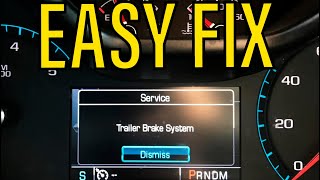
- "Service Trailer Brake System" Message (GM Trucks) — On Chevy and GMC trucks, this specific message on the driver information center is the primary symptom of code C1596.
Diagnostic Flowchart
Tap your situation to follow the diagnostic path that matches what you're seeing on this code.
Common Fixes & Costs
- Replace Brake Light Switch — Parts: $15-$45, Labor: $80-$150, ~0.7 hr book time (DIY)
- Replace Blown Fuse — Parts: $1-$5, Labor: $0-$50, ~0.1 hr book time (DIY)
- Replace Trailer Brake Controller Switch/Module (GM) — Parts: $30-$150, Labor: $100-$250, ~1.2 hr book time (DIY)
- Repair Damaged Wiring — Parts: $10-$30, Labor: $150-$500, ~2 hr book time (Professional)
- Replace/Repair ABS Control Module (Ford) — Parts: $500-$2,200, Labor: $150-$400, ~2 hr book time (Professional)
Used vs. New Parts: Buying Guide
When a used part is worth it: Always buy a new brake light switch, as the part costs under $40. For a $1,200 ABS module or Trailer Brake Control Module on an older vehicle, a professionally rebuilt part is the most cost-effective alternative.
Donor-vehicle mileage cap: roughly under 80000 miles for the part to have meaningful remaining life.
Donor quality checklist:
- Match the OEM part number exactly; superseded numbers fail to communicate with the ECU.
- Electronic modules are VIN-locked and require expensive dealer reprogramming.
- Purchase from a rebuilder offering a minimum 1-year warranty and pre-shipment testing.
Decision logic:
- If The part is a brake light switch → Always buy new; the $10 cost savings for used are not worth the failure risk.
- If The part is an expensive electronic module (e.g., ABS) on a vehicle over 10 years old → A warrantied rebuilt part saves hundreds of dollars.
- If The part requires VIN programming and you lack an advanced scan tool → Having your original module rebuilt avoids dealer programming fees.
Warranty tradeoff: Junkyard parts carry a 30-day warranty. Rebuilt modules carry a 1-year or lifetime warranty. New OEM parts carry the manufacturer's standard 12-month warranty.
Worst-case if a used part fails: $300-$800 (Cost of a dead-on-arrival used module requiring repeat labor and a second replacement part).
What Happens If You Wait — Timeline
- Immediate: ABS and Traction Control warning lights illuminate. Cruise control disables automatically. Code C1596 stores in the ABS module. (MPG impact: 0%% · Added cost: $0)
- 0-1 week: Brake lights fail completely or stick on, creating a severe rear-end collision risk. The shift-interlock system locks the vehicle in Park. (MPG impact: 0%% · Added cost: $250-$1000 (Traffic ticket or collision deductible).)
- 1 week - 2 months: Stuck brake lights create a parasitic draw, killing the battery overnight. The vehicle fails all state safety inspections. (MPG impact: 0%% · Added cost: $150-$300 (New battery and failed inspection fees).)
- 2+ months: Ignoring the code masks the progression of severe ABS module failures (especially on Fords), leading to total anti-lock brake failure during an emergency stop. (MPG impact: 0%% · Added cost: $1500+ (Accident damages or escalating repair bills).)
Cost of Not Fixing It
- Immediate: Significantly increased risk of a rear-end collision due to inoperative brake lights. The shift-interlock system locks the vehicle in Park, stranding you. (Added cost: $250-$1000 (Traffic ticket or insurance deductible))
- 0-3 Months: Immediate failure of state safety inspections. If brake lights stick in the 'on' position, they drain the battery overnight, requiring a jump-start or replacement. (Added cost: $150-$300 (Failed inspection fee, new battery))
- 3+ Months: Operating a vehicle with a known safety defect increases legal liability in an accident. The primary cost remains the constant, high risk of a rear-end collision. (Added cost: $5000+ (Accident damages, legal fees, or injury costs))
Diagnosis Steps

- Check Brake Light Function
With the ignition on, have a helper stand behind the vehicle. Press and release the brake pedal several times. Note if the brake lights turn on and off correctly, stay on constantly, or fail to light up entirely.
Tools: A helper or heavy object (Beginner) - Inspect Fuses
Locate the fuse box using your owner's manual. Pull the fuse labeled 'Stop Lamps', 'Brake Lights', or 'Trailer B+' (GM trucks). Replace it immediately if the internal metal strip is broken.
Tools: Owner's manual, fuse puller or needle-nose pliers (Beginner) - Inspect the Brake Light Switch
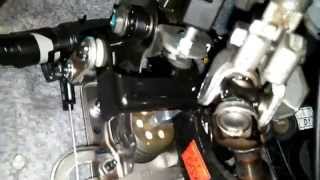
Locate the small sensor with a plunger near the top of the brake pedal arm. Ensure the pedal arm presses the plunger when at rest and releases it when pressed. Verify the plastic stopper pad on the pedal arm is intact.
Tools: Flashlight (Beginner) - Scan for Codes and View Live Data
Connect an OBD-II scanner capable of reading ABS codes. Navigate to the live data stream for the ABS module and monitor the brake pedal position (BPP) switch status. The status must change from 'Off' to 'On' the instant you touch the pedal. If it remains static, the switch or circuit is dead.
Tools: OBD-II Scan Tool with Live Data (Beginner) - Test Brake Switch Continuity
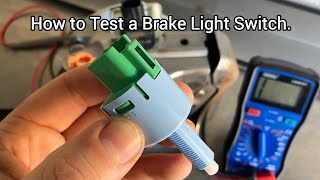
Remove the switch and set a multimeter to Ohms (Ω). Probe the two primary pins for the brake light circuit. With the plunger extended (pedal pressed), resistance must be near 0 ohms (continuity). With the plunger pressed in (pedal at rest), the circuit must read 'OL' (Open Loop). Replace the switch if it fails.
Tools: Multimeter, vehicle-specific wiring diagram (Intermediate) - Perform Basic Voltage Test
Disconnect the switch connector and turn the ignition 'ON'. Set a multimeter to DC Volts. Probe the connector pins. One pin must show constant 12V power. If no pin has power, trace a wiring or fuse problem upstream.
Tools: Multimeter, vehicle-specific wiring diagram (Intermediate) - Inspect Wiring Harness
Trace the wires from the brake switch connector backward. Look for chafing, melting, or breaks. On GM trucks, inspect the harness above the spare tire leading to the trailer brake control module. On Ford F-150s, inspect the harness near the brake booster.
Tools: Flashlight, trim removal tools (Intermediate) - Check Signal Voltage and Ground (Advanced)
Identify the power, ground, and signal wires at the switch connector. Plug the connector in and back-probe the signal wire. The voltage must switch cleanly and immediately from ~0V to ~12V (or vice-versa) the moment the pedal moves. Any hesitation indicates a failing switch.
Tools: Multimeter, back-probe pins, vehicle-specific wiring diagram (Advanced)
When This Code Triggers (Freeze-Frame Conditions)
- Vehicle Speed: 0-15 MPH (Code sets during the initial key-on self-test or upon the first brake application of a drive cycle.)
- Module Voltage: 12.0-14.5V (Usually occurs under normal battery and charging system voltage.)
- Brake Pedal Status: Off/On (The fault logs when the module sees an illogical signal (e.g., 'On' when the pedal is not pressed) or sees zero change when the pedal is pressed.)
- Engine RPM: 0-800 RPM (Logs with the key on and engine off, or at idle speed.)
Related Codes
- P0504 — Brake Switch 'A'/'B' Correlation. The Powertrain Control Module (PCM) sets P0504 when the multiple circuits inside a modern brake switch send conflicting signals. Seeing P0504 and C1596 together guarantees a bad brake switch.
- P0571 — Brake Switch 'A' Circuit. A generic powertrain code pointing to a fault in the brake switch circuit, usually disabling cruise control. Seeing both codes indicates a total switch or power/ground failure.
- C1513 — Brake Switch Circuit Error. A manufacturer-specific code for Hyundai and Kia logged alongside C1596. Both codes trigger from the exact same root cause: the recalled stop lamp switch.
- C109E — Vacuum Sensor Circuit Fault. On Ford F-150s, this code appears with B1596. It indicates a fault with the brake booster vacuum sensor circuit and pinpoints the damaged wiring harness near the booster.
Climate & Environmental Factors
- High Humidity / Road Salt: Road salt and high humidity cause severe corrosion in connectors and fuse boxes. Salt spray infiltrates truck frame wiring harnesses near the spare tire, creating high resistance or short circuits that trigger C1596.
- Extreme Cold: Sub-zero temperatures cause older plastic brake light switches to become brittle and crack. Internal contacts lose reliability, causing intermittent failures during cold snaps.
How to Clear the Code After You Fix It
- Use an OBD-II scan tool capable of accessing the ABS module to clear the fault code.
- Perform a 15-minute test drive involving several complete stops to confirm the ABS light remains off.
Drive cycle (~20 minutes): Start the engine and idle for 2 minutes. Drive for 15 minutes in mixed city/highway conditions, applying the brakes fully at least five times. Turn the ignition off, wait 30 seconds, and restart the vehicle to confirm the ABS light remains off.
Readiness monitors affected: Evaporative System Monitor, Catalyst Monitor
Before emissions retest: drive at least 50 miles to fully set monitors.
Watch out for:
- Basic $20 engine code readers cannot access or clear ABS (Chassis) codes.
- Disconnecting the battery fails to clear ABS codes and resets other critical vehicle systems.
- The code returns immediately upon the first brake press if the mechanical switch adjustment is incorrect.
Will This Fail Emissions / State Inspection?
Yes — this code typically fails an OBD-II emissions inspection.
- California: An illuminated ABS warning light or inoperative brake lights triggers an automatic failure of the required vehicle safety inspection.
- New York: NYS law explicitly dictates that an illuminated ABS warning light is immediate grounds for annual safety inspection failure.
- Texas: An illuminated ABS light passes inspection, but an illuminated red 'BRAKE' warning light or inoperative brake lights causes an immediate failure.
Most Commonly Affected Vehicles

- Hyundai Sonata, Elantra, Santa Fe (2007-2015) — A major safety recall (NHTSA 13V-114) covers a faulty stop lamp switch. Always check your VIN for open recalls before paying for this repair.
- Kia Optima, Sorento, Soul, Forte (2007-2015) — Shares the faulty brake light switch design with Hyundai, covered under the identical safety recall (NHTSA 13V-114).
- Chevrolet Silverado (2014-2024) — Code defines as 'Trailer Brake Power Control Module Enable Circuit.' Inspect the trailer brake module harness above the spare tire for broken wires. TSB N232414840 addresses voltage feedback from trailers on 2020-2024 models.
- GMC Sierra (2014-2024) — Identical to the Silverado. The code points to the integrated trailer brake control system. The primary failure point is wiring damage above the spare tire.
- Ford F-150 (2009-2016) — Appears as code B1596. This indicates an internal failure of the ABS module or a broken wire in the harness near the brake booster sensor. Module repairs exceed $1,200.
- Subaru Outback, Legacy (2015-2018) — Caused by a cracked connector lock tab on the Electronic Parking Brake (EPB) actuator, disabling the EPB and EyeSight systems. Subaru TSB 06-87-22R fixes this with a retainer clip.
- Nissan Titan, Armada, Rogue (2004-2020) — Standard brake light switch failure. Also check the Delta Stroke Sensor in the brake booster or the IPDM (fuse box) for related brake system faults.
- Cadillac Escalade (2021-2023) — TSB 21-NA-155 addresses trailer brake system messages caused by poor connections from non-standard trailer plugs. Program N222384930 replaces the trailer brake control switch.
Manufacturer-Specific Notes
- Hyundai / Kia: Subject to a massive safety recall (NHTSA 13V-114) for a faulty stop lamp switch. The defect causes brake lights to fail, cruise control to stick, and the shifter to lock in park. Check for open recalls before paying for repairs.
- General Motors (Chevy/GMC): On trucks, C1596 links directly to the integrated trailer brake control system. The fault is rarely the dash switch; it is almost always chafed wiring in the harness above the spare tire running to the Trailer Brake Power Module.
- Ford: Appears as B1596-20 (Service Continuous Memory). It points to a severe issue like an internal ABS control module failure or a broken wire near the brake booster. Clearing the code requires a specific key-off, wait, key-on cycle.
- Subaru: On 2015-2018 models, this fault is almost never the brake switch. It is caused by a loose electrical connector at the rear Electronic Parking Brake (EPB) actuators. Subaru TSB 06-87-22R installs a retaining clip to fix this.
Real Owner Stories
2018 Chevy Silverado with 'Service Trailer Brake System' message
The 'Service Trailer Brake System' warning appeared on the dash, accompanied by code C1596. The owner does not tow a trailer regularly.
Outcome: Found a corroded wire in the harness leading to the Trailer Brake Power Module (TBPM) above the spare tire. Splicing the wire for $20 resolved the issue.
Lesson: On GM trucks, C1596 points to a wiring issue in the harness above the spare tire. Check this location thoroughly before replacing expensive modules.
2017 Subaru Outback with multiple brake-related warning lights
At around 75,000 miles, the dash lit up with warnings for the Electronic Parking Brake (EPB), ABS, and EyeSight systems. Code C1596 was present, along with EPB-specific codes like C1956.
Outcome: The locking tab on the right rear EPB actuator connector was broken. Securing the connector firmly with a zip tie cleared the codes.
Lesson: On 2015-2018 Subaru Outbacks, C1596 is caused by a faulty EPB connector, not the brake light switch. Check for TSB 06-87-22R before paying for a diagnosis.
2009 Ford F-150 with ABS light and B1596 code
The ABS light came on. A scan revealed code B1596 ('Service continuous codes') and C109E ('Vacuum sensor circuit fault'). The driver experienced no braking issues, but cruise control was disabled.
Outcome: The owner inspected the wiring harness near the brake booster and found a broken Green/Brown wire. Repairing this single wire cleared all codes and saved a $1,400 module replacement.
Lesson: On Ford F-150s, meticulously inspect the wiring harness between the brake booster sensor and the ABS module for breaks before condemning the expensive ABS module.
2010 Honda Civic with a dead battery overnight
The owner came out to a completely dead battery. After getting a jump start and replacing the battery, they noticed the new battery was also draining.
Outcome: The brake lights were stuck on due to a broken plastic stopper pad on the brake pedal arm. A $5 replacement stopper fixed the battery drain.
Lesson: If you have a sudden parasitic battery drain, check for a broken pedal stopper pad causing the brake light switch to stick in the 'on' position.
How to Prevent This Code From Triggering
- Apply Dielectric Grease to Connectors (Every 2 years) — Applying non-conductive dielectric grease to exposed connectors (GM trailer module, Subaru EPB) seals out moisture and prevents corrosion-induced short circuits.
- Inspect Frame-Mounted Wiring (Annually before winter) — Road debris and vibrations cause truck frame wiring harnesses to chafe and break. Visual inspections catch damage before it triggers a C1596 code.
- Lubricate Brake Pedal Pivot (Every 30,000 miles) — A stiff brake pedal pivot puts excess side-load on the brake light switch plunger, causing premature mechanical failure. Spray pivot points with white lithium grease.
- Use OEM-spec Trailer Connectors (When replacing a plug) — Cheap aftermarket 7-pin trailer plugs fit poorly and damage the truck's socket. Use a quality OEM-spec plug (like Pollak) to ensure reliable connections.
Frequently Asked Questions
I replaced the brake light switch, but the C1596 code is still on. What now?
If a new switch fails to clear the code, use an OBD-II scanner to manually erase it. Next, verify the new switch is adjusted correctly against the pedal arm. If the code returns, inspect the wiring harness and fuses for breaks or shorts.
What does B1596 mean on a Ford F-150?
B1596 is the Ford-specific equivalent of the C1596 chassis code, indicating an ongoing fault in the ABS module. It frequently points to a broken wire in the harness near the brake booster or an internal ABS module failure. Always check the wiring before replacing the $1,200 module.
Why does my truck say 'Service Trailer Brake System'?
On GM trucks, this message is the primary symptom of code C1596, indicating a fault in the trailer brake control system. The most common cause is damaged wiring in the harness running over the spare tire to the control module. A bad in-dash controller switch or blown fuse are secondary causes.
Can a weak battery cause a C1596 code?
Yes, the ABS control module is highly sensitive to voltage drops. A weak battery or failing alternator causes system voltage to drop, generating false C1596 codes. Test your battery and charging system first if you experience slow engine cranking.
How much does it cost to fix code C1596?
A DIY brake light switch replacement costs under $50, while a professional repair runs $80 to $150. GM truck trailer wiring repairs typically cost $200 to $500 at a shop. Ford F-150 ABS module replacements are the most expensive, often exceeding $1,500.
Will a C1596 code cause my car to fail an inspection?
Yes. An active C1596 code illuminates the ABS light, triggering an automatic failure for safety inspections in most jurisdictions. Inoperative brake lights also cause an immediate failure.
My brake lights work, so why do I have this code?
Modern brake light switches contain multiple internal circuits. The circuit operating the lights might function perfectly while the separate circuit signaling the ABS module fails. The ABS module detects this specific failure and sets code C1596 regardless of light function.
Key Takeaways
- Code C1596 indicates a brake switch circuit failure, disabling your brake lights and creating an immediate rear-end collision hazard.
- If you drive a 2007-2015 Hyundai or Kia, check NHTSA recall 13V-114 immediately to get this exact brake switch failure repaired for free at a dealership.
- On 2014-2024 Chevy and GMC trucks, this code triggers a 'Service Trailer Brake System' message, almost always caused by a broken wire in the harness above the spare tire.
- Do not buy a $1,200 replacement ABS module for a Ford F-150 until you inspect the wiring harness near the brake booster for a broken Green/Brown wire.
Helpful Videos

The information in this article is provided for general reference and educational purposes only. Vehicle specifications, procedures, and part compatibility can vary by production date, trim level, and region. Always consult your vehicle's factory service manual and verify part numbers before purchasing or performing repairs. Safety-critical components such as airbags, seat belts, and braking systems should be installed by a qualified professional.
- 🎬 Helpful Videos
- What Does C1596 Mean?
- Can I Drive With C1596?
- Common Causes
- Symptoms
- Diagnostic Flowchart
- Common Fixes & Costs
- Used vs. New Parts: Buying Guide
- What Happens If You Wait — Timeline
- Cost of Not Fixing It
- Diagnosis Steps
- When This Code Triggers (Freeze-Frame Conditions)
- Related Codes
- Climate & Environmental Factors
- How to Clear the Code After You Fix It
- Will This Fail Emissions / State Inspection?
- Most Commonly Affected Vehicles
- Manufacturer-Specific Notes
- Real Owner Stories
- 2018 Chevy Silverado with 'Service Trailer Brake System' message
- 2017 Subaru Outback with multiple brake-related warning lights
- 2009 Ford F-150 with ABS light and B1596 code
- 2010 Honda Civic with a dead battery overnight
- How to Prevent This Code From Triggering
- Frequently Asked Questions
- I replaced the brake light switch, but the C1596 code is still on. What now?
- What does B1596 mean on a Ford F-150?
- Why does my truck say 'Service Trailer Brake System'?
- Can a weak battery cause a C1596 code?
- How much does it cost to fix code C1596?
- Will a C1596 code cause my car to fail an inspection?
- My brake lights work, so why do I have this code?
- Key Takeaways
- 🎟️ Get 5% Off