

OBD-II Code C1586: Brake System Control Fault
What C1586 means, why it triggers, and how to fix it
- Code C1586 disables critical safety systems like the Electronic Parking Brake (EPB) and Anti-Lock Brakes (ABS), requiring immediate diagnosis to prevent rollaway risks.
- A broken or chafed wire leading to the rear parking brake actuator causes over 50% of C1586 faults on Ford and GM vehicles.
- Always check for Technical Service Bulletins (TSBs) first, as a 1-hour software update fixes this code on many 2017+ Cadillac and GMC models.
- Replacing a broken $15 plastic connector clip permanently resolves this code on 2015-2018 Subaru Legacy and Outback models.
- Never manually force a rear brake caliper piston back without using a scan tool to enter 'Service Mode', as this destroys the $1,000+ Electronic Brake Control Module.
What Does C1586 Mean?

Code C1586 means the Electronic Control Unit (ECU) detects a fault in the electronic brake control system. This system manages your anti-lock brakes (ABS), traction/stability control (VSC), and the electronic parking brake (EPB). While the specific definition varies by manufacturer, it universally points to a fault in a safety-critical system requiring immediate attention. On many GM vehicles, it specifically indicates a fault in the right park brake actuator circuit.
Technical definition: C1586 is a manufacturer-specific Chassis (C-code) indicating the Electronic Brake Control Module (EBCM) or a related component detects a fault. The definition commonly points to an electrical circuit failure (short to ground, open circuit), software malfunction, or a mechanical fault within the electronic parking brake (EPB) system or the main ABS/VSC actuator. On many GM vehicles, this code specifically refers to a fault in the right-side park brake actuator circuit. On Volkswagen Auto Group vehicles, it indicates an electrical failure or a signal amplitude that is too high within the EPB control module itself.
Can I Drive With C1586?
Yes, But With Caution. You can drive the vehicle, but do so with extreme caution for short distances only. This code indicates a significant fault in your brake system that disables your electronic parking brake (EPB), Anti-Lock Brakes (ABS), and stability control. This causes unpredictable brake behavior, increased stopping distances, and a complete failure of the parking brake to hold, creating a serious rollaway risk. Continued driving damages expensive components; for instance, on GM vehicles, forcing a malfunctioning system destroys the EBCM, a repair exceeding $1,000.
Common Causes

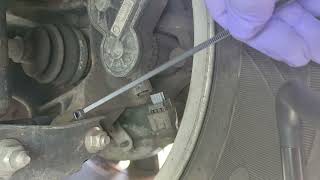
- Damaged Wiring Harness or Connectors (Very Common) — The wires leading to the electric motors on your rear brakes are exposed to road debris, water, and constant suspension movement. Over time, these wires break, chafe against chassis components, or corrode, causing a loss of communication. The plastic connectors also suffer water intrusion and pin corrosion. On Subaru models, the locking tab on the actuator connector breaks, allowing the connector to vibrate loose.
- Brake Control Module Software Glitch (Common) — The software governing the brake control module contains bugs that cause false warnings or improper operation. Manufacturers frequently release Technical Service Bulletins (TSBs) with software updates to resolve these issues. This is a known issue on some Toyota, Cadillac, and GMC models.
- Failed Electronic Parking Brake (EPB) Actuator (Common) — The small electric motor that applies and releases the parking brake fails internally. The internal gears strip, the motor burns out, or water intrusion causes corrosion and a short circuit.
- Faulty Parking Brake Switch (Common) — The switch the driver uses to activate the EPB fails internally. This is a frequent issue on Nissan Rogue models, where a faulty switch near the gear shifter triggers a 'When Parked, Apply Parking Brake' message.
- Seized or Binding Rear Brake Caliper (Common) — If a rear brake caliper seizes or its slide pins bind due to rust, the EPB actuator motor works much harder to apply the brake. The control module detects this excessive current draw as a fault and sets a code to prevent motor burnout.
- Low or Fluctuating Battery Voltage (Less Common) — Sensitive electronic modules require stable voltage. A weak 12-volt battery provides insufficient or fluctuating voltage during engine start-up, causing modules like the brake controller to malfunction and set error codes.
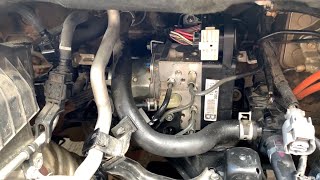
- Failed ABS Actuator Assembly (Less Common) — On Toyota and Lexus hybrids, the entire ABS actuator and pump assembly is a known failure point. An internal failure triggers a cascade of brake-related codes, including C1586. 🎬 Watch this step-by-step guide to replacing a failed ABS actuator.
- Improper Service Procedures (Rare) — Performing a rear brake job without using a scan tool to put the EPB system into 'Service Mode' causes catastrophic damage. Manually pushing the caliper piston back destroys the internal gears of the actuator or causes a pressure spike that destroys the Electronic Brake Control Module (EBCM).
Symptoms
- “Service Parking Brake” or “Park Brake Limited Function” Message — The most common symptom is a specific warning message on your dashboard's driver information center (DIC).
- ABS, Traction Control (VSC), and/or BRAKE Warning Lights On — Because the systems are interconnected, a fault in the EPB system disables the ABS and traction/stability control, illuminating all related warning lights. On Subaru vehicles, this is accompanied by a disabled 'EyeSight' system warning.
- Electronic Parking Brake Will Not Engage or Disengage — The parking brake is stuck on, or it refuses to apply when you press the button. The EPB indicator light on the switch flashes instead of staying solid.
- Spongy or Hard Brake Pedal — If the fault is related to the main ABS actuator assembly (a known issue in Toyota/Lexus), the feel of your primary brake pedal changes dramatically, becoming soft, spongy, or very difficult to press.
- Audible Buzzing, Grinding, or Clicking Noises — You hear unusual noises from the rear of the car when trying to apply the parking brake, or from the engine bay if the ABS actuator is failing. A struggling actuator motor makes a high-pitched straining sound.
Diagnostic Flowchart
Tap your situation to follow the diagnostic path that matches what you're seeing on this code.
Common Fixes & Costs
- Repair or Replace Parking Brake Actuator Wiring Harness — Parts: $20-$80, Labor: $150-$250, ~1.5 hr book time (Intermediate)
- Reprogram Electronic Brake Control Module (EBCM) — Parts: $0, Labor: $150-$400, ~1.2 hr book time (Professional)
- Replace Electronic Parking Brake Actuator Motor — Parts: $100-$450, Labor: $150-$300, ~1.5 hr book time (Intermediate)
- Replace Parking Brake Switch — Parts: $40-$100, Labor: $100-$200, ~1 hr book time (DIY)
- Replace ABS Actuator / Brake Booster Pump Assembly — Parts: $800-$2,500, Labor: $500-$1,000, ~5.5 hr book time (Professional)
- Perform Zero Point Calibration — Parts: $0, Labor: $75-$180, ~0.5 hr book time (DIY)
Used vs. New Parts: Buying Guide
When a used part is worth it: For an EPB actuator motor on an older, high-mileage vehicle where budget is the primary concern and the savings are significant. For an ABS actuator, a professionally remanufactured unit with a long warranty is a better choice than a used part from a junkyard.
Donor-vehicle mileage cap: roughly under 70000 miles for the part to have meaningful remaining life.
Donor quality checklist:
- Verify the part number matches exactly; superseded numbers are not always compatible.
- For electronic modules like an ABS unit, confirm whether it requires VIN reprogramming to function in your vehicle.
- Avoid parts from regions with heavy road salt use, as corrosion is a primary failure mode.
- Prefer sellers who provide photos of the actual part, not stock images.
Decision logic:
- If The part is a complex electronic module (ABS Actuator) and the vehicle is essential for daily use. → Buy new OEM or a high-quality remanufactured unit with a lifetime warranty. The risk of a failed used part and repeat labor costs is too high.
- If The part is a mechanical/electro-mechanical component (EPB Actuator) on a vehicle over 10 years old. → A used part from a low-mileage donor is an acceptable risk to save money, but a new aftermarket part with a warranty is often a safer bet for a similar price.
- If The manufacturer has updated the part to fix a known design flaw. → Buy new OEM to ensure you get the revised, more reliable part.
Warranty tradeoff: Used parts typically have a 30-90 day warranty that covers the part only, not labor. Aftermarket new parts often carry a 1-year to limited lifetime warranty. Remanufactured modules from specialists frequently offer a lifetime warranty.
Worst-case if a used part fails: $500-1200 if a used ABS actuator fails after installation, due to the high cost of repeat labor for installation and bleeding.
What Happens If You Wait — Timeline
- 0-1 month: An intermittent 'Service Parking Brake' light appears, often after hitting a bump or in wet weather. The EPB occasionally fails to engage or release on the first try. The code C1586 is stored. (MPG impact: 0%% · Added cost: $0)
- 1-3 months: The warning light becomes more frequent or stays on permanently. The fault is now 'hard set'. If the cause is a seized caliper, a burning smell is noticed after driving, and one wheel is significantly hotter than the others. (MPG impact: 3-10% (if a caliper is dragging)% · Added cost: $50-$150 in wasted fuel and accelerated brake pad wear.)
- 3-6 months: If caused by a dragging caliper, the constant heat warps the brake rotor and destroys the brake pads on that wheel. The EPB actuator motor, constantly straining against the seizure, burns out. (MPG impact: 5-15%% · Added cost: $300-$700 (New rotor, pads, and potentially a new EPB actuator, plus labor).)
- 6+ months: Catastrophic failure. The EPB becomes permanently stuck on, stranding the vehicle. On GM models, continuing to operate the system with a circuit fault sends feedback that damages the Electronic Brake Control Module (EBCM), turning a wiring or actuator fix into a major electronic repair. An EBCM replacement costs $1,200-$2,500.
Cost of Not Fixing It
- Immediate: Disabled ABS and stability control, creating a safety hazard. The EPB fails to engage, leading to a rollaway risk, or fails to release, stranding the vehicle. (Added cost: 0, unless an accident occurs.)
- 1-6 months: If the cause is a seized caliper, it destroys the associated brake rotor and pads. Continuing to operate a struggling actuator motor causes it to burn out, turning a simple wiring fix into a component replacement. (Added cost: $300 - $800)
- 6+ months: On GM vehicles, repeatedly attempting to use the system with a fault sends voltage feedback that damages the Electronic Brake Control Module (EBCM), a very expensive component. Ignored water leaks cause catastrophic failure to multiple electronic modules. (Added cost: $1,200 - $2,500)
Diagnosis Steps
- Read Codes and Research TSBs
Use an OBD-II scanner capable of reading Chassis (C) codes. Confirm C1586 is present and note all other codes. Immediately search for Technical Service Bulletins (TSBs) for your vehicle's make, model, year, and the stored codes. A TSB points directly to a known software issue or common wiring problem, saving significant diagnostic time.
Tools: OBD-II Scanner (with ABS/Chassis capability) (Beginner) - Check Battery Health and System Voltage
Before any complex diagnostics, ensure your 12-volt battery is healthy. A weak battery causes numerous random electronic faults. With the vehicle off, the voltage must be above 12.4V. With the engine running, it must be between 13.2V and 14.8V. A voltage below 12.5V when working on the EPB system damages the control module.
Tools: Multimeter or Battery Tester (Beginner) - Visually Inspect Wiring and Connectors
Safely raise the rear of the vehicle. Locate the electronic parking brake actuators on the back of the brake calipers. Meticulously inspect the wiring harness going to each actuator. Look for broken wires, chafing against suspension parts, or green corrosion in the connectors. On Subarus, specifically check if the connector is loose or if its locking tab is broken. On Chevy Volts, inspect the harness near the transmission mount for chafing.
Tools: Jack and Jack Stands, Flashlight (Intermediate) - Test EPB Actuator with a Bidirectional Scan Tool
A professional-grade scan tool commands the EPB actuators to apply and release. This determines if the motor is functional. If one side works and the other doesn't, it isolates the problem to the wiring or the actuator on the non-responsive side, ruling out a central module failure.
Tools: Bidirectional Scan Tool (Advanced) - Perform Circuit Integrity Test (Pro Tip)
Disconnect the harness from the EBCM and the actuator. Use a digital multimeter to check for continuity (no breaks) on the power and ground wires. A reading of OL (Over Limit) indicates a broken wire. Then, check for a short to ground by testing resistance between each wire and a clean chassis ground; the reading must be OL. A low resistance reading indicates a short. For GM vehicles, a resistance greater than 0.6 ohms in the circuit sets a fault.
Tools: Digital Multimeter (Advanced) - Check Actuator Motor Resistance and Current Draw (Pro Tip)
Disconnect the actuator and measure the resistance between its two pins. A reading of OL or very high resistance indicates a failed motor. Use a power probe and ammeter to directly power the motor. A healthy motor draws under 5 amps. A draw of over 15-18 amps or a significant voltage drop points to a seized or internally shorted motor.
Tools: Digital Multimeter, Power Probe with Ammeter (Professional) - Inspect for Water Intrusion in Control Modules
On vehicles like the Lexus LS460, the parking brake control module is located in the trunk and is susceptible to water damage from leaks. On GM SUVs (Cadillac XT5, GMC Acadia), a leaking HVAC drain hose drips water onto the Body Control Module (BCM), leading to widespread electrical faults, including brake system errors.
Tools: Flashlight, Trim Removal Tools (Intermediate) - Perform Zero Point Calibration
On Toyota and Lexus vehicles, any work on the brake or suspension system requires a 'Zero Point Calibration' to reset the steering angle, yaw rate, and deceleration sensors. This procedure tells the computer the car's 'straight and level' position and is essential for the proper function of the VSC system.
Tools: Advanced Scan Tool or Jumper Wire (Intermediate) - Advanced: Check EPB Circuit Resistance at EBCM (GM)
For GM vehicles like the Cadillac XT5 or GMC Acadia, disconnect the EBCM connector and measure the resistance of the left and right park brake actuator circuits. According to GM document PIT5662E, the resistance on each circuit must be 0.6 ohms or less. A reading higher than 0.6 ohms indicates excessive resistance in the wiring or the actuator itself.
Tools: Digital Multimeter, EBCM Connector Pinout Diagram (Advanced) - Advanced: Analyze Live Data PIDs
Using an advanced scan tool, monitor live data from the brake control module. Key PIDs to watch include 'Parking Brake Switch Status' (changes state when the button is pressed), 'Actuator Motor Voltage' (stable and near battery voltage), and 'Actuator Position/Travel Counter'. A motor that shows voltage but no change in position count is seized or has a stripped internal gear.
Tools: Advanced Scan Tool (Advanced)
When This Code Triggers (Freeze-Frame Conditions)
- System Voltage: 11.8V - 14.8V (Code sets during engine crank if voltage drops below threshold, or during normal operation if a circuit fault occurs.)
- Vehicle Speed: 0 mph (Fault is detected when the EPB is commanded on or off while parked.)
- EPB Switch Status: Apply/Release (The fault is logged when the module commands the actuator motor but does not see the expected electrical response or movement.)
- Ignition Status: ON / RUN (The EBCM performs self-tests upon ignition-on, which immediately triggers the code if a hard fault exists.)
Related Codes
- C028F — This code often appears with C1586 on GM vehicles. C028F specifically points to a circuit malfunction in the LEFT park brake actuator, while C1586 typically indicates the same fault on the RIGHT side.
- C13A6 — A Toyota-specific code for 'Motor Circuit Open or Short,' which directly relates to the common cause of a broken wire leading to the parking brake motor.
- C0597 — On newer Toyotas, this code indicates a 'Calibration / Parameter Memory Failure' in the brake control module, pointing to a software issue that requires reprogramming or Zero Point Calibration.
- C1587 / C1588 — These codes are companions to C1586 in some GM TSBs. While they are triggered by the same wiring faults, they also indicate a 'software sensitivity' issue caused by low battery voltage, whereas C1586 more commonly points to a hard electrical circuit failure.
Climate & Environmental Factors
- Road Salt / High Humidity (Rust Belt): This is the single most significant environmental factor. Saltwater spray accelerates corrosion of the EPB actuator wiring, connectors, and internal motor components. It also causes brake calipers to seize, which overloads the EPB motor and triggers a fault. The National Highway Traffic Safety Administration (NHTSA) warns that road salt leads to brake line and component failure.
- Extreme Cold: In cold weather, moisture that has seeped into the actuator or wiring connectors freezes. This causes intermittent open circuits or physically damages the components. Additionally, a battery's available power is lower in the cold, and the increased voltage demand from a stiff, cold EPB motor triggers a fault code.
- Water Intrusion: Aside from road spray, water from clogged sunroof drains or leaking trunk seals damages control modules located inside the vehicle, such as in the trunk of a Lexus LS460. On GM SUVs, a clogged A/C drain drips water onto the BCM, causing widespread electrical issues including brake system faults.
How to Talk to a Mechanic About This Code
Say this: "I have a 'Service Parking Brake' warning and my scanner shows code C1586. I'd like to book a diagnostic appointment. Based on my research, this is often a wiring, connector, or software issue. Could you please ensure the technician checks for TSBs and thoroughly inspects the rear actuator wiring for breaks or high resistance before recommending a new actuator or control module?"
This signals you are an informed customer. It directs the shop to check the most common and least expensive failure points first, preventing them from immediately quoting a costly part replacement. It establishes a collaborative, not adversarial, tone.
Avoid saying:
- 'My parking brake is broken, fix it.'
- 'My brake light is on, can you just look at it?'
- 'I think I need a new parking brake motor.'
Questions to ask before authorizing the repair:
- If you are recommending an actuator replacement, did you perform a circuit integrity test on the wiring first? What were the resistance readings?
- Did you check for any Technical Service Bulletins (TSBs) related to this code for my vehicle's VIN?
- If the proposed fix is a software update, is this a guaranteed solution or a 'best guess'?
- Can you show me the broken wire or corroded connector that you found?
- What is the warranty on the recommended parts and labor?
Where to Take It: Dealer vs Independent vs Chain
- Dealer:
Recommended if a known software update (TSB) is the likely cause or if the vehicle is under warranty. For out-of-warranty vehicles, start with an independent shop first.
Best for: Vehicles under warranty., Known software-related issues that require proprietary tools and TSB access (e.g., GM EBCM reprogramming)., Complex electronic diagnostics on newer or European vehicles where manufacturer-specific knowledge is key.
Downsides: Significantly higher labor rates (20-40% more) and parts costs., Quicker to replace a whole component (like a wiring harness) rather than perform a more detailed, cheaper repair. (Typical cost: +45% vs. baseline) - Independent Shop:
Best fit for most out-of-warranty C1586 issues, especially if a wiring or mechanical fault is suspected. Choose a reputable shop with good reviews and ASE-certified technicians specializing in diagnostics.
Best for: Out-of-warranty vehicles where cost is a factor., Diagnosing and repairing common wiring harness or connector issues, which they are often more willing to do than dealers., Vehicles with well-documented common failures (e.g., Subaru connector clip, Ford wiring).
Downsides: Shop quality and diagnostic capabilities vary widely. Ensure they have modern scan tools that read ABS/EPB codes and perform bidirectional tests., Lacks access to the latest manufacturer software for reprogramming modules. (Typical cost: +0% vs. baseline) - Chain Shop:
AVOID for this code. C1586 requires specialized electronic diagnostic capabilities that are typically beyond the scope of a chain repair shop.
Best for: Simple, routine maintenance like oil changes or standard brake pad replacements (on non-EPB systems).
Downsides: Technicians often lack the advanced diagnostic training and equipment (bidirectional scanners) needed for complex electronic brake faults., High potential for misdiagnosis, leading to unnecessary replacement of expensive parts like calipers or actuators. (Typical cost: -10% vs. baseline)
When to Walk Away From the Repair
If the estimated repair cost exceeds 50% of the car's private-party value (from a source like Kelley Blue Book), you should seriously consider selling or trading in the vehicle.
- Car worth $5000, fix is $2800: Walk away. The repair cost is over 50% of the car's value. It's not a sound financial decision.
- Car worth $15000, fix is $1800: Fix it. The repair is only 12% of the vehicle's value and is a worthwhile investment in its safety and function.
- Car worth $3000, fix is $400: Fix it. A $400 repair for a wiring issue or used actuator is well below the threshold and keeps a usable car on the road.
What Scan Tool You Need for This Code

Minimum: A scanner that reads and clears codes from the ABS (Anti-lock Brake System) module. This is a Chassis 'C' code, which basic engine code readers cannot access.
A standard $20 engine code reader shows 'No Codes Found' because it only communicates with the Engine Control Unit (ECU), not the Electronic Brake Control Module (EBCM) where C1586 is stored. You will be unable to diagnose the problem.
Budget: XTOOL A30M / Kingbolen Ediag Elite (~$75) — These are Bluetooth dongles that pair with a smartphone app. They provide full system diagnostics to read and clear ABS codes like C1586 and offer limited bidirectional controls, which activates the EPB motor.
Mid-range: Foxwell NT680/NT809 or Innova 5610 (~$350) — These are dedicated handheld units or tablets that offer full system diagnostics plus crucial bidirectional controls. They allow you to command the EPB into 'Service Mode' for brake jobs and actively test the actuator motors, which is essential for proper diagnosis.
Professional: Autel MaxiCOM MK808S / XTOOL D7 (~$450) — Provides full bidirectional control, extensive live data graphing, and special functions like brake bleeding and calibration. These tools offer near dealer-level capability for diagnostics and are the standard for independent shops and serious DIYers.
Rent vs buy: Most auto parts store loaner tools read ABS codes, which is enough to confirm C1586 is present. However, they typically LACK the bidirectional control needed to command the EPB into service mode or test the actuators. For this code, if you plan to DIY the diagnosis beyond just reading the code, buying a midrange tool with bidirectional capability is necessary.
How to Clear the Code After You Fix It
- Use an OBD-II scan tool capable of reading Chassis codes to clear the fault from the EBCM.
- Perform any manufacturer-specific relearn or calibration procedures (e.g., Toyota/Lexus Zero Point Calibration).
- Cycle the EPB switch several times, listening for normal motor operation on both sides.
- Perform a road test that includes several stops and starts.
Drive cycle (~15 minutes): After clearing the code, start the vehicle. Apply and release the electronic parking brake 3-5 times. Drive the vehicle for at least 10-15 minutes, including some stop-and-go traffic and speeds above 30 mph to allow the system to run its internal self-tests and confirm the fault does not return.
Readiness monitors affected: None directly, as this is a Chassis (C) code. However, using a scanner to 'Clear All Codes' resets emissions readiness monitors.
Before emissions retest: drive at least 50 miles to fully set monitors.
Watch out for:
- Using a basic engine code reader that cannot communicate with the brake control module to clear the code.
- Failing to perform a required calibration after the repair, which causes the code to return immediately.
- Disconnecting the battery will not reliably clear this code from the EBCM's memory.
Will This Fail Emissions / State Inspection?
No — by itself this code doesn't fail OBD inspection (but it can keep readiness monitors from setting, which causes a separate fail).
- California: This code will not fail the OBD-II emissions portion of the Smog Check, but it causes an immediate failure of the mandatory safety inspection due to the illuminated brake warning light.
- New York: An illuminated ABS or brake system warning light is grounds for failing the annual safety inspection.
- Texas: As of 2025, annual safety inspections have been eliminated for non-commercial vehicles. This code does not cause a failure of the emissions test required in certain counties.
- Virginia: The inspection manual states that a vehicle is rejected for a red brake failure warning lamp. An amber-only ABS light is not cause for rejection. Since C1586 often illuminates the red brake light, it causes a failure.
Most Commonly Affected Vehicles
- Ford Edge (2015-2018) — Highly prone to the wiring harness for the rear EPB actuators breaking internally. A small number of 2015-2016 models were also recalled for incorrect ABS software that disables stability control. The cost to replace an actuator is typically $95-$280 for the part.
- Chevrolet Volt (2016-2018) — GM Technical Service Bulletin 17-NA-146 addresses C1586 caused by a poor electrical connection or a chafed wiring harness near the transmission mount. These models are also known for a separate 'Shift to Park' issue, which is typically caused by a faulty switch in the shifter assembly, not the brake system.
- Toyota Prius (2004-2015) — Known for expensive ABS actuator assembly failures, which trigger a cascade of brake-related codes. A new OEM actuator costs over $900, with used units available for less. Replacing the actuator also requires replacing a pump resistor located under the dashboard.
- Cadillac / GMC XT5 / Acadia (2017) — A GM Technical Service Bulletin (17-NA-002) points to a software glitch in the Electronic Brake Control Module fixed with a software update. This presents with a flashing park brake light. Some 2017 models experience driveline vibrations or a low brake pedal feel, addressed by separate TSBs.
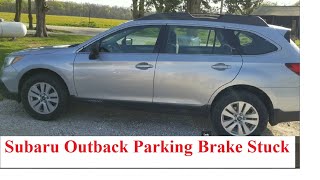
- Subaru Legacy, Outback (2015-2018) — A very common failure is a broken locking tab on the rear EPB actuator's electrical connector, causing a loose connection. TSB 06-87-22R addresses this, and a repair kit (part # X9904AL110) is available as a simple fix.
- Nissan Rogue (2014-2023) — The message 'When Parked, Apply Parking Brake' is frequently caused by a faulty parking brake switch located near the gear shifter. The part itself is relatively inexpensive, often under $50.
- Hyundai / Kia Ioniq 5 / EV6 (2022) — A recall was issued for a software issue in the Shifter Control Unit (SCU) that causes the electronic parking brake to disengage unexpectedly due to voltage fluctuations when the vehicle is off, creating a rollaway risk. The fix is a simple software update performed by the dealer.
- Lexus LS460 (2007-2017) — The parking brake control module is located in the trunk and is susceptible to damage from water leaks, often from a poorly sealed body seam after an accident repair or from clogged sunroof drains.
Manufacturer-Specific Notes

- General Motors (Chevrolet, Cadillac, GMC): Issues are frequently related to either software glitches (TSB 17-NA-002) or wiring harness problems (TSB 17-NA-146). Always check for TSBs first. Improper service during a rear brake job destroys the EBCM, a non-warranty repair. There is also a manual release for a stuck EPB on some models, which involves turning a gear with an Allen key inside the module.
- Ford / Lincoln: The most common culprit is a broken wire inside the protective loom going to one of the rear parking brake motors. The failure is often intermittent at first. Putting the system in 'Brake Service Mode' for rear brake jobs is done via a specific sequence of button presses, not always requiring a scan tool.
- Toyota / Lexus: While this code points to wiring, it is also frequently associated with the failure of the very expensive ABS actuator assembly, especially on older hybrids. Toyota issued a Warranty Enhancement Program (ZG1 for Prius/Highlander Hybrid, ZLG for Lexus models) to extend coverage for this part for up to 10 years or 150,000 miles. Performing a 'Zero Point Calibration' is a mandatory step after any brake or suspension work to ensure the Vehicle Stability Control (VSC) system functions correctly.
- Subaru: On 2015-2018 models, the primary suspect is almost always the small plastic clip on the rear actuator connectors. Subaru issued TSB 06-87-22R and extended the warranty for this specific part to 15 years with unlimited mileage. This must be checked before any expensive parts are replaced. A simple zip tie or the official repair kit is a permanent fix.
- Hyundai / Kia: A 2022 recall (NHTSA Campaign Number 22V-458) was issued for 2022 Ioniq 5 and Kia EV6 models for a software issue that causes the parking pawl to disengage, leading to a rollaway. While this is not a C1586 fault, it is a related EPB system safety issue resolved with a software update.
Real Owner Stories
2017 Cadillac XT5 with 75,000 miles
Owner reported a 'Service Parking Brake' message and a flashing amber park brake light. The EPB was inoperable.
Outcome: The dealer reprogrammed the Electronic Brake Control Module (EBCM) with updated software as per GM TSB 17-NA-002. The repair took about an hour and resolved the issue.
Lesson: For modern cars, especially with electronic issues, always check for Technical Service Bulletins (TSBs) first. A simple software update fixes what seems like a major hardware failure, saving significant cost.
2016 Chevrolet Volt at 60,000 miles
An intermittent 'Service Parking Brake' message appeared on the driver information center (DIC). The code C1586 was present.
Outcome: The mechanic inspected the wiring harness near the transmission mount and found it was chafing against the mount. They repaired the damaged wire and secured the harness away from the contact point. No parts were replaced.
Lesson: Don't immediately assume the most expensive part has failed. On many vehicles, the wiring harness is a common failure point due to its exposure and movement. A thorough visual inspection prevents the unnecessary replacement of a costly actuator or module.
2019 Silverado after DIY rear brake job
Immediately after replacing the rear brake pads and rotors at home, the dashboard lit up with 'Service ESC', 'Brake System Failure', and other warnings. The brake pedal felt extremely soft.
Outcome: The owner disconnected the battery, pumped the brakes several times to reset the system, reconnected the battery, and then correctly followed the procedure to exit service mode. This cleared most of the codes and restored normal brake function.
Lesson: Improper service procedures are a common cause of EPB faults. Always use the manufacturer's specified 'Service Mode' before working on rear brakes. Forcing the caliper piston back manually damages the actuator or even the EBCM, a mistake that costs over $1,500 to fix.
2018 Jeep Renegade with multiple electrical warnings
The vehicle displayed a 'Service Electronic Parking Brake' message, the EPB would not disengage, and the car would not start. The starter clicked briefly and all lights dimmed.
Outcome: The owner replaced the aging 12V battery. Upon installation of the new battery, all warning lights disappeared, and the vehicle started and operated normally. The C1586 code was a symptom of low system voltage, not a primary fault.
Lesson: Always check the simplest things first. A weak or failing battery causes a cascade of seemingly unrelated electronic fault codes in modern vehicles. Before diving into complex diagnostics, ensure the battery and charging system are healthy.
How to Prevent This Code From Triggering
- Cycle the Electronic Parking Brake regularly (At least once a week) — Regular use prevents the actuator motors and caliper slide pins from seizing due to inactivity and corrosion. This is especially important for vehicles that sit for long periods.
- Flush and replace brake fluid (Every 2-3 years, or as per manufacturer recommendation) — Brake fluid is hygroscopic (absorbs moisture). Old, moisture-contaminated fluid causes internal corrosion of brake components, including caliper pistons, which leads to a seized caliper that overloads the EPB motor.
- Clean and lubricate brake caliper slide pins (Every brake service or every 30,000 miles) — Rust and road grime cause caliper slide pins to bind, preventing the caliper from moving freely. This causes uneven pad wear and forces the EPB motor to work harder, which triggers a fault. Use a high-temperature silicone-based brake grease.
- Periodically wash the vehicle's underbody (Monthly, especially in the 'Rust Belt') — Washing away road salt and grime reduces corrosion on exposed EPB components like wiring harnesses, connectors, and actuator motors, which is a primary cause of electrical failures.
- Maintain a healthy 12V battery (Test annually after 3 years of age) — A weak battery provides unstable voltage, which causes sensitive electronic modules like the EBCM to malfunction and generate false error codes. EPB systems require a stable voltage above 12.5V to operate correctly.
Frequently Asked Questions
Can I just replace the fuse for the parking brake?
While checking fuses is smart, a blown fuse rarely causes this code. The fault typically lies in the wiring, the motor, or the control module's software, not the main power supply circuit. On a Ford Edge, the relevant fuses are #69 and #87 in the under-hood fuse box.
Is it safe to drive with the C1586 code?
It is not safe for long-term driving. Your electronic parking brake is unreliable, and your primary anti-lock braking and stability control systems are compromised. This creates a major safety risk in emergency stopping situations.
Why did the light turn off by itself?
This happens when a broken wire or loose connector makes intermittent contact. As the car vibrates, the wire reconnects temporarily, causing the control module to pass its self-test and turn the light off. The fault remains present and the light inevitably returns.
Can a regular brake job cause the C1586 code?
Yes, absolutely. Failing to put the electronic parking brake system into 'Service Mode' before replacing rear brake pads causes serious damage. Manually forcing the caliper piston back destroys the actuator motor or fries the Electronic Brake Control Module (EBCM).
My mechanic wants to replace the whole actuator. Could it be something simpler?
Yes, misdiagnosis is common. Before replacing an expensive actuator, test the wiring circuit thoroughly for opens, shorts, and high resistance. On many Fords and GMs, the fault is a simple broken wire, while 2015-2018 Subarus often just need a $15 replacement connector clip.
My parking brake seems stuck and won't release. What's the cause?
A mechanical fault, like a rusted and seized rear caliper, overloads the EPB motor and triggers this code. The control module detects the motor cannot move the caliper and sets a fault to prevent burnout. Some GM vehicles have a manual release procedure involving an Allen key on the control module.
Will disconnecting the battery clear the code?
Disconnecting the battery clears the warning light temporarily, but it does not fix the underlying problem. The code is stored in the Electronic Brake Control Module's memory and reappears as soon as the module runs its self-test. On GM vehicles, the code clears after 40 consecutive ignition cycles without a fault, but this is unlikely if a hard fault exists.
What does 'Service AdvanceTrac' mean on my Ford?
The 'Service AdvanceTrac' message on a Ford vehicle indicates a problem with the electronic stability control system. Since this system relies on the same sensors and control module as the ABS and EPB, a fault like C1586 disables AdvanceTrac and triggers this warning light.
How do I put my car in parking brake 'Service Mode'?
The procedure varies greatly by manufacturer. On GM vehicles, it requires a bidirectional scan tool to command the caliper pistons to retract. On Ford models, it involves a sequence of actions like turning the ignition on, pressing the gas pedal, and holding the EPB switch down.
Key Takeaways
- Code C1586 disables critical safety systems like the Electronic Parking Brake (EPB) and Anti-Lock Brakes (ABS), requiring immediate diagnosis to prevent rollaway risks.
- A broken or chafed wire leading to the rear parking brake actuator causes over 50% of C1586 faults on Ford and GM vehicles.
- Always check for Technical Service Bulletins (TSBs) first, as a 1-hour software update fixes this code on many 2017+ Cadillac and GMC models.
- Replacing a broken $15 plastic connector clip permanently resolves this code on 2015-2018 Subaru Legacy and Outback models.
- Never manually force a rear brake caliper piston back without using a scan tool to enter 'Service Mode', as this destroys the $1,000+ Electronic Brake Control Module.
Helpful Videos


The information in this article is provided for general reference and educational purposes only. Vehicle specifications, procedures, and part compatibility can vary by production date, trim level, and region. Always consult your vehicle's factory service manual and verify part numbers before purchasing or performing repairs. Safety-critical components such as airbags, seat belts, and braking systems should be installed by a qualified professional.
- 🎬 Helpful Videos
- What Does C1586 Mean?
- Can I Drive With C1586?
- Common Causes
- Symptoms
- Diagnostic Flowchart
- Common Fixes & Costs
- Used vs. New Parts: Buying Guide
- What Happens If You Wait — Timeline
- Cost of Not Fixing It
- Diagnosis Steps
- When This Code Triggers (Freeze-Frame Conditions)
- Related Codes
- Climate & Environmental Factors
- How to Talk to a Mechanic About This Code
- Where to Take It: Dealer vs Independent vs Chain
- When to Walk Away From the Repair
- What Scan Tool You Need for This Code
- How to Clear the Code After You Fix It
- Will This Fail Emissions / State Inspection?
- Most Commonly Affected Vehicles
- Manufacturer-Specific Notes
- Real Owner Stories
- 2017 Cadillac XT5 with 75,000 miles
- 2016 Chevrolet Volt at 60,000 miles
- 2019 Silverado after DIY rear brake job
- 2018 Jeep Renegade with multiple electrical warnings
- How to Prevent This Code From Triggering
- Frequently Asked Questions
- Can I just replace the fuse for the parking brake?
- Is it safe to drive with the C1586 code?
- Why did the light turn off by itself?
- Can a regular brake job cause the C1586 code?
- My mechanic wants to replace the whole actuator. Could it be something simpler?
- My parking brake seems stuck and won't release. What's the cause?
- Will disconnecting the battery clear the code?
- What does 'Service AdvanceTrac' mean on my Ford?
- How do I put my car in parking brake 'Service Mode'?
- Key Takeaways
- 🎟️ Get 5% Off