

OBD-II Code C1580: Steering System Fault or Sensor Location Error
What C1580 means, why it triggers, and how to fix it
- Code C1580 means a critical electric power steering failure on Hyundai/Kia vehicles, but a minor TPMS sensor location fault on Dodge, Jeep, and Ram models.
- If your Hyundai or Kia makes a clunking noise when turning, replace the $10 flexible steering coupler (P/N 56315-2K000-FFF) immediately to prevent a $1,500 steering column failure.
- Do not drive a Hyundai or Kia with C1580 if the steering feels heavy; the sudden loss of power assist requires 5 to 10 times the normal steering effort and causes accidents.
- For Dodge, Jeep, and Ram vehicles, fix C1580 by driving continuously above 15 mph for 20 minutes to force the TPMS system to relearn sensor locations.
- If the 20-minute drive cycle fails on a Dodge or Jeep, expect to pay $50 to $150 to replace a dead TPMS sensor at a tire shop.
What Does C1580 Mean?
Code C1580 has two completely different definitions depending on the manufacturer. For Hyundai and Kia, it signals a critical electric power steering system failure, usually a torque sensor mismatch. For Dodge, Jeep, Chrysler, and Ram, it indicates a minor Tire Pressure Monitoring System (TPMS) fault where the computer cannot determine the physical location of a tire sensor.
Technical definition: For Hyundai/Kia, C1580 is a 'Torque Sensor Main/Sub Signal Fault' within the Motor Driven Power Steering (MDPS) system, meaning the computer detects a mismatch between the primary steering input sensor and its redundant backup. For Dodge/Ram/Jeep/Chrysler, it is defined as 'Left/Right Side Tire Pressure Sensor Location Undetermined', meaning the TPMS module receives a sensor transmission but cannot pinpoint which side of the vehicle it is on.
Can I Drive With C1580?
Yes, But With Caution. For Hyundai/Kia, if your steering feels heavy, unpredictable, or has failed, do not drive. The sudden loss of power assist requires 5-10 times the normal steering effort, creating a high risk of a crash. For Dodge/Jeep/Ram, the code indicates a TPMS fault, and the vehicle is safe to drive. However, manually check your tire pressures immediately since the system will not warn you of a puncture.
Common Causes
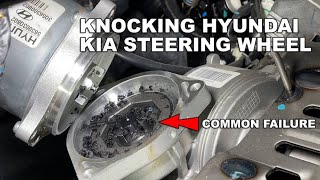
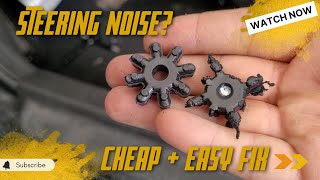
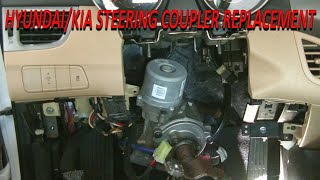
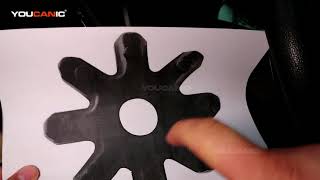
- Worn Flexible Steering Coupler (Hyundai/Kia) (Very Common) — A small, star-shaped rubber coupler (P/N 56315-2K000-FFF) inside the MDPS motor disintegrates over time. 🎬 Watch: How to replace the steering coupler for under $2. This creates excessive play, causing a clunking noise and triggering torque sensor faults as the sensor struggles with the erratic movement.
- Defective Steering Torque Sensor (Hyundai/Kia) (Very Common) — The sensor that measures how much force you apply to the steering wheel fails, confusing the power steering computer and disabling assist.
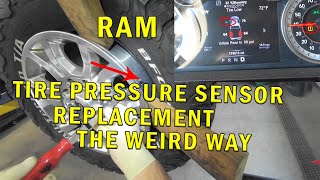
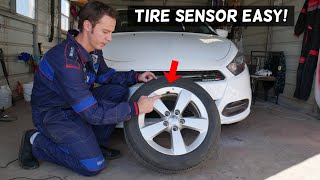
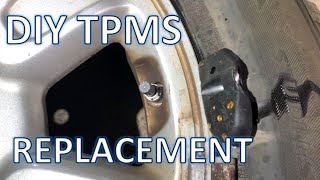
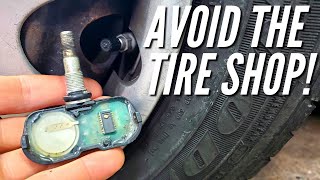
- Failed or Incorrectly Installed TPMS Sensor (Dodge/Jeep/Ram/Chrysler) (Common) — The system loses track of a tire sensor's position, usually after a tire rotation or replacement. A sensor with a dead battery or incorrect frequency fails to transmit 🎬 Watch: How to replace TPMS sensors without a tire machine. a locatable signal.
- Failed Electric Power Steering (MDPS) Motor (Hyundai/Kia) (Common) — The electric motor providing steering assistance fails due to internal shorts or worn splines, leading to a complete loss of power steering.
- TPMS Module or Software Fault (Dodge/Jeep/Ram/Chrysler) (Less Common) — On Jeep Wranglers specifically, the TPMS module experiences a software glitch preventing it from learning sensor locations, triggering C1580, C1581, and C151D simultaneously.
- Damaged TPMS Initiator/Receiver (Dodge/Jeep/Ram/Chrysler) (Less Common) — Road debris or corrosion damages the wheel-well mounted receivers (initiators), preventing the system from determining sensor location even if the tire sensors work perfectly.
- Damaged Wiring or Connectors (Rare) — Frayed wires or corroded connections to the steering column assembly (Hyundai/Kia) or the TPMS module (Dodge/Jeep/Ram) interrupt signals and trigger the code.
Symptoms
- Clicking or Clunking Noise When Turning (Hyundai/Kia) — A distinct clicking or thud sound when turning the wheel indicates a failing flexible steering coupler.
- Heavy or Stiff Steering (Hyundai/Kia) — The loss of electric assist makes the steering wheel very difficult to turn. This often happens intermittently before failing completely.
- Power Steering Warning Light Illuminated (Hyundai/Kia) — The 'EPS' or 'MDPS' light, or a steering wheel symbol, illuminates on the dashboard.
- TPMS Light Flashes, Then Stays Solid (Dodge/Jeep/Ram) — The tire pressure light blinks for about a minute and then remains solid, indicating a system fault rather than low pressure.
- 'Service Tire Pressure System' Message (Dodge/Jeep/Ram) — The Electronic Vehicle Information Center (EVIC) displays a text message indicating a TPMS fault.
Diagnostic Flowchart
Tap your situation to follow the diagnostic path that matches what you're seeing on this code.
Common Fixes & Costs
- Replace Flexible Steering Coupler (Hyundai/Kia) — Parts: $10-$30, Labor: $250-$450, ~2.1 hr book time (DIY Advanced)
- Replace a single TPMS Sensor (Dodge/Jeep/Ram/Chrysler) — Parts: $40-$100, Labor: $50-$150, ~0.6 hr book time (DIY)
- Perform TPMS Software Routine (Dodge/Jeep/Ram/Chrysler) — Parts: $0, Labor: $100-$200, ~0.8 hr book time (Professional)
- Replace Steering Column Assembly (Hyundai/Kia) — Parts: $1100-$2200, Labor: $250-$600, ~2.5 hr book time (Professional)
- Calibrate Steering Angle Sensor (Hyundai/Kia) — Parts: $0, Labor: $80-$150, ~0.5 hr book time (Professional)
Used vs. New Parts: Buying Guide
When a used part is worth it: For a Hyundai/Kia steering column, a used part from a low-mileage donor is a cost-effective alternative to a $1,500 new OEM part. For TPMS sensors, buying used is never recommended as their batteries have a finite life.
Donor-vehicle mileage cap: roughly under 60000 miles for the part to have meaningful remaining life.
Donor quality checklist:
- For steering columns, verify the donor vehicle's VIN to ensure the part number matches exactly.
- Avoid parts from flood-damaged vehicles due to electronic corrosion.
- For TPMS sensors, always buy new OEM or high-quality aftermarket (e.g., Schrader) to ensure a fresh battery.
Decision logic:
- If The fault is the Hyundai/Kia flexible coupler → Always buy the new, inexpensive OEM part. There is no benefit to using a worn used part.
- If The fault is the entire Hyundai/Kia steering column and the vehicle is over 100K miles → A certified-good used column is a reasonable choice to save money.
- If The fault is a Dodge/Jeep/Ram TPMS sensor → Always buy a new sensor. The labor to replace a prematurely failed used sensor negates any initial savings.
Warranty tradeoff: Used steering columns typically have a 30-90 day warranty. New OEM parts carry a 1-2 year warranty.
Worst-case if a used part fails: $500-$800 if a used steering column fails after installation, due to repeated labor costs.
What Happens If You Wait — Timeline
- 0-3 months (Hyundai/Kia - Coupler): A faint 'clicking' noise appears when turning the wheel at low speeds. A slight amount of play is felt in the steering. No codes are set. (MPG impact: 0%% · Added cost: $0)
- 3-6 months (Hyundai/Kia - Coupler): The noise becomes a constant, loud 'clunk'. Excessive play causes the torque sensor to generate irrational signals, intermittently setting code C1580 and disabling power steering. (MPG impact: 0%% · Added cost: $100 (Risk of wear to motor splines begins))
- Immediate to 2 months (Hyundai/Kia - Torque Sensor): Power steering fails intermittently, resetting after restarting the car. The EPS light illuminates. This is a critical safety hazard. (MPG impact: 0%% · Added cost: $0 (but risk of accident is extremely high))
- 6+ months (Hyundai/Kia - Ignored): Permanent loss of power steering. The splines on the MDPS motor shaft are destroyed, requiring a full steering column replacement instead of a $10 coupler. (MPG impact: 0%% · Added cost: $1500-$2800)
- Ongoing (Dodge/Jeep/Ram): The TPMS light remains on. The vehicle will not warn the driver of low tire pressure, risking a blowout. (MPG impact: Up to 3% decrease if a tire is low% · Added cost: $250-$500 (Cost of a new tire and wheel repair from a puncture))
Cost of Not Fixing It
- Immediate (Hyundai/Kia): Sudden and complete loss of power steering assist, leading to an extremely high risk of a crash. (Added cost: Potential for accident-related costs ranging from minor bodywork to total vehicle loss.)
- Short-Term (Hyundai/Kia): Continued driving with a worn flexible coupler destroys the splines on the MDPS motor, requiring a full column replacement instead of just the inexpensive coupler. (Added cost: $1500-$2800)
- Ongoing (Dodge/Jeep/Ram): Loss of the TPMS safety feature. You will not be warned of a slow leak, leading to driving on a flat tire and destroying the wheel. (Added cost: $250-$500)
Diagnosis Steps
- Identify Vehicle Manufacturer
Determine if you are driving a Hyundai/Kia or a Dodge/Jeep/Ram/Chrysler. The code means completely different things for these brands.
Tools: Owner's Manual (Beginner) - Read All Fault Codes
Use an OBD-II scanner capable of reading Chassis codes. On Hyundai/Kia, look for C1290 or C1260. On Dodge/Jeep/Ram, look for C1581 or C151D.
Tools: OBD-II Scanner (Beginner) - Test Steering Feel (Hyundai/Kia)
With the engine running, turn the steering wheel lock to lock. A distinct clunking noise strongly suggests a failed flexible coupler. Heavy steering indicates a torque sensor or motor failure.
Tools: None (Beginner) - Perform TPMS Relearn Procedure (Dodge/Jeep/Ram)
Drive the vehicle continuously for 15-20 minutes above 15 mph. This forces the system to automatically relearn sensor positions. If the light remains on, proceed to hardware testing.
Tools: None (Beginner) - Check TPMS Sensor Data (Dodge/Jeep/Ram)
Use a dedicated TPMS tool to check each tire sensor (including the spare). Verify the signal, unique ID, pressure, and battery status. Replace any dead or non-responsive sensors.
Tools: TPMS Diagnostic Tool (Intermediate) - Analyze Torque Sensor Live Data (Hyundai/Kia)
Access the MDPS control module's live data. Monitor 'Torque Sensor 1 Output' and 'Torque Sensor 2 Output'. Centered, both should read 2.3-2.7V. A difference of more than 0.5V between them confirms a faulty torque sensor assembly.
Tools: Pro-level Scan Tool (Advanced) - Perform MDPS Voltage Drop Test (Hyundai/Kia)
Connect a multimeter to the main power pin on the MDPS module and the positive battery terminal. With the wheel turned to load the motor, voltage must be under 0.5V. Repeat for the ground side. Higher readings indicate wiring resistance.
Tools: Multimeter, Wiring Diagram (Advanced) - Check TPMS Initiator Function (Dodge/Jeep/Ram)
Inspect the TPMS initiators in the front wheel wells for corrosion. Use a professional scan tool to test their function. A faulty initiator prevents the system from locating sensors.
Tools: Flashlight, Pro-level Scan Tool (Professional)
When This Code Triggers (Freeze-Frame Conditions)
- Vehicle Speed: 0-15 mph (Hyundai/Kia) or 15+ mph (Dodge/Jeep) (The MDPS fault triggers during low-speed turning maneuvers. The TPMS fault sets after a period of continuous driving required for the relearn attempt.)
- Steering Angle/Torque: Varies (For Hyundai/Kia, the fault logs when torque sensor signals are irrational during a turn. Not applicable for Dodge/Jeep.)
- System Voltage: 9V-16V (For Hyundai/Kia, the code sets if voltage drops under 9V, causing the MDPS module to fail its self-test.)
- Engine RPM: 500+ RPM (The engine must be running for the respective modules (MDPS or TPMS) to be fully active and set a fault.)
Related Codes
- C1290 — Often appears with C1580 in Hyundai/Kia. C1290 means 'Torque Sensor Main Signal Fault.' Seeing both confirms a fatal mismatch in the sensor assembly requiring column replacement.
- C1260 — A Steering Angle Sensor code triggered along with steering faults on Hyundai/Kia models. This sensor must be calibrated after any steering column repair.
- C1581 — On Dodge/Jeep/Ram, C1581 ('Front/Rear Location Undetermined') frequently accompanies C1580. Seeing both means the system is completely unable to locate any sensors.
- C151D — A general 'Tire Pressure Sensor Location Undetermined' code on Dodge/Jeep/Ram. It is the primary code listed in TSBs indicating the start of a location fault.
Climate & Environmental Factors
- Cold Weather: On Hyundai/Kia, a weak battery struggles in cold temperatures, providing insufficient voltage to the MDPS module on startup. This causes the system to fail its self-test and disable power assist.
- Heat and Time: The rubber material of the Hyundai/Kia flexible steering coupler degrades from prolonged exposure to engine bay heat. Over thousands of heat cycles, it becomes brittle and disintegrates.
- Road Salt and Humidity: On Dodge/Jeep/Ram, the TPMS initiators in the wheel wells are exposed to the elements. Heavy road salt corrodes their wiring, preventing the main module from locating the tire sensors.
How to Talk to a Mechanic About This Code
Say this: "{'hyundai_kia': "I have a C1580 code and a clunking noise in my steering. I'd like you to inspect the flexible steering coupler before quoting a full column replacement. If there's no noise, please check the live data from the torque sensors.", 'dodge_jeep_ram': "I have a C1580 TPMS code, likely after a recent tire rotation. Could you first attempt a TPMS relearn procedure? If that doesn't work, please test the individual sensors before replacing any parts."}"
This steers the mechanic away from an immediate, expensive column replacement on Hyundai/Kia toward a targeted diagnosis. For Dodge/Jeep, it prevents paying for unnecessary sensor replacements when a simple relearn suffices.
Avoid saying:
- 'My steering feels weird.' (Too vague)
- 'My tire light is on.' (Could be low pressure or a system fault)
- 'Just fix the C1580 code.' (The fix is completely different depending on the car)
Questions to ask before authorizing the repair:
- For Hyundai/Kia (Coupler): Did you visually confirm the coupler is degraded? Can you show me the old part?
- For Hyundai/Kia (Column): Can you show me the live data printout from the torque sensors showing the voltage mismatch?
- For Dodge/Jeep/Ram: Did the drive-cycle relearn fail? Which specific sensor tested bad with your TPMS tool?
- Is a steering angle sensor calibration required after this repair, and is that included in the quote?
Where to Take It: Dealer vs Independent vs Chain
- Dealer:
Best for: Hyundai/Kia vehicles possibly covered under the steering coupler warranty extension., Dodge/Jeep/Ram vehicles where a specific TSB software update is required., Complex steering column replacements requiring OEM parts and calibration.
Downsides: Highest labor rates., May default to quoting a full steering column replacement without inspecting the cheaper flexible coupler. (Typical cost: +50% vs. baseline) - Independent Shop:
Best overall fit. A good independent shop handles both the mechanical Hyundai/Kia repair and the electronic TPMS issue cost-effectively.
Best for: Out-of-warranty Hyundai/Kia flexible coupler replacements., Diagnosing and replacing faulty TPMS sensors on Dodge/Jeep/Ram vehicles.
Downsides: Quality varies; ensure the shop is ASE-certified for electronic and chassis work. (Typical cost: +0% vs. baseline) - Chain Shop:
Acceptable only for a straightforward TPMS sensor swap on a Dodge/Jeep/Ram.
Best for: Replacing a single, confirmed-bad TPMS sensor.
Downsides: Technician skill varies greatly., Should be AVOIDED for the Hyundai/Kia steering issue, as it is a complex, safety-critical repair. (Typical cost: -10% vs. baseline)
When to Walk Away From the Repair
If the estimated repair cost for the Hyundai/Kia steering column replacement exceeds 50% of the car's private-party value, strongly consider selling the vehicle. The TPMS repair on a Dodge/Jeep/Ram will never reach this threshold.
- Car worth $4500, fix is $2800: Walk away. The repair cost is over 60% of the car's value. Sell as a 'mechanic's special'.
- Car worth $9000, fix is $2800: Borderline. If the car is otherwise in excellent condition, fixing it is worthwhile. Get a quote for a certified used column to lower the cost.
- Car worth $15000, fix is $400: Fix it. Whether it's the Hyundai coupler replacement or the Jeep TPMS sensor, the repair cost is low relative to the vehicle's value.
What Scan Tool You Need for This Code
Minimum: A scanner that reads Chassis (C-prefix) codes and displays live data from the steering module. For Dodge/Jeep, a dedicated TPMS tool is required.
A $20 code reader cannot see Chassis codes, display live torque sensor data, or perform TPMS relearn functions.
Budget: BlueDriver Pro (~$119) — Reads enhanced Chassis codes like C1580. For Hyundai/Kia, it displays live data from the MDPS module. It cannot perform TPMS relearns.
Mid-range: Foxwell NT510 Elite / Autel MaxiTPMS TS508 (~$150-300) — The Foxwell performs a Steering Angle Sensor calibration on a Hyundai/Kia. The Autel TS508 is a specialized TPMS tool that reads sensor data and performs OBD relearns for Dodge/Jeep.
Professional: Autel MaxiCOM MK808S (~$500-1500) — Provides OEM-level diagnostics. Graphs Hyundai/Kia torque sensor live data, performs SAS calibrations, and has integrated TPMS functions to diagnose and relearn sensors.
Rent vs buy: For a one-time TPMS issue on a Dodge/Jeep, go to a tire shop. For a Hyundai/Kia, buying a mid-range scanner like the Foxwell is a good investment as SAS calibration is necessary after repair.
How to Clear the Code After You Fix It
- For Hyundai/Kia, reconnect battery, clear codes with a scan tool, and perform Steering Angle Sensor calibration.
- For Dodge/Jeep/Ram, clear codes with a scan tool or begin the drive cycle relearn.
Drive cycle (~20 minutes): For Dodge/Jeep/Ram TPMS relearn: Drive the vehicle continuously at speeds above 15 mph for 20 minutes. The system automatically learns the new sensor positions and turns off the light. For Hyundai/Kia, a drive cycle is not required; the MDPS system functions immediately if the repair was successful.
Readiness monitors affected: Not applicable. C1580 is a Chassis code and does not affect emissions readiness monitors.
Watch out for:
- For Dodge/Jeep, if the automatic relearn fails after driving, it indicates a persistent hardware issue that driving longer will not fix.
- For Hyundai/Kia, failing to calibrate the Steering Angle Sensor after replacing the column causes stability control warning lights and handling issues.
Will This Fail Emissions / State Inspection?
No — by itself this code doesn't fail OBD inspection (but it can keep readiness monitors from setting, which causes a separate fail).
- California: A TPMS or steering warning light causes a failure of the state's safety inspection, even though C1580 does not affect the emissions (smog) test.
- New York: An illuminated TPMS or power steering light causes the vehicle to fail the annual safety inspection.
- Texas: The TPMS system is checked during the annual safety inspection. An illuminated warning light results in a failure.
Most Commonly Affected Vehicles
- Hyundai Elantra (2007-2017) — NHTSA Campaign 15V100000 (Hyundai Recall 127) updated MDPS software. The flexible coupler warranty was extended to 10yr/100k miles.
- Hyundai Sonata (2011-2017) — Prone to steering column and flexible coupler failures. Coupler warranty extended to 10yr/100k miles for 2011-2014 models.
- Kia Forte (2010-2014) — Shares the problematic MDPS components with the Hyundai Elantra. Repair costs and procedures are identical.
- Kia Optima (2011-2015) — Shares its platform and MDPS system with the Hyundai Sonata, making it susceptible to the same torque sensor failures.
- Jeep Wrangler / Gladiator (2013-2021) — TSB 08-022-15 addresses a software fix for 2014 models. On other years, C1580 appears frequently after installing larger aftermarket tires.
- Dodge / Ram 1500 (2011-2018) — Triggers C1580 for 'Left/Right Side Tire Pressure Sensor Location Undetermined'. Often resolved by driving over 15 mph for 20 minutes.
Manufacturer-Specific Notes
- Hyundai / Kia: Hyundai issued a warranty extension (TXX7 / TSB 17-ST-002) covering the flexible coupler for 10 years/100,000 miles on many models. Check your VIN with a dealer before paying out of pocket.
- Dodge / Jeep / Ram / Chrysler: This code frequently triggers after rotating tires or using a spare tire. The system simply gets confused and automatically relearns after driving 15 mph for 20 minutes.
- Hyundai / Kia: A 'Torque Sensor Zero Point Calibration' using a professional scan tool temporarily fixes an intermittent C1580 code. If the code returns quickly, it confirms a hardware failure.
Real Owner Stories
2013 Hyundai Elantra at 75,000 miles with steering clunk
Owner noticed a distinct 'clunk' from the steering column when turning the wheel at low speeds, accompanied by noticeable play.
What they tried:
- Researched online and identified the flexible steering coupler (P/N 56315-2K000-FFF) as the culprit.
Outcome: Performed a DIY replacement of the $10 rubber coupler. The old coupler was completely disintegrated. After replacement, the clunking noise vanished and steering felt tight.
Lesson: The classic 'clunking' noise almost always points to the inexpensive flexible coupler. Addressing it early prevents damage to the steering motor splines and saves a $1,500 steering column replacement.
2012 Hyundai Elantra at 132,000 miles with EPS light after DIY repair
After replacing the worn steering coupler, the power steering (EPS) light illuminated, and all power assist was permanently lost.
What they tried:
- Took the car to a mechanic for a Steering Angle Sensor (SAS) calibration. The calibration completed, but the light returned instantly upon turning the wheel.
Outcome: The owner damaged the delicate clock spring/SAS during the coupler replacement by turning the wheel while the column was disconnected. This required replacing the entire clock spring assembly.
Lesson: DIY coupler replacement carries a high risk of causing expensive electronic damage. If you attempt it, secure the steering wheel so it cannot rotate.
2020 Jeep Wrangler (JL) with TPMS light after getting new tires
The 'Service Tire Pressure System' message appeared after installing aftermarket wheels. The dashboard showed pressure readings, but the warning light remained on.
What they tried:
- Drove the vehicle for over an hour to force an automatic relearn. The light remained on.
Outcome: A tire shop used a TPMS tool to test each sensor and found one was not transmitting correctly. After replacing the faulty sensor and performing a manual relearn, the codes cleared.
Lesson: Even if your dash shows pressures, C1580 means the system is lost. If driving for 20 minutes doesn't fix it, a sensor is likely damaged or incompatible.
How to Prevent This Code From Triggering
- Maintain a healthy vehicle battery (Test annually after 3 years) — For Hyundai/Kia, the electric power steering module is sensitive to low voltage. A weak battery causes the system to fail its startup self-test, disabling power assist.
- Avoid 'dry steering' (turning the wheel while stationary) (Daily habit) — Turning the wheels when the vehicle isn't moving places maximum mechanical stress on the Hyundai/Kia flexible coupler, accelerating its degradation.
- Replace all TPMS sensors when buying new tires on an older vehicle (Every 5-10 years) — TPMS sensor batteries have a finite lifespan of 5-10 years. Replacing them all at once during a tire change saves significant future labor costs.
Frequently Asked Questions
Is it safe to drive with code C1580?
If it's a Hyundai/Kia and your steering is heavy or making noises, do not drive due to the risk of sudden steering failure. If it's a Dodge/Jeep/Ram, it is safe to drive, but you must manually check your tire pressures.
My Jeep's TPMS light is on with code C1580, but my dash shows all four tire pressures correctly. What's wrong?
This is a common issue on Wranglers. It means the sensors work, but the TPMS module cannot determine their physical location. This requires a dealer-level scan tool to perform a system reset or software update per TSB 08-022-15.
Can I just replace the bad torque sensor or the flexible coupler inside the steering column on my Hyundai/Kia?
For the flexible coupler, yes; replacing it is a standard $300 repair. However, the torque sensor is integrated into the steering column and not sold separately. This forces the replacement of the entire $1,500+ assembly.
What is the warranty on a Hyundai steering coupler?
Hyundai extended the warranty on the flexible steering coupler to 10 years or 100,000 miles from the vehicle's first use for many affected models. Contact a Hyundai dealer with your VIN to check eligibility.
Can a bad battery cause code C1580?
On a Hyundai/Kia, a weak battery causes voltage-sensitive modules like the MDPS to act erratically and set codes during cold starts. Ensure your battery passes a load test before replacing steering components. On a Dodge/Jeep/Ram, a bad vehicle battery will not cause this specific TPMS code.
I just got new tires on my Jeep and now I have code C1580. What happened?
The shop likely installed an incompatible sensor, or the vehicle's computer needs to go through a relearn procedure. Driving for 20 minutes above 15 mph usually resolves it automatically. If not, the shop must re-check their work.
My Hyundai's steering went out but came back after restarting the car. Am I okay?
No. This is a classic symptom of a failing steering torque sensor or motor. The problem is intermittent now but will become permanent and is a major safety risk.
What does 'Service Tire Pressure System' mean on my Ram or Jeep?
This message indicates a fault within the monitoring system itself, not necessarily low tire pressure. Codes like C1580 mean the system is confused about a sensor's location or a sensor has failed.
How do I fix code C1580?
For Hyundai/Kia, the fix is replacing the flexible steering coupler or the entire steering column. For Dodge/Jeep/Ram, the fix involves driving to trigger an automatic relearn, replacing a faulty TPMS sensor, or performing a dealer software update.
Can I reset the TPMS light myself for a C1580 code?
For a Dodge/Jeep/Ram, trigger the reset by driving the vehicle for 15-20 minutes above 15 mph to perform an automatic relearn. If a part has failed, this will not work and the light will return.
Key Takeaways
- Code C1580 means a critical electric power steering failure on Hyundai/Kia vehicles, but a minor TPMS sensor location fault on Dodge, Jeep, and Ram models.
- If your Hyundai or Kia makes a clunking noise when turning, replace the $10 flexible steering coupler (P/N 56315-2K000-FFF) immediately to prevent a $1,500 steering column failure.
- Do not drive a Hyundai or Kia with C1580 if the steering feels heavy; the sudden loss of power assist requires 5 to 10 times the normal steering effort and causes accidents.
- For Dodge, Jeep, and Ram vehicles, fix C1580 by driving continuously above 15 mph for 20 minutes to force the TPMS system to relearn sensor locations.
- If the 20-minute drive cycle fails on a Dodge or Jeep, expect to pay $50 to $150 to replace a dead TPMS sensor at a tire shop.
Helpful Videos



The information in this article is provided for general reference and educational purposes only. Vehicle specifications, procedures, and part compatibility can vary by production date, trim level, and region. Always consult your vehicle's factory service manual and verify part numbers before purchasing or performing repairs. Safety-critical components such as airbags, seat belts, and braking systems should be installed by a qualified professional.
- 🎬 Helpful Videos
- What Does C1580 Mean?
- Can I Drive With C1580?
- Common Causes
- Symptoms
- Diagnostic Flowchart
- Common Fixes & Costs
- Used vs. New Parts: Buying Guide
- What Happens If You Wait — Timeline
- Cost of Not Fixing It
- Diagnosis Steps
- When This Code Triggers (Freeze-Frame Conditions)
- Related Codes
- Climate & Environmental Factors
- How to Talk to a Mechanic About This Code
- Where to Take It: Dealer vs Independent vs Chain
- When to Walk Away From the Repair
- What Scan Tool You Need for This Code
- How to Clear the Code After You Fix It
- Will This Fail Emissions / State Inspection?
- Most Commonly Affected Vehicles
- Manufacturer-Specific Notes
- Real Owner Stories
- 2013 Hyundai Elantra at 75,000 miles with steering clunk
- 2012 Hyundai Elantra at 132,000 miles with EPS light after DIY repair
- 2020 Jeep Wrangler (JL) with TPMS light after getting new tires
- How to Prevent This Code From Triggering
- Frequently Asked Questions
- Is it safe to drive with code C1580?
- My Jeep's TPMS light is on with code C1580, but my dash shows all four tire pressures correctly. What's wrong?
- Can I just replace the bad torque sensor or the flexible coupler inside the steering column on my Hyundai/Kia?
- What is the warranty on a Hyundai steering coupler?
- Can a bad battery cause code C1580?
- I just got new tires on my Jeep and now I have code C1580. What happened?
- My Hyundai's steering went out but came back after restarting the car. Am I okay?
- What does 'Service Tire Pressure System' mean on my Ram or Jeep?
- How do I fix code C1580?
- Can I reset the TPMS light myself for a C1580 code?
- Key Takeaways
- 🎟️ Get 5% Off