

OBD-II Code C1571: Power Steering Speed Sensor Malfunction
What C1571 means, why it triggers, and how to fix it
- Code C1571 indicates a missing speed signal at the Power Steering ECU, but the root cause lies in the ABS system 95% of the time.
- Inspect the wheel speed sensors and reluctor rings first, as a single failed sensor disables ABS, traction control, and power steering assist.
- Clear the code and drive above 28 mph for 5 minutes; on Toyotas, C1571 often triggers accidentally during diagnostic 'Test Mode' and requires no repair.
- Expect heavy steering at low speeds and an illuminated ABS warning light, requiring immediate caution due to disabled emergency braking systems.
- Test passive wheel speed sensors with a multimeter; a healthy sensor reads between 900 and 2,500 Ohms, while an open loop confirms a dead sensor.
What Does C1571 Mean?

Code C1571 indicates the Power Steering ECU detects a missing or erratic vehicle speed signal. The system requires this signal to adjust power steering assist—providing more help at low speeds for parking, and less at high speeds for stability. While it often flags a genuine fault with a wheel speed sensor or reluctor ring, it frequently triggers accidentally during diagnostic testing on Toyota vehicles.
Technical definition: The formal SAE/OBD-II definition for C1571 is 'Speed Sensor Malfunction (Test Mode DTC)'. The power steering ECU logs this when it loses the vehicle speed signal input, which originates from the ABS/VSC module and is derived from the wheel speed sensors.
Can I Drive With C1571?
Yes, But With Caution. Yes, but with caution. Power steering feels heavy and unresponsive at low speeds. Crucially, the ABS and traction/stability control systems are disabled, increasing the risk of wheel lock-up and skidding during hard braking. Limit driving to reaching a repair shop. Ignoring the issue does not cause expensive cascading mechanical failures, but it makes the vehicle unsafe to operate in emergency situations.
Common Causes

- Faulty Wheel Speed Sensor (Very Common) — One of the four wheel speed sensors has failed. These sensors are the primary source of speed data for the ABS, traction control, and power steering systems.
- Incorrect Diagnostic Procedure (Test Mode) (Very Common) — On Toyota vehicles, this code sets accidentally during a diagnostic 'Sensor Signal Check' if the procedure is not completed correctly, such as failing to drive the vehicle above 28 mph after initiating the test.
- Faulty or Corroded ABS Reluctor Ring (Common) — The toothed ring (reluctor) on the wheel hub or axle is cracked, rusted, covered in debris, or missing a tooth. This forces the sensor to generate an erratic or missing signal.
- Wiring or Connector Issues (Common) — The wiring harness or connectors between a wheel speed sensor, the ABS module, and the power steering ECU are damaged, corroded, or loose, interrupting the speed signal.
- Bad Wheel Hub Bearing (Less Common) — A failing wheel bearing introduces excessive play, changing the air gap between the sensor and the reluctor ring and causing an inconsistent signal. On modern cars, the reluctor ring is integrated into the bearing assembly.
- Low Battery Voltage (Less Common) — A weak battery causes low voltage, leading to erratic behavior and communication errors between electronic modules, triggering this code as a secondary fault.
- Faulty ABS/VSC Control Module (Rare) — The ABS control module has an internal fault and fails to process or send the speed signal to the power steering module.
- Faulty Combination Meter (Instrument Cluster) (Rare) — On older vehicle architectures, the combination meter processes and relays the speed signal from the ABS module to the power steering module. An internal cluster fault disrupts this signal.
- Faulty Power Steering ECU (Rare) — The Electronic Power Steering (EPS) control module has failed and incorrectly interprets the speed signal. Consider this only after ruling out all other possibilities.
Symptoms
- Heavy or Stiff Steering — The power steering provides minimal assistance, making the wheel difficult to turn at low speeds. The system defaults to a fail-safe mode equivalent to driving at highway speeds.
- ABS and Traction Control Warning Lights On — The dashboard illuminates warning lights for the Anti-lock Braking System (ABS) and Traction/Vehicle Stability Control (TCS/VSC), as these systems share the faulty speed sensor data.
- Disabled Cruise Control — The cruise control system refuses to engage because it lacks a reliable speed signal to maintain a set pace.
- Inaccurate or Inoperative Speedometer — The speedometer needle drops to zero, jumps erratically, or shows an incorrect speed.
- Disabled Regenerative Braking (Hybrid Vehicles) — On hybrids like the Toyota Prius, a faulty wheel speed sensor disables the regenerative braking system, reducing fuel efficiency and altering brake pedal feel.
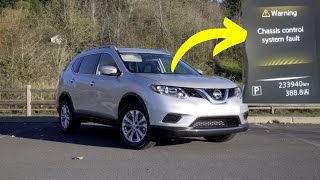
- Chassis Control System Error Message — On Nissan vehicles, a generic 'Chassis Control System Error' appears on the information display, triggered by the wheel speed sensor fault.
Diagnostic Flowchart
Tap your situation to follow the diagnostic path that matches what you're seeing on this code.
Common Fixes & Costs
- Replace Wheel Speed Sensor — Parts: $50-$250, Labor: $100-$200, ~1.5 hr book time (DIY)
- Replace Wheel Hub Assembly (includes reluctor ring/sensor) — Parts: $150-$450, Labor: $200-$400, ~2.0 hr book time (Intermediate)
- Repair Wiring Harness — Parts: $10-$50, Labor: $150-$300, ~2.5 hr book time (Intermediate)
- Replace Battery — Parts: $150-$400, Labor: $50-$100, ~0.5 hr book time (DIY)
- Replace ABS Control Module — Parts: $500-$1300, Labor: $150-$250, ~1.5 hr book time (Professional)
- Replace Power Steering ECU — Parts: $600-$1200, Labor: $150-$300, ~1.5 hr book time (Professional)
Used vs. New Parts: Buying Guide
When a used part is worth it: For a simple wheel speed sensor, a used OEM part from a low-mileage vehicle is a budget-friendly option, often more reliable than a cheap aftermarket part.
Donor-vehicle mileage cap: roughly under 100000 miles for the part to have meaningful remaining life.
Donor quality checklist:
- Verify the donor vehicle's mileage and ensure it wasn't scrapped due to flood damage.
- Match the part number exactly, as variations exist between model years and trim levels.
- Inspect the used sensor's wiring and connector for brittleness, cracking, or corrosion.
Decision logic:
- If The part is a bolt-on wheel speed sensor and the vehicle is over 10 years old → A used OEM or reputable aftermarket sensor (e.g., Bosch, Denso) is a reasonable choice.
- If The sensor is integrated into the wheel hub assembly → Buy a new, quality aftermarket or OEM assembly. The labor is too intensive to risk using a used bearing.
- If Vehicle is newer or under warranty → Always use a new OEM part to ensure compatibility and maintain warranty coverage.
Warranty tradeoff: Used parts typically offer a 30-90 day warranty. Aftermarket new parts range from 1 year to a limited lifetime warranty. New OEM parts usually carry a 12-month warranty.
Worst-case if a used part fails: $150-$300 if a used sensor fails shortly after installation, requiring repeat labor costs.
What Happens If You Wait — Timeline
- Immediate: Code sets, ABS and Traction Control lights illuminate. Power steering becomes heavy. ABS, stability control, and traction control are fully disabled. (MPG impact: 0% (up to 5% on hybrids with disabled regenerative braking)% · Added cost: $0)
- 0-6 months: Driving without ABS/VSC/TCS significantly increases the risk of an accident in emergency braking or slippery conditions. The primary consequence is safety-related. (MPG impact: 0-5%% · Added cost: $0-$150 in wasted fuel on a hybrid, but the main cost is the unquantifiable safety risk.)
- 6-12 months: If the root cause is a bad wheel bearing, continued driving leads to complete bearing failure, potentially damaging the hub and knuckle. A cracked reluctor ring eventually disintegrates. (MPG impact: 0-5%% · Added cost: $400-$800 if a failing bearing is ignored and damages the steering knuckle.)
- 12+ months: The safety systems remain offline. There is no evidence that this fault causes cascading damage to the engine or transmission. The cost is entirely related to the ongoing safety hazard. (MPG impact: 0-5%% · Added cost: The cost remains linked to the root cause (e.g., bearing failure) and the immense potential cost of an accident.)
Cost of Not Fixing It
- Immediate: ABS, traction control, and stability control are disabled. This significantly increases the risk of losing control during hard braking or on slippery surfaces. (Added cost: Potential cost of an accident.)
- 0-3 months: Continued driving without ABS leads to uneven tire wear. On hybrids, disabled regenerative braking decreases fuel economy. (Added cost: $50-$200 in wasted fuel or premature tire wear.)
- 3+ months: The primary risk remains safety-related. There is no evidence that a C1571 fault damages major powertrain components. The most significant cost is the ongoing safety hazard. (Added cost: Negligible direct financial cost, but a major ongoing safety risk.)
Diagnosis Steps

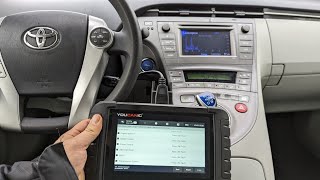
- Read All Trouble Codes from All Modules
Use an advanced OBD-II scanner to read codes from all modules (ABS, Power Steering, Body Control). C1571 is usually a secondary code. A primary code in the ABS module (e.g., C0205 for 'Right Front Wheel Speed Sensor Circuit') identifies the exact failing component.
Tools: Advanced OBD-II Scanner (Beginner) - Clear Codes and Test Drive
Because C1571 is frequently a 'test mode' code on Toyotas, clear all codes and drive the vehicle for 5-10 minutes above 28 mph, including several turns. If the code does not return, it was set accidentally during a previous diagnostic check and requires no repair.
Tools: OBD-II Scanner (Beginner) - Check Live Data from Wheel Speed Sensors
Use a scanner to view live data from all four wheel speed sensors while driving slowly in a straight line. All four readings must be identical. A reading from one sensor that is erratic, lagging, or zero isolates the fault to that specific wheel.
Tools: Advanced OBD-II Scanner (Intermediate) - Inspect Wheel Speed Sensor and Reluctor Ring
Visually inspect the wiring and connector for the suspect wheel speed sensor for damage or corrosion. Inspect the ABS reluctor ring on the wheel hub or axle for cracks, missing teeth, heavy rust, or debris distorting the signal.
Tools: Flashlight, Jack and Jack Stands (Intermediate) - Check Battery and Charging System
Ensure the battery is fully charged. Low voltage causes misleading electronic faults. A healthy battery reads 12.6 volts with the engine off and 13.7-14.7 volts with the engine running.
Tools: Multimeter (Beginner) - Test the Wiring Harness
If the sensor tests good, disconnect the power steering ECU and the ABS control module. Use a multimeter and wiring diagram to check for continuity on the speed signal wire between the two modules. Resistance must be below 1 ohm, with no short to ground.
Tools: Multimeter, Vehicle-Specific Wiring Diagram (Advanced) - [PRO TIP] Test Passive Sensor Resistance
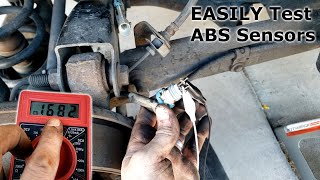
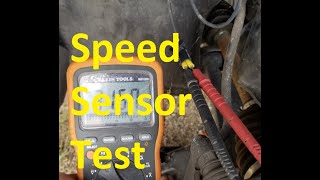
Disconnect the sensor and measure resistance (Ohms) across the two pins. A typical passive sensor reads between 900 and 2,500 ohms. An open loop (infinite resistance) or short (near-zero resistance) confirms a dead sensor. Compare the reading to the opposite wheel.
Tools: Multimeter, Jack and Jack Stands, Service Manual (Advanced) - [PRO TIP] Test Active Sensor Voltage Supply
Active sensors are powered by the ABS module. Keep the sensor connected, turn the ignition ON (engine off), and back-probe the connector. One wire must show a supply voltage (typically 5V or 12V). If voltage is missing, the fault is in the wiring or ABS module.
Tools: Multimeter, Back-probe pins, Vehicle Wiring Diagram (Advanced) - [PRO TIP] Test Passive Sensor AC Voltage Output
With the sensor disconnected, set the multimeter to AC Voltage. Probe the two pins while spinning the wheel by hand at one revolution per second. You must see a minimum of 0.25V AC. No voltage points to a failed sensor or damaged reluctor ring.
Tools: Multimeter, Jack and Jack Stands (Advanced) - [PRO TIP] Analyze the Sensor Signal with an Oscilloscope
Back-probe the sensor's signal wire at the ABS module with an oscilloscope. A good passive sensor produces a clean sine wave; an active sensor produces a square wave. Dropouts or missing peaks confirm a bad sensor or damaged reluctor ring.
Tools: Oscilloscope, Back-probe pins, Vehicle Wiring Diagram (Advanced)
When This Code Triggers (Freeze-Frame Conditions)
- Vehicle Speed: 10-60 mph (The code sets during normal driving when the ABS module detects an inconsistent signal from one wheel speed sensor compared to the others.)
- Steering Angle: Varies (Faults are often detected during turns, as the difference in wheel speed between the inner and outer wheels becomes critical for stability control.)
- Brake Pedal Status: Not Applied (The fault is detected during steady-state driving. However, a faulty signal causes ABS to engage incorrectly during braking.)
- System Voltage: 13.5-14.5V (The code sets when the vehicle runs under normal voltage. Low voltage causes unrelated faults, but C1571 specifically points to a sensor issue.)
Related Codes
- C1541 / C1542 — These Toyota-specific codes point to a speed sensor malfunction detected during normal operation, unlike C1571 which is a Test Mode DTC.
- U0415 — A generic communication code meaning 'Invalid Data Received From Anti-Lock Brake System'. If you have C1571 and U0415, the problem is definitively in the ABS system.
- C0060 - C0095 — This range of codes points to a circuit fault for a specific wheel speed sensor (e.g., Front Right, Rear Left). Finding one of these pinpoints the root cause.
- P1571 — A manufacturer-specific powertrain code. On GM, it means 'Traction Control Torque Request Circuit'. On Ford, it is a 'Brake Switch Malfunction'. P1571 and C1571 are entirely different codes.
Climate & Environmental Factors
- Cold Weather / Snow and Ice: Moisture enters sensor connectors and freezes, causing intermittent signal loss. Snow, ice, or road grime physically blocks the sensor and reluctor ring, triggering the ABS light. The light often turns off after the vehicle thaws in a garage.
- High Humidity / Road Salt (Rust Belt Regions): Road salt accelerates corrosion, a primary driver of C1571 faults. Rust seizes the sensor in the knuckle, damages connector pins, and causes the ABS reluctor ring to swell and crack, creating an erratic signal.
How to Talk to a Mechanic About This Code
Say this: "I have a C1571 code, and my ABS and traction control lights are also on. I understand this code usually points to an issue in the ABS system, like a wheel speed sensor. Could you please start by scanning the ABS module for specific codes and checking the live data from the wheel speed sensors?"
This directs the mechanic to the most likely cause (the ABS system) rather than the symptom (power steering). It prevents them from wasting time diagnosing the power steering ECU and avoids unnecessary parts replacement.
Avoid saying:
- 'My power steering is acting weird.'
- 'My dashboard has a bunch of lights on, can you just fix it?'
- 'I think I need a new power steering rack.'
Questions to ask before authorizing the repair:
- What specific ABS code did you find?
- Did the live data show a fault with a specific wheel speed sensor?
- Did you visually inspect the sensor, wiring, and reluctor ring for that wheel?
- Can you show me the failed part or a photo of the damage/corrosion?
- What is the warranty on the proposed parts and labor?
Where to Take It: Dealer vs Independent vs Chain
- Dealer:
A safe but expensive choice. They have the exact diagnostic tools but are quicker to recommend costly repairs.
Best for: Vehicles under warranty, Complex, manufacturer-specific electrical issues or software updates, When you want a definitive, albeit expensive, diagnosis.
Downsides: Highest labor rates (often $150-$250/hour)., Defaults to replacing entire assemblies when a smaller component is the issue., Less flexibility on using aftermarket or used parts. (Typical cost: +50% vs. baseline) - Independent Shop:
Best fit for most owners. A good independent shop diagnoses and repairs a C1571 fault effectively and affordably.
Best for: Out-of-warranty vehicles where cost is a factor., Common repairs like wheel speed sensors and hub assemblies., Building a long-term relationship with a trusted mechanic.
Downsides: Diagnostic capabilities vary; ensure they have a modern scanner that reads ABS codes and live data., Quality is not guaranteed; vetting the shop through reviews and ASE certifications is crucial. (Typical cost: +0% vs. baseline) - Chain Shop:
Use with caution. While they replace wheel speed sensors, they are generally not the best choice for diagnosing a multi-system warning light scenario.
Best for: Simple, high-volume jobs like tires, oil changes, and brake pads.
Downsides: Technician skill and diagnostic equipment vary dramatically by location., High pressure to upsell services leads to misdiagnosis or unnecessary repairs., Lacks the advanced scanners needed to read specific manufacturer chassis codes or live data. (Typical cost: -10% vs. baseline)
When to Walk Away From the Repair
If the repair cost exceeds 40% of the car's private-party value, pause and consider your options.
- Car worth $4000, fix is $850: Fix it. The repair is 21% of the car's value and restores critical safety systems, preserving its utility and resale value.
- Car worth $3000, fix is $1800: Borderline. The repair is 60% of the car's value. Get a second opinion. If the cost is firm, consider selling the car 'as-is'.
- Car worth $2000, fix is $1500: Walk away. The repair cost is not economical. The money is better spent on a down payment for a more reliable vehicle.
What Scan Tool You Need for This Code
Minimum: An OBD-II scanner that reads and clears ABS (Chassis) codes and displays live data from the wheel speed sensors.
A basic $20 engine code reader cannot see C1571 or related ABS codes. It cannot access the ABS module or show live sensor data, leaving you blind to the root cause.
Rent vs buy: Auto parts stores have loaner tool programs, but the free scanners they loan out are often basic engine code readers. Verify that the loaner tool is specifically an ABS-capable scanner before relying on this option.
How to Clear the Code After You Fix It
- Use an OBD-II scan tool to clear codes from all modules (Engine, ABS, Power Steering).
- Turn the ignition off and then on again.
- Perform a short test drive that includes left and right turns and speeds above 28 mph to allow the system to verify the repair.
Drive cycle (~10 minutes): Drive for 10 minutes, making several turns and reaching a speed of at least 28 mph. If the ABS and power steering warning lights do not reappear, the repair was successful.
Readiness monitors affected: None
Watch out for:
- Clearing the code from the power steering module but not the ABS module causes the light to return.
- If the code was set in 'Test Mode', simply clearing it and test driving is the only required step.
- The code returns immediately if the root cause (e.g., bad sensor or wiring) is not fixed.
Will This Fail Emissions / State Inspection?
No — by itself this code doesn't fail OBD inspection (but it can keep readiness monitors from setting, which causes a separate fail).
- California: Will NOT fail a smog check. An ABS light is not part of the emissions inspection, which only fails for an illuminated Check Engine Light.
- New York: Will NOT fail the emissions portion. However, New York performs a separate annual safety inspection, and an illuminated ABS light is a cause for failure.
- Texas: Will NOT fail the safety inspection. Official Texas vehicle inspection criteria explicitly state that an illuminated ABS warning light is not a reason for rejection.
Most Commonly Affected Vehicles
- Toyota Prius (2004-2009) — Extremely common on the 2nd generation Prius. Often related to a failed wheel speed sensor or the diagnostic 'test mode' being accidentally triggered.
- Toyota Corolla (2003-2008) — Frequently affected due to shared ABS components. A faulty wheel speed sensor is the usual culprit.
- Toyota Avensis (2003-2008) — Factory repair manuals provide specific, detailed diagnostic procedures for C1571, indicating a known issue.
- Toyota RAV4 (2000-2005) — Owners report this code appearing alongside ABS and VSC warning lights, pointing to a failed wheel speed sensor.
- Chevrolet Tahoe, Corvette (1997-2004) — Logs a similar code, P1571 (Traction Control Torque Request Circuit), pointing to a communication issue between the EBCM and PCM.
- Ford Ranger, Focus, Fiesta (2005-2019) — Presents with manufacturer-specific code P1571, which means 'Brake Switch Malfunction', not a speed sensor issue.
- Nissan Rogue, X-Trail (2014-2020) — Displays a 'Chassis Control System Error' for the exact same root causes: a faulty wheel speed sensor, wiring, or weak battery.
- BMW 3-Series (E90/F30) (2006-2019) — Exhibits identical symptoms frequently caused by a corroded rear ABS reluctor ring or failed sensor, logging codes like 480718.
- Subaru Legacy, Outback, Tribeca (2005-2014) — P1571 means 'Reference Code Incompatibility' and points to an immobilizer issue between the BCM and ECM after a battery disconnect.
- Hyundai / Kia Various (2010-2024) — Similar symptoms relate to a faulty wheel speed sensor or a communication fault on the B-CAN bus network.
Manufacturer-Specific Notes

- Toyota: C1571 is a 'Test Mode DTC'. It triggers during a diagnostic check if the procedure isn't completed correctly. Always clear the code and test drive before replacing parts.
- Chevrolet / GM: Older models store a history code P1571H due to an overly sensitive PCM self-diagnostic. The code persists in history without an active fault.
- Subaru: P1571 indicates an immobilizer communication error between the ECM and BCM, often occurring after a dead battery or key replacement.
- Mitsubishi: Uses code P1571 to indicate a 'Malfunction of the Stop Lamp Switch System', disabling cruise control if the dual brake switch signals don't match.
Real Owner Stories
2007 Toyota Prius at 205k miles with C1571 & C1572
Owner inadvertently triggered the 'Sensor Signal Check' diagnostic mode without completing the required driving procedure.
What they tried:
- Initially, the owner was confused by the codes and considered replacing the power steering ECU.
Outcome: A forum expert explained these codes set in test mode if the car isn't driven over 28 mph. The owner cleared the codes, and they did not return.
Lesson: On a Toyota, C1571 is often a 'ghost' code from an incomplete diagnostic test. Always clear the code and test drive before assuming a part failed.
2005 Toyota 4Runner with ABS light and C0205
ABS light was on, and a scan showed code C0205 (Front Right Wheel Speed Sensor Circuit). Live data showed the FR sensor dropping to zero at low speeds.
What they tried:
- The owner tested the sensor's resistance and the wiring harness continuity, both of which were good.
Outcome: The mechanic discovered corrosion on the hub's mounting surface prevented the sensor from sitting flat. Cleaning the surface and re-installing the original sensor fixed the problem.
Lesson: Don't assume the sensor is bad just because its circuit is faulted. Corrosion on the mounting surface creates an air gap issue that mimics a failed sensor.
Older BMW E90 with ABS/DSC lights
ABS, DSC, and 4x4 lights illuminated. A scan pointed to a rear wheel speed sensor fault.
What they tried:
- A mechanic noted that simply replacing the sensor is a temporary fix.
- Rust built up under the ABS reluctor ring, pushing it outward until it destroyed the tip of the speed sensor.
Outcome: The correct repair was replacing the entire axle shaft (which includes a new reluctor ring) along with the damaged sensor.
Lesson: On rust-prone vehicles, a speed sensor code is often a symptom of a corroded reluctor ring. Inspect the ring for swelling before replacing the sensor.
How to Prevent This Code From Triggering
- Apply dielectric grease to wheel speed sensor connectors (Whenever a sensor is replaced or disconnected) — It seals the electrical connector from moisture, preventing the pin corrosion that causes intermittent signals and open circuits.
- Perform regular undercarriage washes in winter (Monthly in salt-belt regions) — Washing away road salt slows the corrosion process that causes steel ABS reluctor rings to swell, crack, and fail.
- Clean ABS reluctor rings during brake service (Every brake job) — Brake dust and rust flakes accumulate in the teeth of the reluctor ring, obstructing the sensor's magnetic reading. A quick cleaning prevents future faults.
- Address noisy wheel bearings immediately (As soon as humming/grinding noises appear) — A failing wheel bearing creates excessive play, altering the precise air gap between the sensor and the reluctor ring, damaging both components.
- Apply a thin layer of bearing grease to the sensor mounting surface (During installation of a new sensor) — It prevents rust from building up between the sensor and the steering knuckle, ensuring a flat mount and making future removal easier.
Frequently Asked Questions
What are common misdiagnosis mistakes for C1571?
The most common mistake is replacing the power steering ECU without checking for primary codes in the ABS module first. Another pitfall is replacing a wheel speed sensor without inspecting the reluctor ring for rust or testing the wiring harness.
Could a bad wheel alignment cause a C1571 code?
Not directly, but a severe impact that causes misalignment also damages wheel bearings or sensors, triggering the code. If the steering angle sensor is not recalibrated after an alignment, it causes VSC errors, though this is separate from C1571.
Can I just clear the C1571 code and keep driving?
You must clear the code and perform a test drive first. Because C1571 is often a 'test mode' DTC on Toyotas, it does not return if set accidentally. If it comes back immediately, you have a hard fault requiring diagnosis.
Will a C1571 code make my car fail an emissions test?
No, C1571 is a chassis code related to the power steering and ABS systems. It does not affect the powertrain or emissions systems and will not cause an emissions inspection failure.
Why did my ABS and Traction Control lights come on with a power steering code?
Power steering, ABS, and traction control all rely on the same wheel speed sensors. A fault in a single sensor provides bad data to all connected modules, illuminating their respective warning lights.
Can a bad clock spring cause a C1571 code?
It is highly unlikely. A bad clock spring causes issues with steering wheel components like the airbag, horn, and buttons. It does not affect the wheel speed signal that triggers C1571.
On a hybrid, does C1571 affect regenerative braking?
Yes, regenerative braking relies on the ABS module and wheel speed sensors to function. If a fault is detected, the system disables regenerative braking as a fail-safe measure. This decreases fuel economy and forces the mechanical brakes to work harder, changing the pedal feel.
Key Takeaways
- Code C1571 indicates a missing speed signal at the Power Steering ECU, but the root cause lies in the ABS system 95% of the time.
- Inspect the wheel speed sensors and reluctor rings first, as a single failed sensor disables ABS, traction control, and power steering assist.
- Clear the code and drive above 28 mph for 5 minutes; on Toyotas, C1571 often triggers accidentally during diagnostic 'Test Mode' and requires no repair.
- Expect heavy steering at low speeds and an illuminated ABS warning light, requiring immediate caution due to disabled emergency braking systems.
- Test passive wheel speed sensors with a multimeter; a healthy sensor reads between 900 and 2,500 Ohms, while an open loop confirms a dead sensor.
Helpful Videos

The information in this article is provided for general reference and educational purposes only. Vehicle specifications, procedures, and part compatibility can vary by production date, trim level, and region. Always consult your vehicle's factory service manual and verify part numbers before purchasing or performing repairs. Safety-critical components such as airbags, seat belts, and braking systems should be installed by a qualified professional.
- 🎬 Helpful Videos
- What Does C1571 Mean?
- Can I Drive With C1571?
- Common Causes
- Symptoms
- Diagnostic Flowchart
- Common Fixes & Costs
- Used vs. New Parts: Buying Guide
- What Happens If You Wait — Timeline
- Cost of Not Fixing It
- Diagnosis Steps
- When This Code Triggers (Freeze-Frame Conditions)
- Related Codes
- Climate & Environmental Factors
- How to Talk to a Mechanic About This Code
- Where to Take It: Dealer vs Independent vs Chain
- When to Walk Away From the Repair
- What Scan Tool You Need for This Code
- How to Clear the Code After You Fix It
- Will This Fail Emissions / State Inspection?
- Most Commonly Affected Vehicles
- Manufacturer-Specific Notes
- Real Owner Stories
- 2007 Toyota Prius at 205k miles with C1571 & C1572
- 2005 Toyota 4Runner with ABS light and C0205
- Older BMW E90 with ABS/DSC lights
- How to Prevent This Code From Triggering
- Frequently Asked Questions
- What are common misdiagnosis mistakes for C1571?
- Could a bad wheel alignment cause a C1571 code?
- Can I just clear the C1571 code and keep driving?
- Will a C1571 code make my car fail an emissions test?
- Why did my ABS and Traction Control lights come on with a power steering code?
- Can a bad clock spring cause a C1571 code?
- On a hybrid, does C1571 affect regenerative braking?
- Key Takeaways
- 🎟️ Get 5% Off