

C1562 on 2015-2016 Ram 1500: Air Suspension Overheating and Performance Fixes
Code C1562 on a 2015-2016 Ram 1500 almost always points to an overworked air suspension compressor, typically caused by a leak in an air spring (airbag). The compressor runs too long trying to compensate for the leak, causing it to overheat or fail. Expect to replace a leaking air spring or the compressor itself. Checking the 40A fuse in slot F5 is a crucial first step.
- C1562 means your air suspension compressor is overheating or performing poorly, almost always because it's overworking.
- The most common cause is an air leak, usually from a cracked rear air spring (airbag).
- Always find and fix the air leak *before* replacing the compressor. A new compressor will quickly fail if the leak isn't repaired.
- As a first step, check the 40A air suspension fuse in the under-hood fuse box. A blown fuse is a strong indicator of an overworked compressor.
- If you experience issues in cold weather, ask your dealer about Technical Service Bulletin 08-051-16, which involves a software update.
What's Unique About the 2015-2016 Ram 1500

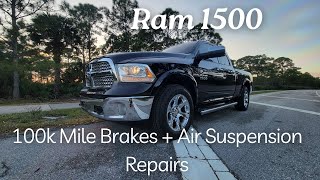
The four-corner air suspension was a signature feature on these Ram 1500s, offering adjustable ride height. However, the system is prone to developing air leaks, especially in the air springs (bags) and lines. This common leaking issue is the primary driver for the C1562 code, as it forces the compressor to constantly run to maintain pressure, leading to overheating and premature failure. Problems are often more frequent in cold weather, which can cause moisture in the system to freeze or materials to contract, exacerbating leaks and sometimes preventing the system from changing height at all. 🎬 Watch: Top 5 places to look for air suspension leaks. [⭐, 8, 30]
Diagnostic Flowchart

Tap your situation to follow the diagnostic path that matches what you're seeing on this vehicle.
Symptoms You May Notice

- "Service Air Suspension" message on the dashboard, sometimes immediately upon starting.
- Vehicle sagging or sitting lower than usual on one or more corners, especially after being parked overnight.
- Air compressor runs constantly or more frequently than normal; may be audible at stop lights.
- Hissing sounds coming from the corners of the truck, indicating a leak.
- Truck is unable to change ride height levels, sometimes getting stuck in one position. [⭐]
- A harsh, bumpy ride as the suspension may be riding on the bump stops.
- Multiple other warning lights, such as for the electronic braking system or traction control, may appear simultaneously.
- Replacing the air compressor without fixing the underlying air leak. Many owners and even some shops replace a failed compressor only to have the new one burn out quickly because the original leak in an air spring was never addressed.
Most Likely Causes

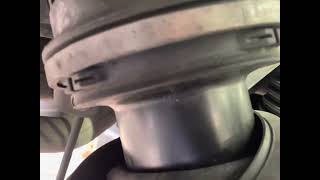
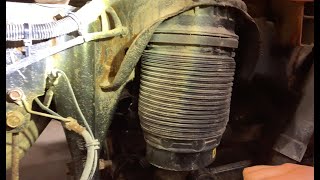
- Leaking Air Spring (Airbag) 🔴 High Probability The rubber air springs, particularly in the rear, are known to develop age-related cracks or punctures, leading to leaks. The way the bags fold at different ride heights can cause wear, and leaks may only appear at certain heights.
How to confirm: With the system aired up, spray the air springs and lines with a soapy water solution and look for bubbles, which indicate a leak. Leaks may only be present at certain ride heights, so it's best to check at multiple settings, especially the lowest ('Entry/Exit' mode). A common owner trick is to pull the compressor fuse overnight to see which corner drops, isolating the leak without the system trying to self-correct.
Typical fix: Replace the leaking air spring assembly. They are often replaced in pairs to ensure even wear and performance.
Est. part cost: $150-$400 per pair for aftermarket, higher for OEM. - Failed Air Suspension Compressor 🟡 Medium Probability The compressor fails from being overworked due to a system leak or from internal moisture causing corrosion and freezing in cold climates. Repeated stress from trying to compensate for leaks will eventually cause failure.
How to confirm: If the compressor does not run at all, check its fuse (F5) and relay first. If the fuse is good and the compressor is receiving power (around 12V at the connector) but doesn't run, or if it runs but is very loud and cannot build pressure, it has likely failed. Some owners report feeling excessive heat from the compressor as a sign of it overworking.
Typical fix: Replace the air suspension compressor and dryer assembly. It is critical to fix any system leaks before replacing the compressor, or the new one will fail quickly.
Est. part cost: $250-$600 for aftermarket, $700+ for OEM. - Blown Air Compressor Fuse or Faulty Relay ⚪ Low Probability The compressor running excessively due to a leak or being frozen by moisture draws high amperage, which can blow the fuse as a protective measure. The relay can also fail from constant use. This is a very common first point of failure, especially in cold weather.
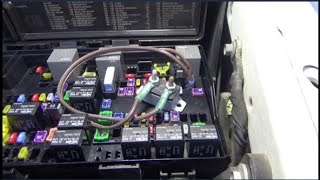
How to confirm: Locate the air suspension fuse (typically a 40A green fuse in slot F5 in the under-hood fuse box) and inspect it. Other related fuses include F50 (20A) and F87 for the control module. The relay is typically in the main under-hood fuse box. You can test the relay by swapping it with an identical one from a non-critical system or by checking for continuity.
Typical fix: Replace the blown fuse or faulty relay. If the fuse blows again, it confirms the compressor is drawing too much current, likely due to a leak or an internal failure.
Est. part cost: $5-$30
Rare But Worth Checking
- Leaking Air Lines or Fittings: The plastic air lines or the fittings at the air springs and valve block can crack, corrode, or be rubbed through by contact with other components, causing slow leaks. This is less common than the air springs themselves but should be checked with soapy water during diagnosis.
- Faulty Air Suspension Control Module (ASCM): A software glitch can sometimes cause these codes. TSB 08-051-16 suggests a software update for the ASCM may resolve issues, particularly for vehicles built between Dec 2014 and Feb 2016 that experience poor performance in cold weather. [⭐, 27] In rare cases, the module itself can fail.
- Faulty Compressor Junction Block: A user on RamForum.com reported that a bad compressor junction block caused symptoms identical to a failed compressor, where it would not run at all. This was replaced under warranty to fix the issue.
Diagnosis Steps
- Read all Diagnostic Trouble Codes (DTCs) from the Air Suspension Control Module (ASCM) with a capable scan tool. Note if C15A1, C15AA, or other overuse codes are present with C1562.
- Visually inspect the truck's stance. Note any corners that are sagging, especially after sitting overnight.
- Listen for the air compressor. If it's not running, check the 40A fuse (F5) and the relay in the under-hood fuse box.
- If the compressor runs, listen for audible hissing noises around the wheels or under the truck.
- Using a spray bottle of soapy water, thoroughly spray each air spring, the air lines, and the fittings at the valve block. Look for bubbles forming, which will pinpoint any leaks. Be patient, as some leaks are slow. Test at multiple ride heights as leaks can open or close as the airbag folds.
- If no leaks are found but the compressor is loud, seems weak, or gets extremely hot quickly (a 'wet rag test' can confirm high heat), it may be failing internally or its internal temperature sensor may be faulty.
- If symptoms are primarily in cold weather, check dealer records or inquire about TSB 08-051-16, which involves a software flash for the ASCM for trucks built between 12/04/2014 and 02/22/2016. [⭐, 27]
Parts You'll Likely Need
- Rear Air Spring
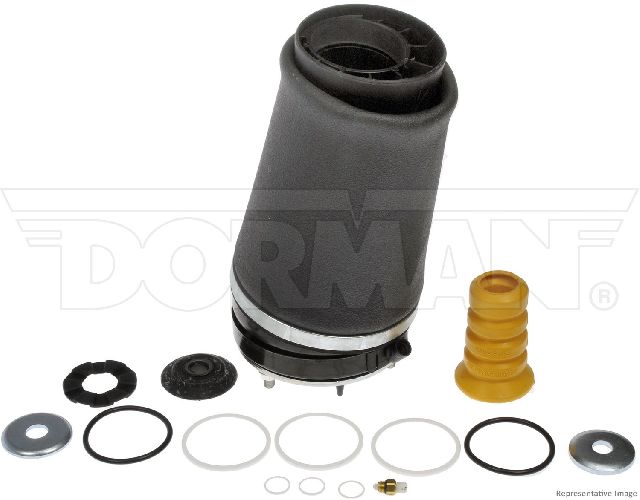
(OEM #4877136AB (replaces 4877136AA), 68248948AA)— This is the most common failure point. The rubber cracks and leaks, causing the compressor to overwork. They are often replaced in pairs.
Trusted brands: Mopar, Arnott, Suncore
OEM price range: $300-$650 each
Aftermarket price range: $150-$300 per pair - Air Suspension Compressor
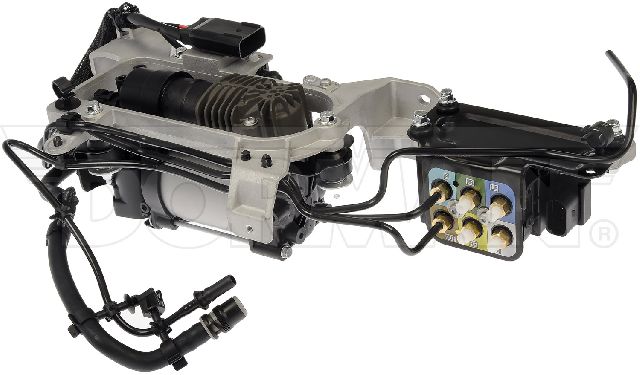
(OEM #68260982AK (supercedes multiple previous versions), 68597424AA)— Fails due to being overworked from a system leak or from moisture ingress. Must be replaced only after the leak is fixed.
Trusted brands: Dorman, Arnott, Mopar
OEM price range: $700-$1200
Aftermarket price range: $250-$600 - Air Suspension Compressor Fuse — A cheap and easy first check. The 40A green J-case fuse in slot F5 often blows to protect the compressor when it's overworked or frozen.
OEM price range: $5-$10
Aftermarket price range: $5-$10
Related Codes That Often Appear With This One
- C15A1-00 — This code means 'Unable To Obtain Desired Ride Height'. It is frequently set alongside C1562 because the leak causing the compressor to overheat also prevents the truck from reaching its target height. [⭐]
- C15AA-00 — This code for 'Air Leak During Vent' is another direct indicator of a leak in the system, which is the root cause of the C1562 code. [⭐]
Technical Service Bulletins (TSBs) & Recalls
- 08-051-16: Addresses C1562 and other air suspension codes, particularly related to poor performance in cold weather ('Vehicle does not change ride heights when selected in cold weather'). It recommends a software update for the Air Suspension Control Module (ASCM) for trucks built between 12/04/2014 and 02/22/2016.
Platform-Specific Known Issues
- Per TSB 08-051-16, 2015-2016 models built between Dec 4, 2014, and Feb 22, 2016, may experience air suspension issues in very cold weather that can be resolved with an Air Suspension Control Module (ASCM) software update. [⭐, 27]
Mechanic-Grade Diagnostic Values
- Compressor Temperature Sensor Reading (Live Data) — expected: Near ambient temperature when the system is at rest.. Failure: A reading of 145°F or higher at rest, or skyrocketing to over 220°F during use, can indicate a faulty sensor and trigger an overheat code even if the compressor is not actually overheating.
- Compressor Relay Signal/Return Circuit Resistance — expected: Less than 5.0 Ohms.. Failure: Resistance above 5.0 Ohms indicates an open or high resistance in the (Y38) Compressor Relay Signal circuit or (Y39) Compressor Relay Return circuit, which can set a C1562-13 code.
- Ride Height Sensor Calibration Values — expected: Values vary by specific truck configuration, but an example calibration used 80mm for the front and 55mm for the rear.. Failure: Incorrectly set values will cause the truck to sit at the wrong height and may set codes like C2212 (calibration not set).
Hidden / Shadow Codes Worth Checking
- C159F-92, C15A0-92, C155E-92: These codes relate to the performance of the reverse valves and pressure vent control. They often appear with C1562 during cold weather issues and point towards a system-wide performance problem, which may be resolved by a software update per TSB 08-051-16. [⭐, 27] (see via A dealer-level scan tool like wiTECH or an advanced aftermarket tool like AlfaOBD.)
- C2212: Indicates that the ride height system calibration has not been set or is lost. This code will be present after replacing a major component like the ASCM or compressor and requires a specific scan tool routine to fix. (see via Advanced aftermarket or dealer-level scan tool.)
Scan Tool Commands That Help
- wiTECH or AlfaOBD: ASCM Reprogram / Flash — Used to apply software updates to the Air Suspension Control Module (ASCM), specifically to address cold-weather performance issues as outlined in TSB 08-051-16.
- wiTECH or AlfaOBD: Write Suspension Height Values — This is a mandatory calibration routine after replacing the compressor, ASCM, or height sensors. It involves measuring the physical height at each corner and entering the values into the module to establish a baseline.
- wiTECH or AlfaOBD: Read/Clear Confirmed Faults — After performing a repair or calibration, it's necessary to go into the specific ASCM module to clear codes; clearing them from a general OBD-II level may not be sufficient.
Wiring & Ground Locations
- Fuse F5 (40A) — In the main under-hood fuse box (Power Distribution Center).. This is the primary fuse for the air suspension compressor. It frequently blows when the compressor is overworked or frozen, making it the first electrical component to check.
- Fuses F50 (20A) & F87 — In the main under-hood fuse box.. These fuses power the Air Suspension Control Module (ASCM). A fault here can prevent the compressor from being commanded to run.
- (Y38) Compressor Relay Signal Circuit — Wire running between the ASCM C2 harness connector and the Air Suspension Relay in the fuse box.. An open or high resistance in this circuit will prevent the ASCM from activating the compressor relay, setting a C1562-13 DTC.
- (Y39) Compressor Relay Return Circuit — Wire providing the ground path for the relay control, running from the relay back to the ASCM.. A short to ground or an open in this circuit will cause the relay control to fail, preventing compressor operation.
Real Owner Repair Stories
- RamForum.com user report (2015 Ram 1500 Sport) — Air suspension would go into 'limp mode' with an overheating message. Problem returned even after the dealer replaced the compressor.
❌ Tried (didn't work) Replacing the air suspension compressor.
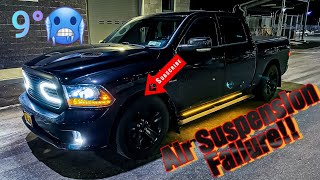
✅ What actually fixed it The temperature sensor, which is integrated into the compressor assembly, was faulty on the brand-new replacement compressor. It was reading 145°F at rest and over 220°F in use, falsely triggering the overheat protection. Replacing the compressor again with one that had a functional sensor resolved the issue. - YouTube user @wikedwips (2016 Ram 1500 Sport) — Air suspension malfunctioned and would not operate, particularly after a cold night (around 9°F).
❌ Tried (didn't work) Panicking and assuming the compressor was dead.
✅ What actually fixed it The 40A green fuse (F5) for the air compressor in the under-hood fuse box was blown. The owner believes moisture in the system froze, causing the compressor to strain and blow the protective fuse. Replacing the fuse restored full function.
"I Checked Everything" — The Actual Cause
- A technician may find no air leaks using a soapy water test, leading them to condemn the compressor. However, the true cause can be a faulty temperature sensor integrated into the compressor assembly, which falsely reports an overheat condition (C1562-98) and shuts the system down. This was confirmed by a user who had a new compressor installed, which did not fix the issue, only to find the sensor on the new part was also bad.
When the Usual Fixes Don't Work
- While the most common cause of C1562 is an air leak causing the compressor to overwork, there are documented cases where the fix was entirely electrical or sensor-related. In one instance, a new compressor did not solve the problem because the integrated temperature sensor on the new part was also faulty, falsely reporting an overheat condition. The final fix was a third compressor with a known-good sensor. In other cases, especially in cold climates, the root cause was simply a blown 40A fuse, which blew because moisture in the system froze and stalled the compressor. These instances highlight the need to diagnose beyond just looking for leaks.
OEM Part Supersession History
68260982AD, AE, AF, AG, AH, AI, AJ→68260982AK— Multiple revisions to improve reliability and address failures in the air suspension compressor.
Heads up: While all are intended for the same application, using the latest part number (68260982AK) is highly recommended to benefit from the latest design improvements.
Model Year Variations Within This Range
- 2015-2016 (build dates 12/04/2014 - 02/22/2016): These vehicles may have ASCM software that performs poorly in very cold weather, leading to the system becoming unresponsive and setting C1562 and other codes. TSB 08-051-16 provides a software update (flash) to correct this specific condition. [⭐, 27]
Helpful Videos
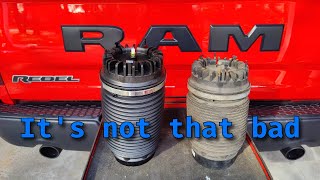
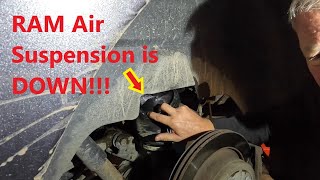
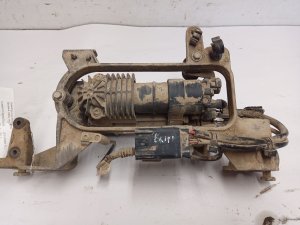
Used OEM Parts in Stock


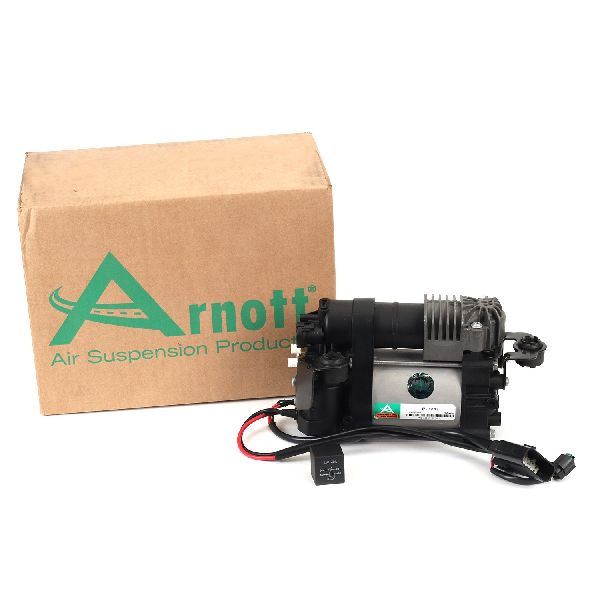
New Aftermarket Parts Available


The information in this article is provided for general reference and educational purposes only. Vehicle specifications, procedures, and part compatibility can vary by production date, trim level, and region. Always consult your vehicle's factory service manual and verify part numbers before purchasing or performing repairs. Safety-critical components such as airbags, seat belts, and braking systems should be installed by a qualified professional.
- Ram 1500:
- 🎬 Helpful Videos
- 🛍️ Shop This Part
- What's Unique About the 2015-2016 Ram 1500
- Diagnostic Flowchart
- Symptoms You May Notice
- Most Likely Causes
- Rare But Worth Checking
- Diagnosis Steps
- Parts You'll Likely Need
- Related Codes That Often Appear With This One
- Technical Service Bulletins (TSBs) & Recalls
- Platform-Specific Known Issues
- Mechanic-Grade Diagnostic Values
- Hidden / Shadow Codes Worth Checking
- Scan Tool Commands That Help
- Wiring & Ground Locations
- Real Owner Repair Stories
- "I Checked Everything" — The Actual Cause
- When the Usual Fixes Don't Work
- OEM Part Supersession History
- Model Year Variations Within This Range
- 🎟️ Get 5% Off