

OBD-II Code C1522: Power Steering Motor Circuit Malfunction
What C1522 means, why it triggers, and how to fix it
- Code C1522 indicates a critical electrical failure in the power steering motor circuit, instantly disabling steering assist.
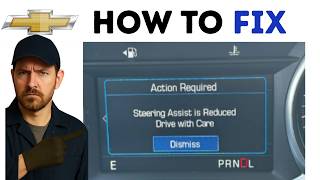
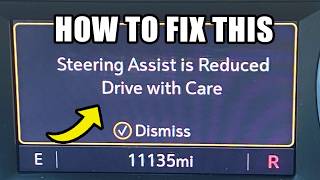
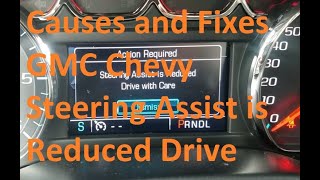
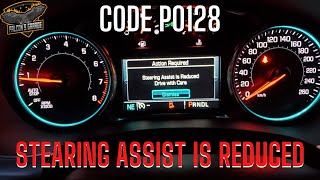
- Expect the steering wheel to become extremely heavy at low speeds, accompanied by an 'EPS' or 'Steering Assist is Reduced' dashboard warning.
- Do not drive with C1522; the manual steering effort required increases crash risk during emergency maneuvers or tight turns.
- Before authorizing a $1,500+ steering rack replacement, check for a weak battery, a poor ground connection (especially GM's G218), or pending software updates.
What Does C1522 Mean?

C1522 means the Power Steering Control Module (PSCM) detected a fault in the electric power steering motor's circuit. This instantly disables power steering assist, making the wheel extremely hard to turn. The fault lies specifically within the electrical path powering the motor, not necessarily the mechanical steering rack itself.
Technical definition: The SAE/ISO definition for C1522 is a Power Steering Motor Circuit Malfunction. The PSCM detected a short, open, or abnormal current in the electric steering motor's power circuit. On Toyota and Lexus models, this code specifically flags a malfunction in the motor's internal current sensor.
Can I Drive With C1522?
Yes, But With Caution. Yes, but it is highly dangerous. Steering defaults to a manual mode, making the wheel extremely heavy and difficult to turn at low speeds. This severely reduces your ability to make sudden emergency maneuvers and increases crash risk. Ford noted this failure condition led to multiple minor accidents, such as hitting curbs, due to the extreme steering effort required. Driving with this fault causes rapid driver fatigue and unpredictable handling.
Common Causes

- Poor Ground Connection (e.g., GM G218) (Very Common) — On 2014-2018 GM trucks and SUVs, a poor ground connection at location G218 under the driver's dash is the primary cause of EPS failure. 🎬 See how to fix the common GM ground connection issue. Dash insulation interferes with the connection, causing a total loss of communication and power.
- Damaged Wiring or Water Intrusion (Common) — The wiring harness frays, corrodes, or disconnects, interrupting electricity flow. Driving through deep water frequently forces moisture into the main EPS connectors, causing a short circuit that triggers C1522.
- Low Battery Voltage or Charging System Fault (Common) — EPS systems draw massive electrical current. A weak battery or failing alternator drops voltage below critical thresholds (e.g., 8.8 volts on GM), forcing the system to shut down to prioritize essential engine functions.
- Faulty Electric Power Steering (EPS) Control Module (Common) — The electronic control unit managing the power steering system fails internally, sending incorrect signals or cutting power entirely to the motor.
- Failed Electric Power Steering Motor (Common) — The electric motor itself, integrated into the steering column or rack, burns out or fails mechanically due to an internal short or seizure.
- Faulty or Dirty Steering Angle Sensor (SAS) (Less Common) — A dirty or failed steering angle sensor sends incorrect data to the EPS module, causing it to shut down assist. This frequently leads to misdiagnosis of the entire steering rack.
- Internal EPS Drive Belt Failure (Less Common) — On Ford and GM models, the electric motor connects to the steering rack via an internal rubber belt. This belt snaps, causing a total loss of assist even if the motor remains functional.
- Faulty VGRS Actuator (Toyota/Lexus) (Less Common) — On vehicles with Variable Gear Ratio Steering (VGRS), the actuator controlling the steering ratio fails. The VGRS ECU detects excessive current and sets code C1522.
- Blown EPS Fuse or Relay Failure (Rare) — A main mega-fuse (e.g., 60-80A) or relay protecting the high-current power steering circuit blows, cutting off all power to the system.
Symptoms

- Heavy or Stiff Steering — The steering wheel becomes incredibly difficult to turn, especially at low speeds or when parking. You are steering with zero mechanical assistance.
- Power Steering Warning Light is On — The 'EPS' icon, a steering wheel symbol, or a 'Steering Assist is Reduced' message illuminates on the dashboard.
- Intermittent Loss of Power Assist — Power steering works normally, then fails suddenly without warning. This correlates heavily with temperature drops, moisture, or a loose electrical ground.
- Delayed or Unpredictable Steering Response — A noticeable delay occurs between turning the steering wheel and the vehicle's response, making emergency maneuvers dangerous.
- Vehicle Pulling to One Side — A partial failure of the torque sensor causes the vehicle to veer to one side, requiring constant correction.
- Noise When Turning — A humming, buzzing, or grinding noise emits from the steering column or rack area when turning the wheel to its limits.
Diagnostic Flowchart
Tap your situation to follow the diagnostic path that matches what you're seeing on this code.
Common Fixes & Costs
- Repair Damaged Wiring or Ground Connection — Parts: $10-$50, Labor: $150-$300, ~1.5 hr book time (Intermediate)
- Replace a Weak Battery — Parts: $150-$250, Labor: $0-$50, ~0.5 hr book time (DIY)
- Replace or Reprogram the EPS Control Module — Parts: $300-$800, Labor: $150-$300, ~1.5 hr book time (Professional)
- Clean or Replace Steering Angle Sensor — Parts: $50-$300, Labor: $150-$300, ~2 hr book time (Intermediate)
- Replace Electric Power Steering Rack/Column Assembly — Parts: $600-$1500, Labor: $400-$800, ~5.5 hr book time (Professional)
Used vs. New Parts: Buying Guide
When a used part is worth it: A used steering rack from a low-mileage donor vehicle is cost-effective for older, high-mileage vehicles where budget is the primary concern.
Donor-vehicle mileage cap: roughly under 80000 miles for the part to have meaningful remaining life.
Donor quality checklist:
- Verify the donor vehicle's VIN to check for accident history.
- Inspect electrical connectors for corrosion or damage.
- Avoid parts from regions with heavy road salt usage (rust belt).
- Ensure the part number is an exact match.
Decision logic:
- If Vehicle is less than 5 years old OR has under 80,000 miles → Buy new or remanufactured. The risk of premature failure with a used part outweighs the savings.
- If Vehicle is over 10 years old AND budget is the primary constraint → A low-mileage used part is an acceptable risk, but has a shorter lifespan.
- If The specific vehicle model is known for frequent EPS failures → Favor a new or remanufactured part to avoid buying the same inherent defect.
Warranty tradeoff: Used parts offer a 30-90 day warranty covering only the part. Remanufactured parts offer 1-year to lifetime warranties. New OEM parts offer 1-3 year warranties.
Worst-case if a used part fails: $500-$1000. The cost of paying labor a second time to replace a faulty used part, plus another alignment.
What Happens If You Wait — Timeline
- 0-1 month: Code C1522 appears. The EPS warning light illuminates. Steering becomes heavy at low speeds. The failure is intermittent, resetting after restarting the car. (MPG impact: 0%% · Added cost: $0 (Immediate safety risk is high))
- 1-3 months: Intermittent failures become permanent. Sustained electrical stress (voltage spikes, abnormal current) from a poor ground or wiring issue strains the Power Steering Control Module (PSCM). (MPG impact: 0%% · Added cost: $0-$500 (Risk of minor collision from loss of control increases.))
- 3-6 months: The PSCM, weakened by prolonged electrical stress, fails completely. A simple $160 wiring repair now requires a new control module programmed by a dealer. (MPG impact: 0%% · Added cost: $450 - $1100 (Cost to replace and program the damaged PSCM.))
- 6+ months: Catastrophic failure of the integrated steering assembly. A shorted motor damages internal rack components. The entire assembly requires replacement. (MPG impact: 0%% · Added cost: $1000 - $2300 (Cost escalates to the most expensive possible repair, including alignment and calibration.))
Cost of Not Fixing It
- Immediate: Significantly increased risk of an accident due to heavy, unresponsive steering. This is a critical safety failure. (Added cost: $0 (if no accident occurs))
- 0-3 months: Extreme driver fatigue and strain on steering column components. Increased risk of losing control and causing a minor collision. (Added cost: $500 - $5000+ (cost of repairing collision damage))
- 3+ months: Prolonged neglect of a minor wiring short destroys the expensive EPS control module or motor. Continued driving with no assist causes premature wear on mechanical steering components. (Added cost: $1000 - $2300 (cost of replacing the entire steering rack instead of a simpler fix))
Diagnosis Steps

- Check Battery and Charging System
Ensure the battery is fully charged (above 12.4V) and the alternator outputs 13.7-14.7V. A weak electrical system triggers false EPS codes, especially on GM vehicles where assist cuts out if voltage drops below 8.8V.
Tools: Multimeter (Beginner) - Check for Technical Service Bulletins (TSBs)
Search for TSBs related to your vehicle's VIN for code C1522. Manufacturers frequently release software updates or extended warranties (like Ford 15N01) for known steering module defects.
Tools: Internet access, VIN (Beginner) - Visually Inspect Wiring and Connectors
Inspect wiring going to the PSCM and steering motor for corrosion or loose connections. On 2014-2018 GM trucks, immediately check the G218 ground point under the driver's dash for trapped insulation.
Tools: Flashlight, 10mm socket (for grounds) (Intermediate) - Inspect the EPS Fuse
Locate the main high-amperage fuse for the EPS system (often 60A-80A near the battery). Verify it is intact.
Tools: Owner's manual, visual inspection (Beginner) - Scan for Other Codes
Use a professional OBD-II scanner to check for related codes. Communication errors ('U' codes) or engine thermostat codes (P0128 on GM) force the EPS to shut down as a fail-safe. Fix these first.
Tools: OBD-II Scanner (professional grade) (Intermediate) - Analyze Live EPS Motor Voltage Data (U, V, W)
[PRO TIP] View live data from the EPS module. Access the 'Motor Terminal Volt (U, V, W)' PIDs. While turning the wheel with the engine on, voltage must fluctuate between 4V and 35V. Fixed or absent voltage confirms a hard fault in the ECU, wiring, or motor.
Tools: OBD-II Scanner (professional grade) (Advanced) - Test Motor Windings with a Multimeter
[PRO TIP] Disconnect the motor connectors. Measure resistance between the three motor phase terminals (U, V, W). Resistance must be below 1.0 Ohm. Next, check resistance from each terminal to the motor housing (ground); it must exceed 10 kOhms. A low reading to ground confirms a shorted motor.
Tools: Multimeter, vehicle-specific wiring diagram (Advanced) - Test the Motor Circuit for Continuity
Test for continuity and shorts to ground in the wiring harness between the control module and the motor. Resistance must be below 1 Ohm end-to-end, and over 10 kOhms from each wire to ground.
Tools: Multimeter, vehicle-specific wiring diagram (Advanced) - Check Torque Sensor Data
Monitor live data for the steering torque sensor. The reading must sit near 0 Nm when stationary and change smoothly as you apply turning force. An erratic or fixed 0 Nm reading indicates a faulty torque sensor.
Tools: OBD-II Scanner (professional grade) (Advanced)
When This Code Triggers (Freeze-Frame Conditions)
- System Voltage: 9.0-11.5V (During engine crank or with a failing alternator; low voltage triggers a system shutdown.)
- Vehicle Speed: 0-5 mph (During parking or low-speed maneuvers when steering assist and motor current draw are highest.)
- Ambient Temperature: < 32°F (0°C) (Cold weather exposes failing batteries or freezes moisture on connectors, leading to temporary open circuits.)
- Torque Sensor Input: Erratic or 0 Nm while turning (A faulty torque sensor provides no input, causing the PSCM to shut down assist and set a motor circuit code.)
Related Codes
- C1521 — In Toyota/Lexus systems, C1521 indicates a direct 'Short in Motor Circuit'. C1522 points to a sensor within the motor circuit.
- C1523 — Indicates an 'Excessively Large Current Deviation'. While C1522 is a general circuit malfunction, C1523 means the motor draws abnormal power, suggesting a near-seizure.
- C1524 — Specifies a malfunction in the motor's terminal voltage. It appears alongside C1522 when there is a direct power supply issue to the motor terminals (U, V, W).
- C1555 — Indicates a motor relay failure. Toyota/Lexus diagnostic procedures state C1555 MUST be fixed before troubleshooting C1522, as a bad relay causes the motor circuit fault.
Climate & Environmental Factors
- Cold Weather: Low temperatures expose weak batteries, dropping voltage on startup and triggering C1522. GM vehicles disable steering assist if a faulty thermostat reports an illogical engine temperature during cold weather.
- High Humidity / Water Exposure: Driving through deep puddles forces water into the main connectors for the EPS motor and control module. This shorts the pins, causing C1522 to appear intermittently as the connection gets wet and dries out.
How to Talk to a Mechanic About This Code
Say this: "I have a C1522 code and the power steering is out. I'd like to schedule a diagnostic to pinpoint the failure. Please test the electrical circuit, including grounds and connectors, before recommending a full rack replacement."
This directs the mechanic to perform a thorough diagnosis rather than jumping to the most expensive conclusion. It asks them to rule out cheaper, common failure points first, protecting you from being oversold.
Avoid saying:
- 'My steering is hard, please fix it.'
- 'The steering warning light is on, can you just replace the broken part?'
- 'I think I need a new power steering rack.'
Questions to ask before authorizing the repair:
- What specific tests did you perform to isolate the failure to this component?
- Did you check for any related Technical Service Bulletins (TSBs) or software updates for my vehicle?
- If you are recommending a full rack replacement, can you show me why a component-level repair is not possible?
- Does the written estimate include a wheel alignment and steering angle sensor calibration?
- What is the warranty on the recommended parts and labor?
Where to Take It: Dealer vs Independent vs Chain
- Dealer:
Necessary for warranty/recall work. For out-of-warranty repairs, get a quote here but compare it with an independent shop.
Best for: Vehicles under warranty or covered by a recall/extended warranty., Complex software updates or programming a new EPS module.
Downsides: Significantly higher labor rates., Defaults to replacing the entire expensive assembly rather than diagnosing a smaller component failure. (Typical cost: +50% vs. baseline) - Independent Shop:
Best fit for most out-of-warranty C1522 repairs. An experienced technician traces wiring faults, saving you from a costly full assembly replacement.
Best for: Out-of-warranty vehicles where cost is a major factor., Diagnosing common issues like the GM G218 ground fault., Vehicles where the fault is likely electrical (wiring, connectors).
Downsides: Shop quality varies widely; vet shops based on reviews and ASE certifications., Lacks expensive, manufacturer-specific programming tools required for module replacements. (Typical cost: +0% vs. baseline) - Chain Shop:
AVOID for C1522 diagnosis. The risk of misdiagnosis and being sold an unnecessary steering rack replacement is very high.
Best for: Simple maintenance like oil changes or tire rotations.
Downsides: Technicians lack specialized diagnostic training for complex electronic faults., Business model encourages replacement of major assemblies over detailed diagnostic work. (Typical cost: -10% vs. baseline)
When to Walk Away From the Repair
If the total estimated repair cost for the power steering system exceeds 50% of your car's current private-party market value, seriously consider selling or trading in the vehicle.
- Car worth $4000, fix is $2200: Walk away. The repair cost is over 50% of the car's value. It is not economically sensible to invest this much into an older car for a single repair.
- Car worth $15000, fix is $2300: Fix it. The repair cost is well under the 50% threshold and is a reasonable investment to keep a valuable car safe.
- Car worth $6000, fix is $350: Fix it. The diagnosis confirmed a cheaper fix like a wiring repair, easily justifying the cost.
What Scan Tool You Need for This Code

Minimum: A scanner that reads manufacturer-specific Chassis ('C') codes and performs a Steering Angle Sensor (SAS) calibration.
A basic $20 code reader cannot see 'C' codes like C1522. Furthermore, after C1522 repairs, a steering angle sensor calibration is mandatory, which basic readers cannot perform.
Budget: BlueDriver Pro (~$100) — Reads enhanced codes (ABS, Steering), views live data from the EPS module, and generates repair reports. It does not perform SAS calibration on all models.
Mid-range: Foxwell NT510 Elite / NT650 (~$150) — Provides deep diagnostic access to the power steering module and includes the special function to perform Steering Angle Sensor (SAS) calibration.
Professional: Autel MaxiCOM MK808 / MK808S (~$500) — Offers full-system diagnostics, bidirectional controls, and comprehensive service functions including SAS calibration and module programming on some vehicles.
Rent vs buy: Auto parts stores rent scanners, but they lack the required SAS calibration function. Buying a mid-range tool like the Foxwell is a mandatory investment for DIY repairs on this code.
How to Clear the Code After You Fix It
- Reconnect battery if disconnected for repair.
- Use a professional-grade OBD-II scan tool to access the Power Steering Control Module (PSCM).
- Clear the C1522 and any related fault codes.
- Perform the 'Steering Angle Sensor Calibration' procedure as prompted by the scan tool.
- With the engine running, turn the steering wheel slowly from full-lock left to full-lock right, then return to center.
Drive cycle (~15 minutes): Conduct a 15-minute test drive including low-speed turns and steady driving (>25 mph). Ensure the EPS warning light remains off and steering assist feels consistent.
Readiness monitors affected: This is a chassis code ('C') and does not affect emissions readiness monitors.
Watch out for:
- Using a basic code reader that cannot access the PSCM fails to clear the fault.
- Skipping the steering angle sensor calibration causes the code to return immediately.
- The code returns instantly if the underlying electrical fault is not repaired.
Will This Fail Emissions / State Inspection?
Yes — this code typically fails an OBD-II emissions inspection.
- California: If the EPS warning light is on, it fails the visual portion of the smog inspection.
- New York: The NYS safety inspection explicitly checks the power steering system. A vehicle fails if the EPS warning light is on or steering is heavy.
- Texas: The state safety inspection requires operational power steering. (Note: As of 2025, safety inspections are no longer required for most non-commercial vehicles, but law enforcement issues citations for unsafe equipment).
Most Commonly Affected Vehicles
- Toyota Corolla (2009-2013) — Well-documented issues with the EPS control module and motor circuit. Diagnostic procedures focus heavily on motor terminal voltage and resistance checks.
- Lexus LS460, GS350, IS250 (2006-2012) — Prone to EPS motor and ECU failures. Models using the VGRS (Variable Gear Ratio Steering) system frequently suffer actuator failures that set this code.
- Hyundai Elantra, Sonata (2011-2016) — Failures in the column-mounted Motor Driven Power Steering (MDPS) motor or its circuitry are common. (Note: The flexible steering coupler recall causes noise, not C1522).
- Ford F-150, Fusion, Explorer, Flex, Taurus (2011-2015) — Subject to recall 15S18 for a PSCM software update. An extended warranty (15N01) covered steering gear replacement for up to 10 years or 150,000 miles.
- Chevrolet / GMC Silverado, Sierra, Tahoe, Yukon (2014-2019) — Frequently display a 'Steering Assist is Reduced' message. The #1 cause is a poor ground at location G218. Multiple software update recalls exist for low-voltage shutdown issues.
- Kia Sportage, Ceed (2008-2021) — Shares the MDPS system with Hyundai. Owners report corroded wiring connections causing C1522 on 4th generation (2015-2021) models.
- BMW 3-Series (E90, F30), 5-Series (E60) (2006-2016) — Suffer from failures of the steering angle sensor (SAS). Removing the sensor and cleaning the internal optical disc with isopropyl alcohol frequently restores function.
- Opel Meriva (2004-2010) — Known for EPS motor failures appearing when the steering is at full lock. The motor current cut-off threshold is around 75-76A.
Manufacturer-Specific Notes
- Toyota/Lexus: Diagnostic procedures require checking voltage at the U, V, and W motor terminals (must fluctuate 4-35V) and measuring resistance between terminals (must be <1 Ohm).
- General Motors (Chevy/GMC): A 'Steering Assist is Reduced' message is highly common. Always check for a poor ground at G218 under the driver's dash first.
- Ford: Recall 15S18 and extended warranty 15N01 covered PSCM software updates and steering gear replacements for up to 10 years/150,000 miles.
- Hyundai/Kia: Replacing any EPS component requires a steering angle sensor calibration and a 'variant coding' procedure using a diagnostic scan tool.
- General Motors (Cadillac/Chevy): A faulty engine thermostat sets code P0128 and disables steering assist. The EPS module uses coolant temperature data; invalid signals force a shutdown.
- Mitsubishi: On specific models, C1522 is defined as 'Motor rotation angle sensor failure 2' and sets alongside code C1521.
- Jeep: C1522 is defined entirely differently as 'Lost Communication With Electronic Overhead Module', a network issue unrelated to power steering.
Real Owner Stories
2015 Chevy Silverado at 75K miles - The 'Easy' Fix
Owner received an intermittent 'Steering Assist is Reduced' message. The steering became very heavy for a few moments, then returned to normal, especially in wet weather.
Outcome: The owner located ground G218 under the driver's side dash. Dash insulation material was caught under the ground nut, preventing a solid connection. They trimmed the insulation, cleaned the contact point, and re-tightened the 10mm nut. The 30-minute, $0 repair permanently fixed the issue.
Lesson: On 2014-2018 GM trucks and SUVs, a poor ground at G218 is the absolute most common cause of intermittent power steering failure. Check this free fix before replacing parts.
2012 Ford Fusion at 157K miles - The Warranty Nightmare
Power steering failed completely while driving. The owner previously experienced intermittent stiffness that resolved after restarting the car.
Outcome: The dealership denied warranty coverage. Ford's extended warranty (15N01) covered the steering gear for 10 years or 150,000 miles. The car was within the 10-year window but 7,000 miles over the limit. The owner paid $2,400 out-of-pocket.
Lesson: Check your VIN for recalls and extended warranties immediately. Ignoring intermittent symptoms pushes you outside warranty mileage limits, turning a free repair into a massive bill.
2016 Chevy Malibu at 60K miles - The Unusual Root Cause
The 'Steering Assist is Reduced' warning appeared. Simultaneously, the engine temperature gauge stuck on 'Cold' and the radiator fan ran constantly.
Outcome: The second mechanic used a pro scanner and found code P0128 (Engine Coolant Temperature Below Thermostat Regulating Temperature). GM EPS modules use engine temperature data; an illogical signal from a bad thermostat forces the EPS to shut down. Replacing the $250 thermostat cleared both codes and restored steering.
Lesson: A power steering warning doesn't guarantee a steering system fault. On GM vehicles, a bad thermostat is a known, non-obvious cause of steering assist failure.
How to Prevent This Code From Triggering
- Maintain Battery Health (Every 3-5 years) — The EPS system is highly sensitive to voltage drops. A weak battery is a primary cause of low-voltage conditions that trigger a 'Steering Assist is Reduced' message.
- Avoid Deep Water and Puddles (During rainy conditions) — Driving through deep water forces moisture into the low-mounted EPS electrical connectors, causing corrosion and short circuits that trigger C1522.
- Perform Regular Wheel Alignments (Every 1-2 years or after hitting a pothole) — Proper alignment ensures the steering angle sensor reads correctly. Misalignment causes conflicts between the steering sensor and wheel speed sensors, prompting EPS shutdown.
- Inspect and Protect Electrical Connectors (During other under-hood maintenance) — Periodically check main EPS connectors for tightness and corrosion. Applying dielectric grease seals out moisture and prevents connection problems.
- Address Warning Lights Promptly (Immediately) — An early fault is often a cheap fix like a bad ground. Ignoring it causes electrical stress that destroys the expensive control module or motor.
Frequently Asked Questions
What are the most common misdiagnoses for C1522?
Shops frequently misdiagnose C1522 as a failed steering rack. They overlook cheaper root causes like a poor ground connection (common on GM), a faulty steering angle sensor, a software glitch, or even a bad engine thermostat.
Can water damage cause the C1522 code?
Yes. Driving through deep puddles forces water into the electrical connectors for the EPS motor or control module. This causes a short circuit and triggers the C1522 code. The failure is often intermittent as the connector dries and gets wet again.
My steering failed after hitting a pothole, could that cause C1522?
Yes. A hard impact damages the delicate electronics inside the EPS motor, breaks the internal drive belt, or damages a wheel speed sensor. The EPS module shuts down as a safety measure if it loses wheel speed data.
Can I just clear the C1522 code and keep driving?
You can clear the code, but it returns immediately upon restart. This is a hard fault related to a critical safety system, not a temporary glitch. Ignoring it leaves you with unsafe, unassisted steering.
Is it dangerous to drive with code C1522?
Yes. The extreme physical effort required to steer makes it impossible to react quickly in an emergency, significantly increasing crash risk.
Will replacing the battery fix a C1522 code?
Only if the code is triggered by low system voltage. The EPS system shuts down first to save power if your battery is failing. Always load-test the battery before replacing it.
My steering failed after a battery replacement, is it related?
Yes. On 2017-2018 GM models, a software glitch causes the 'Steering Assist is Reduced' message after a battery disconnect. The fix is a dealer software update, not parts replacement.
Can a bad wheel alignment cause code C1522?
Indirectly, yes. A bad alignment causes the steering wheel to be off-center. If the steering angle sensor's reading conflicts with wheel speed sensors, the EPS system shuts down as a precaution.
What is the difference between an EPS motor and an EPS module?
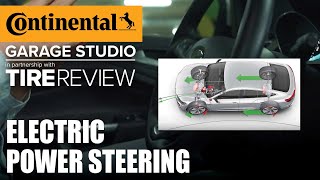
The EPS motor physically applies force to the steering rack to help you steer. The EPS module (PSCM) is the computer that controls the motor based on sensor inputs.
Why is replacing an electric steering rack so expensive?
The assembly is a complex unit containing the mechanical rack, electric motor, sensors, and control module. It requires significant labor, a mandatory wheel alignment, and electronic calibration.
What is a VGRS system and how does it relate to C1522?
Variable Gear Ratio Steering (VGRS) on Toyota/Lexus uses an actuator to change the steering ratio based on speed. A malfunction in this actuator's motor circuit triggers code C1522.
Key Takeaways
- Code C1522 indicates a critical electrical failure in the power steering motor circuit, instantly disabling steering assist.
- Expect the steering wheel to become extremely heavy at low speeds, accompanied by an 'EPS' or 'Steering Assist is Reduced' dashboard warning.
- Do not drive with C1522; the manual steering effort required increases crash risk during emergency maneuvers or tight turns.
- Before authorizing a $1,500+ steering rack replacement, check for a weak battery, a poor ground connection (especially GM's G218), or pending software updates.
Helpful Videos



The information in this article is provided for general reference and educational purposes only. Vehicle specifications, procedures, and part compatibility can vary by production date, trim level, and region. Always consult your vehicle's factory service manual and verify part numbers before purchasing or performing repairs. Safety-critical components such as airbags, seat belts, and braking systems should be installed by a qualified professional.
- 🎬 Helpful Videos
- What Does C1522 Mean?
- Can I Drive With C1522?
- Common Causes
- Symptoms
- Diagnostic Flowchart
- Common Fixes & Costs
- Used vs. New Parts: Buying Guide
- What Happens If You Wait — Timeline
- Cost of Not Fixing It
- Diagnosis Steps
- When This Code Triggers (Freeze-Frame Conditions)
- Related Codes
- Climate & Environmental Factors
- How to Talk to a Mechanic About This Code
- Where to Take It: Dealer vs Independent vs Chain
- When to Walk Away From the Repair
- What Scan Tool You Need for This Code
- How to Clear the Code After You Fix It
- Will This Fail Emissions / State Inspection?
- Most Commonly Affected Vehicles
- Manufacturer-Specific Notes
- Real Owner Stories
- 2015 Chevy Silverado at 75K miles - The 'Easy' Fix
- 2012 Ford Fusion at 157K miles - The Warranty Nightmare
- 2016 Chevy Malibu at 60K miles - The Unusual Root Cause
- How to Prevent This Code From Triggering
- Frequently Asked Questions
- What are the most common misdiagnoses for C1522?
- Can water damage cause the C1522 code?
- My steering failed after hitting a pothole, could that cause C1522?
- Can I just clear the C1522 code and keep driving?
- Is it dangerous to drive with code C1522?
- Will replacing the battery fix a C1522 code?
- My steering failed after a battery replacement, is it related?
- Can a bad wheel alignment cause code C1522?
- What is the difference between an EPS motor and an EPS module?
- Why is replacing an electric steering rack so expensive?
- What is a VGRS system and how does it relate to C1522?
- Key Takeaways
- 🎟️ Get 5% Off