

OBD-II Code C1518: Electric Power Steering Torque Sensor Calibration Not Completed
What C1518 means, why it triggers, and the definitive guide to fixing it
- Code C1518 indicates a missing software calibration in the electric power steering system, not a broken mechanical part.
- Over 80% of C1518 codes trigger immediately after a wheel alignment or battery replacement where the technician forgot the final electronic calibration step.
- You must use a professional bidirectional scan tool (costing $150+) to perform the 'Torque Sensor Calibration' command to clear this code permanently.
- Always test your battery and alternator first; system voltage below 12.4V prevents the EPS module from storing calibration data.
- Do not confuse Chassis code C1518 with Powertrain code P1518 (a Ford engine airflow issue) or U1518 (a GM communication fault).
What Does C1518 Mean?

Code C1518 means your vehicle's computer detects the Electric Power Steering (EPS) torque sensor lacks proper calibration. This sensor measures your steering effort to provide the correct power assistance. Without calibration, the power steering defaults to uneven or heavy steering.
Technical definition: Mitsubishi defines C1518 as "Torque Sensor Calibration Not Completed." The Electric Power Steering (EPS) Electronic Control Unit (ECU) sets this code when it fails to learn the torque sensor's neutral zero position. The system provides limited assist, resulting in uneven effort between left and right turns.
Can I Drive With C1518?
Yes, But With Caution. Yes, but address it immediately. The steering suddenly becomes heavy or behaves unpredictably at low speeds, posing a significant safety risk. A sudden loss of power assist during an emergency maneuver causes accidents. Continued driving does not cause further component damage, but the safety risk remains high.
Common Causes

- Recent steering, suspension, or alignment work (Very Common) — When a mechanic performs a wheel alignment or replaces parts like the steering rack or tie rods, the torque sensor requires recalibration. This is the most frequent trigger, as technicians often forget this final electronic step.
- Battery disconnection or low system voltage (Common) — Disconnecting the battery, installing a new one, or driving with a failing alternator causes the steering module to lose its memory. The EPS system cannot store calibration data without a stable power supply above 12.4 volts.
- Faulty torque sensor (Less Common) — The sensor itself fails internally. It sends erratic signals, no signal, or shorts out, making calibration impossible. This requires physical replacement of the sensor before recalibration.
- Failed Electric Power Steering (EPS) ECU (Less Common) — The electronic module controlling the power steering fails or experiences a software glitch, preventing it from storing calibration data. Voltage spikes or water intrusion typically cause this internal computer failure.
- Wiring or connection issues (Rare) — Damaged wires, loose connections, or corrosion between the torque sensor and the EPS module block the calibration command. This includes physical breaks in the CAN bus communication lines.
- Component Incompatibility (Aftermarket Parts) (Rare) — Installing a non-OEM or remanufactured steering rack introduces a torque sensor incompatible with the vehicle's EPS module. The system recognizes the part but fails to calibrate it.
Symptoms

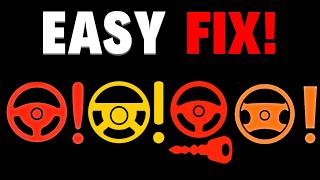
- Power Steering warning light illuminated — The EPS or power steering warning icon (often a steering wheel with an exclamation point) stays lit on the dashboard. 🎬 Watch: How to reset the EPS warning light and troubleshoot issues.
- Heavy, stiff, or uneven steering assist — Power steering assist disables entirely, or turning one direction feels normal while the opposite direction feels heavy and stiff.
- Intermittent loss of power steering — Power steering assist works normally, then suddenly stops during changes in vehicle speed or sharp turns.
Diagnostic Flowchart

Tap your situation to follow the diagnostic path that matches what you're seeing on this code.
Common Fixes & Costs
- Torque Sensor Calibration — Parts: $0, Labor: $100-$250, ~1 hr book time (Professional)
- Battery or Charging System Repair — Parts: $150-$400, Labor: $50-$150, ~1.5 hr book time (Intermediate)
- Steering Angle/Torque Sensor Replacement
— Parts: $120-$520, Labor: $150-$500, ~2 hr book time
(Professional)
Mitsubishi Lancer (2008-2017): OEM 8651A086, 8651A084 (Alt: Standard Ignition SWS132) - Electric Power Steering Control Module (ECU) Replacement
— Parts: $800-$1500, Labor: $200-$400, ~2 hr book time
(Professional)
Mitsubishi Outlander Sport (2011-2022): OEM 8633A109 (Alt: Not commonly available, used OEM is a viable option.) - Steering Column or Rack Assembly Replacement
— Parts: $500-$1500, Labor: $400-$900, ~5 hr book time
(Professional)
Hyundai Elantra (2017-2020): OEM 56310-F2200 (Alt: Cardone (Remanufactured))
Used vs. New Parts: Buying Guide
When a used part is worth it: For a complete steering column or rack assembly on a vehicle worth less than $5,000 where the cost of a new OEM part is prohibitive.
Donor-vehicle mileage cap: roughly under 80000 miles for the part to have meaningful remaining life.
Donor quality checklist:
- Verify the donor vehicle was in a rear-end collision, not a frontal one.
- Match part numbers exactly; modules are programmed to specific vehicles.
- Avoid parts from flood or rust-belt vehicles.
- For individual sensors, strictly buy new OEM parts.
Decision logic:
- If The failed part is the torque sensor only → Buy a new OEM sensor. The labor to replace it is too high to risk a used part.
- If The entire steering column/rack must be replaced on a vehicle worth less than $5,000 → A used assembly from a low-mileage donor is a reasonable gamble.
- If The vehicle is newer or has low mileage → Buy a new OEM or high-quality remanufactured part.
Warranty tradeoff: Salvage yard parts offer 30-90 day warranties on the part only. New OEM parts carry a 1-year/12,000-mile warranty covering parts and labor.
Worst-case if a used part fails: $500-$1000 if a used steering column fails after the warranty period, requiring a second full payment for parts and labor.
What Happens If You Wait — Timeline
- 0-1 month: Code C1518 sets, and the power steering warning light illuminates. Steering feels heavy or uneven. The safety risk is immediate. (MPG impact: 0%% · Added cost: $0)
- 1-4 months: If caused by a bad alignment, uneven tire wear begins. The inner or outer edges of the tires wear down significantly faster. (MPG impact: 0-3%% · Added cost: $200-$500)
- 4-12 months: Continued driving puts stress on suspension components like tie rods. The safety risk from unpredictable steering remains high. (MPG impact: 0-3%% · Added cost: $500-$1500)
- 12+ months: The driver overcorrects in an emergency due to heavy steering. The chance of a low-speed collision causing body or suspension damage is high. (MPG impact: 0-3%% · Added cost: $1000-$3000)
Cost of Not Fixing It
- Immediate: Significant safety risk due to unpredictable steering assist. Increased driver fatigue during low-speed maneuvers. (Added cost: 0)
- 1-6 months: If caused by a bad alignment, continued driving causes accelerated and uneven tire wear, ruining tires in a few thousand miles. (Added cost: $300-$1000)
- 6+ months: Sustained risk of a low-speed collision from wrestling with heavy steering. High potential for body or suspension damage. (Added cost: $500-$2500)
Diagnosis Steps
- Verify Recent Repairs
Review recent vehicle service. If you had a wheel alignment, battery replacement, or front-end suspension work, the shop missed the recalibration step. Return to the shop and request a steering angle sensor calibration.
Tools: Service records (Beginner) - Inspect Battery and Charging System
Test the battery voltage; it must read above 12.4V with the engine off. Check the charging system output, which must read between 13.2V and 14.8V with the engine running. Low voltage prevents modules from storing calibration data.
Tools: Digital Multimeter (Beginner) - Perform Manual Steering Reset
With the engine running and the vehicle parked, slowly turn the steering wheel all the way to the left lock, then all the way to the right lock, and return it to the center. This re-initializes the sensor's range on some models, though it rarely replaces a full scan tool calibration.
Tools: None (Beginner) - Attempt Torque Sensor Calibration via Scan Tool
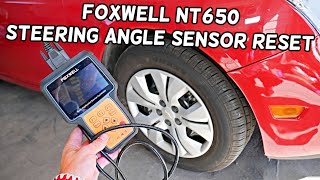
Connect a professional-grade bidirectional scan tool. Navigate to the Electric Power Steering (EPS) module and execute the 'Torque Sensor Calibration' or 'Steering Angle Sensor Reset' function. Follow the on-screen prompts exactly. This is the direct fix if no parts have failed.
Tools: Professional Scan Tool (e.g., Autel, Snap-on, Launch) (Advanced) - Read Live Sensor Data
If calibration fails, use the scan tool to view live steering angle and torque sensor data. With wheels straight, the angle must read 0 degrees. The torque sensor PID must read 0.0 Nm with no input. Incorrect values confirm a faulty sensor.
Tools: Professional Scan Tool (Intermediate) - [PRO TIP] Check Torque Sensor Voltages
Back-probe the torque sensor signal wires (TRQ1 and TRQ2) at the EPS ECU. With the ignition on and wheel centered, both must read 2.3-2.7V. Turning right increases TRQ1 (towards 4.75V) and decreases TRQ2 (towards 0.25V). Missing or erratic voltages dictate sensor replacement.
Tools: Digital Multimeter, Wiring Diagram (Advanced) - [PRO TIP] Inspect CAN Bus Integrity
With the battery disconnected, measure resistance between OBD-II Pin 6 (CAN-H) and Pin 14 (CAN-L). It must read 60 ohms. A 120-ohm reading indicates a broken circuit; 0 ohms indicates a short. Repair the communication network before attempting further EPS diagnostics.
Tools: Digital Multimeter (Advanced)
When This Code Triggers (Freeze-Frame Conditions)
- Vehicle Speed: 0 MPH (Vehicle stationary, immediately after engine start.)
- Engine RPM: 750 RPM (Engine at idle.)
- Battery Voltage: 12.2V - 14.5V (Values below 12.4V indicate an underlying electrical issue caused the memory loss.)
- Ignition Status: Engine Running (The code sets after the engine starts and the EPS module initializes.)
Related Codes
- C1519 — A companion code on Mitsubishi vehicles indicating a 'Torque Sensor Calibration Abnormality.' This suggests a specific internal failure or implausible value detected during calibration, pointing to a hardware fault.
- C1541 — Indicates a 'Power Supply Voltage Abnormality.' If seen alongside C1518, the EPS module cannot store the calibration because its power supply is unstable. Diagnose the battery and alternator first.
- C1511 / C1512 / C1513 — These point to specific faults within the torque sensor itself (TRQ1, TRQ2). Seeing these with C1518 confirms the torque sensor failed and requires replacement, not just calibration.
- U0100 — Means 'Lost Communication With ECM/PCM.' If the power steering module cannot communicate with the main engine computer, it cannot complete calibration. This points to a CAN bus network issue.
Climate & Environmental Factors
- Road Salt / Corrosion: In the 'Salt Belt', corrosion on exposed steering rack connectors or EPS grounds causes voltage drops. This indirectly leads to calibration failures and codes like C1518 and C1541.
- Extreme Cold: Extreme cold reduces a battery's cranking power. A cold start with a weak battery drops system voltage low enough to trigger memory loss in the EPS ECU, setting C1518 upon startup.
How to Talk to a Mechanic About This Code
Say this: "I have a C1518 code and the power steering warning light is on. I suspect it needs a torque sensor calibration. Can you tell me the cost for a diagnostic and calibration service? My car is a [Your Year, Make, Model]."
This signals you understand the problem and focuses the shop on the specific, low-cost software fix, making it harder to quote an expensive part replacement.
Avoid saying:
- 'My steering feels weird.'
- 'The power steering light is on, can you just fix it?'
- 'I think I need a new power steering rack.'
Questions to ask before authorizing the repair:
- If the calibration fails, what is the next diagnostic step and its cost?
- Did you check the battery and charging system voltage first?
- If you recommend a part replacement, can you show me the failed part?
- What is the warranty on the calibration service and any parts you install?
Where to Take It: Dealer vs Independent vs Chain
- Dealer:
A good, but expensive, option. They guarantee the correct diagnostic tool but quickly recommend costly part replacements if calibration fails initially.
Best for: Vehicles still under warranty, Complex cases where calibration repeatedly fails at other shops, When a specific software update or programming is required
Downsides: Highest labor rates (1.5-2x independent shops), Defaults to replacing an entire assembly when a sensor or calibration suffices (Typical cost: +50% vs. baseline) - Independent Shop:
Best fit for most situations. A well-equipped independent shop performs the calibration for a much lower cost than the dealer.
Best for: Out-of-warranty vehicles, Cases where the cause is clear (e.g., appeared right after an alignment), Getting a second opinion on a dealer's expensive quote
Downsides: Diagnostic tool capability varies. You must verify they have a bidirectional scan tool that performs 'Torque Sensor Calibration'. (Typical cost: +0% vs. baseline) - Chain Shop:
AVOID for diagnosing C1518. Go to them for a battery test, but take the car to an independent shop or dealer for the actual steering calibration.
Best for: Wheel alignments (insist they complete the calibration), Battery testing and replacement
Downsides: Technicians lack the bidirectional scan tool needed for calibration., High pressure to upsell unnecessary services. (Typical cost: -10% vs. baseline)
When to Walk Away From the Repair
If the total estimated repair cost exceeds 50% of your car's private party value, sell or trade it in.
- Car worth $5000, fix is $2800: Walk away. The repair cost is over 50% of the car's value.
- Car worth $15000, fix is $1200: Fix it. The repair cost is well below the 50% threshold.
- Car worth $3000, fix is $650: Borderline, but likely worth fixing. Get a second opinion to confirm no other major issues exist.
What Scan Tool You Need for This Code
Minimum: A bidirectional scan tool with specific software for your vehicle's make that performs Steering Angle Sensor (SAS) Calibration.
A basic $50 code reader only reads generic powertrain codes. It cannot see chassis codes like C1518 or send the calibration command to the EPS module.
Budget: None for this task (~$0) — No scanner under $100 reliably performs the bidirectional control needed for SAS calibration.
Mid-range: Foxwell NT510 Elite / Autel MaxiCheck MX808S (~$150) — These scanners offer bidirectional control and explicitly list SAS calibration. They connect to the EPS module, read C1518, and execute the calibration command.
Professional: Autel MaxiSys MS908 / Launch X431 Series (~$500-1200) — These professional tools perform the calibration, provide detailed live data from the torque sensor, diagnose communication issues, and program new modules.
Rent vs buy: You cannot rent bidirectional scanners from auto parts stores. It is more cost-effective to pay a shop $100-$250 for a professional calibration than to buy a mid-range scanner for a one-time fix.
How to Clear the Code After You Fix It
- Perform torque sensor calibration using a professional scan tool.
- Use the scan tool to clear the C1518 fault code from the EPS module.
- Turn the ignition off for 30 seconds, then restart the vehicle to confirm the warning light stays off.
Drive cycle (~20 minutes): If the battery was disconnected, start the engine cold and idle for 3 minutes. Drive in mixed city/highway conditions for 20 minutes to reset emissions monitors.
Readiness monitors affected: Catalyst (CAT) Monitor, Evaporative System (EVAP) Monitor, Oxygen (O2) Sensor Monitor, Oxygen Sensor Heater Monitor
Before emissions retest: drive at least 50 miles to fully set monitors.
Watch out for:
- Clearing the code with a basic reader fails; the code returns instantly because the calibration is still missing.
- Disconnecting the battery erases emissions readiness monitors, causing an automatic smog test failure.
Will This Fail Emissions / State Inspection?
No — by itself this code doesn't fail OBD inspection (but it can keep readiness monitors from setting, which causes a separate fail).
- California: A C-code does not fail the OBD-II smog check. However, disconnecting the battery to clear the light resets readiness monitors, resulting in an automatic failure.
- New York: NYS inspection includes a safety component. An illuminated power steering warning light is a safety failure.
- Texas: The annual safety inspection explicitly checks the steering system. An illuminated power steering warning light causes an automatic failure.
Most Commonly Affected Vehicles
- Mitsubishi Lancer (2008-2017) — Owners frequently report intermittent power steering failures related to sensor calibration loss.
- Mitsubishi Outlander (2014-2022) — These models use an EPS system highly sensitive to voltage drops, triggering chassis codes easily.
- Mitsubishi Outlander Sport (2011-2022) — Equipped with EPS that relies on torque and position sensors known to lose calibration after battery service.
- Hyundai Elantra (2017-2020) — Known issues with the steering column-mounted EPS motor (MDPS) connector cause loss of assist.
- Chevrolet Cruze (2011-2019) — Negative battery cable faults trigger 'Service StabiliTrak' messages and disable power steering assist.
- Toyota Corolla (2019-2022) — Steering angle sensor faults cause traction control lights and require replacement and calibration.
- Ford Escape (2008-2012) — Known for torque sensor failures within the steering column. Ford TSB #44986 advises replacing only the sensor, not the column.
- Fiat Punto / Grande Punto (2007-2012) — Widely known for power steering torque sensor faults requiring replacement and calibration.
Manufacturer-Specific Notes

- General: This is a manufacturer-specific Chassis ('C') code. On Mitsubishi, it refers to electric power steering. On a Toyota Land Cruiser, C1518 means 'Lock Holder Devolution Detection,' an entirely different system.
- Mitsubishi: Mitsubishi frequently resolves control module issues with software updates and recalibrations rather than parts replacement, making scan tool calibration the definitive first step.
- General Motors (Buick, Chevrolet, Cadillac): Do not confuse C1518 with the GM-specific code U1518. TSB 18-NA-224 addresses U1518, which relates to a 'Lost Communication with Head-Up Display'.
- Ford, Lincoln, Mercury: Do not confuse C1518 with the common P1518 code. P1518 means 'Intake Manifold Runner Control (Stuck Open),' an engine performance issue. Ford's equivalent steering code is B2278.
Real Owner Stories
2014 Chevy Cruze with ~80k miles
Owner turned car on and 'Service Power Steering' and 'Service StabiliTrak' messages appeared. Restarting temporarily cleared the messages.
Outcome: Replacing the faulty negative battery cable permanently resolved the warnings.
Lesson: On GM vehicles, steering warnings link to electrical system faults. Check for recalls like the negative battery cable before authorizing expensive diagnostics.
2008 Ford Escape at 170k miles
Experienced violent shaking of the steering wheel followed by a complete loss of power steering, with code B2278 present.
Outcome: A second shop correctly diagnosed the issue using Ford TSB #44986 and replaced only the torque sensor for $650.
Lesson: Dealers recommend replacing entire assemblies, but a Technical Service Bulletin (TSB) specifies cheaper component replacements. Always research TSBs.
How to Prevent This Code From Triggering
- Insist on steering angle sensor calibration after every wheel alignment (Every alignment) — Ensures the car's computer knows the new 'straight-ahead' position, preventing the conflict that triggers code C1518.
- Test battery and charging system annually (Once per year) — A weak battery or failing alternator causes the EPS module to lose its calibration memory. Annual testing catches voltage issues early.
- Keep battery terminals clean and tight (Every oil change) — Corrosion creates resistance, leading to voltage drops and module memory loss. Cleaning them ensures a solid connection.
- Drive the vehicle regularly for at least 20-30 minutes (Weekly) — Frequent short trips prevent the alternator from fully recharging the battery, making it susceptible to voltage-related memory loss.
Frequently Asked Questions
Can I fix code C1518 myself?
Unless you own a professional-grade bidirectional scan tool, you cannot fix this code yourself. The primary repair is a software calibration requiring specialized equipment. Even replacing a physical part requires this tool for the final calibration step.
Why did this code appear right after I got a wheel alignment?
When a mechanic adjusts wheel alignment, it changes the physical 'straight-ahead' position. The car's computer still thinks the old position is straight, creating a conflict that triggers C1518. The alignment shop must perform a steering sensor reset to fix this.
Can a bad battery or alternator cause my power steering to act up?
Yes. Electric power steering systems draw significant electrical current. If the battery is weak or the alternator undercharges, the EPS module loses the stable voltage required to store calibration data.
Is it dangerous to drive with code C1518?
Yes. The steering suddenly becomes heavy without warning or requires more effort to turn one way than the other. This unpredictability causes accidents during low-speed maneuvers or emergency situations.
My code reader shows P1518, not C1518. Is that the same thing?
No, they are completely different. C1518 is a Chassis code for power steering. P1518 is a Powertrain code indicating a problem with the Intake Manifold Runner Control, affecting engine airflow.
How much does it cost to just calibrate the sensor?
If no parts are broken, a simple calibration at a dealership or qualified independent shop costs between $100 and $250. This covers the labor time for diagnosing the code and performing the electronic recalibration.
What does 'Service StabiliTrak' have to do with my steering?
On many GM vehicles, the StabiliTrak system relies on the steering angle sensor to determine driver intention. If this sensor loses calibration, StabiliTrak sets a fault and disables the electric power steering assist as a safety precaution.
Key Takeaways
- Code C1518 indicates a missing software calibration in the electric power steering system, not a broken mechanical part.
- Over 80% of C1518 codes trigger immediately after a wheel alignment or battery replacement where the technician forgot the final electronic calibration step.
- You must use a professional bidirectional scan tool (costing $150+) to perform the 'Torque Sensor Calibration' command to clear this code permanently.
- Always test your battery and alternator first; system voltage below 12.4V prevents the EPS module from storing calibration data.
- Do not confuse Chassis code C1518 with Powertrain code P1518 (a Ford engine airflow issue) or U1518 (a GM communication fault).
Helpful Videos


The information in this article is provided for general reference and educational purposes only. Vehicle specifications, procedures, and part compatibility can vary by production date, trim level, and region. Always consult your vehicle's factory service manual and verify part numbers before purchasing or performing repairs. Safety-critical components such as airbags, seat belts, and braking systems should be installed by a qualified professional.
- 🎬 Helpful Videos
- What Does C1518 Mean?
- Can I Drive With C1518?
- Common Causes
- Symptoms
- Diagnostic Flowchart
- Common Fixes & Costs
- Used vs. New Parts: Buying Guide
- What Happens If You Wait — Timeline
- Cost of Not Fixing It
- Diagnosis Steps
- When This Code Triggers (Freeze-Frame Conditions)
- Related Codes
- Climate & Environmental Factors
- How to Talk to a Mechanic About This Code
- Where to Take It: Dealer vs Independent vs Chain
- When to Walk Away From the Repair
- What Scan Tool You Need for This Code
- How to Clear the Code After You Fix It
- Will This Fail Emissions / State Inspection?
- Most Commonly Affected Vehicles
- Manufacturer-Specific Notes
- Real Owner Stories
- 2014 Chevy Cruze with ~80k miles
- 2008 Ford Escape at 170k miles
- How to Prevent This Code From Triggering
- Frequently Asked Questions
- Can I fix code C1518 myself?
- Why did this code appear right after I got a wheel alignment?
- Can a bad battery or alternator cause my power steering to act up?
- Is it dangerous to drive with code C1518?
- My code reader shows P1518, not C1518. Is that the same thing?
- How much does it cost to just calibrate the sensor?
- What does 'Service StabiliTrak' have to do with my steering?
- Key Takeaways
- 🎟️ Get 5% Off