

OBD-II Code C1513: Comprehensive Diagnostic and Repair Guide
The Ultimate Resource for Understanding, Diagnosing, and Fixing C1513
- Verify your manufacturer's specific C1513 definition before buying parts; it indicates a $30 brake switch failure on a Hyundai, but a $2,000 power steering column failure on a Toyota.
- Inspect the floor mat and brake pedal arm for a crumbled $5 plastic stopper pad, which causes over 70% of C1513 codes on 2006-2016 Hyundai and Kia models.
- Stop driving immediately if your brake lights are stuck on or completely dead, as this creates a 100% chance of failing a safety inspection and a severe rear-end collision risk.
- Use an OBD-II scanner capable of reading ABS/Chassis live data to monitor the 'Brake Switch' PID; a switch reading 'On' while brake pressure is 0 PSI confirms a circuit fault.
What Does C1513 Mean?

Code C1513 is a manufacturer-specific chassis code indicating a critical circuit failure in a control module—typically for Anti-lock Brakes (ABS) or Electronic Stability Control (ESC). The meaning varies dramatically by brand. For Hyundai and Kia, it indicates a problem with the brake light switch circuit. For many Toyota and Lexus models, it points to a torque sensor failure in the electric power steering. For Ford, it indicates a pressure problem at a specific wheel's brake caliper. It demands careful, manufacturer-aware diagnosis.
Technical definition: While there is no single universal SAE/ISO definition, C1513 most commonly indicates a Brake Switch Circuit Malfunction or a Brake Booster Pressure Sensor Circuit Malfunction. For Hyundai/Kia, it is a 'Brake Switch Error'. For many Toyota models, it indicates a 'Torque Sensor Circuit Malfunction' in the Electric Power Steering system. For Ford, it means 'Left Rear Wheel Pressure Reduction Performance Problem'. It consistently points to a fault in a circuit reporting critical operational data to the vehicle's control modules.
Can I Drive With C1513?
Yes, But With Caution. You can drive short distances to a repair facility, but do not commute. The vehicle disables ABS and traction control, increasing stopping distances in emergencies and removing skid correction. Critically, brake lights stick on (draining the battery) or fail completely, creating a major rear-end collision risk. On Toyota models, a sudden loss of power steering assist occurs, making the vehicle extremely difficult to control at speed.
Common Causes

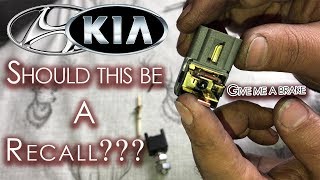
- Broken Brake Light Switch Stopper Pad (Very Common) — A small plastic or rubber pad on the brake pedal arm presses the switch's plunger. These pads become brittle and crumble, creating a gap that leaves the switch constantly activated. This is the most common failure on older Hyundai/Kia vehicles. 🎬 Watch: How to replace a Kia brake light switch
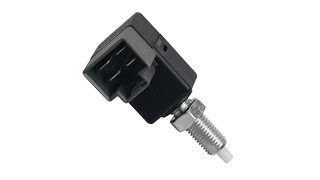
- Faulty Brake Light Switch (Very Common) — The small plastic switch at the top of the brake pedal arm wears out, its internal contacts corrode from electrical arcing, or it breaks. This sends an incorrect or intermittent signal to the ABS module.
- Faulty Power Steering Torque Sensor (Common) — On many Toyota, Lexus, and Daihatsu vehicles, C1513 is triggered by a failure in the torque sensor located within the electric power steering column. This sensor is rarely sold separately, requiring a costly steering column replacement.
- Incorrect Brake Light Switch Adjustment (Less Common) — An improperly installed or adjusted replacement brake light switch sends a constant 'on' signal or a delayed 'on' signal, which the control module flags as a fault.
- Wiring or Connector Damage (Less Common) — Wires leading to the brake switch or a relevant sensor fray, corrode, or disconnect from vibration, moisture, or physical damage, interrupting the signal.
- Air in ABS Module / Improper Bleeding (Rare) — Replacing brake hydraulic components without performing an automated scan-tool bleed traps air in the ABS module. This causes pressure imbalances that trigger a C1513 code on vehicles like the Hyundai Tucson.
- Failing ABS/Traction Control Module (HECU) (Rare) — The main control module (HECU or ABS module) develops an internal fault, failing to read the sensor signal even when the switch and wiring are perfect.
- Low System Voltage (Rare) — A failing battery or alternator drops system voltage, causing communication errors between modules and triggering spurious fault codes, including C1513, during startup.
Symptoms

- ABS and/or Traction Control (ESC/VSC) Light On — The computer disables these safety systems because it cannot trust the brake signal or related inputs.
- Brake Lights Don't Work or Are Stuck On — A faulty switch fails to turn the brake lights on when you press the pedal, or gets stuck and leaves them on, draining the battery.
- Difficulty Shifting Out of Park — Automatic transmissions require a brake pedal signal to activate the shift interlock solenoid. A bad switch prevents the signal, locking the shifter in Park.
- Push-Button Start Inoperative — Vehicles with push-button start require a valid brake pedal signal before the engine cranks. A faulty switch prevents the car from starting.
- Cruise Control Inoperative — Cruise control is disabled when the system cannot verify if the brakes are being applied.
- Power Steering (P/S) Warning Light On (Toyota/Daihatsu) — On Toyota, Lexus, and Daihatsu models, C1513 indicates a fault in the electric power steering's torque sensor. The P/S light illuminates, and steering feels heavy or jerky.
- Engine Stalling or No-Start (Rare, Hyundai/Kia) — In some Hyundai/Kia models, C1513 appears alongside C1613 (CAN error) when a failing sensor causes system-wide communication disruptions and stalling.
Diagnostic Flowchart
Tap your situation to follow the diagnostic path that matches what you're seeing on this code.
Common Fixes & Costs
- Replace Brake Light Switch Stopper Pad — Parts: $5-$15, Labor: $0-$60, ~0.2 hr book time (DIY)
- Replace Brake Light Switch — Parts: $15-$40, Labor: $75-$150, ~0.7 hr book time (DIY)
- Replace Steering Column Assembly (Toyota) — Parts: $700-$1500 (remanufactured) or $2000-$3500+ (new), Labor: $300-$600, ~2.5 hr book time (Professional)
- Replace Brake Pressure Sensor — Parts: $80-$287, Labor: $85-$150, ~1.2 hr book time (Intermediate)
- Repair or Replace ABS Module — Parts: $200-$800 (remanufactured/used) or $900-$2200+ (new), Labor: $150-$350, ~1.8 hr book time (Professional)
DIY vs Professional
- Replace Brake Light Switch Stopper Pad — Beginner:
Tools: Flashlight, needle-nose pliers or a small flathead screwdriver. - Replace Brake Light Switch — Beginner:
Tools: Basic hand tools (e.g., 14mm wrench for Hyundai), flashlight. - Replace Brake Pressure Sensor — Beginner:
Tools: Wrenches, scan tool, brake bleeding equipment. - Replace Steering Column Assembly — Beginner:
Tools: Extensive socket/wrench set, torque wrench, steering wheel puller, trim removal tools, advanced scan tool (for calibration). - Replace ABS Module (HECU) — Beginner:
Tools: Wrenches, scan tool, brake bleeding equipment.
Used vs. New Parts: Buying Guide
When a used part is worth it: For the inexpensive brake light switch, buying used is not recommended. For the expensive steering column assembly (Toyota), a quality-tested used part from a low-mileage vehicle or a professionally remanufactured unit offers significant savings ($500-$1500+) over a new OEM part.
Donor-vehicle mileage cap: roughly under 70000 miles for the part to have meaningful remaining life.
Donor quality checklist:
- Verify the exact OEM part number matches; superseded parts may not be compatible.
- For steering columns, ensure the donor vehicle was not involved in a major front-end collision.
- Purchase from a reputable salvage yard or remanufacturer that offers a warranty (90 days or more is ideal).
Decision logic:
- If The required part is a brake light switch or stopper pad → Always buy new. The cost is minimal ($10-$70) and it is a known wear item.
- If The required part is a steering column and the vehicle has high mileage (>120k) → A remanufactured or low-mileage used part is a reasonable choice to balance cost and reliability.
- If The required part is an ABS module → Favor a professional remanufacturing service for your existing module. This avoids VIN programming issues and is more cost-effective than new.
Warranty tradeoff: Used parts typically have a 30-90 day warranty. Remanufactured parts often come with a 1-year or even lifetime warranty. New OEM parts carry a 12-month/12,000-mile warranty.
Worst-case if a used part fails: $400-$800 if a used steering column or ABS module fails after the warranty period, as this requires paying for the labor a second time plus another replacement part.
What Happens If You Wait — Timeline
- Immediate: Code C1513 is stored, and the ABS/ESC warning lights illuminate on the dashboard. The primary safety systems (ABS, Traction Control, Stability Control) are disabled. (MPG impact: 0%% · Added cost: $0)
- 0-7 days: Driver experiences direct consequences. Brake lights fail completely (major collision risk), or stick on, draining the battery and leaving the driver stranded. Shifting out of Park becomes impossible. (MPG impact: 0%% · Added cost: $150-$300 for a new battery or roadside assistance if the battery is drained.)
- 1-4 weeks: The vehicle fails state safety inspections due to inoperative brake lights or illuminated ABS warning lights. On Toyota models, power steering assist becomes intermittently heavy. (MPG impact: 0%% · Added cost: $50-$200 in failed inspection fees or traffic citations.)
- 1+ months: Catastrophic failure occurs. A rear-end collision happens because brake lights failed. Or, on a Toyota, power steering assist fails completely during a turn, leading to a loss of control and a crash. (MPG impact: 0%% · Added cost: $500-$10,000+ covering accident repairs, insurance deductibles, and potential injuries.)
Cost of Not Fixing It
- Immediate: Major safety risk. Brake lights fail, leading to a high risk of a rear-end collision. ABS and traction control are disabled, increasing stopping distances and risk of skidding. (Added cost: Traffic ticket fine, insurance surcharge, or cost of an accident.)
- 0-1 Month: If the brake lights stick on, the battery drains, leaving you stranded and requiring a jump-start or new battery. (Added cost: $150-$300 for a new battery and/or roadside assistance.)
- 1-6+ Months: On Toyota models, continued driving with a faulty power steering torque sensor leads to a sudden and complete loss of power assist, making the vehicle extremely difficult to steer. (Added cost: Cost of towing and potential accident repair.)
Diagnosis Steps

- Confirm Manufacturer-Specific Definition
Before any diagnosis, use a professional scan tool or online resource to confirm what C1513 means for your specific Year/Make/Model. Is it a brake switch (Hyundai/Kia), a power steering sensor (Toyota), or a wheel pressure issue (Ford)? Misinterpreting the code is the #1 diagnostic mistake.
Tools: OBD-II Scanner with ABS/Chassis capability (Beginner) - Inspect Brake Pedal for Stopper Pad
Look under the dashboard at the top of the brake pedal arm. Check for a small plastic or rubber stopper pad that contacts the brake light switch. Search the floor mat for broken blue, white, or black plastic bits. If this pad is missing or crumbled, it is the cause of the problem.
Tools: Flashlight (Beginner) - Check Brake Light and Shifter Function
Have a helper watch the brake lights as you press and release the pedal. Do they work correctly? Are they stuck on? Can you shift out of Park easily when pressing the brake? This simple test immediately points toward or away from the brake switch circuit.
Tools: A friend or reflective surface (Beginner) - Scan and View Live Data
Use an OBD-II scanner that reads ABS/Chassis live data. Navigate to the live data stream for the ABS/ESC module. Look for PIDs like 'Brake Switch', 'Stop Lamp Switch', and 'Master Cylinder Pressure'. Watch the data as you press and release the brake pedal. The status must change from 'Off' to 'On' instantly. A delay, no change, or illogical state points to a fault.
Tools: OBD-II Scanner with Live Data (Intermediate) - [PRO TIP] Advanced Brake Switch Test (Dual Circuit)
Disconnect the switch. Many modern 4-pin switches have two circuits that work opposite each other. Use a multimeter on its continuity (beep) setting. A good switch shows near-zero ohms on one pair of pins and infinite resistance (OL) on the other. When the plunger is moved, the readings reverse. Wiggle the plunger while testing to check for intermittent internal contacts.
Tools: Multimeter (Intermediate) - [PRO TIP] Advanced Live Data Analysis (Logic Faults)
Monitor brake switch status, vehicle speed, and throttle position. On many Hyundai/Kia vehicles, a fault is set if the brake switch signal is 'On' for over 60 seconds while vehicle speed is above 10 km/h (6 mph) and the accelerator is pressed (>5%). Replicating these conditions confirms a stuck switch or shorted circuit.
Tools: Advanced OBD-II Scanner (Advanced) - [PRO TIP] Oscilloscope Test of Power Steering Torque Sensor (Toyota)
For Toyota C1513, use a dual-channel oscilloscope to back-probe the TRQ1 and TRQ2 signal wires at the power steering ECU. With the vehicle running, the centered voltage for both TRQ1 and TRQ2 should be approximately 2.3V to 2.7V, with a difference of 0.3V or less. As you turn the steering wheel, you should see two clean, mirrored signals. If one signal is noisy or flat-lined, you have definitively confirmed a failed torque sensor.
Tools: Automotive Oscilloscope, back-probe pins (Professional) - [ADVANCED] Test Brake Pressure Sensor Circuit (Ford/Other)
If the code definition points to a pressure sensor fault, use a scan tool to monitor the 'Brake Pressure' PID. With the key on and engine off, the pressure should read 0 bar or 0 PSI. As you firmly press the brake pedal, the pressure reading should increase smoothly. A reading stuck high with no pedal input indicates a failed sensor or circuit.
Tools: Advanced OBD-II Scanner with Live Data (Advanced) - [ADVANCED] Test Brake Booster Vacuum Sensor (GM)
For GM trucks where C1513 is a secondary code, connect a vacuum gauge to the booster supply line. With the engine running, the gauge should read a steady 18-21 inches of mercury (inHg). If vacuum is low, check for a collapsed/leaking supply hose. If vacuum is good but brake pedal assist is poor, the sensor or booster itself is at fault.
Tools: Vacuum Gauge, OBD-II Scanner (Advanced) - Inspect Wiring Harness
Visually trace the wiring from the suspect sensor/switch back to the control module. Look for chafing where it passes through the firewall, melting near exhaust components, or corrosion at connectors, especially under the vehicle or in the engine bay.
Tools: Flashlight, trim removal tools (Advanced)
When This Code Triggers (Freeze-Frame Conditions)
- Vehicle Speed: > 6 mph (10 km/h) (The fault logs if the brake switch signal is illogical for the vehicle's speed, such as being 'on' for an extended period while moving.)
- Brake Pedal Status vs. Accelerator: Brake 'ON' and Throttle > 5% (A fault sets if the ECU sees both the brake and the accelerator pedal applied simultaneously for an extended time (e.g., >60 seconds), indicating a stuck switch.)
- Brake Pedal Status vs. Brake Pressure: Brake Switch 'OFF' and Brake Pressure > 15-20 bar (The system expects the brake switch signal to turn 'on' when significant hydraulic pressure is generated. If pressure is high but the switch signal is off, it flags a fault.)
- Steering Torque Sensor Voltages (Toyota): TRQ1 and TRQ2 deviation > 0.3V (On Toyota models, the code sets when the two internal torque sensor signals deviate from each other beyond a specified threshold, indicating a sensor failure.)
Related Codes
- P0571 — This is the generic Powertrain (P-code) for 'Brake Switch 'A' Circuit Malfunction.' C1513 is the Chassis (C-code) equivalent. Seeing both strongly indicates the brake switch is faulty.
- C1249 — A Toyota-specific code for 'Stop Light Switch Circuit Open.' If you have a Toyota with ABS lights and see C1249, the problem is your brake light switch. If you see C1513, the problem is your power steering torque sensor.
- C1613 — Indicates a CAN bus (communication network) error. It appears with C1513 on Hyundai/Kia vehicles if the faulty brake switch causes electrical noise that disrupts module communication.
- C1511 / C1512 — These are Toyota-specific codes for 'Torque Sensor Circuit Malfunction' (TRQ1 and TRQ2 respectively). They are often stored along with C1513 and further confirm the fault lies within the electric power steering torque sensor.
Climate & Environmental Factors
- Cold Climates / Road Salt: Regions using road salt see accelerated corrosion of underbody components. This degrades wiring and connectors for brake switches and sensors, leading to intermittent signals.
- Hot & Sunny Climates: Prolonged exposure to high heat and UV radiation causes plastic and rubber components to become brittle. This is the primary cause of failure for the brake pedal stopper pad, which crumbles after years in a hot environment.
- High Humidity / Heavy Rain: Constant moisture promotes corrosion on electrical contacts within switches and connectors if seals are compromised, leading to high resistance or short circuits.
How to Talk to a Mechanic About This Code
Say this: "I have a C1513 chassis code and an ABS light on my [Make/Model]. I know this code means different things, so I need a specific diagnosis. If it's a Hyundai/Kia, please start by inspecting the brake light switch and stopper pad. If it's a Toyota/Lexus, please check the power steering torque sensor data before quoting a new steering column."
This signals you understand the code's ambiguity. It directs the technician to the most likely cause for your specific vehicle, preventing them from starting with a generic diagnostic fishing expedition and protects you from a common misdiagnosis.
Avoid saying:
- 'My ABS light is on, can you fix it?'
- 'The code is C1513, just replace the part.'
- 'Do whatever you think is best.'
Questions to ask before authorizing the repair:
- For a Hyundai/Kia: Did you visually inspect the plastic stopper pad on the pedal arm? Is it intact?
- For a Toyota: Can you show me the live data from the scan tool for the TRQ1 and TRQ2 torque sensor voltages? What is the deviation?
- For a Toyota: Before replacing the whole steering column, can you confirm the wiring connector to the column is secure and not damaged?
- For any make: If the fix is replacing a module, will the new module require programming or calibration, and is that included in the quote?
- What is the warranty on both the parts and labor for this specific repair?
Where to Take It: Dealer vs Independent vs Chain
- Dealer:
Recommended for Toyota/Lexus due to the complexity and calibration needs of the likely repair. Overkill and too expensive for the common Hyundai/Kia brake switch issue.
Best for: Toyota/Lexus C1513 diagnosis, as it likely involves the power steering column., Vehicles still under warranty., Complex repairs requiring manufacturer-specific tools, like Zero Point Calibration for a new steering column.
Downsides: Significantly higher labor rates and part costs., Defaults to replacing an entire assembly (steering column) without thoroughly checking connectors first. (Typical cost: +75% vs. baseline) - Independent Shop:
Best fit for Hyundai/Kia. For Toyota/Lexus, only choose a top-tier independent shop that specializes in Toyota/Lexus and proves they have the tools and experience for steering column calibration.
Best for: Hyundai/Kia C1513 diagnosis, as it is almost always a simple brake light switch or stopper pad., Out-of-warranty vehicles where cost is a major factor.
Downsides: Lacks the specific scan tool (e.g., Techstream) or experience to perform the Zero Point Calibration required for a Toyota steering column replacement., Quality varies; ensure they are well-reviewed and ASE certified. (Typical cost: +0% vs. baseline) - Chain Shop:
AVOID. The risk of misdiagnosis or an incorrect repair is very high for this specific code. This is not a simple parts-swap that can be trusted to a generalist chain.
Best for: Selling you a new battery or tires, which may be pitched as related to the ABS light.
Downsides: Technician skill and diagnostic equipment are highly variable., High potential for misdiagnosing the manufacturer-specific nature of this code., Unlikely to be equipped for or experienced in steering column replacement or ABS module bleeding. (Typical cost: -10% vs. baseline)
When to Walk Away From the Repair
If the estimated repair cost exceeds 50% of the car's private-party value, strongly consider selling or trading it in instead of repairing it.
- Car worth $4000, fix is $250: Fix it. This is likely a Hyundai/Kia with a brake switch fault. The repair cost is only 6% of the car's value.
- Car worth $6000, fix is $3500: Walk away. This is likely a Toyota with a power steering fault. The repair cost is nearly 60% of the car's value. It is not a sound financial decision.
- Car worth $15000, fix is $3500: Borderline - Fix it, but get a second opinion first. The repair is 23% of the car's value. While significant, it is worth doing on a higher-value vehicle if the rest of the car is in good condition.
What Scan Tool You Need for This Code
Minimum: A scanner that reads and clears Chassis codes (ABS/SRS). A basic engine-only code reader will NOT see the C1513 code.
A cheap $20 scanner only reads 'P' (Powertrain) codes. C1513 is a 'C' (Chassis) code stored in the ABS module. Without the ability to read these systems, you won't even know the code is there.
Budget: BlueDriver Pro (~$100) — Reads and clears ABS codes like C1513 on most major brands. Displays live data for the brake switch status, which is crucial for diagnosing the Hyundai/Kia issue.
Mid-range: Foxwell NT510 Elite (~$180) — Offers brand-specific software (e.g., for Toyota). Reads manufacturer-specific live data for the steering torque sensors (TRQ1/TRQ2). Has bidirectional control to perform the 'Automated Bleed' for the ABS module if air is trapped.
Professional: Autel MaxiCOM MK808 (~$500) — Full bidirectional control for all systems. Reliably performs the ABS automated bleed procedure. Crucially, it has the special functions required to perform the 'Zero Point Calibration' for Toyota/Lexus steering angle sensors after a steering column replacement.
Rent vs buy: For this code, renting is risky. Auto parts store loaner tools are often basic readers that cannot access ABS codes. To properly diagnose C1513, you need a tool that reads ABS live data. Buying a budget pick like the BlueDriver is a better investment for any DIYer.
How to Clear the Code After You Fix It
- Use an OBD-II scan tool with ABS/Chassis capability to clear the fault code.
- For Toyota steering column replacements, perform the mandatory 'Zero Point Calibration' using a compatible scan tool (e.g., Techstream).
- Perform a complete drive cycle to allow the system to re-verify the repair.
Drive cycle (~20 minutes): After clearing the code, start the engine and let it idle for 2 minutes. Drive the vehicle to include several stops, accelerations, and turns. On Toyota models, turn the steering wheel lock-to-lock while stopped. Drive for at least 10 minutes, including speeds above 30 mph. Park the vehicle, shut it off, and restart to confirm the warning lights do not return.
Readiness monitors affected: This is a Chassis (C-code), so it does not directly affect emissions readiness monitors., If a related Powertrain code (like P0571) was also present, monitors like the Catalyst and O2 sensor may have been reset.
Before emissions retest: drive at least 50 miles to fully set monitors.
Watch out for:
- Disconnecting the battery will not clear the C1513 code from the ABS module's memory.
- The code returns immediately if the root cause (e.g., bad switch, broken stopper, mis-calibration) is not correctly fixed.
- Forgetting to perform the Zero Point Calibration on a Toyota after replacing the steering column causes the code to persist.
Will This Fail Emissions / State Inspection?
No — by itself this code doesn't fail OBD inspection (but it can keep readiness monitors from setting, which causes a separate fail).
- California: A C-code itself does not cause a smog check failure. However, if the malfunction causes the brake lights to be inoperative, the vehicle fails the safety portion of the inspection. If a related P-code (like P0571) is also present, the check engine light illuminates, causing an automatic smog check failure.
- New York: NYS inspection regulations explicitly state that an illuminated ABS warning light is NOT a cause for rejection. However, the vehicle WILL fail if the brake lights are not functioning correctly.
- Texas: In the counties requiring inspection, an illuminated ABS or traction control light is NOT a cause for failure. However, the vehicle is rejected if the brake lights do not work when the pedal is pressed.
Most Commonly Affected Vehicles
- Hyundai Sonata, Elantra, Santa Fe, Tucson, Accent (2006-2015) — Extremely prone to brake light switch failure (Part #93810-3K000). This was the subject of a major recall (NHTSA Campaign 13V114000). C1513 is the primary code stored.
- Kia Sorento, Optima, Soul, Venga, Forte (2007-2016) — Shares platforms and the faulty brake light switch design with Hyundai. TSB SC158 for the Forte notes C1513 sets simply by working on the brake pedal stopper.
- Toyota Corolla, Prius, Yaris, Matrix (2001-2018) — CRITICAL: On these models, C1513 almost always indicates a 'Torque Sensor Malfunction' in the Electric Power Steering (EPS) system. The fix requires replacing the entire steering column and performing a 'Zero Point Calibration'.
- Lexus RX350 / RX400h, IS250 (2006-2011) — Similar to Toyota, C1513 points to the power steering torque sensor. Some RX models are also known for ABS/VSC module internal failures.
- Ford Fusion, Focus, Escape, various models (2006-2023) — The definition for C1513 on many Ford vehicles is 'Left Rear Wheel Pressure Reduction Performance Problem', indicating a fault with a specific wheel's braking performance within the ABS system, not the pedal switch.
- Chevrolet / GMC Silverado / Sierra (2007-2013) — On these trucks, C1513 appears as a secondary code when the brake booster vacuum sensor fails, causing the Traction Control System (TCS) to be disabled.
- Honda Accord, Civic (2008-2013) — Accords and Civics from this era are known to set ABS/VSA lights due to internal ABS module failure, a potential cause for this code family.
- Daihatsu Boon, Sirion (2004-2010) — As these vehicles share components with Toyota, a C1513 code frequently points to the same electric power steering torque sensor issue.
Manufacturer-Specific Notes

- Hyundai / Kia: For these brands, C1513 almost always points to a faulty brake light switch. It is an inexpensive part known to fail frequently and was part of large-scale safety recalls (NHTSA Campaign #13V114000). Start your diagnosis at the switch and the stopper pad.
- Toyota / Lexus: On these vehicles, C1513 is UNRELATED to the brakes. It signifies a 'Torque Sensor Circuit Malfunction' within the Electric Power Steering (EPS) column. The corresponding brake switch fault code in a Toyota is usually C1249.
- Ford: The definition is often 'Left Rear Wheel Pressure Reduction Performance Problem.' This points to an issue with the ABS system's ability to control brake pressure at a specific wheel, indicating a failing solenoid or pressure transducer within the ABS hydraulic unit (HCU).
- General Motors (GM): The definition is often more generic, such as 'Traction Control System Disabled.' The C1513 code is set as a consequence of another brake-related problem (like a failing brake booster vacuum sensor) that forces the TCS to shut down for safety.
Real Owner Stories
2014 Hyundai Santa Fe - Intermittent No-Start and Dead Battery
The owner found the car's battery completely drained over a weekend. A neighbor mentioned the brake lights had been on. After a jump start, the car seemed fine but the issue was intermittent.
Outcome: The owner replaced both the brake light switch (a ~$30 part) and the small plastic bumper pad on the pedal arm (a ~$5 part). This resolved the issue, and the C1513 code did not return.
Lesson: A dead battery without an obvious cause is a classic symptom of a faulty brake light switch stuck in the 'on' position. For Hyundai/Kia, always inspect the cheap plastic stopper pad on the pedal arm first.
2008 Toyota Prius - Misdiagnosis and Expensive Repair
After paying $3,300 for a transaxle replacement, the dealership test-drove the car and a new code, C1513, appeared along with a power steering warning light.
Outcome: The owner faced a second, unexpected, and very expensive repair. The situation felt suspicious because the code had not appeared at two other shops prior to the transaxle work.
Lesson: On a Toyota, C1513 almost always points to the expensive power steering torque sensor, not the cheap brake switch. If the code appears immediately after another major repair, question if a connector was damaged or left loose during the initial job.
2009 Hyundai Tucson - Complete Brake Failure After Caliper Replacement
After replacing a seized front left caliper, the owner experienced a complete loss of brakes and could not get fluid to two of the calipers when bleeding. A C1513 code was present.
Outcome: The fix required a professional scan tool to perform an 'automated bleed procedure,' cycling the ABS pump and valves to purge trapped air. The C1513 code was a secondary symptom of the hydraulic system fault.
Lesson: If C1513 appears after brake hydraulic work, the root cause is air trapped in the ABS module. A standard manual bleed cannot fix this; an electronic, scan-tool-activated ABS bleed is required.
How to Prevent This Code From Triggering
- Periodically flush brake fluid (Every 2-3 years or as per manufacturer recommendation) — Brake fluid absorbs moisture. Old, water-contaminated fluid causes internal corrosion of the expensive ABS module and its solenoid valves, leading to hydraulic faults.
- Apply a UV protectant to interior plastics (Every 3-6 months) — On many Hyundai/Kia models, the brake light switch stopper pad is made of plastic that becomes brittle from heat and UV exposure. Using a quality interior protectant slows this degradation.
- Clean and protect electrical connectors (When performing other under-dash or brake system maintenance) — Applying dielectric grease to the brake light switch connector or ABS module connector prevents moisture intrusion and corrosion, which cause intermittent signals and faults.
- Maintain a healthy battery and charging system (Test annually after 3 years of age) — Sensitive electronic modules like the ABS/ESC unit set fault codes like C1513 during startup if system voltage is too low. A healthy battery prevents these spurious codes.
Frequently Asked Questions
What's the biggest mistake when diagnosing C1513?
Assuming C1513 always means a brake switch failure. On many Toyota, Lexus, and Daihatsu models, it points to a power steering torque sensor. Always verify the manufacturer's specific definition for your vehicle before buying parts.
I replaced my brake switch, but C1513 came back. What now?
First, check the floor mat for a broken plastic stopper pad that fell off the pedal arm. Second, verify the new switch is adjusted correctly with minimal play. Third, use a scan tool to check for illogical signals indicating a shorted wire or failing ABS module.
Can a bad battery cause code C1513?
Yes, a failing battery causes low system voltage, leading to communication errors between modules that trigger a C1513 code on startup. If you have other electrical symptoms like slow cranking, test the battery and charging system first. A stuck brake switch can also drain a healthy battery.
How do you adjust a new brake light switch?
Install the switch with the plunger fully depressed against the pedal arm. On threaded types, screw it in until it makes contact, back it off slightly per manufacturer specs, and lock it with a jam nut. The switch must activate the instant the pedal is pressed.
What is the difference between C1513 and C1613?
C1513 is a specific circuit fault, usually for the brake switch or a torque sensor. C1613 is a CAN bus communication error. They appear together if the faulty component causing C1513 creates electrical noise that disrupts network communication.
My brake lights work, so can the switch still be bad?
Yes. Modern brake switches have two separate internal circuits: one for the brake lights and another for the car's computers. The computer circuit fails while the light circuit works, triggering C1513 and ABS warning lights despite functioning brake lights.
Can I replace the brake light switch myself?
Yes, for most vehicles this is a beginner-level DIY repair requiring basic hand tools and 30 minutes. The switch is located under the dash by the brake pedal. The hardest part is physically contorting to reach the switch in the tight footwell space.
Key Takeaways
- Verify your manufacturer's specific C1513 definition before buying parts; it indicates a $30 brake switch failure on a Hyundai, but a $2,000 power steering column failure on a Toyota.
- Inspect the floor mat and brake pedal arm for a crumbled $5 plastic stopper pad, which causes over 70% of C1513 codes on 2006-2016 Hyundai and Kia models.
- Stop driving immediately if your brake lights are stuck on or completely dead, as this creates a 100% chance of failing a safety inspection and a severe rear-end collision risk.
- Use an OBD-II scanner capable of reading ABS/Chassis live data to monitor the 'Brake Switch' PID; a switch reading 'On' while brake pressure is 0 PSI confirms a circuit fault.
Helpful Videos

The information in this article is provided for general reference and educational purposes only. Vehicle specifications, procedures, and part compatibility can vary by production date, trim level, and region. Always consult your vehicle's factory service manual and verify part numbers before purchasing or performing repairs. Safety-critical components such as airbags, seat belts, and braking systems should be installed by a qualified professional.
- 🎬 Helpful Videos
- What Does C1513 Mean?
- Can I Drive With C1513?
- Common Causes
- Symptoms
- Diagnostic Flowchart
- Common Fixes & Costs
- DIY vs Professional
- Used vs. New Parts: Buying Guide
- What Happens If You Wait — Timeline
- Cost of Not Fixing It
- Diagnosis Steps
- When This Code Triggers (Freeze-Frame Conditions)
- Related Codes
- Climate & Environmental Factors
- How to Talk to a Mechanic About This Code
- Where to Take It: Dealer vs Independent vs Chain
- When to Walk Away From the Repair
- What Scan Tool You Need for This Code
- How to Clear the Code After You Fix It
- Will This Fail Emissions / State Inspection?
- Most Commonly Affected Vehicles
- Manufacturer-Specific Notes
- Real Owner Stories
- 2014 Hyundai Santa Fe - Intermittent No-Start and Dead Battery
- 2008 Toyota Prius - Misdiagnosis and Expensive Repair
- 2009 Hyundai Tucson - Complete Brake Failure After Caliper Replacement
- How to Prevent This Code From Triggering
- Frequently Asked Questions
- What's the biggest mistake when diagnosing C1513?
- I replaced my brake switch, but C1513 came back. What now?
- Can a bad battery cause code C1513?
- How do you adjust a new brake light switch?
- What is the difference between C1513 and C1613?
- My brake lights work, so can the switch still be bad?
- Can I replace the brake light switch myself?
- Key Takeaways
- 🎟️ Get 5% Off