

C1503 on 2014-2015 Ram 3500: Tire Pressure Sensor 3 Failure Causes and Fixes
Code C1503 on a 2014-2015 Ram 3500 indicates a fault with the Tire Pressure Monitoring System (TPMS) sensor in the #3 wheel position, which is confirmed by owner forums to be the left rear tire. The most common cause is a dead sensor battery, requiring replacement of the entire 433MHz sensor unit. The system should automatically relearn the new sensor after driving.
- C1503 means the TPMS sensor in your #3 tire (left rear) has failed.
- The most common reason for failure on a 2014-2015 model is the sensor's non-replaceable battery reaching the end of its 5-10 year life.
- The fix is to replace the entire 433MHz sensor unit, which requires professional tire service equipment.
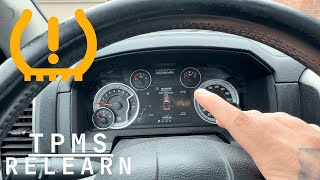
- After replacement, a TPMS relearn procedure is necessary. For this truck, driving over 15 mph for about 10-20 minutes should trigger an automatic relearn.
- You can continue to drive the vehicle, but you should manually check your tire pressures regularly for safety.
What's Unique About the 2014-2015 Ram 3500
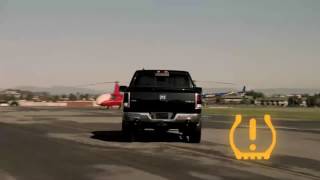
For Ram Heavy Duty trucks like the 3500, the Tire Pressure Monitoring System (TPMS) is a critical safety feature, especially when hauling heavy loads. Unlike some systems that use indirect measurements, Ram uses direct 433MHz sensors inside each wheel for precise readings. These sensors communicate wirelessly with the Wireless Control Module (WCM), which also handles functions like the remote keyless entry. 🎬 Watch: Overview of the 2015 Ram TPMS features and display. The 2014-2015 models are at an age where the original sensor batteries, which have a 5-10 year lifespan, are expected to fail, making this a common maintenance item confirmed by numerous owner experiences.
Diagnostic Flowchart
Tap your situation to follow the diagnostic path that matches what you're seeing on this vehicle.
Symptoms You May Notice
- Tire Pressure Monitoring System (TPMS) warning light is illuminated on the dashboard. The light may flash for 60-75 seconds upon startup before staying solid, indicating a system fault.
- A message appears in the driver information center (EVIC) such as 'Service Tire Pressure System'.
- The pressure reading for one specific tire (usually the left rear) is missing or displays as dashes in the EVIC.
- An audible chime may sound when the warning is first triggered.
- Replacing the wrong tire's sensor. It is crucial to confirm which wheel corresponds to 'Sensor 3'. While typically the left rear, using a diagnostic tool to identify the non-responsive sensor is the best practice before any disassembly.
- Assuming the WCM is bad. Sensor failure is vastly more common. WCM failure should only be considered after multiple, known-good sensors fail to register with the vehicle.
Most Likely Causes
- Dead TPMS Sensor Battery 🔴 High Probability TPMS sensor batteries are not replaceable and have a finite lifespan, typically 5-10 years. Vehicles from 2014-2015 are now in the age range where battery failure is the most common root cause for C1503.
How to confirm: Use a TPMS diagnostic tool to attempt to 'wake up' or read the sensor. If the tool gets no response, the sensor's battery is almost certainly dead. This is the definitive test before dismounting a tire.
Typical fix: Replace the entire TPMS sensor for the affected wheel with a 433MHz compatible unit. The new sensor will need to be 'relearned' to the vehicle, which usually happens automatically upon driving.
Est. part cost: $25-$75 - Internal Sensor Failure 🟡 Medium Probability Harsh conditions inside a tire (vibration, extreme temperatures, moisture) can lead to the failure of the sensor's internal electronics, such as the pressure transducer, accelerometer, or temperature sensor.
How to confirm: A TPMS diagnostic tool may read an error from the sensor (e.g., 'Damaged Accel', 'H/W fail'), or the sensor may fail to transmit valid data. The code C1503-07 specifically points to a mechanical or internal failure.
Typical fix: Replace the faulty TPMS sensor.
Est. part cost: $25-$75 - Physical Damage to Sensor ⚪ Low Probability Sensors can be damaged during tire mounting or dismounting if the technician is not careful. Road debris or severe potholes can also cause damage, though this is less common.
How to confirm: Visual inspection after dismounting the tire from the wheel. The sensor may have visible cracks or damage to its housing or valve stem. This is often discovered during the repair for a suspected dead battery.
Typical fix: Replace the damaged TPMS sensor.
Est. part cost: $25-$75
Rare But Worth Checking
- Wireless Control Module (WCM) Failure: While rare, if a new, known-good sensor cannot be learned by the vehicle, the WCM (the receiver for the TPMS signals) could be at fault. This would often be accompanied by other issues, like problems with the key fob or remote start. TSB 22-002-15 REV. A also points to potential software issues in the WCM that can be fixed with an update.
- Radio Frequency (RF) Interference: Uncommon, but strong RF signals from aftermarket electronic devices (like some dash cams, phone chargers, or trailer brake controllers) can sometimes interfere with the 433MHz TPMS signal transmission. The issue would likely be intermittent and affect more than one sensor.
Diagnosis Steps
- Verify the code with an OBD-II scanner that can read Chassis (C) codes. Confirm C1503 is active.
- Use a TPMS-specific diagnostic tool (like Autel or ATEQ) to attempt to read data from all four sensors at the wheel. The tool will likely fail to get a response from the sensor at the #3 position (left rear).
- If the sensor does not respond, the sensor itself has failed (most likely a dead battery) and needs to be replaced.
- Check for applicable service bulletins. TSB 22-002-15 REV. A applies to vehicles built on or before Nov 5, 2014, and may involve a WCM software update or sensor replacement.
- After replacing the sensor, the tire must be dismounted and remounted. Ensure the new sensor is the correct 433MHz frequency.
- Most 2014+ Ram trucks feature an automatic relearn system. Drive the vehicle for at least 10-20 minutes at speeds above 15 mph (24 km/h) to allow the WCM to automatically detect the new sensor ID and clear the warning light.
- If the light does not clear, a manual relearn may be attempted with a TPMS tool to write the new sensor ID to the WCM, but this is not typically necessary.
Parts You'll Likely Need
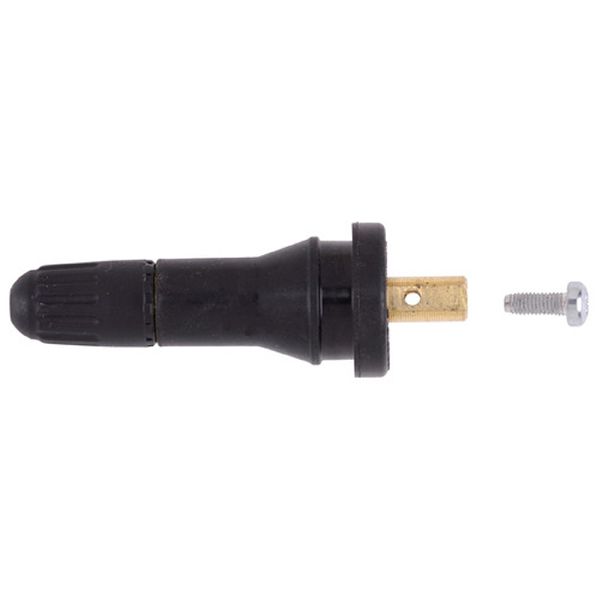
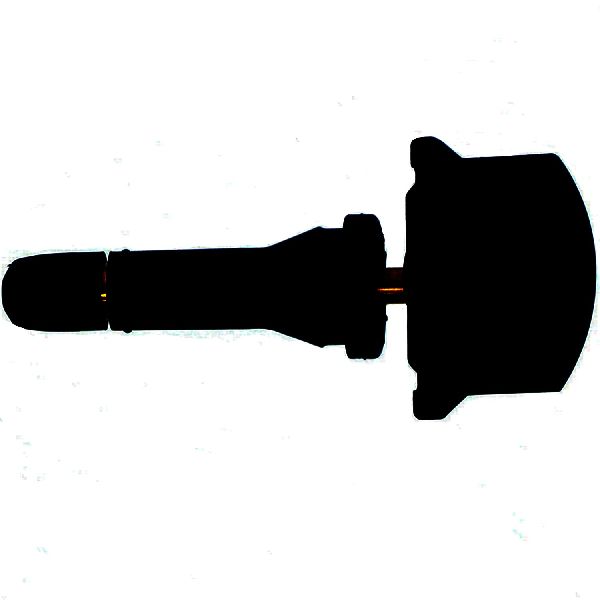
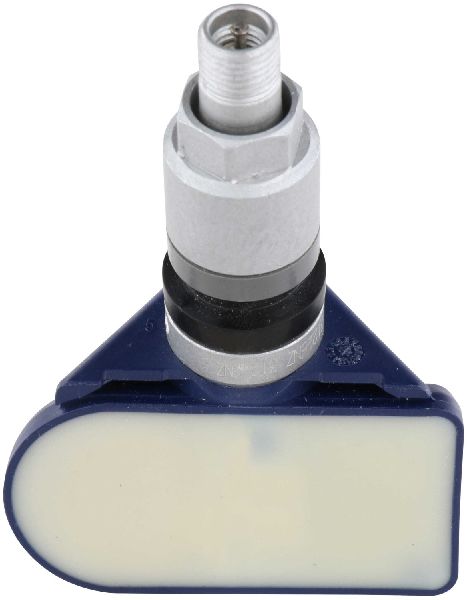
- Tire Pressure Monitoring System (TPMS) Sensor (433MHz)
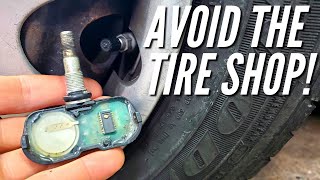
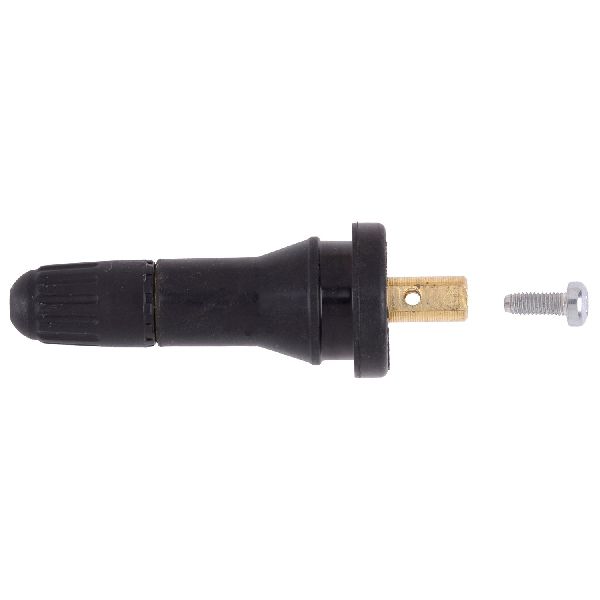
(OEM #68249200AA)— This is the component that fails, usually due to an expired internal battery. It is a self-contained unit that includes the sensor and valve stem. The correct frequency is 433MHz. This part number is superseded by 68239725AD and others.
Trusted brands: Mopar, Schrader, Standard Motor Products, Huf, Bosch
OEM price range: $55-$80
Aftermarket price range: $25-$50
Related Codes That Often Appear With This One
- C1501, C1502, C1504 — These codes correspond to the other three tire pressure sensors. Seeing multiple codes at once could indicate a systemic issue, like a problem with the WCM receiver, or simply that multiple sensor batteries have failed around the same time, which is common for vehicles of this age.
Technical Service Bulletins (TSBs) & Recalls
- 22-002-15 REV. A: This is the most relevant TSB. It addresses a 'Service Tire Pressure System' message on 2014-2015 Ram 2500/3500 models built before Nov 5, 2014. It lists DTCs C1501/C1502/C1503/C1504 with suffixes -07 (Mechanical Failure) and -31 (No Signal). The procedure may involve replacing all four TPM sensors and/or updating WCM software.
Platform-Specific Known Issues
- Auto-Relearn Function: Many owners report that the system successfully relearns the new sensor's ID automatically after driving for a short period, without any need for special tools. However, some have experienced delays or failures in this process, particularly on Dually (DRW) models where sensor locations can be more complex.
- Dually (DRW) Confusion: While C1503 refers to a primary wheel position (LR), tire rotations on DRW models can sometimes cause confusion if sensors are moved between inner and outer positions. The inner dually sensors are sometimes different from the outer/front sensors.
Mechanic-Grade Diagnostic Values
- WCM (SKREEM) Fused (B+) Input Voltage — expected: Above 9.0 Volts. Failure: A voltage reading below 9.0V can set a DTC (like B210D) and cause erratic WCM behavior, potentially affecting TPMS communication.
Hidden / Shadow Codes Worth Checking
- C1503-07: Tire Pressure Sensor 3 - Mechanical Failure. This indicates an internal hardware error in the sensor, such as a fault in its accelerometer, pressure transducer, or temperature sensor. (see via A capable chassis code scanner or dealer tool like wiTECH.)
- C1503-31: Tire Pressure Sensor 3 - No Signal. This indicates the WCM has not received a valid transmission from the sensor for a set number of cycles, typically due to a dead battery or complete electronic failure. (see via A capable chassis code scanner or dealer tool like wiTECH.)
- Scan Tool Live Data PIDs: Within the WCM data display, a technician can monitor specific hardware fault flags for each sensor, such as 'Tire 3 Pressure Sensor HW Fault', 'Tire 3 Temperature Sensor HW Fault', and 'Tire 3 Acceleration Sensor HW Fault'. If any of these flags are 'SET', it confirms an internal failure of the sensor. (see via Dealer-level scan tool (wiTECH) or advanced aftermarket tool with access to WCM live data.)
Scan Tool Commands That Help
- wiTECH (Dealer Tool): TPM Sensor Position Parameter Update — This routine, found under the 'Misc-Function' tab in the TPM section, is used after replacing sensors or the WCM to help the system relearn sensor IDs and positions, as specified in some service bulletins.
- AlfaOBD: Update Pressure Threshold — Allows the user to change the pressure at which the TPMS warning light activates. This is useful for owners who have installed aftermarket tires that require different pressures than stock. This requires connecting to the Body Computer.
- AlfaOBD: RF Hub Reset/Replace — After changing TPMS settings (like pressure thresholds), this function in the Radio Frequency Hub module forces the system to adopt the new values. This procedure requires the vehicle's 4-digit security PIN.
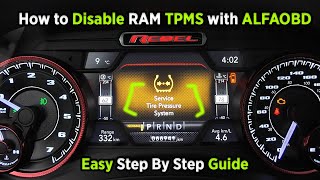
- AlfaOBD: Disable TPMS System — For users with aftermarket wheels without sensors or for off-road use, AlfaOBD can be used to change settings like 'TPMS configuration-logic' and 'non-regulated tire pressure information system present' to 'No', which completely disables the TPMS warnings.
Wiring & Ground Locations
- Wireless Control Module (WCM/SKREEM) — Located within the steering column, behind the steering wheel and clockspring assembly.. This module is the receiver for all TPMS sensor signals. While sensor failure is most common, a fault in the WCM or its wiring/ground can prevent signals from being received, mimicking a bad sensor.
- WCM Ground Wire — On some upfitter schematics, a ground point designated G911A is shown in the vicinity of the under-dash components. A general ground wire for upfitter connections near the park brake bracket is Z905-18T BK/DG (Black/Dark Green). A poor ground can cause intermittent electronic issues.. A poor or intermittent ground connection to the WCM can cause a variety of difficult-to-diagnose issues, including failure to receive TPMS signals, which could be misdiagnosed as a sensor fault.
Real Owner Repair Stories
- RamForum.com user (2019 Ram Rebel (similar system)) — TPMS light on for one tire, message says sensor is disconnected.
❌ Tried (didn't work) The user initially had the sensor replaced at a tire shop, but the problem persisted for the same wheel location (front left).
✅ What actually fixed it The user took the truck back to the tire shop. Although the final post is from the user awaiting the fix, another user in the thread confirms that if a new OEM sensor doesn't work, it's likely the new sensor itself is faulty ('kacked') and needs to be replaced again under warranty from the installer. The consensus is that a single-wheel issue is almost never the RF hub/WCM. - Reddit r/ram_trucks user (2020 Ram 3500 DRW) — Broken valve stem causing an air leak, which was diagnosed as a broken TPMS sensor.
❌ Tried (didn't work) A tire shop refused to install a customer-supplied OEM part., A second shop agreed to install but claimed they could not 'program' it.
✅ What actually fixed it The community confirmed for the user that a genuine Mopar (OEM) sensor does not require special programming. The vehicle's system will perform an automatic relearn procedure after the new sensor is installed and the vehicle is driven for a few miles.
OEM Part Supersession History
68249200AA (Dually Rear Inner)→68239725AD— Standard part evolution and updates by the manufacturer.
Heads up: This part number is specifically for the inner wheels of Dually models for the 2014-2018 model years. Using it on a front or outer wheel, or vice-versa, may cause fitment or reading issues.68186572AA (Front / SRW Rear)→68249201AA— Standard part evolution. The supersession chain includes 68239729AA and 68239729AB.
Heads up: This is the standard sensor for front wheels and all wheels on Single Rear Wheel (SRW) trucks. Do not use on the inner wheel of a Dually.Programmable/Universal Sensors→N/A— Aftermarket alternative to stocking multiple OEM parts.
Heads up: Brands like Schrader EZ-sensor and Autel MX-Sensor are 'programmable' and must be configured with a compatible TPMS tool *before* installation to mimic the OEM sensor's protocol. They are not 'plug-and-play' like a pre-programmed direct-fit or OEM sensor.
Model Year Variations Within This Range
- 2014 (built on or before Nov 5, 2014): Vehicles built before this date are specifically covered by TSB 22-002-15 REV. A. The fix may require a software update to the Wireless Control Module (WCM) in addition to or instead of sensor replacement to improve diagnostic capabilities and prevent false codes.
Helpful Videos

We Have This Part in Stock


The information in this article is provided for general reference and educational purposes only. Vehicle specifications, procedures, and part compatibility can vary by production date, trim level, and region. Always consult your vehicle's factory service manual and verify part numbers before purchasing or performing repairs. Safety-critical components such as airbags, seat belts, and braking systems should be installed by a qualified professional.
- Ram 3500:
- 🎬 Helpful Videos
- 🛍️ Shop This Part
- What's Unique About the 2014-2015 Ram 3500
- Diagnostic Flowchart
- Symptoms You May Notice
- Most Likely Causes
- Rare But Worth Checking
- Diagnosis Steps
- Parts You'll Likely Need
- Related Codes That Often Appear With This One
- Technical Service Bulletins (TSBs) & Recalls
- Platform-Specific Known Issues
- Mechanic-Grade Diagnostic Values
- Hidden / Shadow Codes Worth Checking
- Scan Tool Commands That Help
- Wiring & Ground Locations
- Real Owner Repair Stories
- OEM Part Supersession History
- Model Year Variations Within This Range
- 🎟️ Get 5% Off