

C1503 on 2016 Dodge Durango: Causes and Fixes for TPMS Sensor Fault
Code C1503 on a 2016 Dodge Durango indicates a fault with the #3 Tire Pressure Monitoring System (TPMS) sensor. The most common cause is a dead battery inside the sensor. The fix is to replace the sensor in the affected wheel with the correct 2016-specific part (68313387AC) and perform the automatic relearn procedure by driving the vehicle.
- C1503 means the TPMS sensor for tire #3 has failed, most likely due to an expired battery.
- You must use a TPMS diagnostic tool to confirm which physical wheel corresponds to 'tire #3' before replacing any parts, as tire rotations can move the faulty sensor.
- For a 2016 Durango, it is essential to use TPMS sensor part number 68313387AC; the 2015 sensor is not compatible.
- The vehicle will automatically relearn the new sensor after being driven for 10-20 minutes above 15 mph.
- This is not a typical DIY repair, as it requires a tire machine to access and replace the sensor inside the wheel.
What's Unique About the 2016-2016 Dodge DURANGO
For the 2016 Dodge Durango, it is critical to use the correct model year sensor. A Technical Service Bulletin (TSB #68313387A$) explicitly states that TPMS sensors from 2015 and 2016 models are not interchangeable. The 2015 model uses part number 68252493AB, while the 2016 model requires 68313387AC. Installing the wrong year sensor will cause the system to malfunction and set this code. This TSB was issued because engineering was investigating this specific group of codes (C1501-C1504) on these vehicles.
Diagnostic Flowchart
Tap your situation to follow the diagnostic path that matches what you're seeing on this vehicle.
Symptoms You May Notice
- TPMS warning light flashing for 60-90 seconds at startup, then staying on solid.
- "Service TPM System" message in the instrument cluster display. 🎬 Watch: Overview of the 2016 Durango TPMS display and settings
- Inability to see the pressure reading for one tire in the vehicle's information display (shows as dashes).
- Erratic or wildly fluctuating pressure reading for one tire displayed in the EVIC before it fails completely.
- Replacing the wrong tire's sensor. The designation '3' does not always correspond to a fixed wheel position if tires have been rotated. Always use a TPMS tool to identify which specific wheel's sensor is faulty before replacement.
- Replacing the sensor at the location indicated by the dash after a tire rotation. If a tire rotation was performed *before* the sensor failed, the faulty sensor may now be on a different corner of the vehicle. For example, if the failing left rear tire was rotated to the front left, the system may still report a C1503 fault for the 'Tire 3' (left rear) position, even though the bad part is now on the front.
Most Likely Causes
- Failed TPMS Sensor (Dead Battery or Internal Fault) 🔴 High Probability TPMS sensors contain a non-replaceable battery with a finite lifespan, typically 7-10 years. A 2016 vehicle is well within the age range where battery failure is the most common cause of sensor failure.
How to confirm: Use a TPMS diagnostic tool (like the Mopar #9936 mentioned in the TSB) to attempt to activate and read the sensor. If the tool shows 'No Signal', 'Low Battery', or an internal fault like 'Damaged Accel', the sensor has failed.
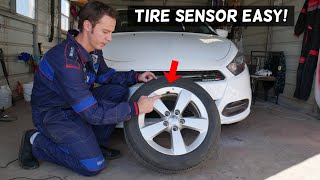
Typical fix: Replace the faulty TPMS sensor and allow the system to perform its automatic relearn procedure by driving the vehicle. This requires dismounting the tire from the wheel. 🎬 See this walkthrough on how to replace the TPMS sensor
Est. part cost: $30-$80 - Incorrect TPMS Sensor Installed 🟡 Medium Probability As noted in TSB #68313387A$, sensors for 2015 and 2016 models are not interchangeable. If tires were recently replaced, the shop may have installed an incompatible sensor (e.g., part #68252493AB from a 2015 model instead of #68313387AC for the 2016).
How to confirm: Visually inspect the part number on the sensor body (requires tire dismount) or use an advanced TPMS tool to check the sensor's protocol and part number information against OEM specs for a 2016 Durango.
Typical fix: Replace the incorrect sensor with the correct OEM or equivalent sensor for a 2016 model year (Mopar #68313387AC).
Est. part cost: $30-$80
Rare But Worth Checking
- Wireless Control Module (WCM) Fault: While rare, the WCM is the central receiver for all TPMS signals. If it fails, it may be unable to receive a signal from one or more sensors. This is usually a last resort after confirming the sensor itself is good. A related issue could be a blown fuse for the RF Hub; on similar platforms, this is often a 5-amp fuse in the under-hood fuse box.
- Radio Frequency (RF) Interference: Strong RF interference from aftermarket electronics, such as audio amplifiers, subwoofers, or poorly shielded dash cams, can disrupt the signal between the TPMS sensor and the WCM/RF Hub. The factory amplifier in the Durango is located behind the driver's side rear quarter trim panel, near the WCM, making this area sensitive to aftermarket electronic installations.
Diagnosis Steps
- Verify the C1503 code is active using an OBD-II scanner capable of reading Chassis (C) codes.
- Use a dedicated TPMS diagnostic tool to scan each of the four wheels.
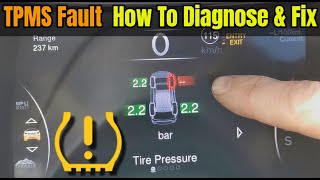
- Identify which wheel does not respond or reports an internal fault/low battery. 🎬 Watch: Step-by-step guide to diagnosing a TPMS fault This is the location of the faulty sensor.
- Note that while some systems designate 'Tire 3' as the left rear, this is not guaranteed and can change with rotation. The TPMS tool is the only way to be certain.
- If a sensor was recently replaced, confirm with the TPMS tool or by part number that it is compatible with a 2016 Durango (Part #68313387AC).
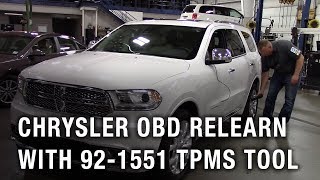
- After replacing the correct sensor, perform the relearn procedure. This is typically automatic: drive the vehicle for up to 20 minutes at a continuous speed above 15 mph (24 km/h). The TPMS light should turn off once the new sensor is learned.
- If the sensor tests good but the code persists, check for sources of RF interference, particularly from aftermarket electronics installed in the rear cargo area near the WCM. If none are found, the diagnostic path would then move to inspecting the wiring and connectors for the Wireless Control Module (WCM) and potentially testing the module itself.
Parts You'll Likely Need
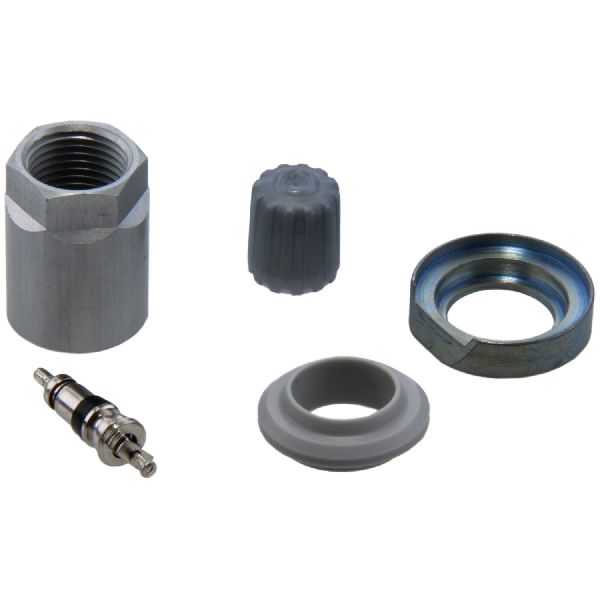
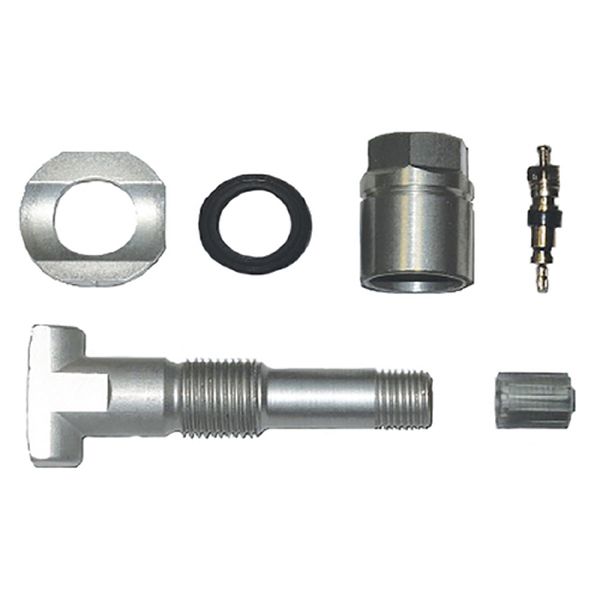
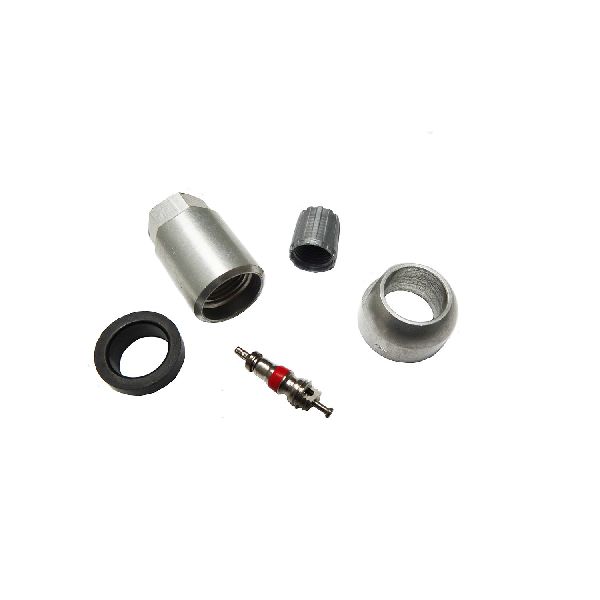
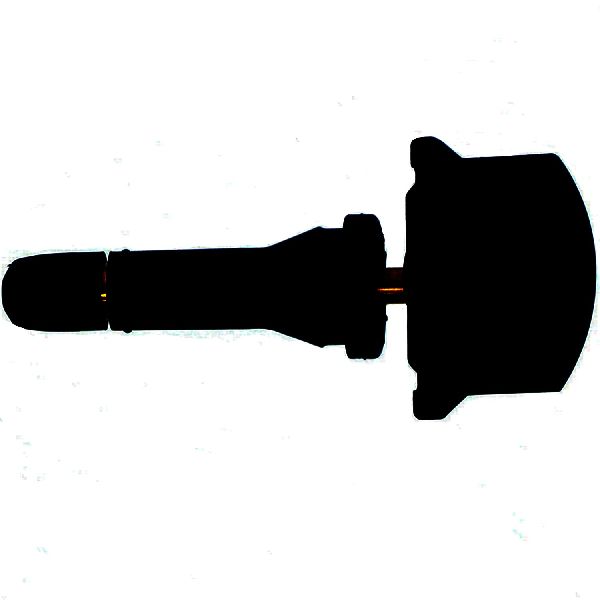
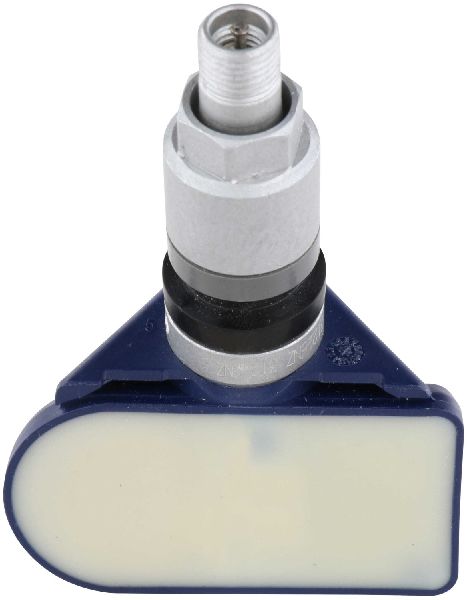
- Tire Pressure Monitoring System (TPMS) Sensor
(OEM #68313387AC)— This is the component that contains the battery and pressure-sensing electronics. The internal battery is the most common point of failure, and it is not serviceable. This part number supersedes older, incompatible versions like 68252493AB used on 2015 models.
Trusted brands: Mopar, Schrader, Huf, VDO, Dorman
OEM price range: $60-$90
Aftermarket price range: $30-$60
Related Codes That Often Appear With This One
- C1501, C1502, C1504 — Seeing multiple codes from this family (C1501, C1502, C1503, C1504) could point to a systemic issue like an incorrect type of sensor being installed on all wheels, RF interference, or a problem with the central WCM receiver.
- C1503-31, C1503-07, C1503-96 — These are more specific sub-codes that can be read by advanced scanners. C1503-31 means 'No Signal', often from a dead battery. C1503-07 means 'Mechanical Failure', an internal hardware fault. C1503-96 is a generic 'Internal Fault'. These codes confirm the sensor itself is the problem.
Technical Service Bulletins (TSBs) & Recalls
- 68313387A$: Notes that 2015 & 2016 TPM Sensors are not interchangeable and that engineering is investigating codes C1501-31, C1502-31, C1503-31, and C1504-31.
- 22-002-15 REV. A (Referenced from similar Ram platform): Specifies sub-fault types for TPMS codes, including C1503-07 (Mechanical Failure) and C1503-31 (No Signal), providing deeper diagnostic insight.
Platform-Specific Known Issues
- A key issue for this model year is the incompatibility between 2015 (part #68252493AB) and 2016 (part #68313387AC) TPMS sensors, as documented in TSB #68313387A$. Using the wrong sensor will prevent the system from working correctly.
- The vehicle uses an automatic relearn system that requires driving to complete. Some owners may be confused when the light does not immediately go out after sensor replacement.
Mechanic-Grade Diagnostic Values
- TPMS Sensor Internal Battery Voltage — expected: 3-volt (Lithium Ion) or 1.25-volt (Nickel Metal Hydride). Failure: A significantly lower voltage reading on a TPMS tool, or a 'Low Battery' status. The battery itself is sealed and cannot be measured directly.
Scan Tool Commands That Help
- wiTECH: TPM Sensor Position Parameter Update — This routine, found under the 'Misc-Function' tab for the TPM, can be used to force the system to relearn sensor positions after replacement or rotation, potentially speeding up the process compared to the automatic drive-cycle relearn.
Wiring & Ground Locations
- Radio Frequency Hub Module (RFHM / WCM) — Behind the left rear cargo quarter trim panel.. This module is the direct receiver for the signals from all TPMS sensors. Its location is critical for diagnosing RF interference issues, as aftermarket electronics (like amplifiers) installed nearby are a potential cause of signal loss. Any wiring checks for the TPMS system would start at this module.
Real Owner Repair Stories
- Personal Blog Post (Ram Truck (similar Chrysler platform)) — TPMS light on, code C1502 initially, then C1503 after a shop replaced the wrong sensor.
❌ Tried (didn't work) A tire shop replaced two sensors, but the light came back on with a code for a different wheel position.
✅ What actually fixed it The owner used diagnostic software (Appcar) and an RTL-SDR dongle to identify exactly which sensor ID was not transmitting. He returned to the shop, told them the specific corner (right rear) with the non-communicating sensor, and they replaced it. The light went off within 30 seconds of driving away, permanently fixing the issue.
OEM Part Supersession History
68252493AA, 68252493AB, 68313387AA, 68313387AB→68313387AC— Part evolution and updates.
Heads up: As stated in TSB #68313387A$, the 2015-era sensors (e.g., 68252493AB) are not interchangeable with the 2016 sensor (68313387AC). Using the wrong part will cause a system malfunction and set codes.
Helpful Videos



We Have This Part in Stock


The information in this article is provided for general reference and educational purposes only. Vehicle specifications, procedures, and part compatibility can vary by production date, trim level, and region. Always consult your vehicle's factory service manual and verify part numbers before purchasing or performing repairs. Safety-critical components such as airbags, seat belts, and braking systems should be installed by a qualified professional.
- Dodge DURANGO:
- 🎬 Helpful Videos
- 🛍️ Shop This Part
- What's Unique About the 2016-2016 Dodge DURANGO
- Diagnostic Flowchart
- Symptoms You May Notice
- Most Likely Causes
- Rare But Worth Checking
- Diagnosis Steps
- Parts You'll Likely Need
- Related Codes That Often Appear With This One
- Technical Service Bulletins (TSBs) & Recalls
- Platform-Specific Known Issues
- Mechanic-Grade Diagnostic Values
- Scan Tool Commands That Help
- Wiring & Ground Locations
- Real Owner Repair Stories
- OEM Part Supersession History
- 🎟️ Get 5% Off