

C1502 on 2016 Jeep Grand Cherokee: Tire Pressure Sensor Fault Causes and Fixes
Code C1502 on a 2016 Jeep Grand Cherokee indicates a fault with the Tire Pressure Monitoring System (TPMS) sensor, typically in the front right tire. The most common cause is a dead sensor battery or an internal fault. The fix involves replacing the sensor, ensuring it's the correct Mopar part for the 2016 model year, as sensor compatibility changed between 2015 and 2016.
- Code C1502 on a 2016 Grand Cherokee points directly to a fault with the front right tire pressure sensor.
- The most likely cause is a dead battery or internal failure of the sensor, which is a common issue for vehicles of this age.
- Crucially, you must use a TPMS sensor specifically for the 2016 model year (e.g., Mopar P/N 68313387AC), as 2015 sensors are not compatible.
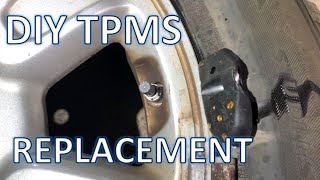
- Replacement requires a tire shop to dismount the tire. After replacement, a short drive above 15 mph is usually all that's needed to reset the system.
What's Unique About the 2016-2016 Jeep GRAND CHEROKEE

A critical issue for the 2016 Grand Cherokee is the incompatibility of Tire Pressure Monitoring System (TPMS) sensors with the previous model year. A Technical Service Bulletin (TSB) issued by the manufacturer explicitly warns that 2015 and 2016 TPM sensors are not interchangeable. The 2016 model requires part number 68313387AC (or its predecessors), while the 2015 model used 68241067AB. Using the wrong part will cause the C1502 fault to persist.
Diagnostic Flowchart

Tap your situation to follow the diagnostic path that matches what you're seeing on this vehicle.
Symptoms You May Notice
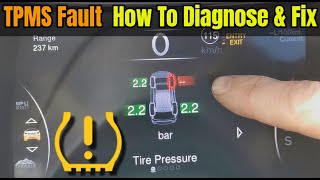
- The TPMS warning light is illuminated on the dashboard. It will typically flash for about 75 seconds on startup before staying solid, which indicates a TPMS system fault rather than just low pressure.
- A 'Service Tire Press System' message appears in the Electronic Vehicle Information Center (EVIC).
- The pressure reading for the front right tire shows as '--' or an incorrect value (e.g., 0 PSI) in the EVIC.
- Replacing the TPMS sensor with an incompatible aftermarket or incorrect model year part (e.g., a 2015 sensor on a 2016 vehicle).
- Assuming the issue is with the vehicle's main computer before properly diagnosing the individual sensor.
- Replacing a sensor without first checking for simple issues like RF interference from accessories.
- Replacing the wrong sensor if tires have been rotated. The code C1502 is linked to a specific sensor ID, not its physical location. A TPMS tool must be used to identify which wheel currently holds the failing sensor.
Most Likely Causes

- Dead TPMS Sensor Battery / Internal Failure 🔴 High Probability TPMS sensor batteries are sealed and have a finite lifespan, typically 5-10 years. A 2016 vehicle is at an age where battery failure is a common cause of sensor failure.
How to confirm: Use a dedicated TPMS diagnostic tool (like the Mopar 9936 TPM-RKE Analyzer or an Autel tool) to attempt to read the sensor's signal. If the tool cannot get a reading or shows an internal fault for the front right sensor, it has failed and must be replaced. Scan tool live data for 'Tire 2 Pressure' will often show 0 PSI.
Typical fix: Replace the faulty TPMS sensor. The entire unit must be replaced as the battery is not serviceable.
Est. part cost: $30-$110 - Incorrect Model Year TPMS Sensor Installed 🟡 Medium Probability As highlighted in TSB #68313387A$, the 2015 and 2016 sensors are not interchangeable. A previous replacement may have used the wrong part (e.g., part #68241067AB for a 2015 model) instead of the correct 2016 part (#68313387AC), leading to this fault code.
How to confirm: Visually inspect the sensor if the tire is dismounted, or use a TPMS tool to check the part number/frequency. Cross-reference the part number with Mopar's catalog for the 2016 Grand Cherokee.
Typical fix: Replace the incorrect sensor with the correct OEM or equivalent sensor specified for a 2016 model.
Est. part cost: $30-$110 - Damaged TPMS Sensor ⚪ Low Probability
How to confirm: A visual inspection of the sensor after dismounting the tire may reveal cracks or physical damage, often caused during a previous tire change or by a significant pothole impact.
Typical fix: Replace the damaged sensor.
Est. part cost: $30-$110
Rare But Worth Checking
- Radio Frequency (RF) Interference: Aftermarket electronic devices, such as phone chargers, dash cams, or certain types of window tint, can sometimes interfere with the 433 MHz signal from the TPMS sensor to the vehicle's receiver. Before replacing parts, try unplugging all aftermarket accessories and see if the code clears after driving.
- Wireless Control Module (WCM) Fault: While rare, the central module that receives signals from all TPMS sensors can fail. This is typically suspected only after all individual sensors have been tested and confirmed to be working correctly. Replacement of the WCM is more expensive, with costs potentially running from $350 to $385. The WCM is also known as the RF Hub and requires programming upon replacement.
- Missing IOD Fuse: A very specific but possible cause for C1501, C1502, C1503, and C1504 to all appear simultaneously is driving the vehicle without the IOD (Ignition Off Draw) fuse installed. This fuse powers the WCM receiver circuit. If it's missing, the receiver cannot get signals from any of the sensors, logging a fault for all of them. This scenario is most common on vehicles that have been in dealer inventory.
Diagnosis Steps
- Verify tire pressures in all four tires are set to the specification on the door jamb placard.
- Use an OBD-II scanner capable of reading Chassis codes to confirm C1502 is active.
- Use a dedicated TPMS activation/diagnostic tool to test each wheel sensor individually. Start with the front right wheel, but be prepared to test all four if tires may have been rotated.
- If the front right sensor (or the sensor identified by the tool as 'Sensor 2') fails to respond or shows an internal fault, it has failed and needs replacement.
- If the sensor responds, check for RF interference by removing aftermarket electronics and re-testing.
- If the code persists with a known-good sensor, further diagnosis of the Wireless Control Module (WCM) and its wiring may be necessary.
- After replacing a sensor, an automatic relearn procedure is required. For the 2016 Grand Cherokee, this involves driving the vehicle for 10-20 minutes at speeds above 15 mph to allow the system to automatically recognize the new sensor. The TPMS light should turn off on its own.
Parts You'll Likely Need

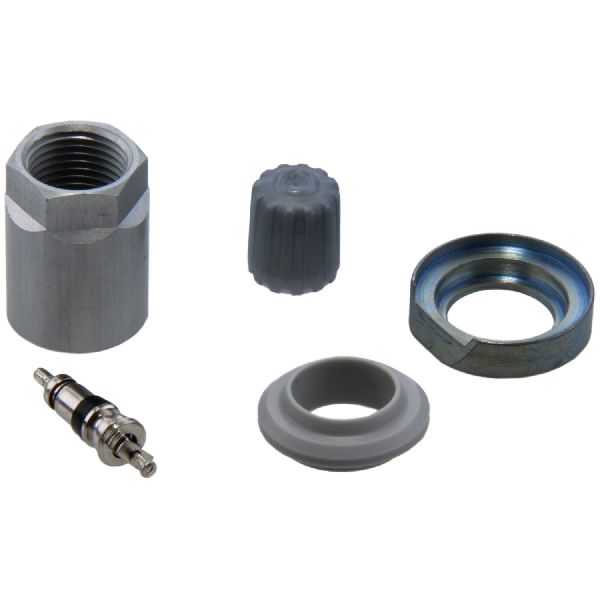
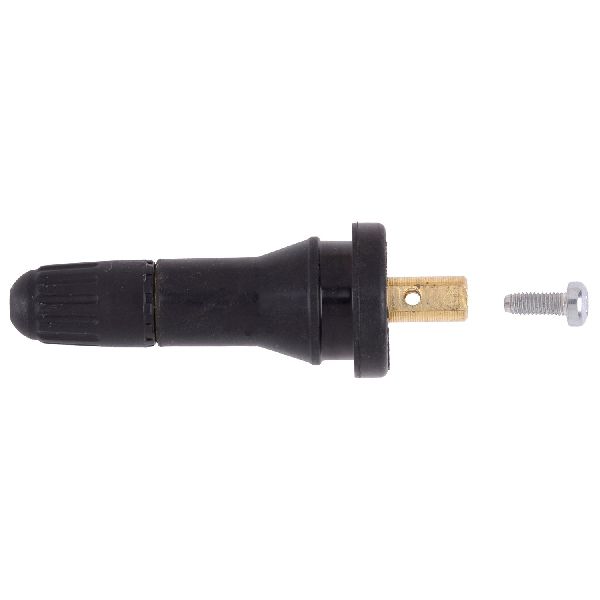
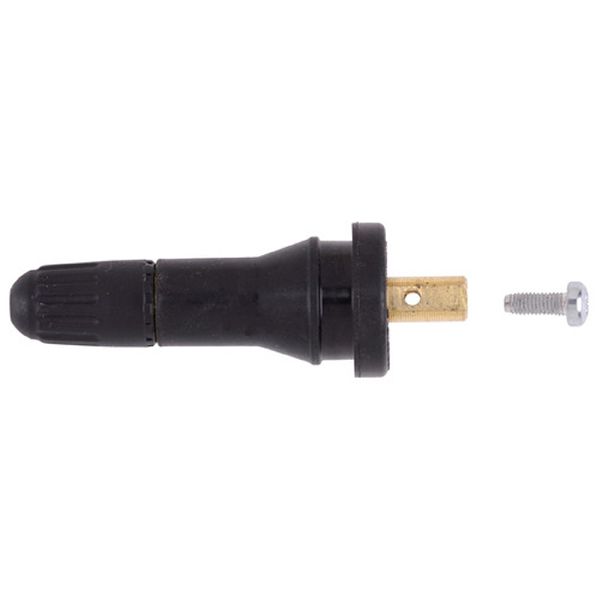
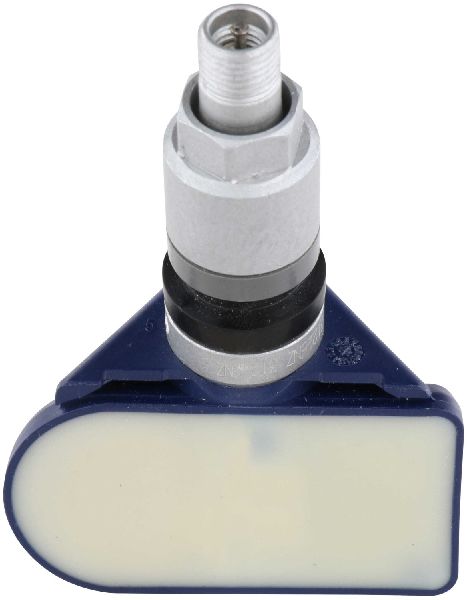
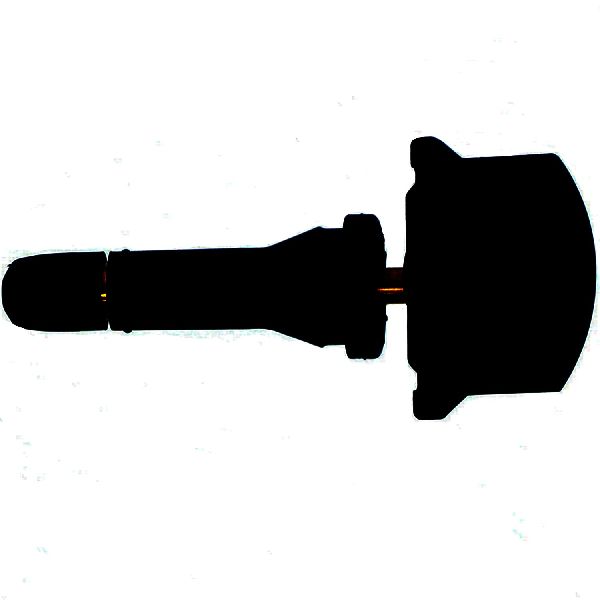
- Tire Pressure Monitoring System (TPMS) Sensor
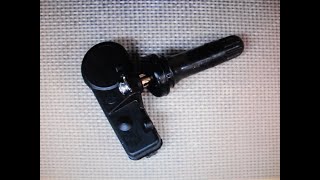
(OEM #68313387AC)— This is the component that fails, either due to an expired internal battery or an internal fault, triggering the C1502 code. The OEM part for a 2016 model is crucial due to incompatibility with other years. Part number 68313387AC supersedes 68313387AB, 68313387AA, 68252493AB, and 68252493AA.
Trusted brands: Mopar, Schrader, VDO, Bosch, Autel
OEM price range: $65-$110
Aftermarket price range: $30-$60
Related Codes That Often Appear With This One
- C1501 — Indicates a fault with the front left TPMS sensor. Often appears with C1502 if sensors are failing due to similar age.
- C1503 — Indicates a fault with the rear left TPMS sensor. Multiple codes may appear if there's a systemic issue or multiple sensors are reaching the end of their battery life.
- C1504 — Indicates a fault with the rear right TPMS sensor. Seeing all four codes (C1501, C1502, C1503, C1504) could point to a central module issue or an event that triggered faults in all sensors, such as a missing IOD fuse.
Technical Service Bulletins (TSBs) & Recalls
- 68313387A$ (2016 TIRES, dated 2016-07-27) - Notes an investigation into TPM lamp illumination with codes C1501-31, C1502-31, C1503-31, C1504-31 and highlights that 2015 and 2016 TPM sensors are not interchangeable.
- 22-002-15 - While for a different FCA vehicle, this TSB helps define the failure type suffix '-31' as 'No Signal' and '-07' as 'Mechanical Failure' for these types of codes.
Platform-Specific Known Issues
- TSB #68313387A$ explicitly notes that 2015 and 2016 model year TPMS sensors are not interchangeable, which is a common source of error during repairs. The 2016 model uses a 433 MHz sensor.
Mechanic-Grade Diagnostic Values
- TPMS Sensor Signal Frequency — expected: 433 MHz. Failure: Using a sensor with a different frequency (e.g., 315 MHz) will result in a no-signal condition and set a fault code.
- Scan Tool Live Data - Tire 2 Pressure — expected: A pressure reading that matches the manual gauge (e.g., 36 PSI).. Failure: A reading of '0 PSI' or '--' indicates a complete loss of signal or an internal sensor fault.
Hidden / Shadow Codes Worth Checking
- C1502-07: Tire Pressure Sensor 2 - Mechanical Failure. This indicates an internal hardware error within the sensor, such as a problem with its internal accelerometer or pressure-sensing components. (see via Dealer-level scan tool (like wiTECH) or advanced aftermarket scanner.)
- C1502-31: Tire Pressure Sensor 2 - No Signal. This is set when the Wireless Control Module (WCM) fails to receive or decode data from the sensor for a set period (e.g., 20 minutes of driving over 15 mph). (see via Dealer-level scan tool (like wiTECH) or advanced aftermarket scanner.)
- C1502-96: Tire Pressure Sensor 2 - Internal Component Failure. This is a general internal fault reported by the sensor itself, often related to its internal electronics or battery. (see via Advanced aftermarket or dealer-level scan tool.)
Scan Tool Commands That Help
- wiTECH (Chrysler OEM Tool): Program Tire sensor ID — This function, found under the TPM section's 'Misc Function' tab, is used to manually enter the unique ID of a new sensor into the vehicle's module. This can be necessary if the auto-relearn procedure fails or to correct sensor location data after a tire rotation.
- wiTECH (Chrysler OEM Tool): TPM Sensor Position Parameter Update — This routine is used to help the module learn the physical position of each sensor on the vehicle, which is useful for resolving codes like C151D (Tire Pressure Sensor Location Undetermined) that can sometimes accompany a sensor fault.
- TPM-RKE Analyzer (e.g., Mopar 9936): LEARN ID — This function on a handheld TPMS tool is used to activate and read the unique ID, pressure, and temperature from each sensor at the wheel. This is the first step in diagnosis to confirm which sensor has failed and to gather the IDs needed for manual programming with a scan tool.
Wiring & Ground Locations
- RF Hub (WCM) — On the Grand Cherokee (WK2), the Radio Frequency Hub (RF Hub), which serves as the TPMS receiver, is located behind the left rear cargo quarter trim panel.. This is the module that receives the signals from all TPMS sensors. In rare cases of persistent faults with known-good sensors, a fault in this module or its wiring/connectors could be the cause. It requires programming if replaced.
- Engine Ground Strap — A common ground strap to corrode on the WK2 platform is located on the passenger side of the engine, visible from under the hood, attaching to the frame near the alternator.. While not directly linked to the TPMS system in documentation, poor grounds can cause a wide range of unpredictable electronic issues. Checking major ground points for corrosion is a valid step in advanced diagnosis when direct causes are not found.
- Interior Grounds (G300/G301) — Under the front passenger seat (G300) and driver seat (G301). These can be accessed by removing the plastic side trim and lifting the carpet.. These ground points serve various interior modules. While the RF Hub is in the rear, ensuring all major chassis grounds are clean and tight can prevent intermittent electrical issues that might affect module communication.
OEM Part Supersession History
68252493AA, 68252493AB→68313387AA, 68313387AB, and finally 68313387AC— Standard part evolution for improved reliability or manufacturing changes.
Heads up: Using a pre-2016 sensor (e.g., 68241067AB) on a 2016 Grand Cherokee will result in a persistent C1502 fault, as confirmed by TSB #68313387A$. The correct part for 2016 is 68313387AC or its direct predecessors.
Helpful Videos





We Have This Part in Stock


The information in this article is provided for general reference and educational purposes only. Vehicle specifications, procedures, and part compatibility can vary by production date, trim level, and region. Always consult your vehicle's factory service manual and verify part numbers before purchasing or performing repairs. Safety-critical components such as airbags, seat belts, and braking systems should be installed by a qualified professional.
- Jeep GRAND CHEROKEE:
- 🎬 Helpful Videos
- 🛍️ Shop This Part
- What's Unique About the 2016-2016 Jeep GRAND CHEROKEE
- Diagnostic Flowchart
- Symptoms You May Notice
- Most Likely Causes
- Rare But Worth Checking
- Diagnosis Steps
- Parts You'll Likely Need
- Related Codes That Often Appear With This One
- Technical Service Bulletins (TSBs) & Recalls
- Platform-Specific Known Issues
- Mechanic-Grade Diagnostic Values
- Hidden / Shadow Codes Worth Checking
- Scan Tool Commands That Help
- Wiring & Ground Locations
- OEM Part Supersession History
- 🎟️ Get 5% Off