

C1502 on 2016 Dodge Durango: TPMS Sensor Failure Causes and Fixes
Code C1502 on a 2016 Dodge Durango means the Tire Pressure Monitoring System (TPMS) sensor in one of the wheels has an internal failure. It's almost always due to the sensor's internal battery dying, as a 2016 model is at the typical age for this to occur. The fix is to replace the faulty sensor, which costs about $50-$90 for the part and requires tire dismounting.
- C1502 means the TPMS sensor for the front-right wheel has likely failed, usually from an old battery.
- The TPMS warning light will flash for about a minute before staying on solid, indicating a system fault.
- You must use a TPMS tool to confirm which physical wheel has the bad sensor before starting repairs, as tires may have been rotated.
- For a 2016 Durango, ensure you buy the correct sensor for that specific model year (OEM #68249197AA or its successor 68378369AF), as 2015 sensors are not compatible.
- Replacement requires tire dismounting, so professional installation at a tire shop is recommended and typically costs $100-$220.
- The vehicle has an automatic relearn system, so no special programming is required after installation; simply driving the car will sync the new sensor.
What's Unique About the 2016-2016 Dodge DURANGO
For the 2016 Durango, a key issue highlighted by a manufacturer Technical Service Bulletin (TSB) is that TPMS sensors from 2015 and 2016 models are not interchangeable. Using the wrong year's sensor will cause a system fault. The good news is that the Durango's TPMS is a self-learning system (automatic relearn). After a new sensor is installed, you typically only need to drive the vehicle for up to 20 minutes at speeds above 15 mph for the system to automatically recognize it, without needing a special dealer tool for programming. However, many tire shops will use an OBDII relearn tool to instantly program the new sensor ID to the vehicle's computer as a best practice.
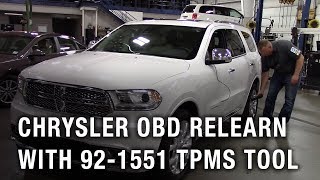
🎬 Watch: How to perform an OBDII relearn with a toolDiagnostic Flowchart
Tap your situation to follow the diagnostic path that matches what you're seeing on this vehicle.
Symptoms You May Notice
- TPMS warning light flashes for approximately 60-90 seconds at startup, then stays on solid.
- "Service Tire Pressure System" message displayed on the instrument cluster (EVIC).
- The pressure reading for one tire shows dashes (---) instead of a number in the EVIC display. 🎬 Watch: How to navigate the 2016 Durango TPMS display menu
- Replacing the wrong wheel's sensor. Tire rotations change the physical position of the sensors. Always use a TPMS tool to identify which specific sensor has failed before removing a wheel. The code C1502 is tied to the sensor ID, not its physical location.
- Assuming all four sensors are bad when the IOD fuse is missing. If all four codes (C1501-C1504) appear at once on a vehicle that was recently serviced, check that the IOD fuse is properly seated before replacing any parts.
Most Likely Causes
- Failed TPMS Sensor (Dead Battery) 🔴 High Probability The sealed, non-rechargeable lithium-ion battery inside the TPMS sensor has a finite lifespan, typically cited as 7-10 years. A 2016 vehicle is well within the age range for the original sensor batteries to fail.
How to confirm: Use a TPMS diagnostic tool to attempt to 'wake' and read the sensor's ID, pressure, temperature, and battery status. A sensor that does not respond or shows a 'LOW BATT' or 'FAULT' status is confirmed bad.
Typical fix: Replace the faulty TPMS sensor. It is often recommended to replace all four sensors at the same time, especially if they are original, as the others are likely near the end of their service life. This avoids repeat trips to the tire shop.
Est. part cost: $40-$90 per sensor - Damaged TPMS Sensor 🟡 Medium Probability Sensors are made of plastic and can be easily damaged during tire mounting or dismounting if the technician is not careful. A YouTube video of a C1502 on a 2013 Durango showed the owner suspected this was the cause after a recent tire change.
How to confirm: Visual inspection after dismounting the tire. The sensor body may be cracked, the valve stem broken, or the sensor may have detached from the stem.
Typical fix: Replace the damaged sensor.
Est. part cost: $40-$90 - Incorrect TPMS Sensor Installed ⚪ Low Probability As noted in TSB #68313387A$, sensors for 2015 and 2016 models are not interchangeable. An aftermarket sensor that is not a proper equivalent (wrong frequency or protocol) can also cause this code. The correct frequency for a 2016 Durango is 433 MHz.
How to confirm: Use a TPMS tool to check the sensor's part number and frequency. Cross-reference the part number with OEM specifications for a 2016 model year. A Reddit user with a platform-mate Jeep Grand Cherokee confirmed sensors from a 2021 model would not work on their 2015.
Typical fix: Install the correct OEM or equivalent TPMS sensor for the specific model year.
Est. part cost: $40-$90
Rare But Worth Checking
- Wireless Control Module (WCM) Fault: While rare, the receiver module itself can fail. This would typically be suspected if multiple sensor codes appear simultaneously (and sensors are known-good) or if a new, correct sensor cannot be recognized by the system. A diagnostic procedure for C1502-96 includes replacing the TPM module as a final step if a new sensor doesn't fix the issue.
- Radio Frequency (RF) Interference: Aftermarket electronic devices like dash cams, phone chargers, or LED lighting can sometimes emit RF noise that interferes with the 433 MHz TPMS sensor signals, though this is uncommon. Diagnostic procedures recommend checking for and removing any non-FCC compliant components first.
- IOD Fuse Not Installed During Vehicle Operation: A TSB for older models notes that if the vehicle is driven for over 10 minutes above 20 mph without the Ignition Off Draw (IOD) fuse installed, the WCM receiver will be unpowered. This can cause the system to erroneously log internal failure codes C1501, C1502, C1503, and C1504 simultaneously. This is most likely to occur at a dealership before sale.
Diagnosis Steps
- Verify the TPMS warning light behavior: Flashing for ~60-90 seconds on startup, then solid. This confirms a system fault, not just low pressure.
- Use an OBD-II scanner to confirm C1502 is the active code. Note any suffixes like '-96' (Internal Component Failure) or '-31' (No Signal).
- Use a dedicated TPMS tool (like the manufacturer-referenced #9936) to scan each of the four tires. This tool will attempt to 'wake up' and read data from each sensor.
- Identify the sensor that does not respond or reports an internal error or low battery. This is the faulty sensor. Note its physical location (e.g., driver's rear).
- Note that even though the code is for 'Sensor 2' (factory front-right), the faulty sensor could be at any wheel location if tires have been rotated. The TPMS tool confirms the physical location of the failed sensor ID.
- If all sensors respond correctly, investigate for rare causes like RF interference or a WCM issue.
- If all four sensors fail to respond, check for the IOD fuse issue mentioned in TSBs before condemning the WCM.
- Once the faulty sensor is identified, proceed with replacement.
Parts You'll Likely Need
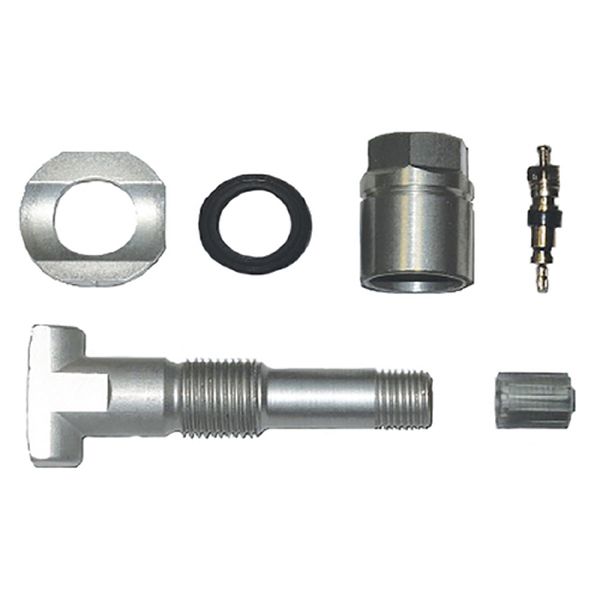
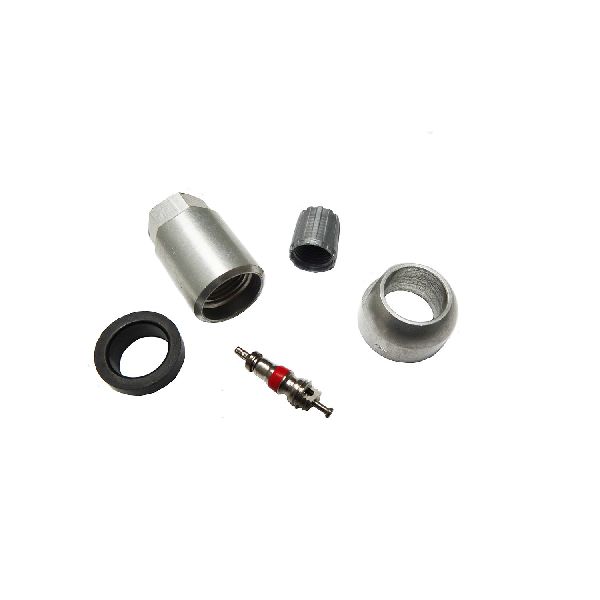
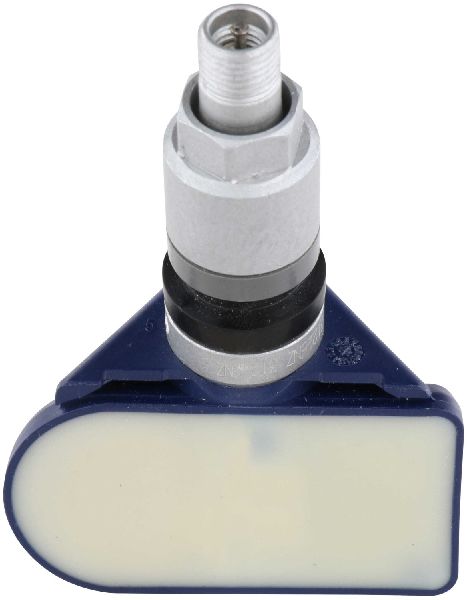
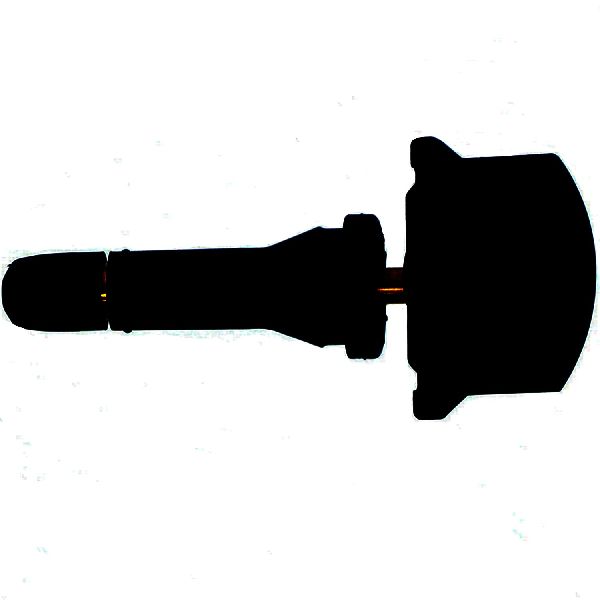
- Tire Pressure Monitoring System (TPMS) Sensor
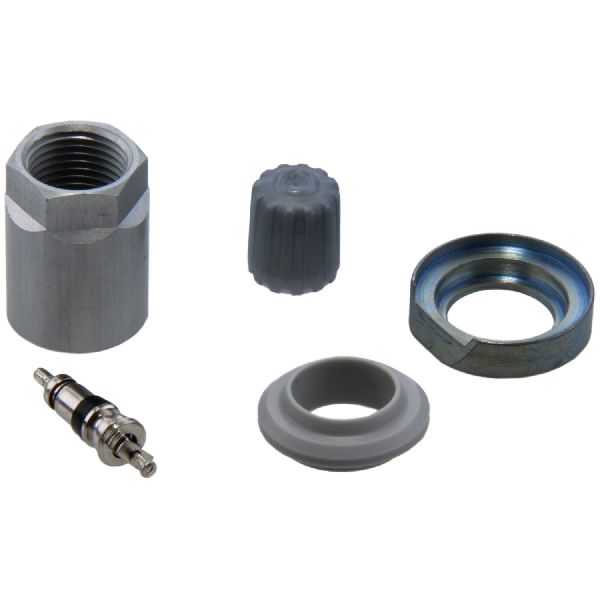
(OEM #68249197AA (Superseded by 68378369AF))— This is the direct cause of the C1502 code, as the sensor's internal battery dies or its electronics fail. The entire unit is sealed and must be replaced. The original part number 68249197AA has been superseded by 68378369AF.
Trusted brands: Mopar, Schrader, Continental, Autel, VDO
OEM price range: $60-$100
Aftermarket price range: $40-$80
Related Codes That Often Appear With This One
- C1501, C1503, C1504 — These codes are for the other three wheel sensors (Front Left, Rear Right, Rear Left). Seeing them together could indicate a systemic issue like a WCM fault, RF interference, a missing IOD fuse, or simply that all sensors are reaching the end of their battery life at the same time.
Technical Service Bulletins (TSBs) & Recalls
- 68313387A$: Notes that 2015 & 2016 TPM Sensors are not interchangeable and mentions codes C1501-31 through C1504-31 for TPM lamp issues.
- 22-002-15 (for Ram trucks): Provides additional context on code suffixes, showing C1502-07 for 'Mechanical Failure' and C1502-31 for 'No Signal', which are applicable failure modes for the Durango's system.
- 02-005-07 (for older models): Explains how driving with the IOD fuse removed can cause all four sensor fault codes (C1501-C1504) to be set erroneously, which is a useful diagnostic tip.
Platform-Specific Known Issues
- A known issue for 2015-2016 models is the incompatibility of TPMS sensors between these two years, as documented in TSB #68313387A$. A 2015 sensor will not work on a 2016 model and vice-versa.
- The TPMS system uses an 'automatic relearn' function. After a new sensor is installed, driving for a period above 15 MPH allows the vehicle to learn the new sensor ID without special tools.
Mechanic-Grade Diagnostic Values
- TPMS Sensor Frequency — expected: 433 MHz. Failure: Using a sensor with a different frequency (e.g., 315 MHz) will result in a no-communication fault.
Hidden / Shadow Codes Worth Checking
- C1502-96: Tire Pressure Sensor 2 - Component Internal Failure. This sub-type is used when the sensor's internal diagnostics report a fault, such as a problem with its internal pressure transducer, accelerometer, or temperature sensor. (see via Dealer-level scan tools like Mopar wiTECH or advanced aftermarket scanners (e.g., Autel MaxiSYS) can read these manufacturer-specific sub-codes.)
Scan Tool Commands That Help
- wiTECH: View DTCs in TPM Module — Used to read the specific active or stored C1502 code and its suffix (like -96) after a test drive to confirm the fault is present.
- wiTECH: Data Display for the TPM Module — Allows a technician to view live data, including the unique ID for each sensor the module is receiving signals from. This is used to confirm if the module is receiving any signal from the suspect sensor.
- wiTECH: WIN REPLACED — This function is used if the entire Wireless Control Module (WCM/WIN) is replaced. It requires the vehicle's PIN to program the new module to the vehicle's immobilizer system.
- wiTECH: PROGRAMMING IGNITION KEYS OR KEY FOBS — This function, located under the Wireless Control Module (WCM) menu, is necessary to program keys to a new module, highlighting that the WCM is integral to the vehicle's security system, not just TPMS.
Wiring & Ground Locations
- Wireless Control Module (WCM/SKREEM) — On the right side of the steering column, near the ignition lock cylinder, concealed beneath the steering column shrouds. It has an antenna ring that fits around the ignition cylinder housing.. This module is the receiver for all TPMS sensor signals. A fault with the module itself, its connector, or its power/ground can mimic a sensor failure, typically by setting codes for all four sensors simultaneously.
- TPMS Fuse — For this generation of Durango/Grand Cherokee, there is often no single, dedicated, removable fuse for the TPMS system. Power for the WCM is typically integrated into a circuit with other modules like the radio or instrument cluster to prevent easy disabling of a safety system.. If multiple TPMS codes are present and a module fault is suspected, a technician would need to check fuses for related systems (Instrument Cluster, Body Control Module) rather than looking for one labeled 'TPMS'.
Real Owner Repair Stories
- Blog post by user 'zack' at zackreed.me (2009 Dodge Ram 1500 (similar FCA TPMS system)) — TPMS light was on, scan tool showed active code C1502 - Tire Pressure Sensor 2 Internal.
❌ Tried (didn't work) The tire shop replaced the sensor for tire #2, but the code and light remained on.
✅ What actually fixed it The brand new replacement sensor was faulty out of the box. After confirming with an RTL-SDR radio that the new sensor was not transmitting, the tire shop installed a second new sensor, which fixed the problem immediately.
OEM Part Supersession History
68249197AA→68378369AF— Standard part evolution for improved reliability, manufacturing efficiency, or to consolidate multiple older part numbers into one.
Heads up: The final 'AF' revision replaces numerous previous versions including 68157568AA, 68239720AC, and 68324960AB, among others. It is critical to use the latest specified part for the vehicle's model year. One vendor lists 68249197AA as a 315 MHz sensor, which would explain the incompatibility with the 433 MHz system on the 2016 Durango, making it a critical error if installed.
Helpful Videos


We Have This Part in Stock


The information in this article is provided for general reference and educational purposes only. Vehicle specifications, procedures, and part compatibility can vary by production date, trim level, and region. Always consult your vehicle's factory service manual and verify part numbers before purchasing or performing repairs. Safety-critical components such as airbags, seat belts, and braking systems should be installed by a qualified professional.
- Dodge DURANGO:
- 🎬 Helpful Videos
- 🛍️ Shop This Part
- What's Unique About the 2016-2016 Dodge DURANGO
- Diagnostic Flowchart
- Symptoms You May Notice
- Most Likely Causes
- Rare But Worth Checking
- Diagnosis Steps
- Parts You'll Likely Need
- Related Codes That Often Appear With This One
- Technical Service Bulletins (TSBs) & Recalls
- Platform-Specific Known Issues
- Mechanic-Grade Diagnostic Values
- Hidden / Shadow Codes Worth Checking
- Scan Tool Commands That Help
- Wiring & Ground Locations
- Real Owner Repair Stories
- OEM Part Supersession History
- 🎟️ Get 5% Off