

C1501 on 2014-2015 Ram 2500: Causes and Fixes for Tire Pressure Sensor Faults
Code C1501 on a 2014-2015 Ram 2500 means the Tire Pressure Monitoring System (TPMS) has detected a fault with the sensor in the front left tire. The most common fix is to replace the faulty sensor, which has a non-serviceable internal battery. Expect to pay $30-$80 for an aftermarket sensor or more for an OEM Mopar part (P/N: 68241067AB). This is not a simple DIY fix as it requires tire dismounting and a TPMS programming tool.
- C1501 means the TPMS sensor in your front-left tire has failed.
- The cause is almost always a dead internal battery or an internal sensor fault, especially on trucks of this age.
- This is not a DIY-friendly repair; you will need a tire shop to replace the sensor and program the new one.
- When replacing one sensor due to age, it's wise to replace all four, especially if you are already getting new tires.
- TSB 22-002-15 Rev. A specifically addresses this issue for early-build 2014-2015 trucks.
What's Unique About the 2014-2015 Ram 2500

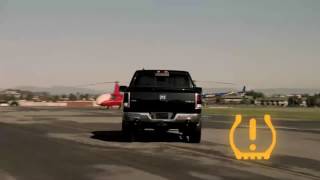
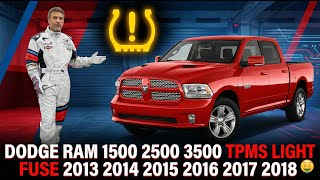
For this generation of Ram Heavy Duty trucks, the TPMS is a common point of failure, largely due to the finite 7-10 year lifespan of the sensor batteries. FCA (the parent company of Ram) issued TSB 22-002-15 Rev. A for these model years acknowledging issues where a "Service Tire Pressure System" message would appear along with codes like C1501. 🎬 Watch: How to diagnose C1501 and service required lights. The TSB applied to vehicles built on or before November 5, 2014, and recommended replacing all TPM sensors. The system is straightforward, assigning a unique code (C1501, C1502, etc.) to each wheel, which simplifies diagnosis compared to systems that don't specify the sensor location.
Diagnostic Flowchart

Tap your situation to follow the diagnostic path that matches what you're seeing on this vehicle.
Symptoms You May Notice
- TPMS warning light flashing for about 75 seconds upon startup, then staying on solid.
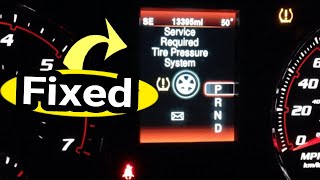
- "Service Tire Pressure System" message displayed on the instrument cluster (EVIC).
- The tire pressure display shows dashes ('--') or no reading for the front left tire.
- Inability to get a reading from the front left sensor using a TPMS diagnostic tool.
- Replacing the wrong sensor. Since C1501 refers to 'Sensor 1', it's crucial to confirm which wheel the system identifies as number 1 (usually front left). If tires have been rotated without relearning their positions, the location may be different. A TPMS tool can confirm which sensor ID is in which location before replacement.
- Ignoring the flashing light. A flashing TPMS light indicates a system fault, not low tire pressure. Adding air will not fix the C1501 code.
Most Likely Causes

- Dead TPMS Sensor Battery 🔴 High Probability TPMS sensors contain a small, non-replaceable battery with a typical lifespan of 7-10 years. Vehicles from 2014-2015 are now at an age where battery failure is the most common cause, as confirmed by numerous owner experiences on forums.
How to confirm: Use a TPMS diagnostic tool to attempt to 'wake' or read the sensor. If the tool cannot get a response from the sensor for wheel 1, the sensor has failed, most likely due to a dead battery. A tire shop can perform this check in minutes.
Typical fix: Replace the TPMS sensor for the front left tire. It is often recommended to replace all four sensors at once, as the others are likely near the end of their service life. This is especially true if getting new tires, as the labor is already being performed.
Est. part cost: $30 - $80 per sensor - Internal Sensor Failure 🟡 Medium Probability As described in TSB 22-002-15, the code C1501-07 indicates a 'Mechanical Failure' within the sensor itself. This can be a failure of the pressure transducer, accelerometer, or other internal electronics from age, vibration, or manufacturing defects, which prompted the TSB for early-build 2014-2015 trucks.
How to confirm: A scan tool may show a specific internal fault status for the sensor. If the sensor does not read pressure correctly or sends erratic data, it is faulty. The presence of the '-07' suffix on the C1501 code points directly to this failure.
Typical fix: Replace the faulty TPMS sensor.
Est. part cost: $30 - $80 - Damaged TPMS Sensor ⚪ Low Probability Sensors can be physically damaged during tire mounting, dismounting, or from hitting a large pothole or curb. Forum users often report TPMS issues immediately after getting new tires, suspecting damage by the tire shop.
How to confirm: Visual inspection after dismounting the tire from the wheel. The sensor body or valve stem may be cracked or broken. This is often discovered after a recent tire service.
Typical fix: Replace the broken TPMS sensor.
Est. part cost: $30 - $80
Rare But Worth Checking
- Radio Frequency (RF) Hub or TPMS Module Fault: If multiple TPMS sensor codes appear simultaneously (e.g., C1501 and C1502), or if a new sensor cannot be programmed, the issue might be with the central receiver module, known as the RF Hub. A failing RF Hub can also cause issues with the key fob and push-to-start system. Diagnosis may involve checking fuse F52 in the under-hood fuse box.
- Instrument Cluster Fault: In some rare cases, a faulty instrument panel cluster can cause incorrect TPMS readings or warnings, even when the sensors and module are working correctly. This is a last-resort diagnosis after all other components have been verified.
- Radio Frequency Interference: Extremely rare, but powerful aftermarket electronic devices (like cheap phone chargers or LED lighting) can sometimes interfere with the 315 MHz or 433 MHz signal from the TPMS sensors, causing intermittent dropouts.
Diagnosis Steps
- Verify the code with a scan tool capable of reading Chassis (C) codes, such as AlfaOBD or a professional-grade scanner.
- Confirm the symptom: TPMS light flashes for ~75 seconds, then stays solid.
- Use a TPMS diagnostic tool to try and read the data from the front left tire's sensor. Note its ID, pressure, temperature, and battery status. Many tire shops will do this for free.
- If the tool cannot get a signal from the sensor, it has failed and must be replaced. This confirms a 'No Signal' condition (C1501-31).
- If the tool reads the sensor but the code persists, check the live data for an internal fault status. This confirms a 'Mechanical Failure' (C1501-07).
- If multiple sensors are not responding, check fuse F52 for the RF Hub module before condemning the sensors.
- Once the faulty sensor is confirmed, have the tire dismounted and replace the sensor. It's best practice to mark the tire's position on the wheel to maintain balance.
- Program the new sensor to the vehicle using the TPMS tool and follow the manufacturer's relearn procedure. For this model, if a tool isn't used to write the new ID, the procedure is to drive the vehicle for a minimum of 10 minutes while maintaining a continuous speed above 15 mph (24 km/h) to allow the system to learn the new sensor ID.
Parts You'll Likely Need
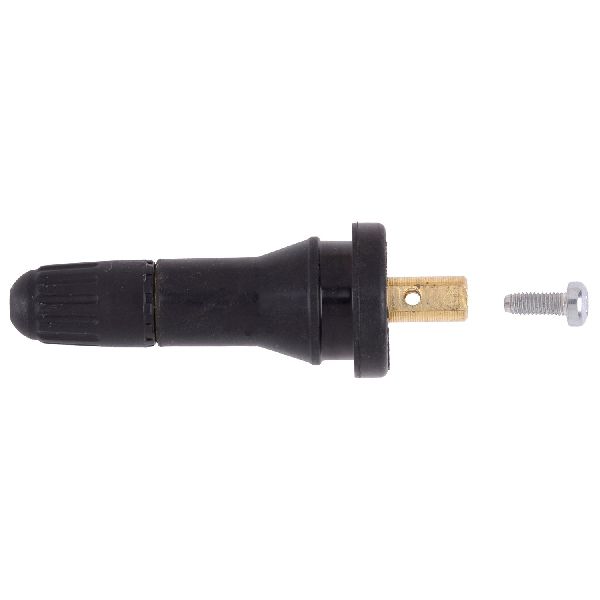
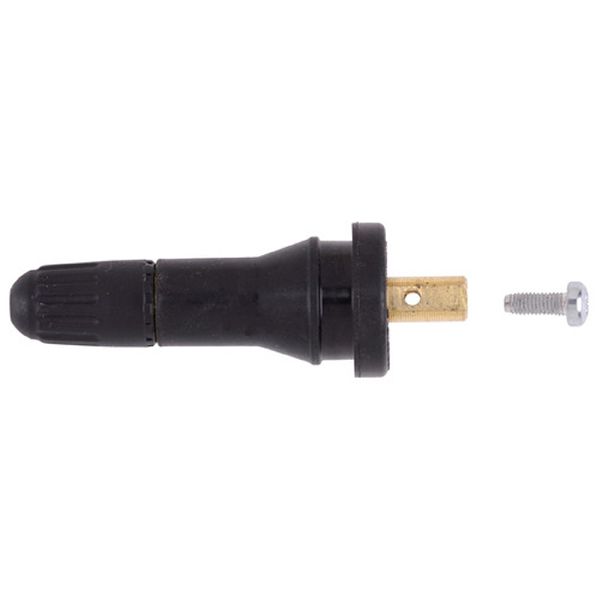
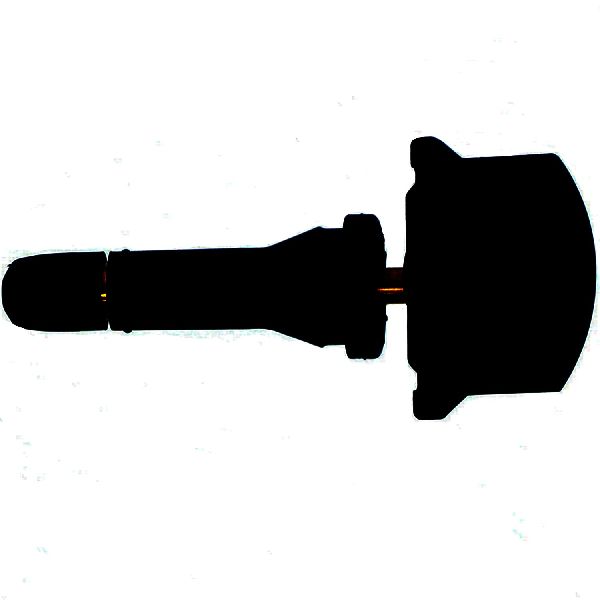
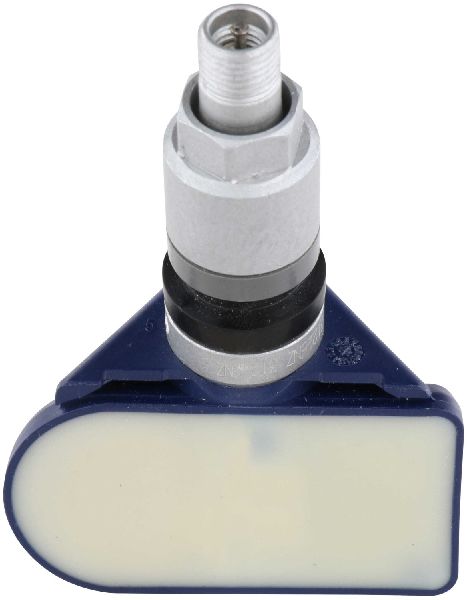
- Tire Pressure Monitoring System (TPMS) Sensor
(OEM #68241067AB)— This is the component that fails, either due to battery death or internal malfunction, triggering code C1501. The OEM part number 68241067AB supersedes several previous numbers including 68142397AA and 56029398AB.
Trusted brands: Mopar (OEM), Schrader (Often the OEM supplier), VDO, Dorman, HUF/BH Sens
OEM price range: $60-$110
Aftermarket price range: $30-$75
Related Codes That Often Appear With This One
- C1502, C1503, C1504 — If multiple sensor codes are present, it could indicate that all sensor batteries are failing around the same time due to age, or a more central problem with the TPMS receiver (RF Hub). TSB 22-002-15 lists the codes for all four wheels as part of the same potential condition.
Technical Service Bulletins (TSBs) & Recalls
- 22-002-15 REV. A: Supersedes the original TSB from Feb 2015. Applies to 2014-2015 Ram 2500/3500/3500 Cab Chassis built on or before Nov 5, 2014. Addresses "Service Tire Pressure System" message with DTCs like C1501-07 (Mechanical Failure) and C1501-31 (No Signal). The remedy is to replace all TPM sensors.
Platform-Specific Known Issues

- FCA issued TSB #22-002-15 Rev. A for 2014-2015 Ram 2500/3500 trucks built on or before November 5, 2014, for a "Service Tire Pressure System" message. It specifically cites codes C1501-07 and C1501-31, among others. The official fix was to replace all TPM sensors.
- Some owners on forums report issues with aftermarket sensors not being liked by the Ram's TPMS system, leading to intermittent dropouts. Many recommend sticking with OEM Mopar or a direct OEM-supplier like Schrader for best results.
Mechanic-Grade Diagnostic Values
- TPMS Sensor Operating Frequency — expected: 433 MHz. Failure: Using a 315 MHz sensor will result in a no-signal condition.
- TPMS Sensor Battery Status (via TPMS Tool) — expected: 'OK' or 'Good'. Failure: A 'LOW' or 'N/A' status indicates the sensor battery is depleted and the sensor needs replacement.
- RF Hub Module Fuse — expected: Continuity. Failure: No continuity indicates a blown fuse. This can cause all TPMS sensors to stop reporting.
Scan Tool Commands That Help
- AlfaOBD: Car Configuration Change: 'Update Pressure Threshold' — Used after installing different tires (e.g., larger off-road tires) that require a lower air pressure than the factory setting to prevent the TPMS light from turning on. This function is found under 'Body Computer'.
- AlfaOBD: 'RF hub reset/replace' — This procedure is necessary after changing the TPMS pressure thresholds or replacing the RF Hub itself. It forces the system to relearn the vehicle configuration. This requires a 4-digit vehicle PIN, which can be obtained from a dealer.
- AlfaOBD: Read System ID / Read Fault Codes — Used to read detailed manufacturer-specific DTCs from the Body Computer and RF Hub, which may provide more insight than generic OBD-II scanners.
Wiring & Ground Locations
- RF Hub (Radio Frequency Hub) — Mounted on the rear wall of the cab, behind the rear seat.. The RF Hub is the receiver for all TPMS sensor signals. While C1501 points to a specific sensor, if multiple sensors fail to report or a new sensor won't learn, the problem could be the RF Hub or its wiring/power supply. Its location makes it vulnerable to water intrusion from rear window leaks.
- Fuse F52 — In the under-hood Power Distribution Center (fuse box).. This fuse supplies power to the RF Hub. If it's blown, the entire TPMS system (and keyless entry) will be inoperative, leading to codes for all sensors.
Real Owner Repair Stories
- RamForum.com user report (2022 Ram 2500 Laramie) — TPMS sensors not connecting (showing dashes), 'key fob has left the vehicle' message, and horn honking when doors are opened/closed while running.
❌ Tried (didn't work) Initial diagnosis by a stereo shop.
✅ What actually fixed it The root cause was radio frequency interference from a newly installed aftermarket JL Audio amplifier located near the RF Hub on the back wall of the cab. Disconnecting the amplifier's remote turn-on wire caused the TPMS sensors to immediately start working again. The final fix was to physically move the RF Hub module away from the amplifier to reduce the interference.
OEM Part Supersession History
56029398AA, 56029398AB, 68142397AA, 68241067AA→68241067AB— Standard part evolution for improved reliability or manufacturing changes.
Heads up: The key incompatibility is frequency. Ram trucks from 2013/2014 onward use 433 MHz sensors. Using an older 315 MHz sensor will not work.
Model Year Variations Within This Range
- 2014-2015: The TPMS system was changed around the 2013-2014 model years. Earlier trucks used a different system and sensor frequency. The 2014+ models integrate TPMS reporting into the RF Hub behind the rear seat, whereas some older models may have had a separate TPMS module. This makes it critical to buy the correct 433 MHz sensor for these years.
Helpful Videos
We Have This Part in Stock


The information in this article is provided for general reference and educational purposes only. Vehicle specifications, procedures, and part compatibility can vary by production date, trim level, and region. Always consult your vehicle's factory service manual and verify part numbers before purchasing or performing repairs. Safety-critical components such as airbags, seat belts, and braking systems should be installed by a qualified professional.
- Ram 2500:
- 🎬 Helpful Videos
- 🛍️ Shop This Part
- What's Unique About the 2014-2015 Ram 2500
- Diagnostic Flowchart
- Symptoms You May Notice
- Most Likely Causes
- Rare But Worth Checking
- Diagnosis Steps
- Parts You'll Likely Need
- Related Codes That Often Appear With This One
- Technical Service Bulletins (TSBs) & Recalls
- Platform-Specific Known Issues
- Mechanic-Grade Diagnostic Values
- Scan Tool Commands That Help
- Wiring & Ground Locations
- Real Owner Repair Stories
- OEM Part Supersession History
- Model Year Variations Within This Range
- 🎟️ Get 5% Off