

OBD-II Code C1501: Comprehensive Diagnosis and Repair Guide
What C1501 means, why it triggers, and how to fix it for good
- Code C1501 indicates a failed tire pressure sensor, most commonly caused by a dead internal battery that has reached its 5-to-10-year lifespan.
- A TPMS warning light that flashes for 60 to 90 seconds before turning solid confirms a system hardware fault, rather than simply low tire pressure.
- On Dodge, Ram, and Jeep vehicles, code C1501 specifically identifies an internal failure in 'Sensor 1', which is the front driver's side tire.
- On 2013-2022 Hyundai and Kia models, C1501 is not a tire code; it indicates an Electronic Parking Brake (EPB) switch failure or a short in the HECU wiring.
- If codes C1501, C1502, C1503, and C1504 appear simultaneously, the central Wireless Control Module (WCM) has failed or is experiencing severe radio frequency interference.
What Does C1501 Mean?

Code C1501 means the vehicle's main computer lost the signal or detected an internal failure in a Tire Pressure Monitoring System (TPMS) sensor. On many vehicles, this code specifically points to 'Sensor 1', typically the front driver's side tire. The computer cannot get a reliable reading because the sensor stopped transmitting, is sending invalid data, or its internal components failed.
Technical definition: The official SAE/OBD-II definition is "Tire Pressure Sensor 1 Internal Failure". This indicates the Wireless Control Module (WCM) detected a hardware error in the sensor or lost communication with it for 10-20 minutes while driving above 15 mph (24 km/h). Manufacturers often use suffixes like C1501-07 (Mechanical Failure), C1501-31 (No Signal), or C1501-96 (Internal Component Fault) for specificity.
Can I Drive With C1501?
Yes, But With Caution. Yes, but your Tire Pressure Monitoring System (TPMS) is disabled. You will not be warned if a tire's pressure becomes dangerously low. A functional TPMS reduces the likelihood of severe underinflation by 55.6%; driving without it increases the risk of a blowout, poor handling, and extended stopping distances.
Common Causes

- Dead TPMS Sensor Battery (Very Common) — TPMS sensors contain non-replaceable 3-volt lithium-ion batteries lasting 5-10 years. A dead battery stops transmission and is the most frequent cause of this code on vehicles over five years old.
- Physical Damage to the Sensor (Common) — Located inside the tire, sensors are easily broken during tire installation, removal, or by severe pothole impacts. A broken sensor often rattles inside the tire.
- Internal Sensor Failure (Common) — Internal electronics, such as the accelerometer or pressure transducer, fail from age, vibration, or manufacturing defects, triggering codes like C1501-96 even if the battery has a charge.
- Faulty Electric Parking Brake (EPB) Switch (Hyundai/Kia) (Common On Specific Models) — On many Hyundai and Kia models, C1501 indicates a "Switch Failure" in the Electric Parking Brake (EPB) system, not a tire issue. This is caused by a faulty center console button or brake fluid leaking into the HECU wiring connector (TSB 23-01-036H-1).
- Incorrect Sensor Installed (Less Common) — Installing an incompatible, non-OEM, or unprogrammed aftermarket sensor triggers C1501. The control module cannot communicate with sensors operating on incorrect frequencies or protocols.
- Using a Spare Tire (Less Common) — Installing a spare tire lacking a TPMS sensor causes the system to lose the original wheel's signal, triggering a fault after a short drive.
- Radio Frequency (RF) Interference (Less Common) — Aftermarket electronics like dash cams, phone chargers, or metallic window tint emit radio signals that block the low-power 315 MHz or 433 MHz TPMS signal.
- Faulty Wireless Control Module (WCM/RDC) (Rare) — The WCM is the central receiver. A failed WCM triggers codes for multiple sensors (C1501, C1502, C1503, C1504) simultaneously and disrupts key fob operation.
- Transfer Case Encoder Fault (Ford) (Rare But Specific) — On specific Ford 4x4 trucks, C1501 points to a failed transfer case encoder assembly (shift motor position sensor), disabling the 4WD system.
Symptoms

- Flashing, then Solid TPMS Light — The TPMS warning light flashes for 60-90 seconds at startup, then stays solid. This sequence specifically indicates a system fault, not low tire pressure.
- Missing Tire Pressure Reading — The dashboard display for the faulty sensor's tire shows blank spaces or dashes ('---').
- "Service Tire Pressure System" Message — A dedicated service message appears on the instrument cluster information screen.
- EPB Warning Light (Hyundai/Kia) — The Electronic Parking Brake (EPB) warning light illuminates instead of the TPMS light, and the parking brake becomes inoperable.
- 4WD or Service 4x4 Light (Ford) — A warning light for the four-wheel-drive system illuminates, indicating a transfer case fault.
- Multiple Electrical Malfunctions (BMW) — A failing central RDC module causes widespread electrical issues, flickering dash lights, and multiple warning messages.
- TPMS Sensor Battery Status 'Low' or 'Fault' (scan-tool only — no driver-felt sign) — A dedicated TPMS scan tool directly reports the sensor's internal low battery or hardware fault status.
Diagnostic Flowchart
Tap your situation to follow the diagnostic path that matches what you're seeing on this code.
Common Fixes & Costs
- Replace the Faulty TPMS Sensor — Parts: $25-$90 per sensor, Labor: $40-$120, ~0.8 hr book time (Professional)
- Replace All TPMS Sensors — Parts: $100-$350 for a set of four, Labor: $100-$250, ~1.5 hr book time (Professional)
- Perform TPMS Relearn Procedure — Parts: $0, Labor: $50-$120, ~0.5 hr book time (Professional)
- Replace Electric Parking Brake (EPB) Switch (Hyundai/Kia) — Parts: $70-$240, Labor: $60-$150, ~1.2 hr book time (Intermediate)
- Repair HECU Wiring Connector (Hyundai/Kia) — Parts: $5-$20, Labor: $100-$200, ~1.5 hr book time (Professional)
Used vs. New Parts: Buying Guide
When a used part is worth it: Buying a used TPMS sensor is never recommended. The primary failure mode is the non-replaceable internal battery, which has a strict 5-10 year lifespan. A used sensor will likely fail shortly after paying for installation labor.
Donor-vehicle mileage cap: roughly under 10000 miles for the part to have meaningful remaining life.
Donor quality checklist:
- Never buy used TPMS sensors; battery health cannot be visually inspected.
- For Hyundai/Kia EPB switches, verify the exact OEM part number matches your vehicle.
Decision logic:
- If The part is a TPMS sensor → Always buy new. The labor cost to dismount, install, and balance the tire makes gambling on a used battery a poor financial decision.
- If The part is a Hyundai/Kia EPB switch → A used OEM switch from a reputable salvage yard is acceptable, as it lacks a limited-life battery.
Warranty tradeoff: Used parts offer 30-90 day warranties. New aftermarket sensors include 1-2 year warranties, while new OEM sensors guarantee 1 year or more.
Worst-case if a used part fails: $150 (Cost of repeat labor for dismounting, mounting, and balancing the tire, plus purchasing another sensor).
What Happens If You Wait — Timeline
- Immediate: TPMS light flashes, then stays on. The 'Service TPMS' message appears. The system is now disabled and provides no tire pressure warnings. (MPG impact: 0%% · Added cost: $0)
- 0-3 Months: A slow leak from a nail goes undetected. One tire drops 10 PSI below the recommended pressure, causing increased rolling resistance and slight shoulder wear on the tire. (MPG impact: 1-2%% · Added cost: $20-$50 in wasted fuel and reduced tire life.)
- 3-6 Months: Continued driving on the severely underinflated tire (25%+ below recommendation) causes excessive heat buildup, leading to accelerated and uneven tread wear, shortening the tire's life by over 25%. (MPG impact: 3-5%% · Added cost: $100-$250 (cost of premature tire replacement))
- 6+ Months: A catastrophic tire blowout occurs at highway speed due to the weakened internal structure from prolonged underinflation. This can cause damage to the wheel, fender, and suspension components, along with a high risk of losing control of the vehicle. (MPG impact: N/A% · Added cost: $500-$2500+ (cost of new tire, wheel, body/suspension repairs))
Cost of Not Fixing It
- Immediate: No warning for low tire pressure, increasing the risk of a dangerous tire blowout, poor handling, and longer braking distances. (Added cost: $0)
- 0-6 Months: Driving on an undetected underinflated tire causes accelerated, uneven wear, shortening tire life by 15-25% and reducing fuel economy. (Added cost: $50-$200)
- 6+ Months: Prolonged underinflation leads to a catastrophic blowout, damaging the wheel, suspension, and body panels, with a high risk of an accident. (Added cost: $500-$2500)
Diagnosis Steps
- Test the Sensor with a TPMS Tool
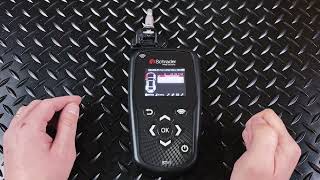
Use a dedicated TPMS tool to 'ping' the sensor near the valve stem. If the tool shows 'Low Battery', 'Hardware Fault', or gets no response, the sensor is dead.
Tools: TPMS Diagnostic Tool (Intermediate) - Verify the Code with a Capable Scanner
Use an advanced OBD-II scanner to confirm C1501. Basic scanners only read Powertrain (P) codes and will miss this Chassis (C) code.
Tools: OBD-II Scanner (with Chassis code capability) (Beginner) - Check Tire Pressures Manually
Check all tires with a reliable gauge and inflate to the door jamb sticker pressure. Tire pressure drops 1 PSI for every 10°F drop in temperature.
Tools: Tire Pressure Gauge (Beginner) - Identify the Correct Wheel
C1501 typically targets 'Sensor 1' (front-left). To confirm without a scanner, deflate the front-right tire slightly; if the dashboard reports a drop there, C1501 is confirmed as the front-left.
Tools: Tire Pressure Gauge (Intermediate) - Inspect the EPB Switch & Wiring (Hyundai/Kia)
For Hyundai/Kia vehicles with an EPB light, check TSB 23-01-036H-1. Inspect the HECU wiring connector for leaked brake fluid before replacing the console switch.
Tools: Trim removal tools, Flashlight (Intermediate) - Check for Radio Interference
Unplug all aftermarket accessories like phone chargers and dash cams. Clear the code and drive above 15 mph for 20 minutes to see if it returns.
Tools: None (Beginner) - Pro Tip: Analyze WCM/RF Hub Live Data
Access the Wireless Control Module live data. If parameters like 'Tire 1 Pressure Sensor HW Fault' read 'YES', the module confirms the sensor has an internal failure.
Tools: Advanced Bi-Directional Scan Tool (Professional) - Advanced: Test EPB Switch Resistance (Hyundai/Kia)
Disconnect the EPB switch and measure resistance between terminals. Open (OL) or out-of-spec readings confirm a faulty switch.
Tools: Multimeter, Trim removal tools, Vehicle-specific wiring diagram (Advanced) - Pro Tip: Check RDC Module Power & Ground (BMW)
If multiple sensor codes exist on a BMW, disconnect the central RDC module. Verify 12V power and ground continuity (< 1.0 ohm) to rule out wiring issues.
Tools: Multimeter, Trim removal tools (Professional)
When This Code Triggers (Freeze-Frame Conditions)
- Vehicle Speed: Above 15-20 mph (24-32 km/h) (The vehicle must be in motion for the TPMS module to expect a signal. The code sets after 10-20 minutes of continuous driving.)
- TPMS Sensor Signal: No Signal Received (The main computer (WCM/RF Hub) failed to receive a valid transmission from the specific sensor for a predetermined timeframe.)
- Ambient Temperature: < 40°F / 4°C (Cold temperatures drop the voltage of an aging sensor battery, causing intermittent failures on cold starts.)
- System Status: Fault Active (Indicates a system fault (flashing light) rather than a low-pressure warning (solid light).)
Related Codes
- C1502, C1503, C1504 — These correspond to sensors 2, 3, and 4. If all four codes appear simultaneously, suspect a central Wireless Control Module (WCM) failure or severe RF interference.
- C0077 — Indicates 'Low Tire Pressure'. The TPMS light stays solid immediately upon startup. C1501 causes the light to flash for 60 seconds first, indicating a hardware fault.
- U0121, U0001 — Communication codes indicating a loss of signal on the data bus. If paired with C1501, diagnose the vehicle's network wiring and modules before replacing a sensor.
- C151D — Means 'Tire Pressure Sensor Location Undetermined'. Appears when a TPMS relearn procedure fails after a tire rotation, whereas C1501 indicates a dead sensor.
Climate & Environmental Factors
- Cold Weather: Cold temperatures slow the chemical reactions in the 3V lithium-ion battery, reducing voltage. This causes an aging sensor to temporarily fail and trigger C1501 on cold mornings, which may clear as the tire warms up.
- High Heat: Prolonged exposure to extreme heat from hot climates or heavy braking accelerates battery degradation, shortening the sensor's lifespan below the typical 5 years.
- Humidity and Road Salt (Corrosion): In the 'Salt Belt', the aluminum TPMS valve stem suffers galvanic corrosion. It seizes to the valve cap or breaks during tire service, requiring complete sensor replacement.
How to Talk to a Mechanic About This Code
Say this: "I have a C1501 code. If it's a Dodge/Jeep/Chrysler, I'd like you to test the front-left TPMS sensor for a dead battery. If it's a Hyundai/Kia, please check for an EPB switch failure and be aware of TSB 23-01-036H-1 regarding the HECU connector."
This immediately shows you've done research and directs the technician to the most likely cause based on the vehicle's make, saving diagnostic time and preventing misdiagnosis (e.g., replacing a TPMS sensor on a Kia for this code).
Avoid saying:
- 'My tire light is on, can you fix it?'
- 'Just replace the bad sensor.' (without confirming which one it is)
- 'I think the battery is dead in my tire.' (too vague)
Questions to ask before authorizing the repair:
- For a TPMS issue: Did you test the sensor with a TPMS tool and did it show 'Low Battery' or 'No Signal'?
- For a Hyundai/Kia: Did you confirm the EPB switch is faulty with a resistance test, or did you find evidence of the issue from the TSB?
- What is the warranty on the new sensor and the labor?
- Does the price include the TPMS service kit (new grommet and nut) and the relearn procedure?
Where to Take It: Dealer vs Independent vs Chain
- Dealer:
Best for: Vehicles under warranty., Diagnosing manufacturer-specific quirks (the Hyundai/Kia EPB issue or the Ford 4x4 transfer case fault)., Complex electrical issues where multiple codes (including U-codes) are present.
Downsides: Highest cost for parts and labor, often 1.5-2x more than other shops., May recommend replacing all four sensors when only one has failed. (Typical cost: +75% vs. baseline) - Independent Shop:
Good choice, but a specialized tire shop is often better and cheaper for the most common TPMS failure.
Best for: Out-of-warranty vehicles with a standard TPMS sensor failure., Owners who have a trusted mechanic with modern diagnostic tools., Replacing a Hyundai/Kia EPB switch (a straightforward parts swap).
Downsides: May not be immediately aware of the non-TPMS C1501 meanings on Hyundai/Kia/Ford, potentially leading to misdiagnosis., Quality varies; ensure the shop has a TPMS-specific tool. (Typical cost: +0% vs. baseline) - Chain Shop:
Best fit for a confirmed, standard TPMS sensor failure. AVOID for initial diagnosis, especially on Hyundai, Kia, or Ford vehicles.
Best for: The most common C1501 cause: a straightforward TPMS sensor replacement., Often the most cost-effective option for sensor replacement.
Downsides: Technicians are highly unlikely to know about the non-TPMS meanings of C1501., High pressure to upsell; may push for four new sensors and an alignment unnecessarily. (Typical cost: -10% vs. baseline)
When to Walk Away From the Repair
If the estimated repair cost exceeds 40-50% of the car's private-party value, you should pause and reconsider the repair.
- Car worth $4000, fix is $250: Fix it. This repair is very inexpensive relative to the car's value and is critical for safety.
- Car worth $1500, fix is $800: Walk away. The car needs all four sensors replaced plus has other issues, pushing the total repair cost over 50% of its value.
What Scan Tool You Need for This Code

Minimum: A scanner that can read Chassis (C) codes. Basic, cheap scanners often only read Powertrain (P) codes and will not see C1501.
A $20 engine-only code reader will show 'No Codes Found' even when the TPMS light is on, because it cannot access the Chassis module where C1501 is stored. You need a tool that can scan systems beyond the engine.
Budget: BlueDriver Pro (~$100) — Confirms the C1501 code is present by reading Chassis codes. Provides freeze-frame data and can clear the code after repair. Connects to your phone via Bluetooth.
Mid-range: Foxwell NT510 Elite / Autel MaxiTPMS TS508WF (~$150) — Reads and clears C-codes. A dedicated TPMS tool like the TS508WF can also 'ping' the individual sensors to check their battery status and confirm which one has failed before you buy parts. It can also perform the relearn procedure.
Professional: Autel MaxiCOM MK808Z / XTOOL D7BT (~$450) — Full bidirectional control. Can read manufacturer-specific TPMS data PIDs, program universal aftermarket sensors, and perform all OEM-level relearn procedures. Essential for a shop or serious DIYer.
Rent vs buy: Auto parts stores like AutoZone and O'Reilly have free loaner tool programs. You may be able to borrow a scanner capable of reading Chassis codes by leaving a deposit. This is the best option for a one-time diagnosis. Buy only if you plan to do your own diagnostics regularly.
How to Clear the Code After You Fix It
- Replace the faulty TPMS sensor or EPB switch.
- Use an OBD-II scan tool capable of reading Chassis (C) codes to clear the fault.
- Perform the vehicle-specific TPMS relearn procedure using a dedicated tool or auto-relearn drive cycle.
- Drive the vehicle above 20 mph for 15 minutes to verify the warning light remains off.
Drive cycle (~20 minutes): A TPMS drive cycle forces the system to recognize the new sensor. Drive continuously for 15-20 minutes at speeds above 20 mph (32 km/h). If the light remains on, a manual relearn with a TPMS programming tool is required.
Readiness monitors affected: None. TPMS is a chassis system and does not affect emissions readiness monitors.
Watch out for:
- Using a basic OBD-II engine code reader that cannot access or clear Chassis (C) codes.
- Skipping the mandatory manual TPMS relearn procedure after installing a new sensor.
- Replacing a single sensor when the central TPMS module has failed (indicated by 4 simultaneous sensor codes).
- Failing to unplug aftermarket electronics causing RF interference before replacing parts.
Will This Fail Emissions / State Inspection?
No — by itself this code doesn't fail OBD inspection (but it can keep readiness monitors from setting, which causes a separate fail).
- California: A TPMS light does not fail a California Smog Check, which strictly tests emissions.
- New York: A functioning TPMS is mandatory. An illuminated TPMS warning light causes an automatic failure of the annual safety inspection.
- Texas: A TPMS light does not fail the Texas state safety inspection, though tire tread depth and condition are checked.
- Missouri: A TPMS light is not a cause for failure in the Missouri safety inspection.
Most Commonly Affected Vehicles
- Ram 2500 / 3500 (2014-2015) — TSB 22-002-15 REV. A addresses C1501-07 and C1501-31. For vehicles built before Nov 5, 2014, the TSB recommends replacing all four sensors.
- Dodge Grand Caravan / Journey (2011-2020) — Commonly reports C1501 for internal sensor failure when original sensors reach the end of their 5-10 year battery life.
- Jeep Wrangler (JK/JL) (2007-2022) — Prone to TPMS faults from battery aging and off-road damage. TSB S1908000197 REV. A advises that aftermarket wheels can trigger the fault.
- Hyundai Elantra / Sonata / Santa Fe (2013-2022) — C1501 indicates an 'EPB Switch Failure'. TSB 23-01-036H-1 notes this is often caused by brake fluid leaking into the HECU wiring connector.
- Kia Optima / Sportage / Sorento (2013-2016) — Logs C1501 for a faulty Electric Parking Brake (EPB) switch or related wiring issue, completely unrelated to the TPMS.
- Ford F-Series / Expedition (2004-2008) — On specific 4x4 models, C1501 indicates a fault with the transfer case encoder assembly, disabling 4WD operation.
- Chevrolet / GMC Silverado / Sierra (2007-2018) — Commonly experience C1501 due to battery life. The relearn procedure can often be done without special tools via the dashboard menu.
- BMW X3 (F25) / 3-Series (F30) (2011-2018) — Simultaneous TPMS faults for all wheels point to a failure of the central RDC module, which is mounted under the vehicle and prone to water damage.
Manufacturer-Specific Notes

- Dodge / Ram / Jeep / Chrysler: C1501 almost always means 'Tire Pressure Sensor 1 Internal' (front-left wheel). Sensors are covered under the 3yr/36k mile bumper-to-bumper warranty, but not the powertrain warranty.
- Hyundai / Kia: Repurposes C1501 to indicate an 'EPB Switch Failure' for the electronic parking brake. TSB 23-01-036H-1 details brake fluid leaking into the HECU connector as the root cause.
- Ford: On 4x4 trucks, C1501 points to a problem with the transfer case shift motor encoder assembly, a powertrain issue unrelated to tires.
- Toyota / Lexus: On older models with adjustable suspension (AHC), C1501 relates to a 'Height Control Sensor' circuit malfunction.
- BMW: The TPMS module is called the RDC. A simultaneous failure of all sensors points to this central module, which is mounted under the car and prone to water intrusion.
- Honda / Volkswagen: Newer models use 'indirect' TPMS via ABS wheel speed sensors instead of in-wheel sensors. These systems do not set C1501 codes.
Real Owner Stories
2015 Ram 3500 at 7 years old
The 'Service Tire Pressure System' message appeared on the dash. The display for the front-left tire pressure was blank, while the other three showed normal pressures.
What they tried:
- Checked tire pressure manually; all tires were correctly inflated.
- Took the truck to a tire shop, which used a TPMS tool to test the sensors.
Outcome: The TPMS tool confirmed the front-left sensor was not transmitting due to a dead battery. The shop replaced the single sensor (Mopar part 68249201AA) and performed a relearn procedure. The total cost was around $120. The light cleared and stayed off.
Lesson: On a vehicle over 5 years old, a single sensor failure with a C1501 code is almost certainly a dead battery. Confirm with a TPMS tool before replacing to avoid guessing. It's cost-effective to replace sensors when getting new tires to save on labor.
2022 Hyundai Elantra with EPB light
The orange Electronic Parking Brake (EPB) warning light came on, and the diagnostic tool showed code C1501 (EPB Switch Failure). The parking brake itself still seemed to function correctly.
What they tried:
- Initially suspected a faulty EPB switch on the center console.
- The dealership investigated further based on a Technical Service Bulletin (TSB).
Outcome: The dealer found the issue described in TSB 23-01-036H-1: brake fluid had leaked into the Hydraulic Electronic Control Unit (HECU) wiring connector, causing a short that the system interpreted as a switch failure. The repair involved cleaning the connector and, in some cases, replacing the HECU. The repair was covered under warranty.
Lesson: On a Hyundai or Kia, C1501 almost never refers to the tires. Always check for TSBs related to the EPB system before replacing the switch, as the root cause may be a more complex wiring issue.
2018 Ram Rebel after new tires installed
Immediately after a tire shop installed four new tires, the 'Service TPMS System' message appeared. The display for the right-rear tire showed dashes ('--'). The TPMS system was working perfectly before the service.
What they tried:
- The owner swapped the right-rear tire with the right-front tire to see if the problem would move. It did not; the display still showed dashes for the right-rear position.
- Returned to the tire shop for diagnosis.
Outcome: The tire shop likely damaged the sensor during the tire mounting process, a common occurrence if the technician is not careful. The fix required the shop to dismount the tire again and replace the broken sensor at their cost.
Lesson: If a TPMS fault appears immediately after tire service, the cause is almost certainly damage during installation or an incompatible part. Return to the shop that performed the work to have them correct it.
How to Prevent This Code From Triggering
- Replace all four TPMS sensors when one fails due to age. (When the first sensor battery dies (typically 5-10 years).) — All sensor batteries have a similar lifespan. Replacing them all at once saves you from paying for tire dismounting/mounting labor three more times as the others inevitably fail.
- Use nickel-plated valve cores and plastic or brass valve stem caps. (During any tire service.) — Prevents galvanic corrosion between the aluminum TPMS valve stem and other metals (like a steel cap or copper valve core), which can seize the cap or destroy the valve stem, leading to breakage and sensor failure.
- Always replace the TPMS service kit during a tire change. (Every time a tire is dismounted from the wheel.) — The service kit includes a new rubber grommet, retaining nut, and valve core. This ensures a proper air seal and prevents leaks that can be caused by reusing old, compressed, or corroded components.
- Inform the tire technician your vehicle has direct TPMS before service. (At every tire rotation or replacement.) — This serves as a reminder for the technician to follow proper procedures to avoid physically damaging the sensor, which is a common cause of failure after tire service.
Frequently Asked Questions
What does 'Sensor 1' mean? Which tire is it?
On Chrysler, Dodge, Jeep, and Ram vehicles, 'Sensor 1' refers to the front-left (driver's side) tire. Always confirm the dead sensor with a TPMS diagnostic tool before replacing parts.
Can I replace just the one bad TPMS sensor?
Yes, but since all sensors share the same 5-to-10-year lifespan, the others will likely fail soon. Replacing all four at once saves significant money on tire dismounting and balancing labor.
Why did the C1501 light come on after I got new tires?
There are several possibilities: the sensor was damaged during mounting, an incompatible aftermarket sensor was installed, the old sensor's battery died, or the new sensor was not properly 'relearned' by the vehicle's computer.
Why is the TPMS light still on after replacing the sensor?
The vehicle's computer must learn the new sensor's unique ID. While some cars auto-relearn after 20 minutes of driving, most require a mechanic to perform a manual relearn with a specialized TPMS tool.
What are common mistakes when diagnosing C1501?
Guessing which wheel is 'Sensor 1' and replacing the wrong part is the most common error. For Hyundai, Kia, and Ford owners, the biggest mistake is replacing tire sensors when the code actually points to the parking brake or 4WD system.
What is the cost difference between a dealer and an independent shop?
Dealerships charge $250 to $350 per sensor using OEM parts. Independent tire shops perform the exact same service for $70 to $150 per sensor using high-quality aftermarket alternatives.
Do I need a special tool to fix this?
Yes. Physically replacing the sensor requires a commercial tire machine to dismount the tire from the wheel. Afterward, a dedicated TPMS diagnostic tool is required to program the sensor and sync it to the car.
Can I just ignore the C1501 code?
You can, but it disables your TPMS and removes all low-pressure warnings. Driving on underinflated tires severely compromises vehicle handling, reduces fuel economy, and drastically increases the risk of a high-speed blowout.
Key Takeaways
- Code C1501 indicates a failed tire pressure sensor, most commonly caused by a dead internal battery that has reached its 5-to-10-year lifespan.
- A TPMS warning light that flashes for 60 to 90 seconds before turning solid confirms a system hardware fault, rather than simply low tire pressure.
- On Dodge, Ram, and Jeep vehicles, code C1501 specifically identifies an internal failure in 'Sensor 1', which is the front driver's side tire.
- On 2013-2022 Hyundai and Kia models, C1501 is not a tire code; it indicates an Electronic Parking Brake (EPB) switch failure or a short in the HECU wiring.
- If codes C1501, C1502, C1503, and C1504 appear simultaneously, the central Wireless Control Module (WCM) has failed or is experiencing severe radio frequency interference.
Helpful Videos


The information in this article is provided for general reference and educational purposes only. Vehicle specifications, procedures, and part compatibility can vary by production date, trim level, and region. Always consult your vehicle's factory service manual and verify part numbers before purchasing or performing repairs. Safety-critical components such as airbags, seat belts, and braking systems should be installed by a qualified professional.
- 🎬 Helpful Videos
- What Does C1501 Mean?
- Can I Drive With C1501?
- Common Causes
- Symptoms
- Diagnostic Flowchart
- Common Fixes & Costs
- Used vs. New Parts: Buying Guide
- What Happens If You Wait — Timeline
- Cost of Not Fixing It
- Diagnosis Steps
- When This Code Triggers (Freeze-Frame Conditions)
- Related Codes
- Climate & Environmental Factors
- How to Talk to a Mechanic About This Code
- Where to Take It: Dealer vs Independent vs Chain
- When to Walk Away From the Repair
- What Scan Tool You Need for This Code
- How to Clear the Code After You Fix It
- Will This Fail Emissions / State Inspection?
- Most Commonly Affected Vehicles
- Manufacturer-Specific Notes
- Real Owner Stories
- 2015 Ram 3500 at 7 years old
- 2022 Hyundai Elantra with EPB light
- 2018 Ram Rebel after new tires installed
- How to Prevent This Code From Triggering
- Frequently Asked Questions
- What does 'Sensor 1' mean? Which tire is it?
- Can I replace just the one bad TPMS sensor?
- Why did the C1501 light come on after I got new tires?
- Why is the TPMS light still on after replacing the sensor?
- What are common mistakes when diagnosing C1501?
- What is the cost difference between a dealer and an independent shop?
- Do I need a special tool to fix this?
- Can I just ignore the C1501 code?
- Key Takeaways
- 🎟️ Get 5% Off