

OBD-II Code C1477: Brake Booster Fault / Transfer Case Over-Temp / HCU Malfunction
What C1477 means, why it triggers, and how to fix it. IMPORTANT: This code has different meanings depending on your vehicle's manufacturer.
- Code C1477 has three distinct meanings: a critical brake fault on Toyota/Lexus, a false 4WD overheat on Ram/Jeep, or an ABS air lock on Ford Hybrids.
- For Ram and Jeep owners, C1477 is almost always a faulty transfer case shift motor or a loose connector, not a $3,000 transfer case failure.
- Toyota and Lexus vehicles with this code experience a dangerous loss of power brake assist, often requiring a $1,500+ brake booster assembly replacement.
- Ford Escape Hybrid owners should demand a specialized scan-tool ABS bleed procedure before authorizing a $1,000+ Hydraulic Control Unit replacement.
What Does C1477 Mean?

Code C1477 is a manufacturer-specific code with three distinct definitions. On Toyota/Lexus, it indicates a brake booster pressure sensor failure, causing a loss of power brakes. On Stellantis (Ram/Jeep), it means 'Transfer Case Clutch Over-Temperature', almost always triggered by a faulty shift motor sending false data. On Ford Hybrids, it flags a 'High Pressure Hydraulic Circuit Leakage Plausibility Malfunction', typically caused by air trapped in the ABS module.
Technical definition: For Toyota/Lexus, SAE defines C1477 as 'Brake Booster Pressure Sensor Circuit High', meaning the sensor output voltage exceeded 4.5V for over 1.2 seconds. For Ram/Jeep, it is 'Transfer Case Clutch-Over Temperature' (often subtype 4B), set when the Drivetrain Control Module calculates an implausibly high clutch temperature from faulty shift motor position data. For Ford Hybrids, the ABS module sets this code when it detects inconsistent pressure readings in the electro-hydraulic brake system.
Can I Drive With C1477?
No — Do Not Drive. Driving is strongly discouraged. On Toyota/Lexus, braking performance drops severely, requiring extreme pedal effort and doubling stopping distances. On Ram/Jeep, the 4WD system locks; driving on dry pavement causes severe drivetrain binding, risking thousands of dollars in transfer case and axle damage. Tow the vehicle to a shop.
Common Causes

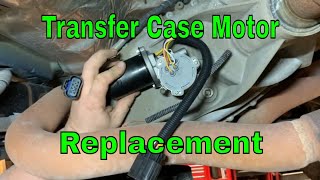
- Faulty Transfer Case Shift Motor (Ram/Jeep) (Very Common) — Internal sensors or motor windings fail, sending incorrect position data to the DTCM. The module falsely calculates an overheat condition. TSBs #9100409 and #21-048-24 explicitly advise replacing this part before condemning the transfer case.
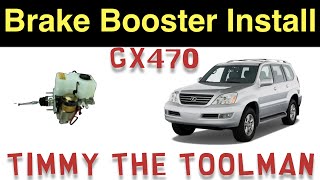
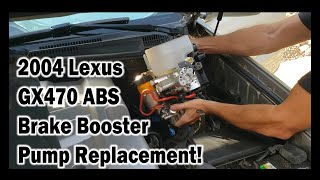
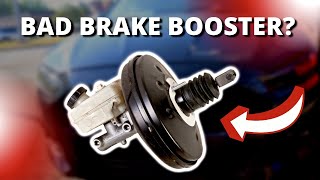
- Failing Brake Booster Assembly or Sensor (Toyota/Lexus) (Very Common) — The pressure sensor fails internally, sending high voltage to the ECU. On most Toyota hybrids and SUVs, this sensor is permanently integrated into the brake booster or pump assembly, requiring a complete unit replacement.
- Loose or Damaged Wiring Connector (Common) — A loose electrical connector on the transfer case motor is the primary cause for 2022+ Ram and Jeep models. TSBs 08-237-23 and 08-239-23 direct technicians to perform a 'push-pull-push' test to secure the connection.
- Air Trapped in ABS/HCU Module (Ford Hybrid) (Common) — Air trapped inside the Hydraulic Control Unit after a brake service or minor leak triggers a plausibility malfunction. It requires a specialized scan-tool bleeding procedure, not a parts replacement.
- Mismatched or Heavily Worn Tires (Ram/Jeep) (Less Common) — Running tires with a tread depth difference exceeding 2/32" forces the 4WD clutches to slip constantly. This generates real friction and heat, triggering a legitimate overheat code.
- Vacuum Leak in Brake Booster System (Less Common) — A torn booster diaphragm, faulty check valve, or cracked vacuum hose skews pressure readings. This usually produces a distinct hissing sound when pressing the brake pedal.
- Low or Degraded Transfer Case Fluid (Ram/Jeep) (Rare) — Low or burnt transfer case fluid loses its ability to cool the internal clutch pack. Under heavy load, the clutches overheat quickly, triggering a legitimate C1477 code.
- Faulty Control Module (ECU/DTCM) (Rare) — The Skid Control ECU or Drivetrain Control Module fails internally and misinterprets sensor signals. A DTCM software update resolves this on specific Jeep/Ram models.
Symptoms

- 'Service 4WD' Message and Flashing Lights (Ram/Jeep) — A '4WD Overheated Temporarily Unavailable' message appears on the dash immediately at startup, accompanied by flashing 4WD selector lights.
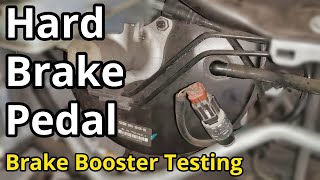
- Hard Brake Pedal and Increased Stopping Distance (Toyota/Lexus) — The brake pedal becomes extremely stiff. The vehicle requires significantly more leg effort to stop, doubling or tripling normal stopping distances.
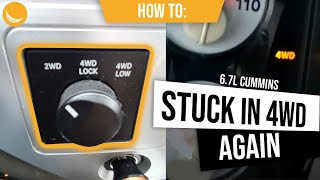
- Drivetrain Binding or Chirping on Turns (Ram/Jeep) — The failed shift motor locks the transfer case in 4WD. Turning on dry pavement causes the tires to chirp and the vehicle to hop, indicating severe drivetrain stress.
- ABS, Traction Control, or VSC Warning Lights On — The vehicle's computer disables safety systems as a precaution, illuminating multiple dashboard warning lights.
- Buzzing or Whining from HCU (Ford Hybrid) — A failing or air-bound Hydraulic Control Unit produces unusual buzzing noises or fails to make its normal priming sound when opening the driver's door.
- Implausible Transfer Case Clutch Temperature (scan-tool only — no driver-felt sign) — A scan tool shows a calculated transfer case clutch temperature exceeding 300°F immediately at startup when the vehicle is cold.
- High Sensor Voltage in Live Data (scan-tool only — no driver-felt sign) — The 'Brake Booster Pressure Sensor' voltage is stuck above 4.5V regardless of engine vacuum or pedal position.
Diagnostic Flowchart
Tap your situation to follow the diagnostic path that matches what you're seeing on this code.
Common Fixes & Costs
- Replace Transfer Case Shift Motor (Ram/Dodge/Jeep) — Parts: $200 - $500, Labor: $150 - $300, ~1.5 hr book time (Intermediate)
- Secure Connector or Repair Wiring — Parts: $0 - $50, Labor: $100 - $200, ~1.0 hr book time (Intermediate)
- Replace Brake Booster Assembly (Toyota/Lexus) — Parts: $500 - $1400, Labor: $300 - $600, ~3.0 hr book time (Professional)
- Bleed ABS/HCU System (Ford Hybrid) — Parts: $30 - $60, Labor: $200 - $400, ~2.0 hr book time (Professional)
- Replace Mismatched Tires — Parts: $400 - $1200, Labor: $50 - $100, ~1.0 hr book time (DIY)
Used vs. New Parts: Buying Guide
When a used part is worth it: For a high-cost item like a Toyota/Lexus brake booster assembly, a used unit from a low-mileage donor offers significant savings. For the Ram/Jeep transfer case motor, a new OEM or quality aftermarket part is a better investment.
Donor-vehicle mileage cap: roughly under 60000 miles for the part to have meaningful remaining life.
Donor quality checklist:
- Verify the exact part number matches; electronic components have non-interchangeable revisions.
- Avoid donors from flood-damaged or high-corrosion areas.
- Obtain the VIN of the donor car to ensure it wasn't scrapped for a related system failure.
Decision logic:
- If Part is the Ram/Jeep transfer case shift motor → Buy new. The part is a known wear item and labor is minimal, so reliability is key.
- If Part is the Toyota/Lexus brake booster assembly and OEM new cost is prohibitive (> $1,500) → A used part from a verified low-mileage donor or a professional remanufactured unit is a reasonable choice.
Warranty tradeoff: Used parts offer a 30-90 day warranty on the part only. New aftermarket parts carry a 1-year to limited lifetime warranty. New OEM parts have a 1-2 year warranty.
Worst-case if a used part fails: $500 - $1000. If a used electronic/hydraulic assembly fails, you pay for labor a second time.
What Happens If You Wait — Timeline
- Immediate (Ram/Jeep - Motor fails 'open'): Code C1477 sets, 'Service 4WD' light appears. The 4WD system is disabled and the truck operates in 2WD only. No mechanical binding occurs. (MPG impact: 0%% · Added cost: $0)
- Immediate (Ram/Jeep - Motor fails 'engaged'): Code sets, but the transfer case is stuck in 4WD. Driving on dry pavement causes immediate tire chirping on turns and severe drivetrain binding. (MPG impact: 1-5%% · Added cost: $0 if you stop driving immediately. Stress begins if driven for even a few miles.)
- 10-100 miles (Ram/Jeep - Driven while 'engaged'): The transfer case chain stretches, clutches burn out, or gears are damaged from binding stress. Loud clunking occurs, and the vehicle becomes immobile. (MPG impact: 5-15%% · Added cost: $2,500 - $5,000+. Cost of a new transfer case, plus potential damage to differentials or axles.)
- Immediate (Toyota/Lexus - Brake Fault): Code sets, ABS/Brake lights turn on. Power brake assist is lost. The brake pedal becomes extremely hard to press and stopping distances double. This is an immediate safety failure. (MPG impact: 0%% · Added cost: The cost of a potential accident due to brake failure.)
Cost of Not Fixing It
- Immediate (Brake Fault): Catastrophic loss of braking performance, leading to a significantly increased risk of a collision. Stopping distances double or triple. (Added cost: Cost of an accident, ranging from minor to total loss of the vehicle.)
- Immediate (4WD Fault): If the transfer case is stuck in 4WD, driving on dry pavement causes severe drivetrain binding, tire chirping, and extreme stress on axles. (Added cost: Negligible if caught immediately. Costs escalate quickly if driven for several miles.)
- 1-3 months (4WD Fault): Continued driving with a bound drivetrain causes catastrophic failure of the transfer case, differentials, or axles. (Added cost: $2,500 - $5,000+. Includes the cost of replacing the transfer case and potential differential damage.)
Diagnosis Steps

- Verify Code and Manufacturer
Confirm C1477 is present and identify your vehicle's manufacturer to determine which system (Brakes, 4WD, or HCU) requires diagnosis.
Tools: OBD-II Scanner (Beginner) - Check TSBs and Related Codes (Ram/Jeep)
Check for TSB 08-237-23 and codes C140A-13 or C1444-98. These confirm the fault is electrical (motor or connector), not a mechanical transfer case failure.
Tools: VIN, Internet Access (Beginner) - Inspect Wiring and Connectors
Visually inspect the harness at the brake booster or transfer case motor. For Ram/Jeep, perform a 'push-pull-push' test on the transfer case motor connector to ensure it is fully seated.
Tools: Flashlight (Intermediate) - Diagnose with Advanced Scan Tool
Monitor live data. For Toyota, check if 'Brake Boost Pressure Sensor' voltage is stuck above 4.5V. For Ram, command the transfer case motor to shift and monitor position feedback.
Tools: Bi-directional Scan Tool (Professional) - Test Transfer Case Motor Circuit (Ram/Jeep)
Disconnect the DTCM and motor. Measure resistance between the 5-volt supply circuit pin and chassis ground. Resistance below 5.0 Ohms indicates a short requiring repair.
Tools: Multimeter, Service Manual (Advanced) - Inspect Tires and Fluid (Ram/Jeep)
Measure all four tires. A difference greater than 2/32" causes genuine clutch overheating. Check transfer case fluid for low levels or a burnt smell.
Tools: Tread Depth Gauge (Intermediate) - Perform Basic Brake Booster Check (Toyota/Lexus)
Pump the brake pedal 5 times with the engine off until firm. Hold pressure and start the engine. If the pedal does not drop about an inch, the booster or vacuum supply has failed.
Tools: None (Beginner) - Test Sensor Voltage (Toyota/Lexus)
Backprobe the brake pressure sensor. The reference wire must show 4.75V-5.25V. If the signal wire stays above 4.5V regardless of pedal position, the sensor is dead.
Tools: Multimeter, Backprobe Kit (Advanced) - Attempt Pressure Bleed (Ford Hybrid)
Use a scan tool to cycle the ABS pump while applying a pressure bleeder to the master cylinder to force trapped air out of the HCU.
Tools: Bi-directional Scan Tool, Pressure Bleeder (Professional)
When This Code Triggers (Freeze-Frame Conditions)
- Vehicle Speed: 0 mph (Ram/Jeep) or 25-55 mph (Toyota) (For Ram/Jeep, the fault sets immediately at startup. For Toyota brake faults, it triggers during steady-state driving.)
- Engine State: Key On, Engine Off or Running (The Ram/Jeep fault sets with just the ignition on. Brake faults set while the engine is running and vacuum is produced.)
- Brake Pedal Status: Not Applied (For brake booster faults, the code sets when the pedal is not pressed, as the sensor reports implausibly high pressure.)
- 4WD Selector Position: Any Position (For Ram/Jeep, the module calculates the false overheat condition based on faulty sensor inputs regardless of the desired state.)
Related Codes
- C1476 — Indicates the Brake Booster Pressure Sensor circuit voltage is too low, pointing to a broken wire or short to ground.
- C140A-13 — Means 'Transfer Case Motor Control-Circuit Open'. Directs diagnosis immediately to the motor's electrical circuit.
- C1444-98 — Means 'T-Case Motor Overuse'. Indicates the control module detected excessive operation of the shift motor.
- C1406-13 — Means 'Transfer Case Brake Control-Circuit Open'. Appears when the main transfer case motor connector is loose.
- C1525 — Relates to the Ford Escape hydraulic brake system and is caused by air trapped in the HCU.
Climate & Environmental Factors
- High Humidity / Water Intrusion: Accelerates corrosion on electrical connectors, leading to poor connections and false signals that trigger C1477.
- Extreme Heat: Accelerates the breakdown of transfer case fluid, reducing its ability to cool the clutch packs and causing genuine overheating.
Where to Take It: Dealer vs Independent vs Chain
- Dealer:
Recommended. For Toyota and Ford faults, their access to manufacturer-specific bidirectional tools is almost mandatory. For Ram/Jeep, they are the best source for warranty work.
Best for: Vehicles under warranty., Complex, tool-dependent repairs like the Ford Escape Hybrid HCU bleed or Toyota/Lexus brake booster calibration., Diagnosing issues on the newest models where independent shops lack updated software.
Downsides: Highest labor rates, often 1.5-2x more than independent shops., May still attempt to misdiagnose a Ram transfer case if the technician ignores TSBs. (Typical cost: +50% vs. baseline) - Independent Shop:
Good for Ram/Jeep, Risky for others. An independent shop is a great choice for the common Ram/Jeep shift motor fix. For Toyota and Ford, verify they own a professional bidirectional scan tool.
Best for: Out-of-warranty Ram/Jeep transfer case shift motor replacements., Vehicles where the diagnosis is straightforward and cost is a primary concern.
Downsides: May lack the expensive, manufacturer-specific scan tools required for Ford HCU bleeding or Toyota brake booster calibration. (Typical cost: +0% vs. baseline) - Chain Shop:
AVOID. The diagnostic challenge of C1477 is a poor fit for the chain shop model. The potential for an expensive misdiagnosis is too high.
Best for: Tire replacement (if mismatched tires are the cause).
Downsides: Extremely high risk of misdiagnosis due to the complexity of the code., Technicians are unlikely to have the specialized training or tools for any of the three C1477 variants. (Typical cost: -10% vs. baseline)
When to Walk Away From the Repair
If the estimated repair cost exceeds 50-60% of your car's current private-party market value, consider not fixing it.
- Car worth $5000, fix is $3000: Walk away. A $3,000 repair for a Toyota Prius brake booster on a car worth $5,000 is not a sound investment.
- Car worth $30000, fix is $800: Fix it. An $800 repair for a Ram 1500 transfer case shift motor is well below the threshold.
- Car worth $3500, fix is $2500: Walk away. If a shop misdiagnoses your Ram and quotes a $2,500 transfer case replacement on a truck worth $3,500, get a second opinion focusing on the shift motor.
What Scan Tool You Need for This Code
Minimum: A scanner that reads manufacturer-specific Chassis ('C') codes and displays live data for your vehicle's make.
A standard $20 code reader will not see 'C' codes or provide live data like 'Brake Booster Pressure' needed to confirm the fault.
Budget: BlueDriver Pro (~$100) — Reads and clears Chassis codes and displays live data for many supported vehicles. Enough to see the faulty reading to confirm the diagnosis.
Mid-range: Foxwell NT510 Elite (~$180) — Offers bidirectional control for a specific manufacturer. CRITICAL for C1477. Allows you to command the Ram transfer case motor or activate the Ford ABS pump.
Professional: Autel MaxiCOM MK808 / MP808 (~$450-600) — Full bidirectional control. Definitively tests the Ram shift motor, performs the Ford ABS bleed, and executes the Toyota brake booster calibration.
Rent vs buy: Rent a basic scanner to confirm the code. If you plan to DIY the diagnosis, buy a tool with live data capabilities. If you need to perform a fix like the Ford HCU bleed, you must buy a bidirectional tool.
How to Clear the Code After You Fix It
- Perform repair (e.g., replace transfer case motor or brake booster).
- Use an OBD-II scan tool to clear the Chassis fault codes.
- For Ram/Jeep, cycle the ignition and shift through all 4WD modes to confirm function.
- For Toyota/Ford, perform the manufacturer-specific brake bleed and sensor calibration procedure.
- Perform a complete drive cycle to allow readiness monitors to run.
Drive cycle (~20 minutes): Cold start and idle for 3 minutes. Drive in mixed city traffic with several stops. Drive at a steady 55 mph for 10 minutes. Allow the vehicle to cool down.
Readiness monitors affected: This is a 'C' (Chassis) code, so it does not directly affect emissions readiness monitors like Catalyst or O2 Sensor.
Before emissions retest: drive at least 50 miles to fully set monitors.
Watch out for:
- Clearing the code with a scanner does not fix the problem; the code returns immediately on the next key cycle.
- Failing to perform post-repair calibration causes the code to return even with a new part.
Will This Fail Emissions / State Inspection?
Yes — this code typically fails an OBD-II emissions inspection.
- California: An illuminated ABS or Brake warning light is grounds for a safety inspection failure, preventing a smog certificate from being issued.
- New York: An illuminated ABS warning light is grounds for the vehicle to fail the annual safety inspection.
- Texas: A brake warning lamp that is on is a reason for rejection. The underlying hard brake pedal issue fails the brake performance test.
Most Commonly Affected Vehicles
- Ram 1500 (2019-2025) — Extremely common code for 'Transfer Case Clutch Over Temperature'. Almost always a faulty shift motor or loose connector.
- Jeep Wagoneer / Grand Wagoneer (2022-2025) — Shares the DT platform with the Ram 1500 and suffers from the identical transfer case code (C1477-4B).
- Toyota Prius (2010-2015) — Prone to brake booster assembly failures which include the integrated pressure sensor.
- Ford Escape Hybrid (2005-2012) — Code means 'High Pressure Hydraulic Circuit Leakage Plausibility Malfunction'. Caused by air in the HCU/ABS module.
- Dodge Durango (2011-2023) — Indicates 'Transfer Case Clutch-Over Temperature'. Diagnostic focus belongs on the shift motor and wiring.
- Ram 1500 (2011-2018) — The issue with shift motors causing false overheat codes spans multiple vehicle generations.
- Toyota 4Runner (2001-2009) — Known for failures in the expensive electro-hydraulic brake booster assembly.
- Lexus GX470 (2003-2009) — Shares the same brake booster design as the 4Runner and is equally susceptible to this failure.
Manufacturer-Specific Notes
- Ram / Dodge / Jeep: C1477 means 'Transfer Case Clutch-Over Temperature' but almost never indicates an actual overheated transfer case. The root cause is overwhelmingly a faulty transfer case shift motor or a loose connector.
- Toyota / Lexus: The brake booster pressure sensor is integrated into the brake booster pump and accumulator assembly. It is not sold separately, turning a small sensor failure into a $1,500+ assembly replacement.
- Ford (Hybrid): C1477 is defined as 'High Pressure Hydraulic Circuit Leakage Plausibility Malfunction'. This is caused by air trapped in the HCU/ABS module after brake service, requiring a specialized power-bleeding procedure.
Real Owner Stories
2021 Ram 1500 Laramie at 73K miles with C1477-4B
Owner reported getting a '4WD Overheating' warning. The dealer replaced the transfer case twice under warranty, but the problem persisted.
What they tried:
- Dealer replaced the transfer case assembly twice.
- Owner tried using both 4-Auto and 4-High modes, with the error recurring.
Outcome: The issue was not resolved by replacing the transfer case. This is a classic misdiagnosis where the mechanical component was replaced instead of addressing the electrical cause (shift motor).
Lesson: If a shop wants to replace your transfer case for C1477, be skeptical. Show them TSBs 08-237-23 and 21-048-24. The problem is almost always the shift motor sending a false signal.
2013 Toyota Prius at 120K miles with brake failure
The brake booster began cycling frequently, then stopped. The dash lit up, the brake pedal became very hard, and braking was severely compromised.
What they tried:
- The owner had the brake booster and pump assembly replaced, fixing the issue initially.
Outcome: The failure required a full replacement of the electro-hydraulic brake booster assembly, a repair costing over $2,000.
Lesson: On a Prius, a frequently cycling pump is the first sign of impending brake booster failure. Check for warranty extensions from Toyota before paying for the repair.
2006 Ford Escape Hybrid with C1477 after brake service
After a brake fluid change, the ABS pump stopped running, the brake pedal felt mushy, and ABS code C1477 appeared.
What they tried:
- The owner used a pressure bleeder on the master cylinder and a vacuum bleeder on the calipers to forcefully remove trapped air.
Outcome: By performing a pressure/vacuum bleed, the owner purged the trapped air. The pump began to prime correctly, and the warning lights went away without replacing parts.
Lesson: If C1477 appears after brake work on a Ford Hybrid, the cause is air trapped in the HCU. The fix is a specialized bleeding procedure, not a new HCU.
How to Prevent This Code From Triggering

- Change transfer case fluid regularly (Ram/Jeep) (Every 30,000 miles.) — Clean fluid lubricates internal components and dissipates heat from the clutch packs, preventing genuine overheating.
- Ensure all four tires are identical and evenly worn (At every tire rotation and replacement.) — Mismatched tire diameters force the 4WD system's clutches to slip constantly, generating excessive heat that triggers a real C1477 code.
- Flush brake fluid periodically (All Vehicles) (Every 2-3 years.) — Brake fluid absorbs water, leading to internal corrosion of sensitive hydraulic components like the HCU and ABS pump.
- Apply dielectric grease to exposed connectors (When servicing the component.) — Applying dielectric grease to the transfer case motor connector seal prevents water intrusion, stopping the corrosion that causes circuit faults.
Frequently Asked Questions
Is it safe to drive my car with code C1477?
No. On Toyota/Lexus, your stopping ability is dangerously compromised. On Ram/Jeep, a locked 4WD system causes severe drivetrain damage on dry pavement. Tow the vehicle to a repair shop.
What are the most common misdiagnoses for C1477?
Ram/Jeep owners often pay $3,000+ for an unnecessary transfer case replacement when a $300 shift motor is the real fix. Ford Hybrid owners frequently replace the entire ABS assembly instead of performing a specialized air-bleed procedure.
Why does my Ram say '4WD Overheated' when the truck is cold?
This is a false signal caused by a failing transfer case shift motor or a loose electrical connector. The control module receives implausible data and incorrectly flags an overheat condition to protect the system.
My Ram's tires are binding and chirping on turns. What's happening?
The failed shift motor has locked the transfer case in 4WD. Stop driving on dry pavement immediately. Continuing to drive causes catastrophic damage to the transfer case, differentials, and axles.
Can mismatched tires really cause the C1477 code on my Ram/Jeep?
Yes. The 4WD control module requires all four wheels to rotate at nearly identical speeds. A tread depth difference over 2/32" forces the transfer case clutch to slip constantly, generating real heat and triggering the code.
My mechanic wants to replace the whole transfer case on my Ram. What should I do?
Challenge the diagnosis. Ask if they specifically tested the shift motor and checked TSBs 9100409 or 21-048-24. Replacing the transfer case for this code is a notorious and expensive misdiagnosis.
Can I just clear the C1477 code and keep driving?
No. Clearing the code does not fix the underlying problem. The code returns immediately, leaving you with a dangerous brake system fault or a 4WD system at risk of severe damage.
Key Takeaways
- Code C1477 has three distinct meanings: a critical brake fault on Toyota/Lexus, a false 4WD overheat on Ram/Jeep, or an ABS air lock on Ford Hybrids.
- For Ram and Jeep owners, C1477 is almost always a faulty transfer case shift motor or a loose connector, not a $3,000 transfer case failure.
- Toyota and Lexus vehicles with this code experience a dangerous loss of power brake assist, often requiring a $1,500+ brake booster assembly replacement.
- Ford Escape Hybrid owners should demand a specialized scan-tool ABS bleed procedure before authorizing a $1,000+ Hydraulic Control Unit replacement.
Helpful Videos


The information in this article is provided for general reference and educational purposes only. Vehicle specifications, procedures, and part compatibility can vary by production date, trim level, and region. Always consult your vehicle's factory service manual and verify part numbers before purchasing or performing repairs. Safety-critical components such as airbags, seat belts, and braking systems should be installed by a qualified professional.
- 🎬 Helpful Videos
- What Does C1477 Mean?
- Can I Drive With C1477?
- Common Causes
- Symptoms
- Diagnostic Flowchart
- Common Fixes & Costs
- Used vs. New Parts: Buying Guide
- What Happens If You Wait — Timeline
- Cost of Not Fixing It
- Diagnosis Steps
- When This Code Triggers (Freeze-Frame Conditions)
- Related Codes
- Climate & Environmental Factors
- Where to Take It: Dealer vs Independent vs Chain
- When to Walk Away From the Repair
- What Scan Tool You Need for This Code
- How to Clear the Code After You Fix It
- Will This Fail Emissions / State Inspection?
- Most Commonly Affected Vehicles
- Manufacturer-Specific Notes
- Real Owner Stories
- 2021 Ram 1500 Laramie at 73K miles with C1477-4B
- 2013 Toyota Prius at 120K miles with brake failure
- 2006 Ford Escape Hybrid with C1477 after brake service
- How to Prevent This Code From Triggering
- Frequently Asked Questions
- Is it safe to drive my car with code C1477?
- What are the most common misdiagnoses for C1477?
- Why does my Ram say '4WD Overheated' when the truck is cold?
- My Ram's tires are binding and chirping on turns. What's happening?
- Can mismatched tires really cause the C1477 code on my Ram/Jeep?
- My mechanic wants to replace the whole transfer case on my Ram. What should I do?
- Can I just clear the C1477 code and keep driving?
- Key Takeaways
- 🎟️ Get 5% Off