

OBD-II Code C1473: Chassis System Calibration Error
The Ultimate Guide to C1473: What It Means, Why It Triggers, and How to Fix It for Good
- Code C1473 indicates a lost steering or brake system calibration, triggering immediately after 90% of uncalibrated wheel alignments or battery replacements.
- Expect the ABS and Traction Control warning lights to illuminate immediately, disabling your vehicle's automated skid prevention systems.
- You can drive with a C1473 code, but your stopping distance increases by up to 20% on wet roads due to disabled Anti-lock Braking Systems (ABS).
- A 15-minute electronic recalibration using a bidirectional scan tool (costing $120-$250 at a shop) fixes this code in the majority of cases without replacing any parts.
- Never replace a $300 Steering Angle Sensor without first verifying its live data output; a smooth but off-center reading means you only need a software recalibration.
What Does C1473 Mean?
C1473 is a manufacturer-specific code signaling a calibration error within a chassis control module. The computer has lost, corrupted, or failed to learn the 'zero point' for a critical component—usually the Steering Angle Sensor (SAS) or the ABS brake valve assembly. The vehicle's computer requires this precise data to operate ABS, Traction Control (TCS), and Electronic Stability Control (ESC). The code triggers when the module's stored data is missing or contradicts the physical orientation of the steering wheel and tires.
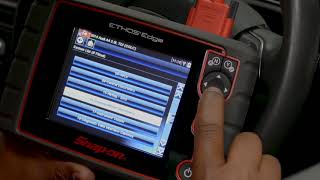
Technical definition: The SAE/OBD-II definition for C1473 varies by manufacturer. On Ford vehicles, it is defined as 'Brake System Valve Calibration Data', pointing to an ABS module memory loss. On most other makes, C1473 (or equivalents like Toyota's C1290) indicates a lost or invalid calibration 🎬 Watch: How to perform a Toyota zero point calibration for the Steering Angle Sensor (SAS). The code sets when the control module's self-check finds its stored calibration data missing, logically impossible, or unlearned.
Can I Drive With C1473?
Yes, But With Caution. Yes, but cautiously. Your vehicle's primary active safety systems—the Anti-lock Braking System (ABS) and Electronic Stability Control (ESC)—are disabled. In an emergency stop, your wheels will lock up, preventing you from steering around obstacles. On slippery surfaces, the risk of skidding increases significantly because the system cannot automatically correct traction loss. Your base braking system still functions, but automated assistance is offline. Drive straight to a repair facility, avoiding aggressive maneuvers and poor weather.
Common Causes
- Lost Calibration After Service or Repair (Very Common) — The most frequent trigger is failing to recalibrate the system after a wheel alignment, battery replacement, or steering/suspension repair. These procedures alter vehicle geometry or erase the computer's 'keep alive' memory, requiring a sensor 're-learn' via a bidirectional scan tool. 🎬 Watch: Steering angle sensor calibration and relearn walkthrough
- Incorrect Wheel Alignment or Suspension Impact (Common) — If wheels are improperly aligned—often due to hitting a severe pothole or curb—the steering wheel will not be centered when driving straight. This creates a persistent data conflict between the steering angle sensor and the wheel speed sensors, triggering a calibration fault.
- Faulty Steering Angle Sensor (SAS) (Common) — The sensor fails internally from wear, physical damage, or electronic component degradation. A dead or erratic sensor cannot send accurate data to the safety system computers, making calibration impossible.
- Incorrect Clock Spring Replacement (Common) — The steering angle sensor mounts to or integrates with the clock spring assembly. If a technician replaces the clock spring without perfectly centering it before installing the steering wheel, the SAS registers an incorrect zero point.
- Damaged Wiring or Poor Connections (Less Common) — Wiring and connectors for the SAS, wheel speed sensors, and ABS module suffer from vibration and moisture exposure. Corrosion or chafed wires disrupt communication, causing the module to drop its calibration.
- Weak or Failing Battery (Less Common) — Voltage drops below 12V during engine cranking can cause control modules to lose their calibration memory or fail startup self-tests.
- Faulty ABS Control Module (Rare) — The main brake system computer (ABS/ESC module) fails internally, preventing it from storing calibration data or communicating with sensors.
Symptoms
- Traction Control and ABS Lights Illuminated — The Traction Control System (TCS) or Electronic Stability Control (ESC) light—often a car with squiggly lines—illuminates alongside the ABS warning light. Both systems disable simultaneously because they rely on the same sensor data.
- Steering Feels Heavy or Unstable — Vehicles with electric power steering reduce assist as a fail-safe measure, making the steering feel unusually heavy or preventing the wheel from returning to center easily after a turn.
- Vehicle Pulls to One Side — The car drifts left or right during normal driving or braking due to the underlying mechanical alignment issue that triggered the code.
- Flashing ESC Light During Normal Driving — A failing sensor sends erratic signals, causing the ESC light to flash intermittently and briefly applying the brakes to individual wheels during normal driving.
Diagnostic Flowchart
Tap your situation to follow the diagnostic path that matches what you're seeing on this code.
Common Fixes & Costs
- System Recalibration via Scan Tool — Parts: $0, Labor: $120-$250, ~1 hr book time (Professional)
- Wheel Alignment and System Recalibration — Parts: $0, Labor: $220-$450, ~2 hr book time (Professional)
- Steering Angle Sensor Replacement
— Parts: $150-$400, Labor: $150-$500, ~2.5 hr book time
(Professional)
Ford Escape (2008-2012): OEM CL8Z-3F818-A (Alt: Dorman 914-241)
VW / Audi (2005-2014): OEM 1K0959653C (Alt: Bosch, Vemo) - Wiring or Connector Repair — Parts: $10-$50, Labor: $150-$400, ~2 hr book time (Intermediate)
- ABS Control Module Replacement/Repair
— Parts: $200-$2500, Labor: $150-$350, ~1.8 hr book time
(Professional)
Ford F-150 (2015-2016): OEM FL3Z-2C219-C (Alt: Cardone (Remanufactured))
Used vs. New Parts: Buying Guide
When a used part is worth it: Buy a remanufactured ABS Control Module to save $1,000+ over a new dealer unit. For a Steering Angle Sensor, always buy new for reliability.
Donor-vehicle mileage cap: roughly under 100000 miles for the part to have meaningful remaining life.
Donor quality checklist:
- Verify the part number matches exactly; electronic modules are VIN-specific.
- Purchase from a remanufacturer offering at least a 90-day warranty.
- Reject parts with visible corrosion on the connector pins.
Decision logic:
- If The part is a Steering Angle Sensor and a new one costs < $400 → Buy new for better reliability and warranty.
- If The part is an ABS Control Module and a new one costs > $1000 → Buy a professionally rebuilt module, provided a shop can program it to your VIN.
Warranty tradeoff: Used salvage parts carry 30-day warranties covering the part only. Remanufactured modules often offer 1-year warranties. New aftermarket sensors carry limited lifetime warranties.
Worst-case if a used part fails: $300-$600 in repeat labor costs if a used ABS module fails after installation.
What Happens If You Wait — Timeline
- Immediate: Code sets and ABS/ESC warning lights illuminate. Primary active safety systems disable, increasing emergency stopping distance. (MPG impact: 0%% · Added cost: $0, but carries a high risk of collision in wet conditions.)
- 1-6 months: If caused by bad alignment, uneven tire wear begins. Inner or outer tread edges wear down significantly faster than the center. (MPG impact: 2%% · Added cost: $50-$150 in wasted fuel and accelerated tire degradation.)
- 6-12 months: Severe 'edge wear' ruins the tires, making the vehicle unsafe in rain and requiring premature replacement. (MPG impact: 4%% · Added cost: $400-$1,000 for a new set of tires ruined by the bad alignment.)
- 12+ months: Constant strain from misalignment destroys suspension components like ball joints, tie rods, and control arm bushings. (MPG impact: 5%% · Added cost: $500-$1,500 in suspension repairs, plus tires and alignment.)
Cost of Not Fixing It
- Immediate: Significantly increased risk of an accident due to disabled ABS and Electronic Stability Control (ESC) systems. (Added cost: Potential for collision costs, insurance premium increases, and injury.)
- 1-6 months: If caused by bad alignment, continued driving causes accelerated and uneven tire wear. (Added cost: $400-$1000 for premature tire replacement.)
- 6+ months: Persistent bad alignment destroys steering and suspension components like ball joints and control arms. (Added cost: $500-$1500 for suspension repairs.)
Diagnosis Steps
- Read All Codes from All Modules
Use an OBD-II scanner capable of reading chassis (C-prefix) and network (U-prefix) codes. C1473 rarely appears alone. Codes related to wheel speed, yaw rate, or communication faults (e.g., U0126) dictate the diagnostic direction.
Tools: OBD-II Scanner with ABS/Chassis capability (Beginner) - Attempt Manual Recalibration Procedures
With the engine running, turn the steering wheel all the way to the left lock, then all the way to the right lock, and return to center. Alternatively, drive straight for a short distance above 15 mph. Clear codes and see if C1473 returns.
Tools: None (Beginner) - Inspect Battery and Charging System
Verify the battery holds at least 12.4V with the engine off. Ensure terminals are clean and tight. Test the charging system to confirm it provides 13.2V-14.8V when running. Low voltage erases module memory.
Tools: Multimeter, Wrench set, Battery terminal cleaner (Beginner) - Check Live Steering Angle Sensor Data
Using an advanced scanner, view the live data PID for the steering angle sensor. With front wheels straight, the sensor must read 0 degrees (+/- 5.0 degrees). Turn the wheel 90 degrees left and right; readings must change smoothly. Jumpy or frozen values confirm a faulty sensor.
Tools: Advanced OBD-II Scanner with Live Data (Intermediate) - Visually Inspect Alignment and Wiring
Verify the steering wheel is physically centered when driving straight. An off-center wheel guarantees an alignment issue. Inspect wiring going to the wheel speed sensors and steering column for chafing or unplugged connectors.
Tools: Flashlight, Tire tread depth gauge (Intermediate) - Perform a Forced Recalibration with a Scan Tool
If live sensor data is smooth but off-center, perform a forced recalibration. Use a bidirectional scan tool to access the ABS module's special functions and execute the 'Steering Angle Sensor Calibration' or 'Brake Valve Calibration'.
Tools: Advanced/Bidirectional OBD-II Scanner (Advanced) - Pro Tip: Test SAS Power and Ground
If the sensor shows no data, back-probe the connector. Verify a 5-volt reference from the control module and a solid ground (less than 0.1 volts). A loss of power or ground points to a wiring harness fault, not a bad sensor.
Tools: Multimeter, Back-probe kit (Advanced) - Pro Tip: Analyze Digital SAS Signal
For modern optical sensors, use an oscilloscope to view the output. A healthy sensor produces a clean square wave that changes frequency as the wheel turns. A garbled signal definitively condemns the sensor.
Tools: Oscilloscope, Back-probe kit (Advanced)
When This Code Triggers (Freeze-Frame Conditions)
- Vehicle Speed: 15-45 mph (System performs self-checks during the initial drive after startup.)
- Steering Angle: Variable (Fault logs when a discrepancy is noted between the steering angle and wheel speed sensors while driving straight.)
- System Voltage: 13.2-14.8V (Code can trigger if voltage drops below 12V during engine cranking.)
- Ignition Cycle Counter: 1 (Sets on the first drive cycle after the event that erased the calibration memory.)
Related Codes
- C1290 — Toyota/Lexus specific code for 'Zero Point Calibration Undone'. Functionally identical to C1473. Fixed by performing the Zero Point Calibration procedure.
- U0126 — Indicates 'Lost Communication With Steering Angle Sensor Module'. This is a total signal loss (dead sensor, cut wire, blown fuse), not just uncalibrated data.
- C0051 — Ford code for 'Steering Wheel Angle Sensor - Signal Mismatch'. Indicates a conflict between the SAS and power steering rack sensors, usually fixed by alignment and software updates.
- 00778 — Volkswagen/Audi code for 'Steering Angle Sensor (G85) - Faulty'. Often accompanied by a terminal voltage code, pointing directly to a G85 sensor power supply issue.
Climate & Environmental Factors
- High Humidity and Road Salt: Moisture and winter road salt accelerate corrosion on the ABS module's external connectors, disrupting the 5V reference signal to the steering angle sensor.
- Extreme Heat Cycles: ABS modules located in the engine bay suffer thermal stress from repeated heating and cooling, causing micro-fractures in the internal circuit board solder joints.
How to Talk to a Mechanic About This Code
Say this: "I have a C1473 code and my ABS lights are on. I suspect a lost calibration. I'd like a diagnostic that starts with checking the steering angle sensor's live data and attempting a scan tool recalibration before we quote replacing any parts."
Signals you are an informed customer. It directs the technician to the $150 software fix first, preventing them from immediately quoting a $600 sensor replacement.
Avoid saying:
- 'My traction control light is on, can you just fix it?'
- 'I think I need a new steering sensor.'
- 'Just do whatever it takes to turn the light off.'
Questions to ask before authorizing the repair:
- Did you check the live data from the steering angle sensor? What was the degree reading when the wheels were straight?
- Did you attempt a 'Steering Angle Sensor Zero Point Calibration' with the scan tool? Did it succeed or fail?
- If you recommend a new sensor, how does the live data prove the old one failed rather than just needing calibration?
- Is the diagnostic fee applied to the final repair bill?
Where to Take It: Dealer vs Independent vs Chain
- Dealer:
Best if you suspect a software update is needed, but the most expensive choice for a simple 15-minute recalibration.
Best for: Vehicles under warranty., Repairs covered by a known Technical Service Bulletin (TSB) or recall requiring software updates.
Downsides: Highest labor rates, often $200+/hour., Quick to quote replacing an entire $1,500 steering column assembly rather than diagnosing a smaller component fault. (Typical cost: +50% vs. baseline) - Independent Shop:
Best fit for most situations. A reputable independent shop performs the necessary live data diagnosis and recalibration for $120-$250.
Best for: Out-of-warranty vehicles where cost is a primary concern., Diagnosing common calibration faults.
Downsides: Must verify they own a modern, bidirectional scan tool capable of ABS/SAS functions before booking. (Typical cost: +0% vs. baseline) - Chain Shop:
Risky for diagnostics. Acceptable for a wheel alignment, but you must explicitly demand they perform the electronic SAS reset as part of the service.
Best for: Getting a mechanical wheel alignment.
Downsides: Technicians often lack the advanced training needed for complex electronic chassis codes., Business model pressures technicians to upsell hard parts rather than perform software calibrations. (Typical cost: -10% vs. baseline)
When to Walk Away From the Repair
If the estimated repair cost exceeds 40% of the car's current private-party market value, consider selling the vehicle.
- Car worth $5000, fix is $250: Fix it. This is a minor cost to restore critical safety features.
- Car worth $5000, fix is $800: Fix it. The cost is well below the 40% threshold and significantly improves vehicle safety.
- Car worth $3500, fix is $2200: Walk away. The repair cost is over 60% of the car's value. This is not an economical repair.
What Scan Tool You Need for This Code
Minimum: A bidirectional scanner that can read ABS codes, display live data for the Steering Angle Sensor, and perform the 'SAS Calibration' special function.
A basic $20 engine code reader cannot see C-prefix codes, cannot view live sensor angles to diagnose the part, and cannot perform the bidirectional recalibration required to fix the car.
Budget: BlueDriver Pro Scan Tool (~$100) — Reads ABS codes and displays live steering angle data to confirm if the sensor is dead. It CANNOT perform the bidirectional recalibration to fix the code.
Mid-range: Foxwell NT630 Plus / Autel MaxiCOM MK808 (~$150-450) — Reads codes, views live data, and performs the mandatory 'Steering Angle Sensor Calibration' special function required to complete the repair.
Professional: Autel MaxiSys Series (~$900-1500) — Provides full bidirectional control, OEM-level diagnostics, and module programming necessary if an ABS module is replaced.
Rent vs buy: Auto parts stores loan basic code readers, not the bidirectional scanners needed to perform a SAS calibration. You must buy a mid-range scanner or pay a shop $150 for the service.
How to Clear the Code After You Fix It
- Reconnect battery if disconnected.
- Use an OBD-II scan tool to clear C1473 and related chassis codes.
- Perform the specific recalibration procedure with a bidirectional scan tool (e.g., 'SAS Calibration').
- Drive straight above 15 mph for 5 minutes to allow the module to verify the new calibration.
Drive cycle (~15 minutes): Start the engine and drive for 15 minutes, including straight-line driving and several 90-degree turns. If the ABS and ESC lights remain off, the calibration was successful.
Readiness monitors affected: Chassis codes do not affect emissions readiness monitors (Catalyst, O2 sensor, etc.).
Watch out for:
- Clearing the code with a basic $20 scanner fails; lights return immediately because the underlying calibration data is still missing.
- Forgetting to perform the mandatory scan tool calibration after installing a new Steering Angle Sensor.
Will This Fail Emissions / State Inspection?
No — by itself this code doesn't fail OBD inspection (but it can keep readiness monitors from setting, which causes a separate fail).
- California: C1473 will not fail a standard smog check. However, it will fail the comprehensive Vehicle Safety Systems Inspection (VSSI) required for salvaged vehicles due to the illuminated ABS light.
- New York: Requires an annual safety inspection. An illuminated ABS warning light is immediate grounds for inspection failure.
- Texas: The ABS warning light is checked during the state safety inspection. If illuminated, the vehicle fails and cannot be legally driven until repaired.
Most Commonly Affected Vehicles
- Ford Escape (2008-2012) — Prone to steering sensor issues. A major recall (NHTSA #14V284000) addressed a torque sensor causing power steering loss. C1473 frequently appears for 'Brake System Valve Calibration Data' after routine service.
- Ford F-150 (2010-2020) — Requires SAS recalibration after installing leveling kits or getting alignments. Ford TSB 20-2046 advises checking alignment and software before replacing modules.
- Volkswagen / Audi Jetta, Golf, A4 (2002-2016) — The G85 steering angle sensor is highly sensitive to battery disconnections. A scan tool like VCDS is mandatory to perform the basic settings calibration.
- Subaru Outback, Forester, Crosstrek (2012-2020) — Frequently illuminates the Vehicle Dynamics Control (VDC) warning light after a simple battery change, requiring a 15-minute scan tool recalibration.
- Hyundai / Kia Elantra, Sonata, Optima (2011-2018) — 2011-2012 Elantras had a safety recall (Campaign 137) for a faulty yaw sensor causing unexpected braking, requiring a software update and potential sensor replacement.
- Toyota Tacoma (2005-2015) — Prone to losing 'Zero Point Calibration' (Code C1290) after lift kit installations. Older models allow manual recalibration by jumping OBD-II pins 4 and 12.
- BMW 3-Series (E90/E92) (2006-2013) — Features a sensitive optical steering angle sensor. Dirt on the internal optical disc triggers the DSC light. Cleaning the disc often prevents replacing the expensive SZL unit.
- Chevrolet / GMC Silverado / Sierra 1500 (2007-2014) — Displays the 'Service Stabilitrak' message if the steering system is serviced or the battery is replaced without performing the electronic re-learn procedure.
Manufacturer-Specific Notes
- Ford: C1473 specifically translates to 'Brake System Valve Calibration Data' missing, pointing to the ABS module rather than the steering column. TSBs frequently recommend reprogramming the ABS or PSCM module before replacing hardware.
- Toyota / Lexus: Uses code C1290 for lost SAS calibration. On models prior to 2019, you can perform a 'Zero Point Calibration' without a scanner by jumping specific pins on the OBD-II port with a paperclip.
- General Motors: The 'Service Stabilitrak' dashboard message is the primary symptom. A simple battery disconnect erases the memory, requiring a scan tool recalibration to clear the message.
Real Owner Stories
2015 Subaru Forester with ABS/VDC lights on
Immediately after a local mechanic replaced the battery, the ABS and VDC (Vehicle Dynamics Control) warning lights illuminated. The mechanic suggested an expensive trip to the Subaru dealer for a new module.
Outcome: The issue was a lost 'Zero Point Calibration' caused by the battery disconnect. An independent shop with a bidirectional scan tool performed the SAS recalibration in 15 minutes for $100, avoiding a $1,200 dealer module replacement.
Lesson: If ABS/VDC lights appear immediately after a battery change, do not assume a part is fried. A simple scan tool recalibration is the correct fix.
2018 Ford F-150 with 'Service AdvanceTrac' message
The 'Service AdvanceTrac' warning appeared after installing a 2-inch leveling kit and getting an alignment. The truck drove fine, but safety systems were disabled.
Outcome: Following Ford's Special Service Message (SSM 47701), the owner performed a 'Steering Angle Sensor Calibration' using FORScan. The computer accepted the new 'straight-ahead' position, permanently clearing the code.
Lesson: Any change to suspension height or alignment on modern trucks requires an electronic SAS recalibration. Do not replace sensors; update the software.
2011 Chevy Silverado hit a pothole
The 'Service StabiliTrak' message illuminated immediately after hitting a massive highway pothole.
Outcome: A diagnostic scan revealed a right front wheel speed sensor fault. Inspection showed the pothole impact had chafed the sensor's wiring harness against the suspension. Splicing the damaged wire fixed the problem permanently.
Lesson: A hard impact can temporarily disrupt a sensor, but returning lights indicate physical damage. Inspect wheel well wiring and alignment immediately after severe impacts.
How to Prevent This Code From Triggering
- Insist on SAS recalibration after every wheel alignment (Every alignment service) — Alignments mechanically change steering geometry. Electronic recalibration makes the computer aware of the new straight-ahead position, preventing data mismatches.
- Use a 'memory saver' device when replacing the vehicle battery (Every battery change) — A memory saver plugs into the OBD-II port to provide low-level power, preventing control modules from erasing vital steering and brake calibration data.
- Perform an annual wheel alignment check (Once per year or 12,000 miles) — Corrects gradual misalignment before it creates a severe enough conflict between the steering sensor and wheel speed sensors to trigger a fault.
Frequently Asked Questions
Can I fix code C1473 myself?
Sometimes. You can check the battery, try the manual lock-to-lock steering reset, and inspect for obvious wiring damage. If those fail, you must take the vehicle to a shop equipped with a bidirectional scan tool for a forced recalibration.
Why did this code appear right after a wheel alignment?
An alignment changes the physical angles of your wheels, requiring the steering angle sensor to be electronically reset to match the new 'straight-ahead' position. The alignment shop should have performed this reset as a final step; contact them to complete the job.
I replaced the Steering Angle Sensor but the light is still on. Why?
A new steering angle sensor does not come pre-calibrated to your vehicle. After installation, you must perform the 'Steering Angle Sensor Calibration' procedure with a bidirectional scan tool. Without this step, the computer rejects the new sensor's data.
How do I know if I need a recalibration or a brand new sensor?
A technician determines this by viewing the sensor's live data on a scan tool. If the degree readings change smoothly as you turn the wheel but are off-center, it only needs recalibration. If the readings are erratic, frozen, or blank, the sensor is dead and requires replacement.
Will replacing my battery cause code C1473?
Yes, disconnecting the battery erases the 'keep alive' memory in control modules, including steering calibration data. On many cars, a short drive or a lock-to-lock steering reset allows the system to self-calibrate. If not, a forced scan tool recalibration is mandatory.
Can a bad alignment alone cause this code, even if the sensor is good?
Yes. If the alignment is poor, your steering wheel won't be centered when driving straight. The car's computer sees a logical conflict between the steering angle sensor and the wheel speed sensors, triggering the calibration fault.
What does 'Service Stabilitrak' or 'Service AdvanceTrac' mean?
This is the dashboard message GM and Ford vehicles display when the electronic stability control system fails. A C1473 calibration issue is one of the most common triggers for this warning.
Key Takeaways
- Code C1473 indicates a lost steering or brake system calibration, triggering immediately after 90% of uncalibrated wheel alignments or battery replacements.
- Expect the ABS and Traction Control warning lights to illuminate immediately, disabling your vehicle's automated skid prevention systems.
- You can drive with a C1473 code, but your stopping distance increases by up to 20% on wet roads due to disabled Anti-lock Braking Systems (ABS).
- A 15-minute electronic recalibration using a bidirectional scan tool (costing $120-$250 at a shop) fixes this code in the majority of cases without replacing any parts.
- Never replace a $300 Steering Angle Sensor without first verifying its live data output; a smooth but off-center reading means you only need a software recalibration.
Helpful Videos




The information in this article is provided for general reference and educational purposes only. Vehicle specifications, procedures, and part compatibility can vary by production date, trim level, and region. Always consult your vehicle's factory service manual and verify part numbers before purchasing or performing repairs. Safety-critical components such as airbags, seat belts, and braking systems should be installed by a qualified professional.
- 🎬 Helpful Videos
- What Does C1473 Mean?
- Can I Drive With C1473?
- Common Causes
- Symptoms
- Diagnostic Flowchart
- Common Fixes & Costs
- Used vs. New Parts: Buying Guide
- What Happens If You Wait — Timeline
- Cost of Not Fixing It
- Diagnosis Steps
- When This Code Triggers (Freeze-Frame Conditions)
- Related Codes
- Climate & Environmental Factors
- How to Talk to a Mechanic About This Code
- Where to Take It: Dealer vs Independent vs Chain
- When to Walk Away From the Repair
- What Scan Tool You Need for This Code
- How to Clear the Code After You Fix It
- Will This Fail Emissions / State Inspection?
- Most Commonly Affected Vehicles
- Manufacturer-Specific Notes
- Real Owner Stories
- 2015 Subaru Forester with ABS/VDC lights on
- 2018 Ford F-150 with 'Service AdvanceTrac' message
- 2011 Chevy Silverado hit a pothole
- How to Prevent This Code From Triggering
- Frequently Asked Questions
- Can I fix code C1473 myself?
- Why did this code appear right after a wheel alignment?
- I replaced the Steering Angle Sensor but the light is still on. Why?
- How do I know if I need a recalibration or a brand new sensor?
- Will replacing my battery cause code C1473?
- Can a bad alignment alone cause this code, even if the sensor is good?
- What does 'Service Stabilitrak' or 'Service AdvanceTrac' mean?
- Key Takeaways
- 🎟️ Get 5% Off