

OBD-II Code C1444: Four-Wheel Drive (4WD) System Fault
What C1444 means, why it triggers, and how to fix it
- Code C1444 indicates a failure in the 4WD electronic control system, disabling your ability to switch between 2WD and 4WD.
- The most frequent fix is replacing the transfer case shift motor, which costs between $300 and $650 for parts and labor.
- On 2019 and newer Ram and Jeep vehicles, the C1444-98 code specifically flags an overheated shift motor covered by TSB 21-048-24.
- Stop driving on dry pavement immediately if the vehicle is stuck in 4WD to prevent upwards of $2,500 in catastrophic transfer case damage.
What Does C1444 Mean?
Code C1444 indicates the vehicle's computer detected a failure in the four-wheel-drive (4WD) system, specifically the electronic components that shift the transfer case. Your vehicle is stuck in its current mode (2WD or 4WD). While overwhelmingly associated with 4WD systems in North American trucks, older Ford documents list it as 'Steering Phase B Circuit Short To Ground'.
Technical definition: C1444 is a manufacturer-specific Chassis code. For modern Jeep, Ram, and Stellantis vehicles, the official definition is 'T-Case Motor Overuse-Component or System Over Temperature.' This indicates the electric shift motor has overheated or activated excessively. The '-98' suffix (C1444-98) specifically confirms 'Over Temperature'.
Can I Drive With C1444?
Yes, But With Caution. Yes, but your 4WD system is disabled or stuck. If stuck in 4WD, driving on dry pavement causes severe drivetrain binding. Continuous driving in this state destroys the transfer case, axles, and universal joints, leading to repairs exceeding $2,500.
Common Causes
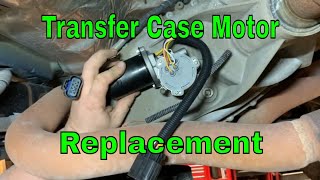
- Faulty Transfer Case Shift Motor (Very Common) — This electric motor physically shifts the transfer case. It is the most common failure point, failing due to internal electronic shorts, overheating, or a stripped internal plastic reduction gear.
- Damaged Wiring or Loose Connectors (Common) — The 4WD wiring harness sits exposed under the vehicle. Water intrusion at the connector grommet causes corrosion, interrupting signals between the control module and the shift motor.
- Leaking Vacuum Lines or Faulty IWE Solenoid (Ford Specific) (Common) — Ford trucks use a vacuum system (Integrated Wheel End) to disengage front hubs. A vacuum leak or bad solenoid allows hubs to partially engage, creating grinding noises and triggering system faults.
- Drivetrain Control Module (DTCM) Software Anomaly (Common) — Software glitches cause the control module to misinterpret shift motor data, falsely triggering an overheat code. A dealership software update (reflash) fixes this without hardware replacement.
- Failed Transfer Case Control Module (TCCM) (Less Common) — The TCCM is the 4WD system's computer. Internal faults or water damage prevent it from processing switch commands or sending signals to the shift motor.
- Low or Burnt Transfer Case Fluid (Less Common) — Degraded fluid causes internal transfer case components to bind. This mechanical resistance forces the shift motor to overwork, triggering an overheat condition.
- Internal Transfer Case Mechanical Failure (Rare) — Severe internal damage, such as a stretched chain or failed clutch packs, binds the transfer case. This puts extreme stress on the shift motor, causing it to fail.
Symptoms
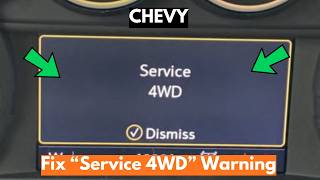
- "Service 4WD" Light is On — The dashboard warning light illuminates immediately when the computer detects a 4x4 system fault.
- Cannot Shift Modes & Flashing Lights — The vehicle remains stuck in 2WD, 4-High, or 4-Low. The dashboard indicator lights flash continuously when you turn the selector switch, indicating an incomplete shift.
- Vehicle Binds or Hops on Tight Turns — If stuck in 4WD, driving on dry pavement forces the front and rear axles to rotate at the same speed, causing the tires to hop or skip during sharp turns.
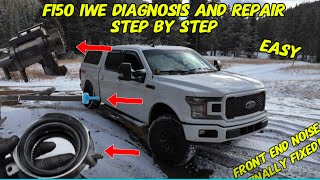
- Grinding or Whining Noises — Grinding or clicking from underneath the truck occurs when the shift motor fails to engage fully. On Ford F-150s, this indicates a failing IWE vacuum system. 🎬 See this in-depth diagnosis for Ford F-150 grinding noises
Diagnostic Flowchart
Tap your situation to follow the diagnostic path that matches what you're seeing on this code.
Common Fixes & Costs
- Replace Transfer Case Shift Motor
— Parts: $150-$350, Labor: $150-$300, ~1.5 hr book time
(Intermediate)
Ram 1500/2500 (2019+): OEM
Jeep Wagoneer/Grand Wagoneer (2022+): OEM
Chevrolet/GMC 1500 (2019+): OEM - Update Control Module Software (Reflash) — Parts: $0, Labor: $100-$200, ~1 hr book time (Professional)
- Repair or Replace Damaged Wiring/Connector
— Parts: $30-$60, Labor: $150-$300, ~2.0 hr book time
(Professional)
GM Trucks (Connector Pigtail): OEM - Replace IWE Solenoid and/or Vacuum Lines (Ford)
— Parts: $30-$70, Labor: $100-$200, ~0.5 hr book time
(DIY)
Ford F-150 (2010-2020): OEM - Replace Transfer Case Control Module (TCCM)
— Parts: $150-$500, Labor: $100-$200, ~1 hr book time
(Intermediate)
Ford F-150 (2015-2020): OEM
Used vs. New Parts: Buying Guide
When a used part is worth it: A used OEM transfer case shift motor from a low-mileage vehicle is a cost-effective option for older trucks where a new OEM part is prohibitive.
Donor-vehicle mileage cap: roughly under 75000 miles for the part to have meaningful remaining life.
Donor quality checklist:
- Verify the exact part number matches.
- Inspect the electrical connector for corrosion or damage.
- Avoid parts from flood-damaged or high-rust vehicles.
- Ask the seller if the donor vehicle's 4WD system was functional.
Decision logic:
- If The vehicle is under warranty or a TSB for a software update exists → Go to the dealer first; do not buy any parts.
- If The vehicle is a modern Ram/Jeep with a known C1444-98 issue → Buy a new OEM or reputable aftermarket motor. The failure is a known defect, and a used part carries the same flaw.
- If The vehicle is older (>10 years) and the budget is tight → A tested, used OEM motor from a reputable recycler is a reasonable choice.
Warranty tradeoff: Used parts from salvage yards offer a 30-90 day warranty. New aftermarket parts come with a 1-year to limited lifetime warranty. New OEM parts have a 1-2 year warranty.
Worst-case if a used part fails: $200-$500 if a used motor fails after installation, requiring repeat labor costs plus the price of another replacement part.
What Happens If You Wait — Timeline
- 0-1 month: Code C1444 appears, 'Service 4WD' light is on. The 4WD system is disabled or unreliable, but the vehicle drives normally in 2WD. No mechanical noise or binding. (MPG impact: 0%% · Added cost: $0)
- 1-4 months (If stuck in 4WD): Driving on dry pavement causes noticeable drivetrain binding, tire hopping on turns, and increased tire wear. The stress on U-joints and axle shafts begins. (MPG impact: 5-10%% · Added cost: $200-$800 (for premature tire replacement and potential U-joint failure).)
- 4-8 months (If stuck in 4WD): Continuous binding puts extreme stress on internal transfer case components. The chain stretches, gears chip, and clutch packs burn out. (MPG impact: 10-15%% · Added cost: $1,500-$3,500 (Transfer case now requires a rebuild or replacement).)
- 8+ months (If stuck in 4WD): Catastrophic failure of the transfer case or front/rear differential occurs. Internal gears shatter, locking up the drivetrain and making the vehicle undrivable. (MPG impact: N/A (Vehicle likely undrivable)% · Added cost: $3,000-$8,000+ (for replacement of transfer case and potentially a differential assembly).)
Cost of Not Fixing It
- Immediate: Loss of 4WD capability. The vehicle remains stuck in its current mode, making it unsuitable for low-traction situations. (Added cost: $0)
- 0-3 months: If stuck in 4WD, driving on dry pavement causes drivetrain binding, leading to accelerated wear on tires, U-joints, and axle components. (Added cost: $200-$800 for tire and U-joint replacement.)
- 3+ months: Continued driving with the system stuck in 4WD on high-traction surfaces causes catastrophic failure of the transfer case, front differential, or axles. (Added cost: $2,500-$5,000+ for transfer case and/or differential replacement.)
- Ford IWE Specific: If a vacuum leak in the IWE system is ignored, the constant grinding destroys the hub actuators and wheel bearings. (Added cost: $600-$1,200 for hub and actuator replacement per wheel.)
Diagnosis Steps
- Check for Technical Service Bulletins (TSBs)
Search your vehicle's make, model, year, and 'C1444 TSB' to find known manufacturer fixes, such as required software updates or faulty factory connectors.
Tools: Internet access (Beginner) - Listen to the Shift Motor
With the engine running in park, have a helper switch between 2WD and 4WD. Lie safely near the transfer case and listen. A healthy motor makes a distinct 1-2 second whirring sound. Silence or grinding confirms a motor or power supply failure.
Tools: A helper (Beginner) - Inspect Wiring and Perform Push-Pull Test
Visually inspect the wiring harness at the transfer case shift motor for chafing or corrosion. Push the connector in, pull back gently, and push firmly again to ensure it is latched. Loose factory connectors are a known cause on 2023+ Ram/Jeep models.
Tools: Flashlight, vehicle jack and stands (Beginner) - Command Shift with a Bi-Directional Scan Tool
Use a professional scan tool to command the TCCM to activate the shift motor directly while monitoring live data PIDs like 'Commanded Shift Position'. If the commanded position changes but the motor does not respond, the motor or its circuit is faulty.
Tools: Bi-directional OBD-II scanner (Advanced) - Test the Vacuum System (Ford IWE)
On Ford models, use a vacuum pump to test the IWE solenoid and wheel hubs. With the engine running in 2WD, verify 18-22 inHg of vacuum at the solenoid. Apply vacuum directly to each hub actuator; it must hold at least 10 inHg without bleeding down.
Tools: Handheld vacuum pump/gauge (Intermediate) - Test Shift Motor Electricals
Disconnect the shift motor. Use a multimeter to verify ~12V at the power pin during a commanded shift, and less than 1.0 ohm of resistance on the ground pin. Check internal motor resistance; an open circuit or direct short to ground confirms a dead motor.
Tools: Multimeter, vehicle-specific wiring diagram (Advanced)
When This Code Triggers (Freeze-Frame Conditions)
- Vehicle Speed: 0 mph (The fault is logged when a shift is attempted while stationary or at very low speed.)
- Engine RPM: 700-800 RPM (At idle, immediately after starting the engine or when stopped, waiting to engage 4WD.)
- System Voltage: 13.5-14.5 V (Normal operating voltage with the engine running.)
- Shift Command: Active (The code is set at the moment the TCCM commands the shift motor to move and it fails to respond or draws excessive current.)
Related Codes
- C1477 — Appears as 'Transfer Case Clutch-Over Temperature.' C1444 points to the shift motor overheating, while C1477 points to the internal clutch pack overheating. A failing motor causes erratic clutch operation, triggering both codes.
- C00A8 — Means '4WD/AWD Transfer Case Unit Actuator Position Sensor B-Circuit Open.' This confirms the position sensor inside the shift motor assembly has an open circuit, definitively proving the shift motor is faulty.
- U0418 — A network code for 'Implausible Data Received From Brake System Control Module.' It appears because the failing 4WD module is sending corrupt data over the vehicle's communication network.
- C1404 — Appears as 'Transfer Case Range Position Sensor Circuit Low'. Indicates the signal from the position sensor is below the expected voltage threshold, pointing to a short to ground or a failed sensor inside the shift motor.
Climate & Environmental Factors
- High Humidity / Road Salt (Rust Belt): Moisture penetrates wiring connectors, especially the transfer case shift motor connector on GM trucks (per TSB 22-NA-187), causing corrosion and signal loss. Road salt accelerates this corrosion.
- Extreme Cold: Cold temperatures thicken the lubricant inside the transfer case and shift motor, increasing mechanical resistance. This forces the shift motor to overwork, triggering an overuse/overheat fault (C1444-98).
- Water Intrusion: Driving through high water forces water past seals on the transfer case and shift motor. This directly corrodes electrical pins and causes internal short circuits.
How to Talk to a Mechanic About This Code
Say this: "I have a 'Service 4WD' light and my scanner is showing code C1444. I'd like to schedule a diagnostic. Based on my vehicle, I know there are several TSBs related to the shift motor, wiring connectors, and potential software updates. Please begin by checking for applicable TSBs before diagnosing other components."
This signals you are an informed customer. It directs the technician to the most likely, and often cheapest, fixes first. It discourages them from starting with a recommendation for a full transfer case replacement.
Avoid saying:
- 'My 4-wheel drive is broken, fix it.'
- 'My 'Service 4WD' light is on, can you just look at it?'
- 'I think I need a new transfer case.'
Questions to ask before authorizing the repair:
- Did you find a TSB that applies to my vehicle's VIN for this code?
- If you are recommending a shift motor replacement, did you first confirm it's receiving power and ground and that the wiring is intact?
- If you are recommending a software update, what is the TSB number that calls for the reflash?
- Can you confirm the problem is not just a corroded connector, as noted in GM TSB 22-NA-187 (if applicable)?
- What is the warranty on the parts and labor for this repair?
Where to Take It: Dealer vs Independent vs Chain
- Dealer:
Recommended, especially if the vehicle is a late-model Ram, Jeep, or GM product with known TSBs, or if it's still under warranty.
Best for: Vehicles still under a powertrain warranty, as this repair is often covered., Newer vehicles (less than 5 years old) where a software update (reflash) is a likely solution., Diagnosing manufacturer-specific quirks detailed in TSBs.
Downsides: Highest labor rates and parts costs, often 1.5-2x more than an independent shop., Defaults to replacing a module when a simple software update is all that is needed. (Typical cost: +50% vs. baseline) - Independent Shop:
Good choice for out-of-warranty hardware replacement. Ask them if they have access to TSBs and module programming capabilities.
Best for: Out-of-warranty vehicles where the diagnosis is straightforward (e.g., a failed shift motor or Ford IWE solenoid)., Cost-conscious owners, as labor and parts are generally more affordable., Vehicles older than 7-10 years.
Downsides: Lacks access to the latest TSBs or manufacturer-specific software for reflashing modules., Quality varies greatly; it's important to find a shop with experience in 4x4 systems. (Typical cost: +0% vs. baseline) - Chain Shop:
AVOID for diagnosis. The risk of misdiagnosis and being sold unnecessary parts is very high.
Best for: Simple, known fixes like replacing a Ford IWE solenoid if you specifically direct them to do so.
Downsides: Technician skill varies dramatically, and they lack experience with complex chassis codes., High pressure to upsell leads to recommendations for unnecessary, expensive repairs., Lacks the tools for software reflashing or advanced diagnostics. (Typical cost: -10% vs. baseline)
When to Walk Away From the Repair
If the estimated repair cost exceeds 40-50% of the vehicle's current private-party value, sell or trade it in rather than repairing it.
- Car worth $25000, fix is $650: Fix it. A $650 repair for a shift motor on a 2019 Ram 1500 valued at ~$25,000 is well below the threshold and restores critical functionality.
- Car worth $15000, fix is $3500: Borderline. If a 2015 Ford F-150 valued at ~$15,000 needs a full transfer case replacement for $3,500, get a second opinion. If confirmed, consider selling it 'as-is'.
- Car worth $5000, fix is $2800: Walk away. Spending $2,800 to fix a major drivetrain issue on an older truck worth $5,000 is not economically sound.
What Scan Tool You Need for This Code
Minimum: A scanner that reads Chassis (C) codes and views live data from the Transfer Case Control Module (TCCM) or Drivetrain Control Module (DTCM).
A basic $20 code reader only sees Powertrain (P) codes. To diagnose this issue, you need to see live data PIDs like 'Commanded Shift Position' vs 'Actual Motor Position'.
Budget: BlueDriver Pro Scan Tool (~$100) — Reads and clears chassis codes (like C1444) and displays live data from the 4WD control module on supported vehicles. It is NOT bi-directional, so you cannot command a shift.
Mid-range: Autel MaxiCOM MK808S / Foxwell NT604 Elite (~$130-350) — Offers bi-directional control, allowing you to command the shift motor to activate directly from the scanner. This is the most crucial diagnostic step to isolate a bad motor from a wiring problem.
Professional: Autel MaxiCOM MK906BT / Launch X431 Series (~$500-1200) — Provides full OEM-level bi-directional control for all modules, advanced coding functions (like programming a new TCCM), and detailed vehicle topology maps.
How to Clear the Code After You Fix It
- Use an OBD-II scan tool to clear the C1444 code from the Drivetrain Control Module (DTCM) or Transfer Case Control Module (TCCM).
- With the vehicle stationary, cycle the 4WD system through all modes (e.g., 2-Hi, 4-Auto, 4-Hi, 4-Lo) to confirm the motor shifts correctly.
- Perform a drive cycle to ensure the code does not return.
Drive cycle (~20 minutes): Start the engine from cold and let it idle for 2-3 minutes. Drive in mixed city/highway conditions for 15-20 minutes. After the drive, shut off the vehicle and restart to see if the 'Service 4WD' light returns.
Readiness monitors affected: This is a Chassis (C) code and does not directly affect emissions readiness monitors. Clearing the code resets other unrelated monitors.
Before emissions retest: drive at least 50 miles to fully set monitors.
Watch out for:
- Disconnecting the battery does not reliably clear this code from the specialized control module; a scan tool is required.
- If the root cause is not fixed, the code returns immediately upon the next shift attempt.
- Forgetting to reprogram a new Transfer Case Control Module (TCCM) prevents it from working correctly.
Will This Fail Emissions / State Inspection?
No — by itself this code doesn't fail OBD inspection (but it can keep readiness monitors from setting, which causes a separate fail).
- California: This is a Chassis (C) code. California's SMOG check focuses on Powertrain (P) codes. C1444 does not cause a SMOG check failure unless the 'Check Engine' light is also on for a separate emissions reason.
- New York: New York's annual safety inspection checks for malfunction indicator lights. While a 'Service 4WD' light is not an automatic failure, an inspector fails the vehicle if the active fault compromises vehicle control.
- Texas: A C1444 code does not cause a failure of the emissions test, which looks exclusively for Powertrain codes.
Most Commonly Affected Vehicles
- Ram 1500 (2019-2025) — A known issue with the transfer case shift motor overheating (C1444-98), addressed by TSBs 21-048-24 and STAR case 9100409. The fix is replacing the shift motor (P/N 68450803AA).
- Jeep Grand Wagoneer / Wagoneer (2022-2025) — Shares the same platform and faulty shift motor issue as the Ram 1500, with multiple TSBs issued (e.g., 08-239-23, 08-122-24). The OEM part number is 68402283AA.
- Ford F-150 (2004-2020) — Prone to 4WD faults from the vacuum-operated IWE system. The fix is replacing the solenoid (P/N 7L1Z-9H465-B) or check valve.
- Ford Explorer (2020-2023) — Subject to 4WD faults from a wiring harness rubbing against a heat shield (SSM 52152) and issues with the front axle disconnect system (TSB 23-2174).
- Chevrolet / GMC Silverado 1500 / Sierra 1500 (2019-2023) — A 'Service 4WD' light is caused by water intrusion into the transfer case actuator harness connector, per GM bulletin 22-NA-187.
- Cadillac Escalade (2020-2023) — Included in GM bulletin 22-NA-187 and 23-NA-185 for water damage to the transfer case actuator connector.
- Jeep Grand Cherokee (2011-2021) — Owners report C1444 related to the transfer case motor and binding during turns. The C1444-00 subtype is commonly seen.
- BMW X3, X5 (2004-2013) — A plastic gear inside the transfer case actuator motor wears out, causing 4x4, ABS, and DSC warning lights. Aftermarket replacement gears are widely available.
Manufacturer-Specific Notes
- Ford: Ford trucks use a vacuum-based Integrated Wheel End (IWE) system to DISENGAGE the front hubs. A loss of vacuum from a cracked line or bad solenoid causes the hubs to engage, leading to grinding noises and 4x4 faults.
- Ram / Jeep (Stellantis): C1444 is almost always C1444-98, meaning 'Component or System Over Temperature.' TSB 9100409 warns technicians NOT to replace the entire transfer case before checking the shift motor per TSB 21-048-24.
- GM (Chevrolet / GMC / Cadillac): A 'Service 4WD' message is frequently caused by water getting into the transfer case actuator's electrical connector. GM issued bulletin 22-NA-187 to address this specific issue.
- BMW: BMW's xDrive system is infamous for a failure where a small plastic gear inside the transfer case actuator motor wears out, causing the 'trifecta' of 4x4, ABS, and DSC warning lights.
Real Owner Stories
2019 Ram 1500 at 55K miles with C1444-98
The 'Service 4WD' light came on intermittently. The truck drove normally in 2WD but would not shift into 4-High or 4-Low. The 4WD selector lights flashed.
What they tried:
- Owner tried clearing the code, but it returned immediately on the next shift attempt.
- Took the truck to the dealership, referencing TSB 21-048-24.
Outcome: The dealership confirmed the transfer case shift motor was overheating. They replaced the shift motor (P/N 68450803AA). The $750 repair was covered under the powertrain warranty.
Lesson: For modern Ram/Jeep trucks, C1444-98 is the known shift motor issue. Check for TSBs and warranty coverage before paying for a diagnosis.
2018 Jeep Grand Cherokee at 78K miles stuck in 4-Low
After testing 4-Low, the vehicle became stuck. The 'Service 4WD' light was on, and the selector switch was unresponsive.
What they tried:
- Replaced the Transfer Case Control Module (TCCM), which did not solve the problem.
- Removed the shift motor, manually shifted the transfer case to neutral using a hex bit, reinstalled the motor, and disconnected the battery for 15 minutes.
Outcome: After reconnecting the battery, the system successfully shifted back into 4-High. The root cause was a control module glitch, not a hard part failure.
Lesson: A system 'stuck' in a mode is sometimes caused by a logic error. Manually resetting the component's physical position resolves the issue without replacing expensive parts.
2015 Ford F-150 with intermittent grinding noise
Owner heard a grinding noise from the front end when accelerating lightly. The noise disappeared when 4WD was engaged.
What they tried:
- Replaced the IWE check valve (P/N YG360), but the noise persisted.
- Replaced the IWE solenoid on the firewall (P/N 7L1Z-9H465-B).
Outcome: Replacing the solenoid fixed the vacuum leak and completely eliminated the grinding noise. The 4WD system operated normally.
Lesson: On Ford trucks, grinding from the front that stops in 4WD is a vacuum leak in the IWE system. Start with the cheapest parts first: the check valve and the solenoid.
How to Prevent This Code From Triggering
- Change Transfer Case Fluid (Every 30,000-60,000 miles) — Old fluid loses its lubricating properties, increasing friction and heat. This forces the shift motor to work harder and leads to mechanical binding.
- Engage 4WD System Periodically (Once a month for a few miles) — Cycling the 4WD system lubricates the internal components of the transfer case and the shift motor mechanism, preventing seals from drying out.
- Protect Underbody Electrical Connectors (During underbody service or once every 1-2 years) — Clean the transfer case motor connectors and apply dielectric grease. This creates a barrier against moisture and road salt.
- Inspect Ford IWE Vacuum Lines (At every oil change) — The plastic vacuum lines for the Ford IWE system become brittle and crack. A visual inspection catches a leak before it causes grinding.
- Avoid Abusive Shifting Practices (Daily habit) — Avoid shifting into or out of 4WD while at high speeds or while a wheel is slipping to minimize stress on the shift motor.
Frequently Asked Questions
What are the most common misdiagnosis mistakes with C1444?
The most expensive mistake is replacing the entire transfer case when only the external shift motor failed. Manufacturer TSBs specifically warn against this. Always verify software updates and shift motor functionality first.
What does the '-98' or '-00' suffix on my code mean?
The '-98' suffix specifically means 'Component or System Over Temperature.' This points directly to an overheating shift motor. The '-00' suffix is generic, indicating a fault without a specific subtype.
Can I just ignore code C1444?
No. Ignoring the code leads to severe drivetrain damage if the system is stuck partially engaged or in 4WD on dry pavement. This binding destroys the transfer case, hubs, and axles, costing thousands to repair.
Is it expensive to fix a C1444 code?
Repair costs range from $50 for a Ford IWE vacuum solenoid to $650 for a Ram shift motor replacement. A complete transfer case replacement is the worst-case scenario, costing over $3,000. Accurate diagnosis prevents unnecessary part swapping.
Can I replace just the plastic gear in the shift motor?
Aftermarket companies sell individual plastic replacement gears for older vehicles like BMWs. However, for most modern American trucks, the shift motor is a sealed assembly. You must replace the entire unit.
Can a bad battery cause a C1444 code?
A weak battery causes voltage drops to electronic modules, including the TCCM. This triggers communication errors, failed shifts, and false fault codes. Always verify battery health before diagnosing complex electronic issues.
What is a TSB and why is it important for this code?
A Technical Service Bulletin (TSB) is a manufacturer notice about a known, non-safety-recall problem. TSBs for code C1444 guide technicians directly to the root cause, such as a bad motor or corroded connector. This saves diagnostic time and prevents expensive misdiagnosis.
Key Takeaways
- Code C1444 indicates a failure in the 4WD electronic control system, disabling your ability to switch between 2WD and 4WD.
- The most frequent fix is replacing the transfer case shift motor, which costs between $300 and $650 for parts and labor.
- On 2019 and newer Ram and Jeep vehicles, the C1444-98 code specifically flags an overheated shift motor covered by TSB 21-048-24.
- Stop driving on dry pavement immediately if the vehicle is stuck in 4WD to prevent upwards of $2,500 in catastrophic transfer case damage.
Helpful Videos

The information in this article is provided for general reference and educational purposes only. Vehicle specifications, procedures, and part compatibility can vary by production date, trim level, and region. Always consult your vehicle's factory service manual and verify part numbers before purchasing or performing repairs. Safety-critical components such as airbags, seat belts, and braking systems should be installed by a qualified professional.
- 🎬 Helpful Videos
- What Does C1444 Mean?
- Can I Drive With C1444?
- Common Causes
- Symptoms
- Diagnostic Flowchart
- Common Fixes & Costs
- Used vs. New Parts: Buying Guide
- What Happens If You Wait — Timeline
- Cost of Not Fixing It
- Diagnosis Steps
- When This Code Triggers (Freeze-Frame Conditions)
- Related Codes
- Climate & Environmental Factors
- How to Talk to a Mechanic About This Code
- Where to Take It: Dealer vs Independent vs Chain
- When to Walk Away From the Repair
- What Scan Tool You Need for This Code
- How to Clear the Code After You Fix It
- Will This Fail Emissions / State Inspection?
- Most Commonly Affected Vehicles
- Manufacturer-Specific Notes
- Real Owner Stories
- 2019 Ram 1500 at 55K miles with C1444-98
- 2018 Jeep Grand Cherokee at 78K miles stuck in 4-Low
- 2015 Ford F-150 with intermittent grinding noise
- How to Prevent This Code From Triggering
- Frequently Asked Questions
- What are the most common misdiagnosis mistakes with C1444?
- What does the '-98' or '-00' suffix on my code mean?
- Can I just ignore code C1444?
- Is it expensive to fix a C1444 code?
- Can I replace just the plastic gear in the shift motor?
- Can a bad battery cause a C1444 code?
- What is a TSB and why is it important for this code?
- Key Takeaways
- 🎟️ Get 5% Off