

C1441 on 2015-2017 Toyota Camry: Understanding the Brake Performance Decline Code
On a 2015-2017 Camry, code C1441 usually indicates a software glitch in the skid control ECU, especially at startup. A dealer-installed software update is the most common fix. In some cases, it can be triggered by user habits like pressing the brake pedal before the engine is fully started or by a failing brake booster on early 2015 models.
- C1441 on a 2015-2017 Camry is most often a software issue that occurs at startup.
- A Toyota dealer can perform a software update (per TSB T-SB-0037-19) which is the most common and direct fix.
- Before going to the dealer, be mindful of your startup habits. Ensure the car is not rolling and the brake is not pressed before the engine is fully on.
- For early 2015 models, a faulty brake booster is a known potential cause addressed by TSB T-SB-0010-15.
What's Unique About the 2015-2017 Toyota CAMRY

This issue is particularly well-documented for the 2015-2017 Camry (XV50 platform). Toyota acknowledged the prevalence of this code at startup by issuing multiple Technical Service Bulletins (TSBs). The problem was common enough that Toyota developed an updated software logic for the Skid Control ECU specifically to address this condition. This points to a sensitivity in the original factory programming's self-test sequence rather than a widespread mechanical failure. The fix in TSB T-SB-0037-19 doesn't stop the code from being set, but it changes the driver alert from a distracting "Check Brake System" message to only illuminating the red "BRAKE" warning light.
Diagnostic Flowchart

Tap your situation to follow the diagnostic path that matches what you're seeing on this vehicle.
Symptoms You May Notice

- "Check Brake System" message on the Multi-Information Display (MID) at startup (on vehicles with older software).
- Red "BRAKE" warning light illuminated on the instrument cluster.
- ABS and/or VSC/TRAC warning lights may also illuminate.
- A noise or feeling similar to ABS activation during normal, light braking.
- The code is often stored as a "history" code and may not be present on every drive cycle.
- Replacing the ABS/Skid Control ECU (Actuator) without first attempting the software update.
- Replacing the Master Cylinder when the issue is the booster or software.
Most Likely Causes

- Outdated Skid Control ECU Software 🔴 High Probability Toyota released TSB T-SB-0037-19 specifically to address this code at startup with a software update, indicating it's a known logic issue. The update prevents the MID message but still allows the BRAKE light to illuminate if the fault is detected.
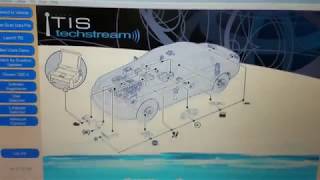
How to confirm: A Toyota dealership or qualified shop with a Techstream scan tool can check the current software calibration ID. 🎬 Watch: How to use Techstream to check for module updates. For example, for a Camry without adaptive cruise, the old ID is F152606091 and the new one is F152606320.
Typical fix: Flash reprogramming the Skid Control ECU with the updated software provided by Toyota. This is a dealer-level repair that takes approximately 0.5 hours of labor.
Est. part cost: $0 - User Habit During Startup 🟡 Medium Probability The system self-test is sensitive. Pressing the brake pedal while the vehicle is moving slightly with the engine off but ignition on can trigger the code. Toyota's Tech Tip T-TT-0491-18 specifically requested dealers to gather data on customer habits like using the brake pedal for leverage when entering or exiting the car.
How to confirm: Interview the driver about their startup routine. Check vehicle control history for simultaneous accelerator and brake signal inputs. The code may be triggered if they use the brake pedal as a brace or if the car rolls slightly before the engine is running.
Typical fix: Modify startup procedure to ensure the vehicle is stationary and the engine is running before manipulating the brake pedal. Clear the code and see if it returns.
Est. part cost: $0 - Failing Brake Booster Assembly ⚪ Low Probability For early 2015 models with the 2AR-FE engine, TSB T-SB-0010-15 identified that an updated brake booster was created to address this code, suggesting a potential hardware issue in some VIN ranges.
How to confirm: This is typically diagnosed after a software update fails to resolve the issue on an applicable 2015 model. A technician would perform an on-vehicle inspection of the brake booster for vacuum leaks or other malfunctions per the TSB.
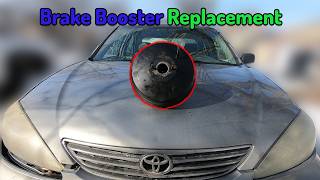
Typical fix: Replacement of the brake booster assembly with the updated part number. The original part 44610-06472 was superseded by 44610-06760. 🎬 Watch: DIY walkthrough for replacing a Toyota Camry brake booster.
Est. part cost: $600-$1000
Rare But Worth Checking
- Low Brake Fluid: While less common for this specific code, low brake fluid can cause a variety of brake system warnings and should always be checked first as a basic step. The diagnostic procedure for C1441 includes checking the fluid level.
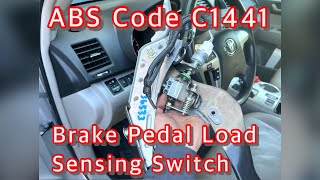
- Failing Brake Pedal Load Sensing Switch: This switch is part of the brake pedal support assembly and tells the ECU that the pedal is being pressed. A malfunction, such as a deviation in its expected characteristics, could cause the ECU to see a pedal press without a corresponding pressure rise, directly triggering code C1441. In some cases, this switch may not be sold separately from the entire brake pedal assembly. 🎬 See this simple job: Replacing the brake pedal load sensing switch.
Diagnosis Steps
- Connect a diagnostic scanner (preferably Toyota Techstream) to read the code and check for any other stored DTCs.
- Check and record the Freeze Frame Data. Per TSB T-SB-0037-19, the software update is only applicable if all wheel speeds in the data are 0.
- Interview the driver about startup habits, specifically asking if the brake is pressed while the car might be moving slightly before the engine is on, or if they press the brake and accelerator simultaneously.
- Check the brake fluid level and inspect for any visible leaks in the system.
- Check the vehicle's VIN against TSBs T-SB-0010-15 (for early 2015 models) and T-SB-0037-19 (for all 2015-2017 models).
- If TSB T-SB-0037-19 applies, check the current calibration ID and perform the Skid Control ECU software update if it's outdated.
- If the vehicle is an early 2015 model covered by T-SB-0010-15 and the issue persists, investigate the brake booster for replacement.
- If software and TSBs do not resolve the issue, proceed with standard diagnostics for the brake booster, brake pedal load sensing switch, and Skid Control ECU/actuator assembly per the service manual.
Parts You'll Likely Need
- Skid Control ECU Reprogramming — This is the official fix described in TSB T-SB-0037-19 for many instances of this code on 2015-2017 Camrys.
Trusted brands: Toyota
OEM price range: $110-$161
Aftermarket price range: N/A - Brake Booster Assembly
(OEM #44610-06761)— For some early 2015 models, an updated brake booster was the specified fix per TSB T-SB-0010-15. The original part (44610-06760) was superseded by this new number.
Trusted brands: Toyota OE, Aisin
OEM price range: $725-$1050
Aftermarket price range: $400-$600
Technical Service Bulletins (TSBs) & Recalls
- T-SB-0037-19: "Check Brake System" Displayed in MID at Startup
- T-TT-0491-18: BRAKE Warning Light Illuminated – DTC C1441
- T-SB-0010-15: Brake Warning Light Illuminated and/or DTC C1441
Platform-Specific Known Issues
- TSB T-SB-0037-19: For 2015-2017 models, Toyota released a software update for the Skid Control ECU to address a "Check Brake System" message and C1441 at startup. The update changes the warning to just the red BRAKE light.
- TSB T-SB-0010-15: For early 2015 models with the 2AR-FE engine, an intermittent brake warning light and C1441 could be caused by the brake booster, and an updated part (superseded by 44610-06761) was made available.
- Owner Complaint ODI #10994394: A 2016 Camry owner reported code C1441, and the dealer noted it can be caused by the brake pedal being pushed while the vehicle moves with the engine off.
- Tech Tip T-TT-0491-18: Toyota actively investigated customer habits, such as using the brake pedal as leverage when entering/exiting the vehicle, as a potential trigger for code C1441.
Mechanic-Grade Diagnostic Values
- Skid Control ECU Power Source Voltage — expected: 11 to 14 V. Failure: Voltage below 11V or above 14V indicates a power supply issue to the ECU.
- Skid Control ECU Ground Circuit Resistance — expected: Below 1 Ω. Failure: Resistance above 1 Ω indicates a poor ground connection.
- CAN Bus Line Resistance at Skid Control ECU Connector — expected: 54 to 69 Ω. Failure: Resistance outside this range indicates a problem with the CAN communication lines or a connected ECU.
Scan Tool Commands That Help
- Techstream: Health Check — To check the current software calibration ID of the Skid Control ECU and compare it against the updated IDs listed in TSB T-SB-0037-19.
- Techstream: Data List — To view Freeze Frame Data associated with DTC C1441. Specifically used to confirm that all wheel speeds were 0 when the code was set, which is a prerequisite for applying the software update from TSB T-SB-0037-19.
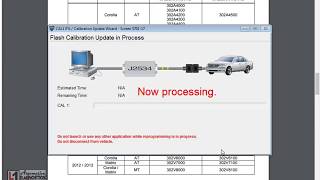
- Techstream: ECU Flash Reprogramming — To apply the updated software logic to the Skid Control ECU as per TSB T-SB-0037-19, which is the primary fix for this code when it occurs at startup.
- Techstream: Active Test — To command components like the ABS pump motor to run, which can help verify the functionality of the brake actuator assembly during advanced diagnostics after software and booster issues have been ruled out.
Wiring & Ground Locations
- A78 (LHD/RHD) / A79 (LHD w/o CVT) — The main connector for the Skid Control ECU (Brake Actuator Assembly), located in the engine compartment.. This is the primary connector where diagnostic checks for power, ground, and CAN signals must be performed to rule out wiring issues before condemning the ECU.
- A78 Pin 13 (GND1) & Pin 26 (GND2) — Ground pins on the Skid Control ECU connector.. A poor ground connection at these specific pins can cause a wide range of intermittent issues with the ABS/VSC system, including setting false diagnostic codes like C1441. Verifying resistance is less than 1 Ω to body ground is a critical step.
- A78 Pin 1 (+BS) & Pin 14 (+BM) — Power supply pins on the Skid Control ECU connector.. These pins supply constant battery voltage to the ECU. Any voltage drop or interruption here, due to a corroded fuse or bad wire, will prevent the ECU from operating correctly and can trigger faults.
Real Owner Repair Stories
- Reddit user whiplsh2018 (2017 Toyota Sienna (similar brake system architecture)) — DTC C1441 and brake light would trip easily when pumping the brakes. Brakes did not feel right.
❌ Tried (didn't work) Initial bleeding of the brakes after letting the master cylinder run dry., A second, two-person bleed., Taking it to a shop for a Techstream-assisted ABS bleed.
✅ What actually fixed it The user's story did not have a definitive fix, but highlighted a critical trigger: introducing a large amount of air into the brake system during a fluid change. Even after a professional bleed, the code could still be triggered, suggesting that air trapped deep in the ABS module can cause the C1441 code under certain conditions (like repeated pedal pumping). The shop's claim that this is normal on modern vehicles was questioned.
OEM Part Supersession History
44610-06472→44610-06760— Updated part to address the condition described in TSB T-SB-0010-15 for early 2015 models.
Heads up: The Pass 2 data mentions a supersession to 44610-06761, while TSB T-SB-0010-15 from March 2015 lists the new part as 44610-06760. This suggests 44610-06760 may have also been superseded later by 44610-06761. Technicians should always verify the latest part number with a Toyota dealer using the vehicle's VIN.
Model Year Variations Within This Range
- Early 2015: TSB T-SB-0010-15, which specifies replacing the brake booster for code C1441, applies only to 2015 Camrys with the 2AR-FE engine built before specific VINs: TMMK Line 1 before 4T1BF1FK#FU028652, TMMK Line 2 before 4T1BF1FK#FU921374, and SIA before 4T4BF1FK#FR475697. Vehicles built after these VINs have the updated booster from the factory.
- 2015-2017: TSB T-SB-0037-19, which provides a software update, applies to all 2015-2017 models. However, the specific calibration IDs differ based on whether the vehicle is equipped with Adaptive Cruise Control. For vehicles without ACC, the old ID is F152606091 and the new is F152606320. For vehicles with ACC, the old ID is F152606100 and the new is F152606330.
Helpful Videos

Used OEM Parts in Stock


New Aftermarket Parts Available

The information in this article is provided for general reference and educational purposes only. Vehicle specifications, procedures, and part compatibility can vary by production date, trim level, and region. Always consult your vehicle's factory service manual and verify part numbers before purchasing or performing repairs. Safety-critical components such as airbags, seat belts, and braking systems should be installed by a qualified professional.
- Toyota CAMRY:
- 🎬 Helpful Videos
- 🛍️ Shop This Part
- What's Unique About the 2015-2017 Toyota CAMRY
- Diagnostic Flowchart
- Symptoms You May Notice
- Most Likely Causes
- Rare But Worth Checking
- Diagnosis Steps
- Parts You'll Likely Need
- Technical Service Bulletins (TSBs) & Recalls
- Platform-Specific Known Issues
- Mechanic-Grade Diagnostic Values
- Scan Tool Commands That Help
- Wiring & Ground Locations
- Real Owner Repair Stories
- OEM Part Supersession History
- Model Year Variations Within This Range
- 🎟️ Get 5% Off