

OBD-II Code C1422: Master Cylinder Pressure Sensor Malfunction
What C1422 means, why it triggers, and how to fix it
- Code C1422 disables your ABS and Vehicle Stability Control (VSC) systems because the computer detects impossible brake pressure readings, increasing your stopping distance on loose surfaces by up to 25%.
- On Toyota and Lexus models, a failing $1,500+ brake actuator assembly is the most common cause, often accompanied by a loud buzzing noise from the engine bay.
- Always diagnose and fix code C1425 (Open Stop Light Switch Circuit) first; a $35 brake light switch or a sticking brake pedal is a frequent misdiagnosis for a failed actuator.
- Subaru owners should ignore C1422 as a brake issue; it is a secondary code indicating the VDC system was disabled due to a primary engine fault like a misfire or loose gas cap.
What Does C1422 Mean?

Your car's main computer (ECU) detects a critical problem within the master cylinder pressure sensor circuit. This sensor tells the brake control module how much force you apply to the pedal. When the computer receives an impossible signal—like seeing high brake pressure when you aren't touching the pedal—it disables the ABS and VSC systems as a safety precaution.
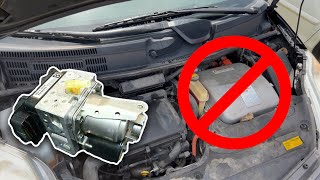
Technical definition: The SAE/ISO definition is 'Master Cylinder Pressure Sensor Zero Point High Malfunction. 🎬 Watch this video to see how to fix the C1422 error.' The sensor reports significant hydraulic pressure when it should read zero. The Skid Control ECU sets this code when it detects sensor voltage above a specific threshold (e.g., > 0.86V) for 5 continuous seconds while the vehicle moves and the brake light switch is OFF.
Can I Drive With C1422?
Yes, But With Caution. Yes, but with significant caution and only for short distances to a repair shop. Your regular hydraulic brakes function, but Anti-lock Braking (ABS) and Vehicle Stability Control (VSC) are disabled. Wheels lock up during hard braking, eliminating steering control and increasing stopping distances on loose surfaces by over 25%.
Common Causes

- Failing Brake Actuator / ABS Module Assembly (Very Common) — On most affected Toyota and Lexus models, the pressure sensor is an integral, non-serviceable part of the brake actuator assembly. 🎬 See this walkthrough on how to replace the brake actuator. An internal failure within this complex electro-hydraulic unit is the primary cause of C1422.
- Faulty or Misadjusted Brake Light Switch / Pedal (Common) — The ECU cross-references the pressure sensor reading with the brake light switch. If the switch fails, or if the brake pedal does not fully return due to debris or improper adjustment, the ECU sees pressure without a 'brake on' signal. This triggers a false C1422 code and is a frequent misdiagnosis.
- Weak or Failing 12V Battery (Less Common) — Modern ABS and VSC systems are highly sensitive to voltage drops. A weak battery provides inconsistent voltage, causing modules to malfunction and generate spurious error codes like C1422.
- Air in Brake Lines or Low Fluid (Less Common) — Air in the hydraulic lines from an improper bleeding procedure causes pressure fluctuations and a spongy pedal, confusing the sensor and triggering the fault.
- Wiring, Connector, or Relay Issues (Rare) — Frayed wiring, corroded connectors at the ABS module, or water intrusion into the Stop Light Control Relay (common on 2006-2012 RAV4s) corrupts the sensor signal.
Symptoms

- ABS and VSC Lights On — The Anti-lock Braking System (ABS) and Vehicle Stability Control (VSC) warning lights illuminate simultaneously on the instrument cluster.
- Noise from ABS Pump / Actuator — A loud, intermittent buzzing, humming, or honking noise from the engine bay. This is the ABS pump motor running excessively, a hallmark sign of a failing Toyota/Lexus brake actuator.
- Unusual Brake Pedal Feel — The brake pedal feels spongy, soft, requires more travel before engaging, or feels unusually hard.
- Brake Warning Light On — The main red brake system warning light illuminates, indicating a serious hydraulic fault.
- Hissing Noise from Brake Booster — A hissing sound from the brake pedal area when pressed, suggesting a vacuum leak in the brake booster (common on Toyota Tacomas).
Diagnostic Flowchart

Tap your situation to follow the diagnostic path that matches what you're seeing on this code.
Common Fixes & Costs
- Replace Brake Actuator / ABS Pump Assembly — Parts: $1200-$2800, Labor: $400-$900, ~4.5 hr book time (Professional)
- Replace Brake Light Switch — Parts: $20-$70, Labor: $50-$150, ~0.8 hr book time (DIY)
- Adjust Brake Pedal and/or Brake Light Switch — Parts: $0, Labor: $75-$150, ~1.0 hr book time (Intermediate)
- Professionally Bleed Brake System — Parts: $20-$40, Labor: $150-$250, ~1.2 hr book time (Intermediate)
- Repair Damaged Wiring or Replace Relay — Parts: $10-$100, Labor: $150-$450, ~2.0 hr book time (Professional)
Used vs. New Parts: Buying Guide
When a used part is worth it: A used actuator makes sense only when the budget is extremely tight. High labor costs mean a premature failure of a used part eliminates initial savings.
Donor-vehicle mileage cap: roughly under 80000 miles for the part to have meaningful remaining life.
Donor quality checklist:
- Verify the donor vehicle was not scrapped for a braking-related issue.
- Ensure the part number matches exactly; superseded numbers may not be compatible.
- Inspect for corrosion and ensure all hydraulic ports were capped immediately after removal.
Decision logic:
- If The vehicle is a high-value daily driver you plan to keep for 2+ years → Buy a new OEM part. The peace of mind and warranty are worth the cost for this critical safety component.
- If The vehicle is older, has high mileage (>150k), and the repair cost approaches the car's value → A used or remanufactured part is a reasonable gamble, but prepare for repeat labor costs.
- If You are a DIYer with the correct tools who is not paying for labor → A used part presents a much lower financial risk.
Warranty tradeoff: Used parts typically have a 30-90 day warranty. Remanufactured parts offer 6-12 months. A new OEM part installed by a dealer carries a 12-month/12,000-mile warranty on parts and labor.
Worst-case if a used part fails: $500-$1000 if a used part fails after warranty, requiring repeat labor plus another part.
What Happens If You Wait — Timeline
- Immediate: Code sets, ABS and VSC warning lights illuminate. Safety systems are disabled. (MPG impact: 0%% · Added cost: $0)
- 1 week - 3 months: The ABS pump motor runs intermittently or for long periods (buzzing noise), indicating an internal leak. This causes a parasitic drain on the 12V battery. (MPG impact: 0%% · Added cost: $0-$150 (Potential battery replacement))
- 3 - 8 months: The pump motor runs constantly, leading to accelerated wear. The brake pedal feels soft. On hybrids, loss of regenerative braking affects battery charging. (MPG impact: 0-5%% · Added cost: $200 (Pump motor burns out, reducing core value of the actuator))
- 8+ months: Catastrophic internal failure. Sudden loss of power brake assist causes an extremely hard pedal and dramatically increased stopping distances. (MPG impact: 0-5%% · Added cost: $1500-$3500 (Full actuator replacement is unavoidable))
Cost of Not Fixing It
- Immediate: ABS and VSC are disabled. Increased risk of skidding and loss of control during emergency braking. (Added cost: $0)
- 0-6 months: The internal ABS pump motor runs continuously or cycles frequently, causing noise and premature motor burnout. This guarantees the need for a full actuator replacement. (Added cost: $0 (Cost is deferred to the inevitable final repair))
- 6+ months: Complete failure of the brake actuator assembly. On hybrids, this causes a loss of power brake assist, leading to a very hard pedal and dangerously long stopping distances. (Added cost: $1500-$3500 (Full actuator replacement is unavoidable))
Diagnosis Steps
- Check for Other Codes
Use an OBD-II scanner to read all ABS/VSC codes. If C1425 ('Open in Stop Light Switch Circuit') is present, you MUST fix it first. A faulty switch circuit is the most common cause of a false C1422.
Tools: OBD-II Scanner (Beginner) - Inspect Brake Pedal and Switch for Sticking
Physically pull up on the brake pedal. Check for free play, debris, floor mats, or improper adjustment preventing the pedal from returning fully. A slightly depressed pedal causes this code.
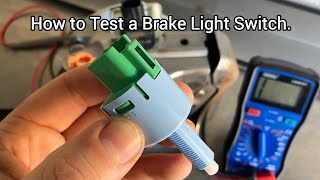
Tools: Flashlight, Hands (Beginner) - Inspect Brake Light Operation 🎬 Watch: Two simple ways to test your brake light switch.
Have an assistant watch the brake lights as you press and release the pedal. They must illuminate instantly with light pressure and extinguish the moment the pedal releases. Delays point to a faulty switch.
Tools: Assistant (Beginner) - Check Battery Voltage and Brake Fluid
Ensure brake fluid is clean and at the 'MAX' line. Check battery voltage with the engine off; it must be above 12.4V. Low voltage causes electronic faults.
Tools: Multimeter (Beginner) - [PRO TIP] Analyze Live Sensor Data
Use an advanced scan tool to view ABS live data. Monitor 'Stop Light SW' and 'Master Cylinder Sensor'. With the pedal released, the switch reads 'OFF' and pressure voltage is 0.3V-0.9V. If voltage exceeds 0.86V for 5+ seconds with the switch OFF, the fault is confirmed.
Tools: Advanced scan tool (e.g., Techstream) (Advanced) - [PRO TIP] Test Brake Light Switch Circuit
Disconnect the switch connector. Measure resistance across the main terminals: <1 Ω when released, >10 kΩ when depressed. Next, check voltage at the ABS module 'STP' pin: 8-14V when pressed, <1.5V when released. Incorrect readings require switch or wiring replacement.
Tools: Multimeter, Wiring Diagram (Advanced) - Inspect Wiring and Connectors
Visually inspect the ABS module wiring harness for damage, corrosion, or rodent activity. On RAV4 models, inspect the Stop Light Control Relay in the passenger kick panel for water damage.
Tools: Flashlight (Intermediate) - Perform Zero Point Calibration
If parts like the actuator or yaw rate sensor were replaced, perform a Zero Point Calibration using a scan tool. This resets the baseline for steering angle, yaw rate, and pressure sensors.
Tools: Advanced scan tool (Advanced)
When This Code Triggers (Freeze-Frame Conditions)
- Vehicle Speed: > 2 mph (Vehicle is moving at low speed or cruising.)
- Stop Light Switch: OFF (The brake pedal is not being pressed.)
- Master Cylinder Pressure: > 255 PSI (1.76 MPa) (The sensor reports significant brake pressure for over 5 seconds despite the pedal being released.)
- System Voltage: 11-14V (The code sets during normal electrical system operation.)
Related Codes
- C1425 — Open in Stop Light Switch Circuit. Diagnose and repair this first. A faulty switch circuit is the most common root cause of a false C1422 code.
- C1241 — Low Power Supply. Indicates low voltage to the ABS module. When paired with C1422, it strongly suggests an internal electronic failure of the actuator assembly.
- C1252 — Hydro-Booster Pump Motor Malfunction. Points directly to a failed pump motor inside the brake actuator assembly, confirming the entire unit requires replacement.
- C1256 — Accumulator Low Pressure. The accumulator cannot hold hydraulic pressure. Paired with C1422, it confirms a major internal actuator fault.
Climate & Environmental Factors
- Extreme Cold: Causes temporary ABS faults due to battery voltage drops during startup or moisture freezing within electrical connectors.
- High Humidity / Freeze-Thaw Cycles: Allows moisture to seep into wiring harnesses and connectors, causing corrosion or freezing that interrupts electrical signals.
- Road Salt: Accelerates degradation of wiring insulation, connector pins, and the ABS module housing, leading to electrical failures.
How to Talk to a Mechanic About This Code
Say this: "I have a C1422 code on my [Make, Model] and the ABS/VSC lights are on. Before assuming it's the expensive actuator, please inspect the brake light switch adjustment and verify the brake pedal returns fully. Also, check if code C1425 is present."
Directs the mechanic to check the cheapest and most frequently overlooked causes first, preventing a multi-thousand dollar unnecessary repair.
Avoid saying:
- 'My ABS light is on, can you fix it?'
- 'Just do whatever it takes to get the lights off.'
- 'A friend said I probably need a new ABS module.'
Questions to ask before authorizing the repair:
- Did you verify the brake light switch functions and is adjusted correctly?
- Did you check if the brake pedal has any play or is sticking?
- Were codes C1425, C1252, or C1256 stored along with C1422?
- If recommending an actuator replacement, what specific tests confirmed the failure?
- Can I see the old part?
- What is the warranty on the recommended parts and labor?
Where to Take It: Dealer vs Independent vs Chain
- Dealer:
Recommended if under warranty or if you prefer OEM parts, but it is the most expensive option.
Best for: Vehicles under warranty, Complex electrical issues requiring manufacturer-specific tools (Techstream) for calibration
Downsides: Highest labor rates, More likely to replace the entire actuator assembly rather than attempting component-level repair. (Typical cost: +50% vs. baseline) - Independent Shop:
Best fit for most customers. An experienced independent mechanic investigates cheaper fixes before recommending full actuator replacement.
Best for: Out-of-warranty vehicles, Diagnosing common issues like a faulty brake light switch or pedal adjustment
Downsides: Ensure the shop has advanced diagnostic tools and experience with modern ABS systems. (Typical cost: +0% vs. baseline) - Chain Shop:
AVOID. They lack the expertise to differentiate between a switch issue and an actuator failure, and cannot perform proper ABS bleeding.
Best for: Simple maintenance like oil changes or tire rotations.
Downsides: Lacks advanced diagnostic tools or specific knowledge for complex ABS faults. High pressure to upsell leads to misdiagnosis. (Typical cost: -10% vs. baseline)
When to Walk Away From the Repair
If the estimated repair cost for the brake actuator exceeds 40-50% of the car's private-party value, seriously consider selling or trading in the vehicle.
- Car worth $5000, fix is $2500: Walk away. The repair cost is 50% of the car's value.
- Car worth $15000, fix is $2800: Fix it. The repair cost is well below the threshold and restores a critical safety system.
- Car worth $3000, fix is $2200: Walk away. The repair cost is over 70% of the car's value.
What Scan Tool You Need for This Code
Minimum: A scanner that reads and clears codes from the ABS/VSC module. Basic engine-only code readers are insufficient.
A standard $20 engine code reader cannot communicate with the ABS module and will not see the C1422 code.
Budget: Foxwell NT630 Plus / Ancel FX2000 (~$90) — Reads and clears ABS codes, and views live data for the brake light switch and pressure sensor.
Mid-range: Launch Creader Elite for Toyota / XTOOL D7 (~$150) — Provides bi-directional control for automated ABS bleeding and performs Zero Point Calibration.
Professional: Autel MaxiCOM MK808/MK900BT / Launch X431 Series (~$500-1200) — Full OEM-level diagnostics, bi-directional control, Zero Point Calibration, and detailed live data graphing.
Rent vs buy: Auto parts stores rent basic OBD-II scanners, but they rarely read ABS codes. Buy a capable mid-range scanner or pay for professional diagnosis.
How to Clear the Code After You Fix It
- Use an OBD-II scan tool to clear codes from the ABS/VSC module.
- Perform a Zero Point Calibration if the actuator or sensors were replaced.
- Complete a full drive cycle to ensure all readiness monitors set for emissions testing.
Drive cycle (~30 minutes): Ensure fuel tank is 1/4 to 3/4 full. Start with a cold engine. Idle for 3 minutes. Drive at a steady 55 mph for 10 minutes. Perform mixed city driving with smooth acceleration and deceleration.
Readiness monitors affected: Clearing ABS codes or disconnecting the battery resets ALL emissions monitors, requiring a drive cycle before testing.
Before emissions retest: drive at least 100 miles to fully set monitors.
Watch out for:
- Clearing the code without fixing the root cause guarantees it returns immediately.
- Failing to perform the computerized ABS bleed procedure after actuator replacement leaves air in the system and triggers new codes.
Will This Fail Emissions / State Inspection?
No — by itself this code doesn't fail OBD inspection (but it can keep readiness monitors from setting, which causes a separate fail).
- California: An ABS light does not fail the smog check. However, clearing codes resets emissions monitors to 'Not Ready', which WILL cause a failure.
- New York: An illuminated ABS warning light causes an automatic failure of the annual safety inspection.
- Texas: An amber ABS warning light passes the safety inspection if standard brakes work. A red 'BRAKE' warning light is an automatic failure.
Most Commonly Affected Vehicles
- Toyota Prius (2004-2009) — Extremely common. Toyota issued an expired warranty extension acknowledging the high failure rate of the brake actuator.
- Lexus IS250 / IS350 (2006-2013) — Frequently experiences C1422 due to internal failure of the ABS actuator assembly.
- Toyota Highlander Hybrid (2006-2008) — The complex regenerative braking system is prone to actuator failure, often presenting C1422 alongside C1252 and C1256.
- Lexus RX400h / RX450h (2006-2009) — Shares the hybrid braking system architecture with the Highlander Hybrid, making it a common victim of actuator failure.
- Toyota Tacoma (2005-2016) — Often presents this code in conjunction with a hissing noise, pointing towards a brake booster vacuum leak.
- Subaru Impreza / Crosstrek / Forester / WRX (2012-2018) — On Subarus, C1422 means 'VDC Interrupted Due to Engine Reason'. It is an informational code indicating a separate engine fault, NOT a brake problem.
- Toyota RAV4 (2006-2012) — A known issue involves water leaking into the passenger cabin and damaging the Stop Light Control Relay, misdiagnosed as actuator failure.
- Chevrolet Equinox (2010-2017) — Appears due to ABS module communication failures or wiring harness issues at the EBCM.
Manufacturer-Specific Notes
- Toyota / Lexus: C1422 is the definitive code for a failed brake actuator assembly. The pressure sensor is integrated and not sold separately. Toyota issued expired warranty enhancements (ZG1, ZLG) acknowledging the high failure rate.
- Subaru: C1422 means 'VDC Interrupted Due to Engine Reason.' It is a secondary code appearing whenever a primary Check Engine Light sets. It does not indicate a brake problem.
- Ford: On 4WD models like the Escape, C1422 means 'Transfer Case Contact Plate A Encoder Circuit Failure,' pointing to a 4x4 system fault, not brakes.
- Fiat: Relates to an internal hardware plausibility failure in the Adaptive Cruise Control (ACC) module.
Real Owner Stories
2008 Lexus IS250 at 130K miles - The Classic Misdiagnosis
ABS, VSC, and Brake warning lights illuminated. A shop quoted a $2,500 brake actuator replacement.
What they tried:
- Owner verified the brake lights did not work when the pedal was pressed.
- Replaced the brake light switch themselves for $40.
Outcome: Replacing the faulty brake light switch fixed the problem. The warning lights extinguished and the car operated normally.
Lesson: A faulty brake light switch prevents a push-to-start vehicle from starting and triggers C1422. Always check the switch before agreeing to an expensive actuator replacement.
2016 Toyota Tacoma at 128K miles - Multiple Unrelated Issues
Check Engine and TRAC OFF lights appeared with codes P0705, C1422, and C1241.
What they tried:
- A shop incorrectly stated the ABS codes were triggered by the Check Engine Light.
- Diagnosis revealed P0705 was a separate transmission sensor issue.
- C1422 and C1241 pointed to a developing internal fault in the ABS module.
Outcome: The owner addressed two separate problems: replacing the transmission range sensor and diagnosing the ABS module fault.
Lesson: On a Toyota, C1422 is a serious brake system code and not a 'sympathy' code triggered by an engine fault.
2017 Subaru WRX STI - The Subaru Exception
After an engine rebuild, an intermittent C1422 code kept appearing.
What they tried:
- Owner researched Subaru-specific definitions and found it meant 'VDC Interruption due to engine convenience'.
- Inspected wiring harnesses related to the recent engine work.
- Found a questionable repair on the engine wiring harness.
Outcome: Replacing the poorly repaired engine wiring harness resolved the communication issue, clearing the C1422 code permanently.
Lesson: On a Subaru, C1422 is an electrical communication or engine-related code, NOT a primary brake system failure.
2012 Toyota Hilux - Calibration is Key
ABS lights were on, and the gear shift lever locked. Codes C1422 and C1336 were present.
What they tried:
- Tested the brake light switch and found it faulty.
- Replaced the switch and cleared the codes.
Outcome: After replacing the switch, the technician performed a 'Zero Point Calibration' using a scan tool. This cleared all lights and restored the shift lock function.
Lesson: After replacing any ABS/VSC component, a Zero Point Calibration is required to make the system recognize the new part.
How to Prevent This Code From Triggering
- Flush brake fluid every 2-3 years or 30,000 miles. (Every 2-3 years) — Brake fluid absorbs moisture, causing internal corrosion and damage to the sensitive solenoids inside the expensive ABS actuator assembly.
- Use the correct DOT-rated brake fluid. (During every fluid change) — Using incorrect fluid lowers the boiling point, forming vapor pockets that cause ABS faults and a spongy pedal.
- Test battery voltage periodically. (Every 6 months) — The ABS/VSC module requires stable voltage. A healthy battery prevents spurious communication errors and fault codes.
- Address brake fluid leaks immediately. (As needed) — Leaks introduce air into the system and force the ABS pump to work harder, accelerating actuator motor wear.
- Ensure vehicle drainage systems are clear. (Annually) — Clogged drains cause water to leak into the cabin, corroding electrical components like relays that trigger C1422.
Frequently Asked Questions
Why is the repair for C1422 so expensive on a Toyota or Lexus?
The faulty pressure sensor is permanently integrated into the brake actuator assembly. You must replace the entire unit, which contains the ABS pump, control module, and valve body. A new OEM part costs $1,200-$2,800, plus hundreds in labor and computerized bleeding.
Can I just replace the sensor instead of the whole ABS module?
No. On the most commonly affected vehicles (Toyota/Lexus), the master cylinder pressure sensor is not sold separately. It is permanently built into the brake actuator assembly.
Could a C1422 code be a misdiagnosis?
Yes. Before authorizing a multi-thousand dollar actuator replacement, verify the brake pedal fully returns and the brake light switch is adjusted correctly. A cheap faulty switch (often indicated by code C1425) frequently tricks the computer into setting C1422.
I have a Subaru and got a C1422 code. Are my brakes failing?
No. On Subarus, C1422 is an informational code meaning the Vehicle Dynamics Control (VDC) turned off due to a separate engine issue. Fix the primary engine trouble code (like a loose gas cap), and C1422 clears automatically.
Can a weak battery cause a C1422 code?
Yes. ABS and VSC systems require stable voltage to operate correctly. A weak battery causes voltage drops that trigger communication errors and false codes in sensitive electronic modules.
How do I reset the C1422 code?
Clear the code from the ABS/VSC control module using an OBD-II scanner. However, if you do not fix the underlying fault, the code returns immediately upon the next drive cycle.
What's the difference between code C1422 and C1425?
C1422 indicates a fault with the pressure sensor's reading, while C1425 indicates an electrical 'Open' in the brake light switch circuit. If C1425 is present, fix it first; a faulty switch circuit usually causes the C1422 code.
Key Takeaways
- Code C1422 disables your ABS and Vehicle Stability Control (VSC) systems because the computer detects impossible brake pressure readings, increasing your stopping distance on loose surfaces by up to 25%.
- On Toyota and Lexus models, a failing $1,500+ brake actuator assembly is the most common cause, often accompanied by a loud buzzing noise from the engine bay.
- Always diagnose and fix code C1425 (Open Stop Light Switch Circuit) first; a $35 brake light switch or a sticking brake pedal is a frequent misdiagnosis for a failed actuator.
- Subaru owners should ignore C1422 as a brake issue; it is a secondary code indicating the VDC system was disabled due to a primary engine fault like a misfire or loose gas cap.
Helpful Videos



The information in this article is provided for general reference and educational purposes only. Vehicle specifications, procedures, and part compatibility can vary by production date, trim level, and region. Always consult your vehicle's factory service manual and verify part numbers before purchasing or performing repairs. Safety-critical components such as airbags, seat belts, and braking systems should be installed by a qualified professional.
- 🎬 Helpful Videos
- What Does C1422 Mean?
- Can I Drive With C1422?
- Common Causes
- Symptoms
- Diagnostic Flowchart
- Common Fixes & Costs
- Used vs. New Parts: Buying Guide
- What Happens If You Wait — Timeline
- Cost of Not Fixing It
- Diagnosis Steps
- When This Code Triggers (Freeze-Frame Conditions)
- Related Codes
- Climate & Environmental Factors
- How to Talk to a Mechanic About This Code
- Where to Take It: Dealer vs Independent vs Chain
- When to Walk Away From the Repair
- What Scan Tool You Need for This Code
- How to Clear the Code After You Fix It
- Will This Fail Emissions / State Inspection?
- Most Commonly Affected Vehicles
- Manufacturer-Specific Notes
- Real Owner Stories
- 2008 Lexus IS250 at 130K miles - The Classic Misdiagnosis
- 2016 Toyota Tacoma at 128K miles - Multiple Unrelated Issues
- 2017 Subaru WRX STI - The Subaru Exception
- 2012 Toyota Hilux - Calibration is Key
- How to Prevent This Code From Triggering
- Frequently Asked Questions
- Why is the repair for C1422 so expensive on a Toyota or Lexus?
- Can I just replace the sensor instead of the whole ABS module?
- Could a C1422 code be a misdiagnosis?
- I have a Subaru and got a C1422 code. Are my brakes failing?
- Can a weak battery cause a C1422 code?
- How do I reset the C1422 code?
- What's the difference between code C1422 and C1425?
- Key Takeaways
- 🎟️ Get 5% Off