

OBD-II Code C1421: Master Cylinder Pressure Sensor Circuit Malfunction
What C1421 means, why it triggers, and how to fix it
- Code C1421 has vastly different meanings depending on the car brand, pointing to brakes on a Toyota, suspension on a Ford, or steering on a Honda.
- On Toyota and Lexus hybrids, this code almost always requires replacing the entire brake actuator assembly, a repair costing between $1,800 and $3,500.
- Do not replace the $1,500 Honda electric steering rack for this code until you visually inspect the wiring harness for rodent damage, a highly common failure point.
- Driving with an active C1421 code disables your ABS and stability control, increasing emergency stopping distances and risking a $1,000 ABS pump motor burnout.
What Does C1421 Mean?

C1421 is a manufacturer-specific code. On Toyota, Lexus, and Scion, it indicates an electrical fault (open or short circuit) in the master cylinder pressure sensor, disabling ABS and stability control. On Ford, Jeep, or Honda, it points to entirely different systems like adaptive suspension, 4WD, or electric power steering.
Technical definition: The SAE/OBD-II definition for C1421 varies by manufacturer. Toyota defines it as 'Open or Short in Master Cylinder Pressure Sensor,' triggering when the Skid Control ECU detects sensor supply voltage outside the 4.4V–5.6V range for over one second. Ford defines it as 'Damper LF Circuit Short to B+,' Jeep as 'Rear Differential Clutch Performance,' and Honda as 'Main Torque Sensor Malfunction.'
Can I Drive With C1421?
Yes, But With Caution. Driving is possible, but disabled Anti-lock Braking (ABS) and Vehicle Stability Control (VSC) systems create a severe safety risk. Stopping distances increase significantly on wet surfaces, and you lose computer-aided skid correction. Continued driving also forces the ABS pump motor to run excessively, guaranteeing a burnout that adds $500–$1,000 to your repair bill.
Common Causes

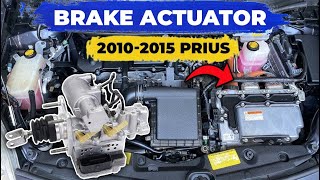
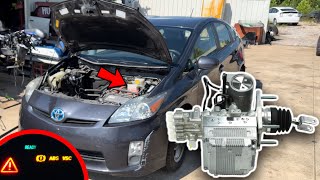
- Internal Failure of the Brake Actuator Assembly (Toyota/Lexus) (Very Common) — The pressure sensor is permanently integrated into the brake actuator assembly. This unit is the most frequent failure point and must be replaced entirely, as the sensor is not sold separately.
- Damaged or Rodent-Chewed Wiring (Common) — Wiring harnesses leading to the brake actuator, suspension struts, or steering rack (especially Honda's soy-based wiring) frequently suffer from rodent damage, moisture corrosion, or road debris impacts.
- Low System Voltage / Failing Battery (Less Common) — A weak battery or poor ground drops voltage to control modules. The ECU logs C1421 if supply voltage falls below 9.5V.
- Failed Ride Height or Wheel Speed Sensor (BMW/Ford) (Less Common) — On vehicles where C1421 relates to chassis stability, a faulty vertical acceleration sensor attached to a suspension strut causes the fault.
- Contaminated Brake Fluid (Rare) — Extremely old, moisture-contaminated brake fluid creates hydraulic pressure anomalies or air pockets inside the actuator, causing erratic sensor readings.
Symptoms

- ABS, VSC, and BRAKE Warning Lights Illuminated — The dashboard illuminates with a combination of warning lights for the Anti-lock Brake System, Vehicle Stability Control (VSC), and the main Brake System.
- Loud Buzzing or Clicking from Engine Bay — The failing actuator pump motor runs constantly to build pressure, creating a loud buzzing or clicking noise even when parked.
- Stiff or Spongy Brake Pedal — The brake pedal requires significantly more effort to press or feels unusually spongy, increasing stopping distances.
- Loss of Power Steering Assist (Honda) — Steering becomes extremely heavy due to an electric power steering torque sensor failure.
- Harsh Ride Quality (BMW/Ford) — The adaptive suspension defaults to its firmest setting, causing a noticeably stiff, bumpy ride alongside a 'Chassis Stabilization' warning.
Common Fixes & Costs

- Replace Brake Actuator Assembly (Toyota/Lexus) — Parts: $1200-$2500, Labor: $600-$1200, ~4.5 hr book time (Professional)
- Repair Damaged Wiring Harness — Parts: $20-$150, Labor: $200-$500, ~2.5 hr book time (Intermediate)
- Replace Electric Power Steering Rack (Honda) — Parts: $1500-$2800, Labor: $600-$900, ~4.8 hr book time (Professional)
- Replace Adaptive Suspension Strut (Ford) — Parts: $300-$900, Labor: $200-$400, ~2.5 hr book time (Professional)
Used vs. New Parts: Buying Guide

When a used part is worth it: A used brake actuator makes sense for high-mileage vehicles (>150k miles) where the owner has a tight budget and the cost of a new OEM part exceeds $1,500.
Donor-vehicle mileage cap: roughly under 100000 miles for the part to have meaningful remaining life.
Donor quality checklist:
- Verify the exact part number matches your original unit; different part numbers will not calibrate.
- Purchase from a reputable seller offering at least a 90-day warranty.
- Inspect the part upon arrival for damage to electrical connectors or brake line ports.
Decision logic:
- If The cost of a new OEM part is less than $1200 and the vehicle has under 100k miles → Buy new for maximum reliability and warranty.
- If Vehicle is over 150k miles and the repair budget is under $1500 total → A used part from a low-mileage donor is a reasonable choice, but carries the risk of premature failure.
Warranty tradeoff: Used parts typically offer a 30-90 day part-only warranty. New OEM parts carry a 1-year/12,000-mile warranty.
Worst-case if a used part fails: $600-$1200 if a used part fails, requiring you to pay for labor a second time.
Cost of Not Fixing It
- Immediate: ABS and VSC disabled. Increased skidding risk and longer stopping distances. (Added cost: $0)
- 1-3 months: The ABS pump motor runs excessively to compensate, accelerating wear. (Added cost: $500-$1000)
- 6+ months: Complete brake actuator failure. The constantly running pump burns out, potentially draining the 12V battery. (Added cost: $2000-$3500)
Diagnosis Steps
- Verify Code and Vehicle Application
Use an OBD-II scanner capable of reading Chassis (C-codes) to confirm C1421 is present. Identify the code's meaning for your specific Make and Model to determine which system to test.
Tools: OBD-II Scanner (Beginner) - Check Battery Voltage and Fluid Levels
Verify battery voltage is ~12.6V (engine off) and 13.7V–14.7V (running). Low voltage below 9.5V triggers false codes. Check brake fluid level and condition.
Tools: Multimeter (Beginner) - Perform a Targeted Visual Inspection
Inspect the Toyota brake actuator connector, Ford front-left strut wiring, or Honda electric steering rack harness for corrosion, disconnected plugs, or chewed wires.
Tools: Flashlight (Beginner) - Analyze Live Data
Connect a professional scan tool and view the 'Master Cylinder Pressure Sensor' data stream. Readings stuck at 0 MPa or pinned at 23+ MPa confirm internal sensor failure.
Tools: Professional Bi-Directional Scan Tool (Advanced) - Test the Sensor Circuit (Toyota/Lexus)
Back-probe the Toyota actuator connector. Verify a stable 5V reference on the VCM terminal. Check the PMC signal wire; voltage must rise smoothly from ~0.5V to 4.5V as the pedal is pressed.
Tools: Multimeter, Back-Probing Kit, Wiring Diagram (Advanced) - Check for Related Communication Codes (Subaru)
On Subarus, C1421 is a secondary code. Scan the TCM for primary P-codes indicating a failed transmission valve body.
Tools: OBD-II Scanner (Intermediate)
When This Code Triggers (Freeze-Frame Conditions)
- Vehicle Speed: > 4 mph (7 km/h) (The ECU actively monitors the sensor signal for rationality while the vehicle is in motion.)
- System Voltage (+BS): 9.5V - 17.4V (The code triggers if the main supply voltage is normal, but the internal sensor's own power supply or signal voltage is out of range.)
- Time: 0.1 - 1.2 seconds (The fault condition must persist for approximately one second before the code is logged.)
Related Codes
- C1256 — Indicates 'Low Pressure in Accumulator'. Confirms comprehensive brake actuator failure when paired with C1421 on Toyota/Lexus hybrids.
- C1424 — Indicates irrational sensor output, confirming internal actuator failure rather than just a wiring issue.
- C1422 — On Subarus, indicates the ECM disabled stability control due to a primary transmission fault.
Climate & Environmental Factors
- Rodent Infestation: Soy-based wire insulation (common on Hondas) attracts rodents. Chewed steering rack harnesses are a primary cause of C1421.
- Road Salt and High Humidity: Salt spray compromises electrical connector weather seals, causing pin corrosion and short circuits.
How to Clear the Code After You Fix It
- Use a professional scan too 🎬 Watch: How to read and clear Lexus diagnostic fault codes.l to clear the Chassis trouble codes.
- For Toyota/Lexus, perform the 'Zero Point Calibration' for the steering angle sensor and yaw rate sensor.
- For Toyota/Lexus, use the scan tool to perform the electronic brake bleeding procedure.
- Perform a test drive including firm stops from over 30 mph to confirm warning lights stay off.
Drive cycle (~20 minutes): Keep the vehicle stationary for 5 seconds and lightly press the brake pedal 3 times. Drive up to 31 mph and firmly press and hold the brake for 3 seconds. Repeat the firm braking step 3 times.
Readiness monitors affected: This is a Chassis code and does not affect emissions readiness monitors.
Watch out for:
- Clearing the code with a basic scanner will not extinguish the lights; the hard fault returns instantly.
- Skipping the mandatory Zero Point Calibration and electronic brake bleed on Toyotas results in a non-functional brake system.
Will This Fail Emissions / State Inspection?
Yes — this code typically fails an OBD-II emissions inspection.
- California: An illuminated BRAKE or ABS warning light is grounds for a safety inspection failure.
- New York: An illuminated ABS warning light causes the vehicle to fail the annual safety inspection.
- Texas: The annual safety inspection requires operational service brake and ABS warning lights. An illuminated ABS light causes a failure.
Most Commonly Affected Vehicles
- Toyota Prius (2004-2015) — Extremely common failure of the brake actuator assembly. Part numbers vary strictly by year.
- Lexus LS460 (2007-2012) — The brake actuator is a notorious and very expensive failure point that disables advanced braking systems.
- Honda Civic (2016-2022) — C1421 indicates a 'Main Torque Sensor Malfunction' caused by rodent damage to the EPS harness or internal sensor failure.
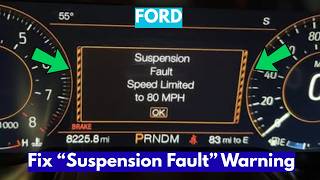
- Ford Expedition (2018-2022) — Indicates a short in the wiring to the front left electronic strut on models with Continuously Controlled Damping (CCD).
- Subaru Forester (2012-2018) — C1421 is a secondary code set by the ECM to flag a problem in the Vehicle Dynamics Control system, usually caused by a failing transmission valve body.
Manufacturer-Specific Notes
- Toyota / Lexus: The pressure sensor is permanently integrated into the brake actuator assembly; you cannot buy or replace the sensor alone.
- Honda: C1421 means 'Main Torque Sensor Malfunction,' causing total loss of power steering. Usually requires a $2,000+ steering rack replacement.
- Ford / Lincoln: Unrelated to brakes. Indicates a short circuit in the front-left adaptive suspension strut wiring.
Frequently Asked Questions
Why is the Toyota repair so expensive?
The faulty pressure sensor is permanently integrated into the complex brake actuator assembly. You must replace the entire unit, which includes a pump, motor, and control module. Real-world costs for parts and labor range from $1,800 to $3,500.
What is the most common misdiagnosis?
Assuming C1421 always relates to brakes. A technician might inspect the brakes on a Ford or Honda, when the code actually points to the suspension or steering systems.
Will my brakes completely fail?
Your primary hydraulic brakes will still function, but you lose ABS and stability control. Your wheels will lock up during panic stops, significantly increasing stopping distances.
Can I just clear the code?
You can clear it, but it will return immediately or upon your next drive. This is a hard fault in a critical safety system that requires physical repair.
Can a bad battery cause this code?
Yes. The ABS control module requires a stable voltage above 9.5V to operate. A failing battery or alternator causes voltage drops that trigger false C1421 codes.
What does C1421 mean on a Subaru?
It is a secondary symptom code indicating the engine computer disabled the stability control system. You must diagnose and fix the primary fault code (usually a transmission issue) to resolve it.
Key Takeaways
- Code C1421 has vastly different meanings depending on the car brand, pointing to brakes on a Toyota, suspension on a Ford, or steering on a Honda.
- On Toyota and Lexus hybrids, this code almost always requires replacing the entire brake actuator assembly, a repair costing between $1,800 and $3,500.
- Do not replace the $1,500 Honda electric steering rack for this code until you visually inspect the wiring harness for rodent damage, a highly common failure point.
- Driving with an active C1421 code disables your ABS and stability control, increasing emergency stopping distances and risking a $1,000 ABS pump motor burnout.
Helpful Videos



The information in this article is provided for general reference and educational purposes only. Vehicle specifications, procedures, and part compatibility can vary by production date, trim level, and region. Always consult your vehicle's factory service manual and verify part numbers before purchasing or performing repairs. Safety-critical components such as airbags, seat belts, and braking systems should be installed by a qualified professional.
- 🎬 Helpful Videos
- What Does C1421 Mean?
- Can I Drive With C1421?
- Common Causes
- Symptoms
- Common Fixes & Costs
- Used vs. New Parts: Buying Guide
- Cost of Not Fixing It
- Diagnosis Steps
- When This Code Triggers (Freeze-Frame Conditions)
- Related Codes
- Climate & Environmental Factors
- How to Clear the Code After You Fix It
- Will This Fail Emissions / State Inspection?
- Most Commonly Affected Vehicles
- Manufacturer-Specific Notes
- Frequently Asked Questions
- Why is the Toyota repair so expensive?
- What is the most common misdiagnosis?
- Will my brakes completely fail?
- Can I just clear the code?
- Can a bad battery cause this code?
- What does C1421 mean on a Subaru?
- Key Takeaways
- 🎟️ Get 5% Off