

Ultimate Guide to OBD-II Code C1405: Right Front Wheel Speed Sensor Circuit Malfunction
The most comprehensive guide to what C1405 means, why it triggers, and exactly how to fix it.
- Code C1405 indicates a failure in the front passenger-side wheel speed sensor circuit, immediately disabling your ABS, traction, and stability control systems.
- Inspect the wiring harness first, as physical damage or corrosion accounts for over 50% of C1405 triggers, especially after recent suspension work.
- Driving with C1405 increases emergency stopping distances by 20-30% on wet surfaces, so limit driving to essential trips to a repair shop.
- Perform a 'swap test' by exchanging the left and right front sensors; if the code changes to C1406, the sensor is dead, but if C1405 remains, the wiring or hub is at fault.
- Verify your vehicle's specific code definition, as Dodge, Ram, and Jeep models use C1405 to indicate a Transfer Case Range Position Sensor fault rather than an ABS issue.
What Does C1405 Mean?

C1405 signifies the vehicle's brake control module (ABS/VSC/TRAC) detects a fault in the electrical circuit for the front passenger-side (Right Hand - RH) wheel speed sensor. This sensor reports the rotational speed of that specific wheel to the computer. When the signal is lost or erratic, the computer preemptively disables the ABS, traction control, and stability control systems as a fail-safe measure, triggering warning lights.
Technical definition: The Society of Automotive Engineers (SAE) standard definition for C1405 is "Open or Short in Front Speed Sensor RH Circuit". This indicates the control module detects a complete loss of signal (open circuit) or an improper voltage/ground path (short circuit) from the right-hand front wheel speed sensor for a specified duration, typically 0.5 seconds or more.
Can I Drive With C1405?
Yes, But With Caution. Yes, but with caution. Your primary hydraulic brakes function, but the Anti-lock Braking System (ABS), Traction Control, and Stability Control systems are disabled. This increases stopping distances by 20-30% on wet or slippery surfaces and makes the vehicle prone to skidding in emergency maneuvers. Driving with these safety systems disabled significantly increases collision risk. It causes no direct mechanical damage to the engine or transmission.
Common Causes

- Damaged Wheel Speed Sensor Wiring Harness or Connectors (Very Common) — This is the leading cause. The wire harness is exposed to road debris, water, ice, and constant flexing. Wires chafe, break internally, or corrode at the connector pins, causing an open or short circuit. Damage frequently occurs during unrelated suspension or brake work.
- Failed Right Front Wheel Speed Sensor (Very Common) — The sensor itself fails from age, heat cycles, and vibration, preventing it from generating or sending a signal.
- Corrosion/Rust Buildup Under Sensor Mount ('Rust Jacking') (Common) — Common in regions with road salt, rust builds up on the steering knuckle where the sensor mounts. This physically pushes the sensor away from the tone ring, increasing the air gap and causing a weak or lost signal, triggering the code even if the sensor and wiring are functional.
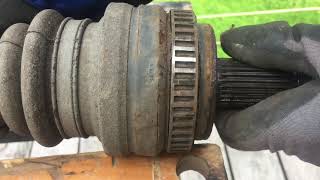
- Damaged or Contaminated ABS Tone Ring (Common) — The sensor reads a toothed or magnetic ring on the axle or wheel bearing. If this ring is cracked, missing teeth, or covered in thick rust or metallic debris, the sensor cannot generate a clean signal.
- Incorrect Wheel Bearing Installation (Less Common) — Many modern wheel bearings have an integrated magnetic encoder on one side. If a new bearing is pressed in backward, the sensor has no tone ring to read, instantly causing a C1405 code. This is a frequent error in DIY repairs. 🎬 Watch: Pro tips on how to prevent wheel speed sensor damage.
- Failed ABS/VSC Control Module (Rare) — An internal failure prevents the module from correctly processing the signal from a perfectly good sensor. This is the last item to diagnose after ruling out all other possibilities.
Symptoms

- ABS, Traction, and Stability Control Warning Lights On — The amber ABS light and VSC/ESC lights illuminate and remain on, as these systems depend entirely on accurate wheel speed data.
- Brakes Lock Up or Skid in Hard Braking — Without functional ABS, the wheels lock during a panic stop, especially on low-traction surfaces, leading to uncontrolled skidding and longer stopping distances.
- Erratic ABS Activation at Low Speeds — Before total failure, a failing sensor sends a jumpy signal. This tricks the ABS module into thinking a wheel is locking up during normal, slow stops, causing the brake pedal to pulse unnecessarily.
- All-Wheel Drive (AWD) System Disabled — AWD systems require accurate speed data from all four wheels to distribute torque. A fault in one sensor causes the vehicle to disable the AWD system and revert to two-wheel drive.
- Other Driver-Assist System Warnings — Malfunction warnings appear for Pre-Collision Systems, Hill-Start Assist, and indirect TPMS systems that rely on wheel speed calculations.
- Inaccurate Speedometer Reading (Rare) — On a few models that use an average of the wheel speed sensors instead of a dedicated vehicle speed sensor (VSS), a C1405 causes the speedometer to read incorrectly or drop to zero.
Diagnostic Flowchart
Tap your situation to follow the diagnostic path that matches what you're seeing on this code.
Common Fixes & Costs
- Repairing Damaged Wiring Harness — Parts: $10-$50, Labor: $150-$250, ~1.5 hr book time (Intermediate)
- Replacing the Right Front Wheel Speed Sensor — Parts: $60-$200, Labor: $100-$200, ~1.0 hr book time (DIY)
- Cleaning Sensor Mount and/or Tone Ring — Parts: $5, Labor: $75-$150, ~0.8 hr book time (DIY)
- Replacing the Wheel Bearing/Hub Assembly — Parts: $150-$450, Labor: $300-$600, ~2.2 hr book time (Professional)
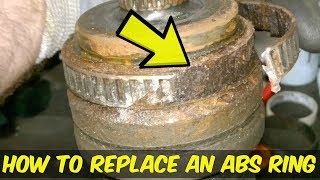
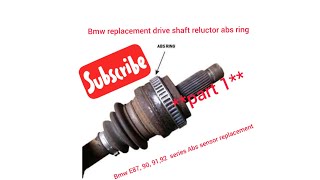
- Replacing the ABS Reluctor Ring (BMW E90, etc.) — Parts: $20-$50, Labor: $300-$600, ~3.5 hr book time (Professional)
- Replacing the ABS Control Module — Parts: $400-$900, Labor: $300-$600, ~2.0 hr book time (Professional)
DIY vs Professional
- Cleaning Sensor Mount and/or Tone Ring — Beginner: Yes
Tools: Jack, jack stands, basic socket set, wire brush, brake cleaner, flashlight. - Replacing the Right Front Wheel Speed Sensor — Beginner: Yes
Tools: Jack, jack stands, socket set (especially 10mm or 12mm), torque wrench, penetrating oil. - Repairing Damaged Wiring Harness — Beginner: No
Tools: Soldering iron, solder, high-quality heat shrink tubing, wire strippers/cutters, multimeter. - Replacing the Wheel Bearing/Hub Assembly — Beginner: No
Tools: Heavy-duty tools including a high-torque impact wrench, large axle nut socket, torque wrench for axle nut (high ft-lbs), potentially a slide hammer or hydraulic press.
Used vs. New Parts: Buying Guide
When a used part is worth it: Avoid used wheel speed sensors entirely. They are electronic components that fail from age, heat cycles, and internal corrosion, not simple mechanical wear. A used sensor has an unknown history and a high likelihood of premature failure.
Donor-vehicle mileage cap: roughly under 10000 miles for the part to have meaningful remaining life.
Donor quality checklist:
- Match the part number exactly, including any superseded numbers.
- Avoid parts from rust-belt donors, as corrosion is a key failure mode.
- If you must buy used, choose a donor with extremely low mileage from a vehicle scrapped for a non-related reason (e.g., rear-end collision).
Decision logic:
- If The part is a critical safety component like an ABS sensor → Buy new from an OEM or reputable aftermarket brand (e.g., Bosch, Denso, VDO, NTK). The small savings from a used or cheap part are not worth the risk and potential repeat labor cost.
- If Budget is the absolute primary concern → A mid-tier aftermarket new sensor is a better value than a used OEM sensor. Avoid the cheapest 'white box' options, which have a very high failure rate.
Warranty tradeoff: Used parts typically offer a 30-90 day warranty at best. Quality aftermarket new parts offer a 1-year to limited lifetime warranty. OEM parts carry a 12-month manufacturer warranty.
Worst-case if a used part fails: $150-$300 if a cheap or used sensor fails after installation, requiring a second repair job (repeat labor) plus the cost of another part.
What Happens If You Wait — Timeline
- Immediate: Code C1405 is stored. ABS, Traction Control, and Stability Control warning lights illuminate. All three systems are disabled. (MPG impact: 0%% · Added cost: $0 (but significant immediate safety risk))
- 1-3 months: Continued operation without key safety systems. Increased risk of an accident in panic braking or slippery conditions. On some AWD vehicles, the AWD system disables or its performance limits as it relies on wheel speed data. (MPG impact: 0%% · Added cost: Potential cost of an accident. Vehicle fails state safety inspections.)
- 3-12 months: The safety risk remains the primary concern. In some modern vehicles, the lack of a valid speed signal causes undesirable transmission shifting behavior, as the transmission control module (TCM) uses this data for its shift logic. (MPG impact: 0-2%% · Added cost: Potential cost of an accident. In rare cases, contributes to premature wear on transmission clutches if shift behavior is harsh.)
- 12+ months: The issue causes no cascading mechanical failures. The main 'progressive' cost is the prolonged and unnecessary safety risk you are exposed to every time you drive. (MPG impact: 0-2%% · Added cost: The cost of an at-fault collision, which ranges from hundreds to tens of thousands of dollars.)
Cost of Not Fixing It
- Immediate: Loss of ABS, Traction Control, and Stability Control. This creates a significant safety risk, increasing the chance of wheel lock-up and skidding in a panic stop or on slippery surfaces. (Added cost: Potential cost of an accident.)
- 0-6 months: In rare cases where a faulty sensor causes erratic, unnecessary ABS activation at low speeds, it causes minor, uneven brake pad and tire wear over time. (Added cost: $50-$200 in premature wear.)
- Long-Term: The primary cost remains the elevated safety risk. The fault causes no progressive mechanical damage to other major components like the transmission or engine. The vehicle fails mandatory state safety inspections in many states. (Added cost: Cost of an accident, plus potential fines for an expired inspection sticker.)
Diagnosis Steps

- Confirm Code with an ABS-Capable Scanner
Use an OBD-II scanner that reads Chassis ('C') codes to access the ABS module. Confirm C1405 is present. Basic scanners that only read Powertrain ('P') codes fail to see this fault.
Tools: ABS-capable OBD-II Scanner (Beginner) - Visual Inspection of Sensor and Harness
Safely raise and support the front passenger side of the vehicle and remove the wheel. Visually trace the sensor wire from the back of the wheel hub, along the suspension components, and up into the wheel well. Look for obvious cuts, chafing, melting, or pinch points.
Tools: Jack, Jack Stands, Flashlight (Beginner) - Analyze Live Data
Using your scanner's live data function, monitor the speeds of all four wheels while driving slowly in a straight line. All four sensors should read nearly identically. The right front sensor reading 0 MPH, lagging behind, or jumping erratically confirms the fault is in that circuit.
Tools: ABS-capable OBD-II Scanner (Intermediate) - Inspect Tone Ring and Clean Sensor
Remove the single bolt holding the sensor in the knuckle. Inspect the sensor's magnetic tip for metallic debris and clean it. Look inside the mounting hole at the tone ring for cracked or missing teeth or heavy rust. Clean the sensor mounting surface on the knuckle with a wire brush.
Tools: Socket Wrench, Wire Brush, Brake Cleaner (Intermediate) - Swap Test (If Applicable)
If the front left and right sensors are identical and the wiring is long enough, swap them. Clear the codes and drive. If the code changes to C1406 (Left Front Sensor Circuit), the sensor is faulty. If C1405 returns, the problem is in the wiring, tone ring, or hub on the right side.
Tools: Basic hand tools (Intermediate) - Test Harness Continuity
Disconnect the harness from both the sensor and the ABS control module. Using a multimeter set to resistance, check for continuity on both wires from end to end (should be <1 Ω). Then, check for a short by testing resistance from each wire to a chassis ground and to the other wire (should be OL or infinite resistance).
Tools: Multimeter, Vehicle-specific wiring diagram (Advanced) - Differentiate and Test Sensor Type (Active vs. Passive)
Identify the sensor type. Passive (2-wire) sensors generate AC voltage. Active (2 or 3-wire) sensors are supplied voltage. DO NOT test resistance on active sensors. Instead, back-probe the connector with the key on. One wire should have battery or reference voltage (5V or 12V), and the other is the signal or ground.
Tools: Multimeter, Vehicle-specific repair manual (Advanced) - Test Passive Sensor Resistance
For a 2-wire passive sensor, disconnect it and set a multimeter to Ohms (Ω). Measure the resistance between the two pins. A good sensor typically reads between 800 and 2,700 Ω. A reading of OL (open circuit) or near 0 Ω (short circuit) indicates a failed sensor.
Tools: Multimeter (Advanced) - Perform Oscilloscope Waveform Analysis
Back-probe the sensor's signal and ground wires. Spin the wheel by hand to view the waveform. Active sensors show a sharp square wave; passive sensors show a sine wave. A flat line, erratic spikes, or a distorted waveform indicates a bad sensor, damaged tone ring, or excessive air gap.
Tools: Automotive Oscilloscope, Back-probe pins (Professional)
When This Code Triggers (Freeze-Frame Conditions)
- Vehicle Speed: > 15 mph (The ABS module begins actively monitoring the sensors once the vehicle exceeds a low-speed threshold.)
- Brake Pedal Status: Off (The code sets during steady-state driving when the module expects to see a plausible speed signal but does not.)
- System Voltage: 11-14 Volts (A fault logs during normal operating voltage; low system voltage triggers unrelated codes.)
- Time Since Ignition On: > 10 seconds (The fault is detected shortly after the initial system self-test at startup and once the vehicle is in motion.)
Related Codes
- C1406 — Identical fault but for the Left Front (LH) wheel speed sensor circuit. This is useful for diagnosis; if you swap the left and right sensors and the code changes from C1405 to C1406, the sensor is bad.
- C1407 / C1408 — These codes point to an open or short in the Rear Right (C1407) and Rear Left (C1408) speed sensor circuits. The diagnostic process is the same, just performed on the respective rear wheel.
- C0205 — This is a generic SAE code for "Front Right Wheel Speed Sensor Circuit Malfunction". It is functionally identical to C1405 and is used by manufacturers like GM and some Chrysler/Dodge/Jeep models instead of the C14xx series.
- C1A50 — A general brake system code that appears on some vehicles, like Lexus, alongside C1405. It indicates a malfunction has been detected and instructs the technician to check for more specific ABS codes like C1405.
Climate & Environmental Factors
- Road Salt / Rust Belt Regions: Salt accelerates corrosion of wiring connectors and the sensor mounting point on the steering knuckle. This corrosion causes 'rust jacking', which physically increases the air gap between the sensor and tone ring, leading to a weak or lost signal.
- Cold Weather / Snow and Ice: Extreme cold makes wire insulation brittle and prone to cracking. Snow and ice pack into the wheel well and around the hub, physically blocking the sensor's view of the tone ring, causing a temporary fault code that clears when the ice melts.
- Temperature Fluctuations: Cycles of freezing and thawing allow moisture to seep into microscopic cracks in the sensor housing or into electrical connectors. When this moisture refreezes, it expands and breaks internal connections or pushes contacts apart, causing an intermittent open circuit.
- High Humidity: In humid climates, moisture penetrates non-sealed electrical connectors, leading to pin corrosion and poor signal quality over time.
How to Talk to a Mechanic About This Code
Say this: "I have an ABS and traction control light on, and my scanner shows code C1405 for the right front wheel speed sensor circuit. I'd like to book a diagnostic appointment to confirm the cause. I've already visually checked for obvious wiring damage."
This shows you've done basic research and are not just a random person with a 'light on'. It focuses the technician on a specific, testable system and reduces the chance of them starting from scratch with a broad, expensive diagnostic 'fishing expedition'.
Avoid saying:
- 'My ABS light is on, can you fix it?' (Too vague, invites a long diagnostic process)
- 'Just replace the right front ABS sensor.' (Don't command a specific repair; the fault could be the wiring or hub. You want to pay for a diagnosis, not a guess.)
- 'My brakes feel weird.' (Unless they do, don't invite an unnecessary brake system upsell.)
Questions to ask before authorizing the repair:
- What were the results of the live data test from the wheel speed sensors? Did the right front show 0 MPH or an erratic signal?
- Did you test the sensor and the wiring harness separately, and what were the results (e.g., sensor resistance, harness continuity)?
- If you are recommending a sensor replacement, can you confirm you inspected the tone ring and cleaned the sensor mounting surface to rule out those issues?
- What is the warranty on the recommended parts and labor?
Where to Take It: Dealer vs Independent vs Chain
- Dealer:
Best for: Vehicles still under warranty., Complex electrical issues where a previous shop has failed., When manufacturer-specific codes on brands like Jeep/Dodge misidentify the problem.
Downsides: Highest labor rates, often 1.5-2x an independent shop., Prefers to replace a larger assembly (like a full harness) rather than repair a single wire. (Typical cost: +50% vs. baseline) - Independent Shop:
Best fit. A C1405 is a routine and common fault that any competent independent shop diagnoses and repairs efficiently without the dealer's cost premium.
Best for: Out-of-warranty vehicles where cost is a factor., Straightforward diagnosis and repair of common codes like C1405., Building a long-term relationship with a trusted mechanic.
Downsides: Diagnostic tool capability varies; ensure they have a modern, ABS-capable scanner., Quality is highly variable; vet shops based on local reviews and ASE certifications. (Typical cost: +0% vs. baseline) - Chain Shop:
Use with caution. Acceptable if you tell them 'Please replace only the right front wheel speed sensor and clear the codes,' but AVOID for initial diagnosis, as you end up paying for unnecessary parts.
Best for: Simple, clear-cut part replacement if you have already performed a 100% confident diagnosis yourself.
Downsides: High pressure to upsell unnecessary services (e.g., turning a sensor replacement into a full brake job)., Technician skill and diagnostic ability vary dramatically. Often incentivized to replace parts rather than perform detailed electrical diagnosis. (Typical cost: -10% vs. baseline)
When to Walk Away From the Repair
If the estimated repair cost exceeds 50% of the car's private-party value, and the car is not essential for daily life, you should seriously consider selling it as-is or trading it in.
- Car worth $4000, fix is $500: Fix it. This is a relatively inexpensive repair that restores critical safety features and makes the car sellable.
- Car worth $12000, fix is $1800: Fix it. The repair cost is well below the 50% threshold and protects the value of a more expensive vehicle.
- Car worth $2500, fix is $1500: Walk away. The repair cost is over 50% of the car's value. The underlying issue is likely a complex module failure. It's not economically sound to proceed.
What Scan Tool You Need for This Code
Minimum: A scanner that reads and clears Anti-lock Braking System (ABS) codes, sometimes called 'C' or Chassis codes. It must also display live data for all four wheel speed sensors.
A basic $20 OBD-II reader only accesses Powertrain ('P') codes for the engine and emissions. It cannot see or clear ABS codes like C1405. You cannot turn off the ABS light or diagnose the problem without an ABS-capable tool.
Budget: BlueDriver Pro Scan Tool (~$99) — Connects to your smartphone via Bluetooth. It reads and clears ABS codes, and most importantly, displays live data streams to compare the speed of all four wheels, which is essential for diagnosing a C1405.
Mid-range: Foxwell NT510 Elite (~$180) — A powerful handheld unit that provides OE-level diagnostics for specific car brands. It offers robust ABS code reading, live data graphing, and some bidirectional controls to test components, which is helpful in complex diagnoses.
Professional: Autel MaxiCOM MK808 / MK808BT (~$450-550) — Provides full bidirectional control, allowing you to send commands to the ABS module and actuators to test their function directly. This level of functionality is usually only found in professional shop tools and is the most definitive way to diagnose complex faults beyond a simple sensor failure.
Rent vs buy: Most auto parts stores like AutoZone have a loaner tool program. For a refundable deposit, you borrow an ABS-capable scanner to read the code. However, these loaner tools typically cannot display the live data needed for a full diagnosis. If you plan to diagnose and fix the issue yourself, buying a budget pick like the BlueDriver is a worthwhile investment.
How to Clear the Code After You Fix It
- Use an ABS-capable OBD-II scan tool to erase the code from the ABS module.
- Perform a system self-test by cycling the ignition.
- Conduct a short test drive including speeds above 15 mph to confirm the warning lights remain off.
Drive cycle (~15 minutes): After clearing the code, start the vehicle and allow it to idle for 1-2 minutes. Drive for 10-15 minutes at a mix of city and highway speeds (exceeding 15 mph). The ABS module performs its own checks; if the repair was successful, the light stays off. In some cases, a steering wheel lock-to-lock turn is needed to re-calibrate the steering angle sensor if the battery was disconnected.
Readiness monitors affected: No emissions readiness monitors are directly affected by a 'C' code., If the battery was disconnected to attempt a reset, all emissions readiness monitors clear, requiring a full drive cycle before an emissions test.
Watch out for:
- Using a basic code reader that only clears powertrain ('P') codes fails to turn off the ABS light.
- The warning light remains on until the stored code is manually cleared, even if the physical fault is fixed.
- If the light returns immediately, the root cause remains unfixed or the repair was done incorrectly.
Will This Fail Emissions / State Inspection?
No — by itself this code doesn't fail OBD inspection (but it can keep readiness monitors from setting, which causes a separate fail).
- California: An illuminated ABS light does NOT cause a failure of the California Smog Check, which is primarily concerned with emissions. There is no separate statewide safety inspection.
- New York: An illuminated ABS warning light is considered a safety defect and WILL cause the vehicle to fail the annual safety inspection.
- Texas: An illuminated ABS warning light does NOT cause a failure of the Texas safety inspection. However, an illuminated red 'BRAKE' warning light results in a failure.
Most Commonly Affected Vehicles
- Toyota Tacoma (2005-2022) — Extremely common. The wiring harness is often the culprit, getting damaged or stretched during off-roading or suspension modifications like lifts or ARB locker installs. Always inspect the harness carefully before replacing the sensor.
- Toyota RAV4 (2006-2018) — A frequent failure point as the vehicle ages. Both sensor failure and harness corrosion are common. For the 2013-2018 models (XA40), ensure replacement sensors have the correct harness clips and length.
- Lexus ES350 / ES300h (2013-2018) — Often caused by an internal break in the wiring harness near the strut tower where it flexes. A repair often involves splicing in a new pigtail or section of wire.
- Toyota Camry (2012-2019) — Failures are common after front-end work. Check that the correct wheel bearing was used and installed in the correct orientation, as the magnetic encoder is directional.
- Toyota Hilux / Yaris / Corolla (2008-2022) — A well-documented fault. On Corollas from 2008-2012, the issue is often just a dirty sensor head or mounting surface that needs cleaning. On Hilux models, the harness is vulnerable to damage from debris.
- BMW 3-Series (E90/E91/E92), 1-Series (E82/E87) (2004-2013) — The classic cause on these models is the rear ABS reluctor ring on the driveshaft corroding. The rust causes the ring to expand and swell, hitting the sensor and generating an erratic signal or damaging it. The fix is to replace the reluctor ring, not necessarily the sensor.
- Honda Civic (2006-2015) — Prone to 'rust jacking' where corrosion builds up under the sensor's mounting flange, increasing the air gap. Also susceptible to issues from backward installation of a new wheel bearing.
- Volkswagen Golf (Mk6), Jetta (2008-2014) — Circuit faults are common. While the sensor and wiring are primary suspects, these models have a higher-than-average rate of ABS module failure that manifests with a single wheel speed sensor code.
Manufacturer-Specific Notes
- Toyota / Lexus: For these brands, C1405 almost exclusively means "Open or Short in Front Speed Sensor RH Circuit". The diagnosis tightly focuses on the passenger side front wheel's sensor, wiring, and hub components.
- Jeep: On certain Jeep models, C1405 has entirely different meanings, such as "Right Front Impact Sensor Circuit Malfunction" or relates to the transfer case. It is critical to use a scanner with manufacturer-specific definitions.
- Dodge: On some Dodge Ram trucks, C1404 and C1405 are codes for the "Transfer Case Range Position Sensor" and are completely unrelated to the ABS system. This fault causes the 4WD light to behave incorrectly.
- Hyundai / Kia: While C1405 typically refers to the wheel speed sensor, on some models it triggers as a secondary code due to a fault in the Steering Angle Sensor (SAS). If wheel speed circuit diagnosis finds no issues, check for SAS-related codes.
Real Owner Stories
2017 Toyota Tacoma - Misdiagnosis Averted
ABS, BSM (Blind Spot Monitor), and 4x4 error lights appeared immediately after a shop installed a front ARB locker. A scanner showed code C1405.
What they tried:
- Almost purchased a new $200 wheel speed sensor.
- Decided to diagnose further by swapping the front and rear sensors; the C1405 code remained, pointing away from the sensor itself.
- Tested the wiring harness with a multimeter and found a loss of signal (open circuit).
Outcome: Purchased and installed a new ABS speed sensor wire harness for $65, which completely resolved the issue and cleared all warning lights.
Lesson: If the code appears after suspension or axle work, the wiring harness is a prime suspect. Always test the harness for continuity before spending money on a new sensor.
2014 Toyota RAV4 - Simple Fix
ABS and traction control lights came on at around 138,000 miles. A scan confirmed C1405, 'Open or Short in Front Speed Sensor RH Circuit'.
What they tried:
- Visually inspected the original sensor after removal and noticed it was heavily rusted and appeared slightly bent.
Outcome: Replaced the right front wheel speed sensor with a new part. After clearing the code with a scanner, the warning lights stayed off, fixing the problem.
Lesson: In many cases, especially on higher-mileage vehicles, the sensor itself simply fails from age and exposure. A visual inspection reveals obvious damage, making for a straightforward diagnosis.
3rd Gen Toyota Tacoma - Complex Electrical Gremlin
ABS, VSC, and Trac lights were on, and 4WD would not engage, with code C1405 active. The owner knew the wiring harness had been previously damaged.
What they tried:
- Replaced the damaged wiring harness pigtail, but the code did not clear.
- Took it to a shop, which suspected the ABS module. The module was replaced under warranty.
- Even with a new harness and new module, the code C1405 would not clear. Multimeter tests showed power was reaching the sensor connector, and swapping sensors with the rear wheel made no difference.
Outcome: The problem remained unresolved even after replacing the two most likely components (harness and module), indicating a deeper, more complex electrical issue, possibly within the main harness or a connector pin fitment issue.
Lesson: Even when you replace the most common culprits, a persistent C1405 points to a very difficult-to-find wiring issue between the pigtail and the main control module. This is where professional-level diagnostics become necessary.
How to Prevent This Code From Triggering
- Apply Dielectric Grease to Connectors (Whenever connectors are disconnected for service) — Fills air gaps and seals the electrical pins from moisture, preventing the corrosion that leads to poor signals and open circuits.
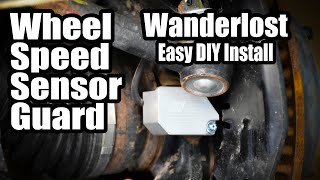
- Install Protective Guards or Loom (Once, especially for off-road or work trucks) — Adds a physical shield over the exposed wiring harness near the wheel, protecting it from being cut or damaged by road debris, rocks, or branches. Aftermarket guards are available for common trucks like the Tacoma.
- Regularly Clean Wheel Wells and Undercarriage (Seasonally, especially after winter in 'Rust Belt' regions) — Washing away road salt and mud prevents corrosive buildup on the sensor body, mounting surface, and connectors. This helps stop 'rust jacking' and connector failure.
- Secure Wiring Harness During Suspension Work (During any brake, strut, or axle repair) — Carefully unclip and move the ABS harness out of the way before service. This prevents accidental stretching or pinching that breaks the delicate internal wires, a very common cause of C1405 failure post-repair.
Frequently Asked Questions
Is it safe to drive my car with a C1405 code?
You can drive the car, but limit trips to reaching a repair shop. Your main brakes work, but you have no ABS, traction control, or stability control. This significantly increases stopping distances in emergencies and the risk of skidding.
Can I just clean the ABS sensor to fix the C1405 code?
Sometimes, yes. If the fault stems from metallic brake dust on the sensor's magnetic tip or rust on the mounting surface, a thorough cleaning provides a permanent fix. It is a simple, cost-effective first step before replacing parts.
Why did my collision warning and AWD lights also come on?
Modern safety and drivetrain systems are interconnected and rely on wheel speed data. When the main brake module loses a trusted signal from one wheel, it disables dependent systems like pre-collision and AWD as a precaution. This causes their respective warning lights to illuminate.
How can I definitively test if it's the sensor or the wiring?
The most reliable DIY method is the 'swap test'. Swap the left and right front sensors; if the code changes to C1406, the sensor is bad. If C1405 returns, the fault lies in the right-side wiring or hub.
What are the most common misdiagnosis mistakes for C1405?
The biggest mistake is immediately replacing the sensor without a full diagnosis. Technicians often overlook a damaged wiring harness or rust buildup under the sensor mount ('rust jacking') that increases the air gap. Another common error is installing a new wheel bearing backward, misaligning the magnetic encoder.
The code came back after I replaced the sensor. What now?
If a new, quality sensor fails to fix the issue, the problem lies in the wiring harness or the tone ring. Perform a continuity and short-to-ground test on the harness from the wheel to the ABS module. If the harness is perfect, inspect the tone ring for cracks and confirm correct wheel bearing installation.
Will the C1405 code clear itself after repair?
No. After completing the physical repair, you must manually clear the stored diagnostic trouble code from the ABS control module using an ABS-capable scan tool. The warning lights remain on until the code is cleared.
This code appeared right after suspension or brake work. Why?
The wheel speed sensor wire is fragile and routed near suspension and brake parts. It easily stretches to its breaking point, gets nicked by a tool, or is simply forgotten during jobs like strut replacement or CV axle work. Always inspect the harness if C1405 appears after front-end maintenance.
Key Takeaways
- Code C1405 indicates a failure in the front passenger-side wheel speed sensor circuit, immediately disabling your ABS, traction, and stability control systems.
- Inspect the wiring harness first, as physical damage or corrosion accounts for over 50% of C1405 triggers, especially after recent suspension work.
- Driving with C1405 increases emergency stopping distances by 20-30% on wet surfaces, so limit driving to essential trips to a repair shop.
- Perform a 'swap test' by exchanging the left and right front sensors; if the code changes to C1406, the sensor is dead, but if C1405 remains, the wiring or hub is at fault.
- Verify your vehicle's specific code definition, as Dodge, Ram, and Jeep models use C1405 to indicate a Transfer Case Range Position Sensor fault rather than an ABS issue.
Helpful Videos

The information in this article is provided for general reference and educational purposes only. Vehicle specifications, procedures, and part compatibility can vary by production date, trim level, and region. Always consult your vehicle's factory service manual and verify part numbers before purchasing or performing repairs. Safety-critical components such as airbags, seat belts, and braking systems should be installed by a qualified professional.
- 🎬 Helpful Videos
- What Does C1405 Mean?
- Can I Drive With C1405?
- Common Causes
- Symptoms
- Diagnostic Flowchart
- Common Fixes & Costs
- DIY vs Professional
- Used vs. New Parts: Buying Guide
- What Happens If You Wait — Timeline
- Cost of Not Fixing It
- Diagnosis Steps
- When This Code Triggers (Freeze-Frame Conditions)
- Related Codes
- Climate & Environmental Factors
- How to Talk to a Mechanic About This Code
- Where to Take It: Dealer vs Independent vs Chain
- When to Walk Away From the Repair
- What Scan Tool You Need for This Code
- How to Clear the Code After You Fix It
- Will This Fail Emissions / State Inspection?
- Most Commonly Affected Vehicles
- Manufacturer-Specific Notes
- Real Owner Stories
- 2017 Toyota Tacoma - Misdiagnosis Averted
- 2014 Toyota RAV4 - Simple Fix
- 3rd Gen Toyota Tacoma - Complex Electrical Gremlin
- How to Prevent This Code From Triggering
- Frequently Asked Questions
- Is it safe to drive my car with a C1405 code?
- Can I just clean the ABS sensor to fix the C1405 code?
- Why did my collision warning and AWD lights also come on?
- How can I definitively test if it's the sensor or the wiring?
- What are the most common misdiagnosis mistakes for C1405?
- The code came back after I replaced the sensor. What now?
- Will the C1405 code clear itself after repair?
- This code appeared right after suspension or brake work. Why?
- Key Takeaways
- 🎟️ Get 5% Off