

C1391 on 2004-2011 Toyota Prius: Abnormal Accumulator Leak Causes and Fixes
Code C1391 on a 2004-2011 Prius indicates a dangerous internal pressure leak in the brake actuator assembly. This is a critical failure requiring immediate attention. The fix is a costly replacement of the brake actuator and often the booster pump, with professional repairs costing between $1,900 and $4,600. Toyota acknowledged this widespread issue with a warranty extension program (ZJB), but it has since expired for most vehicles.
- C1391 is a critical safety code on a Prius, indicating a failure in the power brake system.
- Do not drive the vehicle. The brake assist can fail, making it very difficult to stop.
- The cause is almost always a failed brake actuator assembly, which is an expensive part to replace.
- This is not a DIY-friendly repair. It requires specialized tools and procedures, particularly for bleeding the brake system.
- Even if your vehicle is outside the original warranty, check with a Toyota dealer for any applicable Customer Support Programs for your VIN, as it could cover the repair.
What's Unique About the 2004-2011 Toyota PRIUS

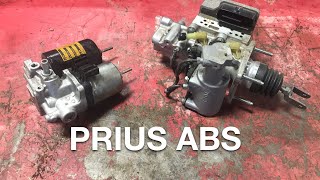
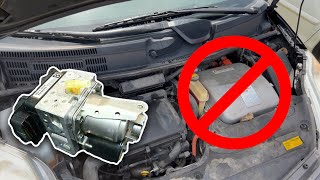
Unlike cars with traditional vacuum brake boosters, the Toyota Prius uses a complex 'brake-by-wire' system, also known as an Electronically Controlled Brake (ECB) system. This system relies on an electric pump to charge an accumulator with high-pressure fluid, which then provides braking force. The entire unit, known as the brake actuator assembly, is a widely documented failure point on the 2nd and 3rd generation Prius. The internal seals within the actuator degrade over time, allowing high-pressure fluid to leak back to the reservoir, which causes the pump to run excessively and triggers code C1391.
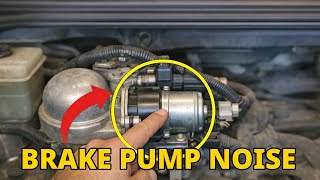
🎬 Watch: Hear the specific pump noise caused by internal leaks.Diagnostic Flowchart

Tap your situation to follow the diagnostic path that matches what you're seeing on this vehicle.
Generation note: This range covers the 2nd generation (2004-2009, XW20) and the first two years of the 3rd generation (2010-2011, XW30). The C1391 fault is common in both generations, but the brake actuator assembly part numbers are different. The fundamental cause—an internal leak in the actuator—and the critical nature of the repair are the same for both.
Symptoms You May Notice

- Multiple warning lights on the dashboard, including BRAKE, ABS, VSC, and the slip indicator.
- A frequent or constant buzzing, humming, or pumping noise from the engine bay, cycling every 5-30 seconds even when not pressing the brake pedal.
- The brake pedal feels unusually hard to press.
- The brake pedal feels soft, spongy, or has less pressure than usual.
- Longer than normal stopping distances.
- Loss of regenerative braking function.
- A faint hissing sound from the actuator area after the pump shuts off as pressure bleeds away internally.
- Replacing only the brake booster pump or accumulator. The issue is most often an internal leak in the main actuator/booster unit itself. While the pump is often replaced at the same time, replacing it alone will not fix the internal leak that causes the C1391 code.
- Assuming a low 12V battery is the cause. While a weak 12V battery can cause many strange electronic issues on a Prius, it does not cause the specific internal hydraulic leak that triggers C1391.
- Mistaking the accumulator for the actuator. These are two distinct, expensive components. Forum users stress the importance of correctly identifying the failed part, which is most often the actuator.
Most Likely Causes

- Internal Failure of the Brake Actuator Assembly 🔴 High Probability As confirmed by Toyota's Technical Service Bulletin T-SB-0032-16, the primary cause is a small internal brake fluid leak inside the brake actuator. The internal seals and valves degrade with age and use, allowing high-pressure fluid to leak back to the reservoir. This causes the pump to run excessively to compensate for the pressure drop, eventually leading to the C1391 code.
How to confirm: Listen for the brake pump in the engine bay cycling on and off every 5-30 seconds with the car in 'Ready' and the brake pedal not being pressed. A professional can confirm using a scan tool like Toyota Techstream to watch the accumulator pressure sensor data (PID: ACC PRESS SENS 1). A rapid drop in voltage/pressure when the pump is not running confirms a leak-down condition.
Typical fix: Complete replacement of the brake actuator assembly (also called brake booster assembly with master cylinder). Due to the high labor involved and the pump's excessive wear, it is often recommended to replace the associated brake booster pump and accumulator at the same time.
Est. part cost: $900-$2200
Rare But Worth Checking
- Failing Brake Booster Pump: While the leak is typically in the actuator, a weak pump may struggle to build or maintain pressure, contributing to the code. However, the pump is usually replaced along with the actuator as a complete assembly as a best practice.
- Skid Control ECU Malfunction: In very rare cases, the computer that monitors the pressure sensor could be faulty. This is highly unlikely and should only be considered after the actuator has been definitively ruled out. The diagnostic procedure in the service manual lists this as a final step if all else fails.
Diagnosis Steps
- Confirm code C1391 (and any related codes like C1252, C1256) is present using an OBD-II scanner capable of reading ABS/Chassis codes.
- With the vehicle in the 'Ready' state, listen carefully to the engine bay. An actuator pump that runs every 5-30 seconds without the brakes being applied is a classic symptom of a significant internal leak.
- Visually inspect the brake actuator, master cylinder, and all brake lines for any external fluid leaks. Note that the C1391 leak is almost always internal and will not be visible.
- A qualified technician should use a professional scan tool (like Toyota Techstream) to monitor the accumulator pressure sensor voltage (PID: ACC PRESS SENS 1). A rapid drop in voltage from a normal range of 3.2-4.0V when the pump is not running confirms a leak-down condition.
- Based on Toyota TSBs and extensive field data, the presence of C1391 accompanied by a frequently running pump is conclusive evidence of a failed brake actuator assembly requiring replacement.
Parts You'll Likely Need
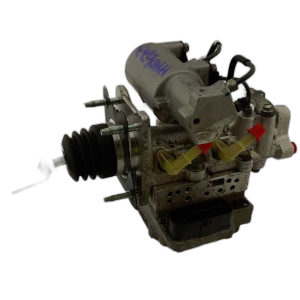
- Brake Actuator Assembly
(OEM #Gen 2 (2004-2009): 44510-47050, superseded by 44510-47051, and later by kit P/N 04003-44647 (which contains actuator 44500-47141). Gen 3 (2010-2011): 44510-47080 is a common part number, with repair kits like 04008-11347 also being used.)— This is the core component that fails. It houses the valves and seals that develop the internal leak, as identified in Toyota's own service bulletins. It is often sold and replaced as an assembly with the master cylinder. Part number confusion is common; it's best to verify by VIN.
Trusted brands: Toyota (OEM), Aisin (OEM supplier), Cardone (Remanufactured), Used/Salvage
OEM price range: $1200-$2200
Aftermarket price range: $800-$1500
Related Codes That Often Appear With This One
- C1256 — This code means 'Accumulator Low Pressure'. It often appears with C1391 because the internal leak (C1391) prevents the system from maintaining adequate pressure (C1256).
- C1252 — This code means 'Brake Booster Pump Motor On Time Abnormally Long'. The pump runs excessively trying to compensate for the pressure loss from the leak, triggering this code.
- C1253 — This code indicates a 'Brake Booster Pump Motor Relay Malfunction'. It can be set when the pump motor runs too frequently due to the leak.
Technical Service Bulletins (TSBs) & Recalls
- T-SB-0032-16: States that DTC C1391, C1252, C1253, or C1256 may be stored due to a small internal brake fluid leak inside the brake actuator. It applies to 2004-2009 Prius and 2006-2007 Highlander HV.
Platform-Specific Known Issues
- Toyota issued a Customer Support Program (ZJB / POL18-03) for 2010-2015 Prius models that extended the warranty coverage for the brake booster and brake booster pump assemblies. This program had specific time and mileage limits (typically 10 years / 150,000 miles) which are now expired for the 2004-2011 model years. A similar program (ZG1 / POL16-03) covered earlier models but is also expired. Owners who previously paid for this repair out-of-pocket were sometimes able to get partial reimbursement from Toyota by contacting corporate customer care, though this is not guaranteed.
Mechanic-Grade Diagnostic Values
- Accumulator Pressure Sensor 1 (ACC PRESS SENS 1) voltage — expected: 3.2 to 4.0 V with the pump motor stopped and no braking applied.. Failure: A rapid voltage drop below 3.2V within 30 seconds of the pump stopping indicates a significant internal leak.
- Skid Control ECU Ground Resistance — expected: Below 1 Ω. Failure: Resistance above 1 Ω indicates a poor ground connection, which can cause erratic ECU behavior.
Hidden / Shadow Codes Worth Checking
- INF 591: This is a detailed or sub-code for C1391. It specifies that the 'Accumulation performance is deteriorated' due to improper sealing inside the actuator, a gas pressure drop in the accumulator, or a leak in a pressure-boosting valve. (see via This code is visible using a Toyota Techstream or a compatible high-level diagnostic scanner that can read manufacturer-specific detail codes.)
Scan Tool Commands That Help
- Toyota Techstream: Reset Memory (in ABS/VSC/TRAC Utility) — This must be performed after replacing the brake actuator assembly to clear the stored linear solenoid valve calibration data before performing the new calibration.
- Toyota Techstream: Linear Valve Offset (in ECB Utility) — This is a mandatory calibration procedure after replacing the brake actuator assembly. It calibrates the linear solenoid valves. Failure to perform this will result in continued warning lights and codes like C1345.
- Toyota Techstream: Air Bleeding (in ABS/VSC/TRAC Utility) — This is a required, multi-step, scanner-guided procedure to properly bleed the complex brake system after replacing the actuator. It is different from a standard brake bleed.
- Toyota Techstream: Zero Point Calibration of Yaw Rate and Acceleration Sensor — This should be performed after the 'Reset Memory' and 'Linear Valve Offset' calibrations are complete to ensure the Vehicle Stability Control (VSC) system functions correctly.
Wiring & Ground Locations
- Skid Control ECU — For the 2010 model year, the Skid Control ECU is integrated into the brake actuator assembly, located in the left rear of the engine compartment.. The ECU is the computer that monitors the accumulator pressure sensor and sets code C1391. All sensor and actuator wiring terminates here.
- Ground Points EA, EB, EC, ED, EE, EF — These are the primary ground points for the main engine compartment wiring harnesses on a Gen 2 Prius. Specifically, EE is located on the left rear of the engine compartment, near the actuator assembly.. A poor ground connection at the ECU's designated ground point (GND1, GND2 at connector A19) can cause incorrect sensor readings or ECU malfunction, although it is a much rarer cause than actuator failure.
- Connector A19 (Gen 2) / A58 (Gen 3) — This is the main electrical connector for the Skid Control ECU / Brake Actuator Assembly.. Technicians may need to test for power (Pin 46, IG1) and ground (Pins 1 & 32, GND1/GND2) at this connector to rule out a wiring issue before condemning the expensive actuator assembly.
Real Owner Repair Stories
- YouTube user comment on 'Auto Scholar with Mr B' video (2010-2015 Toyota Prius (Gen 3)) — ABS code C1391 present.
✅ What actually fixed it The user replaced both the brake booster and accumulator assemblies using new OEM parts from a dealership for $1,900. They successfully performed the brake bleed and calibration using a Foxwell NT630 Elite scanner, saving $1,800 in quoted labor. - Reddit user on r/Toyota (2011 Toyota Prius, 65,000 miles) — Brake, ABS, and anti-skid lights came on. Code C1391 was diagnosed. Noted that braking felt 'off' at slow speeds.
❌ Tried (didn't work) The user noted that the vehicle was outside the 10-year/150,000-mile window for Toyota's ZJB warranty extension program, which would have covered the repair.
✅ What actually fixed it The resolution was not posted by the original user, but a commenter confirmed the fix is replacing the master cylinder, booster/accumulator, and ABS actuator as one large assembly, with a part cost of $2,500-$3,500. The commenter stressed it is not a DIY-friendly project and is unsafe to drive with the fault.
OEM Part Supersession History
44500-47141→04003-44647— Part 04003-44647 is a service replacement kit for the Gen 2 (2004-2009) Prius that contains the updated brake actuator assembly.
Heads up: This kit is specifically for the Gen 2 Prius. While the failure mode is similar, the Gen 3 (2010-2011) Prius uses a different actuator assembly (e.g., 44510-47080). The parts are not interchangeable between generations.
Model Year Variations Within This Range
- 2004-2009 (Gen 2) vs 2010-2011 (Gen 3): While the C1391 code and its root cause (internal actuator leak) are common to both generations, the physical parts are different. For the Gen 3, the brake booster, master cylinder, ABS actuator, and ECU are more integrated into a single assembly, officially called 'SUB-ASSEMBLY, BRAKE BOOSTER WITH MASTER CYLINDER'. The separate 'brake booster pump subassembly' is located below it. This distinction is a common point of confusion.
Helpful Videos
We Have This Part in Stock



The information in this article is provided for general reference and educational purposes only. Vehicle specifications, procedures, and part compatibility can vary by production date, trim level, and region. Always consult your vehicle's factory service manual and verify part numbers before purchasing or performing repairs. Safety-critical components such as airbags, seat belts, and braking systems should be installed by a qualified professional.
- Toyota PRIUS:
- 🎬 Helpful Videos
- 🛍️ Shop This Part
- What's Unique About the 2004-2011 Toyota PRIUS
- Diagnostic Flowchart
- Symptoms You May Notice
- Most Likely Causes
- Rare But Worth Checking
- Diagnosis Steps
- Parts You'll Likely Need
- Related Codes That Often Appear With This One
- Technical Service Bulletins (TSBs) & Recalls
- Platform-Specific Known Issues
- Mechanic-Grade Diagnostic Values
- Hidden / Shadow Codes Worth Checking
- Scan Tool Commands That Help
- Wiring & Ground Locations
- Real Owner Repair Stories
- OEM Part Supersession History
- Model Year Variations Within This Range
- 🎟️ Get 5% Off