

C1391 on 2006-2010 Toyota Highlander: Abnormal Accumulator Leak Explained
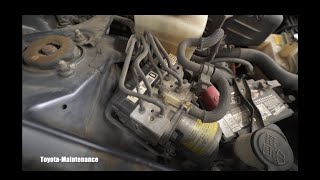
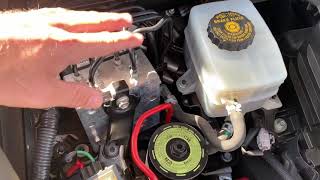
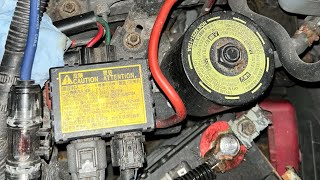
Code C1391 on a 2006-2010 Toyota Highlander almost always means the ABS brake actuator assembly has failed due to an internal leak. This is a critical safety issue requiring immediate attention. The repair is very expensive, often costing over $3,500 for parts and labor, and is not a DIY-friendly job due to the need for specialized software for bleeding and calibration.
- C1391 is a critical safety code indicating a failure within the ABS/VSC actuator assembly.
- The vehicle should not be driven until it is repaired, as braking power is compromised.
- The cause is almost always an internal leak in the brake actuator, which is a known weak point on this vehicle.
- This is a very expensive repair, typically costing $1,800 to $3,500 at a dealership or qualified independent shop.
- This is not a suitable DIY repair due to the safety-critical nature of the system and the need for specialized tools and procedures.
What's Unique About the 2006-2010 Toyota HIGHLANDER

This is a widely documented failure on this platform, particularly affecting Highlander Hybrid models. The issue was so prevalent that Toyota issued Warranty Enhancement Programs (ZG1 for 2006-2007 models and POL19-06 for 2008-2010 Hybrid models) to cover the costly replacement of the brake actuator and/or booster pump assembly outside of the standard warranty period. As one owner complaint filed with the NHTSA noted, a warranty adjustment was issued but has since ended, leaving many owners to face the expensive repair on their own. These programs have now expired for most vehicles based on time, but they serve as official acknowledgment of a common component defect.
Diagnostic Flowchart
Tap your situation to follow the diagnostic path that matches what you're seeing on this vehicle.
Generation note: This issue affects both the late first-generation Highlander (2006-2007, XU20) and the early second-generation Highlander (2008-2010, XU40), with a particular emphasis on the Hybrid models across both generations. Toyota issued separate warranty enhancement programs for these different model year ranges. The problem is also common in the Lexus RX400h, which shares the same platform and braking system.
🎬 See a complete brake actuator replacement walkthroughSymptoms You May Notice
- Multiple warning lights on the dashboard, including ABS, BRAKE, VSC, and a master warning light.
- A buzzing, groaning, or "croaking" noise from the engine bay, which is the sound of the electric brake pump running excessively (every 5-30 seconds) to compensate for the pressure leak.
- A change in brake pedal feel, such as being soft, spongy, weak, or requiring more effort.
- Reduced braking performance and increased stopping distances.
- A constant, high-pitched warning beep inside the cabin.
- Replacing only the brake booster pump
- Replacing wheel speed sensors
- Flushing brake fluid without addressing the mechanical failure
- Replacing the 12V battery without diagnosing the brake system codes
Most Likely Causes

- Internal Failure of the Brake Actuator Assembly 🔴 High Probability The internal seals within the accumulator section of the actuator assembly are known to degrade over time, causing a loss of hydraulic pressure. This was a widespread manufacturing defect acknowledged by Toyota through warranty extensions ZG1 and POL19-06.
How to confirm: A professional technician will confirm by reading the C1391 code, often accompanied by codes like C1252, C1256, or C1241. Using a scan tool like Toyota Techstream, they can monitor the accumulator pressure sensor voltage (PID: ACC PRESS SENS 1). 🎬 Watch: Diagnosing code C1391 using a scan tool A rapid drop in voltage from a normal range of 3.2-4.0V with the pump off confirms the internal leak.
Typical fix: Complete replacement of the Brake Actuator Assembly and, in many cases, the associated Brake Booster Pump, as recommended by Toyota's Customer Support Programs.
Est. part cost: $1200-$2500
Rare But Worth Checking
- Faulty Accumulator Pressure Sensor: While rare, the sensor that measures the pressure could fail and incorrectly report a leak. However, the diagnosis almost always points back to a true internal leak in the actuator itself, and the sensor is typically integrated into the actuator assembly.
- Wiring or Electrical Issues: Damaged wiring or a poor connection to the brake actuator assembly could theoretically cause faults, but this is seldom the root cause for a C1391 code.
- External Brake Fluid Leak: An external leak in a brake line or at a caliper could cause a pressure drop, but this would typically be accompanied by visible fluid loss and a different set of diagnostic indicators. C1391 almost exclusively points to an internal failure.
Diagnosis Steps
- Use a professional scan tool (ideally Toyota Techstream) to confirm the presence of C1391 and any other related ABS/VSC codes.
- Listen for the brake pump motor in the engine bay. If it runs for more than 30-45 seconds at a time or cycles on and off frequently (e.g., every 30 seconds) without the brake pedal being pressed, it's a strong sign of a leak.
- With the vehicle off, listen for the pump running immediately upon opening the driver's door. This indicates the system lost pressure while sitting.
- A technician can use a scan tool to view live data for the accumulator pressure sensor. A rapid drop in pressure (or voltage from 3.2-4.0V) with the pump off confirms an internal leak.
- Visually inspect for external brake fluid leaks, though C1391 is almost always an internal leak and no fluid will be visible on the ground.
- After replacement, perform the mandatory 'Air Bleeding' and 'Linear Valve Offset' calibrations using the scan tool to complete the repair.
Parts You'll Likely Need

- Brake Actuator Assembly
(OEM #44050-48320 (for 2008-2010 models), 44050-48191 (for 2006-2007 models))— This is the component that fails internally, causing the pressure leak that triggers code C1391. It is the definitive fix for this issue.
Trusted brands: Toyota (Genuine)
OEM price range: $1200-$1800
Aftermarket price range: Used or remanufactured units are available but carry risk. Success stories exist, but so do failures. - Brake Booster Pump Assembly
(OEM #44070-48020)— Often replaced along with the actuator, as the pump motor is overworked and may fail soon after. Toyota's POL19-06 program for 2008-2010 models mandated replacing both parts together.
Trusted brands: Toyota (Genuine)
OEM price range: $600-$900
Aftermarket price range: Not generally available or recommended
Related Codes That Often Appear With This One
- C1241 — Indicates a low or high power supply voltage, often triggered because the failing actuator's pump motor is drawing excessive power or cycling improperly.
- C1252 — Means 'Brake Booster Pump Motor On Time Abnormally Long'. The pump runs constantly trying to build pressure that is being lost by the internal leak (C1391).
- C1256 — Means 'Accumulator Low Pressure'. This code is a direct result of the C1391 leak, as the system cannot maintain the required pressure.
- C1253 — Indicates a 'Brake Booster Pump Motor Relay Malfunction', which can be triggered by the pump motor running too frequently due to the leak.
Technical Service Bulletins (TSBs) & Recalls
- POL19-06: Customer Support Program for certain internal malfunctions of the Brake Actuator Assembly and Brake Booster Pump Assembly on 2008-2010 Highlander Hybrid vehicles.
- ZG1: Warranty Enhancement Program extending coverage for the Brake Actuator Assembly on 2006-2007 Highlander Hybrid vehicles.
- T-SB-0032-16: Technical Service Bulletin for 2006-2007 Highlander HV models exhibiting C1391, C1252, C1253, or C1256, instructing dealers to replace the brake actuator.
- T-SB-0064-19: The technical instruction bulletin referenced by the POL19-06 Customer Support Program for the 2008-2010 Highlander Hybrid repair procedure.
Platform-Specific Known Issues
- A well-documented pattern of failure in the brake actuator assembly led Toyota to issue Customer Support Program POL19-06 for 2008-2010 Highlander Hybrids and ZG1 for 2006-2007 Highlander Hybrids.
- These programs extended the warranty with a primary coverage period (e.g., until Dec 31, 2020 for POL19-06) and a secondary period of 10 years/150,000 miles, but have since expired for most vehicles based on time.
- NHTSA owner complaints consistently report this failure, with repair estimates exceeding $3,500. Many owners express frustration that the part was not a formal recall and that they missed the warranty window.
- Some owners report dealers refusing to perform the warranty work unless the dashboard warning lights were actively on at the time of diagnosis, even with known symptoms present, leading some to miss the coverage window.
Mechanic-Grade Diagnostic Values
- Accumulator Pressure Sensor 1 Voltage (ACC PRESS SENS 1) — expected: 3.2 to 4.0 V (with pump motor stopped, no braking). Failure: Voltage drops rapidly from the normal range. A healthy system should hold pressure (and voltage) steady.
Hidden / Shadow Codes Worth Checking
- INF 591: Detailed sub-code for C1391. It specifies that 'Accumulation performance is deteriorated' due to improper sealing inside the actuator, a gas pressure drop in the accumulator, or a leak in a pressure-boosting valve. (see via Professional scan tools like Toyota Techstream can read these detailed information codes from the Skid Control ECU.)
Scan Tool Commands That Help

- Toyota Techstream: Reset Memory — This utility is used to clear stored calibration data before installing a new actuator. It is the first step in the post-repair calibration process.
- Toyota Techstream: ECB Utility / Linear Valve Offset — This is a mandatory calibration performed after replacing the brake actuator assembly. It learns the characteristics of the new solenoid valves. Failure to perform this will result in warning lights and may set code C1345 (Linear Solenoid Valve Offset Learning Undone).
- Toyota Techstream: Air Bleeding — After the actuator is replaced and the hydraulic lines are reconnected, this utility is required to properly bleed air from the complex hydraulic circuits. It is an electronically controlled procedure that cannot be done with a manual bleed.
- Toyota Techstream: Test Mode (Yaw Rate and Acceleration Sensor Zero Point Calibration) — After performing the Reset Memory and Linear Valve Offset, the VSC system requires the yaw rate and acceleration sensors to be recalibrated. This ensures the stability control system functions correctly.
Real Owner Repair Stories
- PriusChat forum user (Toyota Prius (platform mate with similar system)) — C1391 code with all associated warning lights on the dashboard.
❌ Tried (didn't work) Initial attempts to diagnose without replacing parts.
✅ What actually fixed it The owner purchased a used actuator assembly from eBay, installed it themselves, and then used Techstream software on a laptop to perform the electronic brake bleeding procedure. This successfully cleared all codes and restored normal brake function. - Reddit user r/ToyotaHighlander (2008 Toyota Highlander Hybrid) — Squawking noise from actuator, soft brake pedal feel, especially in warm weather.
❌ Tried (didn't work) Taking the car to the dealer in 2019 while under the Customer Support Program (CSP). The dealer refused the repair because no codes were actively set at that moment, despite the known symptoms.
✅ What actually fixed it The owner had to wait until the brake system failure was severe enough to finally trigger the warning lights and set the C1391 code. They took it back to the dealership, and the repair was finally approved under the CSP just one day before the program expired.
OEM Part Supersession History
44050-48190→44050-48191— Part revision/update by the manufacturer.None found, 44050-48320 appears to be the primary number for the generation.→44050-48320— This part number covers a wide range of model years, from 2008 up to 2019 on some parts sites, suggesting it was the established part for the second generation.
Model Year Variations Within This Range
- 2006-2010 Hybrid vs. Non-Hybrid: The braking systems are completely different. Hybrid models use a complex electro-hydraulic brake actuator assembly that integrates the pump, accumulator, master cylinder, and ABS controller. Non-hybrid models use a conventional vacuum-operated brake booster. The parts are not interchangeable.
- 2006-2007 vs. 2008-2010: The brake actuator assemblies have different part numbers for the first generation (XU20) and second generation (XU40) Highlanders. Part #44050-48191 is for 2006-2007 models, while #44050-48320 is for 2008-2010 models.
Helpful Videos
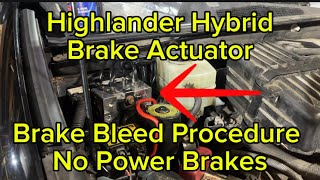
We Have This Part in Stock



The information in this article is provided for general reference and educational purposes only. Vehicle specifications, procedures, and part compatibility can vary by production date, trim level, and region. Always consult your vehicle's factory service manual and verify part numbers before purchasing or performing repairs. Safety-critical components such as airbags, seat belts, and braking systems should be installed by a qualified professional.
- Toyota HIGHLANDER:
- 🎬 Helpful Videos
- 🛍️ Shop This Part
- What's Unique About the 2006-2010 Toyota HIGHLANDER
- Diagnostic Flowchart
- Symptoms You May Notice
- Most Likely Causes
- Rare But Worth Checking
- Diagnosis Steps
- Parts You'll Likely Need
- Related Codes That Often Appear With This One
- Technical Service Bulletins (TSBs) & Recalls
- Platform-Specific Known Issues
- Mechanic-Grade Diagnostic Values
- Hidden / Shadow Codes Worth Checking
- Scan Tool Commands That Help
- Real Owner Repair Stories
- OEM Part Supersession History
- Model Year Variations Within This Range
- 🎟️ Get 5% Off