

C1391 on 2006-2010 Lexus RX HYBRID: Brake Actuator Leak Causes and Fixes
Code C1391 on a 2006-2010 Lexus RX Hybrid almost always means the brake actuator assembly has an internal leak and must be replaced. This is a common, well-documented failure requiring a costly part (OEM #44050-48191) and specialized labor, with total repair costs often reaching $2,500-$4,000. Lexus acknowledged this issue with a Warranty Enhancement Program (ZLG) which has since expired.
- C1391 on a 2006-2010 RX Hybrid is a critical brake system code indicating a pressure leak, almost always inside the brake actuator.
- This is a known, common failure for this vehicle, not a rare occurrence. Lexus acknowledged it with an (expired) warranty extension.
- Symptoms include a full array of brake warning lights and a pump motor that cycles on and off every few seconds.
- The repair is not suitable for most DIYers. It is expensive, requiring a part (44050-48191) that costs over $1,500 and a specialized, tool-assisted brake bleeding procedure.
- Do not drive the vehicle. A loss of brake pressure can lead to brake failure.
What's Unique About the 2006-2010 Lexus RX HYBRID
The second-generation RX 400h (2006-2009) and the early third-generation RX 450h (2010) are known for this specific failure. The issue became so prevalent that Lexus and Toyota issued Technical Service Bulletins (TSBs) and a Warranty Enhancement Program (ZLG) for the 2006-2008 RX 400h to cover the failing Brake Actuator Assembly. This program extended the warranty to 10 years or 150,000 miles, but has since expired. Owner complaints filed with the NHTSA confirm that this is a widespread and expensive failure, often happening outside of the standard warranty period. [ODI #11100669, ODI #11091940]
Diagnostic Flowchart
Tap your situation to follow the diagnostic path that matches what you're seeing on this vehicle.
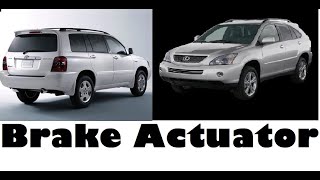
Generation note: This guide covers the late second-generation RX 400h (2006-2009) and the first model year of the third-generation RX 450h (2010). Both generations are known to experience this issue, often involving the same brake actuator assembly failure. The issue is also common on the platform-mate Toyota Highlander Hybrid.
Symptoms You May Notice
- Multiple warning lights on the dashboard, including ABS, Brake, and TRAC/VSC. [L-SB-0016-16, 8]
- A "Check VSC" or "Brake Malfunction" message displayed. [L-SB-0016-16, 23]
- A buzzing, humming, or 'squawking' noise from the engine bay that cycles on and off frequently (every 8-30 seconds) as 🎬 Watch: Hear the specific buzzing and buzzer sounds of a failing pump. the pump tries to rebuild lost pressure.
- A soft, spongy, or inconsistent brake pedal feel, sometimes described as the pedal going 'soft'.
- Increased stopping distances.
- A chirping or creaking sound from the actuator when holding the brake pedal at a stop.
- Replacing only the brake accumulator or pump motor. The failure is typically within the sealed actuator block itself. While some components can be separated, the most reliable fix is replacing the entire assembly.
- Replacing brake pads and rotors. While worn brakes can cause other issues, they will not trigger the C1391 code. An owner on ClubLexus reported doing this, but the code and symptoms remained.
- Assuming a faulty brake light switch. While a bad switch can cause warning lights, it does not cause the frequent pump cycling or the specific C1391 code.
Most Likely Causes
- Internal Failure of the Brake Actuator Assembly 🔴 High Probability The internal seals within the actuator assembly are known to degrade over time, causing a slow, internal leak of brake fluid pressure. This is a documented pattern failure for this component, acknowledged by Lexus through TSB L-SB-0016-16 and Warranty Enhancement Program ZLG.
How to confirm: A mechanic will use a diagnostic scan tool (like Techstream) to monitor the accumulator pressure sensor voltage. A rapid drop in pressure when the pump is not active confirms an internal leak. The pump cycling on frequently at idle is also a strong auditory indicator.
Typical fix: The entire brake actuator and pump assembly must be replaced. The system then requires a specific, tool-guided bleeding procedure. The OEM part for the 2006-2008 RX 400h is 44050-48191.
Est. part cost: $1500-$2500
Rare But Worth Checking
- External Brake Fluid Leak: While the TSB and service manuals mention checking for external leaks at brake lines or calipers, this is rarely the cause of C1391. The code is almost always triggered by the internal actuator failure.
- Failing 12-Volt Battery: On rare occasions, a failing 12-volt auxiliary battery can cause various spurious electronic-related trouble codes to appear, including those for the brake system. It's a simple and inexpensive check to perform before committing to a major repair.
- Faulty Brake Booster Pump Motor: Less commonly, the pump motor itself can fail. However, this usually happens as a secondary failure due to being overworked from an internal actuator leak. If codes C1252 or C1253 are present, the motor may also need replacement, but the root cause is typically the actuator leak indicated by C1391.
Diagnosis Steps
- Verify the presence of code C1391 and any accompanying codes (C1252, C1253, C1256) using an OBD-II scanner capable of reading ABS/Chassis codes.
- With the vehicle on and in park (READY on), listen for the brake pump motor in the engine bay. If it runs for a few seconds, turns off, and then repeats every 10-30 seconds without the brake being pressed, it strongly indicates a pressure leak.
- Visually inspect all brake lines, calipers, and connections to and from the actuator for any signs of external fluid leaks.
- Connect a professional scan tool (like Toyota Techstream) to monitor live data for the 'Accumulator Pressure Sensor'.
- Observe the pressure reading. The pump should pressurize the system, and the pressure should hold steady for a long period. If the pressure drops quickly without brake application, it confirms an internal leak in the actuator.
- If no external leak is found and the pressure test fails, the brake actuator assembly is faulty and requires replacement.
Parts You'll Likely Need
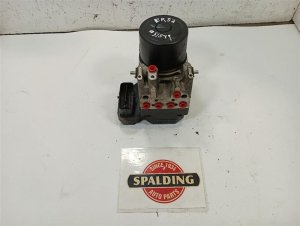
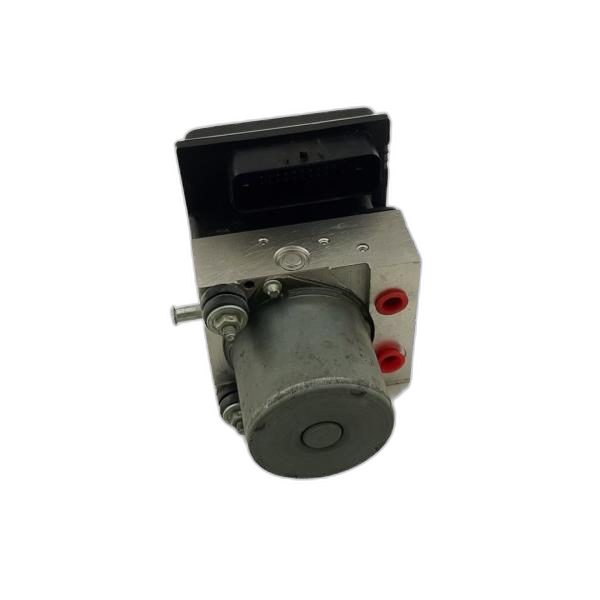
- Brake Actuator and Pump Assembly
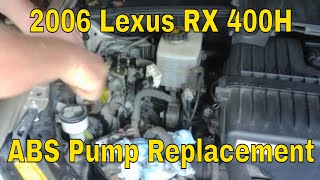
(OEM #44050-48191 (for 2006-2008 RX 400h))— This is the component that fails internally, causing the pressure leak that triggers code C1391. It is replaced as a complete unit. 🎬 See this step-by-step walkthrough of the full actuator replacement process. The part number 44050-48191 supersedes 44050-48190.
Trusted brands: Lexus (OEM), Aisin (OEM supplier)
OEM price range: $1500-$2500
Aftermarket price range: $850-$1800 (Remanufactured or Used, use with caution)
Related Codes That Often Appear With This One
- C1252 — Brake Booster Pump Motor On Time Abnormally Long. This code is often stored with C1391 because the pump has to run constantly to compensate for the pressure leak. [L-SB-0016-16, 8, 17]
- C1253 — Brake Booster Pump Motor Relay Malfunction. This can be triggered as a consequence of the pump motor being overworked due to the leak. [L-SB-0016-16, 8, 17]
- C1256 — Accumulator Low Pressure. This code directly relates to the pressure loss detected by the system, which is the root cause of C1391. [L-SB-0016-16, ODI #11100669, 8, 17]
Technical Service Bulletins (TSBs) & Recalls
- L-SB-0016-16: Notes that C1391, C1252, C1253, or C1256 can be caused by a small internal brake fluid leak inside the brake actuator and provides repair procedures and the updated part number (44050-48191).
Platform-Specific Known Issues
- A known pattern failure of the brake actuator assembly is well-documented through owner complaints and a manufacturer TSB. [L-SB-0016-16, ODI #11100669, ODI #11091940]
- Lexus issued Warranty Enhancement Program ZLG for the 2006-2008 RX 400h, extending coverage for this specific failure to 10 years/150,000 miles. This program has now expired but serves as an official acknowledgment of the defect.
- Owners on ClubLexus have discussed dealer quotes ranging from $3,200 to over $4,000 for the repair, confirming the high cost.
Mechanic-Grade Diagnostic Values
- Accumulator Pressure Sensor Voltage (ACC PRESS SENS 1) — expected: 3.2 to 4.0 V (with the pump motor stopped and no braking). Failure: Voltage drops rapidly without brake application. A drop to ~3.15V will trigger the pump to restart.
- Skid Control ECU Power Supply (Connector A19) — expected: 10 to 14 V at Pin 46 (IG1) to Body Ground with ignition ON. Failure: Voltage below 10V indicates a power supply issue to the ECU.
- Skid Control ECU Ground Circuit Resistance (Connector A19) — expected: Below 1 Ω. Failure: Resistance above 1 Ω on Pin 1 (GND2) or Pin 32 (GND1) to body ground indicates a bad ground connection.
- Skid Control ECU CAN Bus Resistance (Connector A19) — expected: 54 to 69 Ω between Pin 11 (CANH) and Pin 25 (CANL) with ignition OFF. Failure: Resistance outside this range indicates a problem on the CAN bus branch wire.
Hidden / Shadow Codes Worth Checking
- INF 591: A detailed sub-code for C1391, specifically meaning 'Accumulation performance is deteriorated'. This confirms the fault is an internal leak or pressure loss within the actuator, not an external leak or sensor failure. (see via Toyota Techstream software or an equivalent professional scanner capable of reading manufacturer-specific detail codes.)
Scan Tool Commands That Help
- Toyota Techstream: DATA LIST -> ACC PRESS SENS 1 — Used to monitor the live accumulator pressure sensor voltage to confirm an internal leak. A rapid drop in voltage with the pump off is the key indicator.
- Toyota Techstream: Utility -> Air Bleeding — This is the mandatory, guided procedure required after replacing the brake actuator to purge all air from the complex hydraulic circuits. It activates the ABS pump and solenoids in a specific sequence.
- Toyota Techstream: Utility -> ECB Invalid / Zero Down Accumulator Pressure — These commands are used as part of the full bleeding procedure to depressurize the accumulator and allow for manual bleeding of the front brakes without the system interfering.
- Toyota Techstream: Utility -> Linear Valve Offset — This is a required calibration that must be performed after replacing the actuator. It learns the characteristics of the new linear solenoid valves. Failure to perform this can result in improper brake operation.
Wiring & Ground Locations
- Brake Actuator Assembly — Right rear of the engine compartment.. This is the primary component that fails and must be physically accessed for replacement.
- Skid Control ECU (Connector A19) — Located on the right side of the dashboard, typically behind the glove box area.. This is the control module for the brake system. Technicians may need to access its connector (A19) to perform voltage and resistance checks on power, ground, and CAN bus circuits if a simple actuator replacement doesn't solve the issue.
Real Owner Repair Stories
- ClubLexus user @Hobbes22 (2008 Lexus RX 400h) — Owner replaced the actuator as a preventative measure before codes appeared, based on the common failure pattern and audible pump cycling.
❌ Tried (didn't work) N/A, owner went straight for the known fix.
✅ What actually fixed it The owner performed a DIY replacement of the brake actuator assembly using OEM part number 44050-48191. The most difficult part of the job was reported to be the brake bleeding procedure, which required a functional (though buggy) version of Toyota Techstream software. The total cost for the part was around $1,300. The repair was successful.
OEM Part Supersession History
44050-48190, 44510-48060→44050-48191— Updated part to address the internal leak failure.
Heads up: Using the original part number (if found) is not recommended as it is prone to the same failure. 44050-48191 is the correct revised part for the RX 400h.Varies→44050-48320, 44050-48410, 44050-48411— Different part for the third-generation RX.
Heads up: The brake actuator for the RX 450h is NOT interchangeable with the RX 400h part. Always verify the part number with the vehicle's VIN.
Model Year Variations Within This Range
- 2006-2009 RX 400h vs. 2010 RX 450h: The 2010 model year marked the beginning of the third generation RX. The engine was updated from a 3.3L (3MZ-FE) V6 to a 3.5L (2GR-FXE) V6. Critically, the brake actuator assembly is a different part number. The RX 400h uses part 44050-48191, while the 2010 RX 450h uses different parts like 44050-48320 or 44050-48410. The parts are not interchangeable.
Helpful Videos
We Have This Part in Stock





The information in this article is provided for general reference and educational purposes only. Vehicle specifications, procedures, and part compatibility can vary by production date, trim level, and region. Always consult your vehicle's factory service manual and verify part numbers before purchasing or performing repairs. Safety-critical components such as airbags, seat belts, and braking systems should be installed by a qualified professional.
- Lexus RX HYBRID:
- 🎬 Helpful Videos
- 🛍️ Shop This Part
- What's Unique About the 2006-2010 Lexus RX HYBRID
- Diagnostic Flowchart
- Symptoms You May Notice
- Most Likely Causes
- Rare But Worth Checking
- Diagnosis Steps
- Parts You'll Likely Need
- Related Codes That Often Appear With This One
- Technical Service Bulletins (TSBs) & Recalls
- Platform-Specific Known Issues
- Mechanic-Grade Diagnostic Values
- Hidden / Shadow Codes Worth Checking
- Scan Tool Commands That Help
- Wiring & Ground Locations
- Real Owner Repair Stories
- OEM Part Supersession History
- Model Year Variations Within This Range
- 🎟️ Get 5% Off