

OBD-II Code C1334: Wheel Sensor Fault
What C1334 means, why it triggers, and how to fix it
- Code C1334 is a manufacturer-specific fault, primarily for Hyundai and Kia, indicating an internal failure of a wheel sensor—most often the left rear TPMS sensor.
- The most common cause is a dead TPMS sensor battery, which has a strict 5-10 year lifespan and requires complete sensor replacement.
- Driving with C1334 disables critical safety systems, increasing braking distance on loose surfaces by over 25% due to deactivated ABS.
- Before replacing parts, use a TPMS tool to check for a 'Low Battery' signal and inspect the wiring harness 1-3 inches from the connector for hidden corrosion.
What Does C1334 Mean?
C1334 is a manufacturer-specific chassis code, primarily used by Hyundai and Kia, indicating the control module detected an internal fault within a specific wheel sensor. The vehicle's computer received a data signal confirming the sensor failed its internal diagnostics. This usually points to a Tire Pressure Monitoring System (TPMS) sensor inside one of the wheels.
Technical definition: The SAE/OBD-II definition for C1334 is manufacturer-specific. Hyundai defines it as "Left Rear Sensor Fault," meaning the Wheel Electronic (WE) sensor unit detected an internal hardware or measurement fault. The sensor transmits a data frame with pressure, temperature, or acceleration values set to zero, signaling self-diagnosed failure. Use a manufacturer-specific scanner; generic readers sometimes misinterpret this chassis code as a powertrain fault.
Can I Drive With C1334?
Yes, But With Caution. Yes, but cautiously. Driving with this code disables your Tire Pressure Monitoring System (TPMS), Anti-lock Brakes (ABS), and Traction Control. Normal braking works, but your wheels will lock up in an emergency stop. On loose surfaces like gravel or snow, braking distance increases by over 25% without ABS. Prolonged driving without these safety systems significantly increases accident risk.
Common Causes
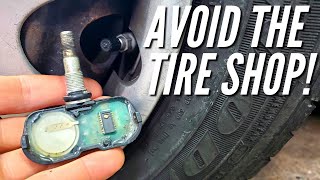
- Dead battery or internal TPMS sensor failure (Very Common) — TPMS sensors contain non-replaceable batteries lasting 5-10 years. When the battery dies or internal electronics fail from moisture intrusion, the sensor sends a fault signal. This is the primary trigger for C1334. 🎬 Learn how to replace TPMS sensors without a tire machine.
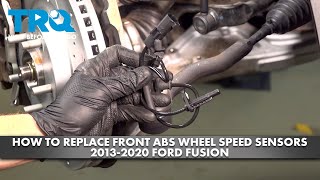
- Corroded wiring near the wheel speed sensor connector (Common) — Moisture penetrates the wiring harness 1-3 inches from the sensor connector, causing hidden corrosion and wire breaks. This is a known issue on Ford models and a deceptive cause of failure. 🎬 See this walkthrough on replacing a front wheel speed sensor.
- Physical damage to the sensor (Common) — Impacts from potholes, curbs, or careless tire changes break the sensor body or its valve stem.
- Bad wheel bearing or damaged tone ring (Less Common) — A worn wheel bearing creates excessive movement, altering the gap between the ABS sensor and tone ring. Debris or rust damages the tone ring teeth, causing erratic signals the module interprets as a fault.
- Radio Frequency (RF) Interference (Less Common) — Aftermarket electronics like dash cams, phone chargers, or factory surround-view cameras emit RF noise that blocks the TPMS receiver's communication with the sensors.
- Incorrect TPMS relearn procedure (Less Common) — Failing to update the vehicle's computer with new sensor IDs after a tire rotation or replacement triggers a fault.
- Faulty ABS or TPMS control module (Rare) — The computer module receiving sensor data fails due to internal software corruption or hardware damage, incorrectly reporting a sensor fault.
Symptoms
- Flashing then solid TPMS warning light — The TPMS light flashes for 60-90 seconds upon startup, then remains solid. This specific sequence indicates a system malfunction, not low tire pressure.
- ABS and Traction Control warning lights illuminated — If the fault lies in the ABS wheel speed sensor circuit, the ABS and Electronic Stability Control (ESC) lights turn on.
- ABS and Traction Control disabled — Safety systems deactivate. You retain standard braking but lose anti-lock functions and traction intervention on slippery surfaces.
- Missing tire pressure reading — Vehicles with individual pressure displays show a dash ('--') or error message for the faulty wheel.
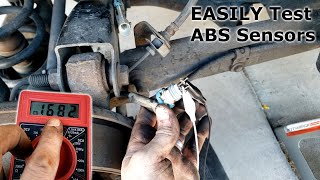
- Unexpected low-speed ABS activation (also visible on scanner) — A failing ABS sensor sends erratic signals, causing the ABS to grind or pulse unnecessarily during low-speed braking. 🎬 Watch: How to test ABS sensors for resistance and voltage.
Diagnostic Flowchart
Tap your situation to follow the diagnostic path that matches what you're seeing on this code.
Common Fixes & Costs
- Replace the faulty TPMS sensor — Parts: $30-$100 per sensor, Labor: $20-$50 per tire, ~0.5 hr book time (Professional)
- Replace the faulty ABS wheel speed sensor — Parts: $30-$100, Labor: $100-$150, ~1.0 hr book time (Intermediate)
- Repair damaged wiring or connector — Parts: $15-$50, Labor: $100-$200, ~1.5 hr book time (Intermediate)
- Replace the TPMS control module — Parts: $200-$450, Labor: $100-$200, ~1.0 hr book time (Professional)
- Replace the ABS control module — Parts: $500-$1200, Labor: $150-$300, ~1.5 hr book time (Professional)
Used vs. New Parts: Buying Guide
When a used part is worth it: Reusing your own vehicle's sensors when swapping wheels makes sense if they are not near the end of their battery life. Buying used sensors from another vehicle is not recommended due to unknown battery life.
Donor-vehicle mileage cap: roughly under 50000 miles for the part to have meaningful remaining life.
Donor quality checklist:
- For ABS sensors, ensure the part number matches exactly and inspect for physical damage or corrosion on connector pins.
- Favor parts from vehicles in dry, salt-free climates.
Decision logic:
- If Vehicle is over 7 years old OR has over 70,000 miles → buy new TPMS sensors; original batteries are near the end of their life.
- If The cost of labor to swap the old sensor is high → buy new to avoid paying repeat labor if the used part fails.
- If The part is a simple, non-wear item like an ABS sensor from a low-mileage vehicle → a used part is a cost-effective option.
Warranty tradeoff: Used parts typically come with a 30-90 day warranty, which is insufficient to reveal a failing TPMS battery. New aftermarket sensors carry a 1-3 year warranty.
Worst-case if a used part fails: $100-$250 if a used sensor fails after installation, requiring repeat labor costs.
What Happens If You Wait — Timeline
- Immediate: Code C1334 sets. TPMS or ABS/Traction Control lights illuminate. Critical safety systems are disabled. (MPG impact: 0%% · Added cost: $0)
- 0-3 months: Driving without ABS/TC increases accident risk. If caused by an unnoticed underinflated tire, fuel economy decreases and tire wear accelerates. (MPG impact: 0-5%% · Added cost: $50-$150 in wasted fuel and premature tire wear.)
- 3-9 months: Continued driving on an underinflated tire causes internal structural damage. (MPG impact: 5-10%% · Added cost: $200-$600 for new tires.)
- 9+ months: High-speed tire blowout due to ignored underinflation warning causes loss of vehicle control. (MPG impact: N/A% · Added cost: $500-$2500+ for wheel, body, and suspension repairs.)
Cost of Not Fixing It
- Immediate: Loss of ABS, traction control, and stability control increases the risk of losing control during emergency braking. Insurance claims are sometimes denied if an accident occurs with a known safety system fault. (Added cost: Potential for accident-related costs.)
- 0-6 months: An unnoticed underinflated tire leads to accelerated, uneven tire wear and decreased fuel economy. An 8 PSI underinflation increases tire wear by 16%. (Added cost: $50-$300 in premature tire replacement and wasted fuel.)
- 6+ months: Continued driving on a severely underinflated tire leads to internal structural damage and a potential blowout. (Added cost: $500-$2500+ for tire, wheel, and body damage repair.)
Diagnosis Steps
- Read Manufacturer-Specific Codes & Check Pressures
Use an OBD-II scanner capable of reading manufacturer-specific chassis codes to confirm C1334. Note the exact fault definition (e.g., 'Left Rear Sensor Fault'). Manually check all four tires with a gauge and inflate them to the door jamb sticker pressure.
Tools: Advanced OBD-II Scanner, Tire Pressure Gauge (Beginner) - Use a TPMS Diagnostic Tool
A dedicated TPMS tool 'pings' each wheel sensor to read its data directly. If a sensor fails to respond or shows a 'Low Battery' status, you have found the faulty component.
Tools: TPMS Diagnostic Tool (Intermediate) - Visual Inspection of Sensor and Wiring
Inspect TPMS valve stems for cracks or damage. For ABS codes, pull back the protective conduit 6 inches from the connector behind the wheel hub. Meticulously check for chafing, breaks, or green/white corrosion on the wires.
Tools: Flashlight (Beginner) - Swap Sensor Locations to Confirm Fault
For an ABS sensor, swap the suspect sensor with a known good one from another wheel. Clear codes, drive, and re-scan. If the fault code follows the sensor (e.g., C1334 Left Rear becomes C0037 Right Rear), the sensor is bad. If it remains, the issue is wiring or the module.
Tools: Basic hand tools, Jack and jack stands (Advanced) - Test ABS Sensor with a Multimeter
Disconnect the sensor. For passive sensors, measure resistance (should be 800-2,500 Ohms) and AC voltage while spinning the wheel (should be 0.2-0.7V AC). For active sensors, turn the ignition ON and probe the harness connector for a 5V-12V DC reference voltage from the ABS module.
Tools: Multimeter, Jack and jack stands, Wiring diagram (Advanced) - Check ABS Sensor Signal with an Oscilloscope
Back-probe the sensor's signal wire with an oscilloscope. Spin the wheel to view the waveform. Dropouts, noise, or malformed patterns indicate a faulty sensor or damaged tone ring.
Tools: Oscilloscope, Back-probe pins (Professional) - Check for Radio Frequency (RF) Interference
If sensors and wiring pass testing, unplug all aftermarket accessories (phone chargers, dash cams). Clear the codes and drive to see if the fault disappears.
Tools: None (Intermediate)
When This Code Triggers (Freeze-Frame Conditions)
- Vehicle Speed: 25-55 mph (Steady highway or city driving)
- System Voltage: 13.5-14.5 Volts (Normal alternator operation)
- Time Since Engine Start: > 5 minutes (Vehicle has been running long enough for systems to initialize and self-test)
Related Codes
- C0031 - C0050 — Generic codes for ABS wheel speed sensor circuit faults. C1334 is often a manufacturer-specific version of these codes.
- C1312, C1313, C1314, C1315 — Hyundai/Kia specific codes for TPMS sensor communication errors for the Front-Left, Front-Right, Rear-Right, and Rear-Left wheels.
- B1334 — An airbag system code (Body control module) completely unrelated to C1334 (Chassis). Highlights the importance of reading the full code prefix.
- P0500 — A generic powertrain code for 'Vehicle Speed Sensor Malfunction'. A fault setting C1334 prevents speed data transmission, causing P0500 to appear as a secondary code.
Climate & Environmental Factors
- Cold Weather: Cold reduces the chemical reaction speed inside the TPMS sensor's battery, lowering voltage. An aging battery working in summer fails when temperatures drop. Cold air also lowers tire pressure by 1-2 PSI per 10°F drop, triggering false warnings.
- Humidity and Road Salt: In the 'Salt Belt', moisture penetrates wiring harnesses and connectors, causing corrosion that leads to high resistance or open circuits. Salt also seizes ABS sensors in mounting hubs.
How to Talk to a Mechanic About This Code
Say this: "I have a C1334 code and my TPMS light is flashing. Please use a TPMS tool to check the battery status of all four sensors and inspect the wiring harness near the affected wheel for corrosion before recommending a part replacement."
Signals you understand common causes (bad battery vs. wiring) and directs the technician to perform efficient diagnostic steps rather than an immediate part swap.
Avoid saying:
- 'My tire light is on, can you fix it?'
- 'Just replace the broken sensor.'
- 'I have a C1334, do whatever it takes to fix it.'
Questions to ask before authorizing the repair:
- Did the TPMS tool confirm the sensor battery is dead?
- Did you check for live wheel speed data on a scan tool?
- Have you inspected the wiring and connector for corrosion?
- Does the estimate include the TPMS relearn procedure?
- What is the warranty on the new sensor and labor?
Where to Take It: Dealer vs Independent vs Chain
- Dealer:
Recommended only for warranty claims or TSB-related fixes. Not cost-effective for common sensor replacements.
Best for: Vehicles under warranty, Known TSBs (e.g., Hyundai RF interference TSB 23-BE-001H), Complex electrical issues requiring module replacement
Downsides: Highest labor rates, Defaults to expensive OEM parts. (Typical cost: +50% vs. baseline) - Independent Shop:
Excellent fit. Well-equipped to handle C1334 faults at a reasonable price.
Best for: Out-of-warranty vehicles, Diagnosing TPMS and ABS-related causes, Cost-effective repairs using aftermarket parts
Downsides: Quality varies; ensure the shop employs ASE-certified technicians. (Typical cost: +0% vs. baseline) - Chain Shop:
Best choice if you are certain the issue is a failed TPMS sensor. Avoid for intermittent ABS faults.
Best for: Straightforward TPMS sensor replacement., When buying new tires
Downsides: Lacks advanced diagnostic tools for ABS wiring or module issues., Technicians are quick to replace parts without full diagnosis. (Typical cost: -10% vs. baseline)
When to Walk Away From the Repair
If the estimated repair cost exceeds 40-50% of your car's private-party value, consider selling or trading it in.
- Car worth $4000, fix is $300: Fix it. Minor repair cost relative to vehicle value.
- Car worth $2500, fix is $1200: Borderline. Repair is almost 50% of value. Get a second opinion.
- Car worth $3000, fix is $1800: Walk away. Repair cost exceeds 50% of value.
What Scan Tool You Need for This Code
Minimum: A scanner that reads and clears Chassis (ABS, SRS, TPMS) codes. Basic engine-only ('P' code) readers are insufficient.
Standard $20 code readers cannot see Chassis codes like C1334, leaving you blind to the problem.
Budget: Foxwell NT301 / Autel AL619 (~$60) — Reads and clears ABS/TPMS codes and shows live data for wheel speed sensors.
Mid-range: BlueDriver Pro / Launch CRP129X (~$120) — Provides detailed reports, freeze frame data, and live data graphing. Offers repair suggestions based on the code.
Professional: Autel MaxiCOM MK808S / Foxwell NT809 (~$500-700) — Offers full-system diagnostics, bidirectional controls, and advanced TPMS functions like sensor programming and relearn procedures.
Rent vs buy: For a one-time fix, AutoZone reads Chassis codes for free or rents capable scanners. Buy a scanner if you perform diagnostics frequently.
How to Clear the Code After You Fix It
- Use an OBD-II scan tool to clear the C1334 code from the ABS/TPMS module.
- For TPMS, perform the vehicle-specific relearn procedure.
- For ABS, ensure the new sensor is properly installed and connected.
Drive cycle (~20 minutes): Drive the vehicle for 10-20 minutes at speeds above 15 mph. For many Hyundai/Kia models, this allows the TPMS system to automatically recognize the new sensor and extinguish the light.
Readiness monitors affected: No direct emissions readiness monitors are affected by a C-code., An illuminated ABS light is an automatic failure for state safety inspections.
Watch out for:
- Forgetting to perform the TPMS relearn procedure after sensor replacement.
- Clearing the code without fixing the root cause, causing immediate return.
- Using a basic code reader that cannot access Chassis ('C') codes.
Will This Fail Emissions / State Inspection?
Yes — this code typically fails an OBD-II emissions inspection.
- California: An illuminated Malfunction Indicator Lamp (MIL), including the ABS or TPMS light, causes an inspection failure.
- New York: The NYS safety inspection checks for proper function of ABS and TPMS warning lights. An illuminated light fails the inspection.
- Texas: While C1334 is a chassis code, an illuminated MIL triggers an automatic failure during OBD-II testing.
Most Commonly Affected Vehicles
- Hyundai i20 (2008-2015) — Code C1334 is specifically defined as 'Left Rear Sensor Fault', pointing directly to a failed TPMS sensor (OEM part 52933-1J000).
- Hyundai Sonata (2011-2019) — Commonly triggers TPMS faults. 2015-2019 models frequently use sensor part number 52933-C1100.
- Hyundai Santa Fe (2019-2023) — Models with a Surround View Monitor (SVM) are subject to TSB 23-BE-001H regarding RF interference causing TPMS DTCs.
- Kia Optima (2011-2020) — Shares platforms with the Sonata and suffers identical TPMS failures. 2016-2020 models commonly use 52933-D4100.
- Kia Sorento (2011-2020) — Frequently reported for TPMS sensor failures. A replacement TPMS control module is relatively less expensive than on other models.
- Ford Fusion / MKZ (2013-2014) — Uses C0034 instead of C1334, but suffers identical symptoms from corroded wheel speed sensor wiring. SSM 44504 advises inspecting the harness 25-75mm from the connector.
- General Motors Silverado, Tahoe, Suburban (2007-2018) — Known for ABS faults caused by rust buildup under the wheel speed sensor mounting point. The fix involves cleaning rust from the hub surface.
- Nissan Xterra / Frontier (2005-2015) — Requires a unique manual relearn procedure involving grounding a specific connector pin under the dash six times in ten seconds.
Manufacturer-Specific Notes
- Hyundai / Kia: Uses C1334 specifically to indicate an internal TPMS sensor failure, often pinpointing the left rear wheel. Surround View Monitors on newer models interfere with TPMS signals (TSB 23-BE-001H).
- Ford: A critical diagnostic step for ABS faults is inspecting the wiring harness 1-3 inches from the connector for hidden corrosion (SSM 44504).
- Nissan: Older models require a manual TPMS relearn procedure involving grounding a specific pin on a single-wire connector under the dashboard.
- General Motors (GM): ABS faults are frequently caused by rust accumulation on the wheel hub mounting surface beneath the sensor, requiring thorough cleaning rather than part replacement.
- Subaru: Requires an OBD-II relearn procedure using a compatible TPMS scan tool to register new sensor IDs; driving alone does not reset the system.
Real Owner Stories
2012 Hyundai Elantra with TPMS light flashing
The TPMS light flashed for a minute then stayed solid. Manual pressure checks showed all tires were fine. A scan tool showed code C1334, defined as 'Left Rear Sensor Fault'.
What they tried:
- Ignored the light, assuming a glitch.
- Attempted an online system reset procedure, which failed.
- Took the car to a tire shop.
Outcome: The shop used a TPMS tool to ping each sensor. The left rear sensor did not respond, confirming failure. The sensor was replaced, relearned, and the code cleared for $120.
Lesson: A flashing TPMS light indicates a system fault. A dead sensor battery is the most common cause, and a TPMS diagnostic tool confirms this in minutes.
2013 Ford Fusion with ABS and Traction Control lights on
ABS and Traction Control lights appeared during wet weather. A scan revealed code C0034 (Right Front Wheel Speed Sensor Circuit), functionally identical to C1334.
What they tried:
- Replaced the right front ABS sensor, but the code returned.
- Inspected the wheel bearing and tone ring, finding no issues.
Outcome: Following Ford TSB SSM 44504, the mechanic inspected the wiring harness 2 inches behind the sensor connector. They found hidden corrosion and a broken wire. Splicing in a new pigtail connector permanently resolved the fault.
Lesson: Hidden wiring corrosion near the wheel hub is often a more common failure point than the sensor itself. Always inspect the harness before replacing parts.
2019 Hyundai Santa Fe with recurring TPMS faults
A low-mileage Santa Fe repeatedly triggered TPMS communication codes, including C1334. The dealership replaced a sensor, but the light returned intermittently.
What they tried:
- Dealership replaced the left rear TPMS sensor.
- Technicians checked for wiring issues.
- Owner noticed the light appeared when their phone charged and navigation was active.
Outcome: The issue was Radio Frequency (RF) interference. Hyundai TSB 23-BE-001H notes the Surround View Monitor (SVM) interferes with TPMS signals. A software update and unplugging a cheap aftermarket charger fixed the issue.
Lesson: Intermittent electronic issues are sometimes caused by RF interference from factory systems or aftermarket accessories. Always check for TSBs related to your symptoms.
How to Prevent This Code From Triggering
- Replace all TPMS sensors during a tire change on older vehicles (Once every 7-10 years) — TPMS batteries are non-replaceable. Replacing them while paying for tire mounting saves future labor costs.
- Clean ABS wheel speed sensors and tone rings (During brake service) — Brake dust and metallic debris disrupt the magnetic signal, causing false ABS faults.
- Apply dielectric grease to sensor connectors (Whenever a sensor is disconnected) — Blocks moisture intrusion and prevents corrosion in salt-belt regions.
- Avoid high-pressure washing near wheel hubs (Daily driving habit) — High-pressure water compromises weather seals on sensor connectors, leading to corrosion.
Frequently Asked Questions
Why is the TPMS light flashing if my tire pressure is fine?
A flashing light for the first 60-90 seconds after startup indicates a system malfunction, not low pressure. Code C1334 points to an internal hardware failure within the sensor itself, such as a dead battery.
Can I replace just one TPMS sensor?
Yes, you can replace only the failed sensor. However, since TPMS sensor batteries share a 5-10 year lifespan, replacing all four at once on older vehicles saves future labor costs.
I replaced the sensor but the C1334 code came back. What's next?
The issue lies elsewhere in the system. Inspect the wiring harness near the sensor connector for hidden corrosion, check for RF interference from aftermarket devices, or verify the new sensor was correctly relearned.
Do I have to go to the dealer to fix a C1334 code?
No. Any reputable independent auto shop or tire center diagnoses this code, replaces sensors, and performs relearn procedures for less than dealership rates.
Can a bad wheel bearing cause a C1334 code?
Yes. A worn wheel bearing causes excessive play in the hub, changing the distance between the ABS sensor and its tone ring. This leads to an erratic signal the ABS module interprets as a sensor fault.
What is the difference between a C1334 and a P1334 code?
'C' codes (Chassis) relate to systems like ABS and TPMS, while 'P' codes (Powertrain) relate to the engine and transmission. C1334 is a wheel sensor fault, whereas P1334 is a manufacturer-specific engine code.
How much does it cost to fix code C1334?
Replacing a single TPMS sensor costs $50-$150 at a tire shop. An ABS sensor replacement runs $130-$250, while repairing corroded wiring costs $115-$250.
Key Takeaways
- Code C1334 is a manufacturer-specific fault, primarily for Hyundai and Kia, indicating an internal failure of a wheel sensor—most often the left rear TPMS sensor.
- The most common cause is a dead TPMS sensor battery, which has a strict 5-10 year lifespan and requires complete sensor replacement.
- Driving with C1334 disables critical safety systems, increasing braking distance on loose surfaces by over 25% due to deactivated ABS.
- Before replacing parts, use a TPMS tool to check for a 'Low Battery' signal and inspect the wiring harness 1-3 inches from the connector for hidden corrosion.
Helpful Videos

The information in this article is provided for general reference and educational purposes only. Vehicle specifications, procedures, and part compatibility can vary by production date, trim level, and region. Always consult your vehicle's factory service manual and verify part numbers before purchasing or performing repairs. Safety-critical components such as airbags, seat belts, and braking systems should be installed by a qualified professional.
- 🎬 Helpful Videos
- What Does C1334 Mean?
- Can I Drive With C1334?
- Common Causes
- Symptoms
- Diagnostic Flowchart
- Common Fixes & Costs
- Used vs. New Parts: Buying Guide
- What Happens If You Wait — Timeline
- Cost of Not Fixing It
- Diagnosis Steps
- When This Code Triggers (Freeze-Frame Conditions)
- Related Codes
- Climate & Environmental Factors
- How to Talk to a Mechanic About This Code
- Where to Take It: Dealer vs Independent vs Chain
- When to Walk Away From the Repair
- What Scan Tool You Need for This Code
- How to Clear the Code After You Fix It
- Will This Fail Emissions / State Inspection?
- Most Commonly Affected Vehicles
- Manufacturer-Specific Notes
- Real Owner Stories
- 2012 Hyundai Elantra with TPMS light flashing
- 2013 Ford Fusion with ABS and Traction Control lights on
- 2019 Hyundai Santa Fe with recurring TPMS faults
- How to Prevent This Code From Triggering
- Frequently Asked Questions
- Why is the TPMS light flashing if my tire pressure is fine?
- Can I replace just one TPMS sensor?
- I replaced the sensor but the C1334 code came back. What's next?
- Do I have to go to the dealer to fix a C1334 code?
- Can a bad wheel bearing cause a C1334 code?
- What is the difference between a C1334 and a P1334 code?
- How much does it cost to fix code C1334?
- Key Takeaways
- 🎟️ Get 5% Off