

OBD-II Code C1331: Wheel Speed Sensor Circuit Malfunction
What C1331 means, why it triggers, and how to fix it
- Code C1331 indicates an open or shorted circuit in the front left wheel speed sensor, immediately disabling your ABS and traction control systems.
- Before buying a $100 replacement sensor, visually inspect the wiring harness 4 to 6 inches from the connector, as broken wires are the leading cause of this fault.
- Remove the sensor and use a wire brush to clean rust off the steering knuckle mounting surface; this 'rust jacking' pushes the sensor out of alignment and causes 30% of false failures.
- If this code appears immediately after a wheel bearing replacement, the new bearing was likely installed backwards, hiding the magnetic encoder ring from the sensor.
What Does C1331 Mean?

Code C1331 means your Engine Control Unit (ECU) or ABS module detects an open or shorted circuit in the front left wheel speed sensor. These sensors tell the computer exactly how fast each wheel spins. When this signal is lost or invalid, the computer disables safety systems like ABS and traction control and illuminates dashboard warning lights.
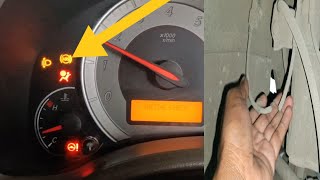
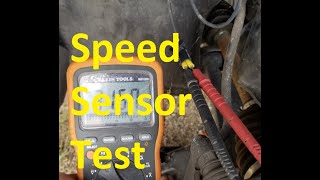
Technical definition: The SAE/ISO definition for code C1331 is 'Front Speed Sensor LH Circuit Open or Shorted 🎬 Watch: Step-by-step repair for a C1331 open circuit fault.'. This indicates the vehicle's computer detects the voltage or signal from the front left sensor is missing, inconsistent, or outside its expected operational range, pointing to a hard electrical fault in the circuit.
Can I Drive With C1331?
Yes, But With Caution. Yes, but only for short distances to a repair facility. Your regular hydraulic brakes function normally, but your Anti-lock Braking System (ABS), Traction Control, and Stability Control are disabled. This significantly increases the risk of wheel lock-up and loss of control during emergency braking or on slippery surfaces, increasing your stopping distance. Driving with these safety systems disabled is a major safety risk and causes an automatic failure of most vehicle safety inspections.
Common Causes

- Damaged or Corroded Wiring/Connector (Very Common) — Wires leading to the wheel speed sensor endure harsh conditions. Broken wires, rodent damage, or corroded connector pins cause an open or short circuit, making this the most frequent cause of C1331.
- Faulty Wheel Speed Sensor (Very Common) — The sensor's internal electronics fail from age, heat cycles, or moisture intrusion, preventing it from generating a valid speed signal.
- Rust Buildup on Mounting Surface (Rust Jacking) (Common) — Rust builds up on the sensor's mounting surface on the steering knuckle. This pushes the sensor away from the tone ring, increasing the air gap and weakening the signal enough to trigger the code.
- Damaged Tone Ring or Failing Wheel Bearing (Common) — The sensor reads a magnetic or toothed ring integrated into the wheel bearing. A failing bearing introduces wobble that damages the ring, or the ring itself cracks and delaminates from rust.
- Incorrect Bearing Installation (Less Common) — Installing a new wheel bearing backwards hides the magnetic encoder ring from the sensor, causing an immediate C1331 code. Low-quality aftermarket bearings also frequently fail out of the box.
- Faulty ABS/Skid Control Module (Rare) — The computer module processing the sensor's signal fails internally. Consider this only after exhaustively testing the sensor, wiring, and tone ring.
- Faulty Stop Lamp Switch (Rare) — A malfunctioning brake light switch sends erroneous data to the ABS module. In some Toyota and Lexus vehicles, this triggers wheel speed sensor codes as a secondary fault.
Symptoms

- ABS and Traction Control Lights Illuminated — The ABS, Traction Control (TCS), and Stability Control (VSC/ESC) warning lights illuminate immediately and stay on.
- Safety Systems Disabled — During hard braking, wheels lock up and skid. Traction and stability control systems fail to intervene on wet, icy, or loose surfaces.
- Brake Pedal Pulsates Incorrectly — A failing sensor sends erratic signals, causing the ABS module to activate unnecessarily at low speeds (under 10 mph), resulting in a pulsating brake pedal.
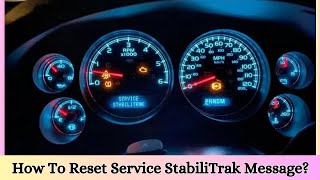
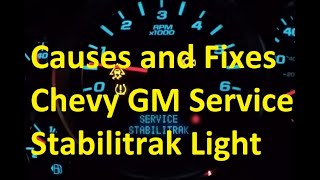
- System-Specific Dashboard Warnings — Vehicles display specific text messages on the dash, such as 'Service AdvanceTrac' (Ford) or 'Service Stabilitrak' (GM). 🎬 Watch: Common causes and fixes for GM Service Stabilitrak warnings.
- Inaccurate Speedometer (also visible on scanner) — On specific vehicle designs where wheel speed sensors provide speedometer data, the gauge reads erratically or drops to zero.
Diagnostic Flowchart
Tap your situation to follow the diagnostic path that matches what you're seeing on this code.
Common Fixes & Costs
- Repair Damaged Wiring or Connector — Parts: $10-$30, Labor: $100-$250, ~1.5 hr book time (Intermediate)
- Clean Sensor and Mounting Surface — Parts: $0-$15, Labor: $50-$120, ~0.5 hr book time (DIY)
- Replace the Wheel Speed Sensor
— Parts: $40-$180, Labor: $100-$250, ~1 hr book time
(DIY)
Toyota Camry (2018+): OEM {'part_number': '89543-06081', 'price_range': '$220-$320'} (Alt: {"brand": "Denso", "part_number": "ABS2931", "price_range": "$100-$150"}, {"brand": "Duralast", "part_number": "SU15547", "price_range": "$180-$220"})
Toyota Corolla (2019+): OEM {'part_number': '89543-12110', 'price_range': '$150-$230'} (Alt: {"brand": "NTK", "part_number": "AB2051", "price_range": "$80-$120"}) - Replace the Wheel Hub/Bearing Assembly
— Parts: $120-$400, Labor: $200-$500, ~2.5 hr book time
(Intermediate)
Toyota Camry (2018+, 2.5L): OEM {'part_number': '43550-06010', 'price_range': '$250-$400'} (Alt: {"brand": "Timken", "part_number": "HA590655", "price_range": "$150-$220"}, {"brand": "MOOG", "part_number": "513412", "price_range": "$140-$200"}) - Replace the ABS/Skid Control Module — Parts: $600-$1500, Labor: $150-$350, ~2 hr book time (Professional)
Used vs. New Parts: Buying Guide
When a used part is worth it: For a simple bolt-on wheel speed sensor, a used OEM part is cost-effective. Never buy a used wheel hub/bearing assembly due to unknown wear and high labor costs.
Donor-vehicle mileage cap: roughly under 60000 miles for the part to have meaningful remaining life.
Donor quality checklist:
- Verify exact part number match.
- Ensure wiring and connector are free of corrosion.
- Avoid parts from rust-belt states.
Decision logic:
- If The part is a complete wheel hub/bearing assembly → Always buy new from a reputable brand (OEM, Timken, SKF). The risk of premature failure and repeat labor costs is too high.
- If The part is a simple bolt-on wheel speed sensor and budget is tight → A used OEM sensor is viable, but compare prices with new aftermarket.
- If Vehicle is > 150K miles and the fix is a hub assembly → Still buy new. Labor costs dictate using a part with a warranty.
Warranty tradeoff: Used parts offer 30-90 day warranties. New aftermarket parts offer 1-year to lifetime warranties.
Worst-case if a used part fails: $300-$600 if a used hub assembly fails, requiring repeat labor.
What Happens If You Wait — Timeline
- Immediate: ABS, Traction Control, and Stability Control warning lights illuminate. Safety systems disable. (MPG impact: 0%% · Added cost: $0)
- First emergency: Wheels lock up during hard braking. Vehicle skids on wet/icy surfaces. (MPG impact: 0%% · Added cost: Variable)
- Ongoing: No direct mechanical damage occurs. The primary progression is the continuous safety risk. (MPG impact: 0%% · Added cost: $0)
- Vehicle Inspection: Vehicle automatically fails state safety inspections. (MPG impact: 0%% · Added cost: $150-$700)
Cost of Not Fixing It
- Immediate: Loss of ABS, traction control, and stability control, significantly increasing the risk of losing control during emergency braking. (Added cost: $0)
- 0-6 months: No direct mechanical damage occurs to other components. The primary cost is the elevated safety risk. (Added cost: $0)
- 6+ months: Continued driving with disabled safety systems is a major liability. It leads to preventable accidents in adverse weather conditions. (Added cost: Variable)
Diagnosis Steps

- Read Code and Identify Wheel
Use an OBD-II scanner capable of reading ABS codes to confirm C1331. This code specifically targets the Front Left (Driver's Side) sensor circuit.
Tools: OBD-II Scanner (with ABS capability) (Beginner) - Visually Inspect Wiring and Connector
Safely raise the vehicle. Meticulously inspect the wire harness for breaks, melting, or rodent damage, especially 4-6 inches from the connector. Unplug the connector and check for green or white corrosion on the pins.
Tools: Jack, Jack Stands, Flashlight (Beginner) - Clean Sensor Mounting Surface
Remove the 10mm bolt holding the sensor. Use a wire brush to thoroughly clean rust off the knuckle's mounting surface until bare metal shows. This fixes 'rust jacking' alignment issues.
Tools: Socket Set, Wire Brush, Brake Cleaner (Intermediate) - Test Circuit Continuity
Disconnect the sensor and the ABS module. Use a multimeter to check for continuity on the signal and ground wires between the two connectors. An open loop (OL) confirms a broken wire in the harness.
Tools: Multimeter, Vehicle Wiring Diagram (Advanced) - Test Sensor Resistance and Voltage
For passive 2-wire sensors, check internal resistance (typically 800-2500 Ohms). Set the multimeter to AC Volts (mV) and spin the wheel; it must generate 100-250mV. Active sensors require back-probing for a 5V/12V reference voltage.
Tools: Multimeter, Jack, Jack Stands (Advanced) - Check for Wheel Bearing Play
Grasp the raised wheel at 12 and 6 o'clock and wiggle it. Noticeable play or a grinding noise when spun indicates a bad wheel bearing, which destroys the integrated tone ring.
Tools: Jack, Jack Stands (Intermediate) - Analyze Signal with Oscilloscope
Back-probe the active sensor's signal wire. Spin the wheel to view the digital square wave. Dropouts or garbled patterns confirm a damaged magnetic tone ring on the wheel bearing.
Tools: Oscilloscope, Jack, Jack Stands (Advanced)
When This Code Triggers (Freeze-Frame Conditions)
- Vehicle Speed: 10-30 mph (The ABS module performs a self-test upon startup and at low speeds. The fault registers during the initial drive.)
- System Voltage: 11.5-14.5V (Normal operating voltage. Low voltage rarely sets this specific code.)
- Time After Ignition On: 20-80 seconds (The ABS ECU requires a short period of receiving invalid or no signal before logging the fault.)
- Brake Pedal Status: Off (The code sets during normal driving, as the module constantly monitors wheel speeds regardless of braking.)
Related Codes
- C1330 — Identical fault for the Front Right (RH) sensor. If C1330 and C1331 appear together, suspect rodent damage affecting both harnesses or a failed ABS module.
- C1332 / C1333 — Rear wheel speed sensor codes. Appearing alongside C1331 suggests a catastrophic wiring harness issue or an internal ABS control unit fault.
- U-Series Codes (e.g., U1213) — CAN bus communication errors. The C1331 fault prevents the ABS module from sending valid data. Fix C1331 first; the U-code clears automatically.
- C1425 — Open in Stop Lamp Switch Circuit. A faulty brake light switch confuses the ABS system and triggers secondary codes. Diagnose the brake switch circuit first if present.
Climate & Environmental Factors
- Road Salt / High Humidity: States in the 'Salt Belt' see a massive spike in C1331. Salt accelerates connector corrosion and causes 'rust jacking' under the sensor, pushing it out of alignment.
- Extreme Cold: Sub-zero temperatures make wiring harnesses brittle. The thin wires leading to the wheel speed sensor snap easily as the suspension articulates.
How to Talk to a Mechanic About This Code
Say this: "My scanner shows code C1331 for the front left wheel speed sensor circuit. Please inspect the wiring, connector, and tone ring before recommending a new sensor or hub."
Directs the technician to perform a proper diagnosis rather than immediately replacing the most likely part, saving money if the issue is a simple wiring break.
Avoid saying:
- 'My ABS light is on, fix it.'
- 'I need a new wheel speed sensor.'
- 'Just do whatever it takes to turn the light off.'
Questions to ask before authorizing the repair:
- Did you test the sensor's signal output and check wiring continuity?
- Did you inspect the tone ring?
- Can you show me the damaged part before I approve the repair?
Where to Take It: Dealer vs Independent vs Chain
- Dealer:
A safe but expensive option. Recommended only if the vehicle is under warranty.
Best for: Vehicles under warranty, Complex module programming
Downsides: Highest labor rates, Defaults to replacing assemblies (Typical cost: +50% vs. baseline) - Independent Shop:
Best fit for most situations. A reputable independent shop diagnoses and repairs C1331 efficiently.
Best for: Out-of-warranty vehicles, Common C1331 cases
Downsides: Quality varies (Typical cost: +0% vs. baseline) - Chain Shop:
Use with caution. Acceptable if you are certain the sensor itself is the only problem.
Best for: Simple bolt-on sensor replacement
Downsides: High pressure to upsell, Lacks advanced diagnostic equipment (Typical cost: -10% vs. baseline)
When to Walk Away From the Repair
If the estimated repair cost exceeds 40-50% of your car's private-party value, consider your options.
- Car worth $3500, fix is $1800: Walk away. The repair cost is over 50% of the car's value.
- Car worth $15000, fix is $750: Fix it. This repair is well below the threshold and is a critical safety issue.
- Car worth $5000, fix is $2000: Borderline. Get a second opinion on the diagnosis and repair estimate.
What Scan Tool You Need for This Code

Minimum: An OBD-II scanner that reads and clears ABS (Anti-lock Brake System) codes. Basic engine-only readers cannot see C1331.
C1331 is a 'C' (Chassis) code stored in the ABS module. You need ABS capability and live data to watch speed readings from all four sensors.
Budget: BlueDriver Pro (~$100) — Reads ABS codes and graphs live data to spot sensor dropouts.
Mid-range: Foxwell NT630 Plus (~$150) — Dedicated handheld scanner with deep ABS diagnostics and bi-directional tests.
Professional: Autel MaxiCOM MK808S (~$450-600) — Dealership-level diagnostics with robust live data graphing and bi-directional controls.
Rent vs buy: Auto parts stores offer free loaner tools. Confirm their specific scanner reads ABS codes.
How to Clear the Code After You Fix It
- Use an OBD-II scanner with ABS capability to clear the code.
- Perform a short test drive exceeding 20 mph.
- If the light stays off, the repair is successful.
Drive cycle (~15 minutes): Start the vehicle and accelerate above 20 mph. The ABS light turns off after its self-check if the repair was successful. A 15-minute drive with varied speeds confirms the fix.
Watch out for:
- Using a standard OBD-II scanner that cannot read ABS codes.
- Forgetting to clear the code manually after repair.
- Replacing the sensor without fixing the underlying wiring break.
Will This Fail Emissions / State Inspection?
No — by itself this code doesn't fail OBD inspection (but it can keep readiness monitors from setting, which causes a separate fail).
- California: An illuminated ABS warning light fails the safety portion of the inspection, though it does not directly affect the emissions 'smog check'.
- New York: An illuminated ABS warning light is grounds for failing the annual safety inspection.
- Texas: An illuminated ABS warning light does NOT cause a rejection of the state safety inspection. The brake system is checked for performance only.
Most Commonly Affected Vehicles
- Toyota Camry (2007-2018) — Extremely common. The root cause is almost always a broken wire inside the harness loom, 4-6 inches from the front left sensor connector.
- Toyota Corolla (2009-2019) — Frequently caused by a broken wire within the protective sheathing near the sensor. Rodent damage is highly prevalent.
- Lexus ES / RX (2007-2018) — Shares platforms with Toyota; exhibits the exact same failure pattern of broken wiring harnesses leading to the front-left sensor.
- Honda Civic / Accord (2006-2015) — Primary cause is rust buildup on the knuckle underneath the sensor ('rust jacking'). Cleaning the surface to bare metal is mandatory before replacing parts.
- Chevrolet Impala / Malibu (2014-2020) — Triggers 'Service Stabilitrak'. The cause is frequently a cracked magnetic encoder ring on the wheel bearing, requiring full hub replacement.
- Ford F-150 / Explorer (2015-2020) — Triggers 'Service AdvanceTrac'. The fault traces to a bad wheel bearing assembly containing the integrated sensor ring.
- Subaru Legacy / Outback (2010-2014) — Code often appears immediately after a wheel bearing replacement due to low-quality aftermarket bearings with weak magnetic encoders.
- Peugeot/Citroën 308 / C4 (2010-2015) — Caused by a damaged magnetic reluctor ring integrated into the wheel bearing. Full bearing replacement is required.
Manufacturer-Specific Notes
- Toyota / Lexus: C1331 specifically means 'Front Speed Sensor LH Circuit Open'. The cause is rarely the sensor itself; it is almost always a broken wire inside the protective sheathing 4-6 inches from the connector.
- Chevrolet / GM: The magnetic encoder ring built into the wheel bearing assembly cracks or delaminates from heat and age. Visual inspection of the ring on the back of the hub is crucial.
- Honda: Rust buildup on the steering knuckle where the sensor mounts ('rust jacking') increases the air gap. Always clean the mounting surface flat with a wire brush before replacing parts.
- Peugeot / Citroën: C1331 is frequently caused by a failure of the magnetic reluctor ring integral to the wheel bearing. Even if the bearing feels fine, a damaged ring requires full bearing replacement.
Real Owner Stories
2012 Toyota Camry with C1331
ABS, steering, and traction control lights were all on. A previous shop attempted a repair for rodent damage.
Outcome: The technician correctly re-spliced the chewed wires for the front left sensor. C1331 resolved.
Lesson: On Toyotas, C1331 is very often a wiring issue. Inspect the harness 4-6 inches from the connector before replacing parts.
2009 Peugeot 207 with C1331 after DIY repair
Owner replaced a noisy front wheel bearing and sensor, but the ABS light came on immediately with code C1331.
Outcome: The bypass test proved the new wheel bearing was installed backwards. The bearing had to be replaced again.
Lesson: If C1331 appears after bearing replacement, the bearing is backwards. The magnetic ring must face the sensor.
2016 Scion FR-S with C1331 - A Misdiagnosis
ABS light was on. The initial mechanic recommended replacing the entire ABS module.
Outcome: The fault traced to a broken wire in the harness leading to the sensor. The initial diagnosis was incorrect.
Lesson: Never replace a control module without exhaustively testing sensors and wiring first.
2014 Honda CR-V with intermittent ABS activation
ABS activated randomly at low speeds, causing the brake pedal to pulse. No warning light was on initially.
Outcome: The technician found thick rust on the steering knuckle mounting surface. Cleaning restored the air gap, resolving the issue.
Lesson: On Hondas, 'rust jacking' is common. Clean the mounting point to bare metal before assuming parts are bad.
How to Prevent This Code From Triggering
- Clean and protect connectors (During brake service) — Spray connector with contact cleaner and apply dielectric grease to prevent moisture intrusion.
- Apply anti-seize to sensor body (When replacing sensor) — Coat the sensor body (avoiding the tip) to prevent it from seizing in the knuckle due to rust.
- Inspect wiring harness routing (During tire rotations) — Ensure the wire is clipped into suspension mounts to prevent rubbing against the tire.
- Use rodent deterrent tape (If parking outdoors) — Wrap vulnerable harnesses in capsaicin-infused electrical tape to deter chewing.
- Clean undercarriage (Seasonally) — Wash away road salt to reduce corrosion on connectors and tone rings.
Frequently Asked Questions
Can I just clear the C1331 code?
You can clear it, but it returns immediately upon the next drive cycle when the ABS module self-tests. Because it relates to a hard electrical or mechanical fault, the underlying issue must be repaired.
Will a C1331 code cause my car to fail an inspection?
Yes. In virtually all regions, an illuminated ABS or stability control warning light results in an automatic failure for a vehicle safety inspection.
I replaced the sensor, but the C1331 code is still there. What now?
The problem is likely a broken wire between the sensor and the ABS module, or a damaged tone ring on the wheel hub. Perform a continuity test on the wiring harness and inspect the tone ring for missing teeth or delamination.
I replaced the wheel bearing and now I have a C1331 code. What happened?
The new bearing was almost certainly installed backwards. The side with the magnetic encoder ring must face the sensor. It is also possible the aftermarket bearing has a defective encoder ring.
Can a bad wheel bearing cause code C1331?
Absolutely. Most modern cars integrate the ABS tone ring into the wheel bearing assembly. If the bearing fails or develops excessive play, it damages the ring or creates an erratic signal.
What are the most common mistakes when diagnosing C1331?
The biggest mistake is immediately replacing the wheel speed sensor without testing the circuit. Often, the problem is a simple broken wire, corroded connector, or rust buildup on the mounting surface.
My mechanic wants to replace the whole wheel hub for a sensor code. Is this necessary?
Yes, it often is. On modern vehicles, the tone ring the sensor reads is permanently integrated into the wheel hub assembly. If that ring cracks or loses magnetism, replacing the entire hub is the only fix.
What is the difference between a passive and an active wheel speed sensor?
Passive 2-wire sensors generate their own AC voltage that increases with wheel speed. Active sensors are powered by the car and produce a precise digital square-wave signal. Active sensors require an oscilloscope for proper diagnosis.
Key Takeaways
- Code C1331 indicates an open or shorted circuit in the front left wheel speed sensor, immediately disabling your ABS and traction control systems.
- Before buying a $100 replacement sensor, visually inspect the wiring harness 4 to 6 inches from the connector, as broken wires are the leading cause of this fault.
- Remove the sensor and use a wire brush to clean rust off the steering knuckle mounting surface; this 'rust jacking' pushes the sensor out of alignment and causes 30% of false failures.
- If this code appears immediately after a wheel bearing replacement, the new bearing was likely installed backwards, hiding the magnetic encoder ring from the sensor.
Helpful Videos

The information in this article is provided for general reference and educational purposes only. Vehicle specifications, procedures, and part compatibility can vary by production date, trim level, and region. Always consult your vehicle's factory service manual and verify part numbers before purchasing or performing repairs. Safety-critical components such as airbags, seat belts, and braking systems should be installed by a qualified professional.
- 🎬 Helpful Videos
- What Does C1331 Mean?
- Can I Drive With C1331?
- Common Causes
- Symptoms
- Diagnostic Flowchart
- Common Fixes & Costs
- Used vs. New Parts: Buying Guide
- What Happens If You Wait — Timeline
- Cost of Not Fixing It
- Diagnosis Steps
- When This Code Triggers (Freeze-Frame Conditions)
- Related Codes
- Climate & Environmental Factors
- How to Talk to a Mechanic About This Code
- Where to Take It: Dealer vs Independent vs Chain
- When to Walk Away From the Repair
- What Scan Tool You Need for This Code
- How to Clear the Code After You Fix It
- Will This Fail Emissions / State Inspection?
- Most Commonly Affected Vehicles
- Manufacturer-Specific Notes
- Real Owner Stories
- 2012 Toyota Camry with C1331
- 2009 Peugeot 207 with C1331 after DIY repair
- 2016 Scion FR-S with C1331 - A Misdiagnosis
- 2014 Honda CR-V with intermittent ABS activation
- How to Prevent This Code From Triggering
- Frequently Asked Questions
- Can I just clear the C1331 code?
- Will a C1331 code cause my car to fail an inspection?
- I replaced the sensor, but the C1331 code is still there. What now?
- I replaced the wheel bearing and now I have a C1331 code. What happened?
- Can a bad wheel bearing cause code C1331?
- What are the most common mistakes when diagnosing C1331?
- My mechanic wants to replace the whole wheel hub for a sensor code. Is this necessary?
- What is the difference between a passive and an active wheel speed sensor?
- Key Takeaways
- 🎟️ Get 5% Off