

OBD-II Code C1323: A Comprehensive Guide for Professionals and DIYers
What C1323 Means, Why It Triggers, and How to Fix It for Good
- Code C1323 disables critical safety systems like ABS and traction control, increasing stopping distances and skid risks.
- While often pointing to a $50-$150 wheel speed sensor, C1323 definitions vary by manufacturer, indicating transmission faults on Smart cars or transfer case issues on BMWs.
- Always read live wheel speed data with an ABS-capable scanner before replacing parts; a 0 mph reading isolates the exact faulty corner.
- Inspect the ABS tone ring for rust or cracks before buying an expensive ABS module, as a $20 cracked ring is the root cause on many Ford and Transit models.
What Does C1323 Mean?

Code C1323 indicates the ABS control module detected a fault within its network of chassis-related components. It most commonly points to a problem in a wheel speed sensor circuit, which tells the computer how fast each wheel is spinning. When a sensor's signal is lost or implausible, the ABS module deactivates essential safety systems as a fail-safe.
Technical definition: C1323 is a manufacturer-specific chassis code. While it frequently flags a wheel speed sensor circuit fault, definitions vary wildly. On Citroën/Peugeot, it means 'Front wheel speed sensor signal too high'. On specific Kia models, it indicates 'No Communication With Rear Wheel Steering Control Module'. On Smart cars, it often points to a transmission communication error.
Can I Drive With C1323?
Yes, But With Caution. Yes, but exercise extreme caution. Standard hydraulic brakes function normally, but the Anti-lock Braking System (ABS), Traction Control (TCS), and Electronic Stability Control (ESC) are disabled. This significantly increases stopping distances and the risk of skidding during a panic stop or on slick roads. Driving with C1323 does not cause escalating mechanical damage, but the immediate safety risk requires prompt repair.
Common Causes

- Faulty Wheel Speed Sensor (Very Common) — The sensor is the most frequent culprit. Located in the harsh wheel hub environment, it fails from heat, moisture, and physical damage, sending an incorrect or dead signal.
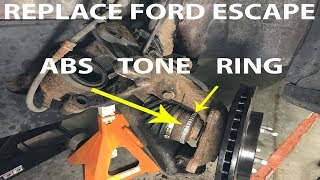
- Damaged or Rusted ABS Tone Ring (Very Common) — The sensor reads a toothed metal ring (tone ring) spinning with the wheel. Rust swells underneath the ring, causing it to crack or push into the sensor—a documented issue on Ford Escapes and Transits.
- Corroded Wiring or Connectors (Common) — The wiring harness is easily damaged by road debris or chafing. The electrical connector is a frequent failure point where pins corrode or locking tabs break, causing a loose connection.
- Failing Wheel Hub Bearing Assembly (Less Common) — Many modern vehicles integrate the tone ring into the wheel hub bearing. A worn bearing introduces excessive wobble, altering the precise air gap between the sensor and the ring.
- Low Battery Voltage (Less Common) — A weak battery causes low system voltage during startup, interrupting ABS module self-checks and generating false communication codes like C1323.
- Incorrect Module Calibration (Rare) — After replacing components like a Smart Fortwo clutch actuator or a BMW transfer case motor, the control module requires a re-learn procedure. Skipping this causes a C1323 communication fault.
- Faulty ABS Control Module (Rare) — The ABS module itself occasionally fails due to internal electronic faults or, in recalled Kia Optima models, internal brake fluid leaks causing short circuits.
Symptoms

- ABS Warning Light On — The 'ABS' light on the dashboard illuminates immediately.
- Traction/Stability Control Light On — The traction control or 'ESC' light illuminates because these systems rely on wheel speed data. On BMWs, a '4x4' warning light also appears.
- Brakes Lock Up in an Emergency — During a hard stop, wheels lock up and skid because the anti-lock function is disabled.
- Brake Pedal Pulsates at Low Speeds — A cracked tone ring sends a false slip signal, causing the ABS pump to activate unnecessarily during low-speed braking, resulting in a vibrating pedal.
Diagnostic Flowchart
Tap your situation to follow the diagnostic path that matches what you're seeing on this code.
Common Fixes & Costs
- Replace Wheel Speed Sensor
— Parts: $50 - $150, Labor: $90 - $150, ~1.2 hr book time
(DIY)
Ford Escape Hybrid (Front): OEM YL8Z-2C205-AB (Alt: Duralast SU3356, Bosch 0986594537) - Replace ABS Tone Ring
— Parts: $20 - $50, Labor: $150 - $350, ~2.5 hr book time
(Intermediate)
Ford Escape Hybrid (Front): OEM AL8Z-2C182-A (Alt: Dorman 917-539) - Replace Wheel Hub Bearing Assembly — Parts: $150 - $350, Labor: $150 - $300, ~1.8 hr book time (Intermediate)
- Perform Module Re-learn Procedure — Parts: $0, Labor: $100 - $200, ~1.0 hr book time (Professional)
- Repair or Replace ABS Control Module — Parts: $250 - $1500, Labor: $150 - $400, ~2.2 hr book time (Professional)
DIY vs Professional
- Replace Wheel Speed Sensor — Beginner: Yes
Tools: Jack, jack stands, socket set, penetrating oil, torque wrench. - Replace ABS Tone Ring — Beginner: No
Tools: Axle nut socket, breaker bar, slide hammer, hydraulic press. - Replace Wheel Hub Bearing Assembly — Beginner: No
Tools: Axle nut socket, breaker bar, hydraulic press (for press-in bearings). - Repair or Replace ABS Control Module — Beginner: No
Tools: Professional scan tool, flare nut wrenches, brake pressure bleeder.
Used vs. New Parts: Buying Guide
When a used part is worth it: Buying used wheel speed sensors or hub bearings is strongly discouraged due to high labor costs and unknown wear. The only exception is sourcing an expensive ABS module from a low-mileage donor vehicle, though mail-in repair of your original module is usually a better value.
Donor-vehicle mileage cap: roughly under 20000 miles for the part to have meaningful remaining life.
Donor quality checklist:
- Avoid used sensors and bearings entirely.
- Choose reputable aftermarket brands (Bosch, VDO, NTK) over budget options.
- Match ABS module part numbers exactly; variations exist even within the same model year.
Decision logic:
- If Part is a wheel speed sensor or wheel hub bearing. → Buy new from an OEM or reputable aftermarket brand. Savings are not worth the repeat labor risk.
- If Part is an expensive ABS control module. → Use a mail-in repair service for your original module to avoid costly dealer programming.
- If Part is a standalone ABS tone ring. → Buy new aftermarket. They are inexpensive and reliable.
Warranty tradeoff: Used parts offer 30-90 days (part only). New aftermarket offers 1-year to lifetime warranties. OEM offers 1-2 years.
Worst-case if a used part fails: $300-600 if a cheap sensor or hub fails, requiring repeat labor.
What Happens If You Wait — Timeline
- Immediate: Code C1323 sets. ABS, Traction Control, and Stability Control are disabled. (Added cost: $0)
- 1-6 months (if caused by bad wheel bearing): A failing wheel bearing begins to hum or growl, getting louder with speed. (Added cost: $50-$150 in uneven tire wear.)
- Variable (if caused by intermittent wiring short): An intermittent short sends voltage spikes to the ABS control module, eventually damaging its internal circuitry. (Added cost: $800 - $2500 for ABS module replacement.)
- Potentially at any time (if caused by bad wheel bearing): Catastrophic failure of the wheel bearing causes the wheel to seize or detach from the vehicle. (Added cost: $1500 - $5000+ for suspension and collision repairs.)
Cost of Not Fixing It
- Immediate: Disabled ABS and Stability Control significantly increase the risk of collision in panic braking or adverse weather. (Added cost: Cost of an insurance deductible or total loss of vehicle ($500 - $25,000+).)
- 1-6 months: Continued driving on a failing wheel bearing leads to complete bearing failure and wheel detachment. (Added cost: $1500 - $5000+ for suspension repairs and bodywork.)
- 6+ months: An unresolved wiring short damages the sensitive ABS control module over time. (Added cost: $800 - $2500)
Diagnosis Steps
- Read Codes with an Advanced Scanner
Use an ABS-capable OBD-II scanner to read Chassis ('C') codes. Look for a specific SAE code (like C0035-C0050) stored alongside C1323 to pinpoint the exact wheel circuit at fault.
Tools: ABS-capable OBD-II Scanner (Beginner) - Monitor Live Wheel Speed Data
Monitor live speed readings from all four wheels while driving slowly. The faulty sensor displays 0 mph, erratic jumps, or mismatched speeds compared to the healthy sensors.
Tools: ABS-capable OBD-II Scanner (Intermediate) - Visually Inspect Sensor and Tone Ring
Raise the vehicle safely. Inspect the identified wheel's sensor, wiring, and connector for chafing or corrosion. Check the tone ring on the axle for cracks, missing teeth, or heavy rust buildup.
Tools: Jack, Jack Stands, Flashlight, Wire Brush (Intermediate) - Test Passive (2-Wire) Sensor
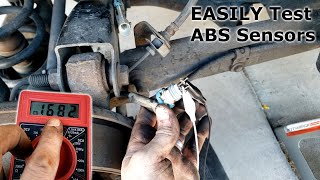
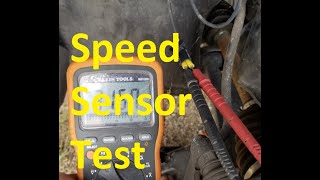
Disconnect the sensor and measure resistance (Ohms) across its terminals. Good sensors read 800-2,000 ohms; an 'OL' reading means it is dead. Next, switch to AC Volts, spin the wheel by hand, and verify it generates at least 100mV (0.1V) AC.
Tools: Multimeter, Service Manual (Advanced) - Test Active (3-Wire) Sensor
With ignition ON, check the vehicle-side connector for power (5V/12V) and ground. Back-probe the signal wire with the sensor plugged in. Spin the wheel and watch for the voltage to toggle between two values (e.g., 0.7V and 1.4V).
Tools: Multimeter, Back-probe Kit (Advanced) - Check Sensor Air Gap
Measure the physical distance between the sensor tip and the tone ring using a non-magnetic feeler gauge. A gap outside the typical 0.020" to 0.050" specification indicates a warped hub or rust buildup under the sensor mount.
Tools: Non-magnetic Feeler Gauge (Advanced) - Analyze Waveform with an Oscilloscope
Back-probe the sensor's signal wire and spin the wheel. Dropouts, missing sections, or 'noisy' patterns in the sine or square wave definitively prove a damaged tooth or cracked tone ring.
Tools: Oscilloscope, Back-probe Kit (Professional) - Check for TSBs and Recalls
Check manufacturer Technical Service Bulletins (TSBs) for your specific year and model. For example, Kia Optimas have a critical recall (SC212) requiring a parasitic draw test on the ABS module to prevent fire risks.
Tools: Online TSB/Recall Database (Beginner)
When This Code Triggers (Freeze-Frame Conditions)
- Vehicle Speed: 15-70 mph (Sets when the vehicle is in motion. The ABS module compares wheel speeds and registers a fault when one sensor reads 0 mph while others show movement.)
- Wheel Speeds (Individual): Mismatched (Three wheels report a plausible speed (e.g., 45 mph) while the faulty circuit reports 0 mph or an erratic value.)
- System Voltage: 12.0-14.8V (Usually sets during normal voltage. However, a reading under 10.5V during startup indicates a weak battery, which triggers false communication errors.)
Related Codes
- C0035 - C0050 — Standardized SAE codes for specific wheel speed sensor circuits (e.g., C0035 is Front Left). C1323 is often stored alongside these to pinpoint the exact failing wheel.
- U0121 — Indicates 'Lost Communication With ABS Control Module'. If seen with C1323, check for broader CAN bus network issues affecting multiple modules.
- P1800 — On a Smart Fortwo, seeing P1800 with C1323 confirms the fault is a communication breakdown between the transmission and chassis modules, requiring a clutch re-learn.
- 5F3A — A BMW-specific code for 'Transfer Case Malfunction'. It is the root cause when 4x4, ABS, and Brake lights illuminate together, logging C1323 in the ABS module.
Climate & Environmental Factors
- Cold Weather / Snow and Ice: Freezing temperatures turn moisture inside connectors into ice, breaking electrical contact. Packed snow physically blocks the sensor's view of the tone ring. The light often extinguishes after the vehicle thaws.
- High Humidity / Road Salt (Rust Belt): Road salt accelerates corrosion, causing rust to swell underneath the ABS tone ring until it cracks. It also attacks wiring harnesses, leading to hard-to-diagnose intermittent faults.
How to Talk to a Mechanic About This Code
Say this: "I have an ABS light and a C1323 code. Please start by reading the specific C-codes to identify the wheel, check live wheel speed data, and visually inspect that wheel's sensor, wiring, and tone ring before recommending parts."
This directs the mechanic to follow a logical diagnostic path, preventing them from immediately quoting an expensive ABS module replacement and focusing them on cheaper failures.
Avoid saying:
- 'My ABS light is on, can you fix it?'
- 'Just replace the ABS sensor.'
- 'Do whatever you think is best.'
Questions to ask before authorizing the repair:
- Did you get a specific code like C0035 that pointed to a single wheel?
- What did the live data show for that wheel's sensor when you drove it?
- Did you visually inspect the ABS tone ring for cracks or rust damage?
- If you are recommending a full hub assembly, is it because the tone ring is integrated and failed?
- What is the warranty on the recommended part and the labor?
Where to Take It: Dealer vs Independent vs Chain
- Dealer:
Best for: Vehicles under warranty, Confirmed manufacturer-specific quirks (e.g., BMW transfer case, Smart transmission issues), Vehicles with open safety recalls (e.g., Kia/Hyundai HECU fire risk)
Downsides: Highest labor rates, often 1.5-2x more than independent shops., May recommend replacing a full assembly (like a CV axle) when only the tone ring failed. (Typical cost: +75% vs. baseline) - Independent Shop:
Best fit for most situations. A trusted independent shop with modern diagnostic equipment is the most cost-effective choice for common C1323 causes.
Best for: Out-of-warranty vehicles where cost is a factor., Diagnosing and repairing common failures like wheel speed sensors, wiring, and tone rings.
Downsides: Shop quality varies widely; ensure they have an ABS-capable scanner., May not be aware of niche, manufacturer-specific TSBs. (Typical cost: +0% vs. baseline) - Chain Shop:
Use with caution. Acceptable for a straightforward sensor swap, but avoid for initial diagnosis of an unknown ABS fault.
Best for: Simple, clear-cut wheel speed sensor replacement if you've already diagnosed it yourself.
Downsides: Technician skill varies dramatically., Less likely to perform in-depth diagnostics to differentiate between a bad sensor, wiring, or tone ring., High pressure to upsell additional services. (Typical cost: -10% vs. baseline)
When to Walk Away From the Repair
If the estimated repair cost exceeds 40-50% of the car's private-party market value, seriously consider selling or trading in the vehicle.
- Car worth $5000, fix is $300: Fix it. A standard wheel speed sensor or tone ring repair is well below the threshold.
- Car worth $4000, fix is $2200: Walk away. A $2200 quote for an ABS module replacement is over 50% of the car's value.
- Car worth $8000, fix is $3500: Borderline. A quote for a BMW transfer case replacement is significant. Get a second opinion; an independent specialist will likely suggest the $100 actuator gear fix instead.
What Scan Tool You Need for This Code

Minimum: A scanner that reads and clears Chassis ('C') codes and displays live wheel speed sensor data.
A basic $20 engine-only code reader cannot see ABS codes. Without reading the specific 'C' code and watching live wheel speed data, you are replacing parts blindly.
Budget: BlueDriver Pro (~$99) — Connects to your smartphone via Bluetooth. Reads and clears ABS codes, views live data for all four wheel speed sensors simultaneously, and generates repair reports.
Mid-range: Foxwell NT630 Plus (~$150) — A dedicated handheld unit that reads engine, transmission, ABS, and SRS codes. Offers live data graphing and bidirectional tests for ABS components.
Professional: Autel MaxiCOM MK808S (~$470) — A full-featured diagnostic tablet offering OE-level diagnostics, advanced bidirectional controls (like activating the ABS pump for bleeding), and numerous service functions.
How to Clear the Code After You Fix It
- Use an ABS-capable OBD-II scan tool to clear the fault codes from the ABS module.
- Perform a short test drive. The ABS light extinguishes automatically after the vehicle exceeds 10-15 mph if the repair is successful.
- Do not disconnect the battery; this rarely clears hard chassis codes.
Drive cycle (~10 minutes): Start the vehicle and drive safely up to 20 mph. The ABS module performs a self-test once this speed threshold is crossed. If the light stays off after several minutes of varied driving, the repair is successful.
Readiness monitors affected: None. This code does not affect emissions readiness monitors.
Watch out for:
- The code returns immediately upon the first test drive if the root cause was not repaired.
- Using a basic $20 engine-only scanner fails to clear ABS module codes.
- Forgetting to perform a specific re-learn procedure on Smart or BMW models after replacing parts.
Will This Fail Emissions / State Inspection?
No — by itself this code doesn't fail OBD inspection (but it can keep readiness monitors from setting, which causes a separate fail).
- California: Passes the standard smog check, which only tests powertrain emissions. However, the illuminated ABS light flags a significant safety defect.
- New York: Fails the annual safety inspection. An illuminated ABS warning light is immediate grounds for rejection.
- Texas: Passes the safety inspection. Texas rules explicitly state an illuminated ABS lamp is not a reason for rejection, though basic brakes must pass a performance test.
Most Commonly Affected Vehicles
- Smart Fortwo (451) (2007-2014) — C1323 indicates a CAN bus communication error with the transmission, not a wheel sensor. A 'clutch relearn' procedure with a diagnostic tool usually fixes it.
- Ford Escape Hybrid (2005-2008) — Highly prone to cracked front ABS tone rings due to rust buildup.
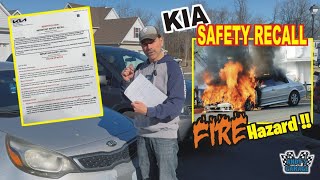
- Kia Optima (2011-2016) — Subject to a major recall (SC212) for an ABS module (HECU) that leaks internally, causing an electrical short and engine fire. Check VINs immediately.
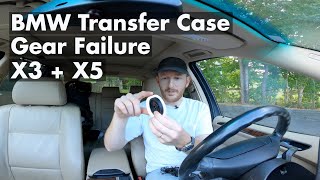
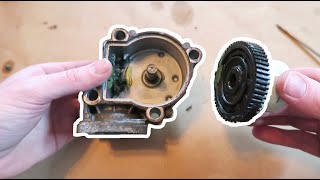
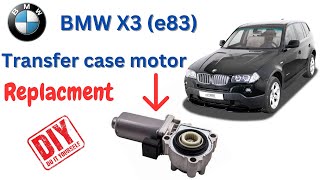
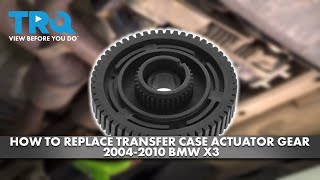
- BMW X3 (E83) (2004-2010) — A worn plastic gear inside the transfer case actuator motor triggers the 4x4/ABS/Brake lights and logs C1323 communication faults.
- Ford Transit (2015-2024) — Known for cracked rear ABS tone rings due to rust scaling on the hub. The ring is available as a separate, inexpensive part.
- Mercedes-Benz C-Class (W204) (2008-2014) — Corrosion builds up in the sensor mounting hole, pushing the sensor away from the tone ring and triggering faults.
- Volkswagen Jetta, Golf (MK6) (2010-2018) — Experience wheel speed sensor faults due to heavy corrosion in the wheel hub area.
- Subaru Impreza, Outback (1993-2009) — Older models suffer from cracked front ABS tone rings. Mid-2000s models suffer from brittle plastic clips on sensor connectors failing.
Manufacturer-Specific Notes

- Smart: Code C1323 points to a CAN communication fault with the transmission control unit, often triggered by a poorly adjusted clutch actuator. A 're-learn' procedure is required.
- Kia/Hyundai: The ABS module (HECU) is a major fire hazard subject to recall (SC212) for internal fluid leaks. Check the vehicle's VIN immediately.
- Ford: The most common cause on Escapes and Transits is a cracked ABS tone ring from rust, not a failed sensor.
- BMW: The 'trifecta' of 4x4, ABS, and Brake warning lights on xDrive models points directly to a failure of the transfer case actuator motor gear.
- Citroën/Peugeot: The code specifically translates to the sensor's signal being 'too high', indicating an electrical short to power.
Real Owner Stories
2007 Ford Escape Hybrid at 56K miles
ABS and traction control lights illuminated. The system behaved erratically.
What they tried:
- A shop diagnosed codes C1142, C1234, and C1323.
Outcome: The passenger side front ABS tone ring cracked due to rust buildup. The shop replaced only the $35 ring instead of the entire half-shaft, permanently clearing the codes.
Lesson: On Ford Escapes, a cracked tone ring from rust is extremely common and a cheap fix. Always inspect the ring before authorizing an expensive half-shaft or ABS module replacement.
2008 BMW X3 (E83) at 100K miles
The 'trifecta' of ABS, Brake, and 4x4 warning lights appeared on the dashboard.
What they tried:
- Owner researched forums and identified the transfer case actuator gear as the culprit.
Outcome: The owner replaced the worn plastic gear inside the transfer case actuator motor for under $100. All three warning lights extinguished. The worn gear caused a communication fault with the ABS module.
Lesson: On an xDrive BMW, the 4x4/ABS/Brake light combination almost always points to the transfer case actuator gear, not a wheel speed sensor. It is an inexpensive DIY fix.
2010 Smart Fortwo (451) with shifting issues
Car failed to shift, displaying the 'three bars of death' on the gear indicator alongside a C1323 code.
What they tried:
- Owner performed a manual 'clutch relearn' procedure found on a forum.
Outcome: Turning the key to 'ON', pressing the gas pedal to the floor for 10 seconds, and waiting 2 minutes resynchronized the clutch actuator. This smoothed out shifting and cleared the C1323 communication fault.
Lesson: On a Smart Fortwo, C1323 is a communication fault between the transmission and ABS. Try a simple 'clutch relearn' before replacing any parts.
2014 Kia Optima with ABS light
ABS light illuminated on a vehicle under an active ABS module (HECU) recall.
What they tried:
- Owner took the vehicle to a Kia dealership for recall service SC212.
Outcome: The technician performed a parasitic draw test. The HECU failed and was replaced for free under the recall, eliminating a severe fire risk.
Lesson: If you have a C1323 code on a 2011-2016 Kia or Hyundai, check your VIN for open recalls immediately. The HECU is a known fire risk and is replaced for free by the dealer.
How to Prevent This Code From Triggering
- Clean wheel hub and sensor mounting surfaces (Whenever brakes are serviced) — Rust buildup pushes the sensor away from the tone ring, increasing the air gap and causing a weak signal. Cleaning maintains the correct gap.
- Apply dielectric grease to sensor connectors (Anytime a sensor is disconnected) — Seals the electrical connector from moisture and road salt, preventing pin corrosion and intermittent connections.
- Perform regular brake fluid flushes (Every 2-3 years) — Removes moisture from the brake fluid, preventing internal corrosion and electrical shorts within the expensive ABS control module.
- Wash the vehicle's undercarriage (Frequently during winter months) — Washing away road salt reduces corrosion on ABS tone rings, sensor wiring, and connectors.
Frequently Asked Questions
Is it safe to drive my car with code C1323?
You can drive the car, but it is not safe. Standard brakes function, but anti-lock brakes (ABS), traction control, and stability control are disabled. This significantly increases the risk of skidding in an emergency or on slippery roads.
What are the most common mistakes when diagnosing C1323?
The biggest mistake is replacing the expensive ABS control module when the actual cause is a $20 cracked ABS tone ring or damaged wiring. Another error is replacing the wheel speed sensor without testing the wiring or checking the tone ring. Finally, mechanics often overlook a weak battery, which sets false communication codes during startup.
Can a bad battery cause code C1323?
Yes. A weak battery causes voltage to drop during the vehicle's startup self-test sequence. The ABS module interprets this low voltage as a communication error and sets code C1323, even if the sensors are perfectly fine.
Why would C1323 point to my transmission or 4x4 system?
On certain cars, C1323 is a generic communication error. On a Smart Fortwo, the ABS module must talk to the transmission; if that fails, it sets C1323. On a BMW, a fault in the 4x4 transfer case disrupts the entire chassis network.
Do I need a special scanner to diagnose this code?
Yes. A basic $20 engine code reader cannot see ABS codes; you need an advanced scanner that reads 'C' (Chassis) codes and displays live wheel speed data.
What does a bad ABS tone ring sound or feel like?
A cracked tone ring causes a grinding noise or a pulsation in the brake pedal that occurs only at very low speeds (under 5 mph) as you come to a stop.
Can I just clean the ABS sensor and tone ring to fix the problem?
Sometimes. If the tone ring is covered in thick rust or metallic brake dust, cleaning it and the sensor tip with a wire brush restores a clear signal. It is an excellent, low-cost first step.
Key Takeaways
- Code C1323 disables critical safety systems like ABS and traction control, increasing stopping distances and skid risks.
- While often pointing to a $50-$150 wheel speed sensor, C1323 definitions vary by manufacturer, indicating transmission faults on Smart cars or transfer case issues on BMWs.
- Always read live wheel speed data with an ABS-capable scanner before replacing parts; a 0 mph reading isolates the exact faulty corner.
- Inspect the ABS tone ring for rust or cracks before buying an expensive ABS module, as a $20 cracked ring is the root cause on many Ford and Transit models.
Helpful Videos



The information in this article is provided for general reference and educational purposes only. Vehicle specifications, procedures, and part compatibility can vary by production date, trim level, and region. Always consult your vehicle's factory service manual and verify part numbers before purchasing or performing repairs. Safety-critical components such as airbags, seat belts, and braking systems should be installed by a qualified professional.
- 🎬 Helpful Videos
- What Does C1323 Mean?
- Can I Drive With C1323?
- Common Causes
- Symptoms
- Diagnostic Flowchart
- Common Fixes & Costs
- DIY vs Professional
- Used vs. New Parts: Buying Guide
- What Happens If You Wait — Timeline
- Cost of Not Fixing It
- Diagnosis Steps
- When This Code Triggers (Freeze-Frame Conditions)
- Related Codes
- Climate & Environmental Factors
- How to Talk to a Mechanic About This Code
- Where to Take It: Dealer vs Independent vs Chain
- When to Walk Away From the Repair
- What Scan Tool You Need for This Code
- How to Clear the Code After You Fix It
- Will This Fail Emissions / State Inspection?
- Most Commonly Affected Vehicles
- Manufacturer-Specific Notes
- Real Owner Stories
- 2007 Ford Escape Hybrid at 56K miles
- 2008 BMW X3 (E83) at 100K miles
- 2010 Smart Fortwo (451) with shifting issues
- 2014 Kia Optima with ABS light
- How to Prevent This Code From Triggering
- Frequently Asked Questions
- Is it safe to drive my car with code C1323?
- What are the most common mistakes when diagnosing C1323?
- Can a bad battery cause code C1323?
- Why would C1323 point to my transmission or 4x4 system?
- Do I need a special scanner to diagnose this code?
- What does a bad ABS tone ring sound or feel like?
- Can I just clean the ABS sensor and tone ring to fix the problem?
- Key Takeaways
- 🎟️ Get 5% Off