

OBD-II Code C1321: Wheel Speed Sensor Signal Fault
What C1321 means, why it triggers, and how to fix it
- Code C1321 disables your ABS and traction control because the computer detects an erratic signal from a single wheel speed sensor.
- Over 80% of C1321 faults stem from a dead wheel speed sensor, a corroded wiring harness, or a rust-swollen tone ring.
- Never replace parts blindly; use an OBD-II scanner with live data to pinpoint exactly which of the 4 wheels is dropping its speed signal.
- On Peugeot and Citroën models built between 2004 and 2018, C1321 almost exclusively flags a front-left sensor or wiring failure.
- Verify your manufacturer's specific code definition, as Toyota and Subaru use C1321 to indicate suspension or internal ABS pump failures rather than wheel sensors.
What Does C1321 Mean?

Code C1321 means the ABS module detects an illogical or erratic signal from one wheel speed sensor. When a signal is present but doesn't logically match the other wheel speeds (a 'coherence' fault), the computer shuts down the ABS, traction control, and stability control systems to prevent dangerous, incorrect brake activation.
Technical definition: The SAE/ISO definition for C1321 translates to 'Wheel Speed Sensor Signal Fault' or 'Wheel Speed Sensor Signal Coherence Fault'. This indicates the signal from a specific wheel speed sensor is present but erratic, intermittent, or does not logically match the signals from the other wheel sensors when the vehicle is in motion (e.g., one sensor reading 5 mph while the others read 30 mph). The module sets this fault if the speed difference between wheels exceeds a pre-programmed threshold for a specific duration.
Can I Drive With C1321?
Yes, But With Caution. Yes, but your Anti-lock Braking System (ABS) and traction/stability control are disabled. Your vehicle's braking reverts to standard, non-ABS operation, increasing stopping distances by over 20% on loose surfaces and up to 50% in wet conditions. You also lose the ability to steer during a panic stop because the wheels will lock. Drive with extreme caution, allow for greater stopping distances, and repair the vehicle immediately.
Common Causes

- Defective Wheel Speed Sensor (Very Common) — The sensor is the most frequent point of failure. Internal electronics fail from age, heat cycles, and vibrations, causing the sensor to send an erratic or intermittent signal.
- Damaged or Corroded Wiring/Connectors (Very Common) — Exposed to harsh elements, sensor wires chafe, break internally near tight securing clips, or corrode. Connectors fill with moisture or dirt, leading to a poor or dropping signal.
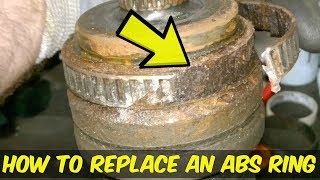
- Contaminated or Damaged Tone Ring (Common) — The sensor reads a toothed ring (reluctor ring) spinning with the wheel. Metal shavings, rust, or dirt stick to this ring and disrupt the reading. The ring also cracks, swells with rust, or loses teeth, causing an inconsistent signal.
- Failing or Incorrectly Installed Wheel Bearing (Common) — A worn wheel bearing creates excessive play, changing the distance between the sensor and the tone ring and causing an erratic signal. On modern cars with magnetic encoders integrated into the bearing seal, installing the bearing backward leaves the sensor with nothing to read.
- Incorrect Air Gap / Rust Buildup (Common) — Rust builds up on the hub surface where the sensor mounts. This increases the distance (air gap) between the sensor and the tone ring, weakening the signal.
- Tire Size Mismatch (Rare) — Installing a tire with a significantly different overall diameter on one corner causes it to rotate at a different speed. The ABS module interprets this constant speed mismatch as a coherence fault.
- Failing ABS Control Module (Very Rare) — The sensor, wiring, and tone ring are fully functional, but the ABS control module itself fails to correctly process the incoming signal due to an internal electronic fault.
Symptoms

- ABS Light On — The ABS warning light on your dashboard illuminates and stays on immediately after the fault is detected.
- Traction or Stability Control Light On — Because traction (TCS/ASR) and stability (ESC/ESP) systems rely on wheel speed sensors, their warning lights also illuminate.
- ABS Activates Incorrectly at Low Speeds — You feel the ABS pump activate (a grinding or buzzing from the brake pedal) at very low speeds, such as pulling into a parking spot on dry pavement.
- Jerky Driving or Loss of Power When Turning — A faulty sensor tricks the stability control into thinking a wheel is slipping during a turn. The system cuts engine power or applies the brakes to a specific wheel, causing a stuttering sensation.
- Disabled Advanced Driver-Assistance Systems (ADAS) — Features relying on wheel speed data, including cruise control, automatic emergency braking, and hill start assist, are completely disabled.
- Erratic Speedometer — If the vehicle uses the faulty wheel speed sensor as the primary source for vehicle speed, the speedometer behaves erratically or drops to zero.
Diagnostic Flowchart
Tap your situation to follow the diagnostic path that matches what you're seeing on this code.
Common Fixes & Costs
- Replace Wheel Speed Sensor — Parts: $50-$150, Labor: $100-$200, ~1.2 hr book time (DIY)
- Repair Damaged Wiring or Connector — Parts: $10-$40, Labor: $100-$250, ~1.5 hr book time (Intermediate)
- Clean Sensor Mounting Surface and Tone Ring — Parts: $5-$15, Labor: $50-$100, ~0.8 hr book time (DIY)
- Replace Wheel Hub Bearing Assembly — Parts: $100-$350, Labor: $200-$450, ~2.5 hr book time (Professional)
- Replace ABS Control Module — Parts: $250-$2500, Labor: $150-$300, ~1.8 hr book time (Professional)
Used vs. New Parts: Buying Guide
When a used part is worth it: Buying a used wheel speed sensor is not recommended. The cost savings are minimal compared to a new aftermarket part, and the risk of premature failure is high.
Donor-vehicle mileage cap: roughly under 40000 miles for the part to have meaningful remaining life.
Donor quality checklist:
- Verify the part number matches exactly.
- Avoid parts from vehicles in 'rust belt' regions due to corrosion.
- Visually inspect for cracks in the sensor body or damage to the wiring pigtail.
Decision logic:
- If The cost of a new OEM or quality aftermarket sensor is under $100 → Always buy new. The labor to replace a failed used part negates any initial savings.
- If The vehicle is very old and budget is the absolute primary concern → A used sensor from a low-mileage donor is a possibility, but accept the risk of a short lifespan.
- If The part is an integrated hub/sensor assembly → Never buy used. The bearing is a wear item and its remaining life is unknown.
Warranty tradeoff: Used parts typically offer a 30-day warranty. New aftermarket sensors come with a 1-year to limited lifetime warranty, while OEM parts carry a 12-month warranty.
Worst-case if a used part fails: $150-$250 (cost of repeat labor to install another sensor when the used one fails)
What Happens If You Wait — Timeline
- 0-4 weeks: Intermittent or permanent ABS/Traction Control light. ABS and stability control are disabled, creating a significant safety risk in emergency maneuvers. (MPG impact: 0%% · Added cost: $0)
- 1-3 months (if caused by bearing): If caused by a bad wheel bearing, a faint humming or growling noise begins above 40 mph. The C1321 fault becomes more frequent. (MPG impact: 0-1%% · Added cost: $0-$50 (in potential wasted fuel if brakes drag))
- 3-6 months (if caused by bearing): Bearing noise progresses to a distinct grinding that changes when turning. Excess play causes uneven tire wear and stresses the wheel hub. (MPG impact: 1-3%% · Added cost: $150-$400 (for premature tire wear))
- 6+ months (if caused by bearing): Catastrophic failure of the wheel bearing is imminent. The bearing seizes, damaging the hub and axle spindle, or the wheel detaches from the vehicle. (MPG impact: 5-10% (due to extreme friction)% · Added cost: $1,000-$2,500+ (for damage to the hub, axle, brakes, and suspension components))
Cost of Not Fixing It
- Immediate: Loss of ABS, traction control, and stability control, resulting in a significant reduction in vehicle safety during emergency braking or slippery conditions. (Added cost: N/A)
- 0-6 months: Increased and uneven tire wear if the fault is caused by a bad wheel bearing or causes the vehicle to pull to one side. (Added cost: $150-$800 (for premature tire replacement))
- 6+ months: Continued driving with a bad wheel bearing leads to catastrophic failure of the hub, potentially causing the wheel to detach from the vehicle. (Added cost: $1500-$4000+ (for suspension, axle, and body damage))
Diagnosis Steps

- Read the Fault Code and Identify the Wheel
Use an OBD-II scanner capable of reading ABS/Chassis codes to confirm C1321 and identify exactly which wheel sensor is the source of the fault (e.g., 'Front Left'). A basic engine-only scanner cannot see this code.
Tools: OBD-II Scanner (with ABS capability) (Beginner) - Live Data Analysis
View the live data for all four wheel speed sensors on your scanner while driving slowly in a straight line. The sensor dropping out, reading erratically, or showing a speed more than 2 mph different from the others is the culprit.
Tools: OBD-II Scanner (with live data) (Intermediate) - Visual Inspection of Sensor and Wiring
Safely raise the vehicle and remove the affected wheel. Visually inspect the wheel speed sensor, wiring harness, and connector for broken wires, chafing, corrosion on pins, or a sensor covered in metallic debris.
Tools: Jack, Jack Stands, Lug Wrench (Beginner) - Check for Wheel Bearing Play
Firmly grasp the tire at the 12 and 6 o'clock positions and push/pull to check for wiggle. If you feel significant play or hear a grinding noise when spinning the hub, a bad wheel bearing is causing the signal issue.
Tools: None (Intermediate) - Inspect and Clean Tone Ring and Mounting Surface
Inspect the tone ring on the axle for cracks, missing teeth, or rust buildup. Remove the sensor and thoroughly clean its mounting surface on the hub with a wire brush to ensure the correct air gap.
Tools: Brake Cleaner, Wire Brush, Socket Set (Beginner) - Test Sensor and Harness with a Multimeter
Disconnect the sensor. For passive 2-wire sensors, measure resistance (Ohms); a good sensor reads between 800-1700 Ω. Switch to AC Volts, spin the wheel, and look for a rising voltage (100mV+). For active sensors, back-probe the signal wire with the ignition on to check for a 5V/12V reference and a switching signal.
Tools: Multimeter, Repair Manual, Back-probe pins (Advanced) - Wiring Harness Integrity Check
If the sensor tests good, check the wiring. With the sensor and ABS module disconnected, test for continuity on the signal and ground wires. Perform a 'wiggle test' by shaking the harness to expose intermittent breaks.
Tools: Multimeter, Repair Manual (Advanced) - Advanced Sensor Testing (Oscilloscope)
Connect an oscilloscope to the sensor's signal wire. Spin the wheel. A passive sensor produces a clean AC sine wave; an active sensor produces a DC square wave. Dropouts or noise indicate a failing sensor or damaged tone ring.
Tools: Automotive Oscilloscope, Back-probe pins (Professional)
When This Code Triggers (Freeze-Frame Conditions)
- Vehicle Speed: > 15 mph (20 km/h) (The fault is typically set when the vehicle is moving at a steady speed.)
- Fault Duration: 20-80 seconds (The inconsistent signal must be present for a specific duration before the code is logged.)
- Wheel Speed Mismatch: > 3-5 mph (The code triggers when one wheel's speed reading differs from the others by more than a set threshold.)
- System Status: No other major ABS faults present (The module is online and functioning, but receiving illogical data from a single sensor.)
Related Codes
- C1320 — C1320 indicates an 'Open or Short Circuit' for the wheel speed sensor (a total loss of signal). C1321 is a 'Coherence' fault, meaning the module receives a signal, but it is erratic or nonsensical.
- C0031-C0050 — These are generic SAE-standard codes for wheel speed sensor faults. C1321 is often a manufacturer-specific version of one of these codes with stricter criteria for triggering.
- C1335, C1330 — Manufacturer-specific codes for the other wheel speed sensors. They follow the exact same diagnostic principles as C1321 but point to a different corner of the vehicle.
- U0121 — Means 'Lost Communication With ABS Control Module'. If you see U0121, the entire ABS module is offline due to a power or network problem. C1321 means the module is online but receiving bad sensor data.
Climate & Environmental Factors
- Cold Weather / Snow and Ice: Moisture freezes within sensor connectors, causing intermittent signal loss. Packed snow and ice physically block the sensor from reading the tone ring, triggering a fault that resolves once the ice melts.
- Humidity and Road Salt ('Rust Belt' regions): Road salt dramatically accelerates corrosion. This destroys thin wires in the sensor harness, corrodes connector pins, and causes the tone ring to swell or delaminate with rust, leading to a high failure rate.
How to Talk to a Mechanic About This Code
Say this: "I have an ABS light on and my scanner shows code C1321, pointing to a wheel speed sensor signal fault. I'd like to book a diagnostic appointment. Please check the live data from all four sensors, and inspect the sensor, wiring, tone ring, and wheel bearing play at the affected corner before recommending a repair."
This directs the mechanic to perform a thorough diagnosis of the entire system rather than just replacing the most obvious part, saving you money on unnecessary parts and labor.
Avoid saying:
- My ABS light is on, can you fix it?
- Just replace the wheel speed sensor.
- Do whatever you think is best.
Questions to ask before authorizing the repair:
- What did the live data show for the wheel speeds?
- Did you inspect the tone ring for damage and the sensor mounting surface for corrosion?
- Did you test the sensor itself and the wiring harness for continuity?
- Is there any play in the wheel bearing?
- Can I see the old part you're replacing?
Where to Take It: Dealer vs Independent vs Chain
- Dealer:
A good but expensive option. Best for complex cases or if you want the manufacturer's expertise, but overkill for a common C1321 fault.
Best for: Vehicles under warranty, Complex electrical issues or manufacturer-specific quirks (e.g., BMW DSC issues), When you've already tried an independent shop without success
Downsides: Highest labor rates and parts costs, Defaults to replacing entire assemblies (e.g., hub with bearing) when a smaller component is the cause (Typical cost: +40% vs. baseline) - Independent Shop:
Best fit for this code. A reputable independent shop has the right balance of diagnostic skill and cost-effectiveness to correctly identify and fix the root cause.
Best for: Most out-of-warranty C1321 repairs, Cost-conscious owners who want a proper diagnosis, Building a long-term relationship with a trusted mechanic
Downsides: Quality and diagnostic capabilities vary widely, May lack the latest manufacturer-specific tools for brand new models (Typical cost: +0% vs. baseline) - Chain Shop:
Use with caution. Acceptable if you have already diagnosed the problem and just need a simple sensor replacement. Avoid for initial diagnosis of an intermittent fault.
Best for: Simple, pre-diagnosed repairs (e.g., 'I know my front-left sensor is bad, please replace it.'), Brake jobs and tire services
Downsides: Technician skill varies dramatically, High pressure to upsell services, Often lack advanced diagnostic tools for non-obvious electrical faults (Typical cost: -10% vs. baseline)
When to Walk Away From the Repair
If the estimated repair cost exceeds 40% of the car's private-party value, seriously consider selling or trading it in instead of repairing.
- Car worth $4000, fix is $250: Fix it. A $250 repair for a new sensor is well below the threshold.
- Car worth $4000, fix is $600: Fix it. A $600 wheel bearing replacement is a reasonable investment to keep a $4,000 car safe.
- Car worth $3000, fix is $1800: Walk away. The repair cost is 60% of the vehicle's value. It is not financially sound to invest this much in an aging car.
What Scan Tool You Need for This Code

Minimum: An OBD-II reader that specifically reads and clears ABS/SRS (Chassis) codes and displays live sensor data.
A standard $20 engine code reader cannot see ABS codes like C1321. It will report 'No Codes Found', which is misleading. You must have a tool that communicates with the ABS module and displays live data to identify the faulty sensor.
Budget: Autel AutoLink AL619 / Foxwell NT301 (ABS capable version) (~$70) — Reads and clears engine and ABS codes. Some models graph live data, essential for seeing the faulty sensor's signal drop out during a test drive.
Mid-range: Innova 5210 / BlueDriver Pro / OBDLink MX+ (~$120) — Provides full system scanning, superior live data graphing on your smartphone, and includes repair suggestions and freeze-frame data.
Professional: Autel MaxiCOM MK808 / Launch CRP919E (~$450-650) — Offers full bidirectional control to test components like the ABS pump, manufacturer-level diagnostics, and advanced service functions.
How to Clear the Code After You Fix It
- Use an ABS-capable OBD-II scan tool to clear the fault codes.
- Turn the ignition off, wait 15 seconds, and restart the engine.
- Perform a short test drive including turns and smooth stops.
Drive cycle (~15 minutes): Drive the vehicle for 15 minutes at speeds above 15 mph. The ABS system performs a self-test upon startup and during the drive. If the repair was successful, the ABS light remains off.
Readiness monitors affected: This is an ABS/Chassis code and does not affect engine emissions readiness monitors.
Watch out for:
- Using a basic engine-only code reader that cannot access the ABS module to clear the code.
- Disconnecting the battery fails to clear a 'hard' fault from the ABS module's memory.
- The light returns immediately if the underlying physical problem has not been fixed.
Will This Fail Emissions / State Inspection?
Yes — this code typically fails an OBD-II emissions inspection.
- California: An illuminated ABS light is grounds for a safety inspection failure. Many inspection stations will not proceed with the smog test if the ABS light is on.
- New York: The NYS vehicle safety inspection requires all dashboard warning lights to function correctly. An ABS light that remains on is an automatic failure.
- Texas: The ABS warning lamp is checked during the annual safety inspection. If the light stays on, the vehicle fails the inspection.
Most Commonly Affected Vehicles
- Peugeot 308 / Partner / Berlingo (2007-2018) — Extremely prone to C1321, almost exclusively for the front left sensor. Often caused by wiring harness issues near the connector or body clips.
- Citroën C4 / C4 Picasso (2004-2018) — Frequently experiences C1321 pointing to the front left wheel speed sensor. Replacing the sensor sometimes makes the fault permanent until codes are cleared with a Diagbox tool.
- BMW 1 Series / 3 Series (E8x, E9x) (2004-2013) — Commonly triggers ABS/DSC lights for this fault. A key symptom is a jerky loss of power when turning. Often caused by a corroded and swollen rear reluctor ring on the driveshaft.
- Hyundai Ioniq / Sonata / Elantra (2011-2023) — ABS and traction control lights due to wheel speed sensor faults are a common complaint, typically caused by a failed sensor or damaged wire.
- Ford Expedition / F-150 (2003-2008) — Logs this code for wheel speed sensor faults that start intermittently before becoming permanent. Water intrusion into connectors is a frequent cause.
- Citroën / Peugeot / Fiat Dispatch / Expert / Scudo (2007-2016) — These vans use a magnetic encoder built into the wheel bearing seal. C1321 is frequently caused by failure of this bearing or damage to the wiring harness.
- Toyota / Lexus Avalon / ES300 / 4Runner (1997-2005) — On older models, this code triggers for a standard wheel sensor failure. However, on some Toyota models, C1321 indicates a suspension solenoid fault instead.
Manufacturer-Specific Notes
- Peugeot/Citroën: C1321 almost invariably refers to the 'Front Left Wheel Speed Sensor Signal Fault' and is notorious for being caused by wiring harness problems near the sensor connector.
- Toyota/Lexus: On some models, C1321 means 'Open Circuit in Right Front Damper Solenoid Circuit', relating to the electronically controlled suspension system, not the ABS.
- Subaru: On certain models, C1321 is defined as 'FL INLET SOLENOID VALVE SYSTEM', indicating a fault within the ABS hydraulic control unit itself, not a wheel speed sensor.
- BMW: A failing sensor or swollen reluctor ring causes a distinct symptom of engine power being cut and jerky braking during turns as the DSC system falsely activates.
Real Owner Stories
2012 Peugeot 308 1.6 HDI with ABS/ESP fault lights
ABS, ESP, and engine management lights appeared on the dashboard. A diagnostic scan confirmed code C1321 for the front left ABS sensor.
What they tried:
- The owner cleared the codes, but they returned.
- They purchased a new aftermarket ABS sensor.
- The vehicle was raised, the wheel removed, and the old sensor unbolted from behind the hub.
- The new sensor was compared to the old one to ensure an exact match before installation.
Outcome: Replacing the front left ABS sensor was the correct fix. The new sensor was installed, and the fault was resolved, turning off the warning lights.
Lesson: On many Peugeot/Citroën models, C1321 almost always points to the front left sensor. It is a common and straightforward DIY replacement that often solves the problem.
Citroën C4 Picasso with intermittent ABS/Gearbox fault
The car intermittently displayed 'ABS, parking brake, and gearbox fault' messages and went into limp mode. A Diagbox scan pointed to C1321 - front LH wheel sensor signal fault.
What they tried:
- Clearing the faults made the problem go away temporarily, but it became more frequent.
- The owner replaced the front left wheel speed sensor, but the fault immediately became permanent.
- Further investigation suspected the new sensor was faulty or the wiring harness was the issue.
Outcome: The issue was traced to a damaged wiring loom. Repairing the wires cleared the C1321 code and associated warning lights.
Lesson: If replacing the sensor makes the problem worse or doesn't fix it, thoroughly inspect the wiring harness for breaks or corrosion, a known issue on these models.
BMW E90 with DSC/ABS lights and jerky turning
The owner experienced ABS and DSC lights, and the car jerked or cut power during turns as the stability control incorrectly activated.
What they tried:
- The owner replaced the rear wheel speed sensor associated with the code, but the problem persisted.
- A visual inspection of the tone ring on the driveshaft revealed it was heavily corroded and swollen with rust, causing it to split.
Outcome: The root cause was the failed reluctor ring, not the sensor. The corroded ring was cut off, the driveshaft cleaned, and a new ring pressed on, clearing the fault codes.
Lesson: For coherence faults, always inspect the tone ring for damage, rust, or debris before condemning the sensor, especially on BMWs where reluctor ring failure is common.
How to Prevent This Code From Triggering
- Perform Periodic Brake Service (Every 1-2 years or 30,000 miles) — Cleaning away brake dust and corrosion from calipers and hardware is a perfect time to inspect and clean the exposed ABS sensor head and tone ring, preventing metallic debris buildup.
- Inspect and Protect Wiring (During every tire rotation or oil change) — Visually check the sensor wiring for chafing or cracks. Applying dielectric grease to the connector plug prevents moisture intrusion and corrosion.
- Address Wheel Bearing Noise Immediately (As soon as symptoms appear) — A humming noise indicates a failing bearing. Early replacement prevents much costlier damage to the hub and suspension.
- Regularly Wash Underbody, Especially in 'Rust Belt' (Monthly during winter) — Washing the undercarriage removes road salt and de-icing chemicals that dramatically accelerate corrosion of sensor connectors, wiring, and tone rings.
Frequently Asked Questions
What are the most common misdiagnoses for a C1321 code?
A common mistake is replacing the sensor without checking for rust buildup on the mounting surface, which increases the air gap. Another pitfall is overlooking damage to the wiring harness further up from the sensor. Finally, if the fault appears after a wheel bearing replacement, the new bearing was likely installed backward.
Can a bad wheel bearing cause a C1321 code?
Yes. A worn wheel bearing introduces excessive play in the hub, constantly changing the distance between the sensor and the tone ring. This creates an erratic signal that the ABS module flags as a coherence fault.
Can incorrect tire size cause a C1321 code?
Yes. The ABS module expects all wheels to rotate at similar speeds. If you install a tire with a significantly different diameter, that wheel spins at a different rate, triggering a coherence fault.
Why did the ABS light come on, but then go away?
This indicates an intermittent fault. The cause is usually a wire starting to break, a loose connector with moisture in it, or a sensor failing due to heat. The fault becomes more frequent over time until it is permanent.
My mechanic replaced the sensor, but the light came back on. What now?
If a new sensor doesn't fix it, the problem lies in the wiring, tone ring, or wheel bearing. Inspect the wiring harness for intermittent breaks and check the tone ring for cracks or missing teeth. Verify the wheel bearing has no play and ensure the correct aftermarket part was used.
Is it safe to drive with a C1321 code?
You can drive the car, but it is not safe. Your ABS and stability control will not work, increasing stopping distance by up to 50% in wet conditions and causing a loss of steering control during hard braking.
Can I fix a C1321 code myself?
Yes, replacing a wheel speed sensor or cleaning the sensor and tone ring are straightforward DIY jobs requiring basic hand tools. Always start with a visual inspection and a scan tool to confirm the faulty wheel.
Will clearing the code fix the problem?
No. The code reports a real, physical fault. The ABS module performs a self-test as soon as you start driving, and if the fault condition still exists, the code and warning lights return immediately.
Key Takeaways
- Code C1321 disables your ABS and traction control because the computer detects an erratic signal from a single wheel speed sensor.
- Over 80% of C1321 faults stem from a dead wheel speed sensor, a corroded wiring harness, or a rust-swollen tone ring.
- Never replace parts blindly; use an OBD-II scanner with live data to pinpoint exactly which of the 4 wheels is dropping its speed signal.
- On Peugeot and Citroën models built between 2004 and 2018, C1321 almost exclusively flags a front-left sensor or wiring failure.
- Verify your manufacturer's specific code definition, as Toyota and Subaru use C1321 to indicate suspension or internal ABS pump failures rather than wheel sensors.
Helpful Videos



The information in this article is provided for general reference and educational purposes only. Vehicle specifications, procedures, and part compatibility can vary by production date, trim level, and region. Always consult your vehicle's factory service manual and verify part numbers before purchasing or performing repairs. Safety-critical components such as airbags, seat belts, and braking systems should be installed by a qualified professional.
- 🎬 Helpful Videos
- What Does C1321 Mean?
- Can I Drive With C1321?
- Common Causes
- Symptoms
- Diagnostic Flowchart
- Common Fixes & Costs
- Used vs. New Parts: Buying Guide
- What Happens If You Wait — Timeline
- Cost of Not Fixing It
- Diagnosis Steps
- When This Code Triggers (Freeze-Frame Conditions)
- Related Codes
- Climate & Environmental Factors
- How to Talk to a Mechanic About This Code
- Where to Take It: Dealer vs Independent vs Chain
- When to Walk Away From the Repair
- What Scan Tool You Need for This Code
- How to Clear the Code After You Fix It
- Will This Fail Emissions / State Inspection?
- Most Commonly Affected Vehicles
- Manufacturer-Specific Notes
- Real Owner Stories
- 2012 Peugeot 308 1.6 HDI with ABS/ESP fault lights
- Citroën C4 Picasso with intermittent ABS/Gearbox fault
- BMW E90 with DSC/ABS lights and jerky turning
- How to Prevent This Code From Triggering
- Frequently Asked Questions
- What are the most common misdiagnoses for a C1321 code?
- Can a bad wheel bearing cause a C1321 code?
- Can incorrect tire size cause a C1321 code?
- Why did the ABS light come on, but then go away?
- My mechanic replaced the sensor, but the light came back on. What now?
- Is it safe to drive with a C1321 code?
- Can I fix a C1321 code myself?
- Will clearing the code fix the problem?
- Key Takeaways
- 🎟️ Get 5% Off