

OBD-II Code C1314: Left Rear Tire Pressure Sensor Communication Failure
The Ultimate Guide to Diagnosing and Fixing C1314
- On Hyundai, Kia, GM, and Nissan vehicles, C1314 confirms the left rear tire pressure sensor stopped transmitting data.
- On Toyota, Ford, and VW/Audi models, C1314 is NOT a TPMS code; it indicates critical ABS or Engine Control Module failures requiring immediate, separate diagnosis.
- A dead internal sensor battery causes over 80% of C1314 codes on vehicles older than 7 years.
- Replacing all four sensors simultaneously saves $100+ in repeated labor costs when the first sensor fails due to a depleted 7-to-10-year battery.
What Does C1314 Mean?

C1314 indicates the vehicle's main computer lost communication with the left rear tire pressure sensor. The sensor transmits radio frequency (RF) signals containing pressure and temperature data. When the computer stops receiving these signals for a set period (e.g., 9 minutes driving above 15 mph), it logs C1314 and illuminates the TPMS warning light.
Technical definition: The official SAE/OBD-II definition for C1314 on General Motors, Hyundai, and Kia vehicles is 'Rear Left TPMS Sensor Radio Frequency Channel Failure'. This means the TPMS control module has not received a valid signal from the left rear wheel's pressure sensor. **Critically, for Toyota, Ford, and Volkswagen/Audi, C1314 points to entirely different systems. On a Toyota, it means 'Short Circuit in Main Relay 2' (ABS system); on a Ford, 'Rear Left Wheel Brake Hydraulic Pressure Transducer Circuit Failure'; and on VW/Audi, 01314 means 'Engine Control Module: No Communications'. Misdiagnosing this code on these makes is a costly error.**
Can I Drive With C1314?
Yes, But With Caution. Yes, but your TPMS is disabled. The system cannot warn you if the left rear tire loses pressure, increasing the risk of a sudden blowout and loss of control at highway speeds. Repair this promptly to restore safety monitoring.
Common Causes

- Dead TPMS Sensor Battery (Very Common) — Each TPMS sensor is powered by a sealed internal battery with a 7-10 year lifespan. Battery depletion is the primary cause of C1314 on vehicles over five years old.
- Internal TPMS Sensor Failure (Common) — The sensor's internal electronics fail due to extreme heat cycles, age, or manufacturing defects. It may respond to a manual trigger from a tool but fail to transmit automatically while driving.
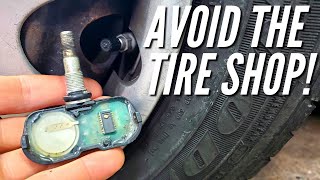
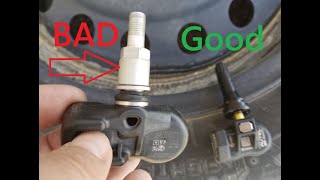
- Physical Damage or Corrosion (Less Common) — The sensor is vulnerable to damage during tire installation, severe pothole impacts, or winter road salt corrosion. This cracks the housing, destroys internal components, or seizes the valve stem. 🎬 Watch: How to replace TPMS sensors without a tire machine
- Incorrect or Incompatible Sensor (Less Common) — Installing a sensor with the wrong frequency (e.g., 315 MHz vs. 433 MHz) or communication protocol prevents it from communicating with the vehicle's TPMS module.
- Radio Frequency (RF) Interference (Rare) — Strong radio signals from aftermarket dash cams, phone chargers, or thick aftermarket alloy wheels overpower or block the low-power TPMS signal.
- Faulty TPMS Receiver, Antenna, or Wiring (Rare) — The main TPMS module, wheel-well antenna, or connecting wiring fails due to corrosion or impact damage. This usually triggers codes for multiple sensors simultaneously.
Symptoms

- Flashing then Solid TPMS Warning Light — The TPMS warning light flashes for 60-90 seconds upon starting the vehicle, then remains solid. This specific sequence guarantees a TPMS system fault, not just low tire pressure.
- 'Service Tire Monitor System' Message — A text message displays on the instrument cluster, such as 'Service Tire Monitor System' or 'TPMS Fault', alongside the warning light.
- No Pressure Reading for Left Rear Tire — Vehicles that display individual tire pressures show a blank reading or dashes ('--') for the left rear tire.
Diagnostic Flowchart
Tap your situation to follow the diagnostic path that matches what you're seeing on this code.
Common Fixes & Costs
- Replace the Left Rear TPMS Sensor and Relearn — Parts: $30-$150, Labor: $25-$100, ~0.5 hr book time (Professional)
- Replace All Four TPMS Sensors — Parts: $100-$400, Labor: $100-$200, ~1.2 hr book time (Professional)
- Perform TPMS Relearn Procedure — Parts: $0, Labor: $0-$50, ~0.3 hr book time (Intermediate)
- Repair Damaged Wiring or Connector — Parts: $10-$30, Labor: $100-$300, ~1.5 hr book time (Professional)
- Replace the TPMS Control Module/Receiver — Parts: $150-$500, Labor: $100-$200, ~1.0 hr book time (Professional)
Used vs. New Parts: Buying Guide
When a used part is worth it: Never buy a used TPMS sensor. The primary failure mode is a depleted internal battery with a finite 7-10 year lifespan. A used sensor guarantees premature failure and repeated labor costs.
Donor quality checklist:
- Avoid used sensors entirely.
- Ensure new aftermarket sensors match the exact OEM frequency (315 MHz or 433 MHz).
Decision logic:
- If The vehicle is more than 5 years old → Buy a new OEM or reputable aftermarket sensor.
- If You are replacing one failed sensor due to age → Buy four new sensors to save on repeated labor costs.
- If Budget is tight → Choose a new, branded aftermarket sensor (e.g., Schrader, Standard Motor Products) over a used OEM part.
Warranty tradeoff: Used parts carry no warranty. New aftermarket sensors typically offer a 1-2 year warranty, while OEM provides a 1-year warranty.
Worst-case if a used part fails: $150 for repeat labor to dismount the tire, replace a failed used sensor, and re-balance.
What Happens If You Wait — Timeline
- Immediate: The TPMS light flashes for 60-90 seconds at startup, then stays solid. The vehicle cannot warn of low pressure in the left rear tire. (MPG impact: 0%% · Added cost: $0)
- 1-6 months: An undetected slow leak develops. Driving on the underinflated tire increases rolling resistance and causes uneven tread wear. (MPG impact: 1-3%% · Added cost: $20-$50 in wasted fuel and accelerated tire wear.)
- 3-9 months: Continued driving on a significantly underinflated tire destroys its internal structure from excessive heat, requiring premature replacement. (MPG impact: 3-5%% · Added cost: $150-$400 for a new tire.)
- 6+ months: The risk of a catastrophic tire blowout at highway speeds becomes severe, leading to loss of control and accidents. (MPG impact: N/A% · Added cost: $2,000-$5,000+ for accident repairs and towing.)
Cost of Not Fixing It
- Immediate: Loss of safety warning for low tire pressure on the left rear tire. Annoying flashing warning light on the dash. (Added cost: $0)
- 1-6 months: An undetected slow leak causes accelerated, uneven tire wear and destroys the tire's internal structure from excessive heat. (Added cost: $150-$400 (for a replacement tire))
- 6+ months: Catastrophic tire blowout at highway speeds due to severe underinflation, leading to loss of control and vehicle damage. (Added cost: $2,000-$5,000+)
Diagnosis Steps
- Scan for Codes and Confirm Vehicle Make
Use an OBD-II scanner to confirm C1314 is the active code. Confirm the vehicle make. If it is a Toyota, Ford, or VW/Audi, this code is NOT for the TPMS system; stop and consult a manufacturer-specific ABS/ECU diagnostic chart.
Tools: OBD-II Scanner (Beginner) - Verify Tire Pressures Manually
Use an accurate tire pressure gauge to check all four tires. Inflate them to the pressure specified on the driver's door jamb placard to rule out simple low pressure.
Tools: Accurate Tire Pressure Gauge (Beginner) - Test the Sensor with a TPMS Diagnostic Tool
Place a TPMS activation tool near the left rear tire's valve stem and trigger the sensor. If the tool gets no response, or live data shows voltage below 1.8Vdc, the sensor is dead and requires replacement.
Tools: TPMS Diagnostic Tool (Intermediate) - Rotate Tires to Isolate the Fault
If you lack a TPMS tool, swap the left rear wheel with the left front wheel. Clear the codes and drive for 20 minutes above 15 mph. If the code changes to C1312 (Left Front), the sensor is bad. If C1314 remains, the car's wiring or receiver is faulty.
Tools: Lug wrench, car jack, jack stands, OBD-II Scanner (Intermediate) - Check for Radio Frequency (RF) Interference
Unplug all non-essential 12V accessories (dash cams, chargers). Clear the code and drive to see if it returns. On modern Hyundai/Kia models, check TSBs regarding interference from Surround View Monitor cables.
Tools: None (Beginner) - Test TPMS Receiver, Antenna, and Wiring
If the fault stays at the left rear corner after a tire rotation, locate the TPMS receiver or wheel-well antenna. Use a multimeter to verify 12V power and solid ground at the module. Check the signal wire for continuity (0 Ohms) and ensure it is not shorted to ground ('OL').
Tools: Digital Multimeter, Service Manual, Wiring Diagram (Advanced)
When This Code Triggers (Freeze-Frame Conditions)
- Vehicle Speed: 15-25+ MPH (The vehicle must be driven continuously above a minimum speed (typically 15-25 MPH) for 5-15 minutes for the TPMS module to flag a missing sensor signal.)
- TPMS System Status: Active / Monitoring (The fault logs when the TPMS control unit actively listens for sensor transmissions and receives no valid message from the left rear sensor.)
- Time Since Key-On: > 10 minutes (The code sets after a period of driving, not immediately at startup, as the system requires time to identify a non-reporting sensor.)
- Sensor Battery Voltage: Below 1.8V (The underlying cause is the sensor's battery voltage dropping too low to power the transmitter, especially under load or in cold weather.)
Related Codes
- C1312 — Identical fault for the Front Left TPMS sensor. Swapping the left rear wheel to the front left and getting C1312 confirms the sensor is dead.
- C1313 — Identical fault for the Front Right TPMS sensor.
- C1315 — Identical fault for the Rear Right TPMS sensor.
- C1662 — Auto-learning Failure on Hyundai/Kia. This is a secondary symptom of C1314; the system cannot learn a sensor that isn't transmitting.
Climate & Environmental Factors
- Cold Weather: Extreme cold reduces the voltage output of the sensor's internal battery. This pushes an aging battery below the transmission threshold, triggering C1314.
- High Heat: Prolonged exposure to high ambient temperatures accelerates the chemical degradation of the internal battery, shortening its lifespan.
- High Humidity / Road Salt: Winter road salt corrodes metal valve stems, causing air leaks, damaging electronics, or seizing the stem to the wheel.
How to Talk to a Mechanic About This Code
Say this: "I have a flashing TPMS light and a C1314 code pointing to the left rear sensor. Can you test the sensor's battery and signal transmission before replacing it?"
This directs the shop to perform a specific diagnostic test rather than blindly replacing parts or starting with an expensive vehicle-side diagnosis.
Avoid saying:
- 'My tire light is on.'
- 'Just replace the bad sensor.'
- 'Whatever you think is best.'
Questions to ask before authorizing the repair:
- Did your TPMS tool confirm the sensor is not transmitting?
- If a new sensor doesn't fix the light, what is your diagnostic process for the receiver or wiring?
- Does the quote include the sensor, labor, and the relearn procedure?
- What is the warranty on the new sensor and labor?
Where to Take It: Dealer vs Independent vs Chain
- Dealer:
Recommended only if the vehicle is under warranty or if independent shops fail to resolve a wiring issue.
Best for: Vehicles under warranty, Complex cases where a new sensor doesn't solve the problem, Owners who prefer OEM parts exclusively
Downsides: Highest cost for parts and labor, often double the price of independent shops. (Typical cost: +75% vs. baseline) - Independent Shop:
Excellent fit. A good independent shop handles this repair cost-effectively.
Best for: Out-of-warranty vehicles where cost is a factor, Building a relationship with a trusted mechanic
Downsides: TPMS-specific tool capabilities vary; ensure they have modern diagnostic equipment. (Typical cost: +0% vs. baseline) - Chain Shop:
Best fit. Tire-focused chains specialize in this exact repair, offer the best prices, and perform it daily.
Best for: Convenience and competitive pricing at national tire chains (Discount Tire, Costco), Bundling sensor replacement with new tires
Downsides: General service chains (Jiffy Lube) lack experienced technicians for complex diagnostics. (Typical cost: -10% vs. baseline)
When to Walk Away From the Repair
If the total estimated repair cost exceeds 40-50% of the vehicle's current private-party value, consider selling or trading it in.
- Car worth $8000, fix is $350: Fix it. This is a low-cost safety repair well below the threshold.
- Car worth $3000, fix is $350: Fix it. The cost is low, and the safety benefit is high.
- Car worth $2500, fix is $1500: Walk away. If C1314 is part of a larger $1500 repair list, it exceeds 50% of the car's value.
What Scan Tool You Need for This Code

Minimum: A dedicated TPMS diagnostic tool. A basic OBD-II code reader cannot activate sensors or perform relearn procedures.
A simple code reader only shows the 'C1314' fault. It cannot test if the sensor battery is dead or perform the required relearn procedure after replacement.
Budget: VXDAS EL-50448 or basic activation tool (~$20) — Triggers the sensor to test if it is dead. It cannot perform OBD relearns.
Mid-range: Autel MaxiTPMS TS508WF (~$240) — Activates sensors, displays battery status, reads/clears TPMS codes, and performs vehicle-specific OBD-II relearn procedures.
Professional: Foxwell NT809TS or Autel MaxiCOM MK900-TS (~$400-900) — Combines professional-grade TPMS capabilities with comprehensive, all-system bidirectional OBD-II diagnostics.
Rent vs buy: Auto parts stores rarely rent complex TPMS relearn tools. Buying a mid-range tool makes financial sense if you plan to DIY this repair or manage TPMS on multiple cars.
How to Clear the Code After You Fix It
- Use an OBD-II scan tool to clear the C1314 fault code from the TPMS module.
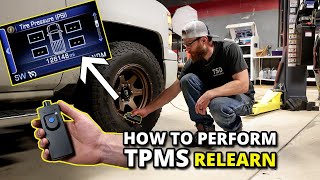
- Perform the vehicle-specific TPMS relearn procedure to register the new sensor ID.
- Drive the vehicle for 15-20 minutes above 25 MPH to allow the system to verify communication and extinguish the light.
Drive cycle (~20 minutes): Drive the vehicle for at least 15-20 minutes at speeds over 25 mph. This allows 'auto-relearn' vehicles to detect sensors and confirms the fault is resolved.
Readiness monitors affected: None
Watch out for:
- Clearing the code without fixing the dead sensor causes the light to return immediately.
- Failing to follow the exact relearn procedure for your specific make and model prevents the new sensor from syncing.
Will This Fail Emissions / State Inspection?
No — by itself this code doesn't fail OBD inspection (but it can keep readiness monitors from setting, which causes a separate fail).
- California: An illuminated TPMS light does NOT cause a Smog Check failure. The test focuses strictly on emissions components.
- New York: A non-functional TPMS system does NOT cause a failure on the NYS safety inspection, despite common misconceptions.
- Texas: A TPMS light does NOT cause a failure of the Texas state safety inspection.
Most Commonly Affected Vehicles
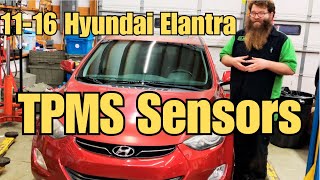
- Hyundai Elantra (2011-2016) — Extremely common code as original sensors reach end-of-life. Ensure the correct part number is used, as 2011-2013 models differ from 2014-2016.
- Kia Sorento (2011-2020) — A primary indicator of sensor battery failure on XM generation models. TSB SA213 addresses false warnings on 2016 models.
- Hyundai Santa Fe (2012-2022) — TSB 23-BE-001H notes RF interference from Surround View Monitor cables causes this on 2019+ models. Standard battery failure applies to older years.
- Chevrolet / GMC Suburban, Tahoe, Silverado (2007-2020) — A frequent fault as original sensors age out. GM confirms a flashing light indicates a system fault needing diagnosis, not just low air.
- Nissan Altima, Rogue, Sentra (2010-2020) — Widespread issue as vehicles with original sensors reach the 7-10 year battery life mark.
- BMW X3, 3-Series, X5 (2007-2017) — Diagnosis often involves checking the RDC module/antenna in the rear wheel well, which is highly susceptible to water damage.
- Kia Rio (2018-2022) — Code C1662 (Auto-learning Failure) often appears alongside C1314, pointing directly to a sensor that stopped transmitting.
- Hyundai Sonata (2008-2017) — Experiences this fault as original sensors in the YF and LF generations reach the end of their battery life.
Manufacturer-Specific Notes

- Toyota: Code C1314 is NOT a TPMS code. It indicates 'Short Circuit in Main Relay 2' within the ABS system. Diagnosing it as a TPMS fault is a complete misdiagnosis.
- Ford: C1314 is NOT a TPMS code. It translates to 'Rear Left Wheel Brake Hydraulic Pressure Transducer Circuit Failure' in the braking system.
- Volkswagen / Audi: Code 01314 is NOT a TPMS code. It means 'Engine Control Module: No Communications' on the CAN bus network.
- Hyundai / Kia: TSB 23-BE-001H states poor coaxial cable connections for the Surround View Monitor camera system create RF interference, triggering TPMS codes.
- General Motors: Recall N192279200 highlights that installing incorrect frequency sensors (433 MHz instead of 315 MHz) prevents communication entirely.
- Honda: Modern Hondas use an 'indirect' TPMS that infers low pressure via ABS wheel speed sensors. They do not set sensor-specific codes like C1314.
Real Owner Stories
2013 Hyundai Elantra with flashing TPMS light
Owner experienced a flashing TPMS light. A scan revealed code C1314. The vehicle was over 8 years old, making battery failure highly likely.
What they tried:
- The owner decided to replace all four TPMS sensors proactively at an independent tire shop.
Outcome: The shop replaced all four sensors, programmed the new IDs, and cleared the code. The TPMS light extinguished permanently.
Lesson: On older vehicles, if one sensor fails due to battery life, it is cost-effective to replace all four at once to avoid repeated labor costs.
2008 Hyundai Elantra with persistent TPMS light after sensor replacement
A tire shop replaced the sensors, but the light returned within an hour. The shop claimed the sensors were reading correctly.
What they tried:
- The owner scanned the vehicle and found codes C1312, C1313, C1314, and C1315, indicating communication failure for all four sensors.
Outcome: The presence of codes for all four sensors points away from a single bad sensor and confirms a central issue with the TPMS receiver module or wiring.
Lesson: If the TPMS light returns immediately after replacing sensors and codes for all wheels are present, the issue is with the vehicle's central TPMS module, not the new sensors.
2021 Kia Rio with C1314 and C1662 codes
The TPMS warning light was on, showing C1314 (Rear Left Sensor Failure) and C1662 (Auto-learning Failure).
What they tried:
- Using a diagnostic tool, live data confirmed the system received no signal from the rear left sensor.
Outcome: The combination indicates the system cannot 'learn' the sensor's position because the sensor is dead. Replacing the faulty rear left sensor fixed both codes.
Lesson: Code C1662 often accompanies a specific sensor failure code. Fix the communication failure (C1314) first, and the learning code resolves itself.
How to Prevent This Code From Triggering
- Replace all TPMS sensors proactively when buying new tires on a vehicle over 7 years old (Once every 7-10 years) — Sensor batteries have a finite 7-10 year lifespan. Replacing them during a tire change saves significant future labor costs.
- Inspect valve stems for corrosion (During every tire rotation) — Winter road salt corrodes metal valve stems, leading to air leaks or seizure, which damages the sensor during service.
- Use high-quality, compatible sensors (During replacement) — Cheap, unbranded sensors have shorter battery life and weaker transmitters. Reputable brands ensure longevity.
Frequently Asked Questions
Why is my scanner showing C1314, but my car is a Toyota/Ford/VW?
On Toyota, Ford, and VW/Audi vehicles, C1314 is NOT related to the TPMS. It points to critical faults in the ABS main relay, brake pressure transducer, or ECU communication. You must follow the manufacturer's specific diagnostic tree for that system.
A shop replaced my sensor, but the C1314 code came back. What's wrong?
The new sensor is likely incompatible, the wrong frequency, or faulty. Alternatively, RF interference or a damaged vehicle wiring harness is blocking the signal. A simple wheel rotation diagnostic confirms if the fault stays with the car or moves with the sensor.
Can I just ignore the C1314 code and the TPMS light?
Ignoring the light is unsafe. It signifies your TPMS is inoperative and cannot warn you of a dangerously low tire. This leads to catastrophic tire failure at speed and loss of vehicle control.
Do I have to go to a dealership to fix a C1314 code?
No. Any reputable tire shop with a modern TPMS diagnostic tool can diagnose the fault, replace the sensor, and program it. This is significantly cheaper than a dealership.
Will replacing the battery in the TPMS sensor fix the problem?
No. The batteries are permanently sealed inside the sensor housing and cannot be replaced. The entire sensor unit must be replaced when its battery dies.
If one TPMS sensor failed, should I replace all of them?
Yes, replacing all four is highly recommended. All four sensors share the same age and battery lifespan, meaning the others will fail soon. Replacing them together saves you from paying labor costs four separate times.
Can I replace a TPMS sensor myself?
This is not a typical DIY job. It requires a tire mounting machine to break the tire bead and access the sensor inside the wheel. You also need a specific TPMS programming tool to sync the new sensor.
What does the flashing TPMS light mean versus a solid one?
A light that flashes for 60-90 seconds and then stays solid indicates a TPMS system malfunction, like the C1314 communication failure. A light that stays solid from the start indicates one or more tires is simply low on air.
Key Takeaways
- On Hyundai, Kia, GM, and Nissan vehicles, C1314 confirms the left rear tire pressure sensor stopped transmitting data.
- On Toyota, Ford, and VW/Audi models, C1314 is NOT a TPMS code; it indicates critical ABS or Engine Control Module failures requiring immediate, separate diagnosis.
- A dead internal sensor battery causes over 80% of C1314 codes on vehicles older than 7 years.
- Replacing all four sensors simultaneously saves $100+ in repeated labor costs when the first sensor fails due to a depleted 7-to-10-year battery.
Helpful Videos

The information in this article is provided for general reference and educational purposes only. Vehicle specifications, procedures, and part compatibility can vary by production date, trim level, and region. Always consult your vehicle's factory service manual and verify part numbers before purchasing or performing repairs. Safety-critical components such as airbags, seat belts, and braking systems should be installed by a qualified professional.
- 🎬 Helpful Videos
- What Does C1314 Mean?
- Can I Drive With C1314?
- Common Causes
- Symptoms
- Diagnostic Flowchart
- Common Fixes & Costs
- Used vs. New Parts: Buying Guide
- What Happens If You Wait — Timeline
- Cost of Not Fixing It
- Diagnosis Steps
- When This Code Triggers (Freeze-Frame Conditions)
- Related Codes
- Climate & Environmental Factors
- How to Talk to a Mechanic About This Code
- Where to Take It: Dealer vs Independent vs Chain
- When to Walk Away From the Repair
- What Scan Tool You Need for This Code
- How to Clear the Code After You Fix It
- Will This Fail Emissions / State Inspection?
- Most Commonly Affected Vehicles
- Manufacturer-Specific Notes
- Real Owner Stories
- 2013 Hyundai Elantra with flashing TPMS light
- 2008 Hyundai Elantra with persistent TPMS light after sensor replacement
- 2021 Kia Rio with C1314 and C1662 codes
- How to Prevent This Code From Triggering
- Frequently Asked Questions
- Why is my scanner showing C1314, but my car is a Toyota/Ford/VW?
- A shop replaced my sensor, but the C1314 code came back. What's wrong?
- Can I just ignore the C1314 code and the TPMS light?
- Do I have to go to a dealership to fix a C1314 code?
- Will replacing the battery in the TPMS sensor fix the problem?
- If one TPMS sensor failed, should I replace all of them?
- Can I replace a TPMS sensor myself?
- What does the flashing TPMS light mean versus a solid one?
- Key Takeaways
- 🎟️ Get 5% Off